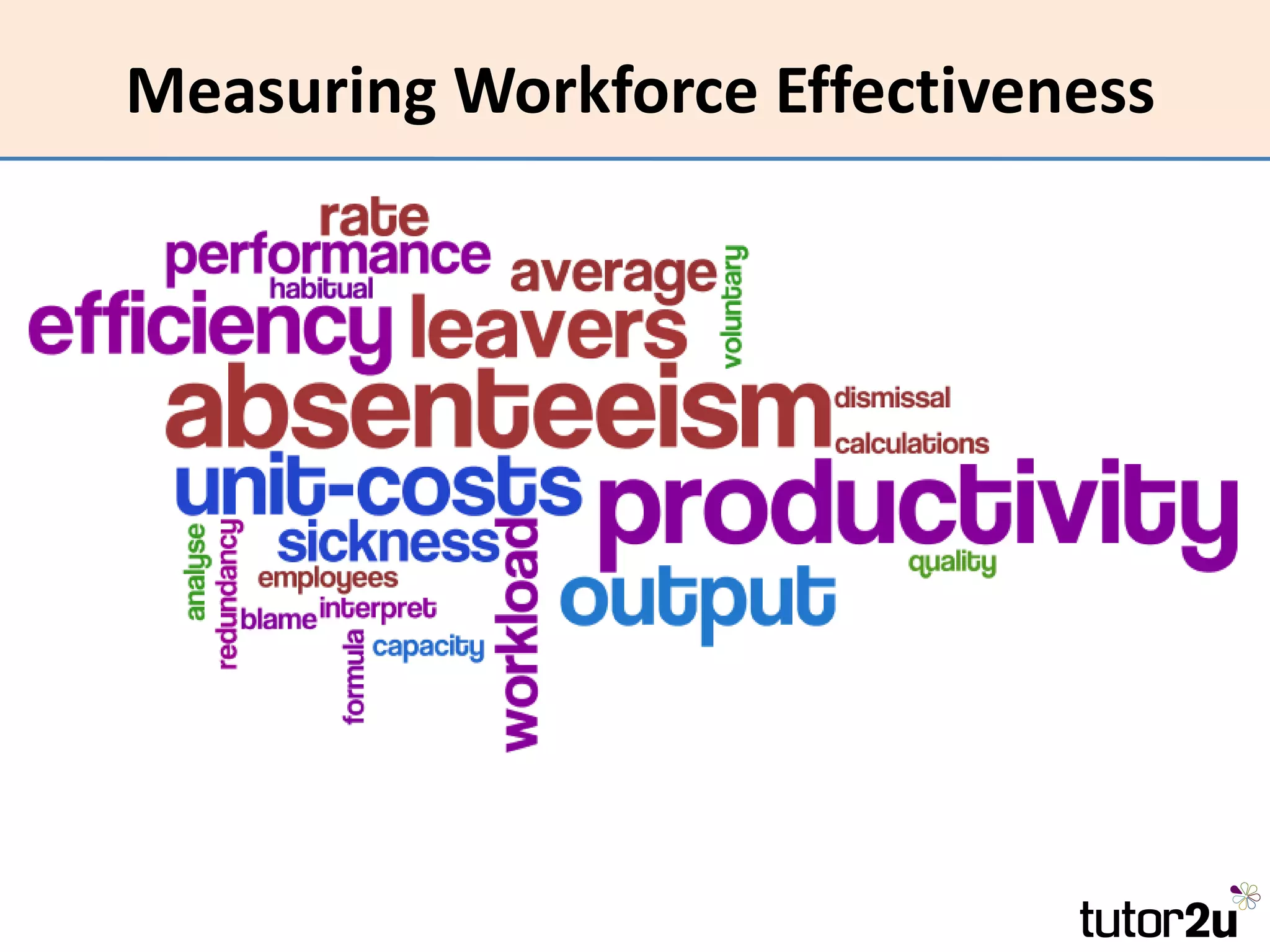
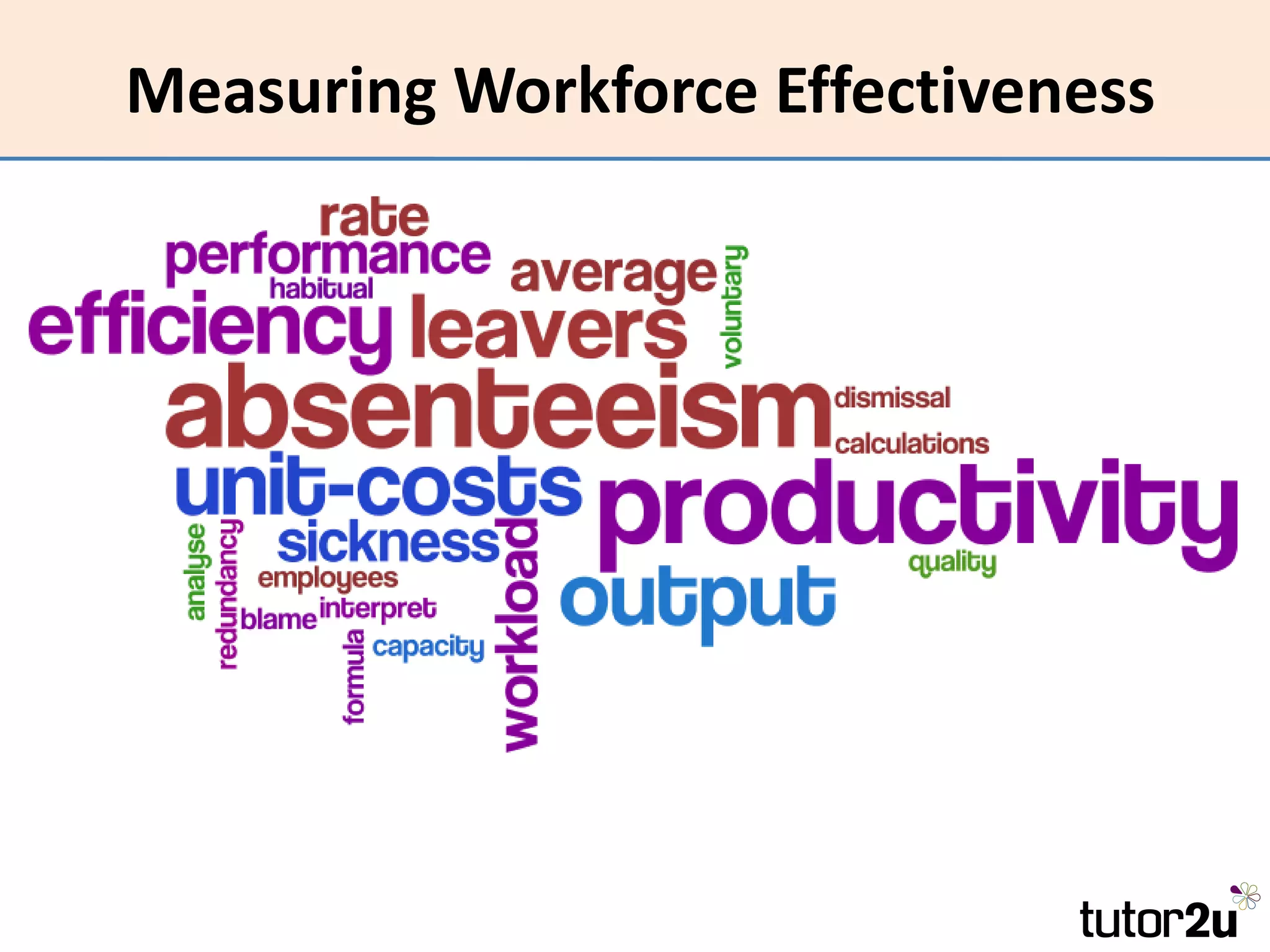
Measuring Workforce Effectiveness
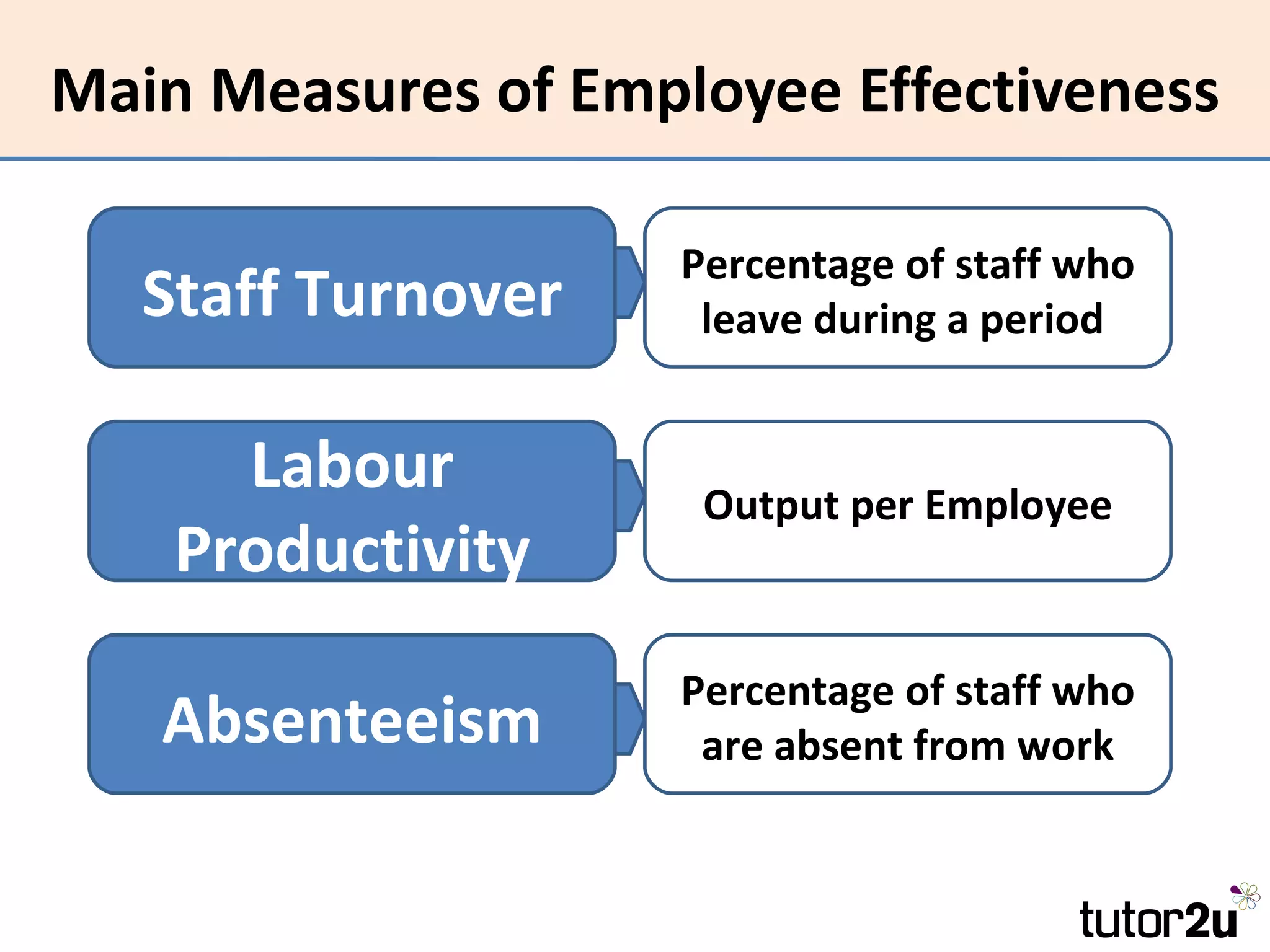
Main Measures of Employee Effectiveness

                     Percentage of staff who
   Staff Turnover     leave during a period


      Labour          Output per Employee
    Productivity
                     Percentage of staff who
   Absenteeism        are absent from work
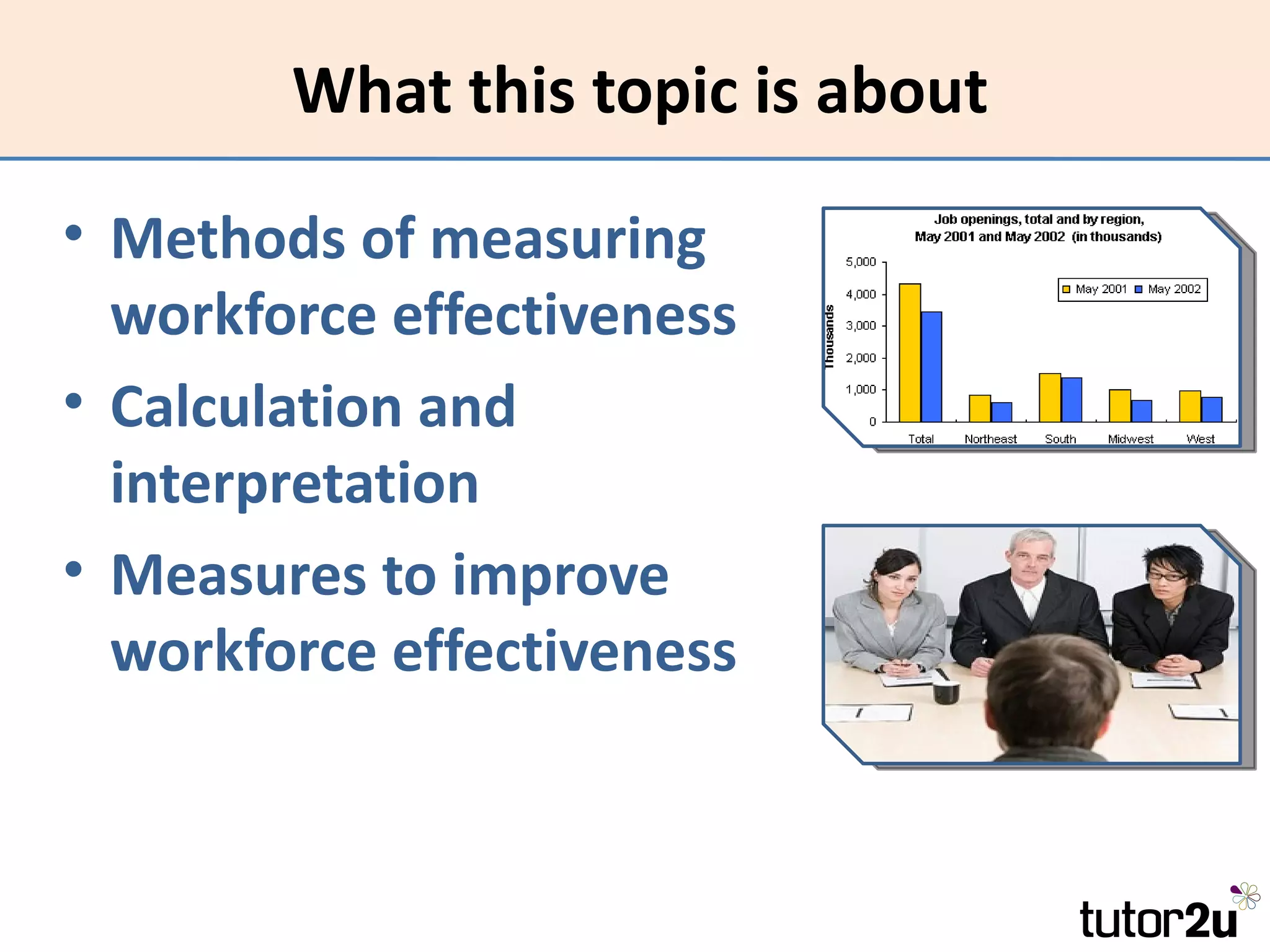
What this topic is about

• Methods of measuring
  workforce effectiveness
• Calculation and
  interpretation
• Measures to improve
  workforce effectiveness
Staff
Turnover
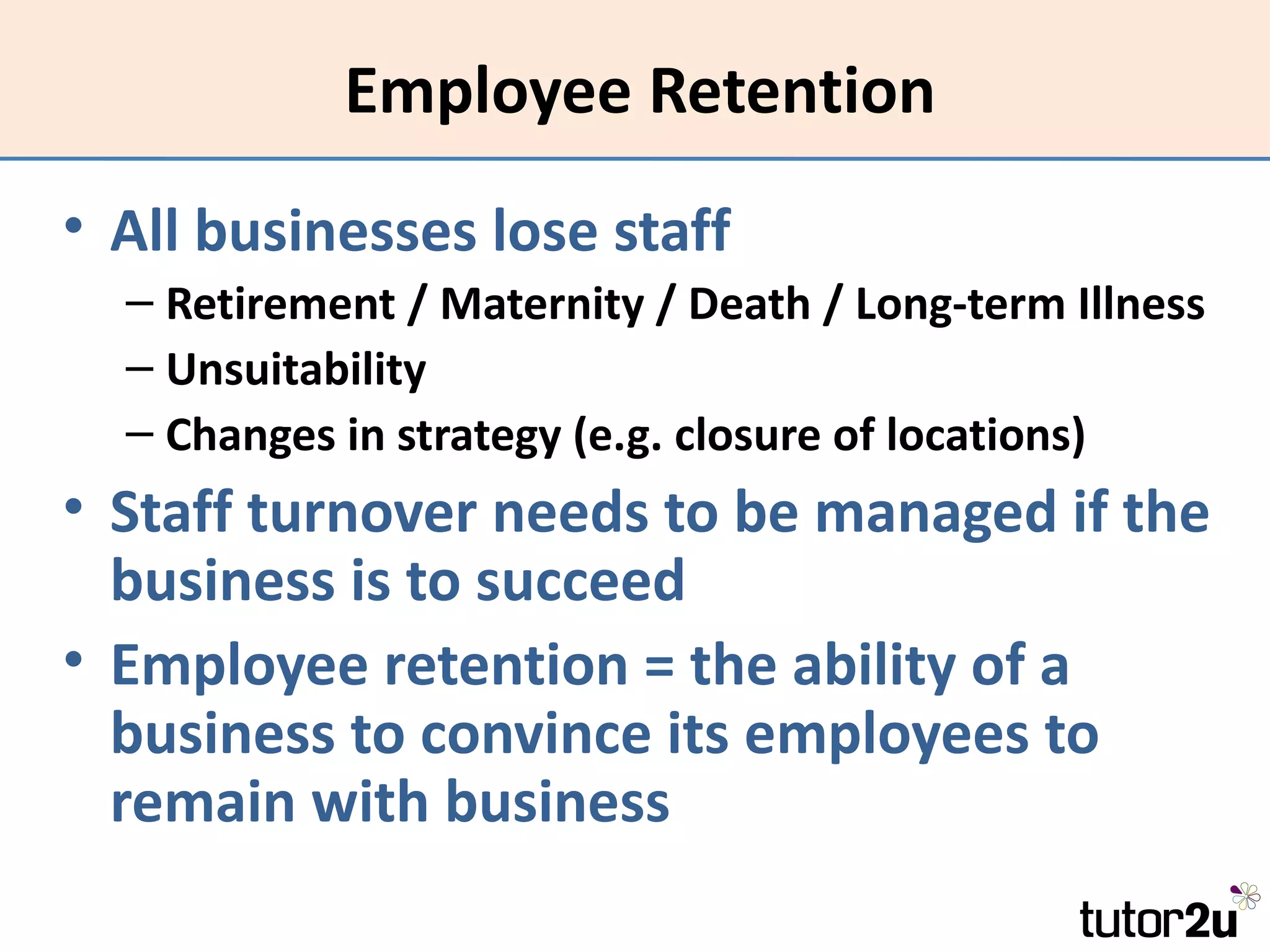
Employee Retention
• All businesses lose staff
  – Retirement / Maternity / Death / Long-term Illness
  – Unsuitability
  – Changes in strategy (e.g. closure of locations)
• Staff turnover needs to be managed if the
  business is to succeed
• Employee retention = the ability of a
  business to convince its employees to
  remain with business
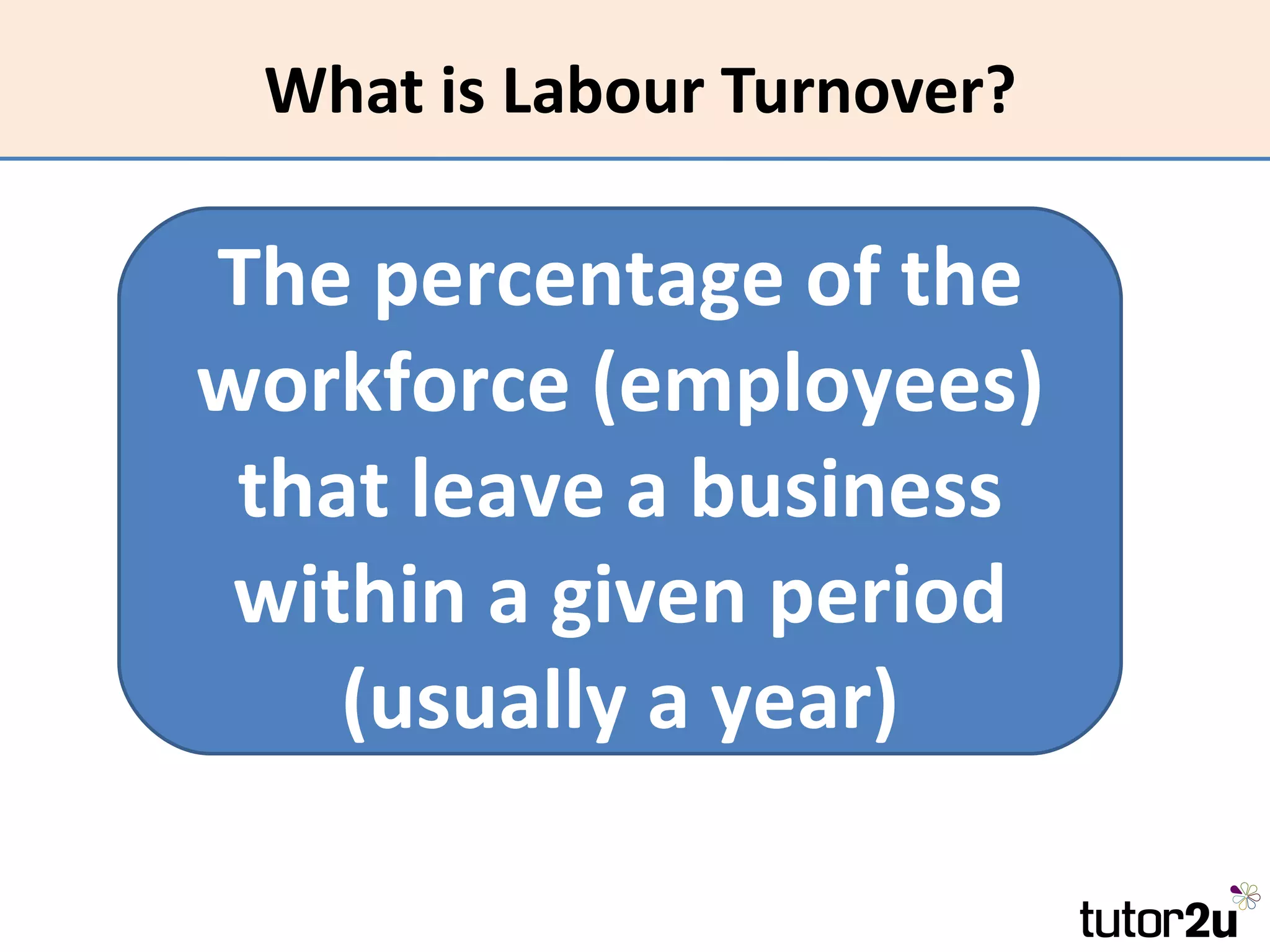
What is Labour Turnover?

The percentage of the
workforce (employees)
 that leave a business
 within a given period
    (usually a year)
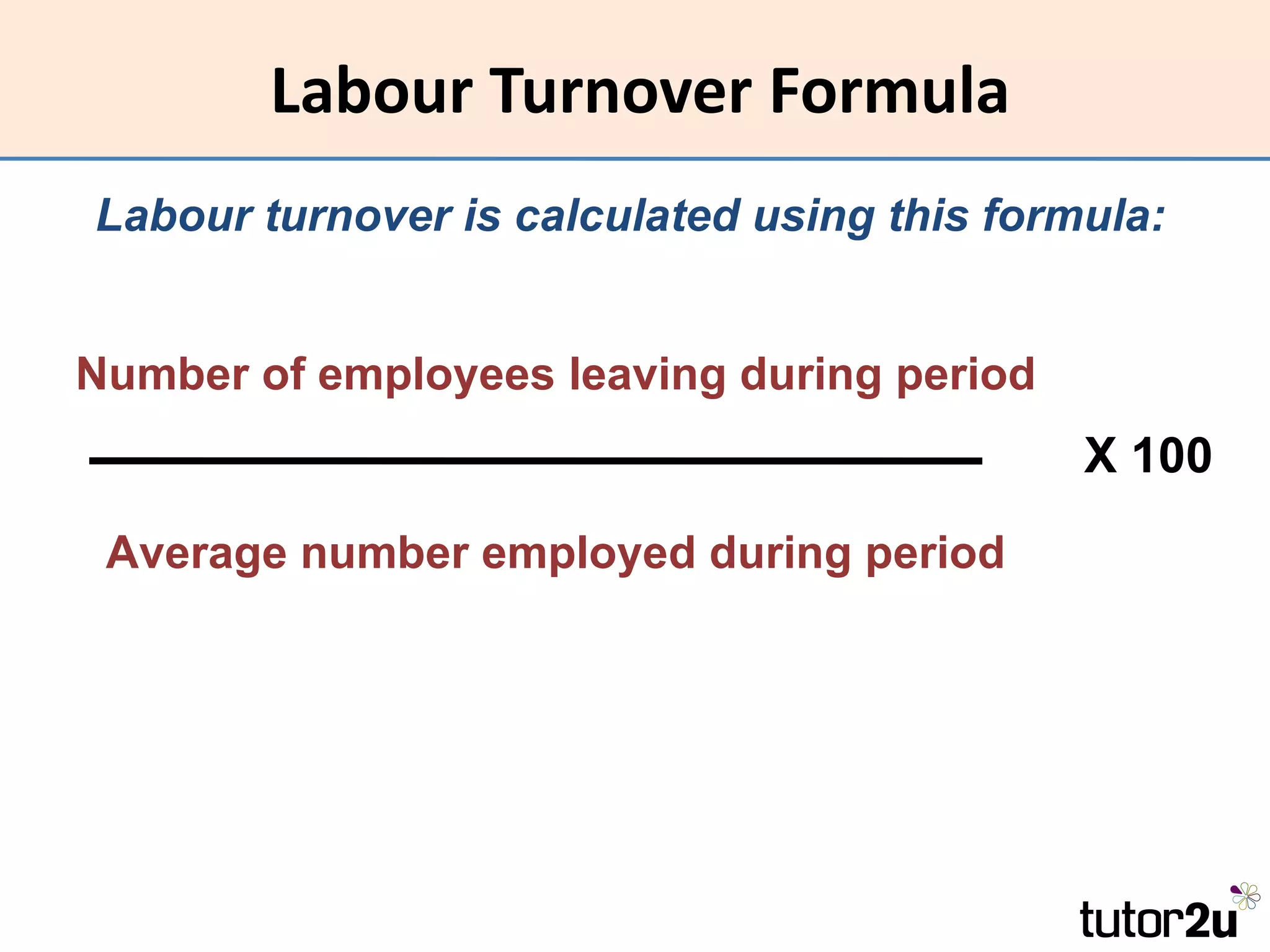
Labour Turnover Formula
Labour turnover is calculated using this formula:


Number of employees leaving during period
                                             X 100
 Average number employed during period
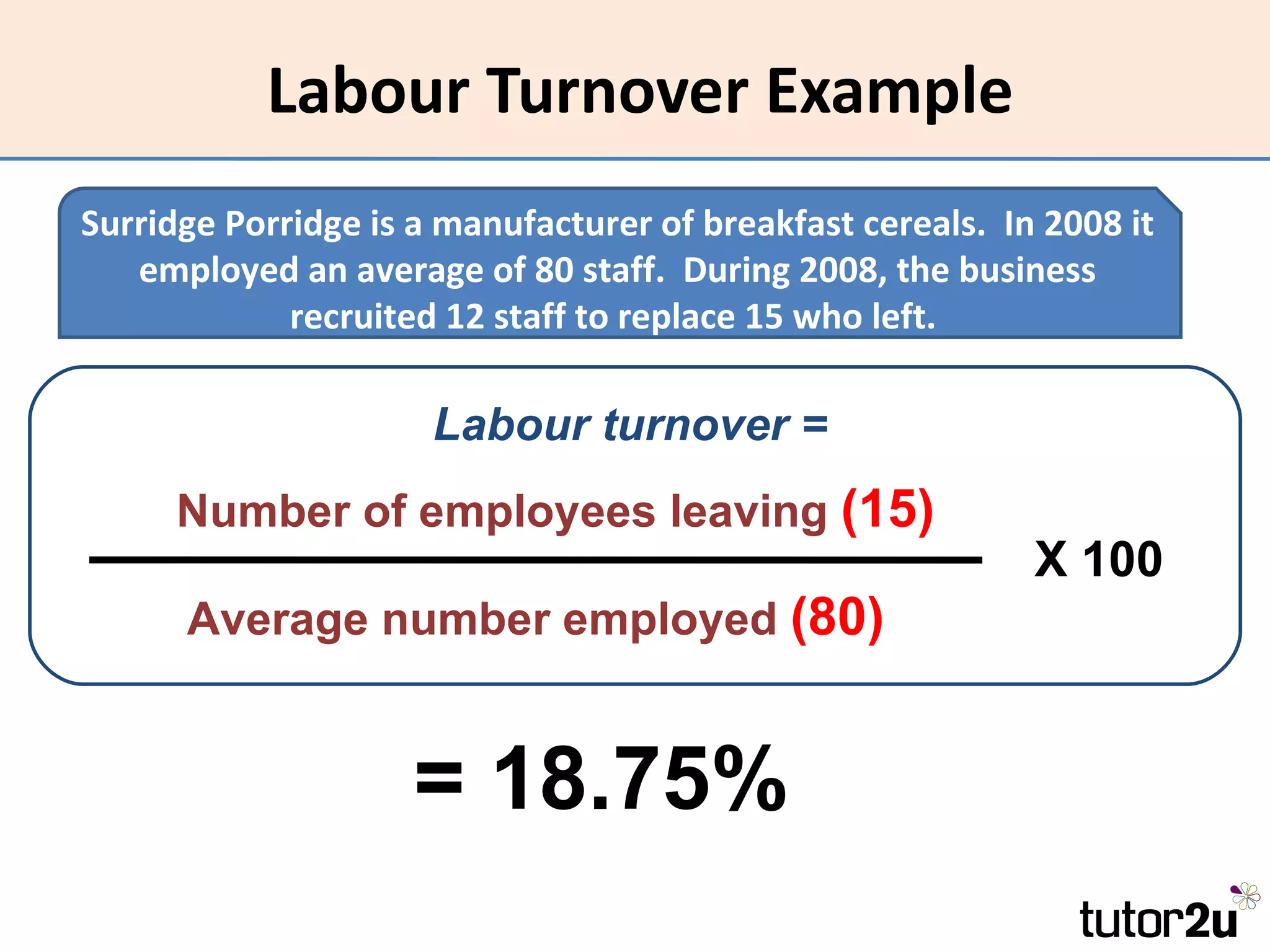
Labour Turnover Example
Surridge Porridge is a manufacturer of breakfast cereals. In 2008 it
   employed an average of 80 staff. During 2008, the business
             recruited 12 staff to replace 15 who left.

                      Labour turnover =
      Number of employees leaving (15)
                                                            X 100
      Average number employed (80)


                     = 18.75%
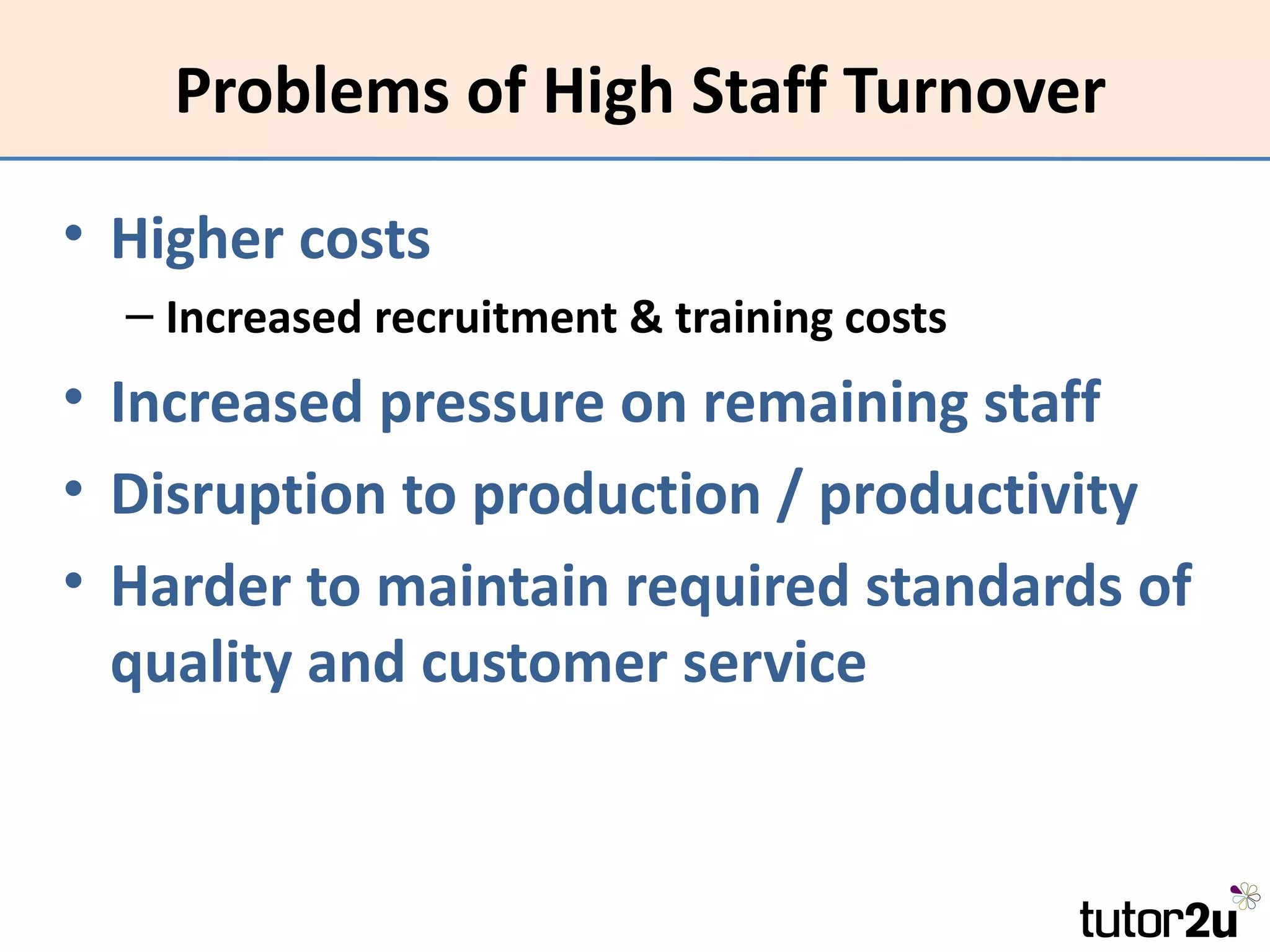
Problems of High Staff Turnover

• Higher costs
  – Increased recruitment & training costs
• Increased pressure on remaining staff
• Disruption to production / productivity
• Harder to maintain required standards of
  quality and customer service
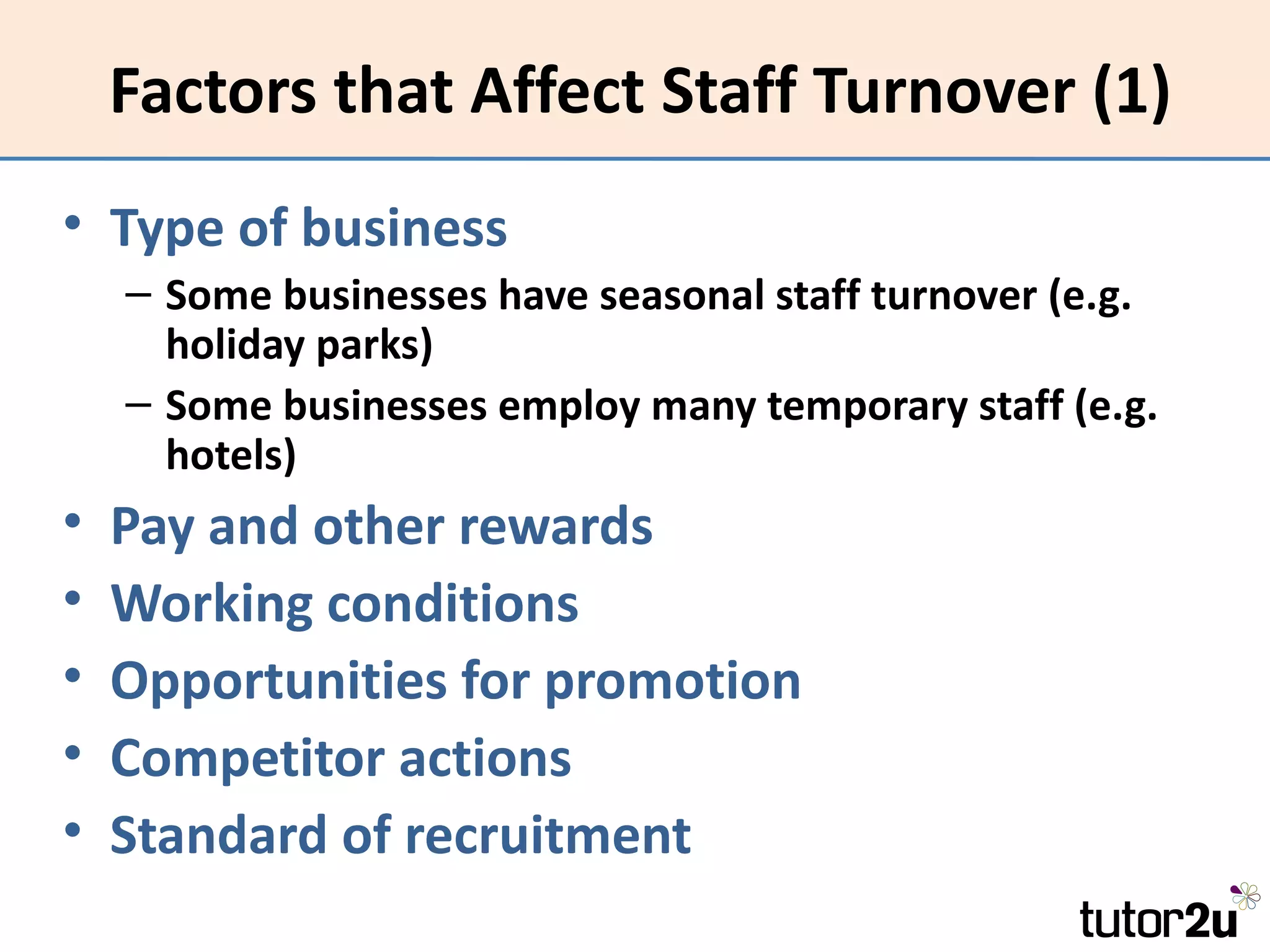
Factors that Affect Staff Turnover (1)
• Type of business
    – Some businesses have seasonal staff turnover (e.g.
      holiday parks)
    – Some businesses employ many temporary staff (e.g.
      hotels)
•   Pay and other rewards
•   Working conditions
•   Opportunities for promotion
•   Competitor actions
•   Standard of recruitment
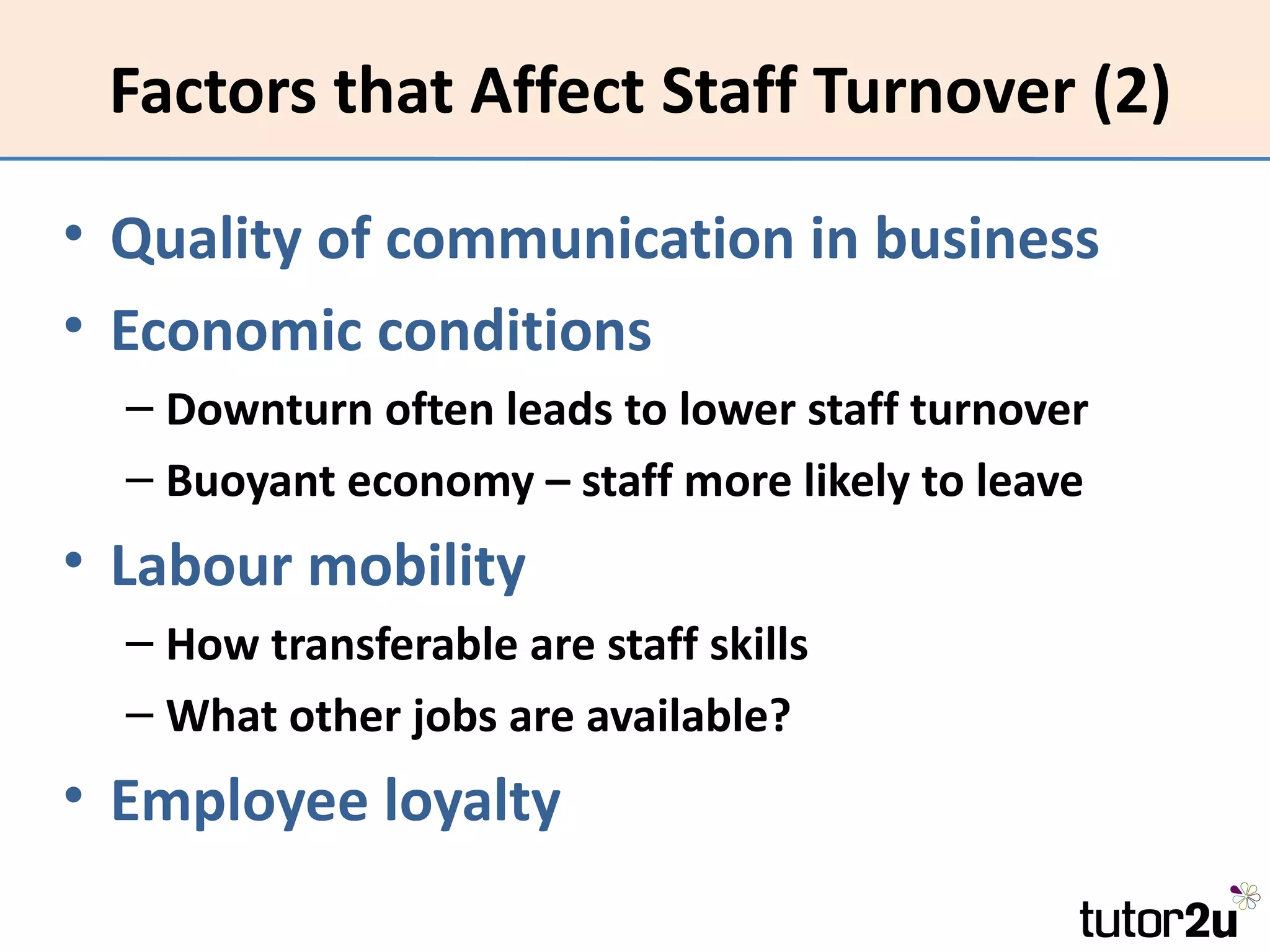
Factors that Affect Staff Turnover (2)

• Quality of communication in business
• Economic conditions
  – Downturn often leads to lower staff turnover
  – Buoyant economy – staff more likely to leave
• Labour mobility
  – How transferable are staff skills
  – What other jobs are available?
• Employee loyalty
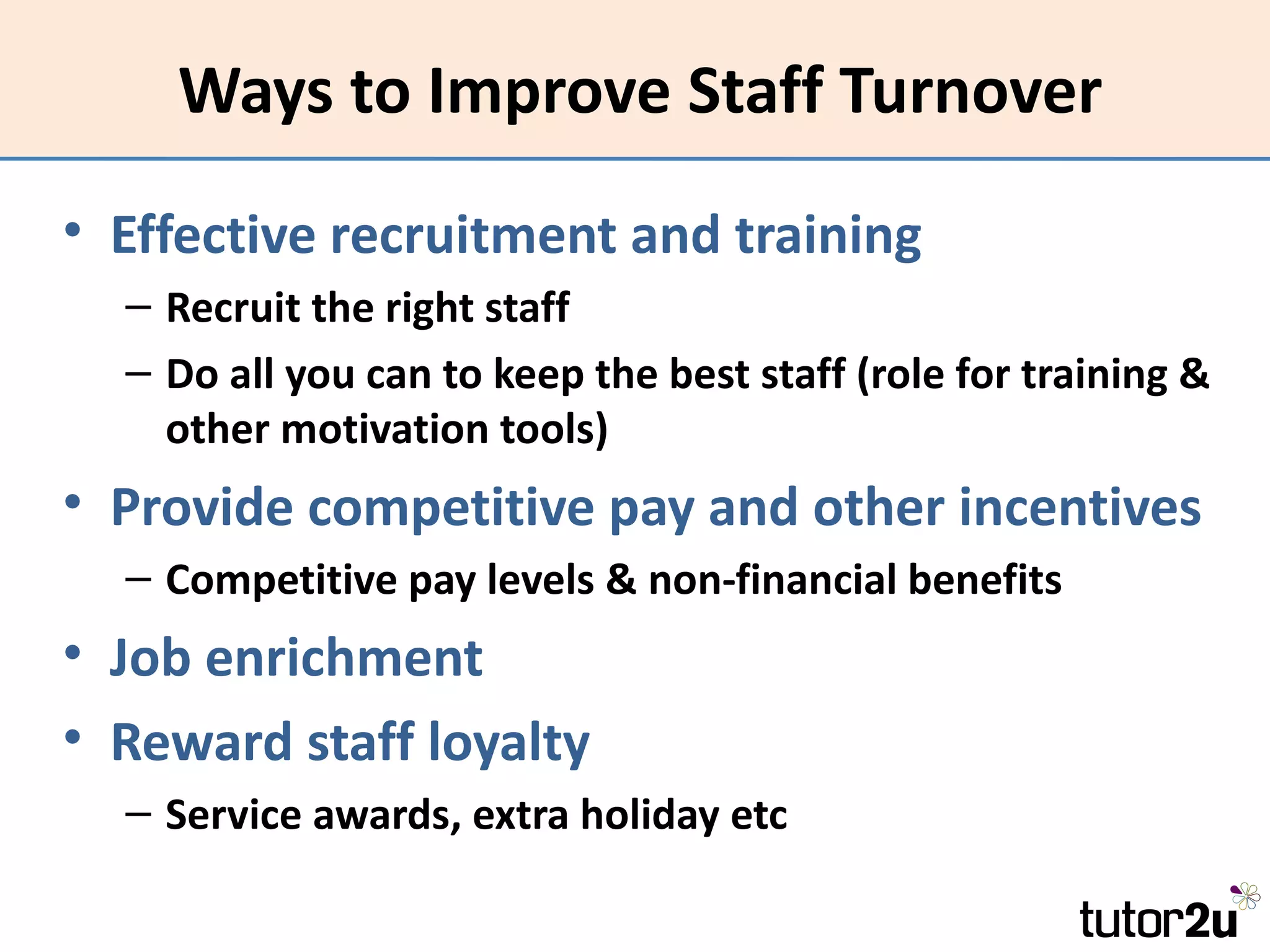
Ways to Improve Staff Turnover
• Effective recruitment and training
  – Recruit the right staff
  – Do all you can to keep the best staff (role for training &
    other motivation tools)
• Provide competitive pay and other incentives
  – Competitive pay levels & non-financial benefits
• Job enrichment
• Reward staff loyalty
  – Service awards, extra holiday etc
Labour
Productivity
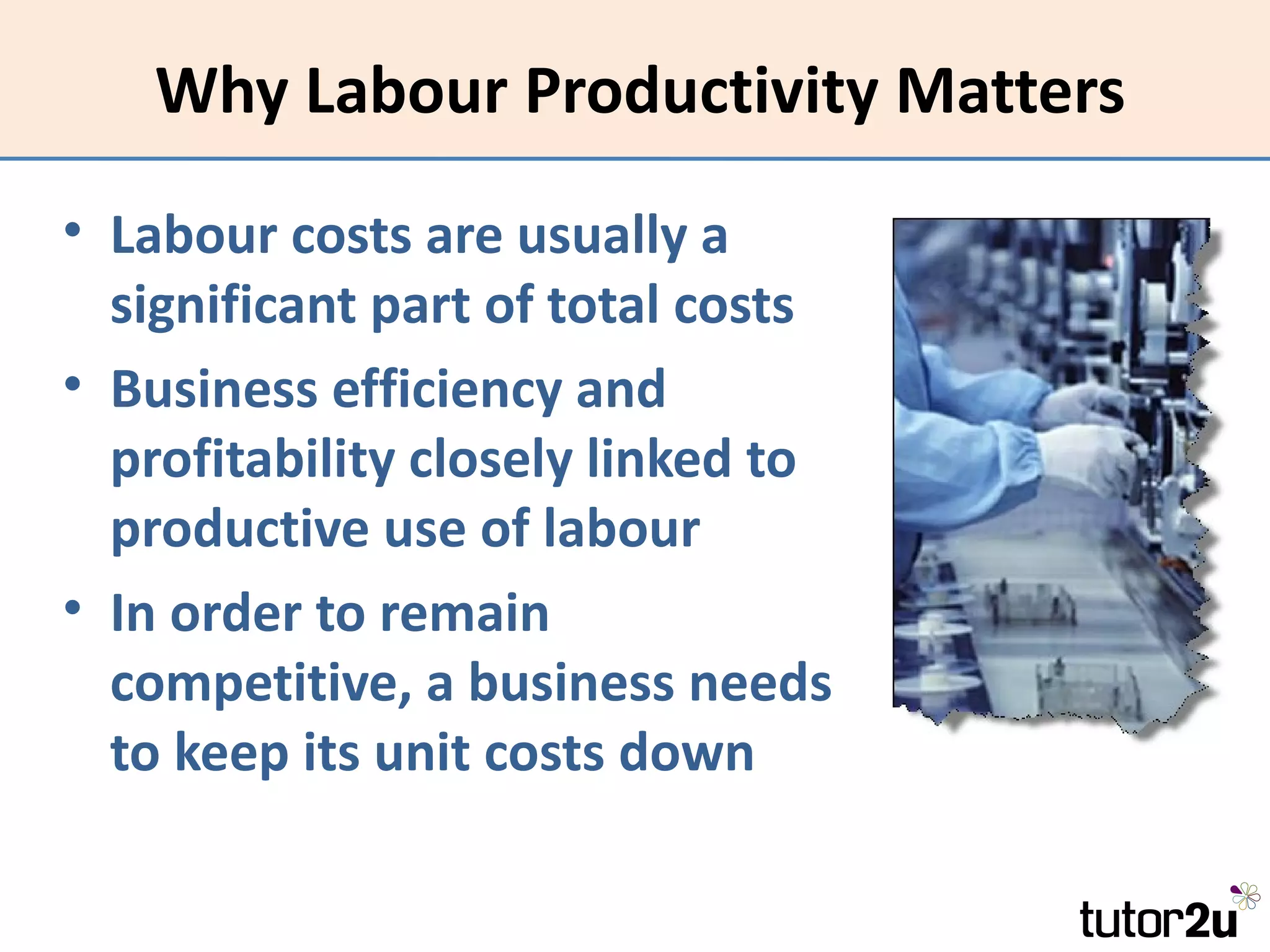
Why Labour Productivity Matters
• Labour costs are usually a
  significant part of total costs
• Business efficiency and
  profitability closely linked to
  productive use of labour
• In order to remain
  competitive, a business needs
  to keep its unit costs down
Factors influencing labour productivity

• Extent and quality of fixed assets (e.g.
  equipment, IT systems)
• Skills, ability and motivation of the
  workforce
• Methods of production organisation
• External factors (e.g. reliability of
  suppliers)
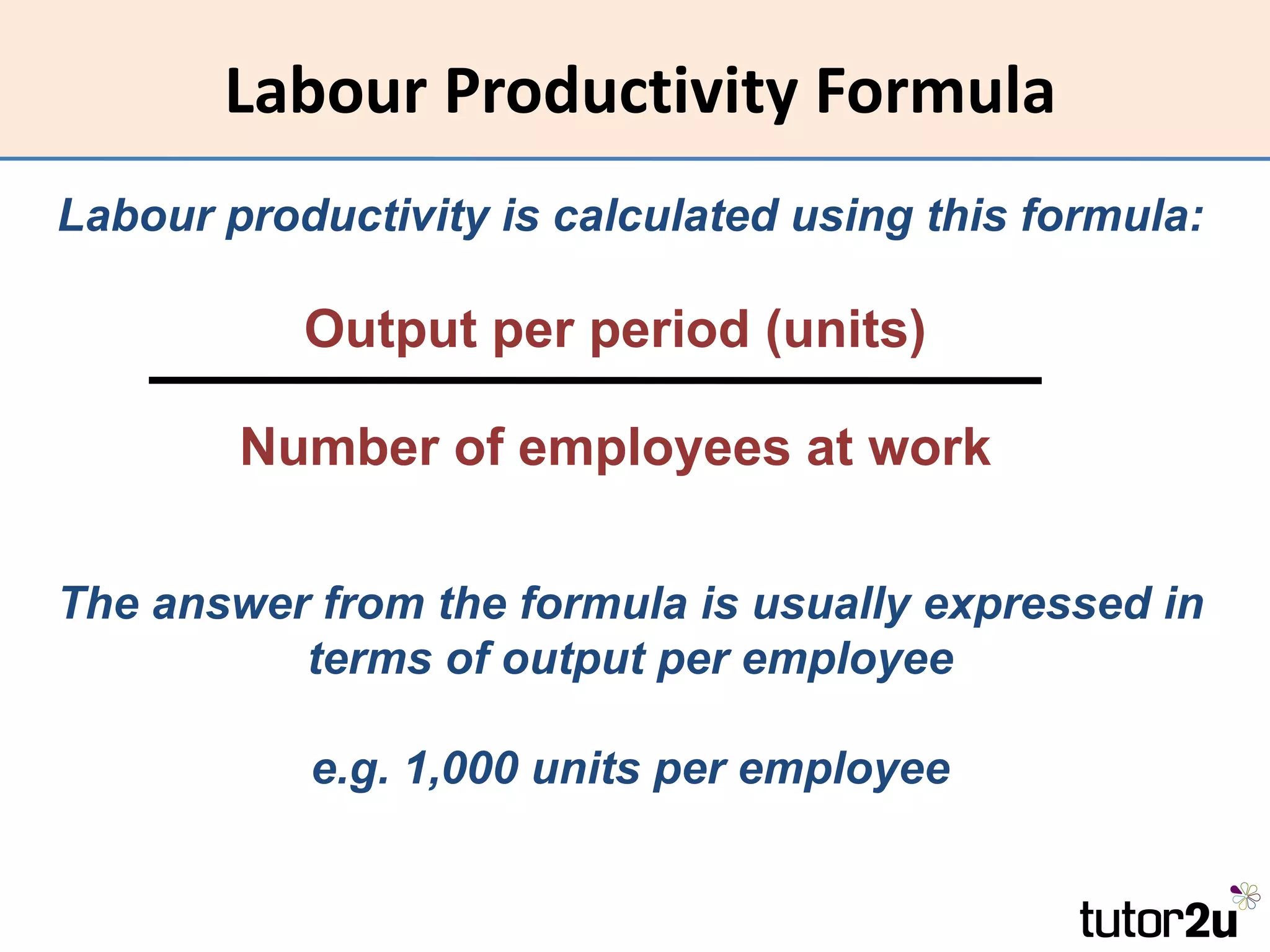
Labour Productivity Formula
Labour productivity is calculated using this formula:

           Output per period (units)

        Number of employees at work

The answer from the formula is usually expressed in
          terms of output per employee

           e.g. 1,000 units per employee
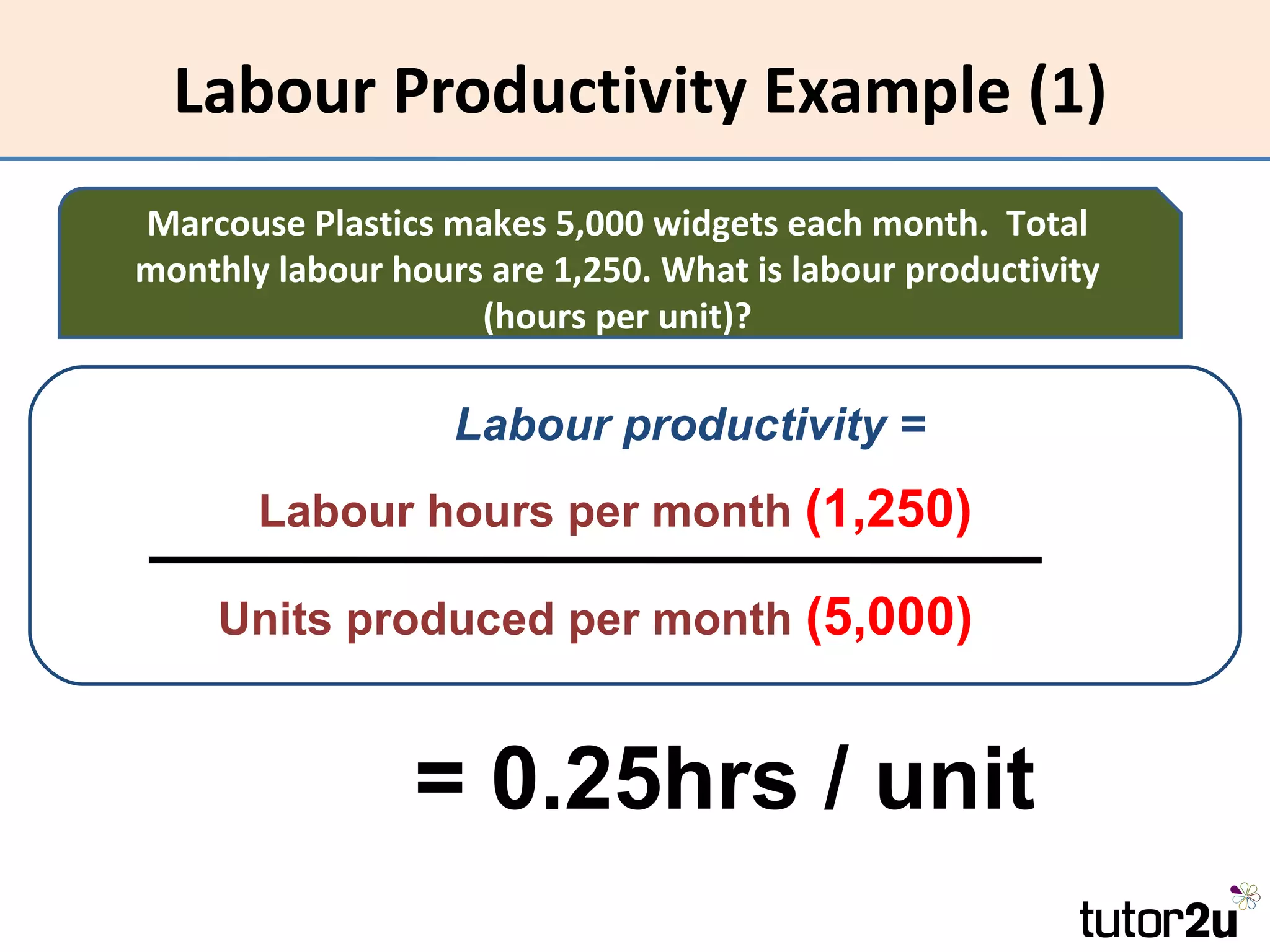
Labour Productivity Example (1)
Marcouse Plastics makes 5,000 widgets each month. Total
monthly labour hours are 1,250. What is labour productivity
                    (hours per unit)?

                   Labour productivity =
       Labour hours per month (1,250)

     Units produced per month (5,000)


                 = 0.25hrs / unit
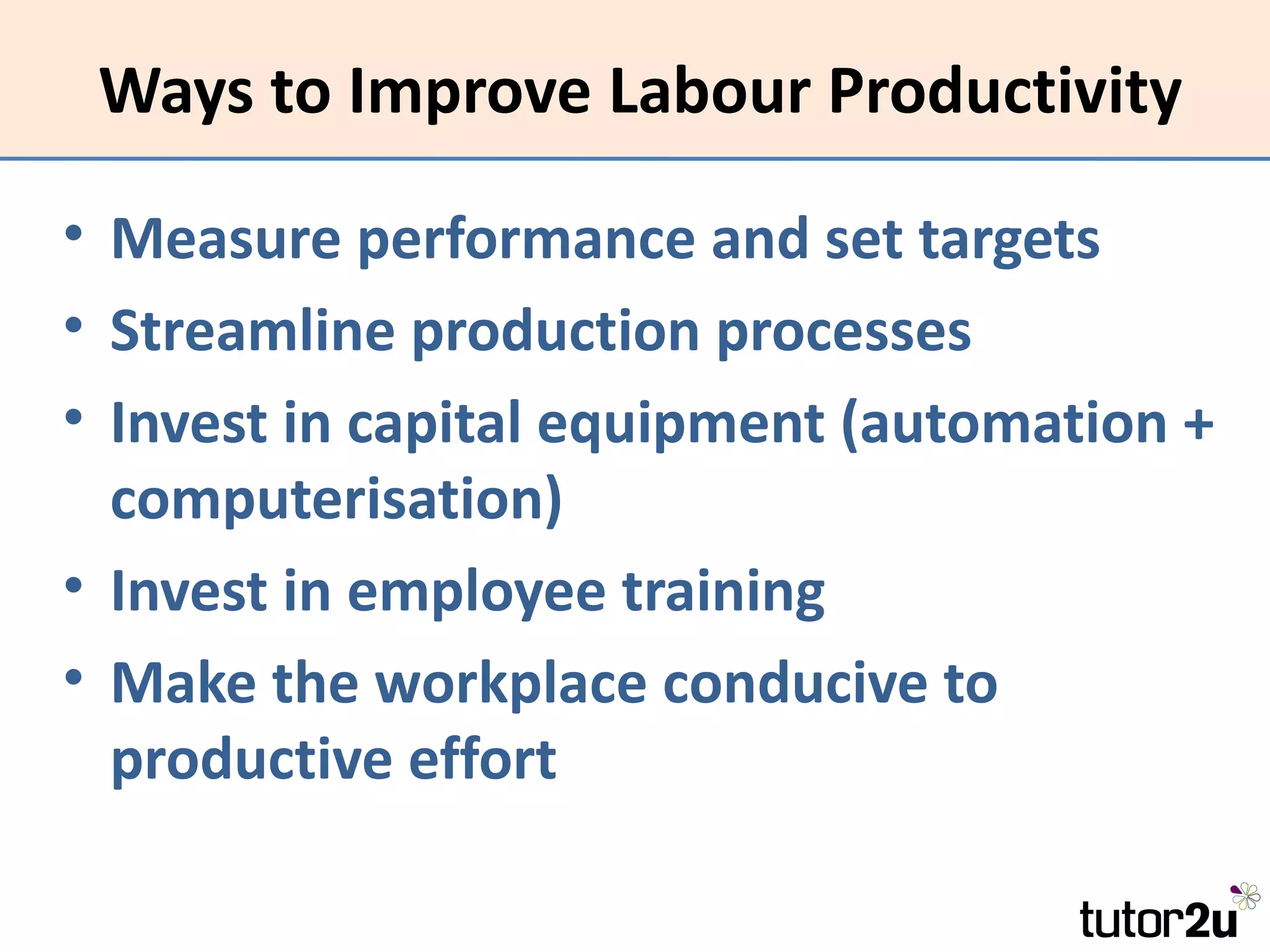
Ways to Improve Labour Productivity

• Measure performance and set targets
• Streamline production processes
• Invest in capital equipment (automation +
  computerisation)
• Invest in employee training
• Make the workplace conducive to
  productive effort
Absenteeism
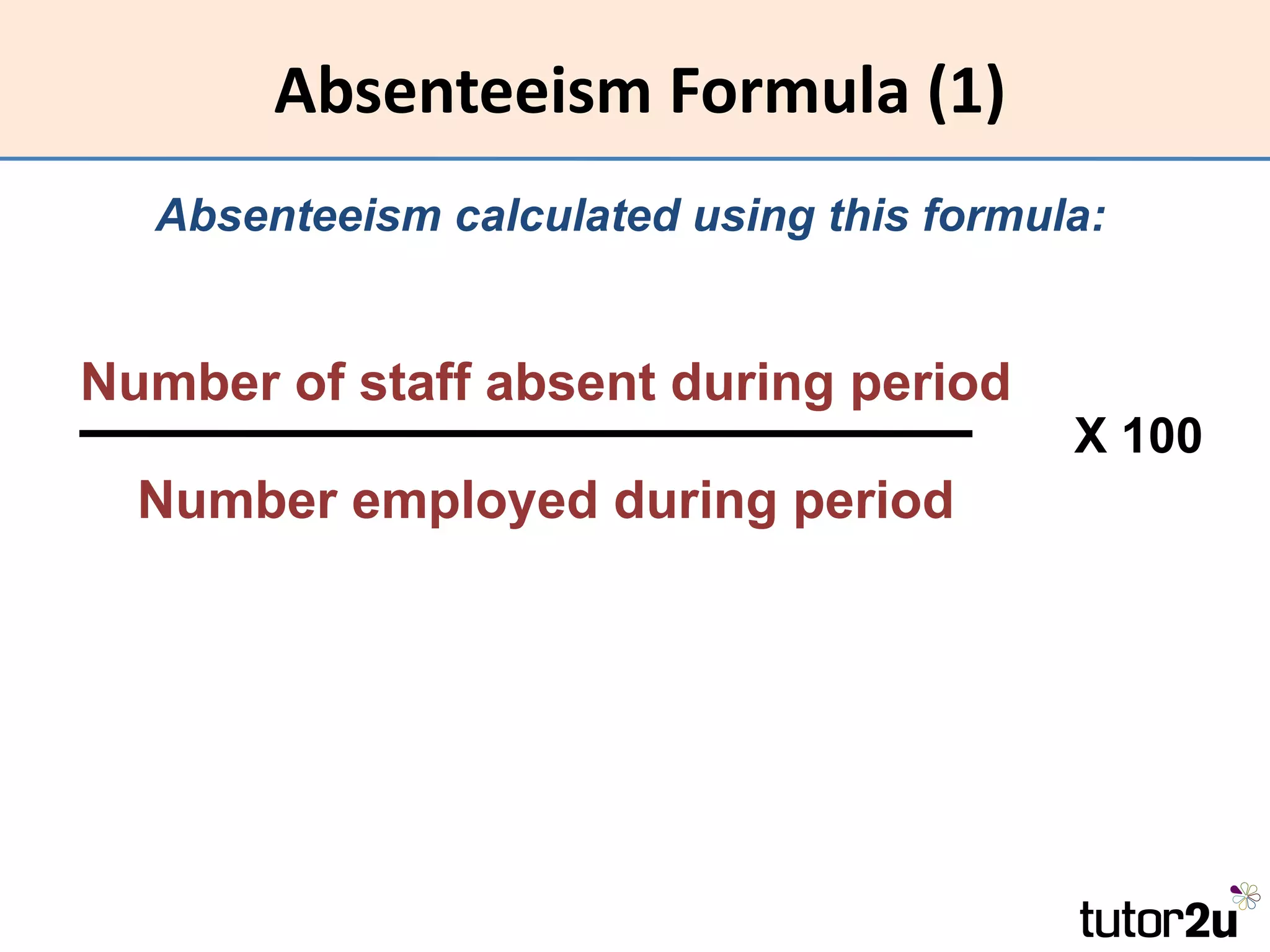
Absenteeism Formula (1)
  Absenteeism calculated using this formula:


Number of staff absent during period
                                          X 100
  Number employed during period
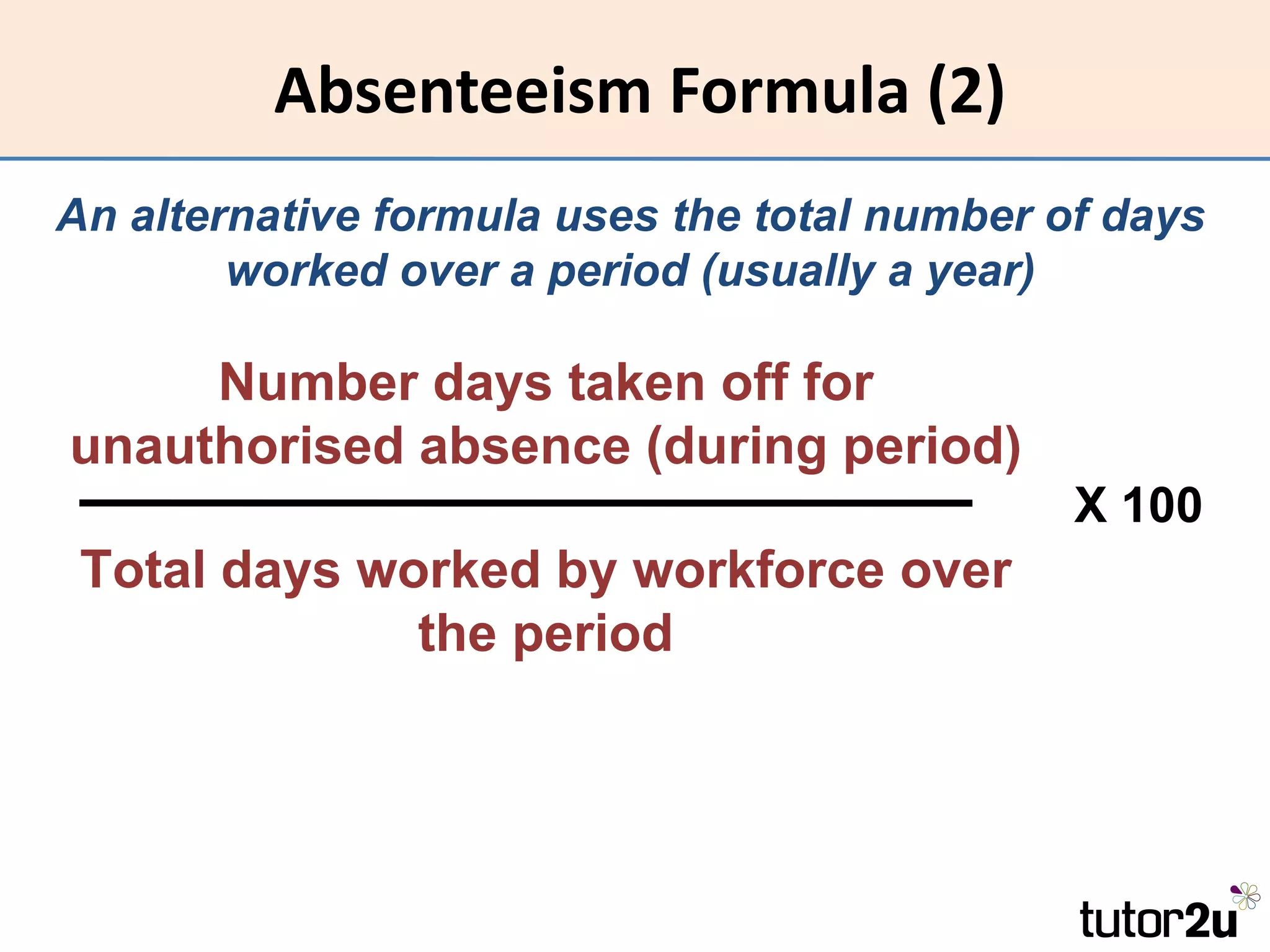
Absenteeism Formula (2)
An alternative formula uses the total number of days
        worked over a period (usually a year)

     Number days taken off for
unauthorised absence (during period)
                                              X 100
 Total days worked by workforce over
              the period
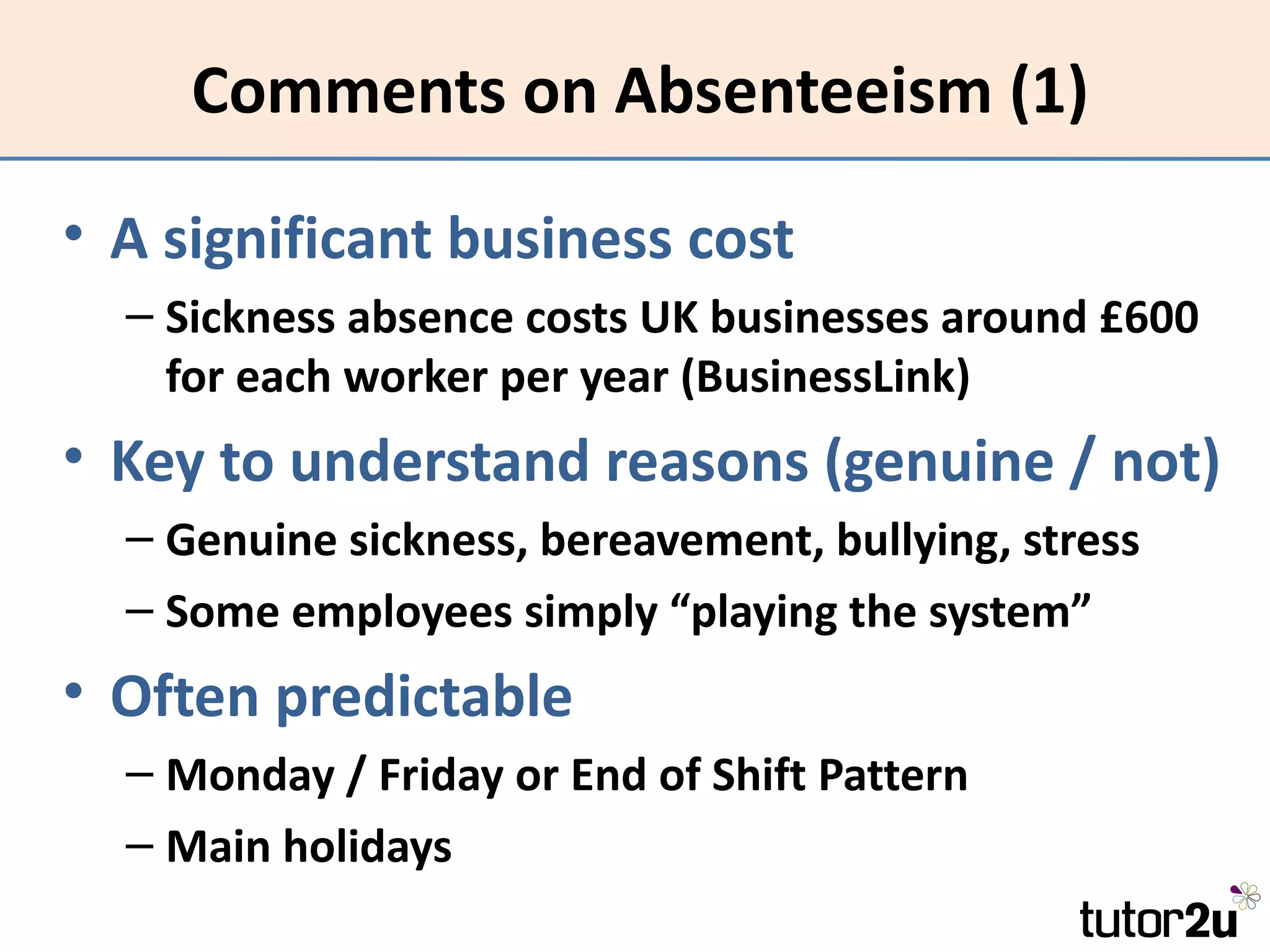
Comments on Absenteeism (1)

• A significant business cost
  – Sickness absence costs UK businesses around £600
    for each worker per year (BusinessLink)
• Key to understand reasons (genuine / not)
  – Genuine sickness, bereavement, bullying, stress
  – Some employees simply “playing the system”
• Often predictable
  – Monday / Friday or End of Shift Pattern
  – Main holidays
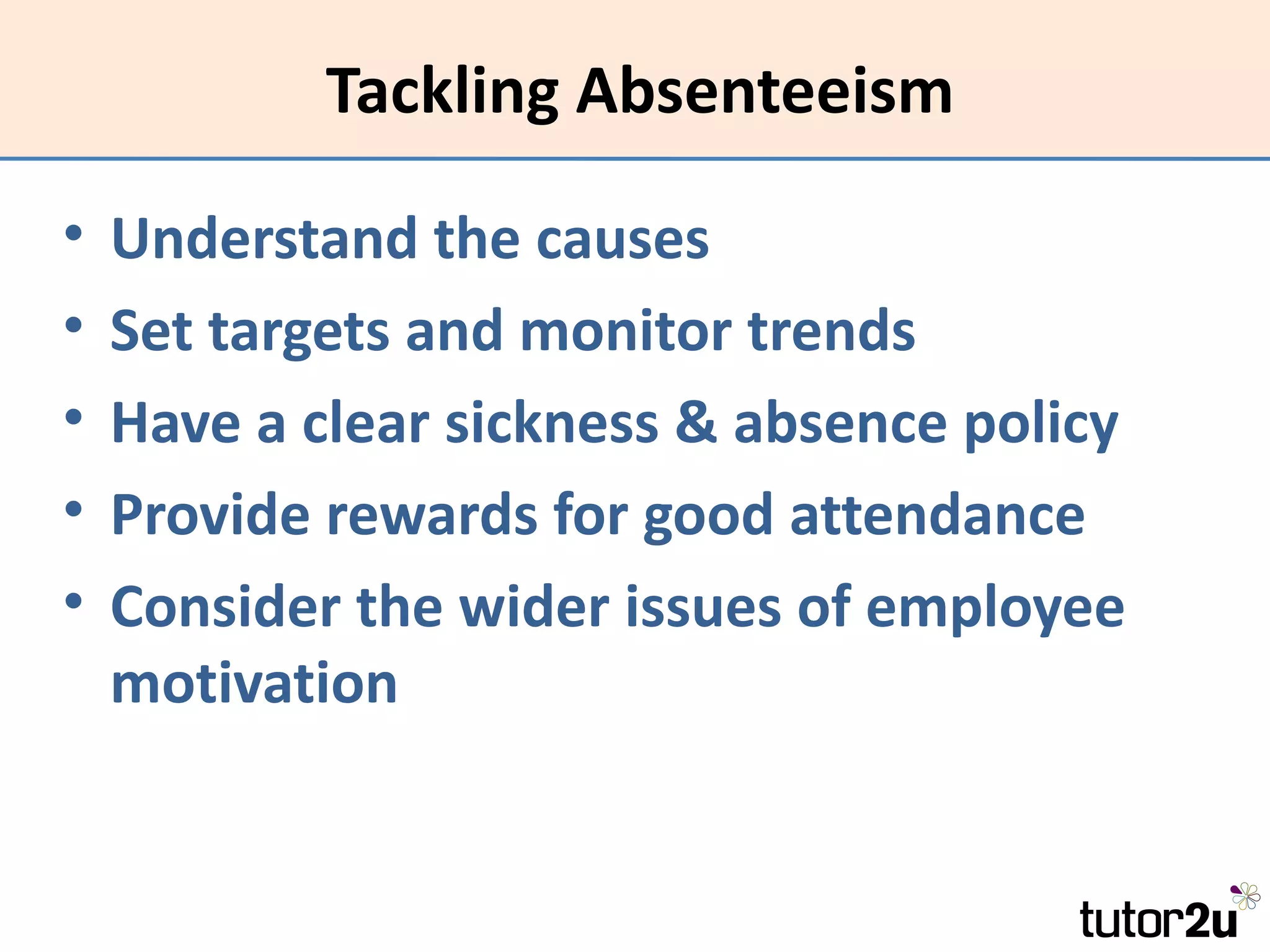
Tackling Absenteeism

•   Understand the causes
•   Set targets and monitor trends
•   Have a clear sickness & absence policy
•   Provide rewards for good attendance
•   Consider the wider issues of employee
    motivation
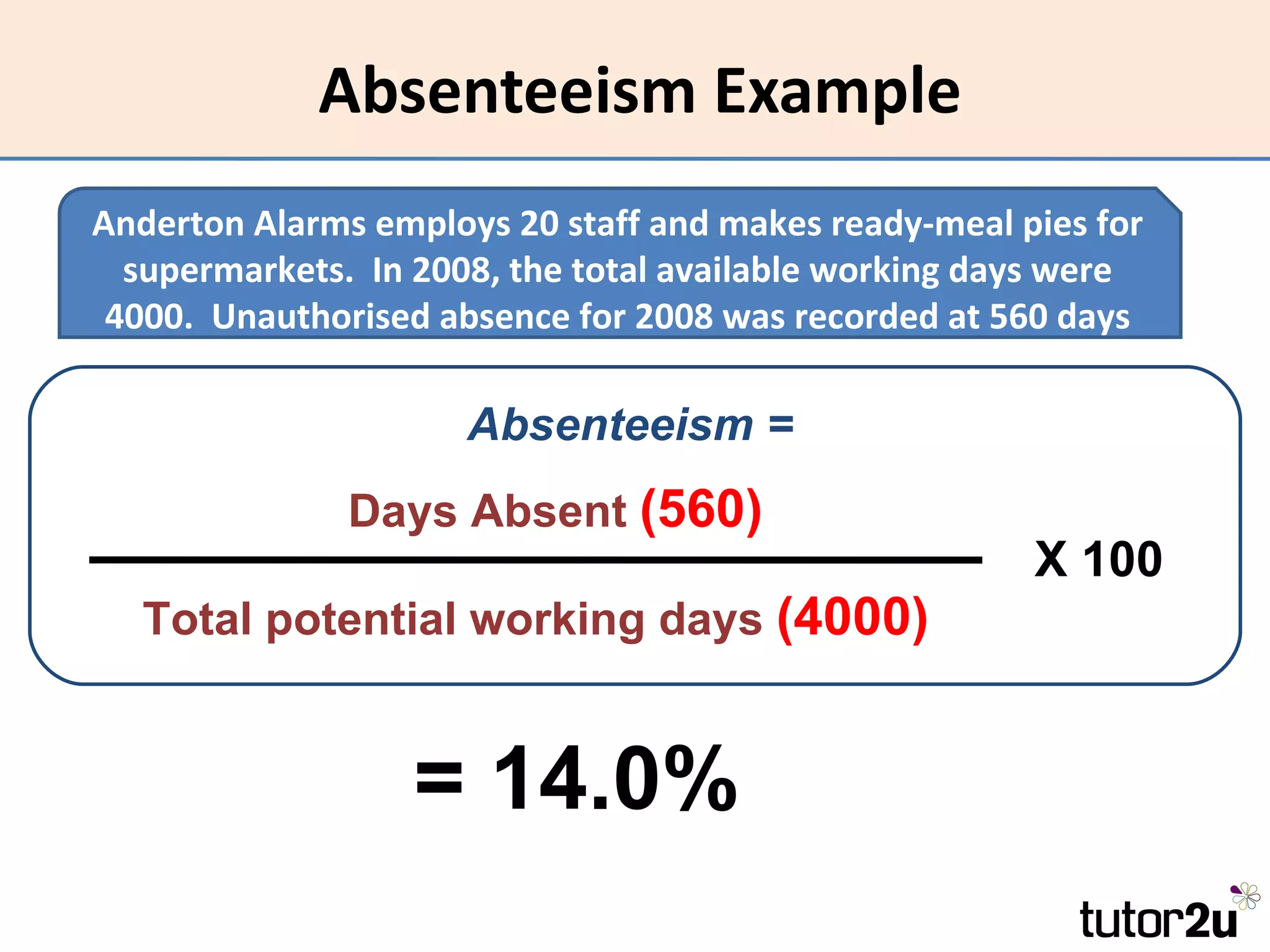
Absenteeism Example
Anderton Alarms employs 20 staff and makes ready-meal pies for
  supermarkets. In 2008, the total available working days were
 4000. Unauthorised absence for 2008 was recorded at 560 days

                      Absenteeism =
               Days Absent (560)
                                                       X 100
  Total potential working days (4000)


                  = 14.0%
Measuring Workforce Effectiveness

HRM - Workforce Effectiveness

  • 1.
  • 2.
    Main Measures ofEmployee Effectiveness Percentage of staff who Staff Turnover leave during a period Labour Output per Employee Productivity Percentage of staff who Absenteeism are absent from work
  • 3.
    What this topicis about • Methods of measuring workforce effectiveness • Calculation and interpretation • Measures to improve workforce effectiveness
  • 4.
  • 5.
    Employee Retention • Allbusinesses lose staff – Retirement / Maternity / Death / Long-term Illness – Unsuitability – Changes in strategy (e.g. closure of locations) • Staff turnover needs to be managed if the business is to succeed • Employee retention = the ability of a business to convince its employees to remain with business
  • 6.
    What is LabourTurnover? The percentage of the workforce (employees) that leave a business within a given period (usually a year)
  • 7.
    Labour Turnover Formula Labourturnover is calculated using this formula: Number of employees leaving during period X 100 Average number employed during period
  • 8.
    Labour Turnover Example SurridgePorridge is a manufacturer of breakfast cereals. In 2008 it employed an average of 80 staff. During 2008, the business recruited 12 staff to replace 15 who left. Labour turnover = Number of employees leaving (15) X 100 Average number employed (80) = 18.75%
  • 9.
    Problems of HighStaff Turnover • Higher costs – Increased recruitment & training costs • Increased pressure on remaining staff • Disruption to production / productivity • Harder to maintain required standards of quality and customer service
  • 10.
    Factors that AffectStaff Turnover (1) • Type of business – Some businesses have seasonal staff turnover (e.g. holiday parks) – Some businesses employ many temporary staff (e.g. hotels) • Pay and other rewards • Working conditions • Opportunities for promotion • Competitor actions • Standard of recruitment
  • 11.
    Factors that AffectStaff Turnover (2) • Quality of communication in business • Economic conditions – Downturn often leads to lower staff turnover – Buoyant economy – staff more likely to leave • Labour mobility – How transferable are staff skills – What other jobs are available? • Employee loyalty
  • 12.
    Ways to ImproveStaff Turnover • Effective recruitment and training – Recruit the right staff – Do all you can to keep the best staff (role for training & other motivation tools) • Provide competitive pay and other incentives – Competitive pay levels & non-financial benefits • Job enrichment • Reward staff loyalty – Service awards, extra holiday etc
  • 13.
  • 14.
    Why Labour ProductivityMatters • Labour costs are usually a significant part of total costs • Business efficiency and profitability closely linked to productive use of labour • In order to remain competitive, a business needs to keep its unit costs down
  • 15.
    Factors influencing labourproductivity • Extent and quality of fixed assets (e.g. equipment, IT systems) • Skills, ability and motivation of the workforce • Methods of production organisation • External factors (e.g. reliability of suppliers)
  • 16.
    Labour Productivity Formula Labourproductivity is calculated using this formula: Output per period (units) Number of employees at work The answer from the formula is usually expressed in terms of output per employee e.g. 1,000 units per employee
  • 17.
    Labour Productivity Example(1) Marcouse Plastics makes 5,000 widgets each month. Total monthly labour hours are 1,250. What is labour productivity (hours per unit)? Labour productivity = Labour hours per month (1,250) Units produced per month (5,000) = 0.25hrs / unit
  • 18.
    Ways to ImproveLabour Productivity • Measure performance and set targets • Streamline production processes • Invest in capital equipment (automation + computerisation) • Invest in employee training • Make the workplace conducive to productive effort
  • 19.
  • 20.
    Absenteeism Formula (1) Absenteeism calculated using this formula: Number of staff absent during period X 100 Number employed during period
  • 21.
    Absenteeism Formula (2) Analternative formula uses the total number of days worked over a period (usually a year) Number days taken off for unauthorised absence (during period) X 100 Total days worked by workforce over the period
  • 22.
    Comments on Absenteeism(1) • A significant business cost – Sickness absence costs UK businesses around £600 for each worker per year (BusinessLink) • Key to understand reasons (genuine / not) – Genuine sickness, bereavement, bullying, stress – Some employees simply “playing the system” • Often predictable – Monday / Friday or End of Shift Pattern – Main holidays
  • 23.
    Tackling Absenteeism • Understand the causes • Set targets and monitor trends • Have a clear sickness & absence policy • Provide rewards for good attendance • Consider the wider issues of employee motivation
  • 24.
    Absenteeism Example Anderton Alarmsemploys 20 staff and makes ready-meal pies for supermarkets. In 2008, the total available working days were 4000. Unauthorised absence for 2008 was recorded at 560 days Absenteeism = Days Absent (560) X 100 Total potential working days (4000) = 14.0%
  • 25.