Lesson 3 
Media Stereotypes 
Key Words 
 Representation 
 Stereotype 
L/Os: 
By the end of the lesson… 
You Must – understand and explain the concept Stereotype 
(Starter and Main Task) 
You Should – Explore the difference between a TV media 
stereotype and reality (Extension 1) 
Amazing If – Explore a media stereotype from a different media 
area (extension 2) 
STARTER: 
 Write down the meaning of the word stereotype in your own words: 
Stereotype means when something is assumed but not true. 
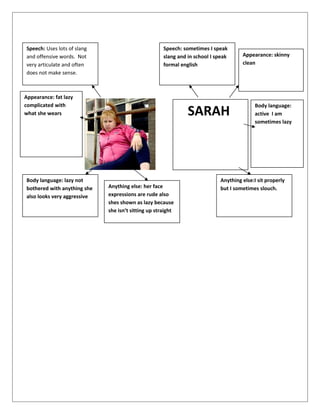
MAIN TASK 1: Describe each characteristic to show the difference 
between this media stereotype and a real teenager.
Speech: sometimes I speak 
slang and in school I speak 
formal english 
SARAH 
Speech: Uses lots of slang 
and offensive words. Not 
very articulate and often 
does not make sense. 
Anything else: her face 
expressions are rude also 
shes shown as lazy because 
she isn’t sitting up straight 
Appearance: fat lazy 
complicated with 
what she wears 
Body language: lazy not 
bothered with anything she 
also looks very aggressive 
Appearance: skinny 
clean 
Body language: 
active I am 
sometimes lazy 
Anything else:I sit properly 
but I sometimes slouch.
Extension 1 – Stereotypes and reality: 
1. Which negative characteristics of teenagers have been exaggerated in 
Vicky Pollard? 
Not all teenagers are aggressive and rude mannered 
2. Explain in your own words how you are different to a ‘stereotypical’ 
teenager like Vicky Pollard? 
.................................................................................................................................... 
.................................................................................................................................... 
................................................................................................................................... 
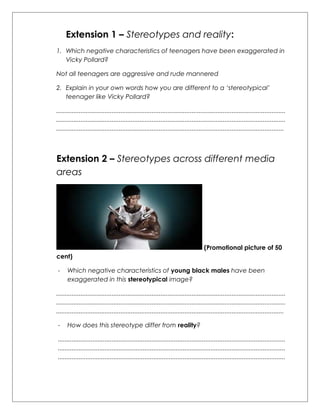
Extension 2 – Stereotypes across different media 
areas 
(Promotional picture of 50 
cent) 
- Which negative characteristics of young black males have been 
exaggerated in this stereotypical image? 
.................................................................................................................................... 
.................................................................................................................................... 
................................................................................................................................... 
- How does this stereotype differ from reality? 
................................................................................................................................... 
................................................................................................................................... 
...................................................................................................................................
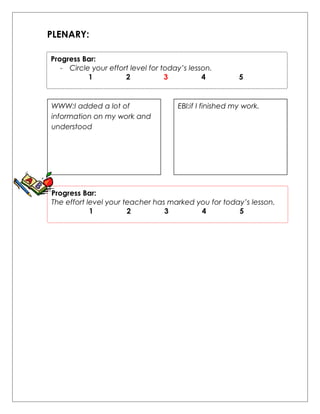
PLENARY: 
Progress Bar: 
- Circle your effort level for today’s lesson. 
1 2 3 4 5 
WWW:I added a lot of 
information on my work and 
understood 
EBI:if I finished my work. 
Progress Bar: 
The effort level your teacher has marked you for today’s lesson. 
1 2 3 4 5

Lesson 3 media stereotypes worksheet

  • 1.
    Lesson 3 MediaStereotypes Key Words  Representation  Stereotype L/Os: By the end of the lesson… You Must – understand and explain the concept Stereotype (Starter and Main Task) You Should – Explore the difference between a TV media stereotype and reality (Extension 1) Amazing If – Explore a media stereotype from a different media area (extension 2) STARTER:  Write down the meaning of the word stereotype in your own words: Stereotype means when something is assumed but not true. MAIN TASK 1: Describe each characteristic to show the difference between this media stereotype and a real teenager.
  • 2.
    Speech: sometimes Ispeak slang and in school I speak formal english SARAH Speech: Uses lots of slang and offensive words. Not very articulate and often does not make sense. Anything else: her face expressions are rude also shes shown as lazy because she isn’t sitting up straight Appearance: fat lazy complicated with what she wears Body language: lazy not bothered with anything she also looks very aggressive Appearance: skinny clean Body language: active I am sometimes lazy Anything else:I sit properly but I sometimes slouch.
  • 3.
    Extension 1 –Stereotypes and reality: 1. Which negative characteristics of teenagers have been exaggerated in Vicky Pollard? Not all teenagers are aggressive and rude mannered 2. Explain in your own words how you are different to a ‘stereotypical’ teenager like Vicky Pollard? .................................................................................................................................... .................................................................................................................................... ................................................................................................................................... Extension 2 – Stereotypes across different media areas (Promotional picture of 50 cent) - Which negative characteristics of young black males have been exaggerated in this stereotypical image? .................................................................................................................................... .................................................................................................................................... ................................................................................................................................... - How does this stereotype differ from reality? ................................................................................................................................... ................................................................................................................................... ...................................................................................................................................
  • 4.
    PLENARY: Progress Bar: - Circle your effort level for today’s lesson. 1 2 3 4 5 WWW:I added a lot of information on my work and understood EBI:if I finished my work. Progress Bar: The effort level your teacher has marked you for today’s lesson. 1 2 3 4 5