How to Write Business Planning
www.humanikaconsulting.com
Definition
Document that can
convince the reader
that the business can
produce enough
revenue to make a
satisfactory profit and
therefore attractive as
an investment
opportunity
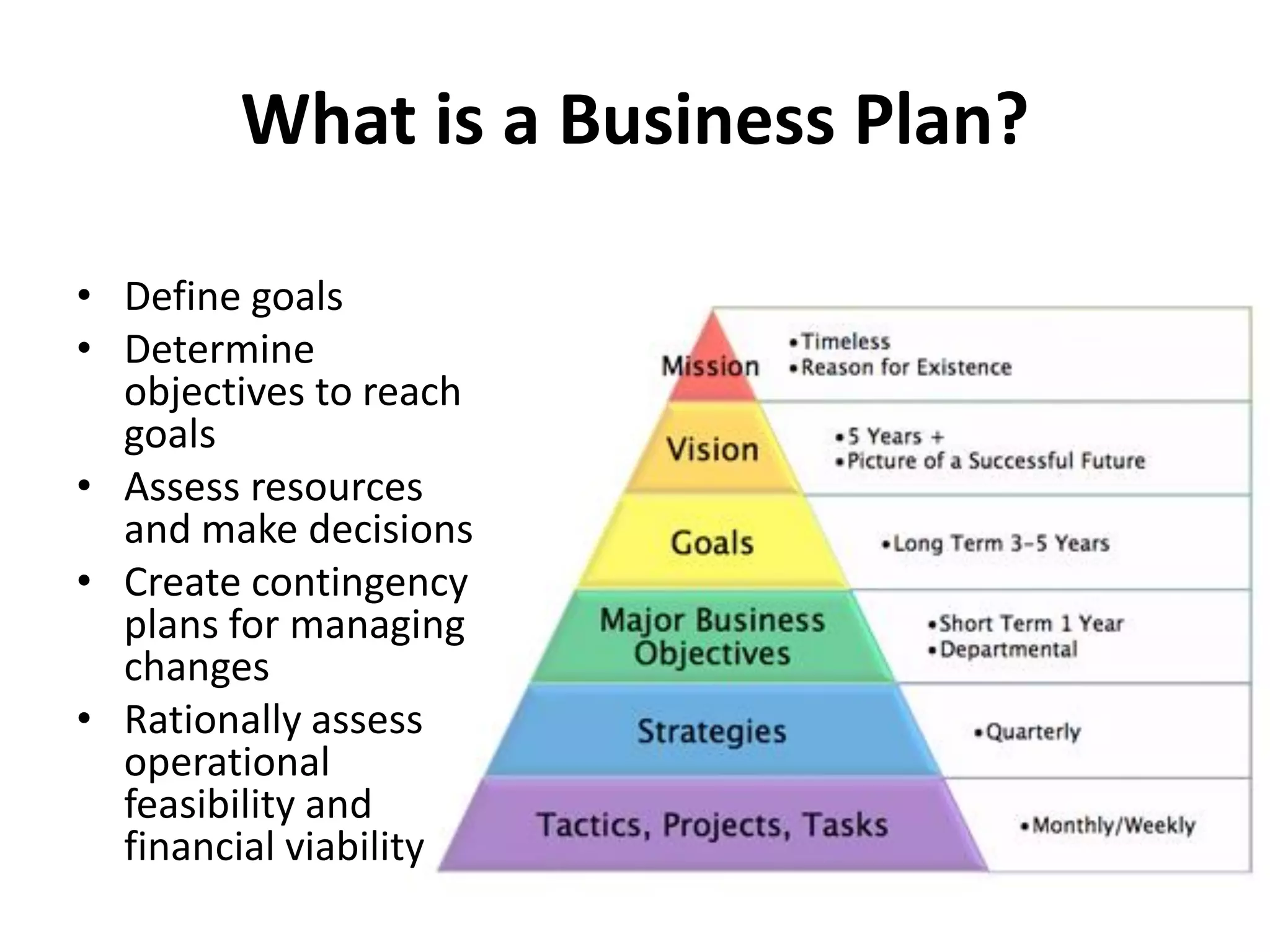
What is a Business Plan?
• Define goals
• Determine
objectives to reach
goals
• Assess resources
and make decisions
• Create contingency
plans for managing
changes
• Rationally assess
operational
feasibility and
financial viability
Reasons for Writing a Plan
To serve as the guide you
will follow throughout the life
of your business
All lenders and investors
require a business plan
A business plan is the key to
conducting business in the
international marketplace
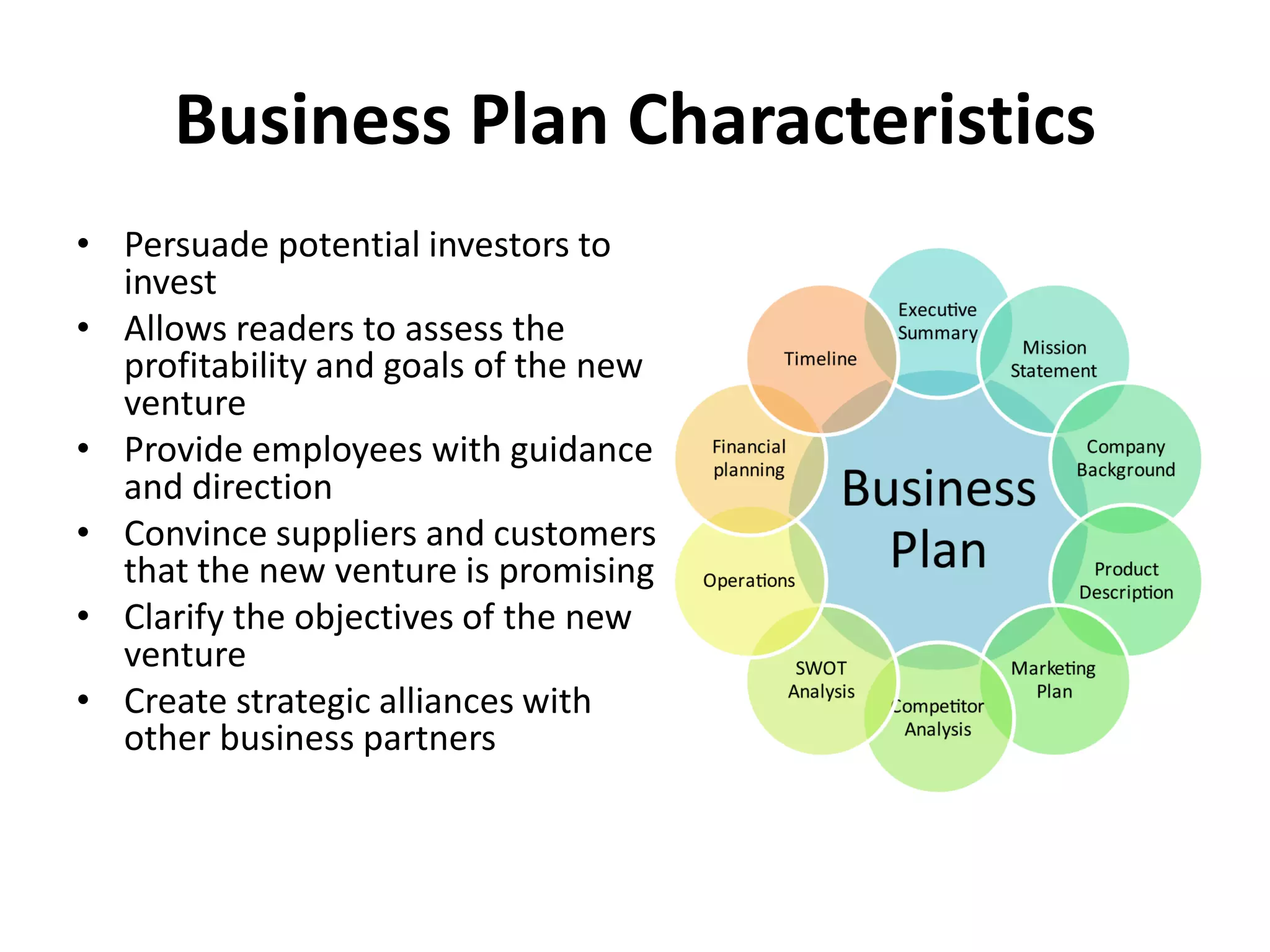
Business Plan Characteristics
• Persuade potential investors to
invest
• Allows readers to assess the
profitability and goals of the new
venture
• Provide employees with guidance
and direction
• Convince suppliers and customers
that the new venture is promising
• Clarify the objectives of the new
venture
• Create strategic alliances with
other business partners
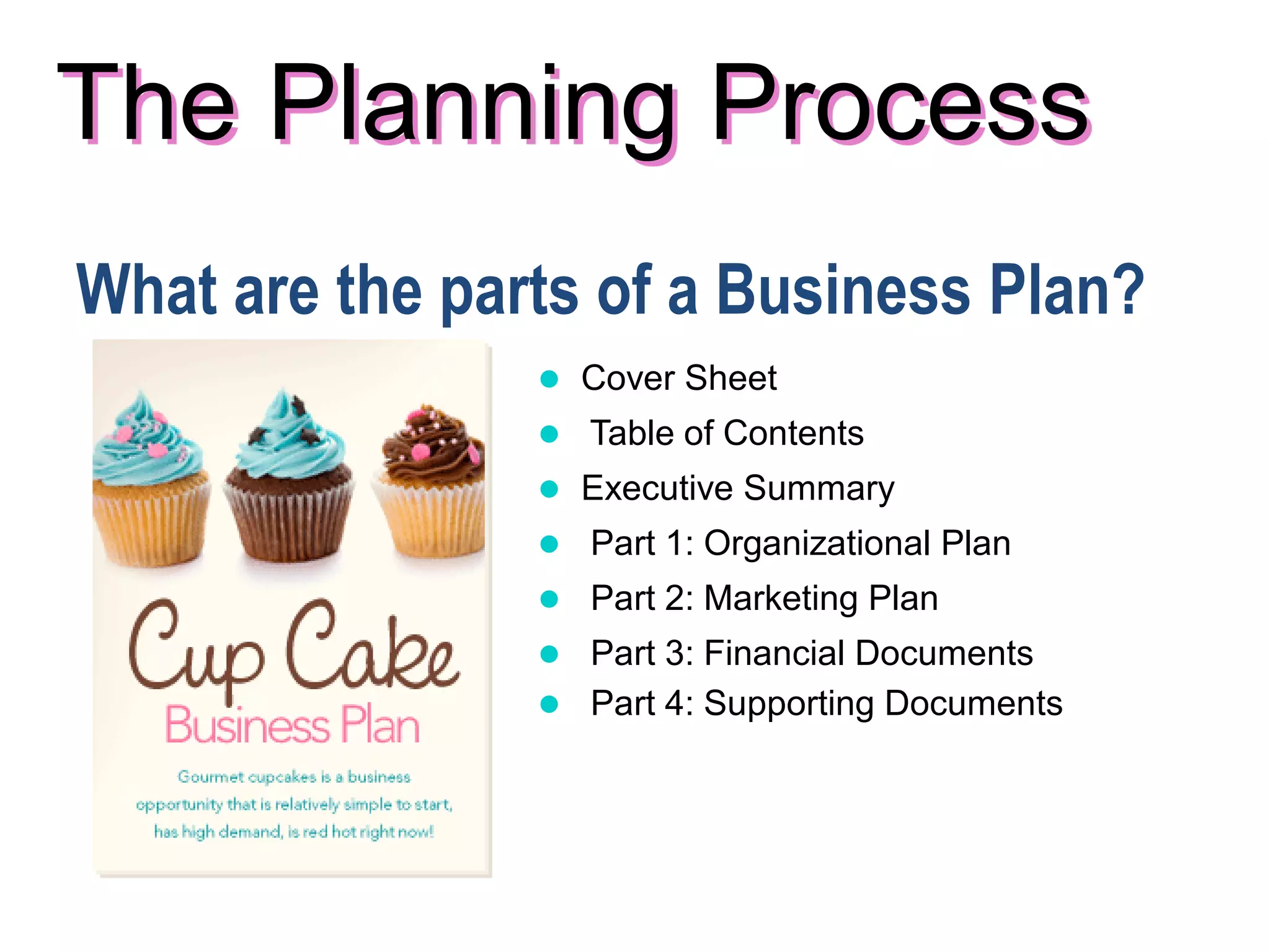
The Planning Process
What are the parts of a Business Plan?
 Cover Sheet
 Table of Contents
 Executive Summary
 Part 1: Organizational Plan
 Part 2: Marketing Plan
 Part 3: Financial Documents
 Part 4: Supporting Documents
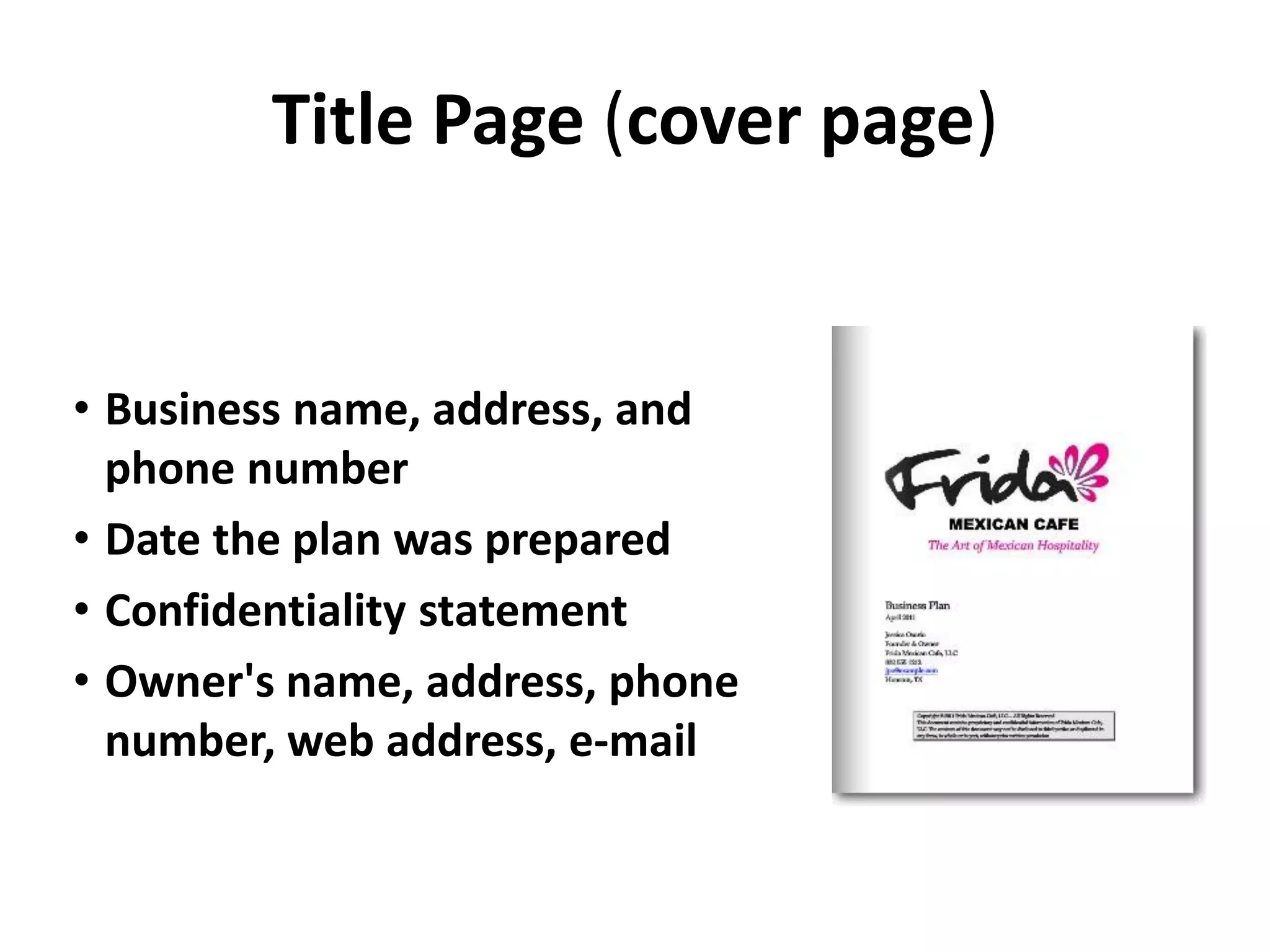
Title Page (cover page)
• Business name, address, and
phone number
• Date the plan was prepared
• Confidentiality statement
• Owner's name, address, phone
number, web address, e-mail
Table of Contents
• List major sections of the
plan and the page number
where each section can be
found.
• This page cannot be
prepared until the plan is
finished.
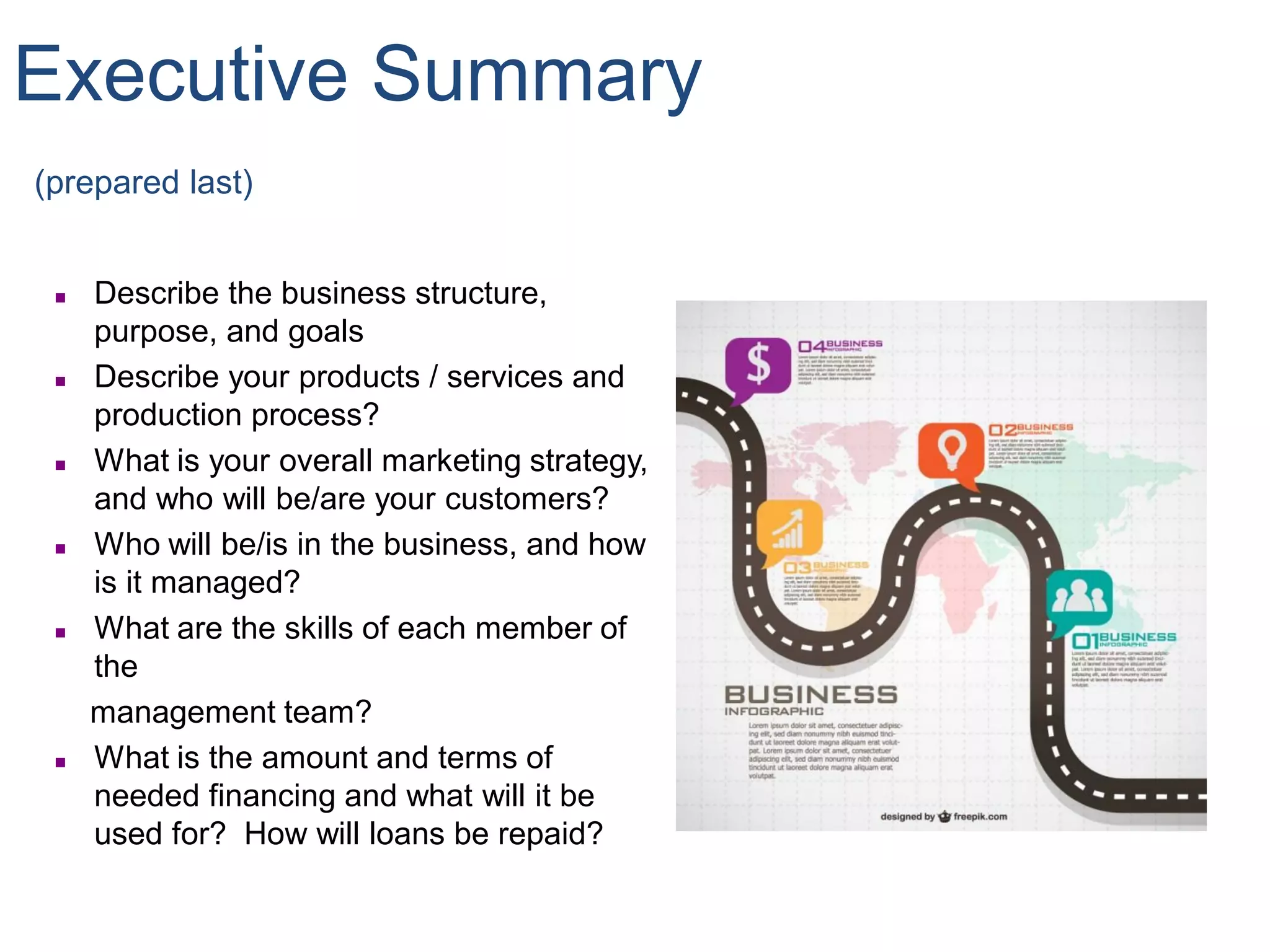
Executive Summary
(prepared last)
 Describe the business structure,
purpose, and goals
 Describe your products / services and
production process?
 What is your overall marketing strategy,
and who will be/are your customers?
 Who will be/is in the business, and how
is it managed?
 What are the skills of each member of
the
management team?
 What is the amount and terms of
needed financing and what will it be
used for? How will loans be repaid?
The Company Profile
• Organization and
Management
• Products or services
The two major topics of the company section:
(The Company)
Organization and Management
• Briefly mention what
the business purpose is
and what you provide
to the customer
• Identify the legal
structure of your
business
– Sole proprietorship
– Partnership
– Corporation
– LLC
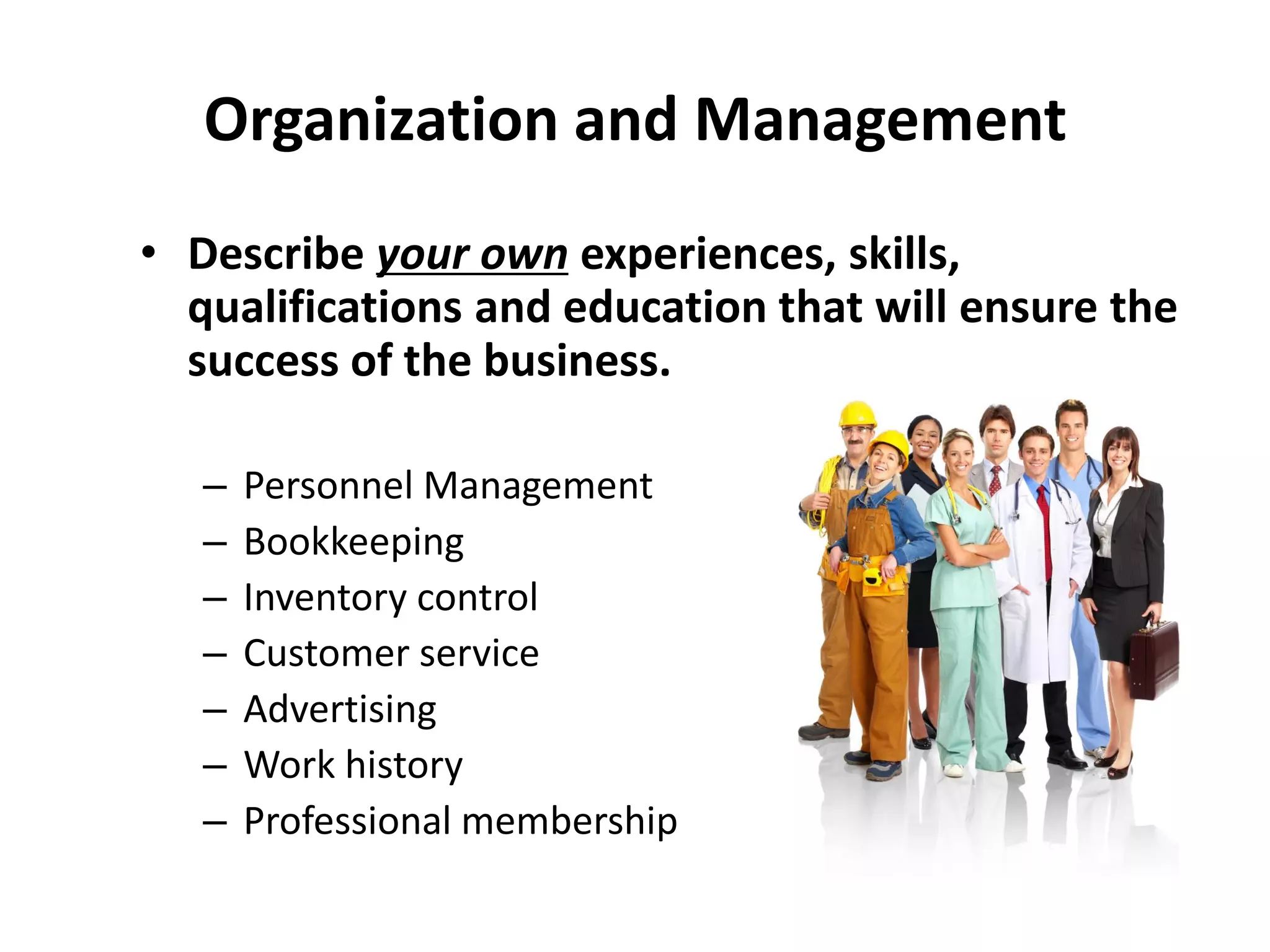
Organization and Management
• Describe your own experiences, skills,
qualifications and education that will ensure the
success of the business.
– Personnel Management
– Bookkeeping
– Inventory control
– Customer service
– Advertising
– Work history
– Professional membership
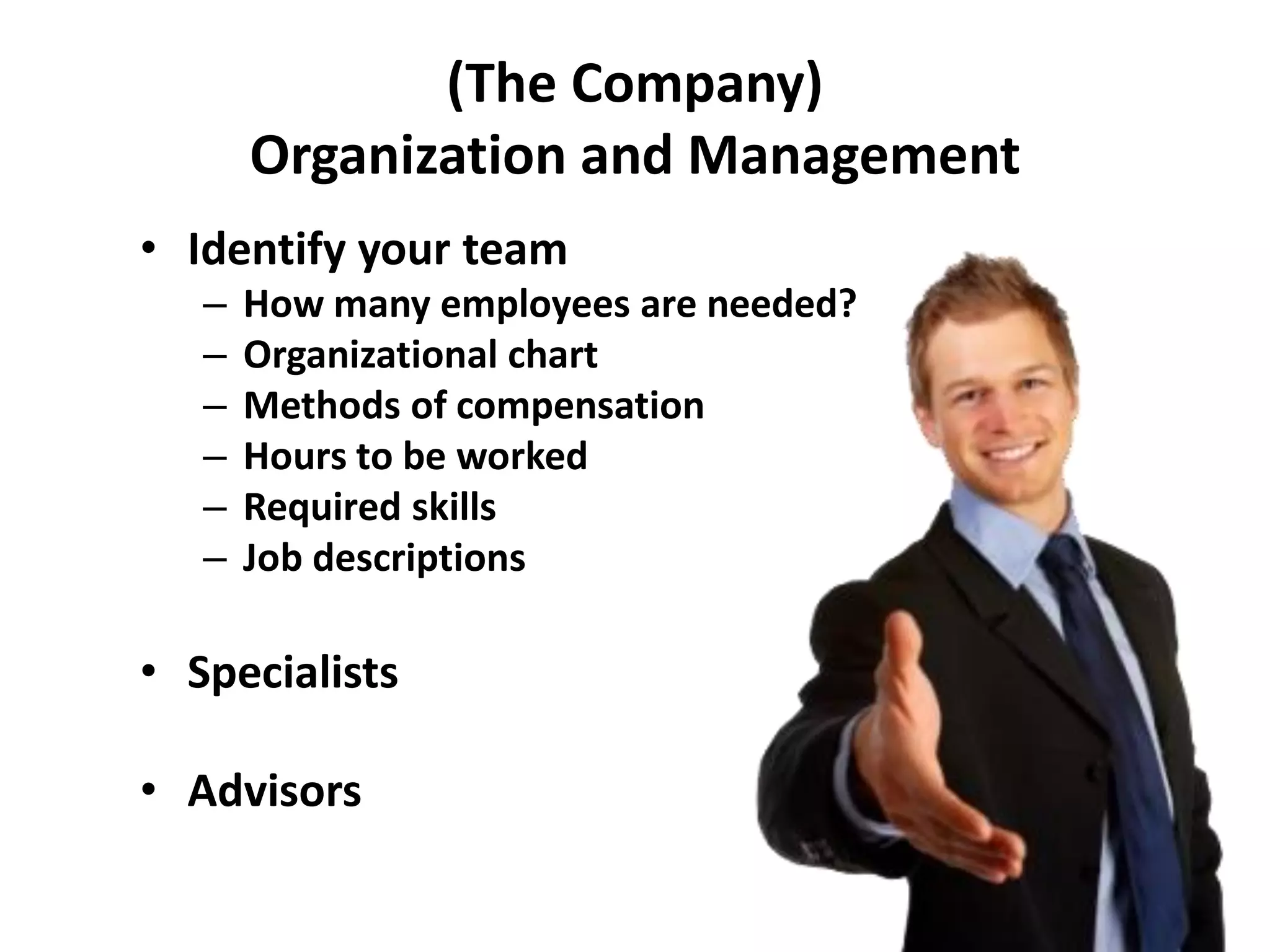
(The Company)
Organization and Management
• Identify your team
– How many employees are needed?
– Organizational chart
– Methods of compensation
– Hours to be worked
– Required skills
– Job descriptions
• Specialists
• Advisors
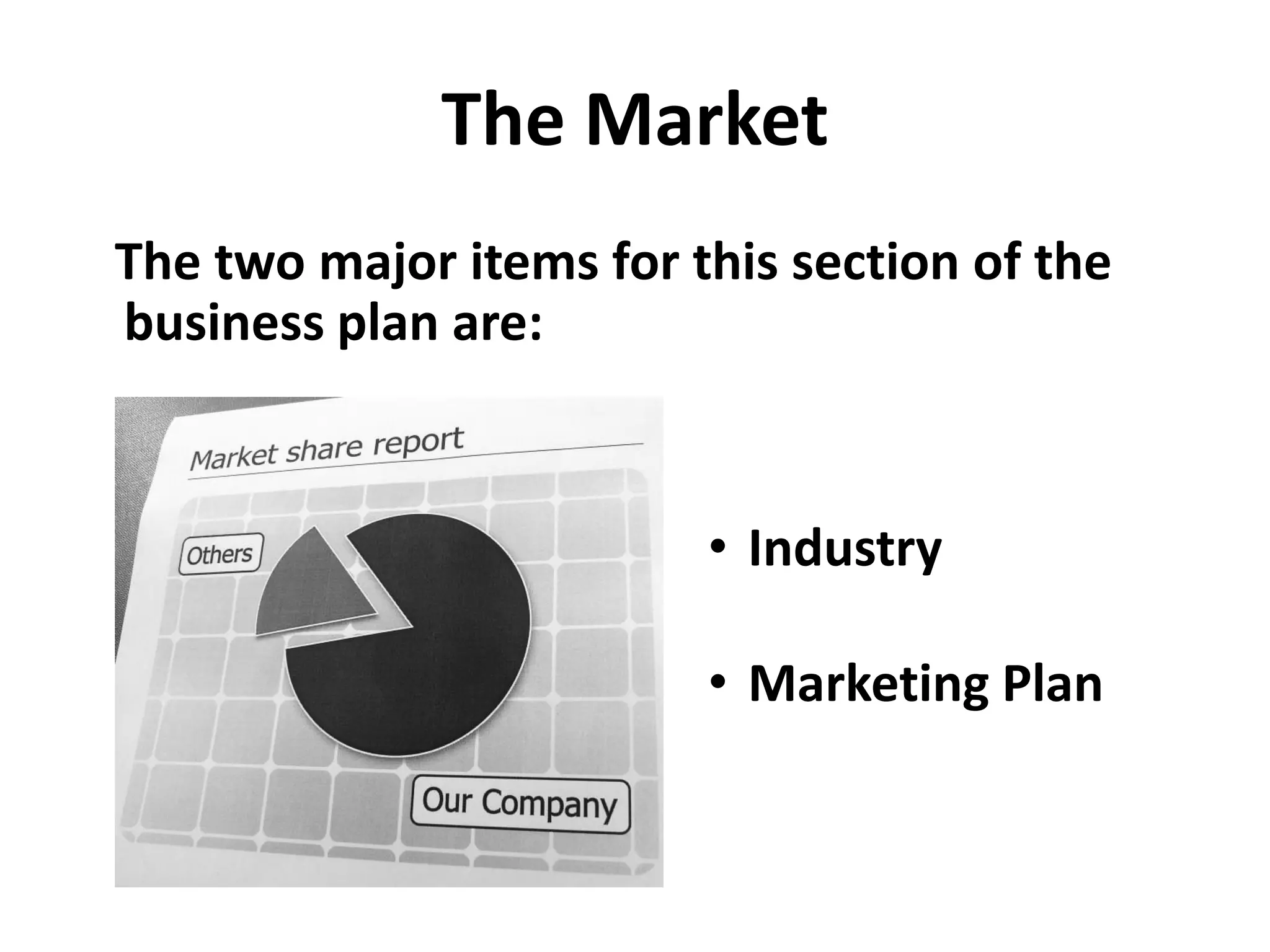
The Market
The two major items for this section of the
business plan are:
• Industry
• Marketing Plan
Part II: Marketing Plan
Overview & Goals of Your Marketing Strategy
Market Analysis:
Target Market, Competition, Industry Trends
Marketing Strategy: Product
Distribution, Packaging, Pricing, Branding,
Database Marketing, Sales Strategies,
Promotions, Advertising Strategies,
Public Relations, Networking
Customer Service
Implementation of Strategy
Assessment of Marketing Effectiveness
(The Market) Marketing plan sections
– Competition
– Customers
– Strategies to meet sales goals
– Market research
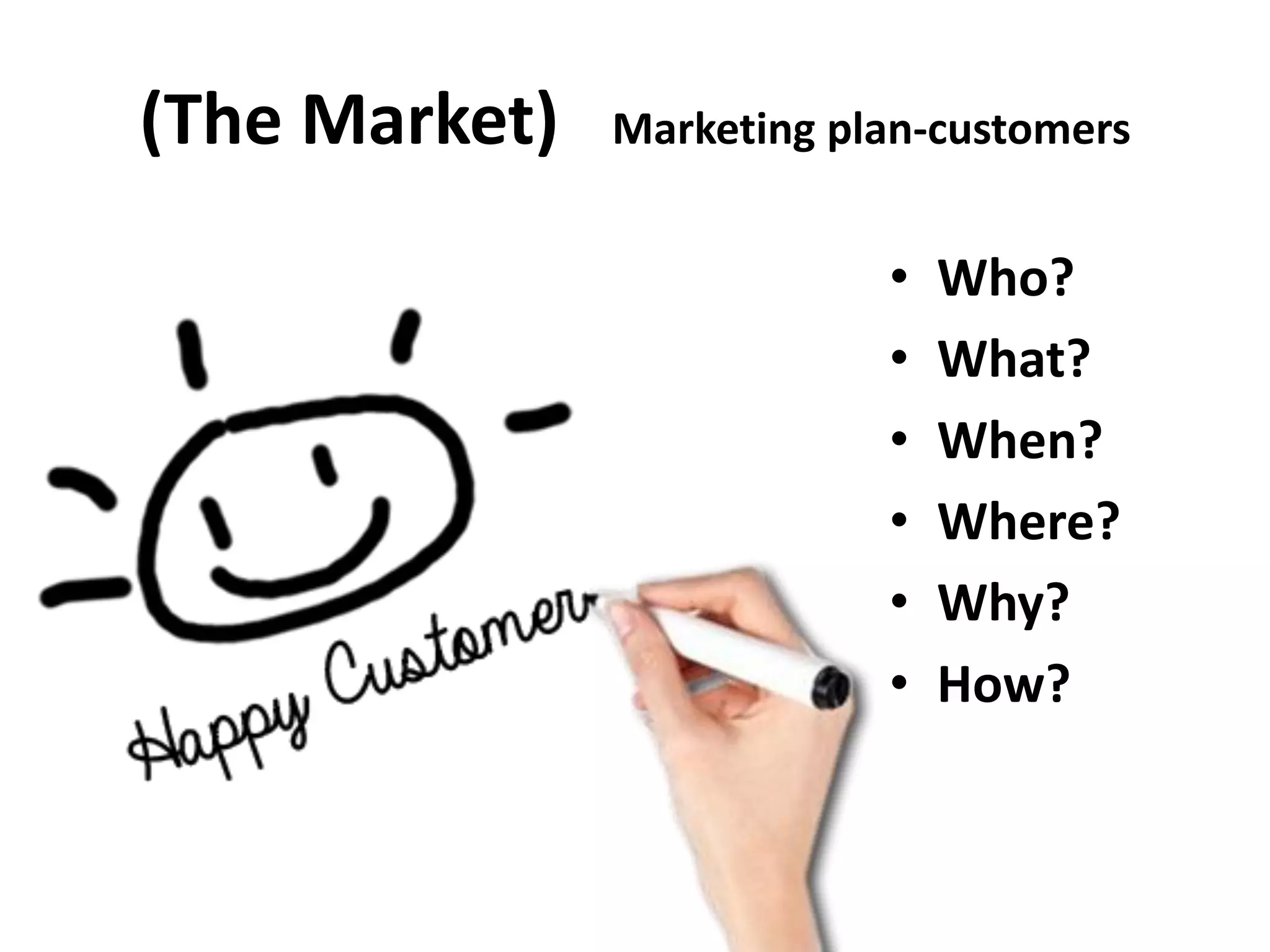
(The Market) Marketing plan-customers
• Who?
• What?
• When?
• Where?
• Why?
• How?
(The Market) Marketing plan- sales strategies
• What is the selling price of the product or service?
How was this determined?
– Quality
– Competition *
– Service provided
– Location
– Your business costs *
– Perceived value to customer
– What the market will allow *
– Profit
(The Market)
Marketing plan- sales strategies
• Promotional activities are determined by your
target customers
– Advertising – newspaper, radio, TV, yellow pages,
billboards, direct mail, flyers, posters, business cards,
website, etc..
– Sales promotions –samples, reduced prices, coupons
and contests.
– Publicity –feature stories, public relations, trade
shows, networking, organizations
The Financial Plan
Major sections include:
• Financial Projections
– Income statements
– Balance sheet
– Cash flow
• Assumptions
• Sources and uses
• Break even analysis
• Contingent liabilities
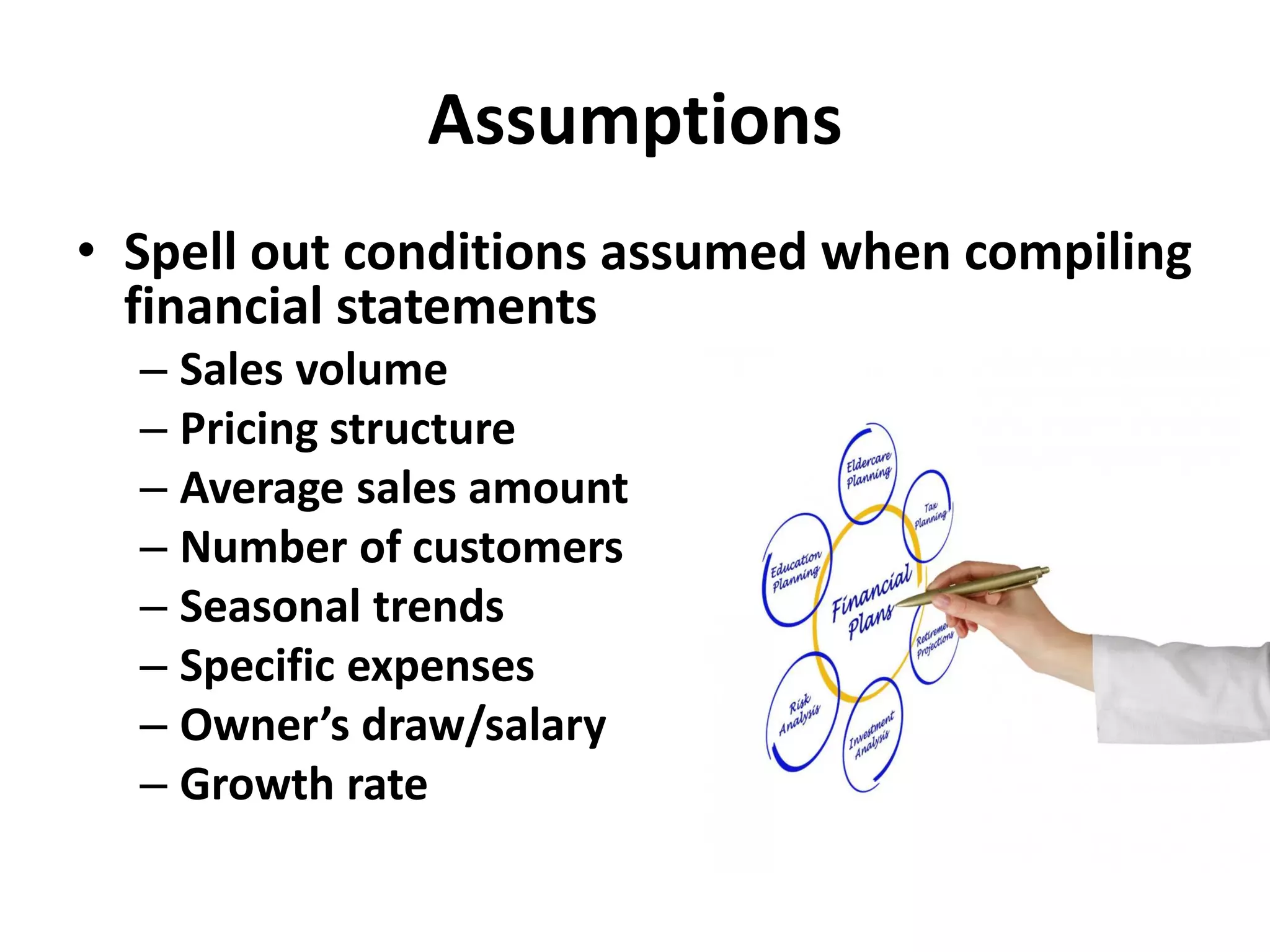
Assumptions
• Spell out conditions assumed when compiling
financial statements
– Sales volume
– Pricing structure
– Average sales amount
– Number of customers
– Seasonal trends
– Specific expenses
– Owner’s draw/salary
– Growth rate
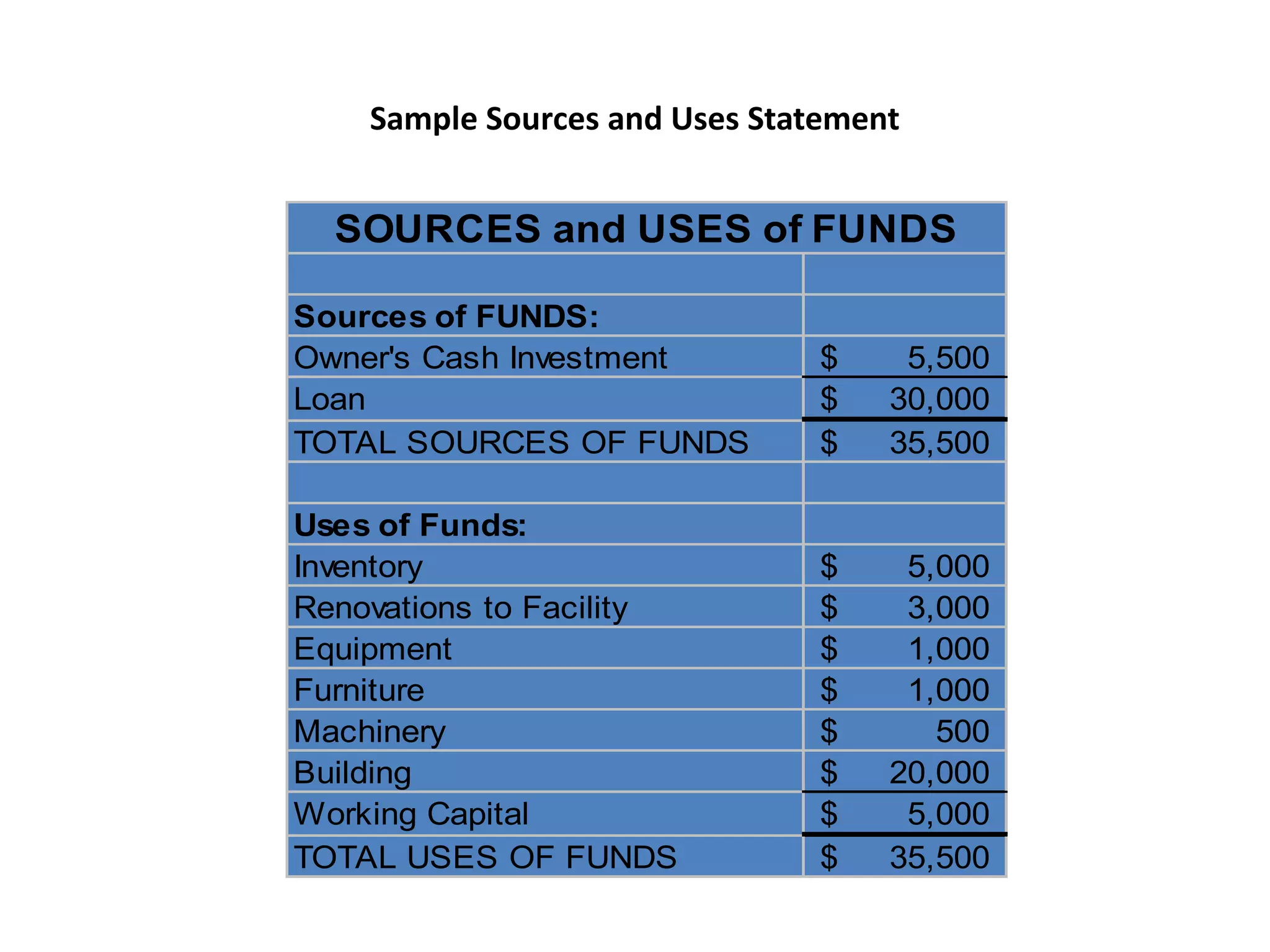
Sample Sources and Uses Statement
Sources of FUNDS:
Owner's Cash Investment 5,500$
Loan 30,000$
TOTAL SOURCES OF FUNDS 35,500$
Uses of Funds:
Inventory 5,000$
Renovations to Facility 3,000$
Equipment 1,000$
Furniture 1,000$
Machinery 500$
Building 20,000$
Working Capital 5,000$
TOTAL USES OF FUNDS 35,500$
SOURCES and USES of FUNDS
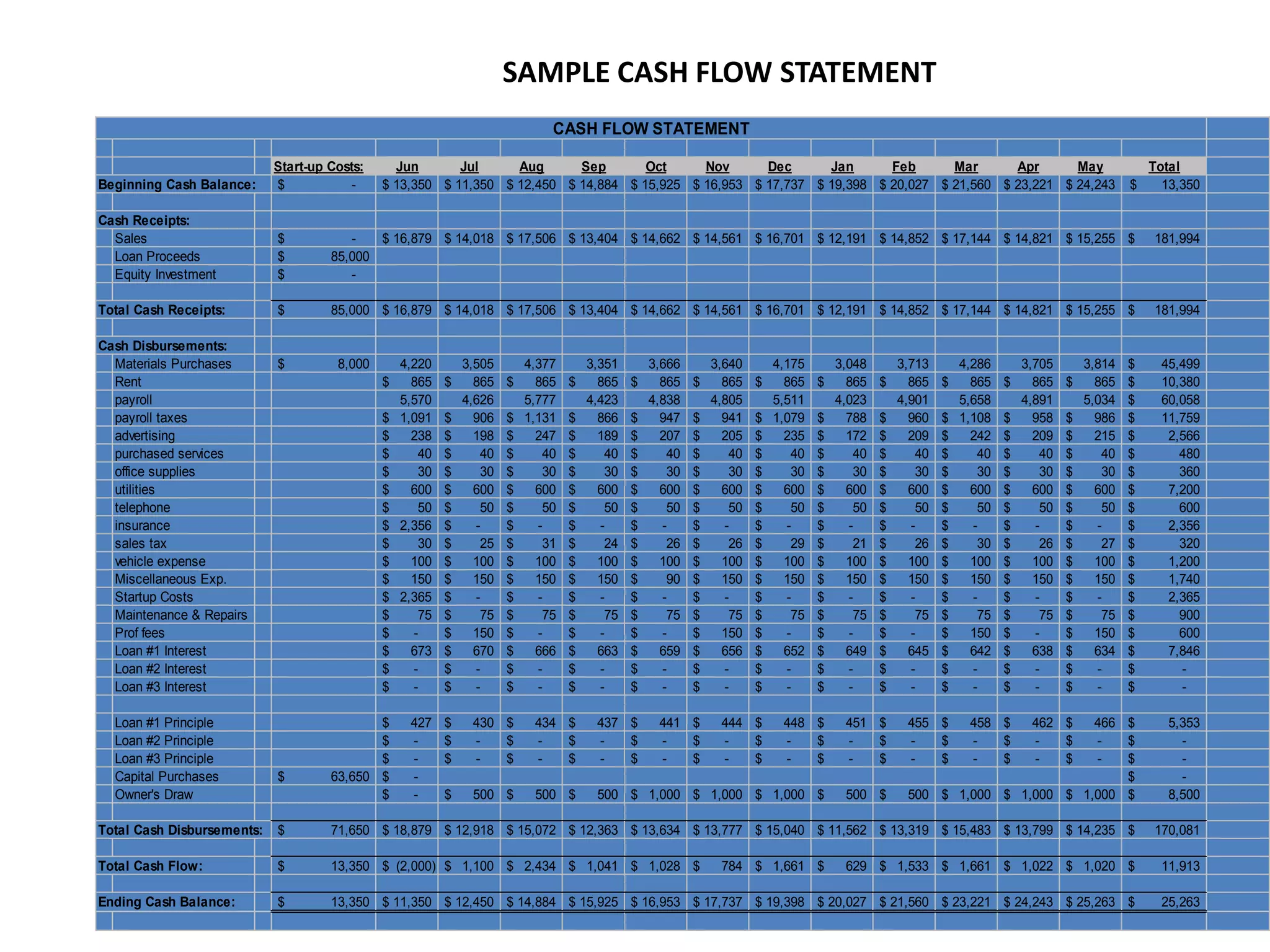
SAMPLE CASH FLOW STATEMENT
Start-up Costs: Jun Jul Aug Sep Oct Nov Dec Jan Feb Mar Apr May Total
Beginning Cash Balance: -$ 13,350$ 11,350$ 12,450$ 14,884$ 15,925$ 16,953$ 17,737$ 19,398$ 20,027$ 21,560$ 23,221$ 24,243$ 13,350$
Cash Receipts:
Sales -$ 16,879$ 14,018$ 17,506$ 13,404$ 14,662$ 14,561$ 16,701$ 12,191$ 14,852$ 17,144$ 14,821$ 15,255$ 181,994$
Loan Proceeds 85,000$
Equity Investment -$
Total Cash Receipts: 85,000$ 16,879$ 14,018$ 17,506$ 13,404$ 14,662$ 14,561$ 16,701$ 12,191$ 14,852$ 17,144$ 14,821$ 15,255$ 181,994$
Cash Disbursements:
Materials Purchases 8,000$ 4,220 3,505 4,377 3,351 3,666 3,640 4,175 3,048 3,713 4,286 3,705 3,814 45,499$
Rent 865$ 865$ 865$ 865$ 865$ 865$ 865$ 865$ 865$ 865$ 865$ 865$ 10,380$
payroll 5,570 4,626 5,777 4,423 4,838 4,805 5,511 4,023 4,901 5,658 4,891 5,034 60,058$
payroll taxes 1,091$ 906$ 1,131$ 866$ 947$ 941$ 1,079$ 788$ 960$ 1,108$ 958$ 986$ 11,759$
advertising 238$ 198$ 247$ 189$ 207$ 205$ 235$ 172$ 209$ 242$ 209$ 215$ 2,566$
purchased services 40$ 40$ 40$ 40$ 40$ 40$ 40$ 40$ 40$ 40$ 40$ 40$ 480$
office supplies 30$ 30$ 30$ 30$ 30$ 30$ 30$ 30$ 30$ 30$ 30$ 30$ 360$
utilities 600$ 600$ 600$ 600$ 600$ 600$ 600$ 600$ 600$ 600$ 600$ 600$ 7,200$
telephone 50$ 50$ 50$ 50$ 50$ 50$ 50$ 50$ 50$ 50$ 50$ 50$ 600$
insurance 2,356$ -$ -$ -$ -$ -$ -$ -$ -$ -$ -$ -$ 2,356$
sales tax 30$ 25$ 31$ 24$ 26$ 26$ 29$ 21$ 26$ 30$ 26$ 27$ 320$
vehicle expense 100$ 100$ 100$ 100$ 100$ 100$ 100$ 100$ 100$ 100$ 100$ 100$ 1,200$
Miscellaneous Exp. 150$ 150$ 150$ 150$ 90$ 150$ 150$ 150$ 150$ 150$ 150$ 150$ 1,740$
Startup Costs 2,365$ -$ -$ -$ -$ -$ -$ -$ -$ -$ -$ -$ 2,365$
Maintenance & Repairs 75$ 75$ 75$ 75$ 75$ 75$ 75$ 75$ 75$ 75$ 75$ 75$ 900$
Prof fees -$ 150$ -$ -$ -$ 150$ -$ -$ -$ 150$ -$ 150$ 600$
Loan #1 Interest 673$ 670$ 666$ 663$ 659$ 656$ 652$ 649$ 645$ 642$ 638$ 634$ 7,846$
Loan #2 Interest -$ -$ -$ -$ -$ -$ -$ -$ -$ -$ -$ -$ -$
Loan #3 Interest -$ -$ -$ -$ -$ -$ -$ -$ -$ -$ -$ -$ -$
Loan #1 Principle 427$ 430$ 434$ 437$ 441$ 444$ 448$ 451$ 455$ 458$ 462$ 466$ 5,353$
Loan #2 Principle -$ -$ -$ -$ -$ -$ -$ -$ -$ -$ -$ -$ -$
Loan #3 Principle -$ -$ -$ -$ -$ -$ -$ -$ -$ -$ -$ -$ -$
Capital Purchases 63,650$ -$ -$
Owner's Draw -$ 500$ 500$ 500$ 1,000$ 1,000$ 1,000$ 500$ 500$ 1,000$ 1,000$ 1,000$ 8,500$
Total Cash Disbursements: 71,650$ 18,879$ 12,918$ 15,072$ 12,363$ 13,634$ 13,777$ 15,040$ 11,562$ 13,319$ 15,483$ 13,799$ 14,235$ 170,081$
Total Cash Flow: 13,350$ (2,000)$ 1,100$ 2,434$ 1,041$ 1,028$ 784$ 1,661$ 629$ 1,533$ 1,661$ 1,022$ 1,020$ 11,913$
Ending Cash Balance: 13,350$ 11,350$ 12,450$ 14,884$ 15,925$ 16,953$ 17,737$ 19,398$ 20,027$ 21,560$ 23,221$ 24,243$ 25,263$ 25,263$
CASH FLOW STATEMENT
Supporting Documents
• Personal resumes
• Personal financial statement
• Supporting documentation
– Market research
– Business documents
– Promotional materials
– Letters of support
– Proprietary protection
– Previous income tax returns
In 2016

How to write business plan

  • 1.
    How to WriteBusiness Planning www.humanikaconsulting.com
  • 2.
    Definition Document that can convincethe reader that the business can produce enough revenue to make a satisfactory profit and therefore attractive as an investment opportunity
  • 3.
    What is aBusiness Plan? • Define goals • Determine objectives to reach goals • Assess resources and make decisions • Create contingency plans for managing changes • Rationally assess operational feasibility and financial viability
  • 4.
    Reasons for Writinga Plan To serve as the guide you will follow throughout the life of your business All lenders and investors require a business plan A business plan is the key to conducting business in the international marketplace
  • 5.
    Business Plan Characteristics •Persuade potential investors to invest • Allows readers to assess the profitability and goals of the new venture • Provide employees with guidance and direction • Convince suppliers and customers that the new venture is promising • Clarify the objectives of the new venture • Create strategic alliances with other business partners
  • 6.
    The Planning Process Whatare the parts of a Business Plan?  Cover Sheet  Table of Contents  Executive Summary  Part 1: Organizational Plan  Part 2: Marketing Plan  Part 3: Financial Documents  Part 4: Supporting Documents
  • 7.
    Title Page (coverpage) • Business name, address, and phone number • Date the plan was prepared • Confidentiality statement • Owner's name, address, phone number, web address, e-mail
  • 8.
    Table of Contents •List major sections of the plan and the page number where each section can be found. • This page cannot be prepared until the plan is finished.
  • 9.
    Executive Summary (prepared last) Describe the business structure, purpose, and goals  Describe your products / services and production process?  What is your overall marketing strategy, and who will be/are your customers?  Who will be/is in the business, and how is it managed?  What are the skills of each member of the management team?  What is the amount and terms of needed financing and what will it be used for? How will loans be repaid?
  • 10.
    The Company Profile •Organization and Management • Products or services The two major topics of the company section:
  • 11.
    (The Company) Organization andManagement • Briefly mention what the business purpose is and what you provide to the customer • Identify the legal structure of your business – Sole proprietorship – Partnership – Corporation – LLC
  • 12.
    Organization and Management •Describe your own experiences, skills, qualifications and education that will ensure the success of the business. – Personnel Management – Bookkeeping – Inventory control – Customer service – Advertising – Work history – Professional membership
  • 13.
    (The Company) Organization andManagement • Identify your team – How many employees are needed? – Organizational chart – Methods of compensation – Hours to be worked – Required skills – Job descriptions • Specialists • Advisors
  • 14.
    The Market The twomajor items for this section of the business plan are: • Industry • Marketing Plan
  • 15.
    Part II: MarketingPlan Overview & Goals of Your Marketing Strategy Market Analysis: Target Market, Competition, Industry Trends Marketing Strategy: Product Distribution, Packaging, Pricing, Branding, Database Marketing, Sales Strategies, Promotions, Advertising Strategies, Public Relations, Networking Customer Service Implementation of Strategy Assessment of Marketing Effectiveness
  • 16.
    (The Market) Marketingplan sections – Competition – Customers – Strategies to meet sales goals – Market research
  • 17.
    (The Market) Marketingplan-customers • Who? • What? • When? • Where? • Why? • How?
  • 18.
    (The Market) Marketingplan- sales strategies • What is the selling price of the product or service? How was this determined? – Quality – Competition * – Service provided – Location – Your business costs * – Perceived value to customer – What the market will allow * – Profit
  • 19.
    (The Market) Marketing plan-sales strategies • Promotional activities are determined by your target customers – Advertising – newspaper, radio, TV, yellow pages, billboards, direct mail, flyers, posters, business cards, website, etc.. – Sales promotions –samples, reduced prices, coupons and contests. – Publicity –feature stories, public relations, trade shows, networking, organizations
  • 20.
    The Financial Plan Majorsections include: • Financial Projections – Income statements – Balance sheet – Cash flow • Assumptions • Sources and uses • Break even analysis • Contingent liabilities
  • 21.
    Assumptions • Spell outconditions assumed when compiling financial statements – Sales volume – Pricing structure – Average sales amount – Number of customers – Seasonal trends – Specific expenses – Owner’s draw/salary – Growth rate
  • 22.
    Sample Sources andUses Statement Sources of FUNDS: Owner's Cash Investment 5,500$ Loan 30,000$ TOTAL SOURCES OF FUNDS 35,500$ Uses of Funds: Inventory 5,000$ Renovations to Facility 3,000$ Equipment 1,000$ Furniture 1,000$ Machinery 500$ Building 20,000$ Working Capital 5,000$ TOTAL USES OF FUNDS 35,500$ SOURCES and USES of FUNDS
  • 23.
    SAMPLE CASH FLOWSTATEMENT Start-up Costs: Jun Jul Aug Sep Oct Nov Dec Jan Feb Mar Apr May Total Beginning Cash Balance: -$ 13,350$ 11,350$ 12,450$ 14,884$ 15,925$ 16,953$ 17,737$ 19,398$ 20,027$ 21,560$ 23,221$ 24,243$ 13,350$ Cash Receipts: Sales -$ 16,879$ 14,018$ 17,506$ 13,404$ 14,662$ 14,561$ 16,701$ 12,191$ 14,852$ 17,144$ 14,821$ 15,255$ 181,994$ Loan Proceeds 85,000$ Equity Investment -$ Total Cash Receipts: 85,000$ 16,879$ 14,018$ 17,506$ 13,404$ 14,662$ 14,561$ 16,701$ 12,191$ 14,852$ 17,144$ 14,821$ 15,255$ 181,994$ Cash Disbursements: Materials Purchases 8,000$ 4,220 3,505 4,377 3,351 3,666 3,640 4,175 3,048 3,713 4,286 3,705 3,814 45,499$ Rent 865$ 865$ 865$ 865$ 865$ 865$ 865$ 865$ 865$ 865$ 865$ 865$ 10,380$ payroll 5,570 4,626 5,777 4,423 4,838 4,805 5,511 4,023 4,901 5,658 4,891 5,034 60,058$ payroll taxes 1,091$ 906$ 1,131$ 866$ 947$ 941$ 1,079$ 788$ 960$ 1,108$ 958$ 986$ 11,759$ advertising 238$ 198$ 247$ 189$ 207$ 205$ 235$ 172$ 209$ 242$ 209$ 215$ 2,566$ purchased services 40$ 40$ 40$ 40$ 40$ 40$ 40$ 40$ 40$ 40$ 40$ 40$ 480$ office supplies 30$ 30$ 30$ 30$ 30$ 30$ 30$ 30$ 30$ 30$ 30$ 30$ 360$ utilities 600$ 600$ 600$ 600$ 600$ 600$ 600$ 600$ 600$ 600$ 600$ 600$ 7,200$ telephone 50$ 50$ 50$ 50$ 50$ 50$ 50$ 50$ 50$ 50$ 50$ 50$ 600$ insurance 2,356$ -$ -$ -$ -$ -$ -$ -$ -$ -$ -$ -$ 2,356$ sales tax 30$ 25$ 31$ 24$ 26$ 26$ 29$ 21$ 26$ 30$ 26$ 27$ 320$ vehicle expense 100$ 100$ 100$ 100$ 100$ 100$ 100$ 100$ 100$ 100$ 100$ 100$ 1,200$ Miscellaneous Exp. 150$ 150$ 150$ 150$ 90$ 150$ 150$ 150$ 150$ 150$ 150$ 150$ 1,740$ Startup Costs 2,365$ -$ -$ -$ -$ -$ -$ -$ -$ -$ -$ -$ 2,365$ Maintenance & Repairs 75$ 75$ 75$ 75$ 75$ 75$ 75$ 75$ 75$ 75$ 75$ 75$ 900$ Prof fees -$ 150$ -$ -$ -$ 150$ -$ -$ -$ 150$ -$ 150$ 600$ Loan #1 Interest 673$ 670$ 666$ 663$ 659$ 656$ 652$ 649$ 645$ 642$ 638$ 634$ 7,846$ Loan #2 Interest -$ -$ -$ -$ -$ -$ -$ -$ -$ -$ -$ -$ -$ Loan #3 Interest -$ -$ -$ -$ -$ -$ -$ -$ -$ -$ -$ -$ -$ Loan #1 Principle 427$ 430$ 434$ 437$ 441$ 444$ 448$ 451$ 455$ 458$ 462$ 466$ 5,353$ Loan #2 Principle -$ -$ -$ -$ -$ -$ -$ -$ -$ -$ -$ -$ -$ Loan #3 Principle -$ -$ -$ -$ -$ -$ -$ -$ -$ -$ -$ -$ -$ Capital Purchases 63,650$ -$ -$ Owner's Draw -$ 500$ 500$ 500$ 1,000$ 1,000$ 1,000$ 500$ 500$ 1,000$ 1,000$ 1,000$ 8,500$ Total Cash Disbursements: 71,650$ 18,879$ 12,918$ 15,072$ 12,363$ 13,634$ 13,777$ 15,040$ 11,562$ 13,319$ 15,483$ 13,799$ 14,235$ 170,081$ Total Cash Flow: 13,350$ (2,000)$ 1,100$ 2,434$ 1,041$ 1,028$ 784$ 1,661$ 629$ 1,533$ 1,661$ 1,022$ 1,020$ 11,913$ Ending Cash Balance: 13,350$ 11,350$ 12,450$ 14,884$ 15,925$ 16,953$ 17,737$ 19,398$ 20,027$ 21,560$ 23,221$ 24,243$ 25,263$ 25,263$ CASH FLOW STATEMENT
  • 24.
    Supporting Documents • Personalresumes • Personal financial statement • Supporting documentation – Market research – Business documents – Promotional materials – Letters of support – Proprietary protection – Previous income tax returns
  • 25.