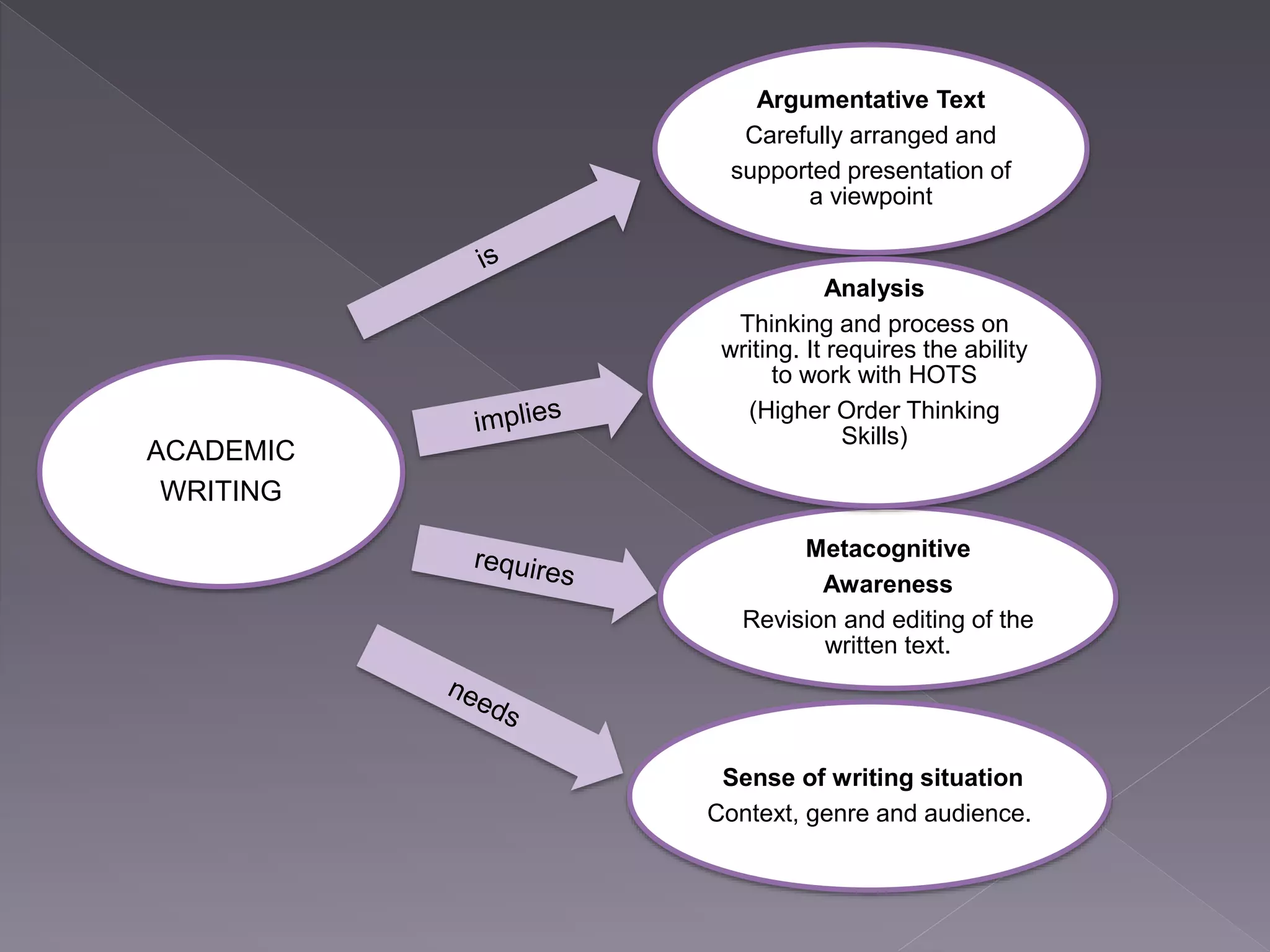
ACADEMIC
WRITING
Argumentative Text
Carefully arranged and
supported presentation of
a viewpoint
Sense of writing situation
Context, genre and audience.
Metacognitive
Awareness
Revision and editing of the
written text.
Analysis
Thinking and process on
writing. It requires the ability
to work with HOTS
(Higher Order Thinking
Skills)
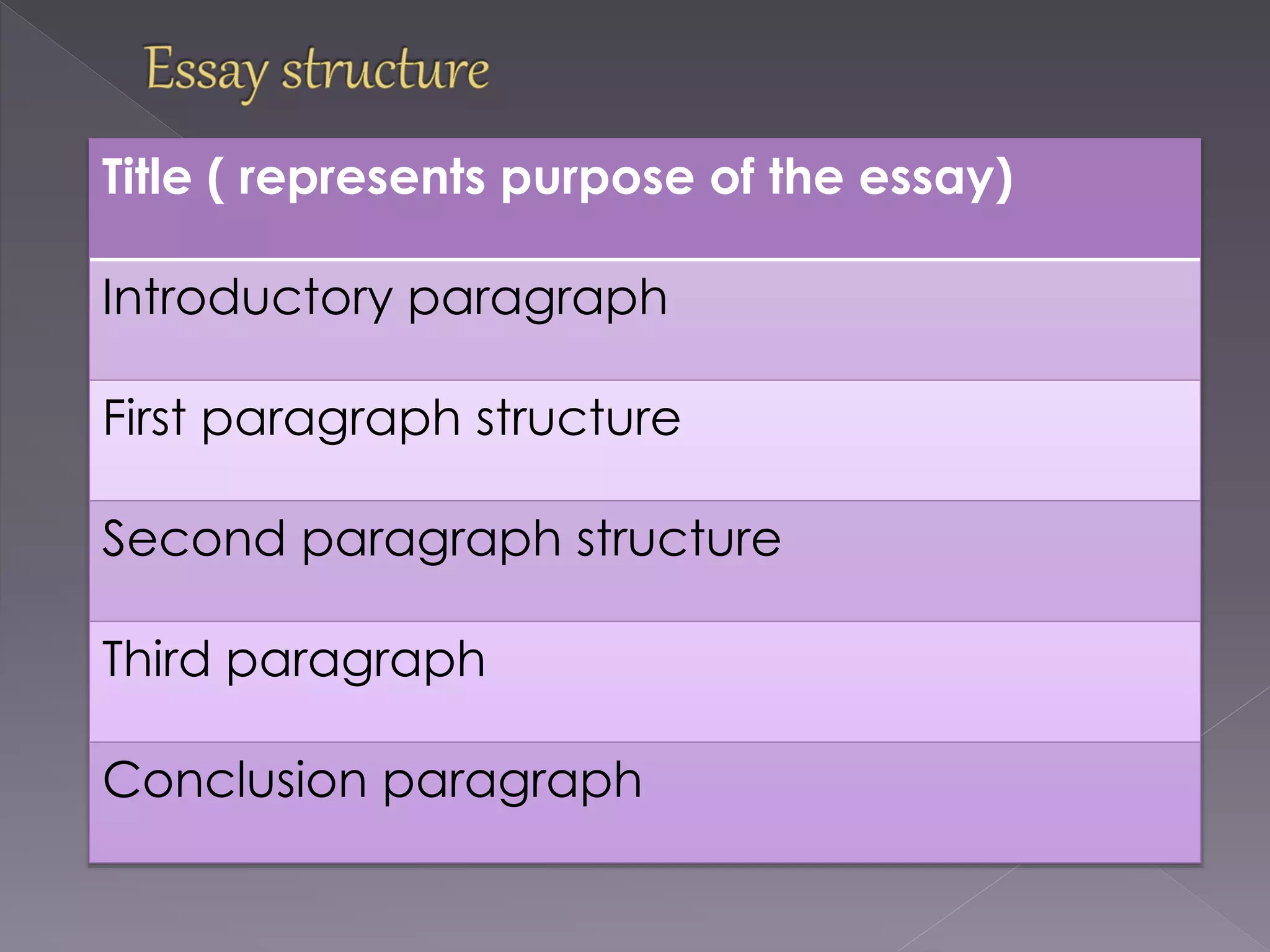
Title ( represents purpose of the essay)
Introductory paragraph
First paragraph structure
Second paragraph structure
Third paragraph
Conclusion paragraph
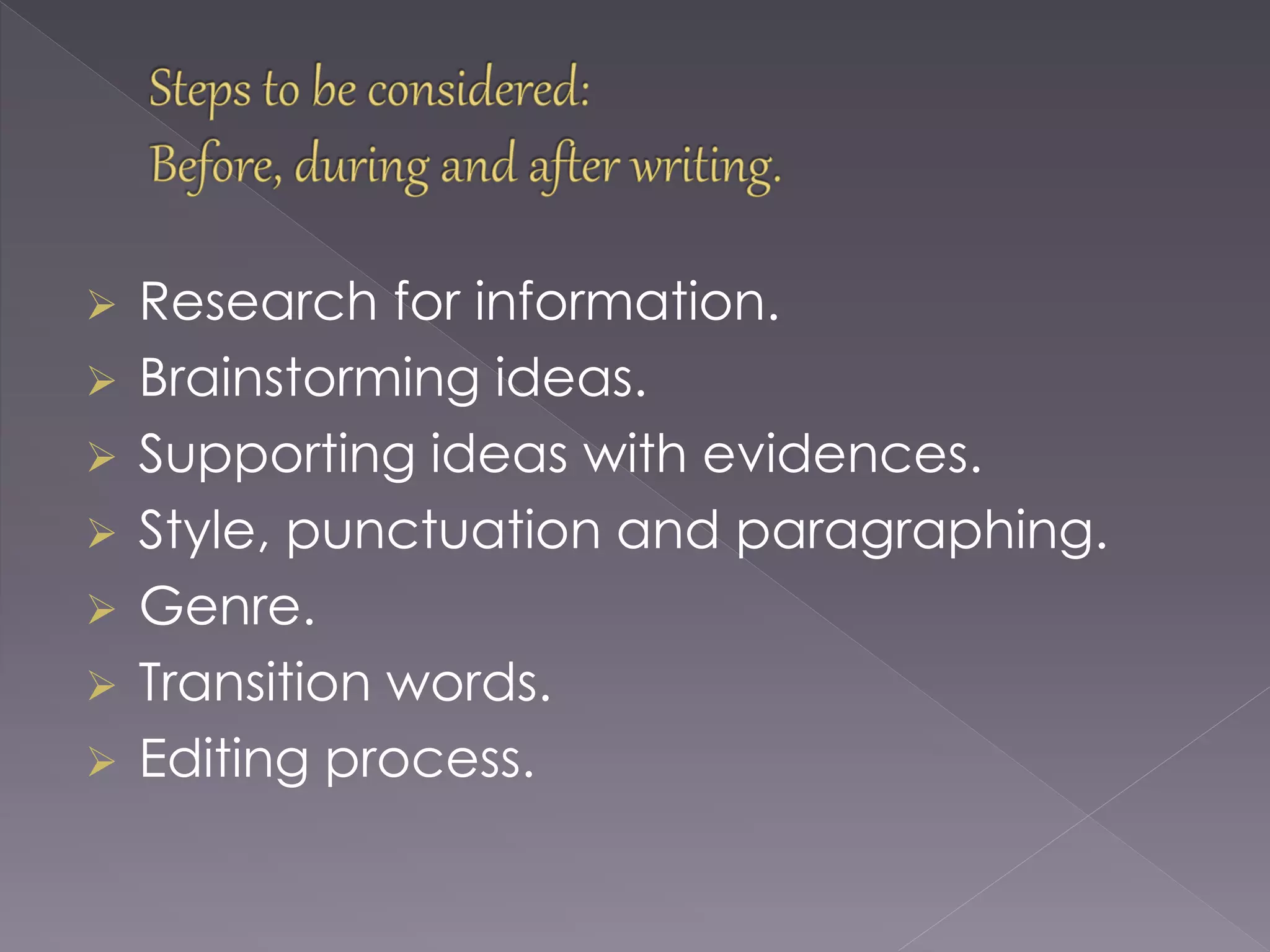
 Research for information.
 Brainstorming ideas.
 Supporting ideas with evidences.
 Style, punctuation and paragraphing.
 Genre.
 Transition words.
 Editing process.
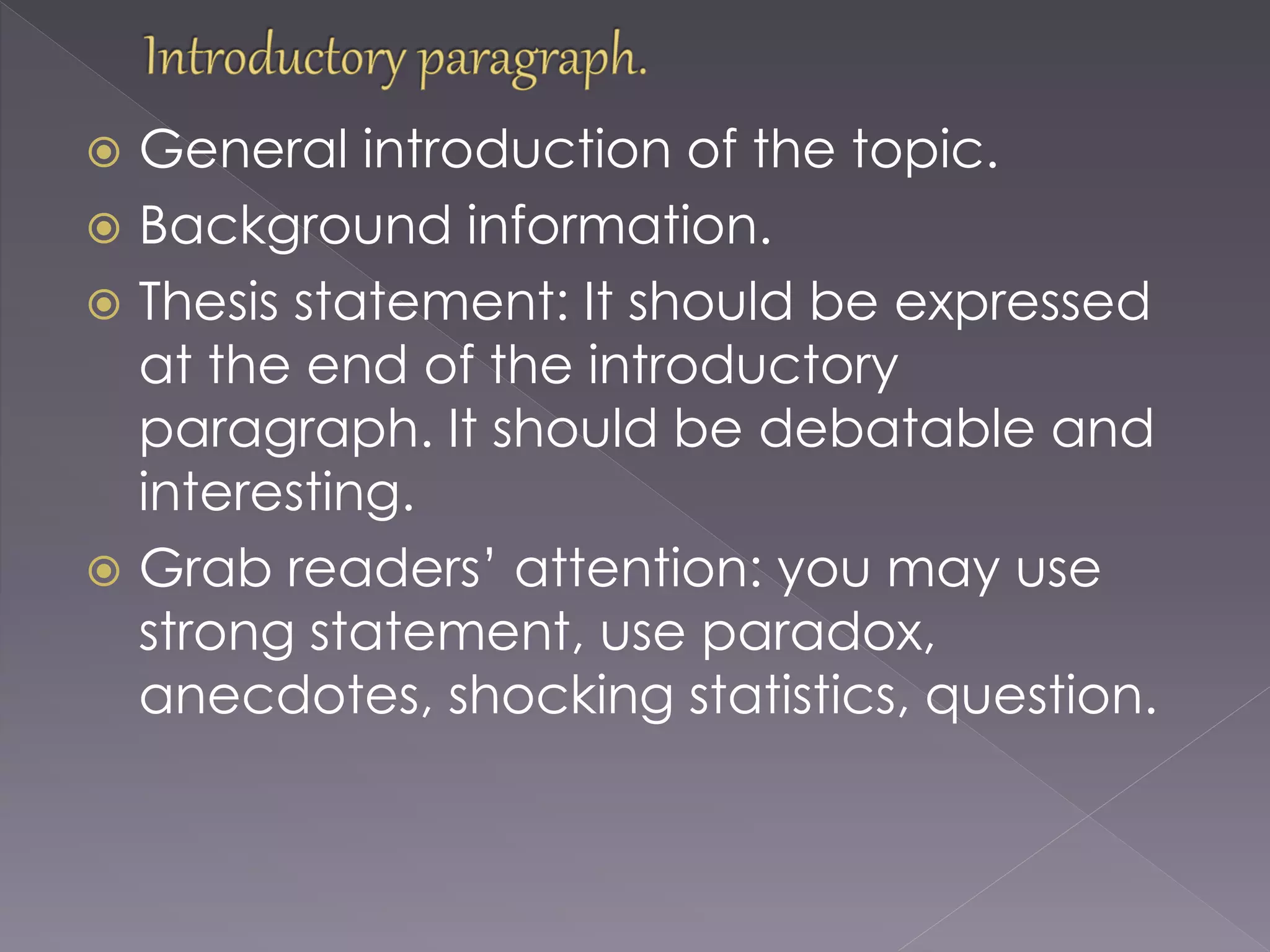
 General introduction of the topic.
 Background information.
 Thesis statement: It should be expressed
at the end of the introductory
paragraph. It should be debatable and
interesting.
 Grab readers’ attention: you may use
strong statement, use paradox,
anecdotes, shocking statistics, question.
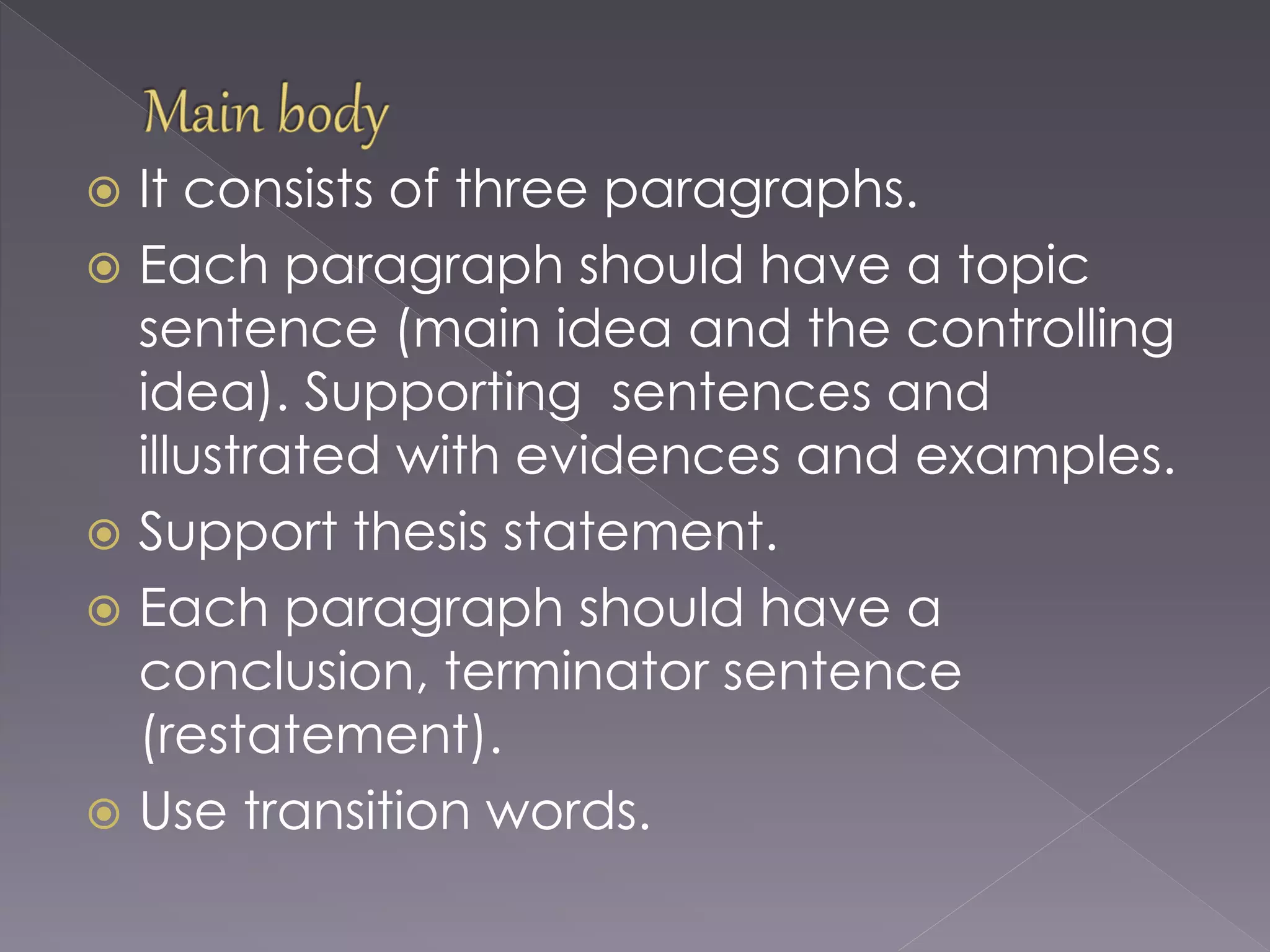
 It consists of three paragraphs.
 Each paragraph should have a topic
sentence (main idea and the controlling
idea). Supporting sentences and
illustrated with evidences and examples.
 Support thesis statement.
 Each paragraph should have a
conclusion, terminator sentence
(restatement).
 Use transition words.
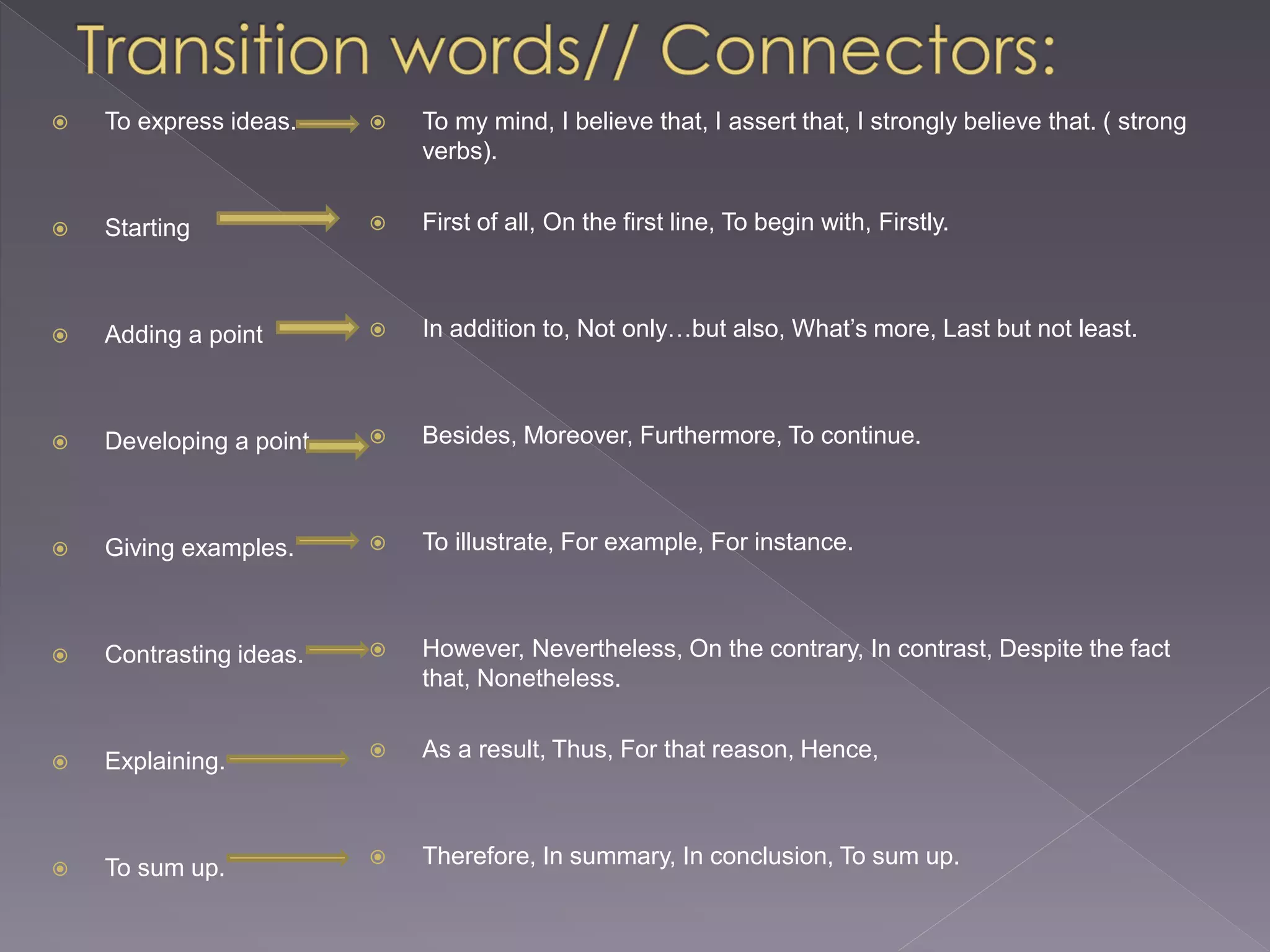
 To express ideas.
 Starting
 Adding a point
 Developing a point.
 Giving examples.
 Contrasting ideas.
 Explaining.
 To sum up.
 To my mind, I believe that, I assert that, I strongly believe that. ( strong
verbs).
 First of all, On the first line, To begin with, Firstly.
 In addition to, Not only…but also, What’s more, Last but not least.
 Besides, Moreover, Furthermore, To continue.
 To illustrate, For example, For instance.
 However, Nevertheless, On the contrary, In contrast, Despite the fact
that, Nonetheless.
 As a result, Thus, For that reason, Hence,
 Therefore, In summary, In conclusion, To sum up.
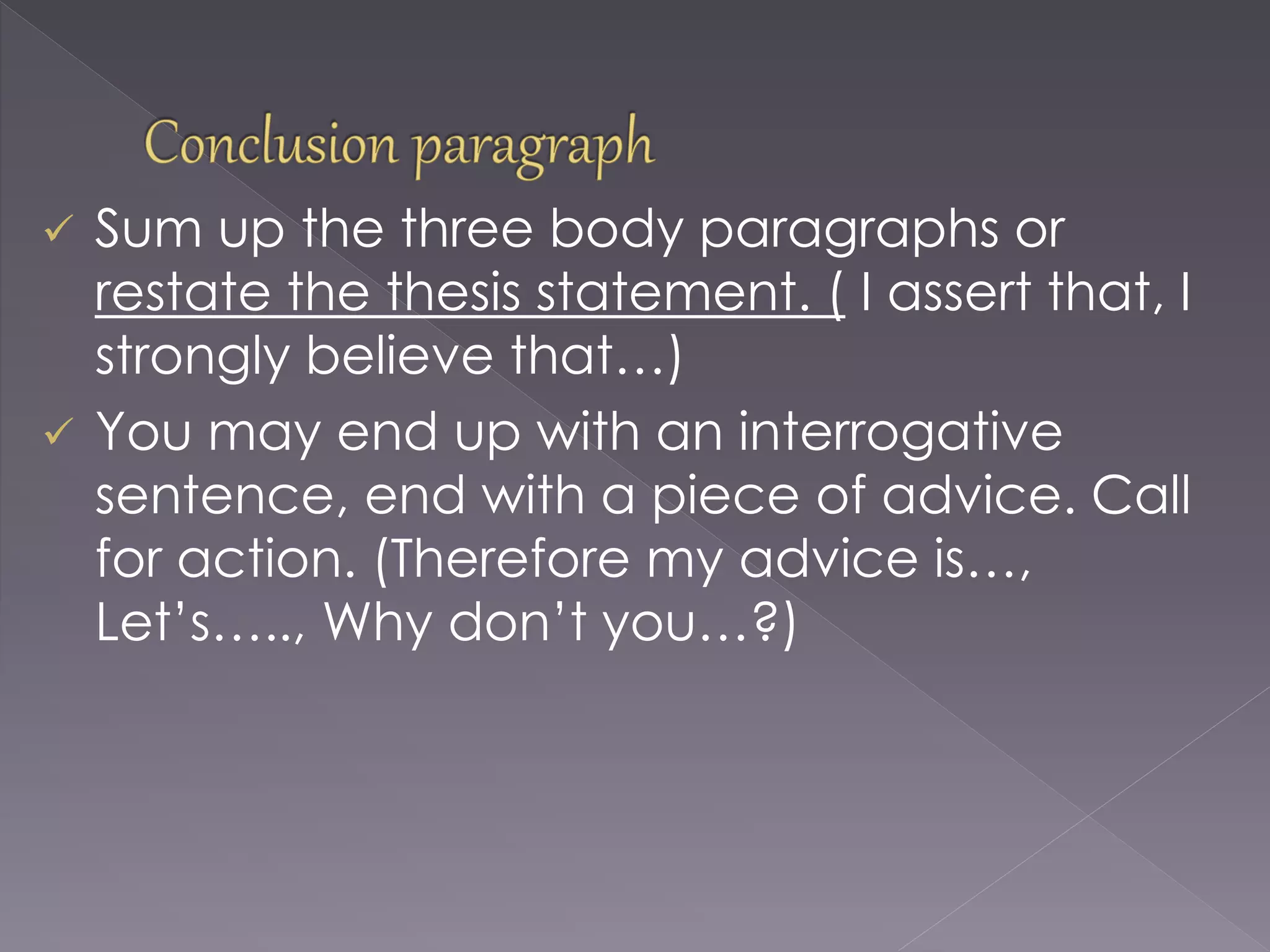
 Sum up the three body paragraphs or
restate the thesis statement. ( I assert that, I
strongly believe that…)
 You may end up with an interrogative
sentence, end with a piece of advice. Call
for action. (Therefore my advice is…,
Let’s….., Why don’t you…?)
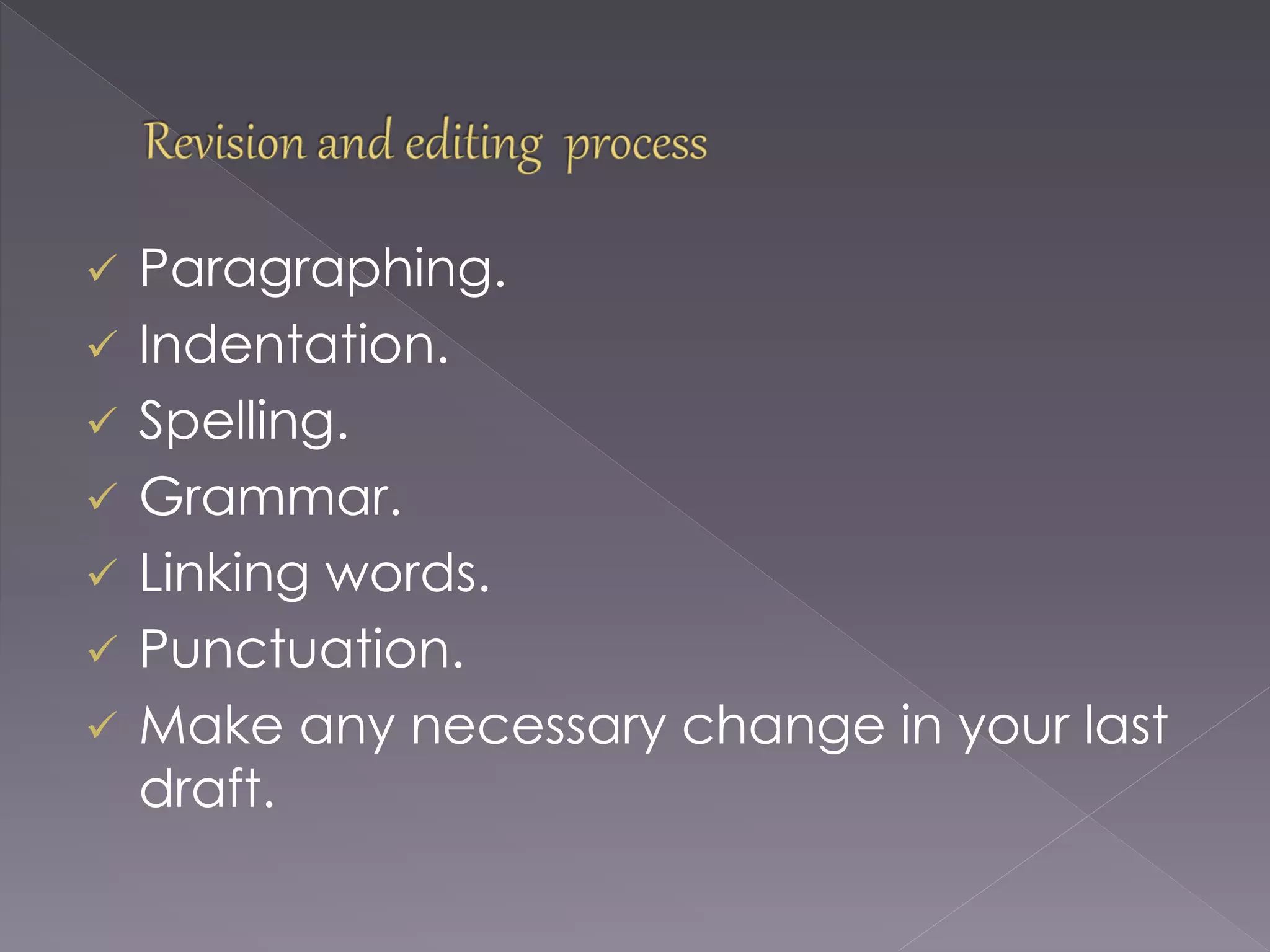
 Paragraphing.
 Indentation.
 Spelling.
 Grammar.
 Linking words.
 Punctuation.
 Make any necessary change in your last
draft.

How to write an academic writing

  • 2.
    ACADEMIC WRITING Argumentative Text Carefully arrangedand supported presentation of a viewpoint Sense of writing situation Context, genre and audience. Metacognitive Awareness Revision and editing of the written text. Analysis Thinking and process on writing. It requires the ability to work with HOTS (Higher Order Thinking Skills)
  • 3.
    Title ( representspurpose of the essay) Introductory paragraph First paragraph structure Second paragraph structure Third paragraph Conclusion paragraph
  • 4.
     Research forinformation.  Brainstorming ideas.  Supporting ideas with evidences.  Style, punctuation and paragraphing.  Genre.  Transition words.  Editing process.
  • 5.
     General introductionof the topic.  Background information.  Thesis statement: It should be expressed at the end of the introductory paragraph. It should be debatable and interesting.  Grab readers’ attention: you may use strong statement, use paradox, anecdotes, shocking statistics, question.
  • 6.
     It consistsof three paragraphs.  Each paragraph should have a topic sentence (main idea and the controlling idea). Supporting sentences and illustrated with evidences and examples.  Support thesis statement.  Each paragraph should have a conclusion, terminator sentence (restatement).  Use transition words.
  • 7.
     To expressideas.  Starting  Adding a point  Developing a point.  Giving examples.  Contrasting ideas.  Explaining.  To sum up.  To my mind, I believe that, I assert that, I strongly believe that. ( strong verbs).  First of all, On the first line, To begin with, Firstly.  In addition to, Not only…but also, What’s more, Last but not least.  Besides, Moreover, Furthermore, To continue.  To illustrate, For example, For instance.  However, Nevertheless, On the contrary, In contrast, Despite the fact that, Nonetheless.  As a result, Thus, For that reason, Hence,  Therefore, In summary, In conclusion, To sum up.
  • 8.
     Sum upthe three body paragraphs or restate the thesis statement. ( I assert that, I strongly believe that…)  You may end up with an interrogative sentence, end with a piece of advice. Call for action. (Therefore my advice is…, Let’s….., Why don’t you…?)
  • 9.
     Paragraphing.  Indentation. Spelling.  Grammar.  Linking words.  Punctuation.  Make any necessary change in your last draft.