Social network
amplification
for
social media
Maximizing earned social media through targeted influencer engagement
https://giphy.com/gifs/satisfying-starlings-murmuration-eZYz372UA5oeA
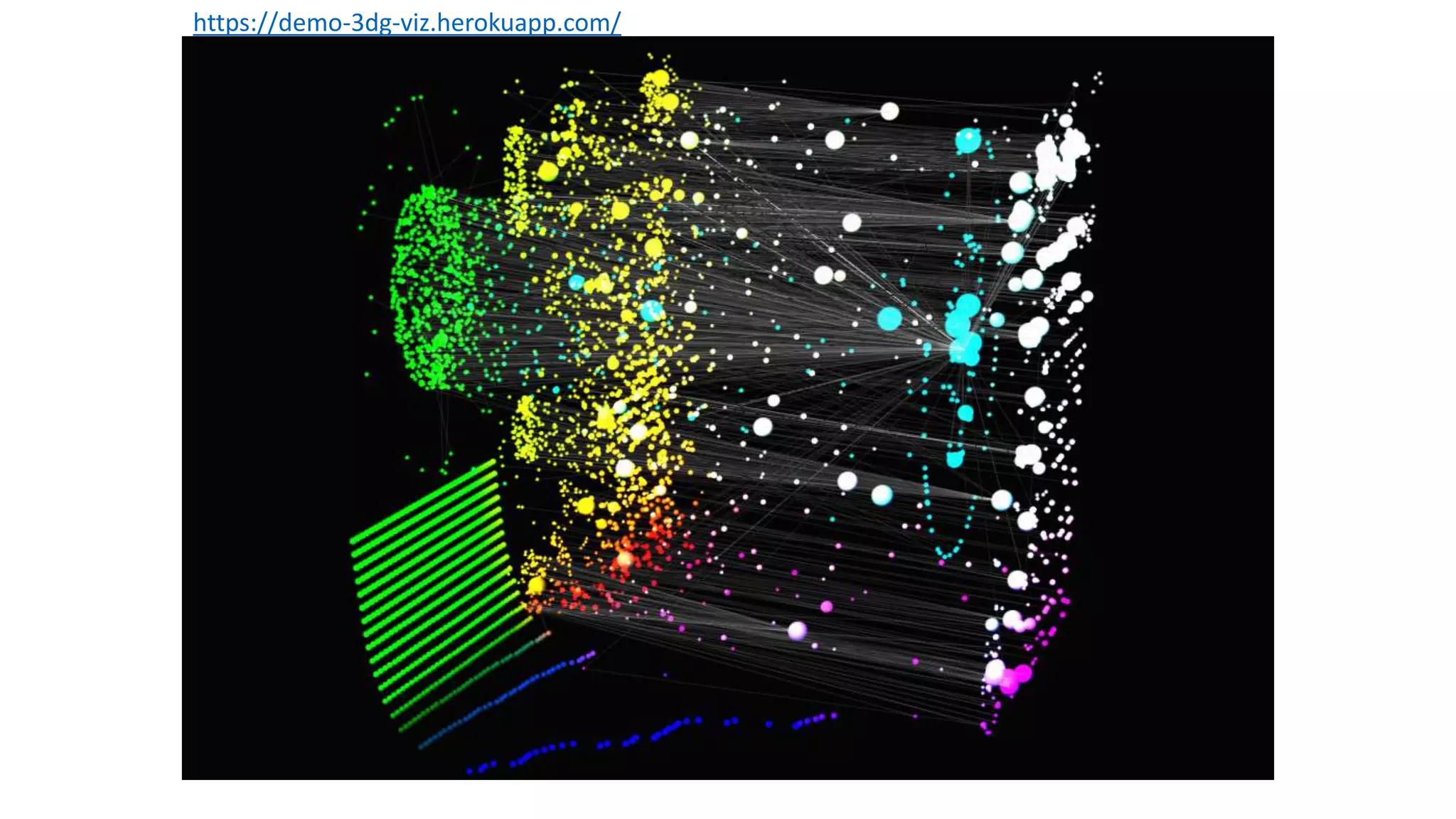
https://demo-3dg-viz.herokuapp.com/
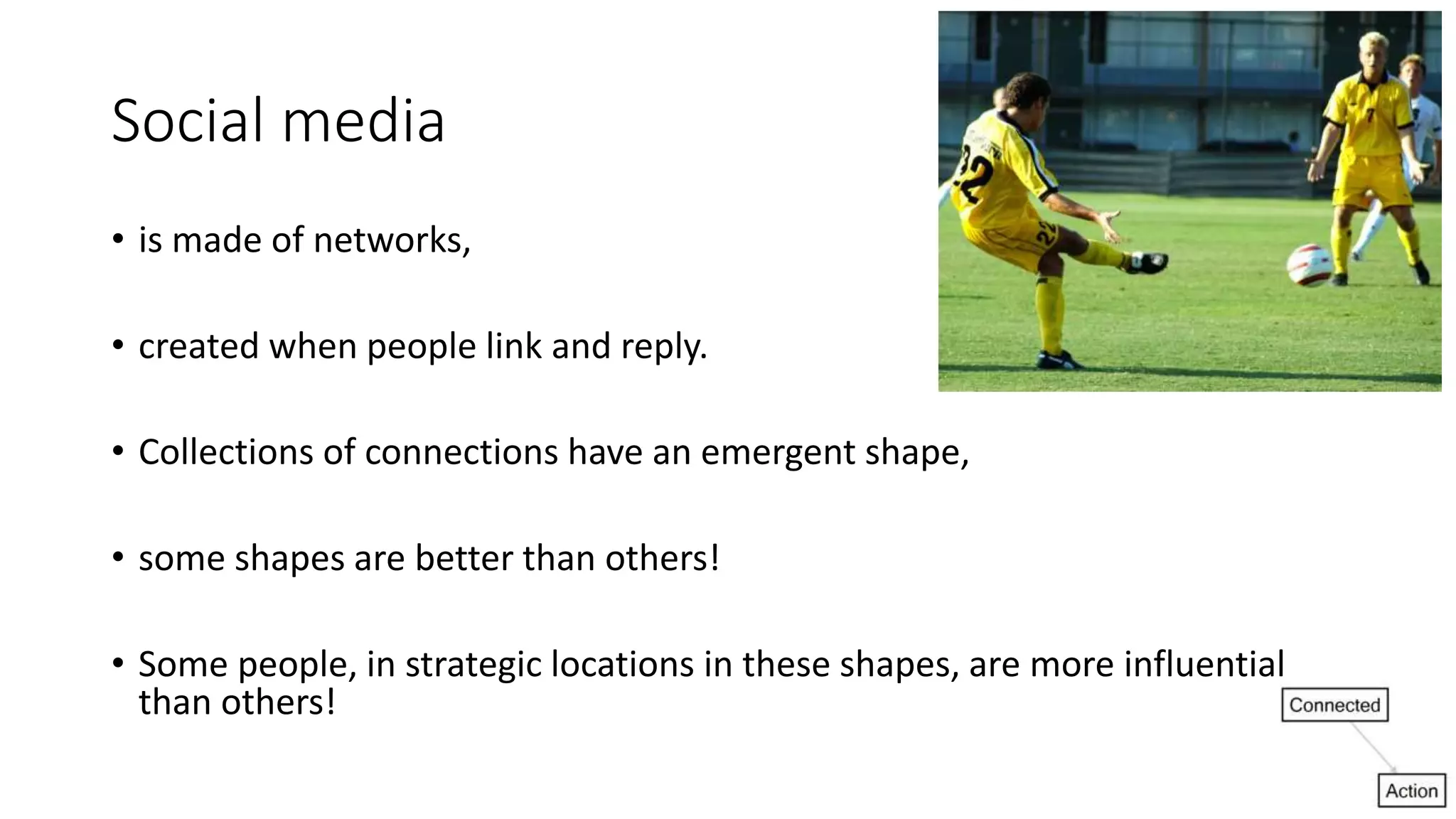
Social media
• is made of networks,
• created when people link and reply.
• Collections of connections have an emergent shape,
• some shapes are better than others!
• Some people, in strategic locations in these shapes, are more influential
than others!
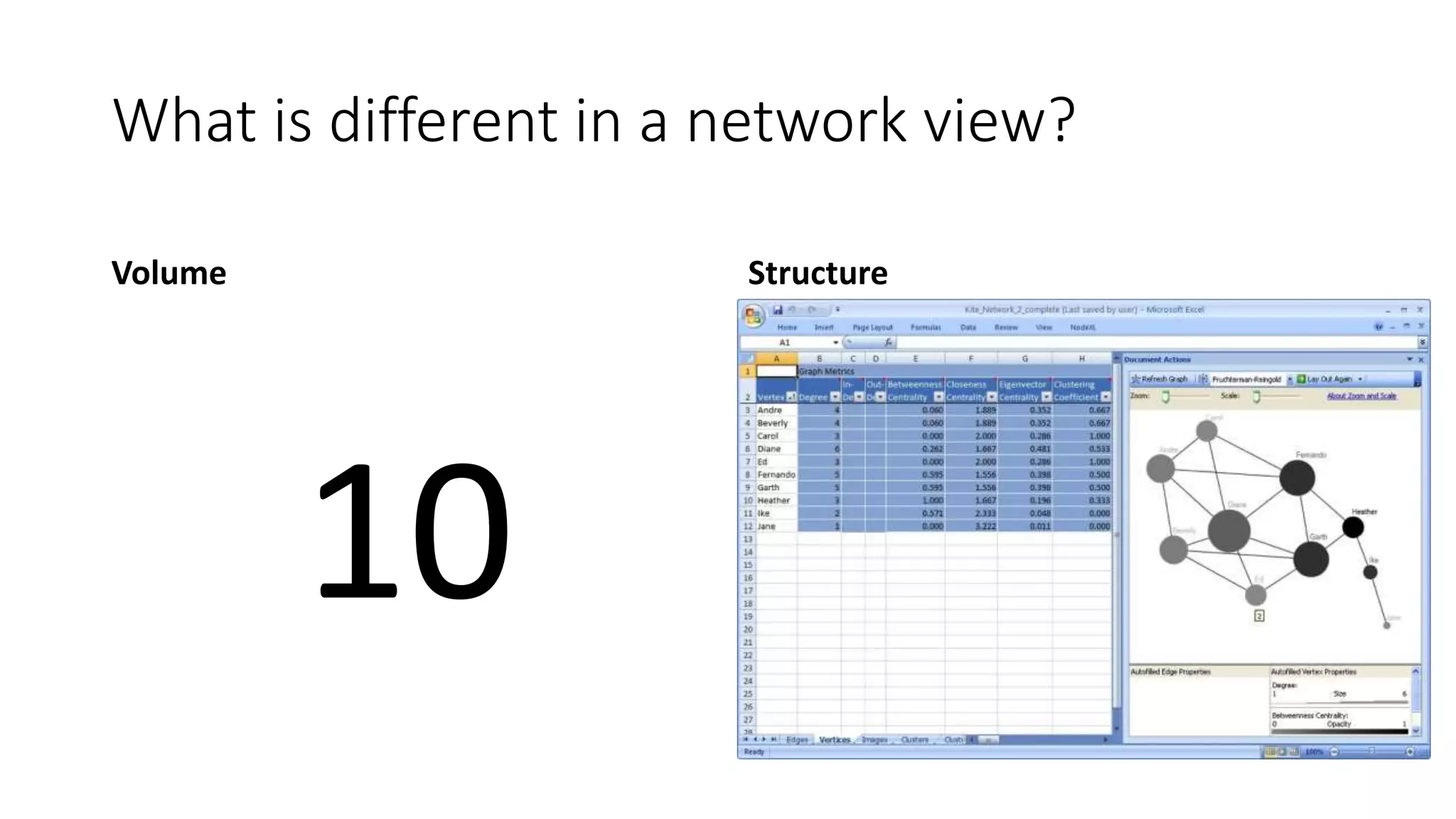
What is different in a network view?
Volume
10
Structure
Same number of people, different structures
https://gfycat.com/gifs/detail/failingassuredazurewingedmagpie
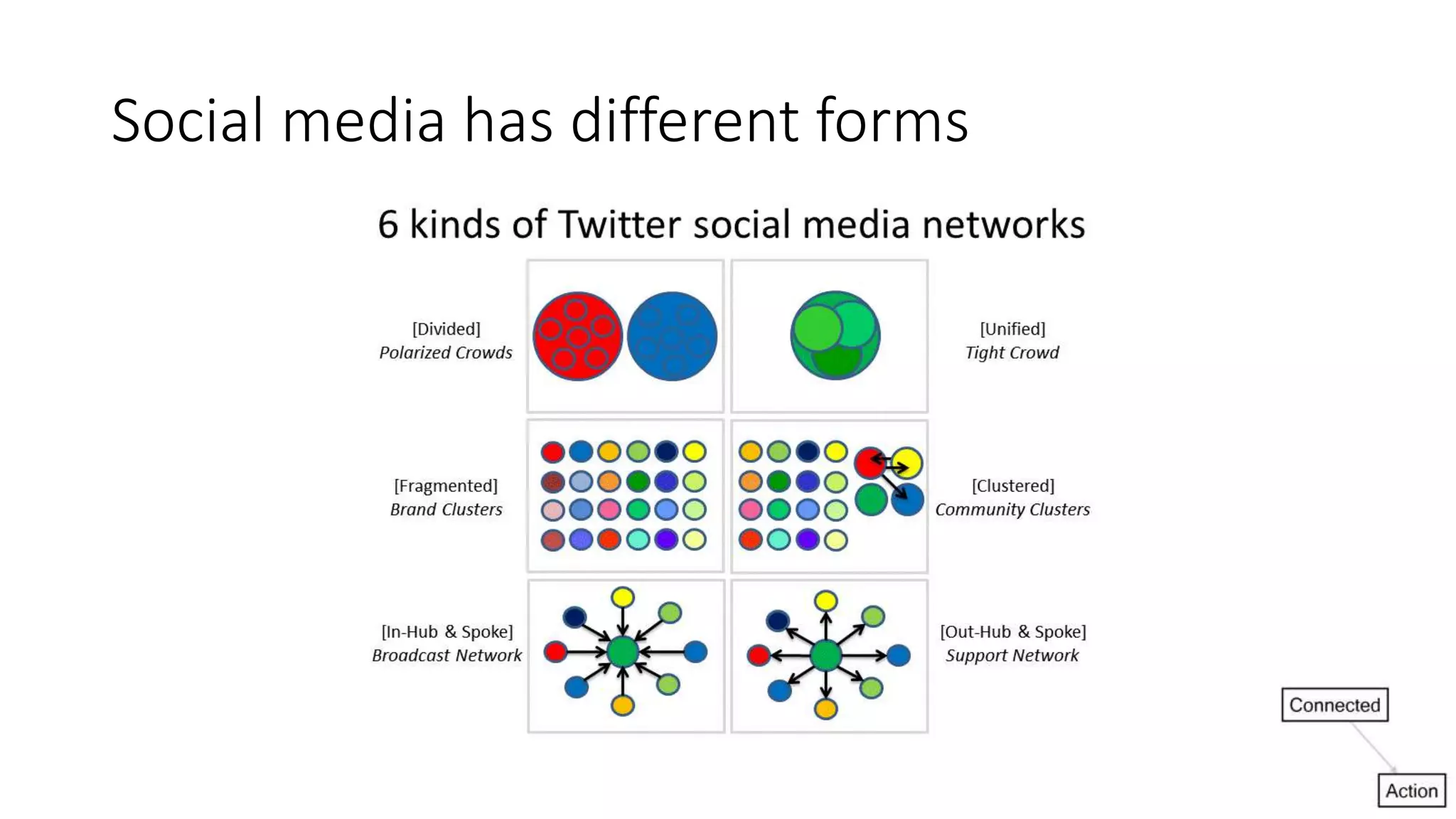
Social media has different forms
[Divided]
Polarized Crowds
[Unified]
Tight Crowd
[Fragmented]
Brand Clusters
[Clustered]
Community Clusters
[In-Hub & Spoke]
Broadcast Network
[Out-Hub & Spoke]
Support Network
6 kinds of Twitter social media networks
Monitor your topics with social network maps
• Identify the:
• Key people
• Groups
• Top topics
• Locate your social media accounts within the network.
Your social media audience is smaller…
…than the audiences of
ten influential voices.
The “mayor” of your hashtag
• Some people are in the middle of the conversation.
• “Centrality” is about being in the middle of the discussion.
• Not “Followers”
• Not “Tweets”
• Not “RTs”
• Not “Mentions”
• The “mayor” has an audience that may be bigger than yours.
Build a collection of mayors in many topics
• Map multiple topics.
• Your brand and company names.
• Your competitor brands and company names.
• The names of the activities or locations related to your products.
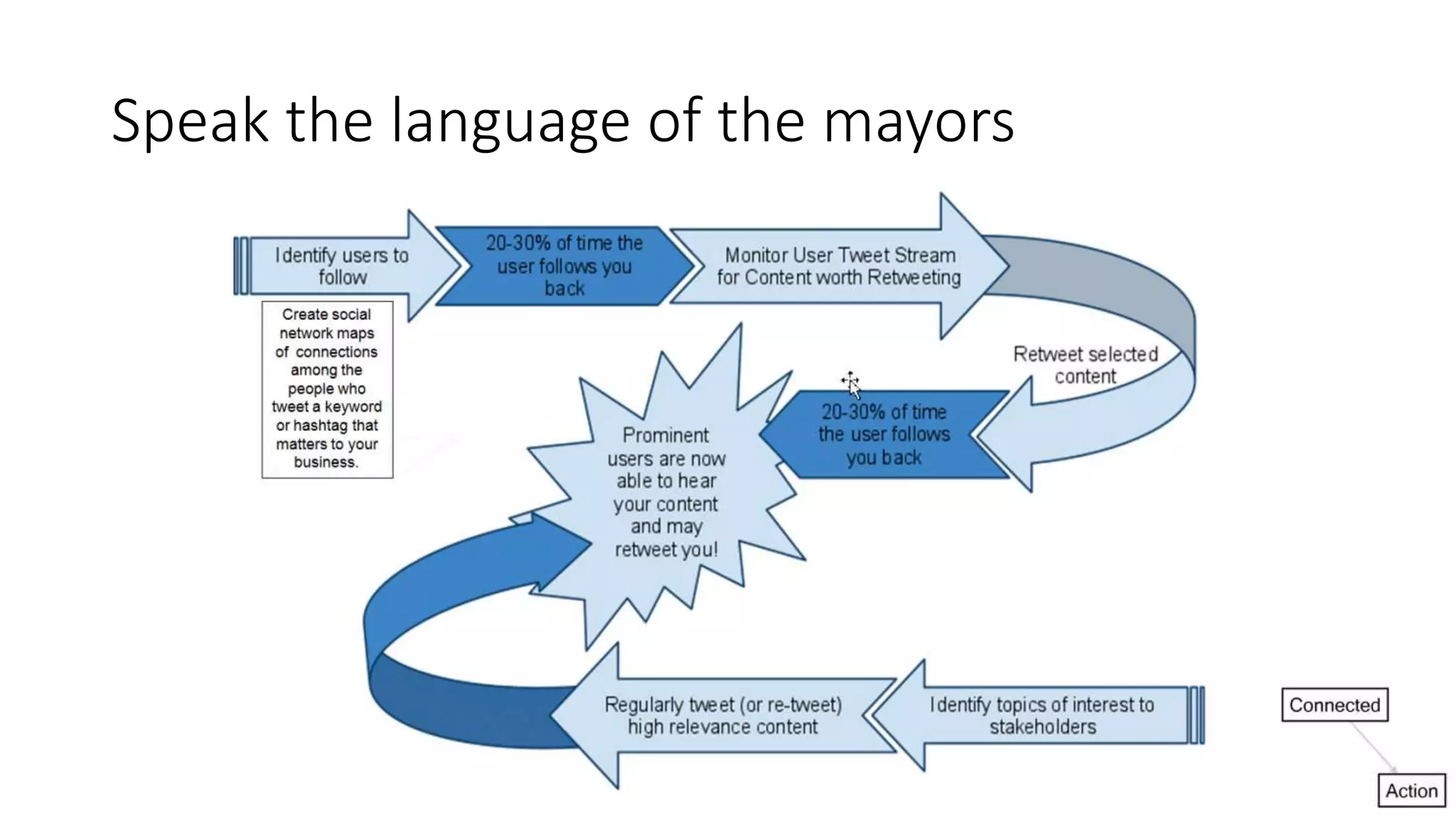
• Identify the top people in each topic.
• Follow these people.
• 30-50% of the time they follow you back.
• Re-tweet these people (if they did not follow you).
• 30-50% of the time they follow you back.
Speak the language of the mayors
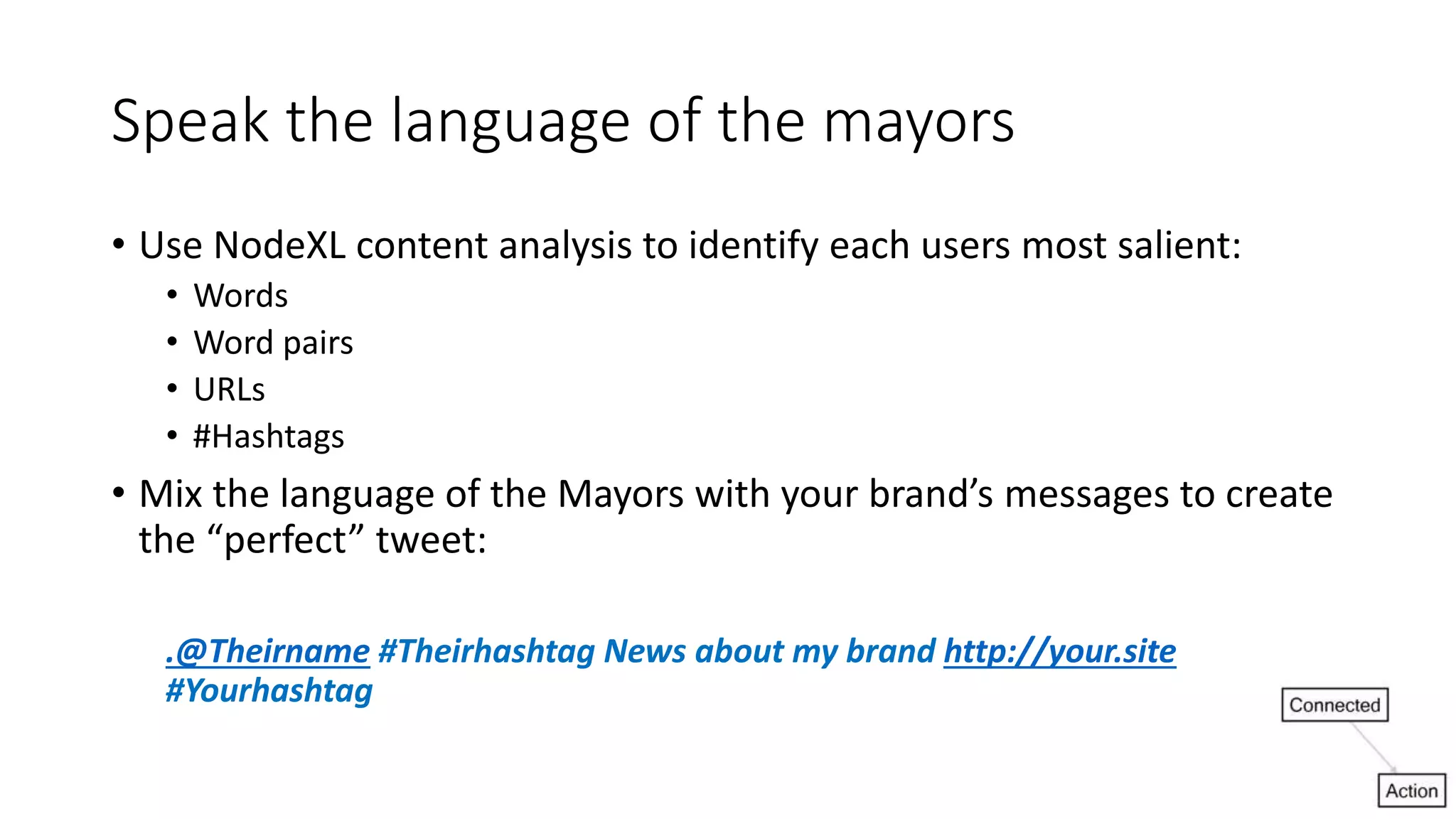
• Use NodeXL content analysis to identify each users most salient:
• Words
• Word pairs
• URLs
• #Hashtags
• Mix the language of the Mayors with your brand’s messages to create
the “perfect” tweet:
.@Theirname #Theirhashtag News about my brand http://your.site
#Yourhashtag
Speak the language of the mayors
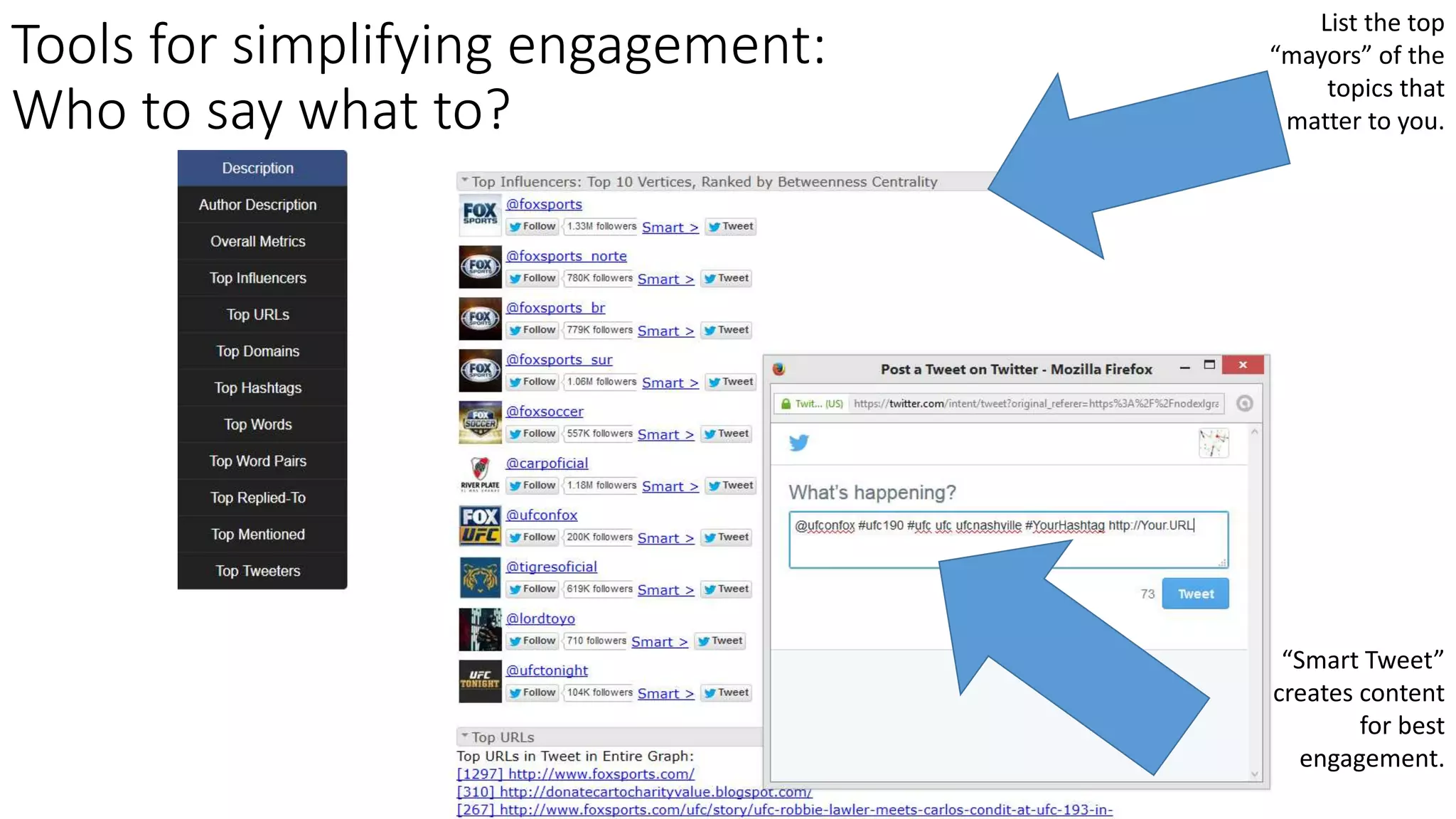
Tools for simplifying engagement:
Who to say what to?
List the top
“mayors” of the
topics that
matter to you.
“Smart Tweet”
creates content
for best
engagement.
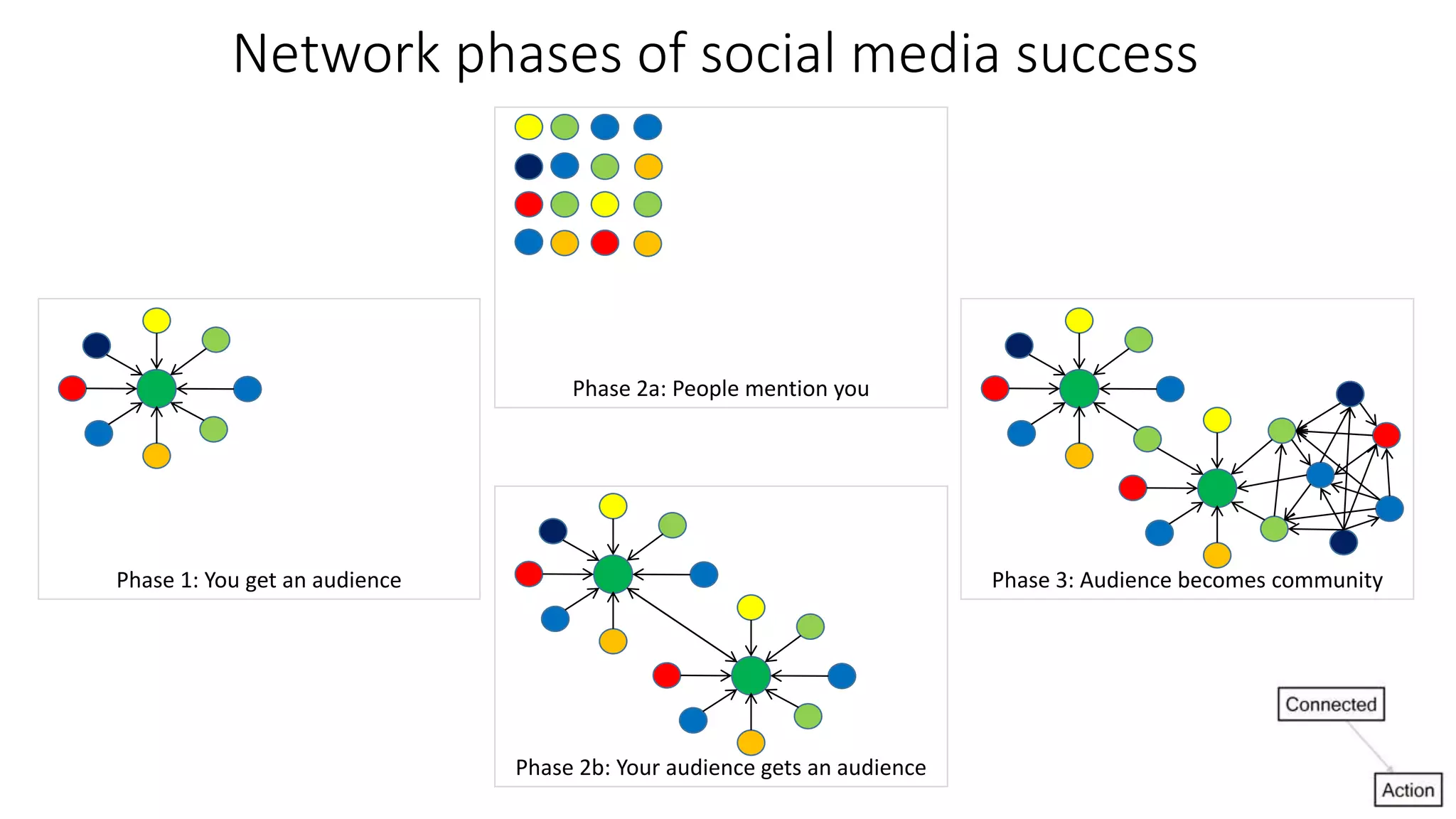
Network phases of social media success
Phase 1: You get an audience
Phase 2b: Your audience gets an audience
Phase 3: Audience becomes community
Phase 2a: People mention you
Some shapes are better than others:
• The value of Broadcast versus community network!
• From community to brand!
• Support and why community can be a signal of failure!
[Divided]
Polarized Crowds
[Unified]
Tight Crowd
[Fragmented]
Brand Clusters
[Clustered]
Communities
[In-Hub & Spoke]
Broadcast
Network
[Out-Hub & Spoke]
Support
Network
[Low probability]
Find bridge users.
Encourage shared
material.
[Low probability]
Get message out to
disconnected
communities.
[Possible transition]
Draw in new
participants.
[Possible transition]
Regularly create
content.
[Possible transition]
Reply to multiple
users.
[Undesirable
transition]
Remove bridges,
highlight divisions.
[Low probability]
Get message out to
disconnected
communities.
[High probability]
Draw in new
participants.
[Possible transition]
Regularly create
content.
[Possible transition]
Reply to multiple
users.
[Undesirable
transition]
Increase density of
connections in two
groups.
[Low probability]
Dramatically increase
density of
connections.
[High probability]
Increase retention,
build connections.
[Possible transition]
Regularly create
content.
[Possible transition]
Reply to multiple
users.
[Undesirable
transition]
Increase density of
connections in two
groups.
[Low probability]
Dramatically increase
density of
connections.
[Undesirable
transition]
Increase population,
reduce connections.
[Possible transition]
Regularly create
content.
[Possible transition]
Reply to multiple
users.
[Undesirable
transition]
Increase density of
connections in two
groups.
[Low probability]
Dramatically increase
density of
connections.
[Low probability]
Get message out to
disconnected
communities.
[Possible transition]
Increase retention,
build connections.
[High probability]
Increase reply rate,
reply to multiple
users.
[Undesirable
transition]
Increase density of
connections in two
groups.
[Low probability]
Dramatically increase
density of
connections.
[Possible transition]
Get message out to
disconnected
communities.
[High probability]
Increase retention,
build connections.
[High probability]
Increase publication
of new content and
regularly create
content.
How to use social media network analysis for amplification

How to use social media network analysis for amplification

  • 1.
    Social network amplification for social media Maximizingearned social media through targeted influencer engagement
  • 2.
  • 3.
  • 4.
    Social media • ismade of networks, • created when people link and reply. • Collections of connections have an emergent shape, • some shapes are better than others! • Some people, in strategic locations in these shapes, are more influential than others!
  • 5.
    What is differentin a network view? Volume 10 Structure
  • 6.
    Same number ofpeople, different structures https://gfycat.com/gifs/detail/failingassuredazurewingedmagpie
  • 7.
    Social media hasdifferent forms
  • 8.
    [Divided] Polarized Crowds [Unified] Tight Crowd [Fragmented] BrandClusters [Clustered] Community Clusters [In-Hub & Spoke] Broadcast Network [Out-Hub & Spoke] Support Network 6 kinds of Twitter social media networks
  • 9.
    Monitor your topicswith social network maps • Identify the: • Key people • Groups • Top topics • Locate your social media accounts within the network.
  • 10.
    Your social mediaaudience is smaller… …than the audiences of ten influential voices.
  • 11.
    The “mayor” ofyour hashtag • Some people are in the middle of the conversation. • “Centrality” is about being in the middle of the discussion. • Not “Followers” • Not “Tweets” • Not “RTs” • Not “Mentions” • The “mayor” has an audience that may be bigger than yours.
  • 12.
    Build a collectionof mayors in many topics • Map multiple topics. • Your brand and company names. • Your competitor brands and company names. • The names of the activities or locations related to your products. • Identify the top people in each topic. • Follow these people. • 30-50% of the time they follow you back. • Re-tweet these people (if they did not follow you). • 30-50% of the time they follow you back.
  • 13.
    Speak the languageof the mayors • Use NodeXL content analysis to identify each users most salient: • Words • Word pairs • URLs • #Hashtags • Mix the language of the Mayors with your brand’s messages to create the “perfect” tweet: .@Theirname #Theirhashtag News about my brand http://your.site #Yourhashtag
  • 14.
    Speak the languageof the mayors
  • 15.
    Tools for simplifyingengagement: Who to say what to? List the top “mayors” of the topics that matter to you. “Smart Tweet” creates content for best engagement.
  • 16.
    Network phases ofsocial media success Phase 1: You get an audience Phase 2b: Your audience gets an audience Phase 3: Audience becomes community Phase 2a: People mention you
  • 17.
    Some shapes arebetter than others: • The value of Broadcast versus community network! • From community to brand! • Support and why community can be a signal of failure!
  • 18.
    [Divided] Polarized Crowds [Unified] Tight Crowd [Fragmented] BrandClusters [Clustered] Communities [In-Hub & Spoke] Broadcast Network [Out-Hub & Spoke] Support Network [Low probability] Find bridge users. Encourage shared material. [Low probability] Get message out to disconnected communities. [Possible transition] Draw in new participants. [Possible transition] Regularly create content. [Possible transition] Reply to multiple users. [Undesirable transition] Remove bridges, highlight divisions. [Low probability] Get message out to disconnected communities. [High probability] Draw in new participants. [Possible transition] Regularly create content. [Possible transition] Reply to multiple users. [Undesirable transition] Increase density of connections in two groups. [Low probability] Dramatically increase density of connections. [High probability] Increase retention, build connections. [Possible transition] Regularly create content. [Possible transition] Reply to multiple users. [Undesirable transition] Increase density of connections in two groups. [Low probability] Dramatically increase density of connections. [Undesirable transition] Increase population, reduce connections. [Possible transition] Regularly create content. [Possible transition] Reply to multiple users. [Undesirable transition] Increase density of connections in two groups. [Low probability] Dramatically increase density of connections. [Low probability] Get message out to disconnected communities. [Possible transition] Increase retention, build connections. [High probability] Increase reply rate, reply to multiple users. [Undesirable transition] Increase density of connections in two groups. [Low probability] Dramatically increase density of connections. [Possible transition] Get message out to disconnected communities. [High probability] Increase retention, build connections. [High probability] Increase publication of new content and regularly create content.

Editor's Notes

  • #3 https://giphy.com/gifs/satisfying-starlings-murmuration-eZYz372UA5oeA https://www.reddit.com/r/oddlysatisfying/comments/7bzagu/starlings_murmuration/
  • #4 https://demo-3dg-viz.herokuapp.com/
  • #7 https://gfycat.com/gifs/detail/failingassuredazurewingedmagpie
  • #19 Red=Undesireable transition Yellow=Low probability transition Light blue= potential transition or complementary structure Dark green = strong transition or complementary structure