How to Pitch a Software
Development Initiative and
Ignite Culture Change
Ike Ellis @ike_ellis
www.ikeellis.com
Microsoft MVP
Chairperson of the San Diego TIG
Book co-author – Developing Azure Solutions
Upcoming course on Azure Databricks
Crafting Bytes
We’re hiring Data Experts!
www.craftingbytes.com
The challenges of culture change
• Personal
• Team
• Company
• Societal
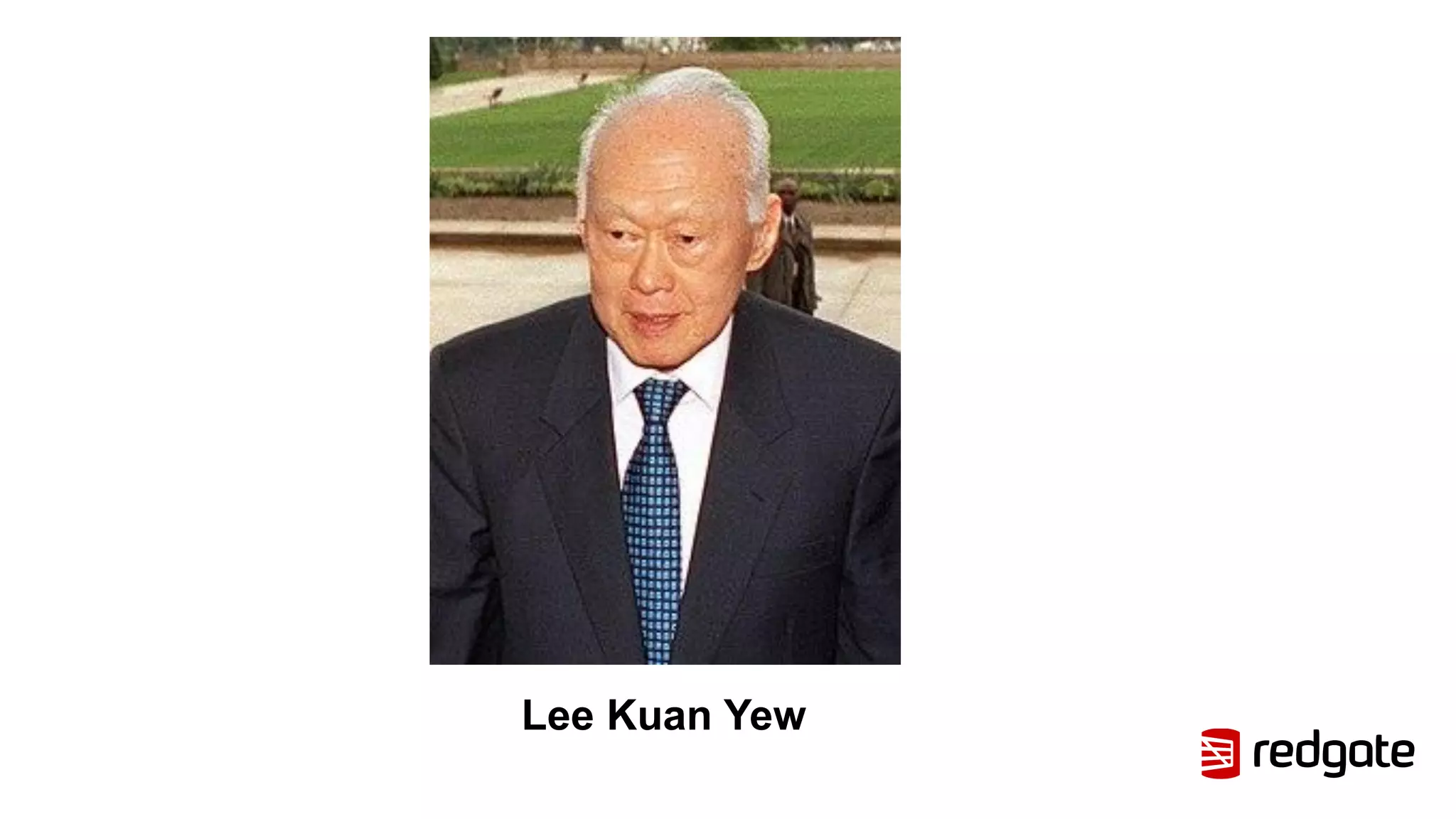
Lee Kuan Yew
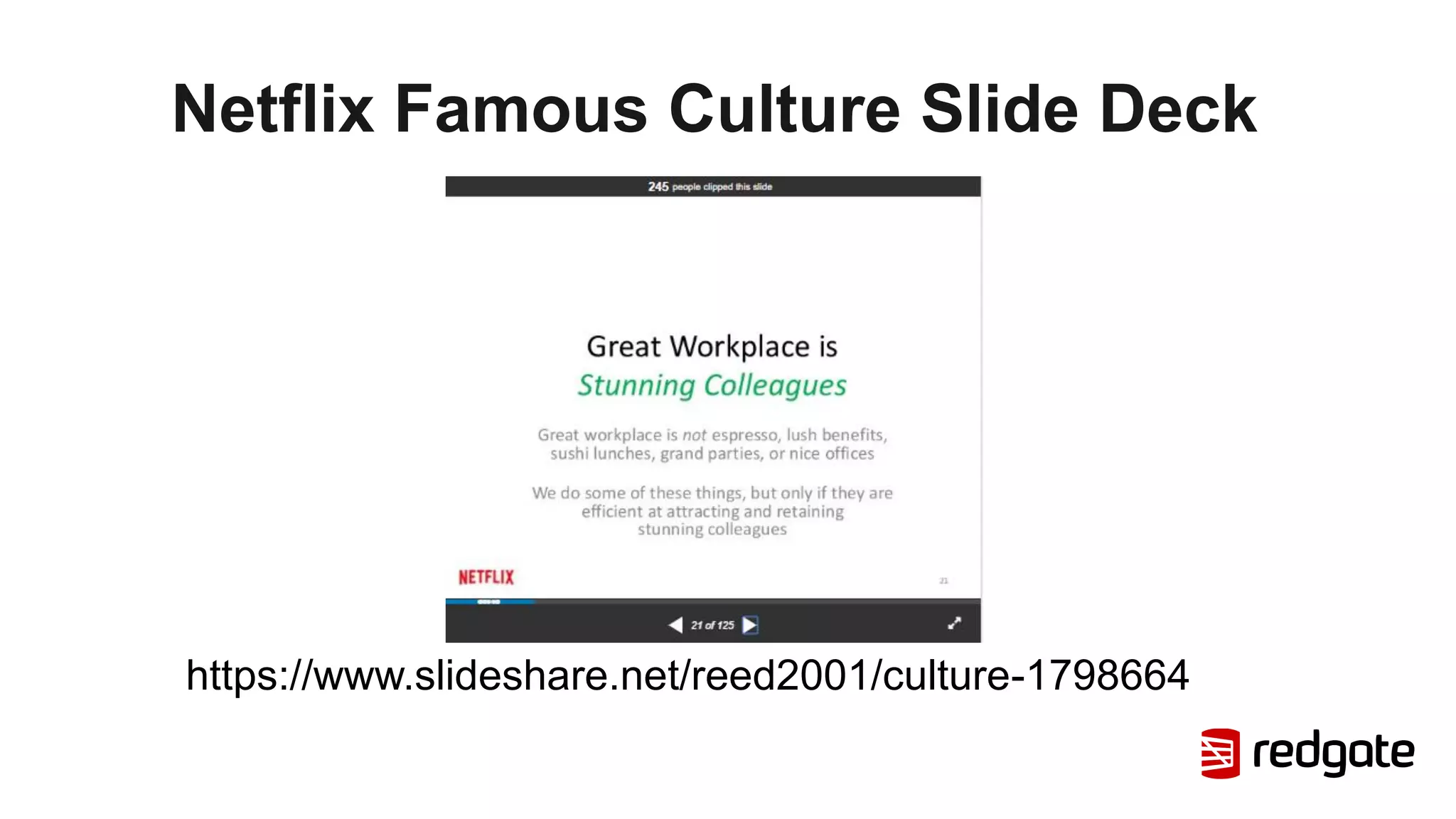
Netflix Famous Culture Slide Deck
https://www.slideshare.net/reed2001/culture-1798664
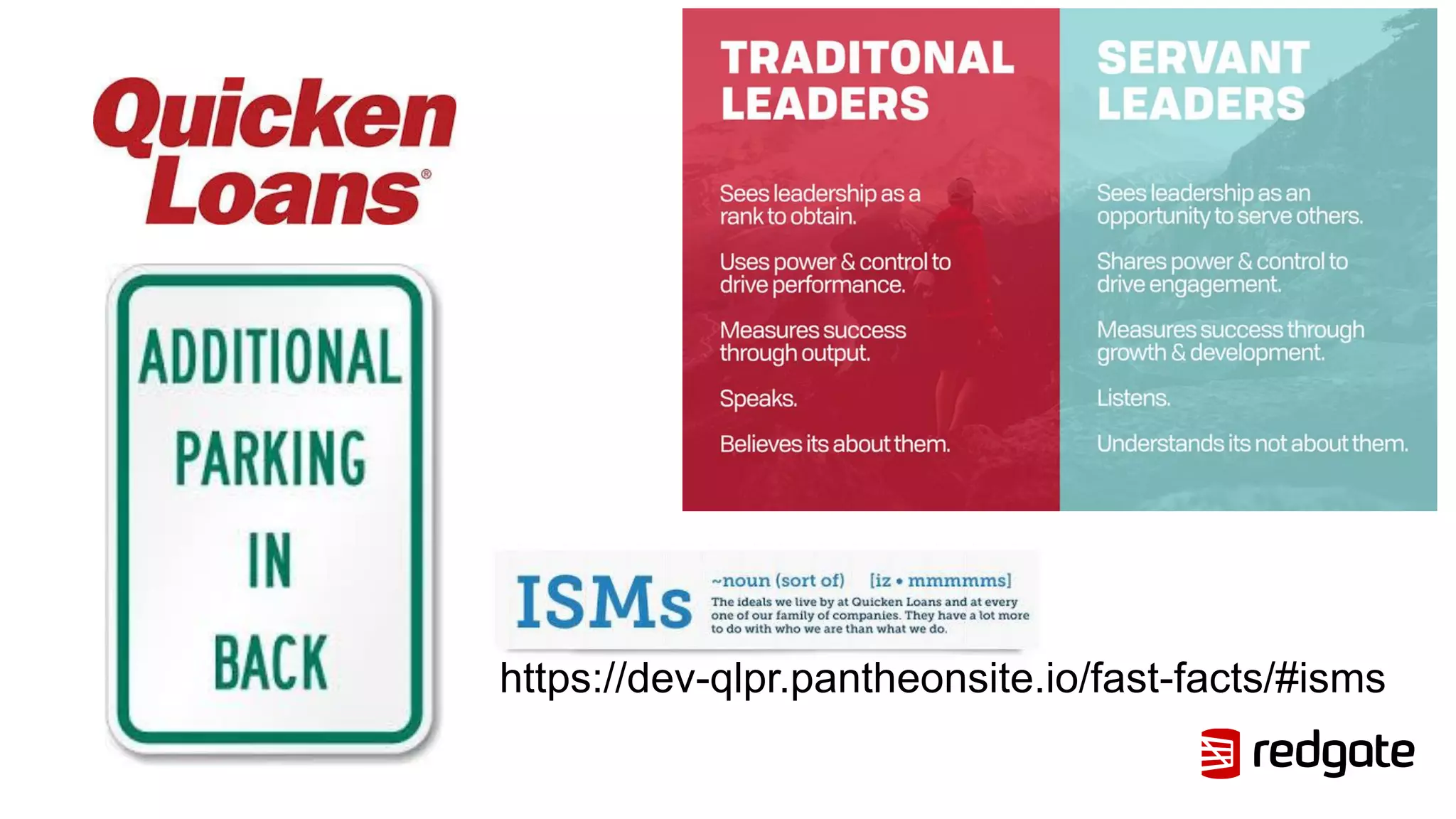
https://dev-qlpr.pantheonsite.io/fast-facts/#isms
How do I convince a reluctant
leader that we should go to
DevOps for the database?
How do I fix a cowboy culture?
Convince a leader of the need of
DevOps and change the culture?
This is very difficult!!!
That’s a culture change that you are
solely in charge of.
How was that?
Those of you who were successful,
was it easy?
So how do you get someone else to
change?
You can’t hire, promote, or fire a
reluctant boss
So what do we do?
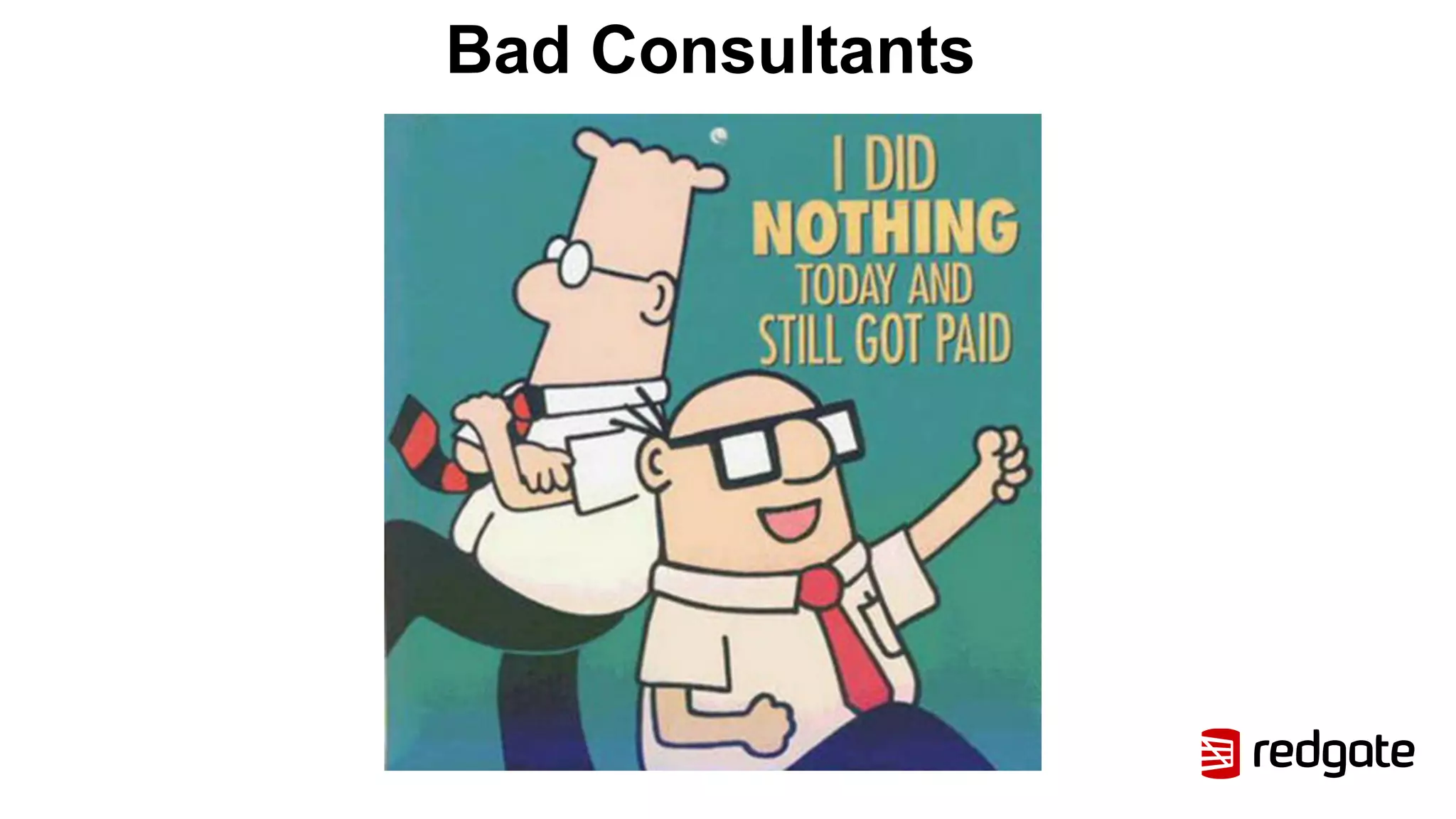
Bad Consultants
Every boss (and in fact everyone)
listens to the same radio station
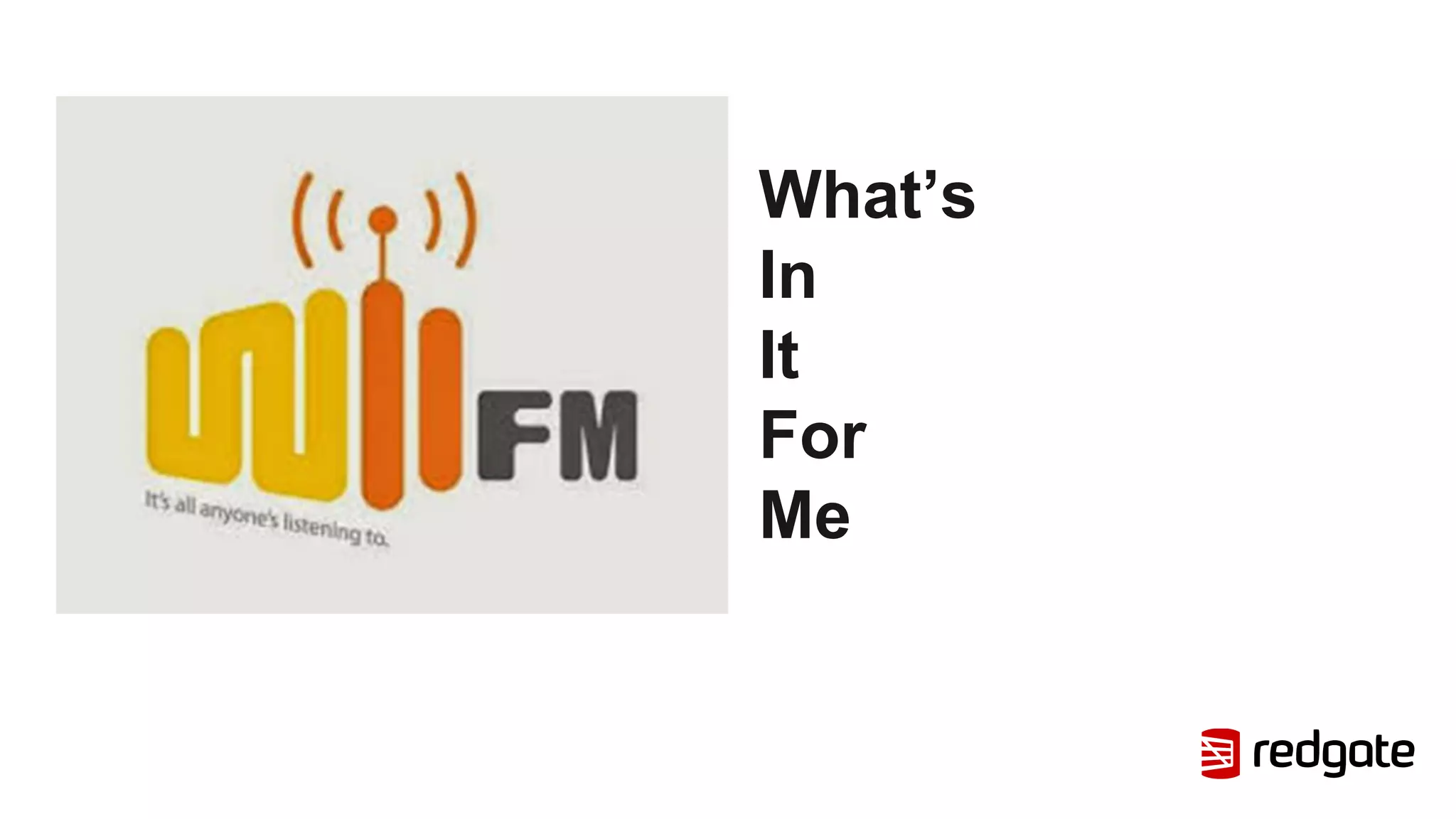
What’s
In
It
For
Me
Every leader I’ve ever met has the same
few things in common:
• A lingering project
• A lingering problem
• A publicly embarrassing event
So tune in to the radio station and
calm their fear
• We can deliver faster
• We’ll deliver more frequently
• We’ll have fewer bugs
• We’ll have more success
How do we convince reluctant
team members?
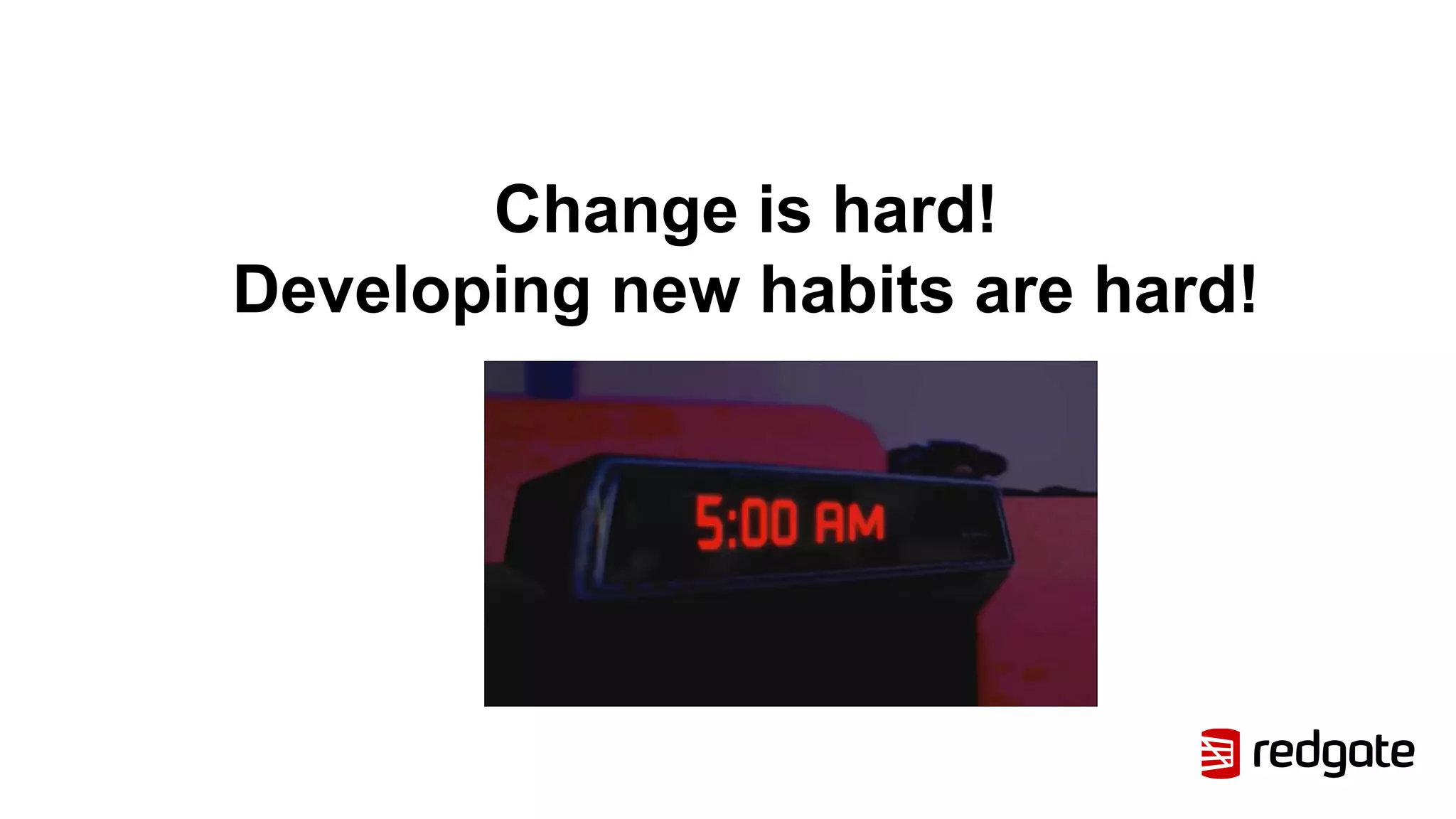
Change is hard!
Developing new habits are hard!
People fear change
Phrases of Fear
• We tried that and we failed
• That will never work here
• This is just the latest fad,our processes are tried and true
• Our company is always 10 years behind the industry
• I have too much to do and this will slow me down
• Just another kitchy program that will eat up all our time
But we can address their fears and slowly
introduce change so that they are
comfortable with it
Steps to developing new habits:
Step 1: Focus on One New Habit at a time
Step 2: Form a new habit? Commit to 30 days per new habit
Step 3: Anchor Your New Habit to an Established Habit.
Step 4: Take Baby Steps. Don’t be too hard if you misstep or
step backward…stay determined to baby step forward
Step 5: Make a Plan for Obstacles.
Step 6: Create Accountability for Your Habit.
Step 7: Reward Important Milestones.
Step 8: Build a New Identity.
CULTURE TIP: Make Posters
Culture TIP: Throw a Pizza Party!
Culture TIP: $15 Tee Shirts!
Culture TIP: Fire someone
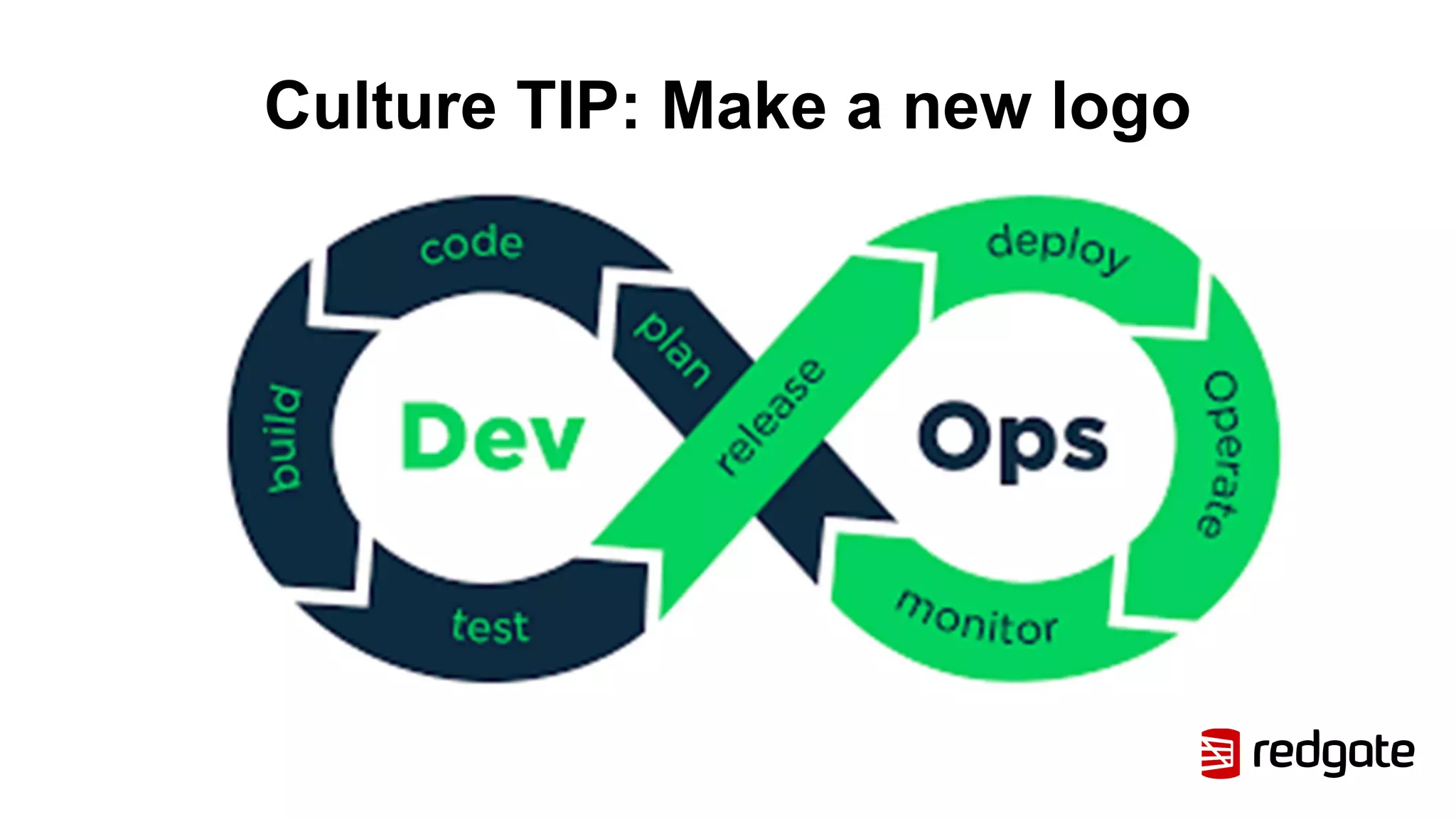
Culture TIP: Make a new logo
Culture TIP: Bathroom signs
LEARN ON THE LOO!
• Teach DevOps Best Practices
• Teach how to use Source Control
• Teach good testing techniques
• Teach culture
Standardizing source code only
Pros
• Provides audit trail of
development changes
• Manages collaboration
of team members
• Standardizes coding
practices
Cons
• Manual database code
validation, testing, and
deployments
• Requires a custom process
to prevent environment drift
Elevator pitch template:
“We are doing _____ so that
_____.”
“We should standardize
database code and automate
deployments to reduce feature
time to market.”
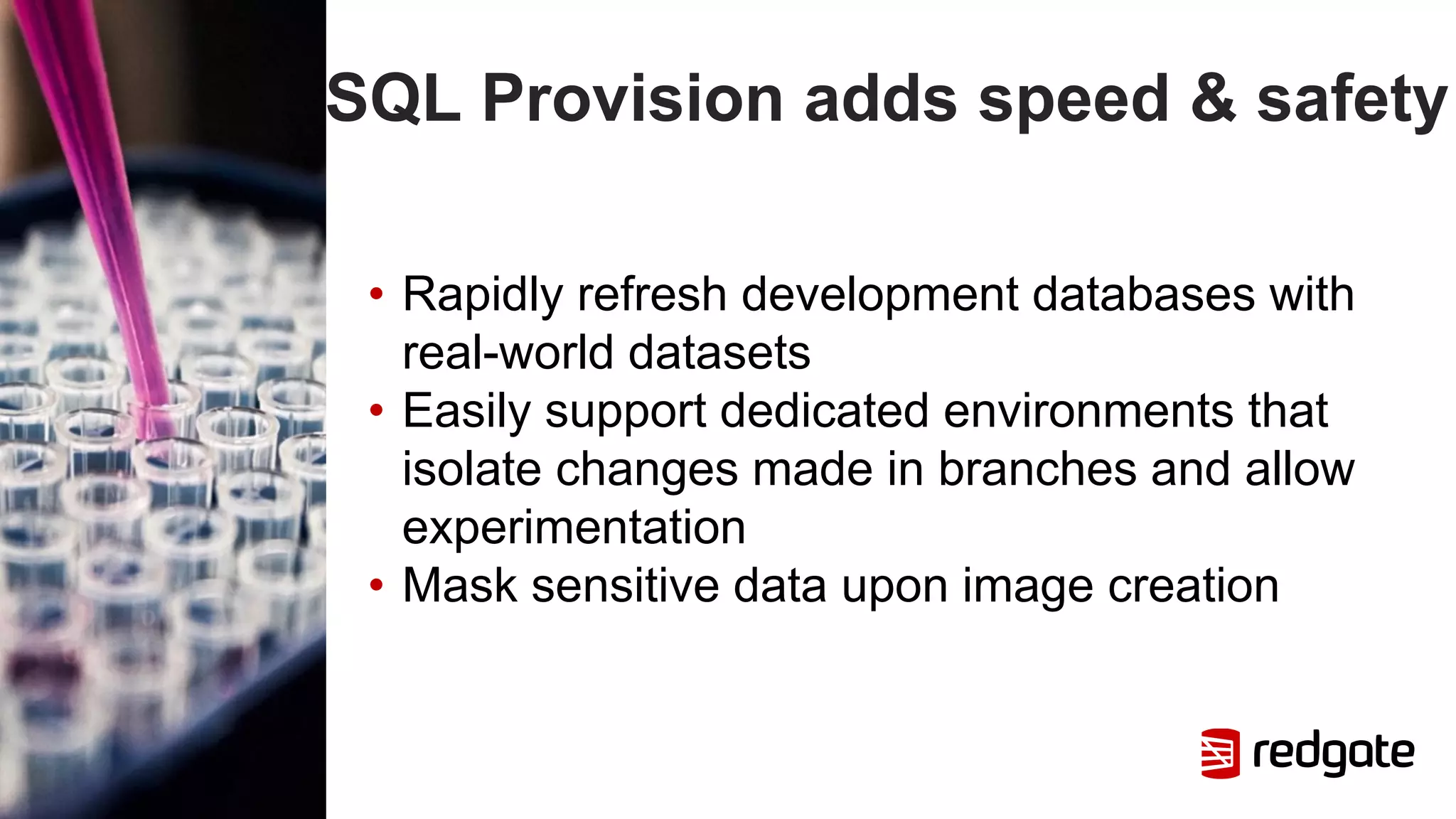
SQL Provision adds speed & safety
• Rapidly refresh development databases with
real-world datasets
• Easily support dedicated environments that
isolate changes made in branches and allow
experimentation
• Mask sensitive data upon image creation
Should monitoring be in your initial project?
Pros
• Visibility into production
health
• SQL Monitor shows when
deployments have occurred,
making it easy to track
customer impact (good and
bad) of changes
Cons
• If an external team in
your organization already
controls monitoring,
proposing a change may
be tricky
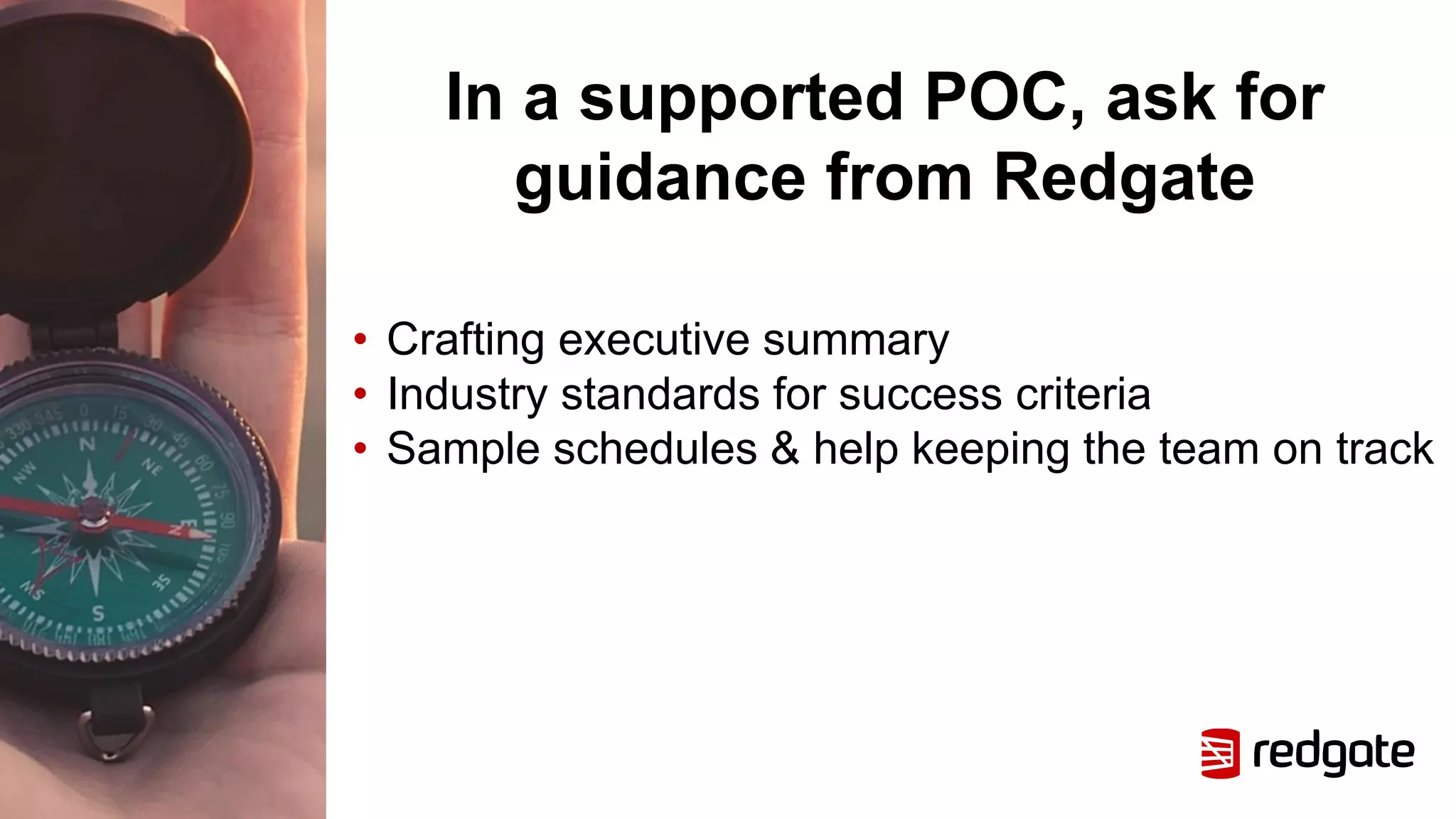
In a supported POC, ask for
guidance from Redgate
• Crafting executive summary
• Industry standards for success criteria
• Sample schedules & help keeping the team on track
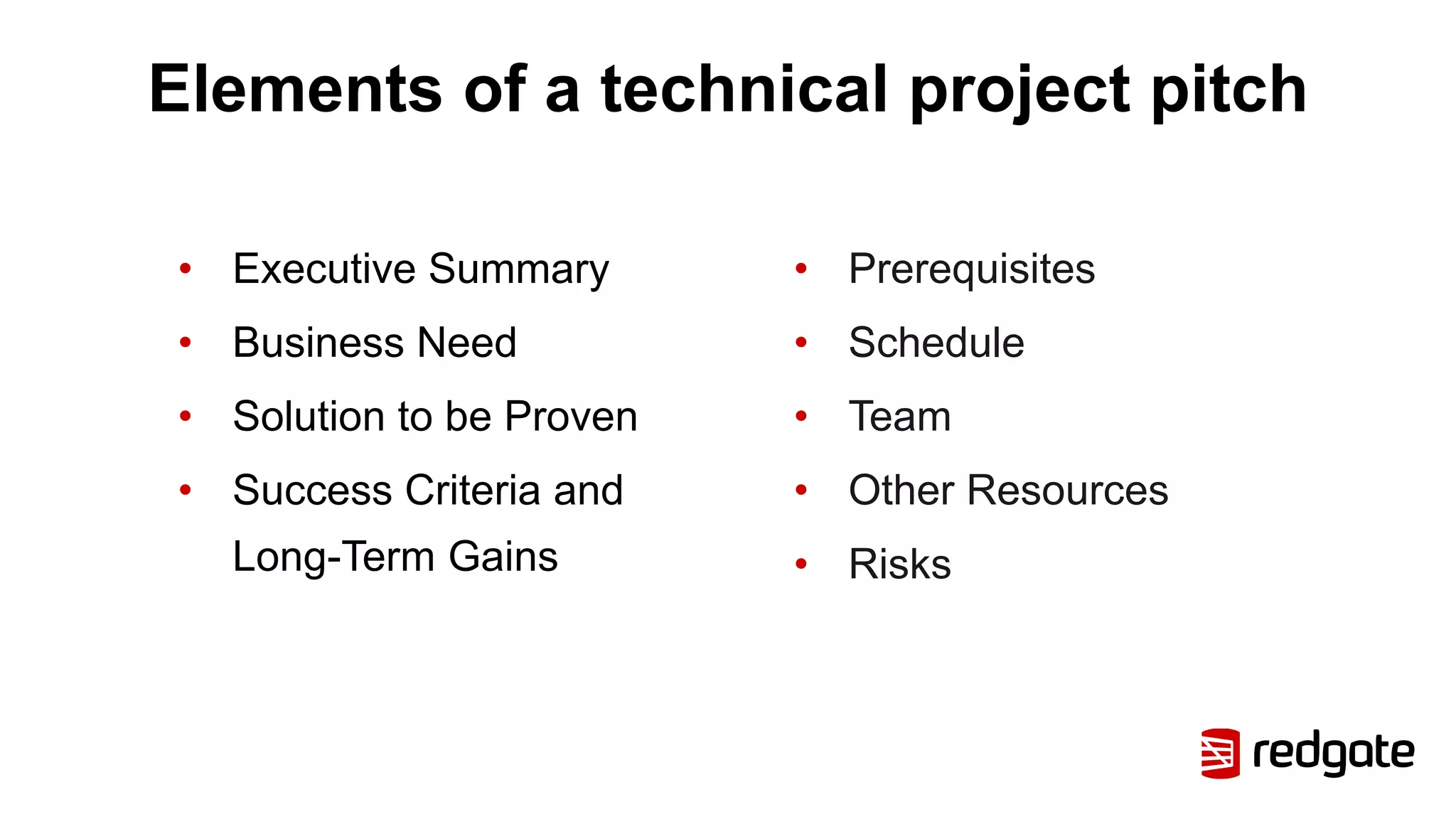
Elements of a technical project pitch
• Executive Summary
• Business Need
• Solution to be Proven
• Success Criteria and
Long-Term Gains
• Prerequisites
• Schedule
• Team
• Other Resources
• Risks
Project Schedule
Keeps your team moving in sync
Helps key stakeholders understand
• Target project duration
• Key milestones
• Proof of concept schedule and core meetings
Identify and approach potential
sponsors
Who might this project resonate with in your organization?
• C-Level
• Executive & Senior Managers
• Department Heads
Key actions for a sponsor
• Help build a coalition of managers and peers
• Be visible to employees throughout the project
• Communicate the ‘why’ of the change to employees
https://www.prosci.com/resources/articles/change-sponsor-checklist
Messages from sponsors
Engage with employees with face-to-face messaging
• Video and recordings work when in-person isn’t possible,
these are more effective than emails alone
Answer questions about the business issues
• “Why is this change happening?”
• “What is the risk of not changing?”
https://www.prosci.com/resources/articles/change-management-communication-checklist
The goal of a Proof of Concept is
demonstrating that the tools achieve your
success criteria
Choose your technical champions
This team will:
• Explore methodologies to standardize database code
and choose the best approach for your teams
• Set up a proof of concept (POC), safely outside of
production
• Explore and test automation for provisioning, builds
(code validation) and change deployment
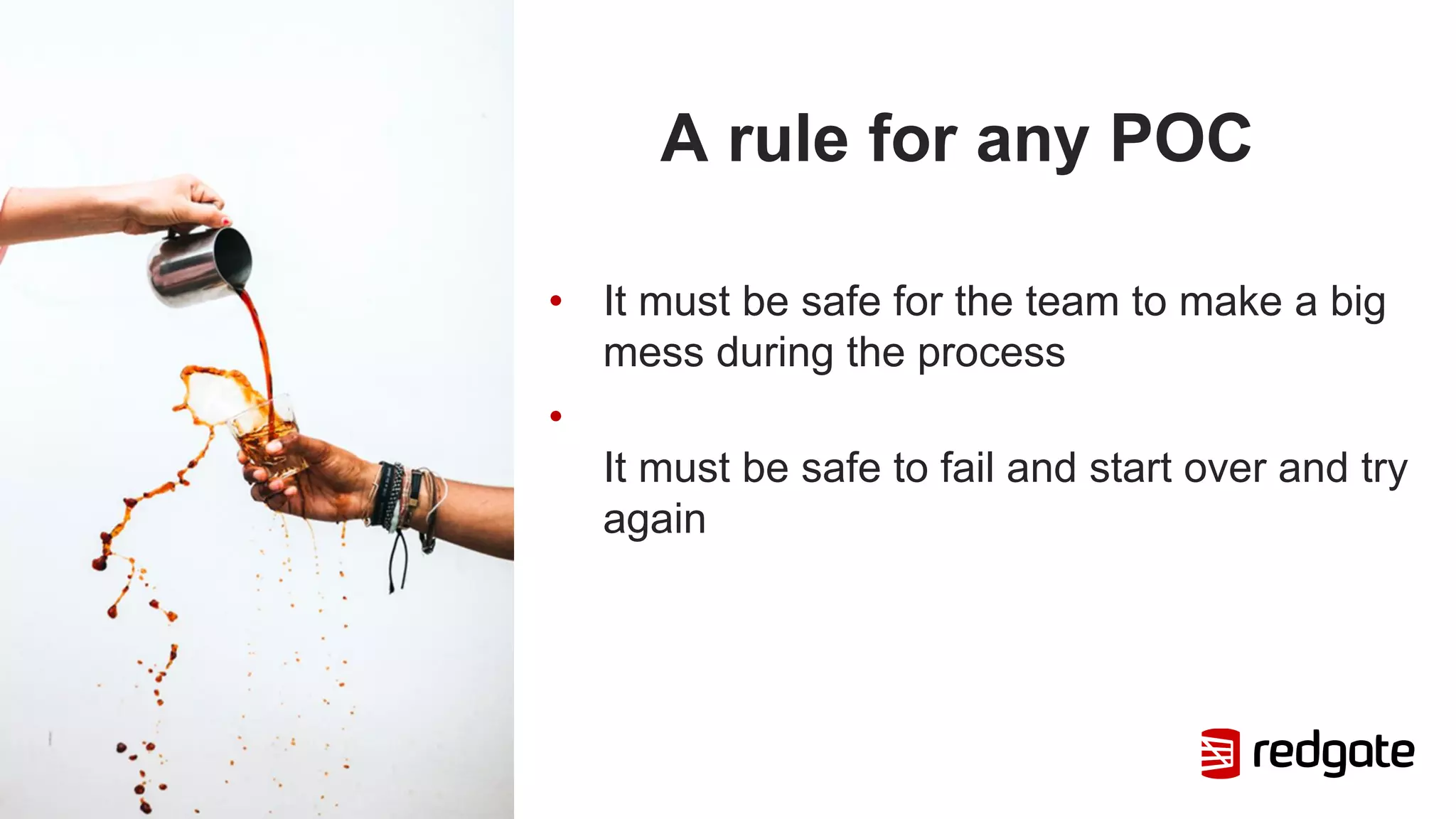
A rule for any POC
• It must be safe for the team to make a big
mess during the process
•
It must be safe to fail and start over and try
again
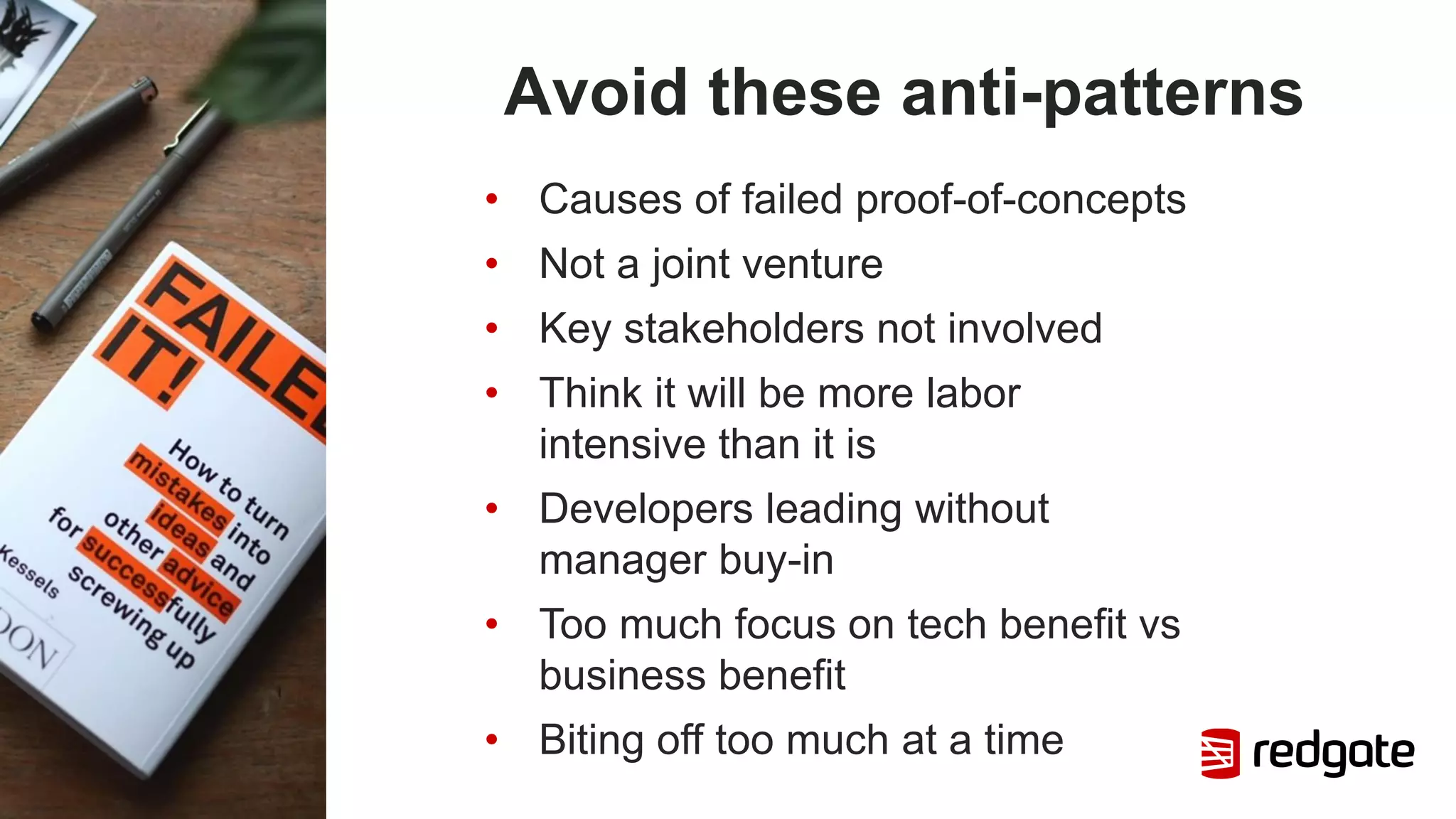
Avoid these anti-patterns
• Causes of failed proof-of-concepts
• Not a joint venture
• Key stakeholders not involved
• Think it will be more labor
intensive than it is
• Developers leading without
manager buy-in
• Too much focus on tech benefit vs
business benefit
• Biting off too much at a time
Once scoped, kick off any
required security assessments
A POC doesn’t take 2 months of
sustained work
The two-three month timeline applies if:
• Your internal point team has other duties
• You only get a few hours of their time each week
Dedicated resource teams have completed Standardize,
Automate & Protect POCs in two weeks
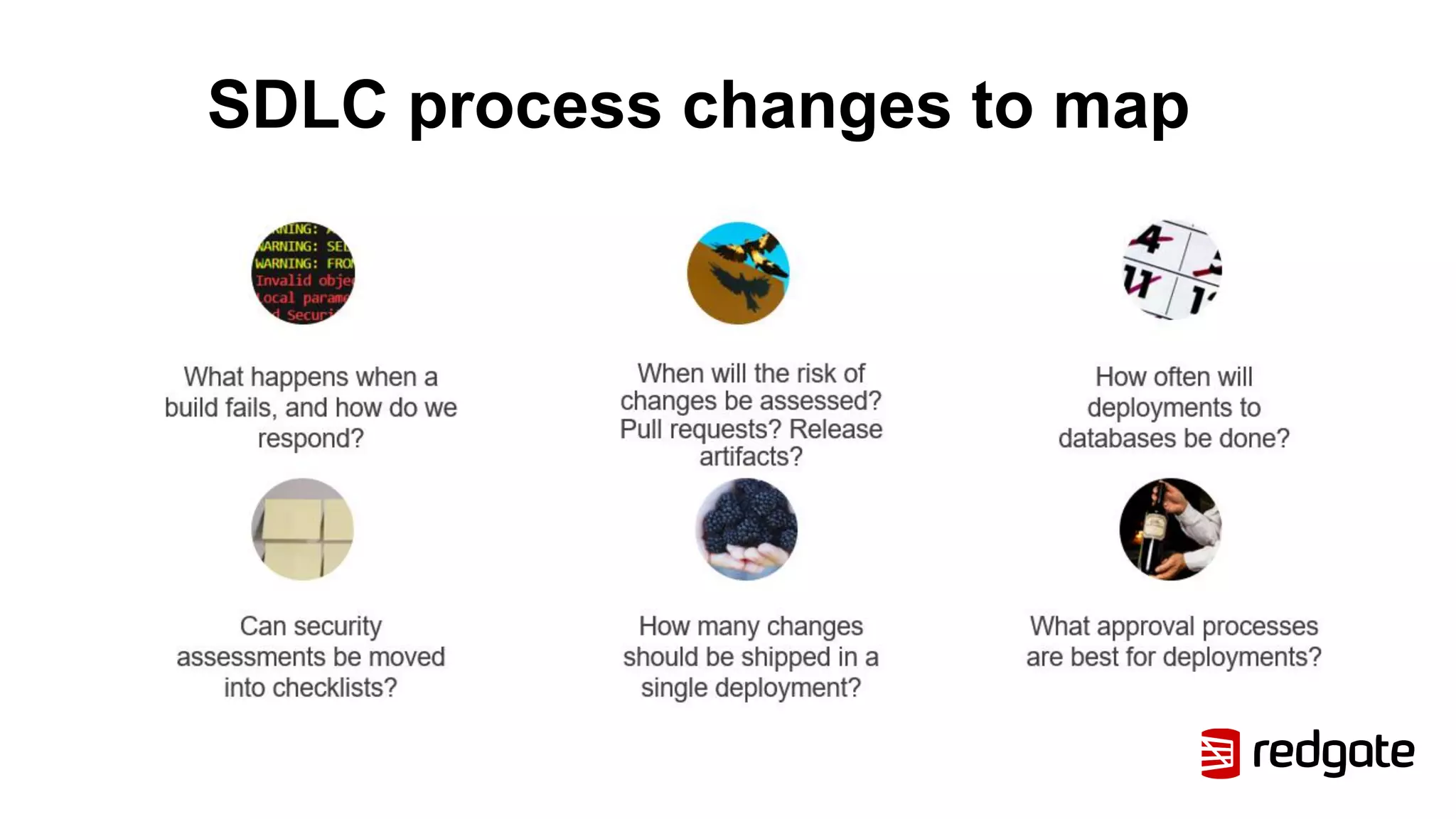
SDLC process changes to map
Support practices to map
• What team on-call rotations are needed?
• How to avoid single-points of failure in the team?
• How/when to escalate to subject matter experts?
Shifting change approval left
• Shifting change review and approval to earlier in
the development cycle speeds you up
• First steps: can standard (pre-approved) changes
help get you started?
• Sponsorship: this is one place where a sponsor
who can help you build a coalition will help
Completing your Proof of Concept
• Collate results from POC and implementation plan
• Finalize licensing
• Set target implementation date and schedule first call
and support session
• Internal presentations about business benefits
When an executive sponsor has been
involved from the start, POC sign-off and
completion goes very smoothly
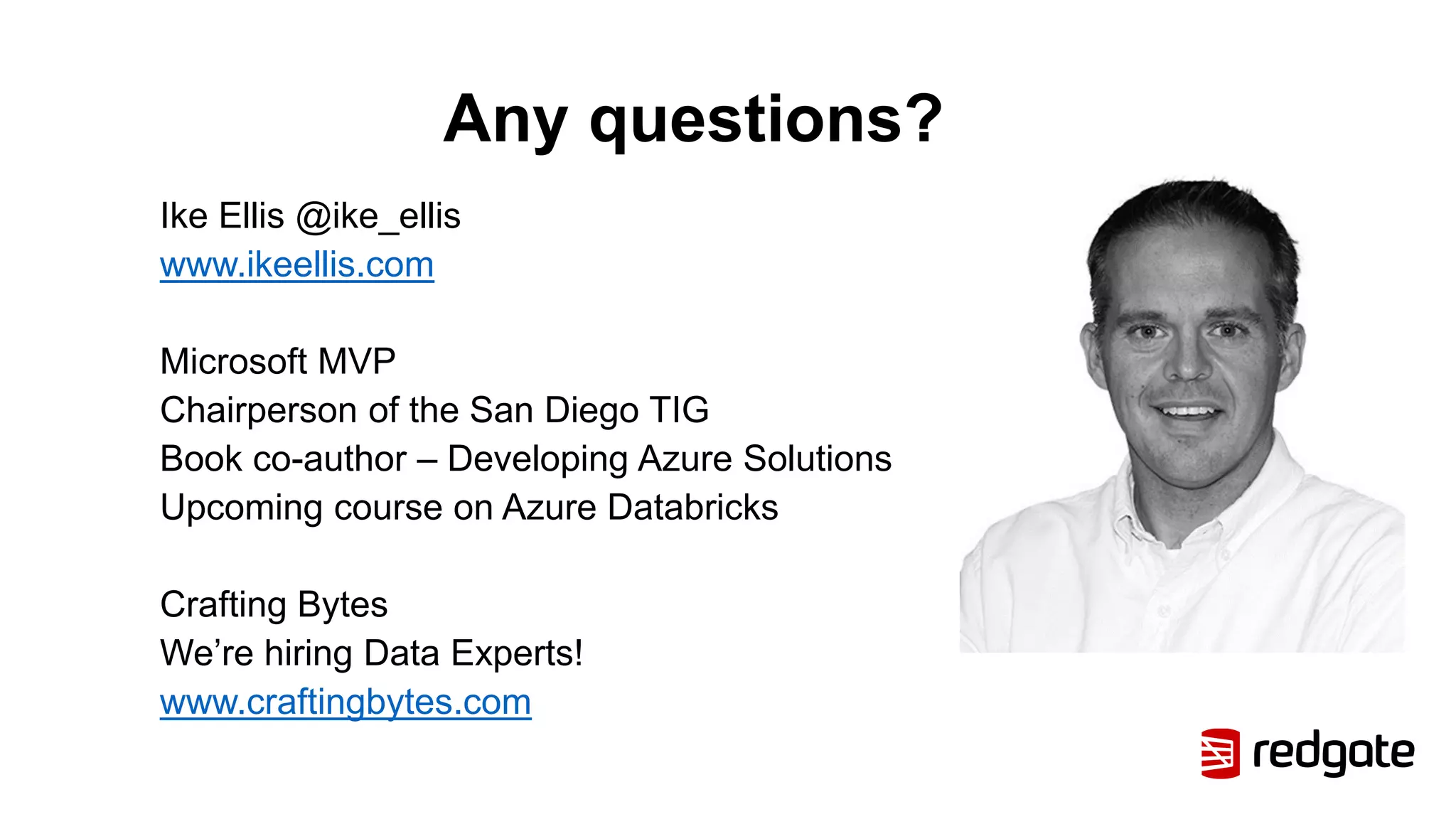
Any questions?
Ike Ellis @ike_ellis
www.ikeellis.com
Microsoft MVP
Chairperson of the San Diego TIG
Book co-author – Developing Azure Solutions
Upcoming course on Azure Databricks
Crafting Bytes
We’re hiring Data Experts!
www.craftingbytes.com
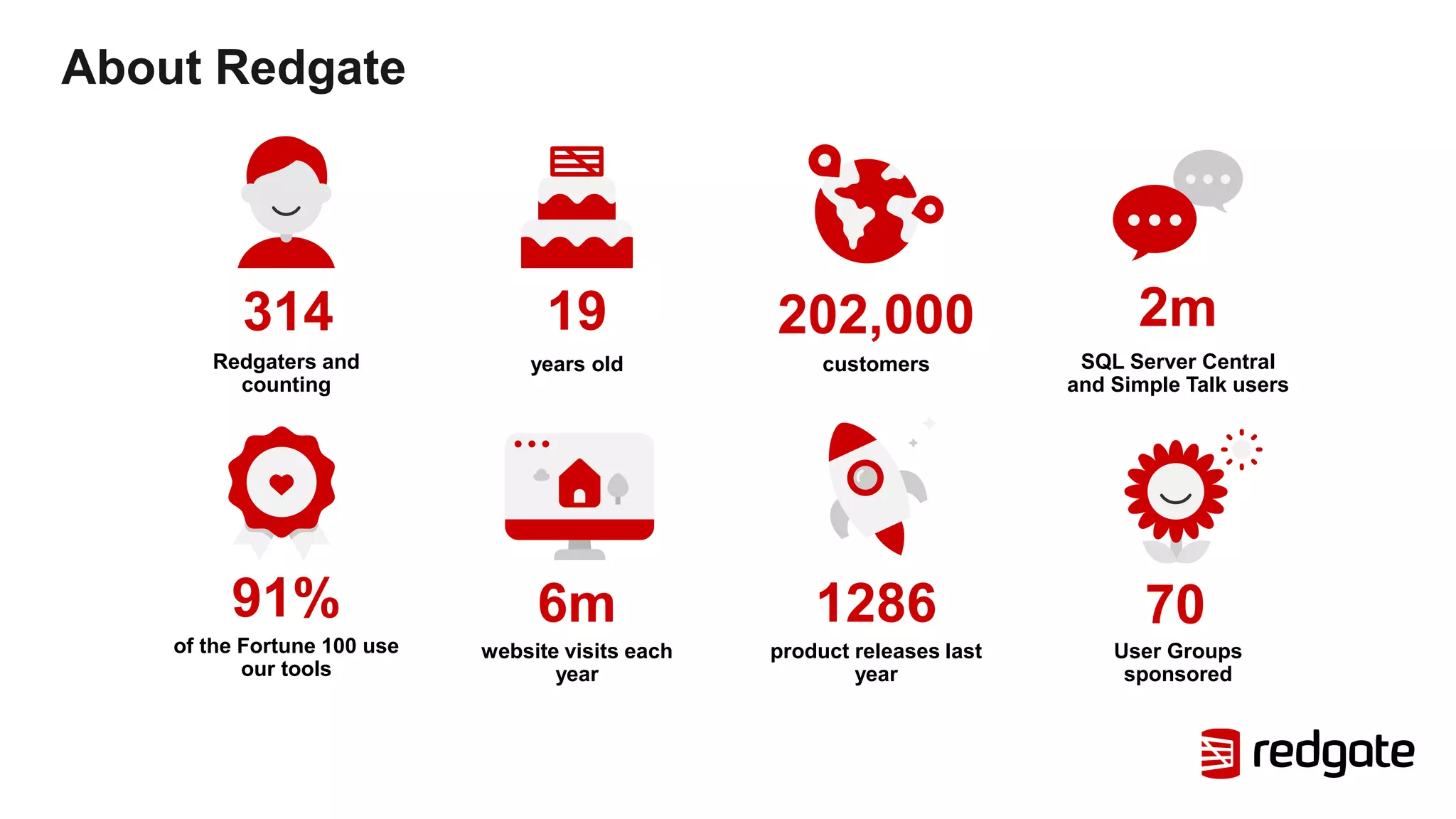
314
Redgaters and
counting
19
years old
202,000
customers
2m
SQL Server Central
and Simple Talk users
91%
of the Fortune 100 use
our tools
6m
website visits each
year
1286
product releases last
year
70
User Groups
sponsored
About Redgate

How to Pitch a Software Development Initiative and Ignite Culture Change

  • 1.
    How to Pitcha Software Development Initiative and Ignite Culture Change
  • 2.
    Ike Ellis @ike_ellis www.ikeellis.com MicrosoftMVP Chairperson of the San Diego TIG Book co-author – Developing Azure Solutions Upcoming course on Azure Databricks Crafting Bytes We’re hiring Data Experts! www.craftingbytes.com
  • 3.
    The challenges ofculture change • Personal • Team • Company • Societal
  • 7.
  • 10.
    Netflix Famous CultureSlide Deck https://www.slideshare.net/reed2001/culture-1798664
  • 12.
  • 13.
    How do Iconvince a reluctant leader that we should go to DevOps for the database? How do I fix a cowboy culture?
  • 14.
    Convince a leaderof the need of DevOps and change the culture? This is very difficult!!!
  • 15.
    That’s a culturechange that you are solely in charge of. How was that? Those of you who were successful, was it easy?
  • 16.
    So how doyou get someone else to change?
  • 17.
    You can’t hire,promote, or fire a reluctant boss So what do we do?
  • 18.
  • 19.
    Every boss (andin fact everyone) listens to the same radio station
  • 20.
  • 21.
    Every leader I’veever met has the same few things in common: • A lingering project • A lingering problem • A publicly embarrassing event
  • 22.
    So tune into the radio station and calm their fear • We can deliver faster • We’ll deliver more frequently • We’ll have fewer bugs • We’ll have more success
  • 23.
    How do weconvince reluctant team members?
  • 24.
    Change is hard! Developingnew habits are hard!
  • 25.
  • 26.
    Phrases of Fear •We tried that and we failed • That will never work here • This is just the latest fad,our processes are tried and true • Our company is always 10 years behind the industry • I have too much to do and this will slow me down • Just another kitchy program that will eat up all our time
  • 27.
    But we canaddress their fears and slowly introduce change so that they are comfortable with it
  • 28.
    Steps to developingnew habits: Step 1: Focus on One New Habit at a time Step 2: Form a new habit? Commit to 30 days per new habit Step 3: Anchor Your New Habit to an Established Habit. Step 4: Take Baby Steps. Don’t be too hard if you misstep or step backward…stay determined to baby step forward Step 5: Make a Plan for Obstacles. Step 6: Create Accountability for Your Habit. Step 7: Reward Important Milestones. Step 8: Build a New Identity.
  • 29.
  • 34.
    Culture TIP: Throwa Pizza Party!
  • 35.
    Culture TIP: $15Tee Shirts!
  • 36.
  • 37.
  • 38.
    Culture TIP: Bathroomsigns LEARN ON THE LOO! • Teach DevOps Best Practices • Teach how to use Source Control • Teach good testing techniques • Teach culture
  • 39.
    Standardizing source codeonly Pros • Provides audit trail of development changes • Manages collaboration of team members • Standardizes coding practices Cons • Manual database code validation, testing, and deployments • Requires a custom process to prevent environment drift
  • 40.
    Elevator pitch template: “Weare doing _____ so that _____.”
  • 41.
    “We should standardize databasecode and automate deployments to reduce feature time to market.”
  • 42.
    SQL Provision addsspeed & safety • Rapidly refresh development databases with real-world datasets • Easily support dedicated environments that isolate changes made in branches and allow experimentation • Mask sensitive data upon image creation
  • 43.
    Should monitoring bein your initial project? Pros • Visibility into production health • SQL Monitor shows when deployments have occurred, making it easy to track customer impact (good and bad) of changes Cons • If an external team in your organization already controls monitoring, proposing a change may be tricky
  • 45.
    In a supportedPOC, ask for guidance from Redgate • Crafting executive summary • Industry standards for success criteria • Sample schedules & help keeping the team on track
  • 46.
    Elements of atechnical project pitch • Executive Summary • Business Need • Solution to be Proven • Success Criteria and Long-Term Gains • Prerequisites • Schedule • Team • Other Resources • Risks
  • 47.
    Project Schedule Keeps yourteam moving in sync Helps key stakeholders understand • Target project duration • Key milestones • Proof of concept schedule and core meetings
  • 48.
    Identify and approachpotential sponsors Who might this project resonate with in your organization? • C-Level • Executive & Senior Managers • Department Heads
  • 50.
    Key actions fora sponsor • Help build a coalition of managers and peers • Be visible to employees throughout the project • Communicate the ‘why’ of the change to employees https://www.prosci.com/resources/articles/change-sponsor-checklist
  • 51.
    Messages from sponsors Engagewith employees with face-to-face messaging • Video and recordings work when in-person isn’t possible, these are more effective than emails alone Answer questions about the business issues • “Why is this change happening?” • “What is the risk of not changing?” https://www.prosci.com/resources/articles/change-management-communication-checklist
  • 52.
    The goal ofa Proof of Concept is demonstrating that the tools achieve your success criteria
  • 53.
    Choose your technicalchampions This team will: • Explore methodologies to standardize database code and choose the best approach for your teams • Set up a proof of concept (POC), safely outside of production • Explore and test automation for provisioning, builds (code validation) and change deployment
  • 54.
    A rule forany POC • It must be safe for the team to make a big mess during the process • It must be safe to fail and start over and try again
  • 55.
    Avoid these anti-patterns •Causes of failed proof-of-concepts • Not a joint venture • Key stakeholders not involved • Think it will be more labor intensive than it is • Developers leading without manager buy-in • Too much focus on tech benefit vs business benefit • Biting off too much at a time
  • 56.
    Once scoped, kickoff any required security assessments
  • 58.
    A POC doesn’ttake 2 months of sustained work The two-three month timeline applies if: • Your internal point team has other duties • You only get a few hours of their time each week Dedicated resource teams have completed Standardize, Automate & Protect POCs in two weeks
  • 59.
  • 60.
    Support practices tomap • What team on-call rotations are needed? • How to avoid single-points of failure in the team? • How/when to escalate to subject matter experts?
  • 61.
    Shifting change approvalleft • Shifting change review and approval to earlier in the development cycle speeds you up • First steps: can standard (pre-approved) changes help get you started? • Sponsorship: this is one place where a sponsor who can help you build a coalition will help
  • 62.
    Completing your Proofof Concept • Collate results from POC and implementation plan • Finalize licensing • Set target implementation date and schedule first call and support session • Internal presentations about business benefits
  • 63.
    When an executivesponsor has been involved from the start, POC sign-off and completion goes very smoothly
  • 64.
    Any questions? Ike Ellis@ike_ellis www.ikeellis.com Microsoft MVP Chairperson of the San Diego TIG Book co-author – Developing Azure Solutions Upcoming course on Azure Databricks Crafting Bytes We’re hiring Data Experts! www.craftingbytes.com
  • 65.
    314 Redgaters and counting 19 years old 202,000 customers 2m SQLServer Central and Simple Talk users 91% of the Fortune 100 use our tools 6m website visits each year 1286 product releases last year 70 User Groups sponsored About Redgate