
SYEDRAADALISHAH
STUDENT OF CIVIL ENGINEERING
AT UET LAHORE
SOCIAL ACTIVIST, SPEAKER, WRITER,
HR EXECUTIVE, GRAPHICS DESIGNER,
HOST
HOW TO
IMPROVE
COMMUNICATION
SKILLS?
Whatdoyou
meanby
Communication?
3
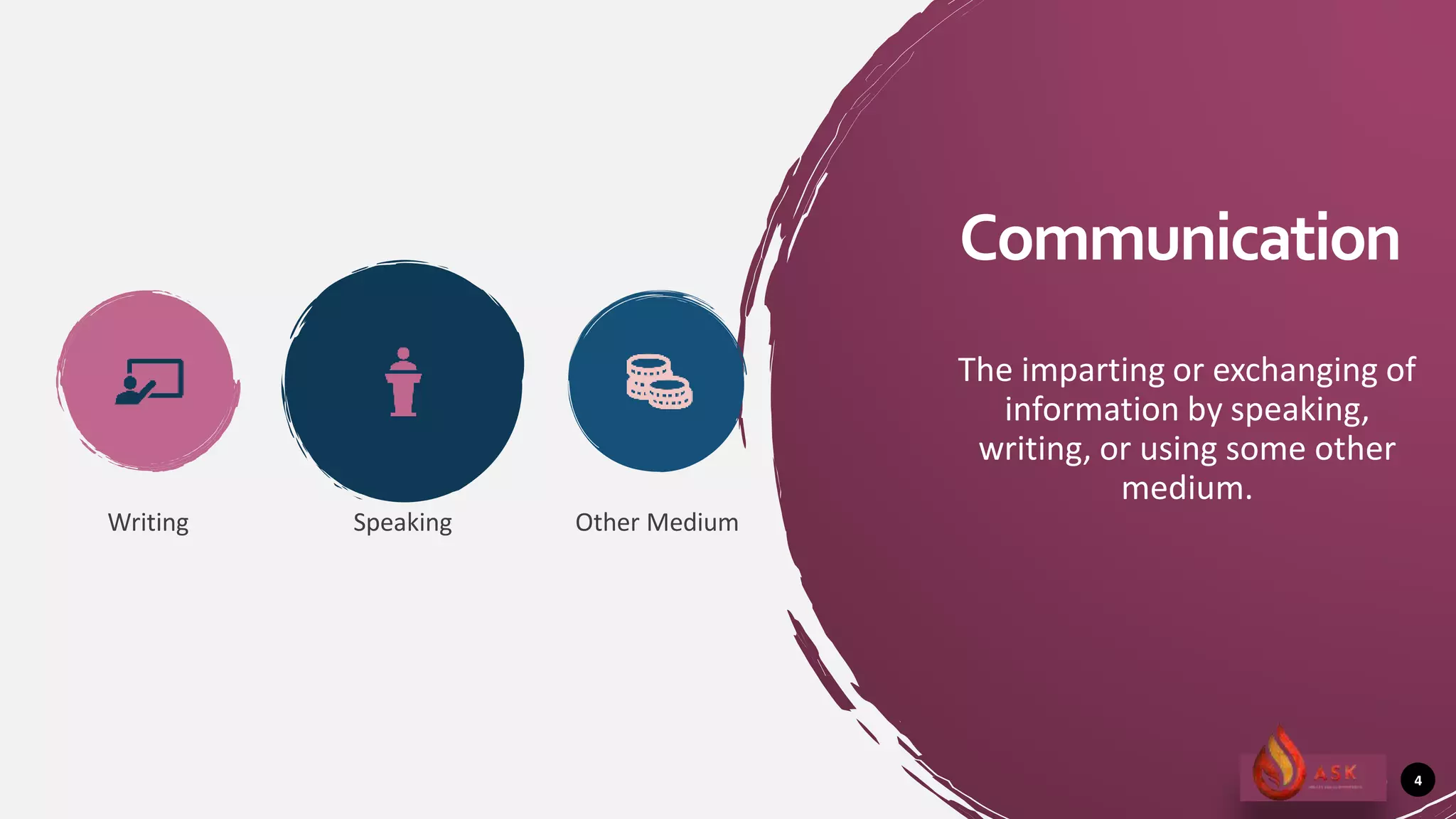
Communication
The imparting or exchanging of
information by speaking,
writing, or using some other
medium.
Writing Speaking Other Medium
4
5
6
SPEAKING WRITING
LISTENING READING
7
HowtoImprove
Communication
Skills?
Speaking:
If there’s one communication skill everyone needs, but many fear, it’s speaking
effectively. The fear is in terms of speaking in front of an audience—presentations,
meetings and speeches.
 You speak clearly and concisely to draw your audience’s attention
 You’re able to convey your ideas, thoughts and opinions with impact
 You articulate things well into words with a strong verbal delivery
 You have the capacity to overcome a fear of public speaking with
practice
 You’re more likely to ace your interviews or client meetings by
speaking impactfully.
8
Writing:
Linguistic skills are incomplete without proficient writing abilities. Writing well means
you’re able to impactfully present your ideas.
 You know how to structure your writing to generate interest
 You can tell a story with your words to make your communication all
the more interesting
 Your writing is clear and precise without wasting words
 You’re able to put your thoughts into words
 You can summarize long reports and texts for easier understanding
9
Listening:
Listening is an activity where you’re fully engaged. Not only are you registering their
words but also getting curious to learn more. Listening successfully will usually end with
you asking follow-up questions about the speaker’s intent, drive and purpose.
 You want to actively understand what they’re trying to convey
 You give them your complete attention
 You ask more questions than giving answers
 You listen first, speak or interject later
 You make the speaker feel welcome so they can open up to you
10
Reading:
When you read, you take your time to understand what the author’s trying to convey
with their words.
 You’re able to understand what the author wants to convey the first
time
 You manage your time well without spending hours with a text
 You can draw conclusions, write summaries and analyse the content
without a problem
 You make notes and memos so it’s easier to identify parts of a text
 You’re not afraid to tackle 100-page reports because you know how to
approach a large body of text
11
Rules for an
effective
communication.
12
1. Listen,listen,andlisten.
13
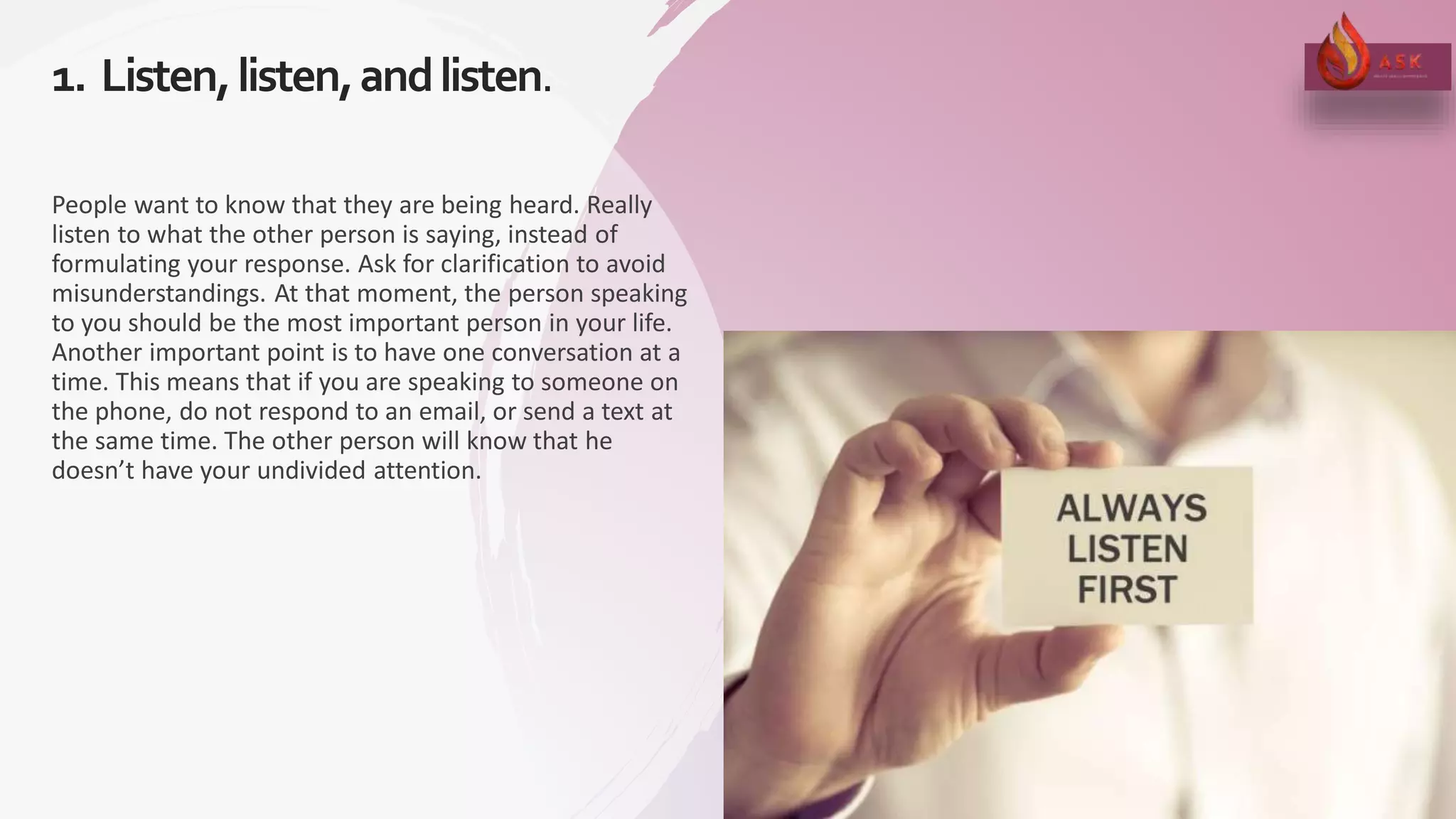
People want to know that they are being heard. Really
listen to what the other person is saying, instead of
formulating your response. Ask for clarification to avoid
misunderstandings. At that moment, the person speaking
to you should be the most important person in your life.
Another important point is to have one conversation at a
time. This means that if you are speaking to someone on
the phone, do not respond to an email, or send a text at
the same time. The other person will know that he
doesn’t have your undivided attention.
2. Whoyouaretalkingtomatters.
14
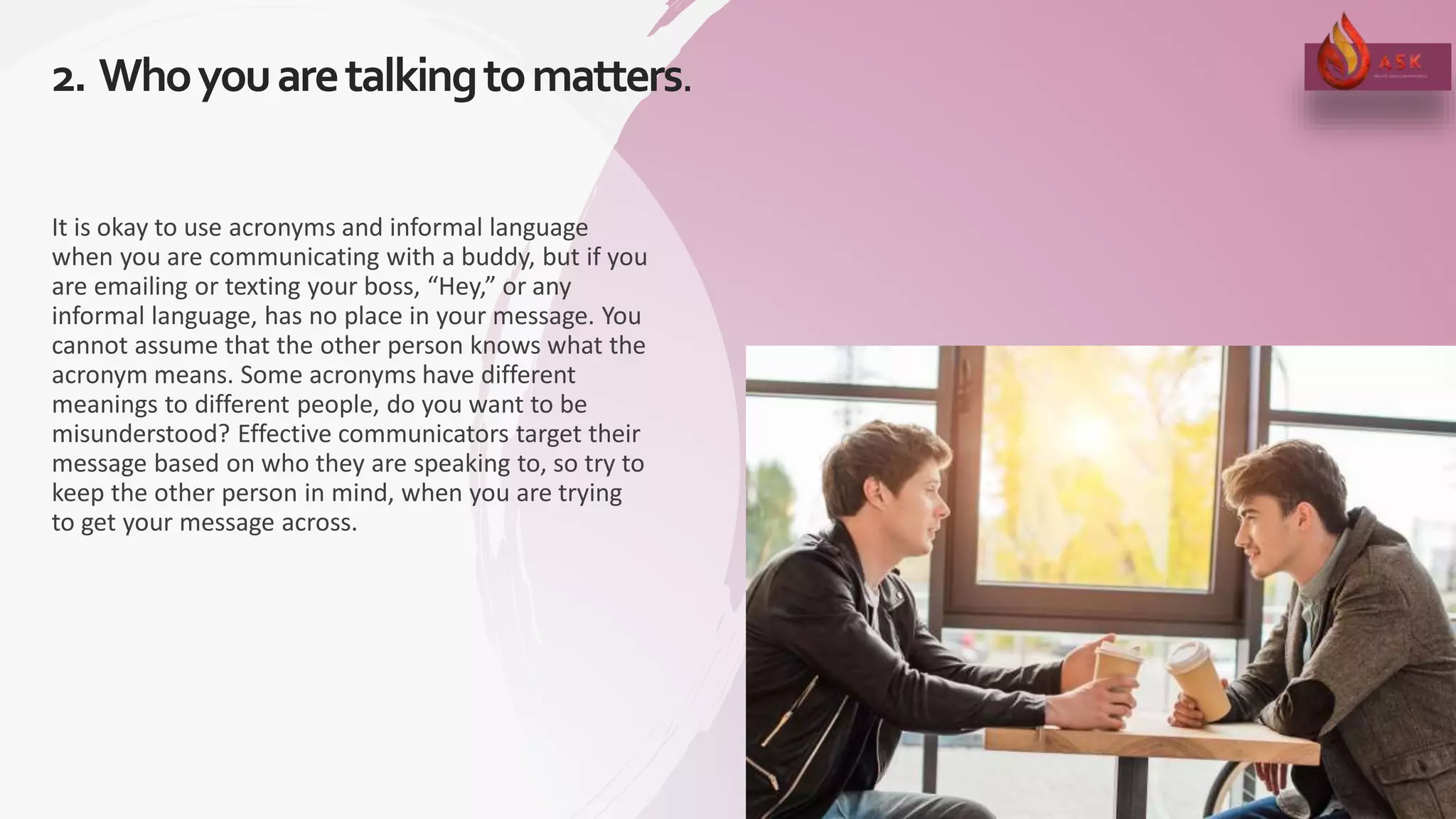
It is okay to use acronyms and informal language
when you are communicating with a buddy, but if you
are emailing or texting your boss, “Hey,” or any
informal language, has no place in your message. You
cannot assume that the other person knows what the
acronym means. Some acronyms have different
meanings to different people, do you want to be
misunderstood? Effective communicators target their
message based on who they are speaking to, so try to
keep the other person in mind, when you are trying
to get your message across.
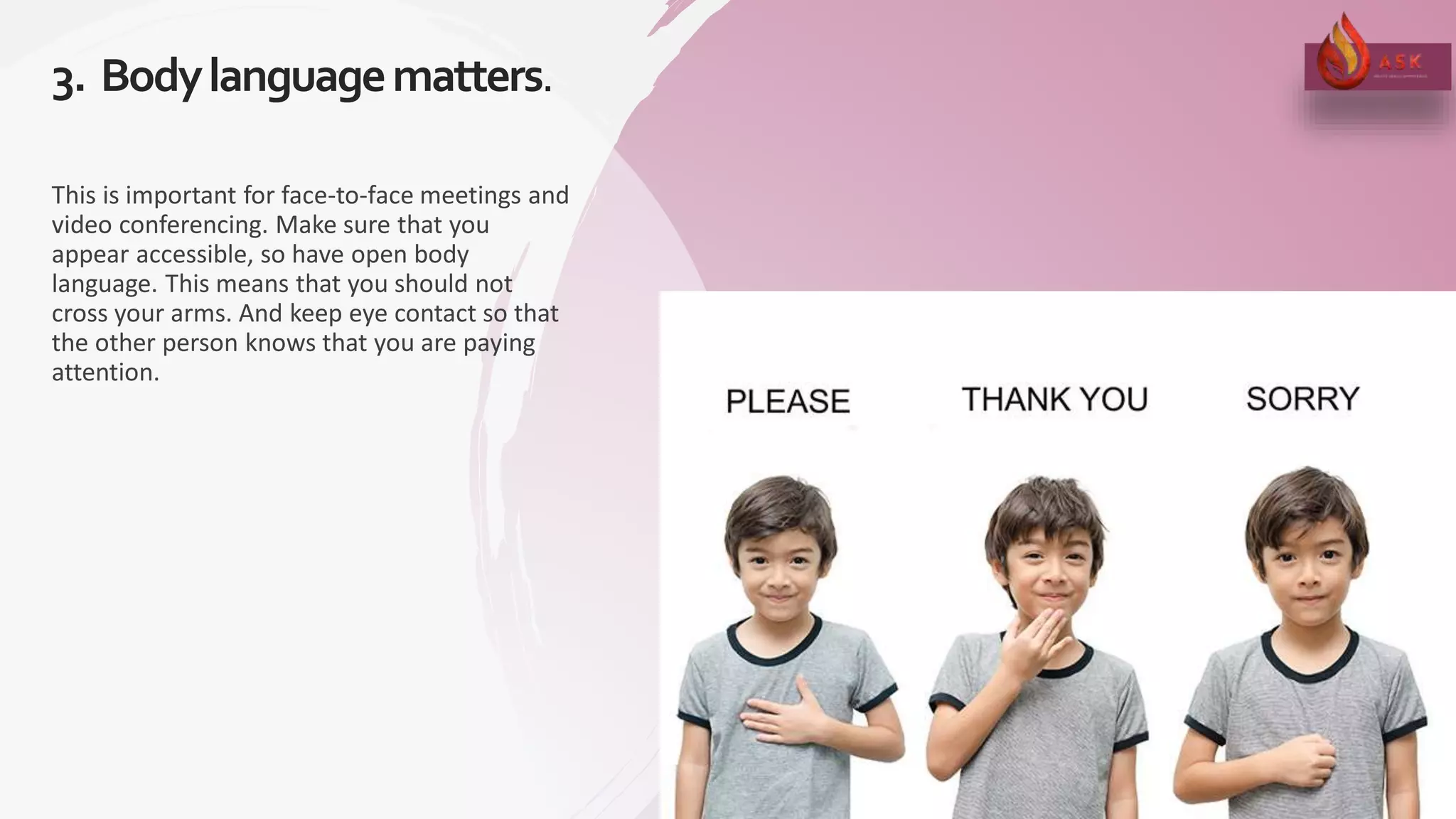
3. Bodylanguagematters.
15
This is important for face-to-face meetings and
video conferencing. Make sure that you
appear accessible, so have open body
language. This means that you should not
cross your arms. And keep eye contact so that
the other person knows that you are paying
attention.
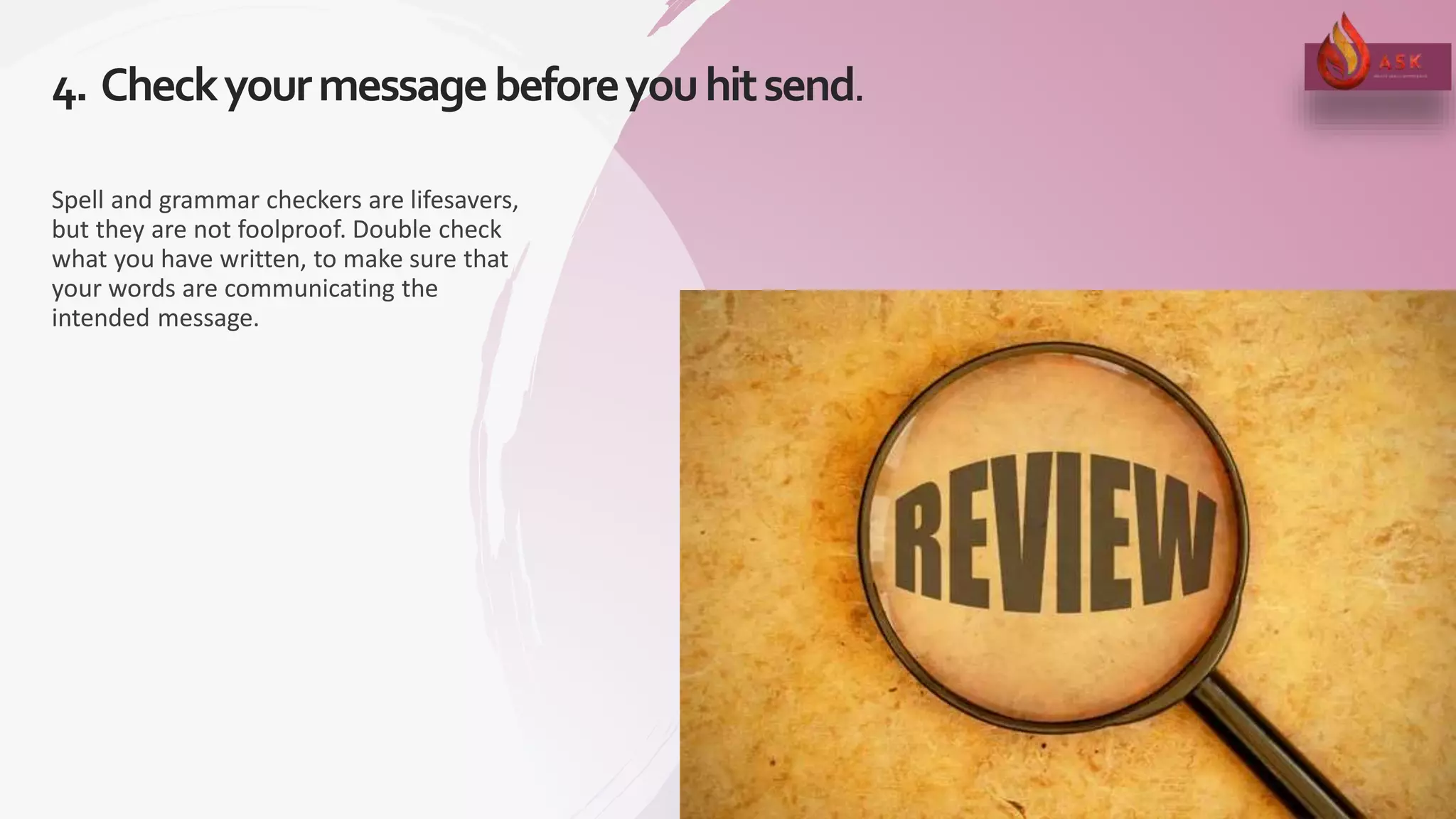
4. Checkyourmessagebeforeyouhitsend.
16
Spell and grammar checkers are lifesavers,
but they are not foolproof. Double check
what you have written, to make sure that
your words are communicating the
intended message.
5. Bebrief,yetspecific.
17
For written and verbal communication,
practice being brief yet specific enough,
that you provide enough information for
the other person to understand what you
are trying to say. And if you are responding
to an email, make sure that you read the
entire email before crafting your response.
With enough practice, you will learn not to
ramble, or give way too much information.
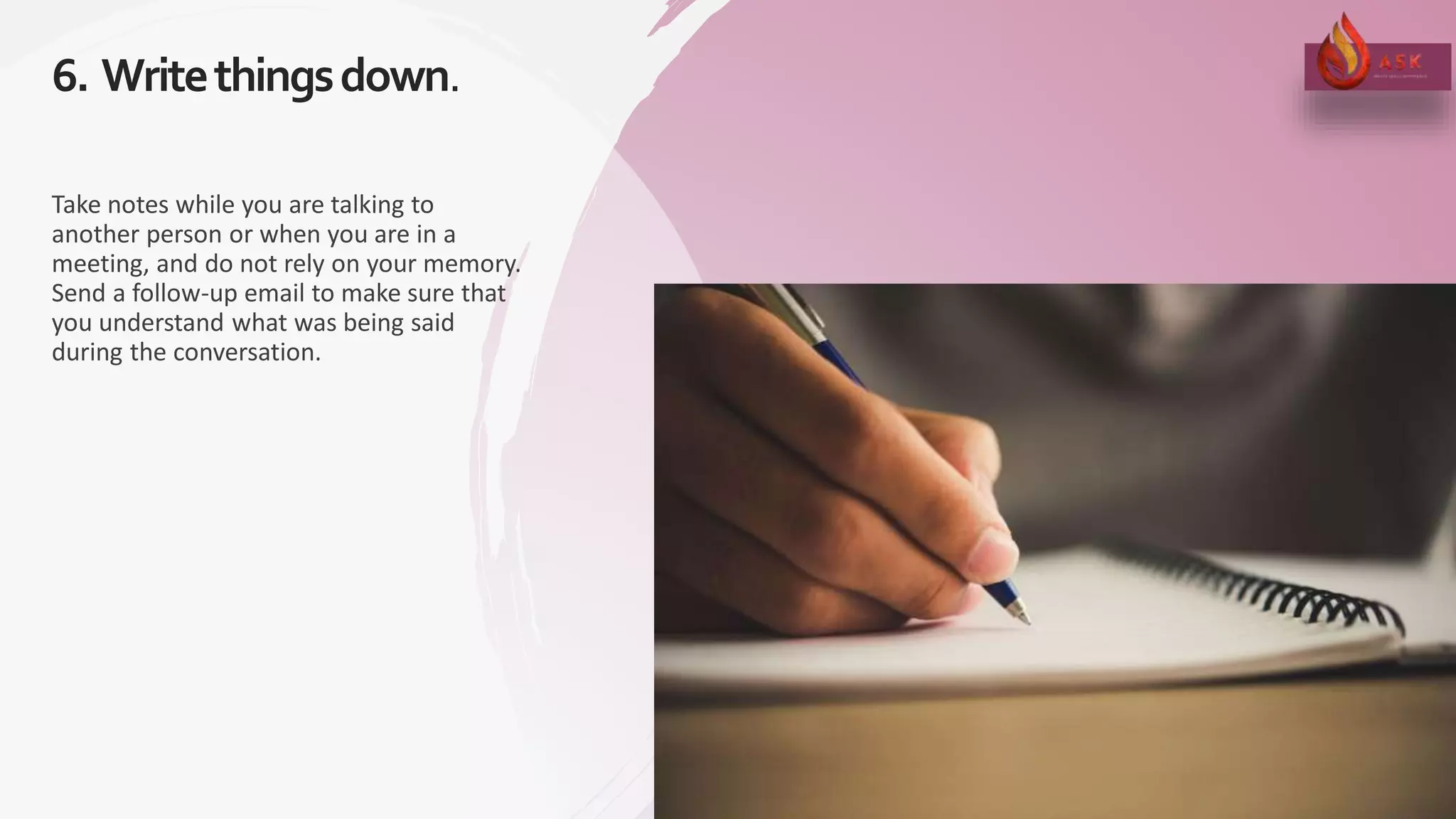
6. Writethingsdown.
18
Take notes while you are talking to
another person or when you are in a
meeting, and do not rely on your memory.
Send a follow-up email to make sure that
you understand what was being said
during the conversation.
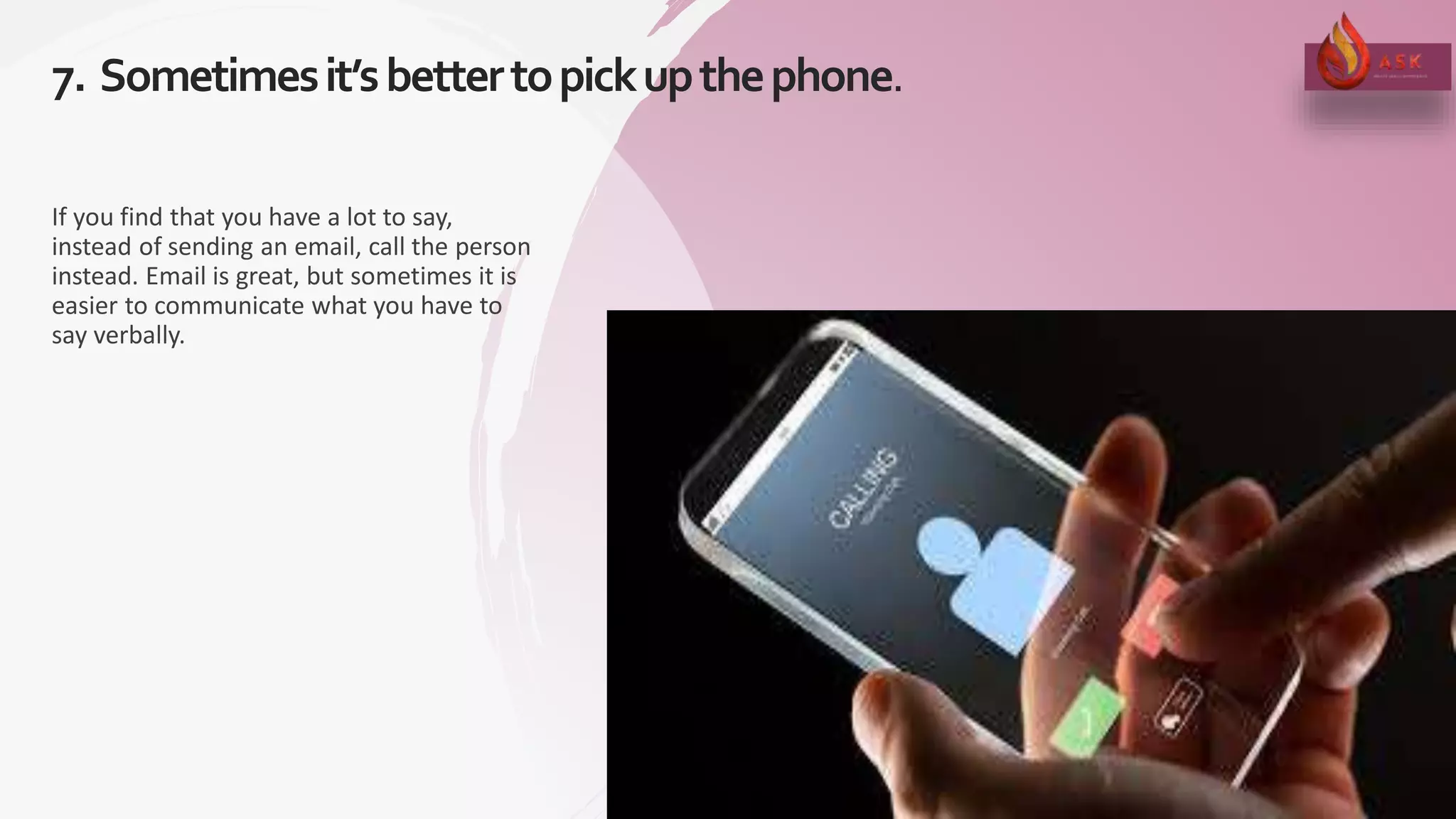
7. Sometimesit’sbettertopickupthephone.
19
If you find that you have a lot to say,
instead of sending an email, call the person
instead. Email is great, but sometimes it is
easier to communicate what you have to
say verbally.
8. Thinkbeforeyouspeak
20
Always pause before you speak, not
saying the first thing that comes to
mind. Take a moment and pay close
attention to what you say and how you
say it. This one habit will allow you to
avoid embarrassments.
9. Treateveryoneequally.
21
Do not talk down to anyone,
treating everyone with respect.
Treat others as your equal.
10. Maintainapositiveattitudeandsmile.
22
Even when you are speaking on the phone,
smile because your positive attitude will shine
through and the other person will know it.
When you smile often and exude a positive
attitude, people will
THANKYOU
Syed Raad Ali Shah
23

"How to improve Communication Skills"

  • 1.
    SYEDRAADALISHAH STUDENT OF CIVILENGINEERING AT UET LAHORE SOCIAL ACTIVIST, SPEAKER, WRITER, HR EXECUTIVE, GRAPHICS DESIGNER, HOST
  • 2.
  • 3.
  • 4.
    Communication The imparting orexchanging of information by speaking, writing, or using some other medium. Writing Speaking Other Medium 4
  • 5.
  • 6.
  • 7.
  • 8.
    Speaking: If there’s onecommunication skill everyone needs, but many fear, it’s speaking effectively. The fear is in terms of speaking in front of an audience—presentations, meetings and speeches.  You speak clearly and concisely to draw your audience’s attention  You’re able to convey your ideas, thoughts and opinions with impact  You articulate things well into words with a strong verbal delivery  You have the capacity to overcome a fear of public speaking with practice  You’re more likely to ace your interviews or client meetings by speaking impactfully. 8
  • 9.
    Writing: Linguistic skills areincomplete without proficient writing abilities. Writing well means you’re able to impactfully present your ideas.  You know how to structure your writing to generate interest  You can tell a story with your words to make your communication all the more interesting  Your writing is clear and precise without wasting words  You’re able to put your thoughts into words  You can summarize long reports and texts for easier understanding 9
  • 10.
    Listening: Listening is anactivity where you’re fully engaged. Not only are you registering their words but also getting curious to learn more. Listening successfully will usually end with you asking follow-up questions about the speaker’s intent, drive and purpose.  You want to actively understand what they’re trying to convey  You give them your complete attention  You ask more questions than giving answers  You listen first, speak or interject later  You make the speaker feel welcome so they can open up to you 10
  • 11.
    Reading: When you read,you take your time to understand what the author’s trying to convey with their words.  You’re able to understand what the author wants to convey the first time  You manage your time well without spending hours with a text  You can draw conclusions, write summaries and analyse the content without a problem  You make notes and memos so it’s easier to identify parts of a text  You’re not afraid to tackle 100-page reports because you know how to approach a large body of text 11
  • 12.
  • 13.
    1. Listen,listen,andlisten. 13 People wantto know that they are being heard. Really listen to what the other person is saying, instead of formulating your response. Ask for clarification to avoid misunderstandings. At that moment, the person speaking to you should be the most important person in your life. Another important point is to have one conversation at a time. This means that if you are speaking to someone on the phone, do not respond to an email, or send a text at the same time. The other person will know that he doesn’t have your undivided attention.
  • 14.
    2. Whoyouaretalkingtomatters. 14 It isokay to use acronyms and informal language when you are communicating with a buddy, but if you are emailing or texting your boss, “Hey,” or any informal language, has no place in your message. You cannot assume that the other person knows what the acronym means. Some acronyms have different meanings to different people, do you want to be misunderstood? Effective communicators target their message based on who they are speaking to, so try to keep the other person in mind, when you are trying to get your message across.
  • 15.
    3. Bodylanguagematters. 15 This isimportant for face-to-face meetings and video conferencing. Make sure that you appear accessible, so have open body language. This means that you should not cross your arms. And keep eye contact so that the other person knows that you are paying attention.
  • 16.
    4. Checkyourmessagebeforeyouhitsend. 16 Spell andgrammar checkers are lifesavers, but they are not foolproof. Double check what you have written, to make sure that your words are communicating the intended message.
  • 17.
    5. Bebrief,yetspecific. 17 For writtenand verbal communication, practice being brief yet specific enough, that you provide enough information for the other person to understand what you are trying to say. And if you are responding to an email, make sure that you read the entire email before crafting your response. With enough practice, you will learn not to ramble, or give way too much information.
  • 18.
    6. Writethingsdown. 18 Take noteswhile you are talking to another person or when you are in a meeting, and do not rely on your memory. Send a follow-up email to make sure that you understand what was being said during the conversation.
  • 19.
    7. Sometimesit’sbettertopickupthephone. 19 If youfind that you have a lot to say, instead of sending an email, call the person instead. Email is great, but sometimes it is easier to communicate what you have to say verbally.
  • 20.
    8. Thinkbeforeyouspeak 20 Always pausebefore you speak, not saying the first thing that comes to mind. Take a moment and pay close attention to what you say and how you say it. This one habit will allow you to avoid embarrassments.
  • 21.
    9. Treateveryoneequally. 21 Do nottalk down to anyone, treating everyone with respect. Treat others as your equal.
  • 22.
    10. Maintainapositiveattitudeandsmile. 22 Even whenyou are speaking on the phone, smile because your positive attitude will shine through and the other person will know it. When you smile often and exude a positive attitude, people will
  • 23.