














AContent
Marketing Strategy
to Increase Your
ROI up to 60%
According to Demand
Metric, 78 percent of
CMOs think that
custom content is the
future of marketing.
But, if content marketing is so
good, why do so many people not
see results with it?
The answer is simple: Most people
don’t have a documented content
marketing strategy. That’s why
they fail.
As a matter of fact, a recent
research conducted by the
Content Marketing Institute
revealed that 60% of
businesses that have a
documented strategy
reported effectiveness and
good results.
6steps that will allow you to
develop a winning strategy in
record time.
Here It is,
Number:1
Create a planning
document
Just create an Excel spreadsheet and name it
“Content Marketing Strategy”.
Number:2
Set your business
objectives
Every business owner knows that objectives are
extremely important.
# 1: State the goals you want to
accomplish with content marketing
# 2: Add specific numbers
(benchmarks)
# 3: What’s the business impact?
Follow the steps below to define your
objectives properly:
# 1: State the goals you
want to accomplish with
content marketing
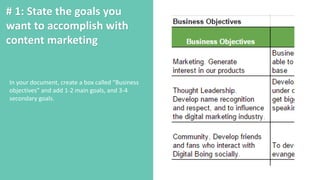
In your document, create a box called “Business
objectives” and add 1-2 main goals, and 3-4
secondary goals.
# 2: Add specific numbers
(benchmarks)
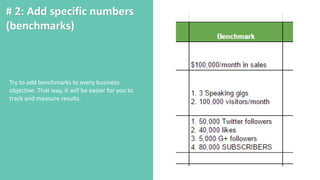
Try to add benchmarks to every business
objective. That way, it will be easier for you to
track and measure results.
# 3: What’s the business
impact?
Now that you have set your goals and specific
benchmarks, it’s time to add a “reason why” to
each of them. In other words, how will those
objectives directly benefit your business?
Number:3
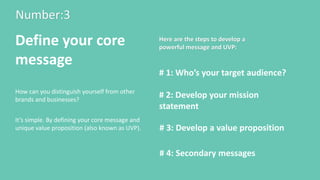
Define your core
message
How can you distinguish yourself from other
brands and businesses?
# 1: Who’s your target audience?
# 2: Develop your mission
statement
# 3: Develop a value proposition
Here are the steps to develop a
powerful message and UVP:
It’s simple. By defining your core message and
unique value proposition (also known as UVP).
# 4: Secondary messages
# 1: Who’s your target
audience?
In order to create a compelling message, you
need to understand who your audience is and
what their problems are. If you don’t understand
that, your content won’t benefit them at all.
# 2: Develop your mission
statement
According to Entrepreneur Magazine:
“A sentence describing a company's function,
markets, and competitive advantages; a short
written statement of your business goals and
philosophies”
# 3: Develop a value
proposition
“A unique value proposition is a statement that
directly communicates a specific benefit to your
main audience and distinguishes you from your
competitors”
Read more in detail
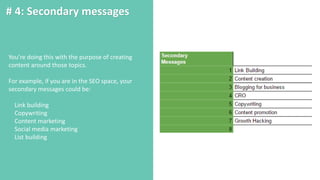
# 4: Secondary messages
You’re doing this with the purpose of creating
content around those topics.
For example, if you are in the SEO space, your
secondary messages could be:
Link building
Copywriting
Content marketing
Social media marketing
List building
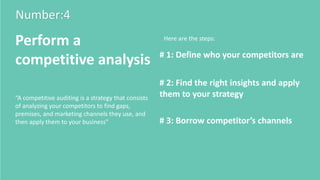
Number:4
Perform a
competitive analysis # 1: Define who your competitors are
# 2: Find the right insights and apply
them to your strategy
# 3: Borrow competitor’s channels
Here are the steps:
“A competitive auditing is a strategy that consists
of analyzing your competitors to find gaps,
premises, and marketing channels they use, and
then apply them to your business”
# 1: Define who your
competitors are
No worry, finding your competitors is not that
hard, just follow one of the two techniques below
and you’ll be fine:
Option 1: Use Google Search
Option 2: Use BuzzSumo
That’s a good way to find your stronger
competitors.
Read more in detail
# 2: Find the right insights
and apply them to your
strategy
Once you have a list of competitors, it’s time to
perform a competitive analysis on their content.
Here are the main things you need to analyze:
Their headlines
Types of content they use
Topics they cover
Social networks they use
Style of their content
How often they publish content
The gap
# 3: Borrow competitor’s
channels
It’s time to see which channels your
competitor use and who their main
audience is.
Here are the options:
Option 1: Use Alexa
Option 2: Use Similar Web
Read more in detail
Number:5
Choose the right
instruments # 1: Choose a CMS
# 2: Define the content types you
will use
# 3: Define the channels you use to
promote your content
Here are the steps:
Now it’s time to choose the tools and instruments
you’ll use to implement your content strategy:
Read more in detail
Number:6
Develop an editorial
calendar # 1: Set your frequency
# 2: Structure the workflow
# 3: Track results
Here are the steps:
An editorial calendar is a simple document where
all your content is programed and where you can
plan your next moves. It’s extremely useful to
keep you organized.
Read more in detail
Conclusion
Developing a good content marketing strategy can become really tedious, But all
your efforts are worth it.
May your content make the web better…
Read more in detail

How to develop a winning content marketing strategy

  • 1.
  • 2.
    According to Demand Metric,78 percent of CMOs think that custom content is the future of marketing.
  • 3.
    But, if contentmarketing is so good, why do so many people not see results with it? The answer is simple: Most people don’t have a documented content marketing strategy. That’s why they fail.
  • 4.
    As a matterof fact, a recent research conducted by the Content Marketing Institute revealed that 60% of businesses that have a documented strategy reported effectiveness and good results.
  • 5.
    6steps that willallow you to develop a winning strategy in record time. Here It is,
  • 6.
    Number:1 Create a planning document Justcreate an Excel spreadsheet and name it “Content Marketing Strategy”.
  • 7.
    Number:2 Set your business objectives Everybusiness owner knows that objectives are extremely important. # 1: State the goals you want to accomplish with content marketing # 2: Add specific numbers (benchmarks) # 3: What’s the business impact? Follow the steps below to define your objectives properly:
  • 8.
    # 1: Statethe goals you want to accomplish with content marketing In your document, create a box called “Business objectives” and add 1-2 main goals, and 3-4 secondary goals.
  • 9.
    # 2: Addspecific numbers (benchmarks) Try to add benchmarks to every business objective. That way, it will be easier for you to track and measure results.
  • 10.
    # 3: What’sthe business impact? Now that you have set your goals and specific benchmarks, it’s time to add a “reason why” to each of them. In other words, how will those objectives directly benefit your business?
  • 11.
    Number:3 Define your core message Howcan you distinguish yourself from other brands and businesses? # 1: Who’s your target audience? # 2: Develop your mission statement # 3: Develop a value proposition Here are the steps to develop a powerful message and UVP: It’s simple. By defining your core message and unique value proposition (also known as UVP). # 4: Secondary messages
  • 12.
    # 1: Who’syour target audience? In order to create a compelling message, you need to understand who your audience is and what their problems are. If you don’t understand that, your content won’t benefit them at all.
  • 13.
    # 2: Developyour mission statement According to Entrepreneur Magazine: “A sentence describing a company's function, markets, and competitive advantages; a short written statement of your business goals and philosophies”
  • 14.
    # 3: Developa value proposition “A unique value proposition is a statement that directly communicates a specific benefit to your main audience and distinguishes you from your competitors” Read more in detail
  • 15.
    # 4: Secondarymessages You’re doing this with the purpose of creating content around those topics. For example, if you are in the SEO space, your secondary messages could be: Link building Copywriting Content marketing Social media marketing List building
  • 16.
    Number:4 Perform a competitive analysis# 1: Define who your competitors are # 2: Find the right insights and apply them to your strategy # 3: Borrow competitor’s channels Here are the steps: “A competitive auditing is a strategy that consists of analyzing your competitors to find gaps, premises, and marketing channels they use, and then apply them to your business”
  • 17.
    # 1: Definewho your competitors are No worry, finding your competitors is not that hard, just follow one of the two techniques below and you’ll be fine: Option 1: Use Google Search Option 2: Use BuzzSumo That’s a good way to find your stronger competitors. Read more in detail
  • 18.
    # 2: Findthe right insights and apply them to your strategy Once you have a list of competitors, it’s time to perform a competitive analysis on their content. Here are the main things you need to analyze: Their headlines Types of content they use Topics they cover Social networks they use Style of their content How often they publish content The gap
  • 19.
    # 3: Borrowcompetitor’s channels It’s time to see which channels your competitor use and who their main audience is. Here are the options: Option 1: Use Alexa Option 2: Use Similar Web Read more in detail
  • 20.
    Number:5 Choose the right instruments# 1: Choose a CMS # 2: Define the content types you will use # 3: Define the channels you use to promote your content Here are the steps: Now it’s time to choose the tools and instruments you’ll use to implement your content strategy: Read more in detail
  • 21.
    Number:6 Develop an editorial calendar# 1: Set your frequency # 2: Structure the workflow # 3: Track results Here are the steps: An editorial calendar is a simple document where all your content is programed and where you can plan your next moves. It’s extremely useful to keep you organized. Read more in detail
  • 22.
    Conclusion Developing a goodcontent marketing strategy can become really tedious, But all your efforts are worth it. May your content make the web better… Read more in detail