HOW TO CREATE A SALES PLAN
(Tips + Examples)
Do you have a sales
plan?
Are you tired of
constantly failing at
meeting your sales
goals?
Or is the confusion
of how to create one
lingering in your
head?
A well-laid sales plan is crucial regardless of the size of the business or industry.
The focus of a sales plan should
be on your objectives, potential
obstacles, and necessary
actions at every stage.
Whether you are an
entrepreneur, sales executive,
or sales manager, developing a
sales plan will help you achieve
your goals.
So, if your current plan isn’t
working, it’s time to conduct a
deeper analysis for better
results..
Collect Relevant Sales Data and Study Current Trends
Understanding past data is crucial to creating a compelling future strategy. Here are some
tips for analyzing sales data and trends…
Identify the average
deal size per team
member by dividing the
total number of deals by
the total amount that
comes in.
Calculate the percentage
of leads that convert into
customers.
Target specific metrics
to ensure you spend
time closing the right
leads.
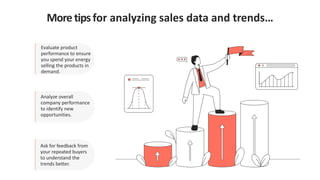
Moretipsfor analyzing sales data and trends…
Evaluate product
performance to ensure
you spend your energy
selling the products in
demand.
Analyze overall
company performance
to identify new
opportunities.
Ask for feedback from
your repeated buyers
to understand the
trends better.
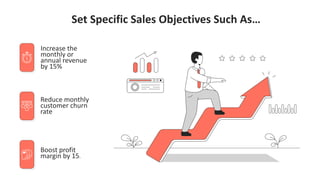
Set Specific Sales Objectives Such As…
Increase the
monthly or
annual revenue
by 15%
Reduce monthly
customer churn
rate
Boost profit
margin by 15%
MoreSalesObjectivesExamples…
Increase the number
of units sold in a
month.
Increase customer
lifetime value by
20%
Reduce the sales
cycle time by 8%.
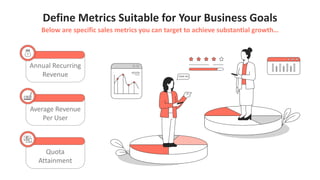
Define Metrics Suitable for Your Business Goals
Below are specific sales metrics you can target to achieve substantial growth…
Annual Recurring
Revenue
Average Revenue
Per User
Quota
Attainment
More Sample Sales Metrics….
Win Rate, Sales Cycle
Length, Churn Rate
Conversion Rate,
Average Deal Size
Average Profit Margin,
Deal Slip Rate, Lead
Scoring
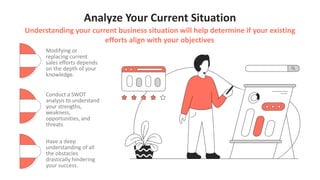
Analyze Your Current Situation
Understanding your current business situation will help determine if your existing
efforts align with your objectives.
Modifying or
replacing current
sales efforts depends
on the depth of your
knowledge.
Conduct a SWOT
analysis to understand
your strengths,
weakness,
opportunities, and
threats.
Have a deep
understanding of all
the obstacles
drastically hindering
your success.
Conduct Sales Forecasting
Create an in-depth report with predictions about how much a particular salesperson, team,
or company should sell in a given time frame.
The time frame can be weekly,
monthly, quarterly, or annually.
It’s created based on past
performance data.
Managers must ensure their team
closes enough deals required to
achieve business objectives.
Following are some tips for
conducting effective sales
forecasting for your business:
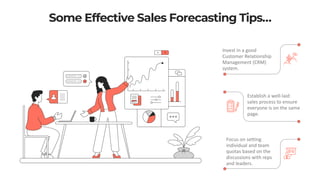
Some Effective Sales Forecasting Tips…
Invest in a good
Customer Relationship
Management (CRM)
system.
Establish a well-laid
sales process to ensure
everyone is on the same
page.
Focus on setting
individual and team
quotas based on the
discussions with reps
and leaders.
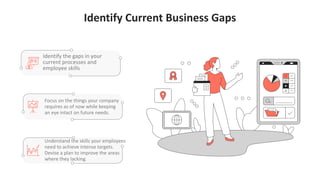
Identify Current Business Gaps
Identify the gaps in your
current processes and
employee skills.
Focus on the things your company
requires as of now while keeping
an eye intact on future needs.
Understand the skills your employees
need to achieve intense targets.
Devise a plan to improve the areas
where they lacking.
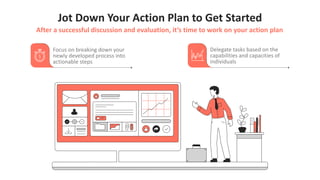
Jot Down Your Action Plan to Get Started
After a successful discussion and evaluation, it’s time to work on your action plan.
Focus on breaking down your
newly developed process into
actionable steps.
Delegate tasks based on the
capabilities and capacities of
individuals.
Brought to you by New Horizons 123
NewHorizons123.com
Get started with your
sales plan today to
effectively achieve
your business
objectives.
Remember that
spending considerable
time researching and
analyzing is crucial to
developing a sales plan.
Execute the plan and
keep modifying with
changing
requirements.

How To Create A Sales Plan.pdf

  • 1.
    HOW TO CREATEA SALES PLAN (Tips + Examples) Do you have a sales plan? Are you tired of constantly failing at meeting your sales goals? Or is the confusion of how to create one lingering in your head?
  • 2.
    A well-laid salesplan is crucial regardless of the size of the business or industry. The focus of a sales plan should be on your objectives, potential obstacles, and necessary actions at every stage. Whether you are an entrepreneur, sales executive, or sales manager, developing a sales plan will help you achieve your goals. So, if your current plan isn’t working, it’s time to conduct a deeper analysis for better results..
  • 3.
    Collect Relevant SalesData and Study Current Trends Understanding past data is crucial to creating a compelling future strategy. Here are some tips for analyzing sales data and trends… Identify the average deal size per team member by dividing the total number of deals by the total amount that comes in. Calculate the percentage of leads that convert into customers. Target specific metrics to ensure you spend time closing the right leads.
  • 4.
    Moretipsfor analyzing salesdata and trends… Evaluate product performance to ensure you spend your energy selling the products in demand. Analyze overall company performance to identify new opportunities. Ask for feedback from your repeated buyers to understand the trends better.
  • 5.
    Set Specific SalesObjectives Such As… Increase the monthly or annual revenue by 15% Reduce monthly customer churn rate Boost profit margin by 15%
  • 6.
    MoreSalesObjectivesExamples… Increase the number ofunits sold in a month. Increase customer lifetime value by 20% Reduce the sales cycle time by 8%.
  • 7.
    Define Metrics Suitablefor Your Business Goals Below are specific sales metrics you can target to achieve substantial growth… Annual Recurring Revenue Average Revenue Per User Quota Attainment
  • 8.
    More Sample SalesMetrics…. Win Rate, Sales Cycle Length, Churn Rate Conversion Rate, Average Deal Size Average Profit Margin, Deal Slip Rate, Lead Scoring
  • 9.
    Analyze Your CurrentSituation Understanding your current business situation will help determine if your existing efforts align with your objectives. Modifying or replacing current sales efforts depends on the depth of your knowledge. Conduct a SWOT analysis to understand your strengths, weakness, opportunities, and threats. Have a deep understanding of all the obstacles drastically hindering your success.
  • 10.
    Conduct Sales Forecasting Createan in-depth report with predictions about how much a particular salesperson, team, or company should sell in a given time frame. The time frame can be weekly, monthly, quarterly, or annually. It’s created based on past performance data. Managers must ensure their team closes enough deals required to achieve business objectives. Following are some tips for conducting effective sales forecasting for your business:
  • 11.
    Some Effective SalesForecasting Tips… Invest in a good Customer Relationship Management (CRM) system. Establish a well-laid sales process to ensure everyone is on the same page. Focus on setting individual and team quotas based on the discussions with reps and leaders.
  • 12.
    Identify Current BusinessGaps Identify the gaps in your current processes and employee skills. Focus on the things your company requires as of now while keeping an eye intact on future needs. Understand the skills your employees need to achieve intense targets. Devise a plan to improve the areas where they lacking.
  • 13.
    Jot Down YourAction Plan to Get Started After a successful discussion and evaluation, it’s time to work on your action plan. Focus on breaking down your newly developed process into actionable steps. Delegate tasks based on the capabilities and capacities of individuals.
  • 14.
    Brought to youby New Horizons 123 NewHorizons123.com Get started with your sales plan today to effectively achieve your business objectives. Remember that spending considerable time researching and analyzing is crucial to developing a sales plan. Execute the plan and keep modifying with changing requirements.