





How to Compare
Two Writing Systems


Charisma Pimentel Coloma
1. Introduction
1.1   learning a writing systems is not the same as
         learning a language
1.2   the written symbols of each language form a
         system
1.3   types of writing systems
1.4   regularity of fit
1.5   knowing how to read and write involve habits
1.6   transfer of native writing habits affects our
         learning of the writing system of a foreign
         language
1.7   need for systematic comparison of systems
1.1 “learning a writing system is not the
      same as learning a language.”
            (Bloomfield, 1933)


       • a child learns to speak before he
         learns to read and write
       • caveat: when there is a
         similarity     in the writing
         systems of both L1 & L2.
1.2 “the written symbols of each
   language form a system.”

 • symbols      language

 • not all features of the symbols are
   equally important

 • caveat: when the correspondence
   between sound & writing is more
   complex, better use a system
   approach rather than word item
   approach
1. 3 Types of Writing Systems


      1. Alphabet Writing
      2. Syllabic Writing
      3. Logographic Writing
1. 3 Types of Writing Systems


1. Alphabet Writing
   • symbols represent phonemes (more
      or less)
   • historically the latest type to be
      invented
   • e.g. English, Spanish, French,
      German
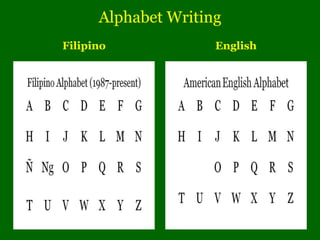
Alphabet Writing
Filipino             English
1.3 Types of Writing Systems


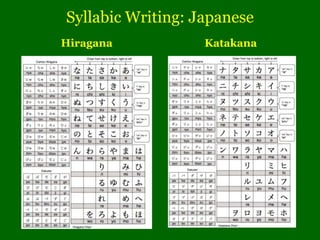
2. Syllabic Writing
   • symbols represent syllables
   • eg. Cherokee (Chief Sequoya, 1821),
     Japanese (uses 2 sets of written
     syllabic symbols)
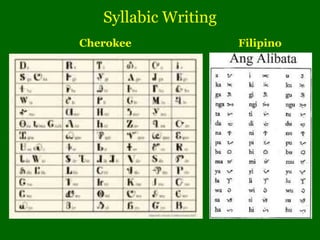
Syllabic Writing
Cherokee              Filipino
Syllabic Writing: Japanese
Hiragana           Katakana
1. 3 Types of Writing Systems


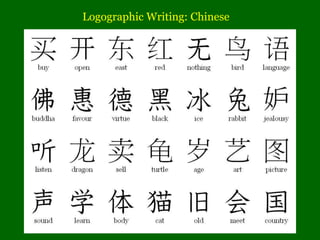
3. Logographic Writing
   • symbols represent morphemes
   • eg. Chinese (a symbol can be read in
     different ways depending on the
     Chinese language, but they represent
     specific words with form and
     meaning)
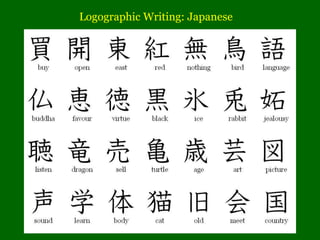
   • Japanese uses logographic writing on
     top of two syllabic writing systems
Logographic Writing: Chinese
Logographic Writing: Japanese
1.4 “regularity of fit”

• “one to one relationship        between
  symbols and language units”

• English writing has particularly a bad
  regularity of fit

• good regularity of fit: Turkish, Spanish,
  Finnish,
1.5 “knowing how to read and write
          involve habits”
1.6 “transfer of native writing habits
  affects our learning of the writing
    system of a foreign language”


               similarity


              dissimilarity
1.7 why the need for a systematic
          comparison?


  • yield useful data on learning problems
  • saves time
  • better chances to achieve completeness
    by comparing beforehand
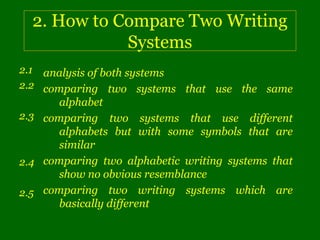
2. How to Compare Two Writing
             Systems
2.1 analysis of both systems
2.2 comparing two systems that use the same
       alphabet
2.3 comparing two systems that use different
       alphabets but with some symbols that are
       similar
2.4 comparing two alphabetic writing systems that
       show no obvious resemblance
2.5 comparing two writing systems which are
       basically different
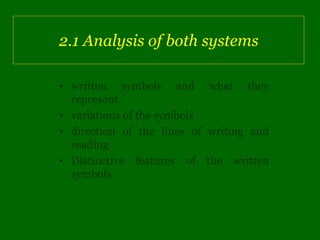
2.1 Analysis of both systems

• written symbols and what they
  represent
• variations of the symbols
• direction of the lines of writing and
  reading
• Distinctive features of the written
  symbols
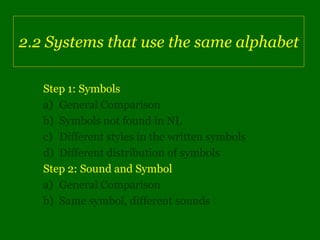
2.2 Systems that use the same alphabet

   Step 1: Symbols
   a) General Comparison
   b) Symbols not found in NL
   c) Different styles in the written symbols
   d) Different distribution of symbols
   Step 2: Sound and Symbol
   a) General Comparison
   b) Same symbol, different sounds
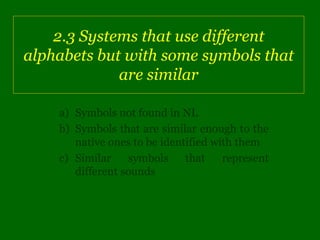
2.3 Systems that use different
alphabets but with some symbols that
             are similar

    a) Symbols not found in NL
    b) Symbols that are similar enough to the
       native ones to be identified with them
    c) Similar    symbols     that    represent
       different sounds
2.4 Two writing systems that show no
        obvious resemblance
2.5 Comparing two alphabetic writing
 systems which are basically different
3. Application

•   astute teaching methodology
•   significant research problems and testing
    instruments
•   clearer understanding of the L2 learner

How to compare 2 writing systems

  • 1.
    How to Compare TwoWriting Systems Charisma Pimentel Coloma
  • 2.
    1. Introduction 1.1 learning a writing systems is not the same as learning a language 1.2 the written symbols of each language form a system 1.3 types of writing systems 1.4 regularity of fit 1.5 knowing how to read and write involve habits 1.6 transfer of native writing habits affects our learning of the writing system of a foreign language 1.7 need for systematic comparison of systems
  • 3.
    1.1 “learning awriting system is not the same as learning a language.” (Bloomfield, 1933) • a child learns to speak before he learns to read and write • caveat: when there is a similarity in the writing systems of both L1 & L2.
  • 4.
    1.2 “the writtensymbols of each language form a system.” • symbols language • not all features of the symbols are equally important • caveat: when the correspondence between sound & writing is more complex, better use a system approach rather than word item approach
  • 5.
    1. 3 Typesof Writing Systems 1. Alphabet Writing 2. Syllabic Writing 3. Logographic Writing
  • 6.
    1. 3 Typesof Writing Systems 1. Alphabet Writing • symbols represent phonemes (more or less) • historically the latest type to be invented • e.g. English, Spanish, French, German
  • 7.
  • 8.
    1.3 Types ofWriting Systems 2. Syllabic Writing • symbols represent syllables • eg. Cherokee (Chief Sequoya, 1821), Japanese (uses 2 sets of written syllabic symbols)
  • 9.
  • 10.
  • 11.
    1. 3 Typesof Writing Systems 3. Logographic Writing • symbols represent morphemes • eg. Chinese (a symbol can be read in different ways depending on the Chinese language, but they represent specific words with form and meaning) • Japanese uses logographic writing on top of two syllabic writing systems
  • 12.
  • 13.
  • 14.
    1.4 “regularity offit” • “one to one relationship between symbols and language units” • English writing has particularly a bad regularity of fit • good regularity of fit: Turkish, Spanish, Finnish,
  • 15.
    1.5 “knowing howto read and write involve habits”
  • 16.
    1.6 “transfer ofnative writing habits affects our learning of the writing system of a foreign language” similarity dissimilarity
  • 17.
    1.7 why theneed for a systematic comparison? • yield useful data on learning problems • saves time • better chances to achieve completeness by comparing beforehand
  • 18.
    2. How toCompare Two Writing Systems 2.1 analysis of both systems 2.2 comparing two systems that use the same alphabet 2.3 comparing two systems that use different alphabets but with some symbols that are similar 2.4 comparing two alphabetic writing systems that show no obvious resemblance 2.5 comparing two writing systems which are basically different
  • 19.
    2.1 Analysis ofboth systems • written symbols and what they represent • variations of the symbols • direction of the lines of writing and reading • Distinctive features of the written symbols
  • 20.
    2.2 Systems thatuse the same alphabet Step 1: Symbols a) General Comparison b) Symbols not found in NL c) Different styles in the written symbols d) Different distribution of symbols Step 2: Sound and Symbol a) General Comparison b) Same symbol, different sounds
  • 21.
    2.3 Systems thatuse different alphabets but with some symbols that are similar a) Symbols not found in NL b) Symbols that are similar enough to the native ones to be identified with them c) Similar symbols that represent different sounds
  • 22.
    2.4 Two writingsystems that show no obvious resemblance
  • 23.
    2.5 Comparing twoalphabetic writing systems which are basically different
  • 24.
    3. Application • astute teaching methodology • significant research problems and testing instruments • clearer understanding of the L2 learner