Do you know one of these characters?
1. Debbie Downer
2. Negative Ned
3. Debilitating Dave
4. Loud Lucy
5. Stale Stan
the toxic employee
What impact do they
have on the workplace?
what do you think?
survey
results
survey results
The day this
person left our
company is
considered an
annual holiday!
– anonymous
Great vision
without great
people is
irrelevant.
– Jim Collins
“63 percent of employees are
unengaged and 24 percent are actively
disengaged making up 87 percent of the
global workforce.”
— Gallup
factor #1:
disengaged
factor #2:
overworked
“42 percent of working adults
are willing to give up some percentage of
their salary for more flexibility at work.”
— Business News Daily
“80% of workers feel stress on the job
and nearly half say they need help
learning how to manage stress. 29% of
employees have yelled at co-workers
because of workplace stress.”
— NIOSH National Institute for
Occupational Safety & Health
factor #3:
stress
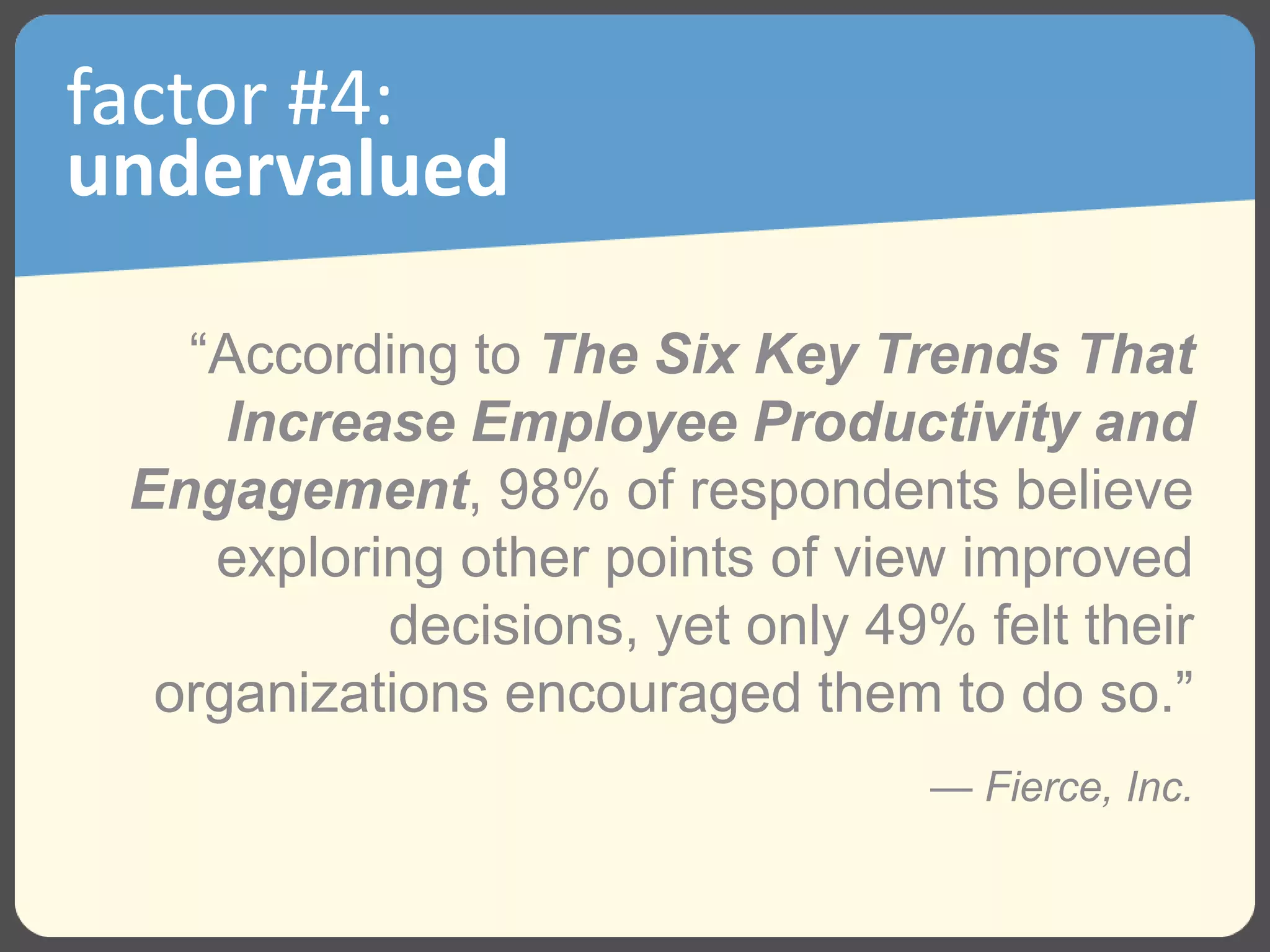
factor #4:
undervalued
“According to The Six Key Trends That
Increase Employee Productivity and
Engagement, 98% of respondents believe
exploring other points of view improved
decisions, yet only 49% felt their
organizations encouraged them to do so.”
— Fierce, Inc.
What trend do you see the most?
1. Disengaged
2. Overworked
3. Stressed
4. Undervalued
what do you think?
Take
Responsibility
for Your
Emotional Wake
tools & ideas:
principle #6
1. Feedback: Give and receive feedback on
the spot to create awareness
2. Confrontation: Deeper conversation to
create behavior change
tools & ideas:
conversations
How do you feel about giving
constructive feedback?
feedback-o-meter:
giving
1
2
3
4
5
How do you feel about receiving
constructive feedback?
feedback-o-meter:
receiving
1
2
3
4
5
Everyone wants it,
most people don’t
know how to give it.
tools & ideas:
feedback
feedback vs. confrontation
It’s never happened
before and I don’t
think they were
aware they did that.
There is a pattern of
similar behavior, I’ve
said something and
nothing is changing
or it is not changing
quickly enough.
feedback vs. confrontation
They did a great thing
and I want to make
sure they know how
impactful it was for
me, the team, the
organization.
They did something
that is troublesome
to me, or the team,
or the organization
and it really shouldn’t
happen again.
feedback vs. confrontation
I see a pattern
that could become
a problem later on
for the person and feel
compelled to share it
with them so that they
have an opportunity to
course correct.
The individual has
done something and
once is too much.
feedback vs. confrontation
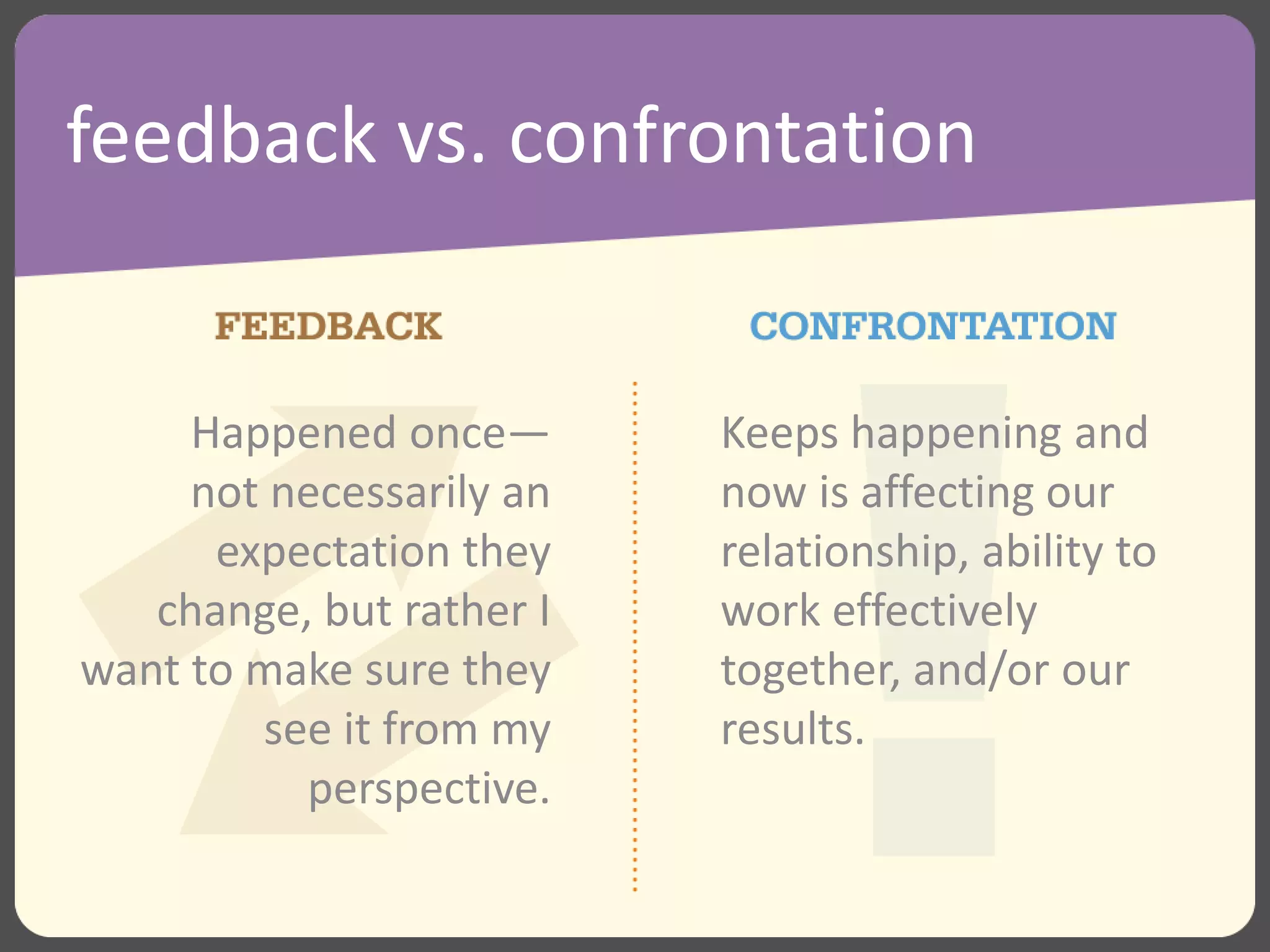
Happened once—
not necessarily an
expectation they
change, but rather I
want to make sure they
see it from my
perspective.
Keeps happening and
now is affecting our
relationship, ability to
work effectively
together, and/or our
results.
feedback vs. confrontation
A mistake was made
and it’s important to
share insights on what
could have been done
better.
Mistakes keep being
made and there is an
underlying issue that
needs to be corrected
to prevent further,
unanticipated
mistakes.
tools & ideas:
confrontation
tools & ideas:
confrontation model
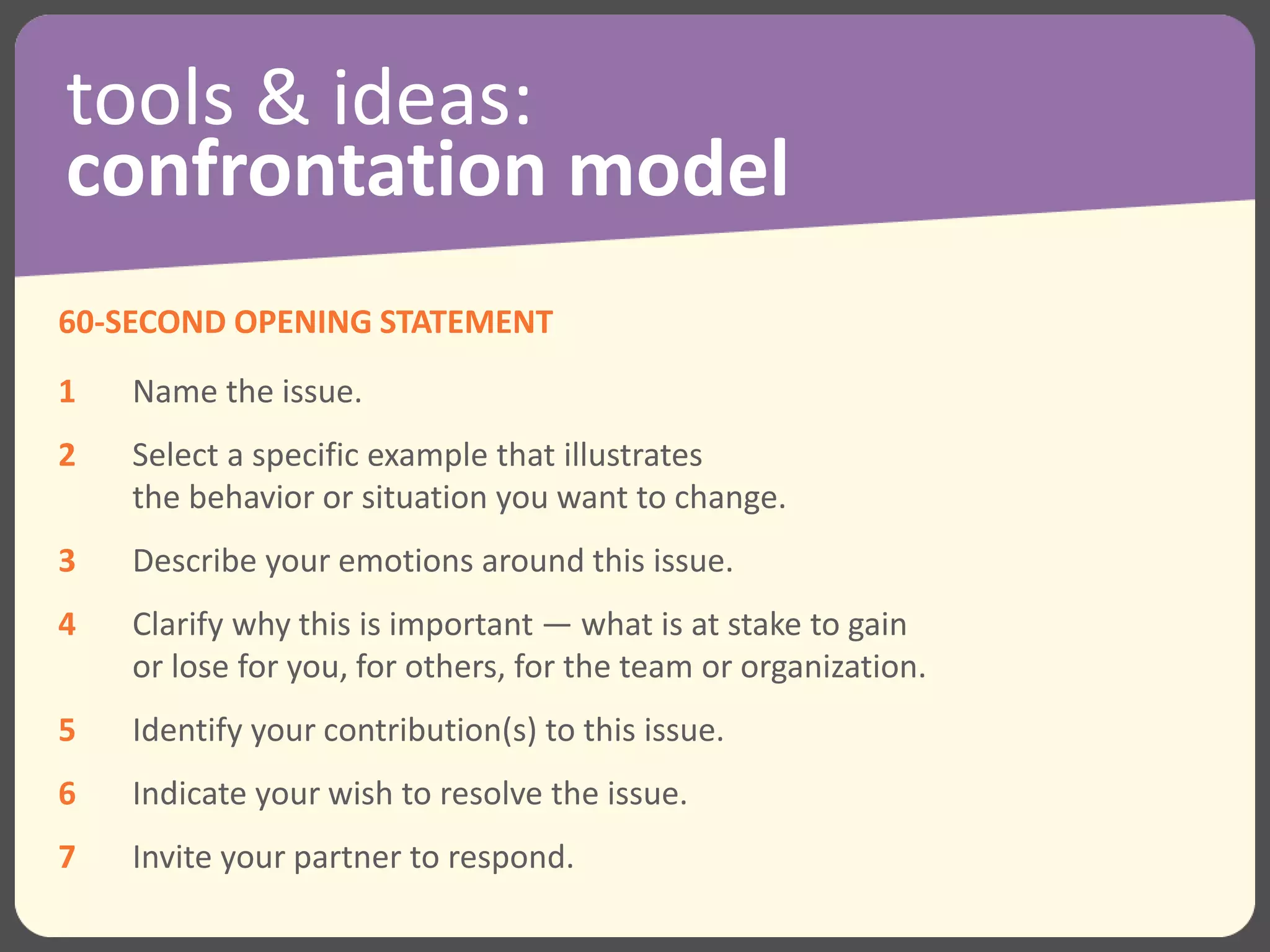
60-SECOND OPENING STATEMENT
1 Name the issue.
2 Select a specific example that illustrates
the behavior or situation you want to change.
3 Describe your emotions around this issue.
4 Clarify why this is important — what is at stake to gain
or lose for you, for others, for the team or organization.
5 Identify your contribution(s) to this issue.
6 Indicate your wish to resolve the issue.
7 Invite your partner to respond.
tools & ideas:
confrontation model
INTERACTION
8 Inquire into your partner’s views. Use paraphrasing and perception check.
Dig for full understanding; don’t be satisfied on the surface. Make sure
your partner knows that you fully understand and acknowledge his/her
position and interests.
RESOLUTION
9 What was learned? Where are we now? What is needed for resolution?
What was left unsaid that needs saying? Have we moved? What is our
new understanding? How can we move forward from here, given this new
understanding?
10 Make a new agreement and have a method to hold each other able.
tools & ideas:
confrontation model
When is it
time to cut
the cord?
what do you think?
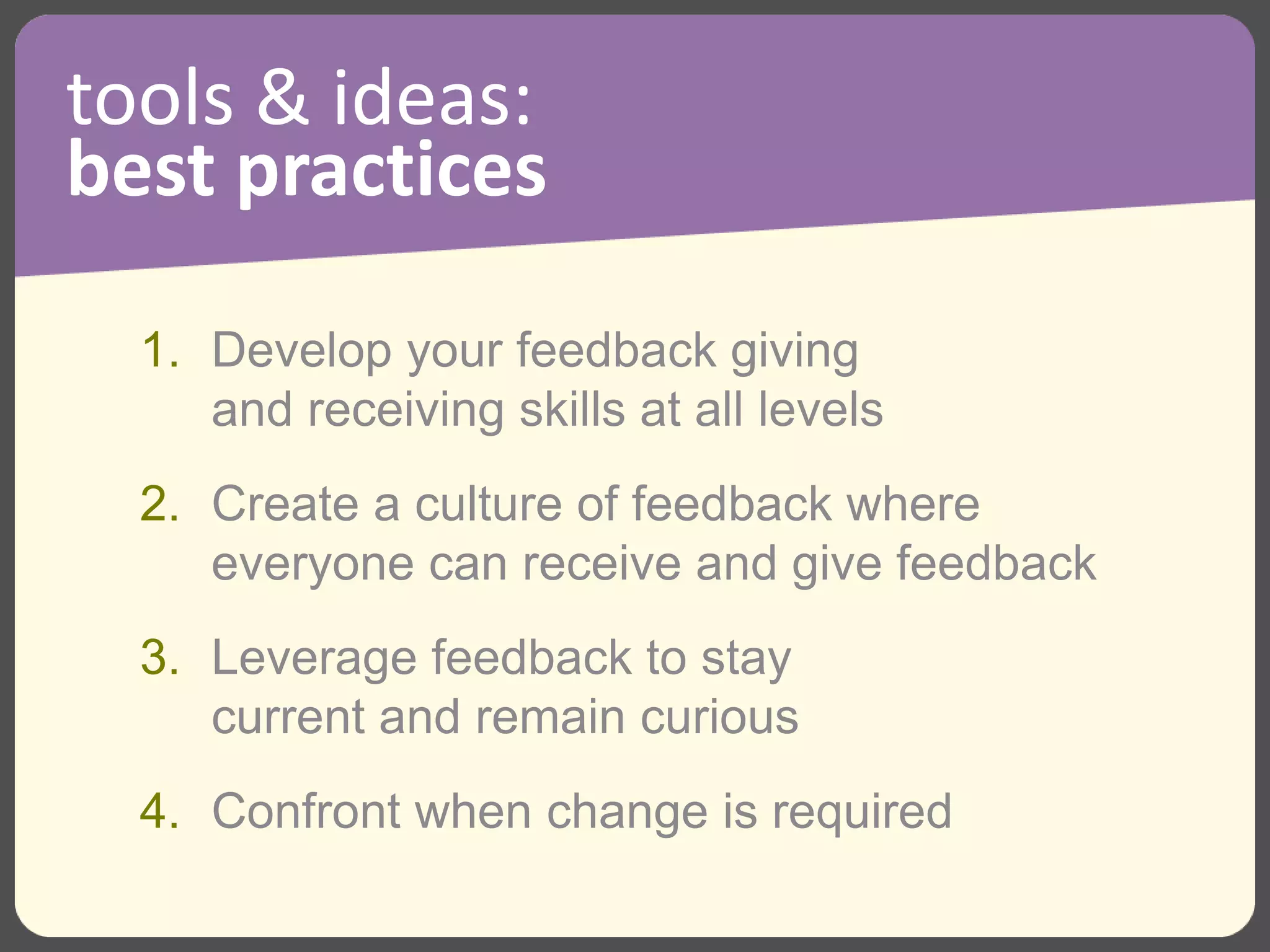
1. Develop your feedback giving
and receiving skills at all levels
2. Create a culture of feedback where
everyone can receive and give feedback
3. Leverage feedback to stay
current and remain curious
4. Confront when change is required
tools & ideas:
best practices
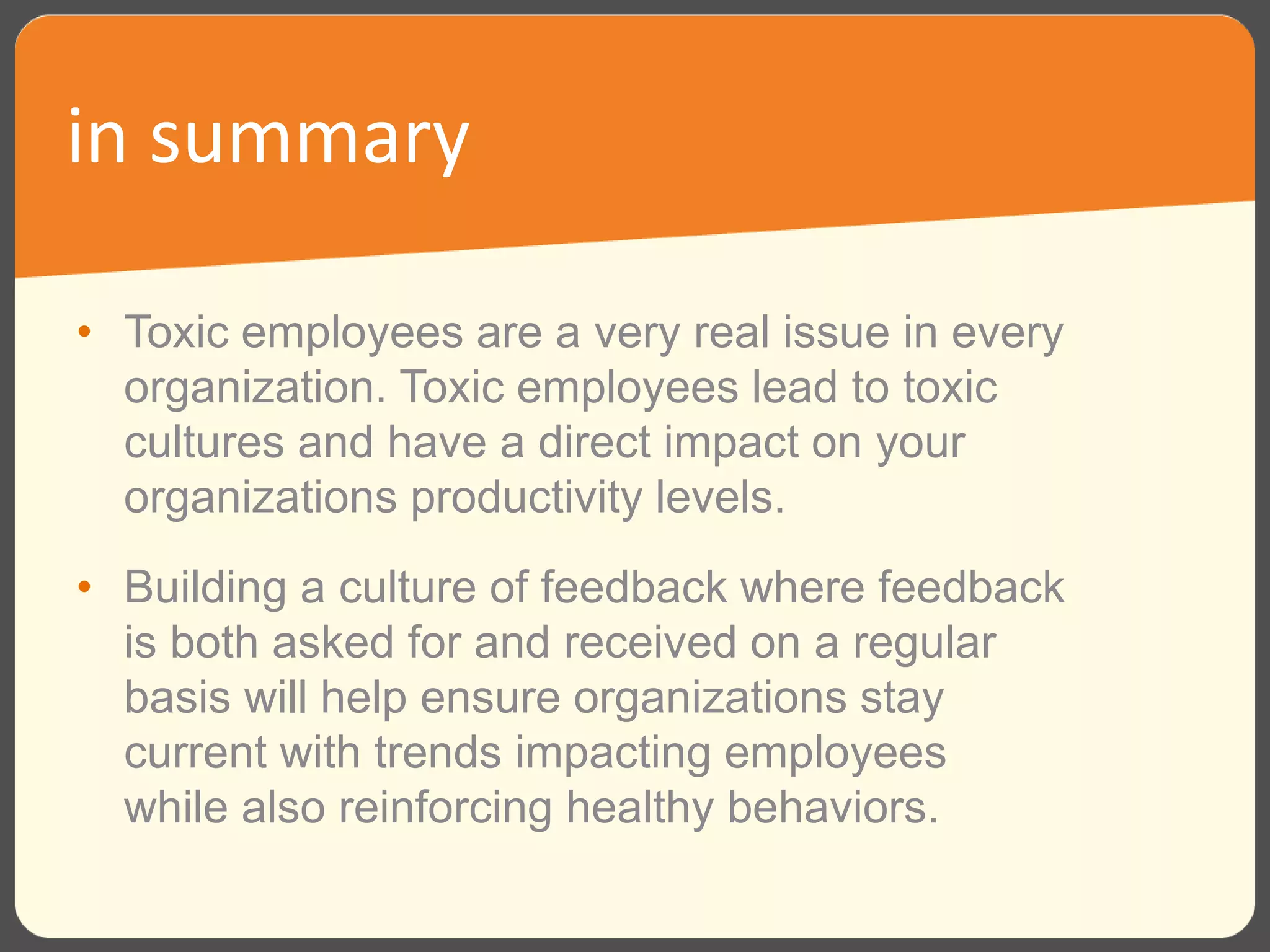
• Toxic employees are a very real issue in every
organization. Toxic employees lead to toxic
cultures and have a direct impact on your
organizations productivity levels.
• Building a culture of feedback where feedback
is both asked for and received on a regular
basis will help ensure organizations stay
current with trends impacting employees
while also reinforcing healthy behaviors.
in summary
How To Address Toxic Employees

How To Address Toxic Employees

  • 5.
    Do you knowone of these characters? 1. Debbie Downer 2. Negative Ned 3. Debilitating Dave 4. Loud Lucy 5. Stale Stan the toxic employee
  • 6.
    What impact dothey have on the workplace? what do you think?
  • 7.
  • 8.
  • 9.
    The day this personleft our company is considered an annual holiday! – anonymous Great vision without great people is irrelevant. – Jim Collins
  • 11.
    “63 percent ofemployees are unengaged and 24 percent are actively disengaged making up 87 percent of the global workforce.” — Gallup factor #1: disengaged
  • 12.
    factor #2: overworked “42 percentof working adults are willing to give up some percentage of their salary for more flexibility at work.” — Business News Daily
  • 13.
    “80% of workersfeel stress on the job and nearly half say they need help learning how to manage stress. 29% of employees have yelled at co-workers because of workplace stress.” — NIOSH National Institute for Occupational Safety & Health factor #3: stress
  • 14.
    factor #4: undervalued “According toThe Six Key Trends That Increase Employee Productivity and Engagement, 98% of respondents believe exploring other points of view improved decisions, yet only 49% felt their organizations encouraged them to do so.” — Fierce, Inc.
  • 15.
    What trend doyou see the most? 1. Disengaged 2. Overworked 3. Stressed 4. Undervalued what do you think?
  • 17.
  • 18.
    1. Feedback: Giveand receive feedback on the spot to create awareness 2. Confrontation: Deeper conversation to create behavior change tools & ideas: conversations
  • 19.
    How do youfeel about giving constructive feedback? feedback-o-meter: giving 1 2 3 4 5
  • 20.
    How do youfeel about receiving constructive feedback? feedback-o-meter: receiving 1 2 3 4 5
  • 21.
    Everyone wants it, mostpeople don’t know how to give it. tools & ideas: feedback
  • 22.
    feedback vs. confrontation It’snever happened before and I don’t think they were aware they did that. There is a pattern of similar behavior, I’ve said something and nothing is changing or it is not changing quickly enough.
  • 23.
    feedback vs. confrontation Theydid a great thing and I want to make sure they know how impactful it was for me, the team, the organization. They did something that is troublesome to me, or the team, or the organization and it really shouldn’t happen again.
  • 24.
    feedback vs. confrontation Isee a pattern that could become a problem later on for the person and feel compelled to share it with them so that they have an opportunity to course correct. The individual has done something and once is too much.
  • 25.
    feedback vs. confrontation Happenedonce— not necessarily an expectation they change, but rather I want to make sure they see it from my perspective. Keeps happening and now is affecting our relationship, ability to work effectively together, and/or our results.
  • 26.
    feedback vs. confrontation Amistake was made and it’s important to share insights on what could have been done better. Mistakes keep being made and there is an underlying issue that needs to be corrected to prevent further, unanticipated mistakes.
  • 27.
  • 28.
    tools & ideas: confrontationmodel 60-SECOND OPENING STATEMENT 1 Name the issue. 2 Select a specific example that illustrates the behavior or situation you want to change. 3 Describe your emotions around this issue. 4 Clarify why this is important — what is at stake to gain or lose for you, for others, for the team or organization. 5 Identify your contribution(s) to this issue. 6 Indicate your wish to resolve the issue. 7 Invite your partner to respond.
  • 29.
  • 30.
    INTERACTION 8 Inquire intoyour partner’s views. Use paraphrasing and perception check. Dig for full understanding; don’t be satisfied on the surface. Make sure your partner knows that you fully understand and acknowledge his/her position and interests. RESOLUTION 9 What was learned? Where are we now? What is needed for resolution? What was left unsaid that needs saying? Have we moved? What is our new understanding? How can we move forward from here, given this new understanding? 10 Make a new agreement and have a method to hold each other able. tools & ideas: confrontation model
  • 31.
    When is it timeto cut the cord? what do you think?
  • 32.
    1. Develop yourfeedback giving and receiving skills at all levels 2. Create a culture of feedback where everyone can receive and give feedback 3. Leverage feedback to stay current and remain curious 4. Confront when change is required tools & ideas: best practices
  • 33.
    • Toxic employeesare a very real issue in every organization. Toxic employees lead to toxic cultures and have a direct impact on your organizations productivity levels. • Building a culture of feedback where feedback is both asked for and received on a regular basis will help ensure organizations stay current with trends impacting employees while also reinforcing healthy behaviors. in summary

Editor's Notes

  • #2 Change Graphic Treatment Title: Fierce Conversations: How to Address Toxic Employees
  • #5 Talking Points: What is the makeup of toxic employees: negative attitudes, behavior, cold shoulder, rolling of the eyes, narcissism,. Can also be the high performer who is discouraging to others, someone who wears their disgust on their face, the idea of why can you be more like me and do what I do. Toxic Employees leads to a Toxic Office: implications of toxic, sharing in “victim bonding” What are acceptable levels of toxicity?
  • #8 Fierce, Inc. Toxic Employees Survey Results 78 percent of employees say negative attitudes are extremely debilitating to team morale. 17 percent say negative attitudes increase stress. 27 percent of employees say negative attitudes decrease productivity.
  • #9 62 percent of employees opt to confront toxic coworkers, yet 78 percent of employees claim their organizations are extremely to somewhat tolerant of colleagues with negative attitudes.
  • #10 First Quote- “The day this person left our company is considered an annual holiday!” – anonymous Second Quote- “Great vision without great people is irrelevant.” – Jim Collins
  • #11 a recipe for disaster
  • #12 What is active disengagement doing to the workforce?
  • #13 http://www.businessnewsdaily.com/1419-flexible-workplace-options-survey.html This is for all ages. Look at vacation survey- ours internal
  • #14 http://www.theadrenalizer.com/upload/workplace_conflict_statistics4.pdf http://www.cdc.gov/niosh/topics/violence/ http://www.cdc.gov/niosh/docs/2002-116/pdfs/2002-116.pdf
  • #15 Look for survey from whitepaper
  • #20 Steve: Could you place numbers in the colored areas on the meter? I want people to vote by punching in a number that correlates to how they feel about feedback. 1 is LOVE IT and 5 is LOATHE IT.
  • #21 Steve: Could you place numbers in the colored areas on the meter? I want people to vote by punching in a number that correlates to how they feel about feedback. 1 is LOVE IT and 5 is LOATHE IT.
  • #23 Halley: How do you want this too build?
  • #24 Halley: How do you want this too build?
  • #25 Halley: How do you want this too build?
  • #26 Halley: How do you want this too build?
  • #27 Halley: How do you want this too build?
  • #32 Optional questions.
  • #35 We will be sending you a tool we have to help you take a Personal Integrity Scan And we would LOVE to start a conversation with you. Give us a call, tweet about your experience, send us an email… We would love to hear from you. Thank you so much for spending this time with me! I am grateful!!