
How is the 
Reading 
Recovery Session 
Conducted?
A typical tutoring session is an intimate situation 
where tutor and child sit side by side, 
reading/writing collaboratively. The session 
includes the ff. components in the order suggested 
by Marie Clay. 
1. Re-Reading familiar books 
-The child reads aloud books he has read 
before. This gives the child the chance to 
engage in fast, fluent reading. He does not 
have to work so hard so that the reading 
process breaks down. And he gets a 
feeling of success.
2. Re-Reading yesterday’s Book 
-The child re-reads the book he read for 
the first time the day before. He is not 
expected to read it with complete 
accuracy, but he does not have to 
struggle anymore. This also gives the 
tutor the chance to do a running 
record.
3. Letter Identification Activity 
- If the child has very low letter 
knowledge, he has encouraged to use 
plastic letters and a magnetic board to 
form words and engage in word 
analysis. Otherwise, more time is spent 
on writing.
4. Writing a Story 
- The child compose 1 or 2 sentences. 
Assisted by the tutor, he writes it on the 
lower half of a blank sheet. The top half is 
used for working on words he misspells. The 
tutor invites him to say the word slowly and 
predict the letters that present the sounds. 
He learns to make links between letters 
and sounds. Then he asked to read his 
story aloud.
5. Arranging Cut-up Story 
- The child may dictate another 
sentence, as the tutor quickly writes in 
on a strip of paper, then cuts it apart for 
the child to resemble. He may be 
asked to paste the pieces on a sheet of 
paper. The written message is read 
aloud. He may also asked to copy the 
resembled sentence.
6. New Book Introduced 
- Everyday is new book is introduced to 
the child. Tutor and child talk about the 
pictures, page by page. Through oral 
language, he gets to know the storyline, 
important ideas and some of the 
language of the story.
7. New Book Attempted 
- The child is now encouraged to read 
the new book aloud. This is placed at 
the end of the tutoring session because 
each previous activity should have 
encouraged him to work on his own 
problems and engage in problem-solving.
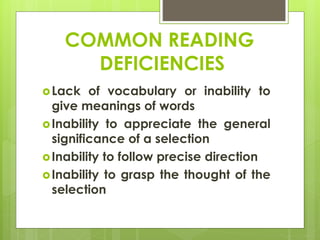
COMMON READING 
DEFICIENCIES 
Lack of vocabulary or inability to 
give meanings of words 
Inability to appreciate the general 
significance of a selection 
Inability to follow precise direction 
Inability to grasp the thought of the 
selection
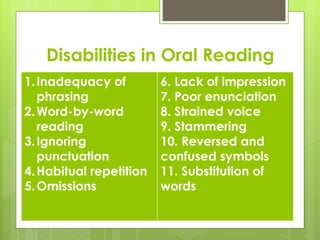
Disabilities in Oral Reading 
1.Inadequacy of 
phrasing 
2.Word-by-word 
reading 
3. Ignoring 
punctuation 
4. Habitual repetition 
5.Omissions 
6. Lack of impression 
7. Poor enunciation 
8. Strained voice 
9. Stammering 
10. Reversed and 
confused symbols 
11. Substitution of 
words
How is the reading recovery session conducted

How is the reading recovery session conducted

  • 1.
    How is the Reading Recovery Session Conducted?
  • 2.
    A typical tutoringsession is an intimate situation where tutor and child sit side by side, reading/writing collaboratively. The session includes the ff. components in the order suggested by Marie Clay. 1. Re-Reading familiar books -The child reads aloud books he has read before. This gives the child the chance to engage in fast, fluent reading. He does not have to work so hard so that the reading process breaks down. And he gets a feeling of success.
  • 3.
    2. Re-Reading yesterday’sBook -The child re-reads the book he read for the first time the day before. He is not expected to read it with complete accuracy, but he does not have to struggle anymore. This also gives the tutor the chance to do a running record.
  • 4.
    3. Letter IdentificationActivity - If the child has very low letter knowledge, he has encouraged to use plastic letters and a magnetic board to form words and engage in word analysis. Otherwise, more time is spent on writing.
  • 5.
    4. Writing aStory - The child compose 1 or 2 sentences. Assisted by the tutor, he writes it on the lower half of a blank sheet. The top half is used for working on words he misspells. The tutor invites him to say the word slowly and predict the letters that present the sounds. He learns to make links between letters and sounds. Then he asked to read his story aloud.
  • 6.
    5. Arranging Cut-upStory - The child may dictate another sentence, as the tutor quickly writes in on a strip of paper, then cuts it apart for the child to resemble. He may be asked to paste the pieces on a sheet of paper. The written message is read aloud. He may also asked to copy the resembled sentence.
  • 7.
    6. New BookIntroduced - Everyday is new book is introduced to the child. Tutor and child talk about the pictures, page by page. Through oral language, he gets to know the storyline, important ideas and some of the language of the story.
  • 8.
    7. New BookAttempted - The child is now encouraged to read the new book aloud. This is placed at the end of the tutoring session because each previous activity should have encouraged him to work on his own problems and engage in problem-solving.
  • 9.
    COMMON READING DEFICIENCIES Lack of vocabulary or inability to give meanings of words Inability to appreciate the general significance of a selection Inability to follow precise direction Inability to grasp the thought of the selection
  • 10.
    Disabilities in OralReading 1.Inadequacy of phrasing 2.Word-by-word reading 3. Ignoring punctuation 4. Habitual repetition 5.Omissions 6. Lack of impression 7. Poor enunciation 8. Strained voice 9. Stammering 10. Reversed and confused symbols 11. Substitution of words