


HOW
DESIGN THINKING,
LEAN, AND
AGILE WORK TOGETHER
@Jonnyschneider
LONDON 2019
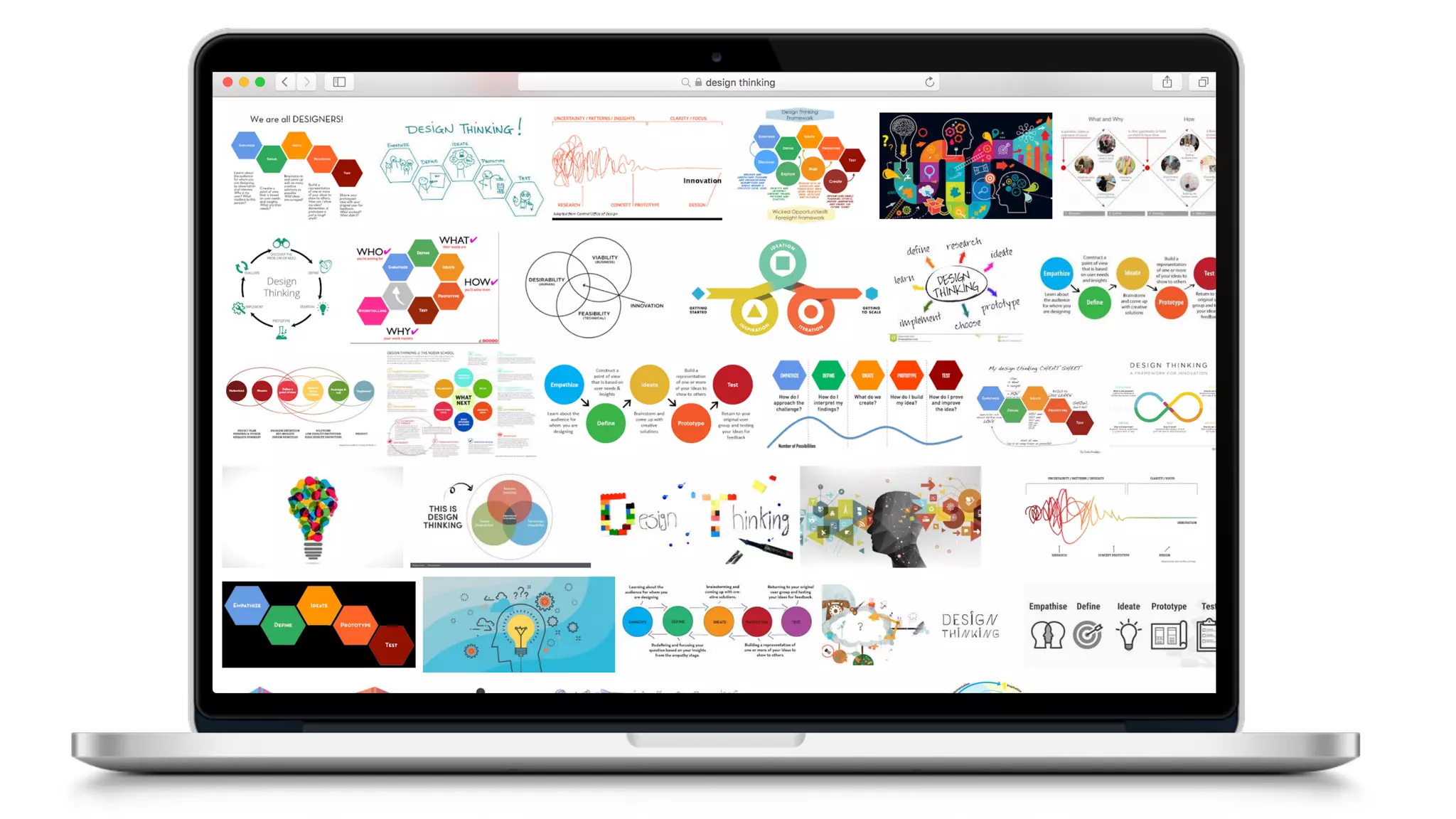
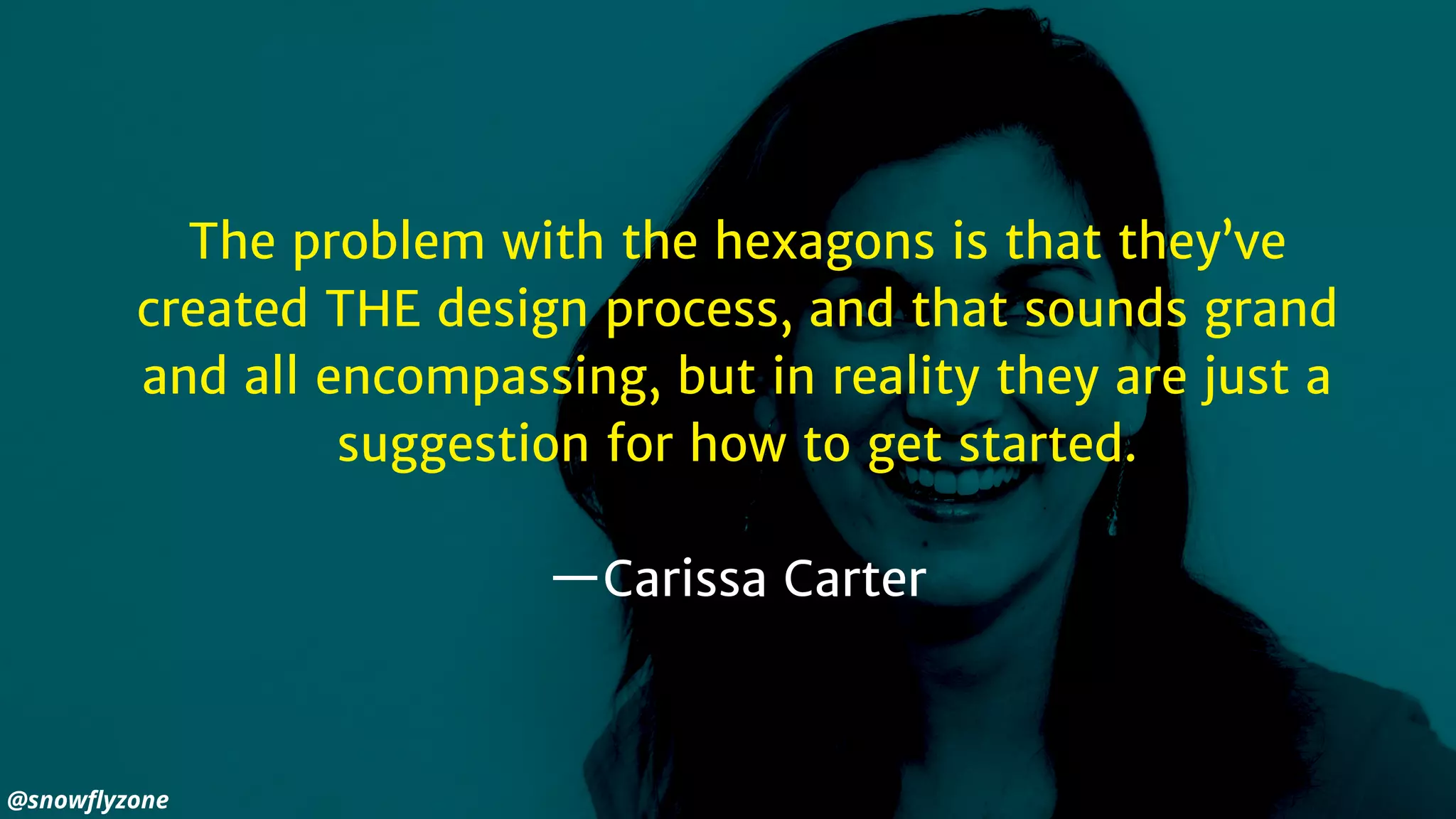
The problem with the hexagons is that they’ve
created THE design process, and that sounds grand
and all encompassing, but in reality they are just a
suggestion for how to get started.
—Carissa Carter
@snowflyzone
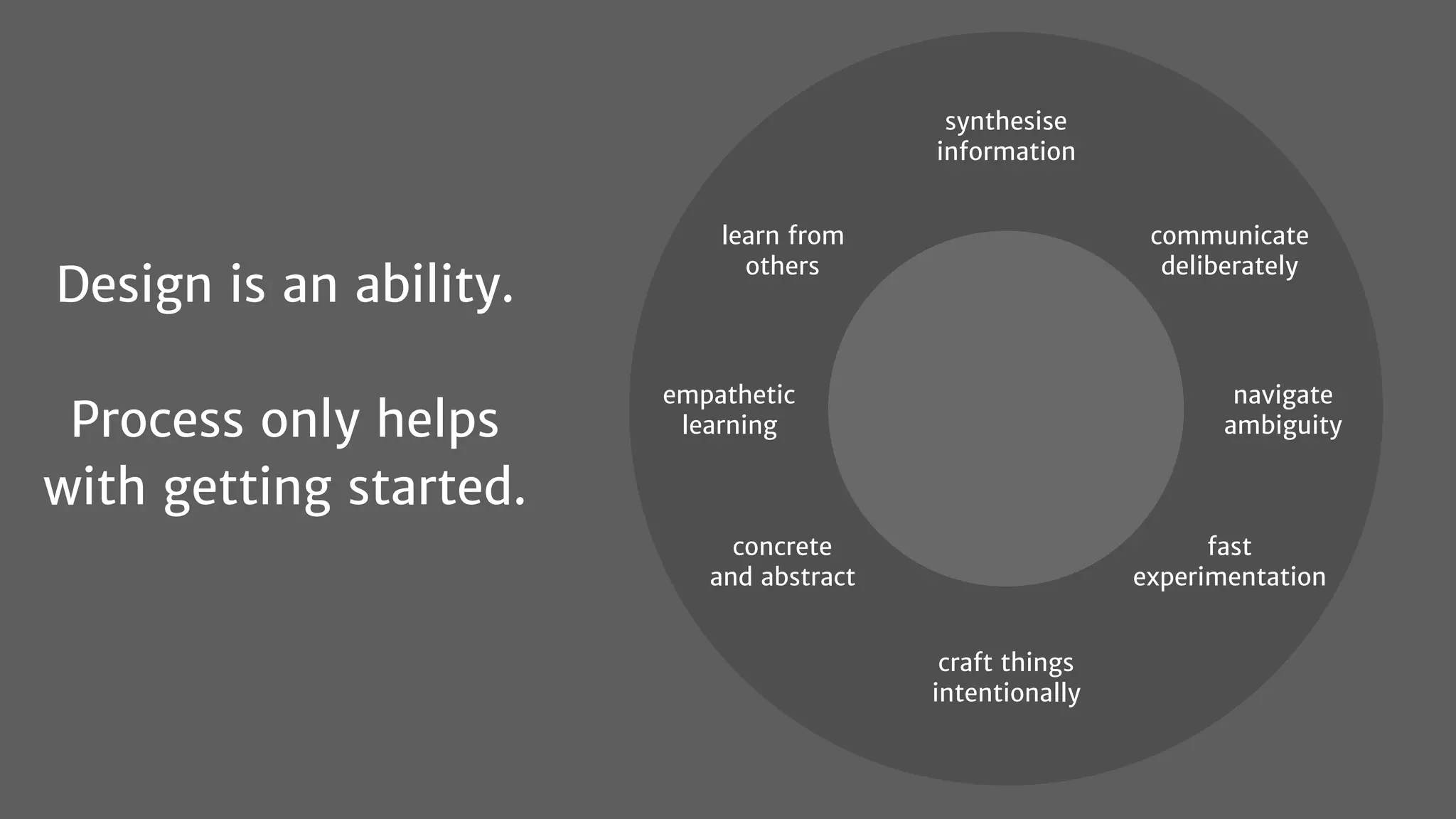
navigate
ambiguity
empathetic
learning
synthesise
information
fast
experimentation
concrete
and abstract
learn from
others
craft things
intentionally
communicate
deliberately
Design is an ability.
Process only helps
with getting started.
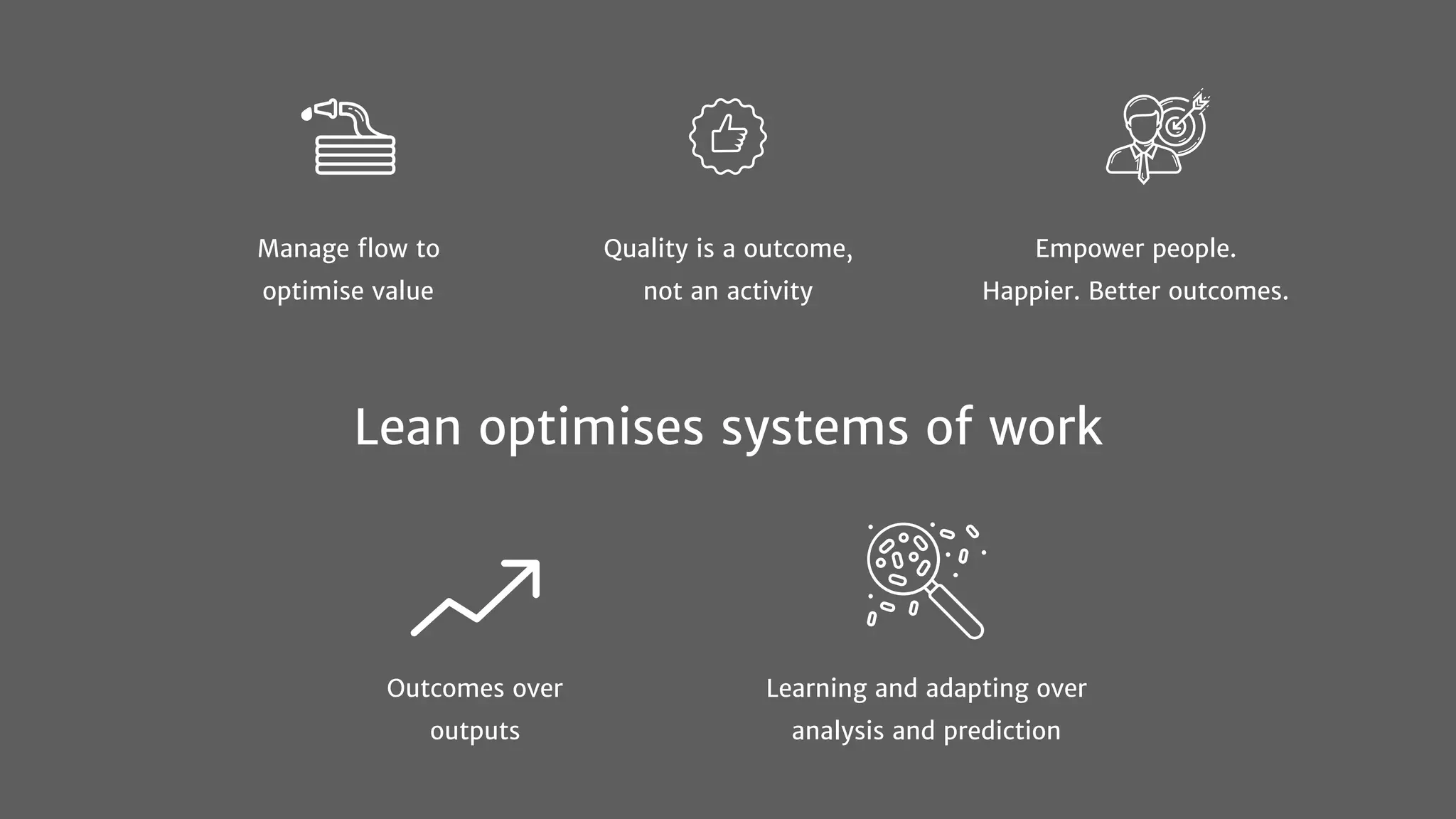
Manage flow to
optimise value
Quality is a outcome,
not an activity
Empower people.
Happier. Better outcomes.
Outcomes over
outputs
Learning and adapting over
analysis and prediction
Lean optimises systems of work
Manage flow to
optimise value
Quality is a outcome,
not an activity
Empower people.
Happier. Better outcomes.
Outcomes over
outputs
Learning and adapting over
analysis and prediction
Lean optimises systems of work
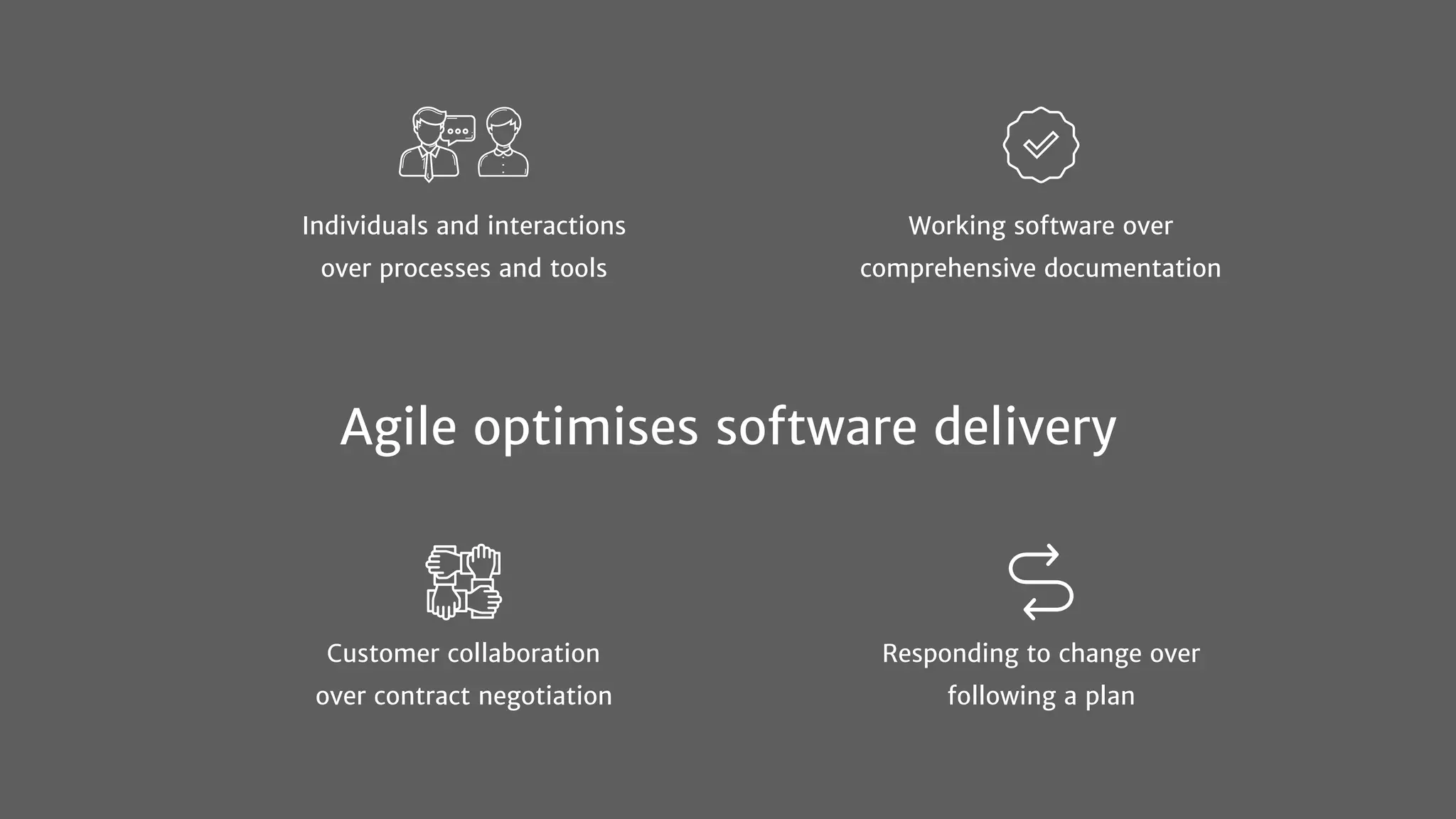
Individuals and interactions
over processes and tools
Working software over
comprehensive documentation
Customer collaboration
over contract negotiation
Responding to change over
following a plan
Agile optimises software delivery
Individuals and interactions
over processes and tools
Working software over
comprehensive documentation
Customer collaboration
over contract negotiation
Responding to change over
following a plan
Agile optimises software delivery
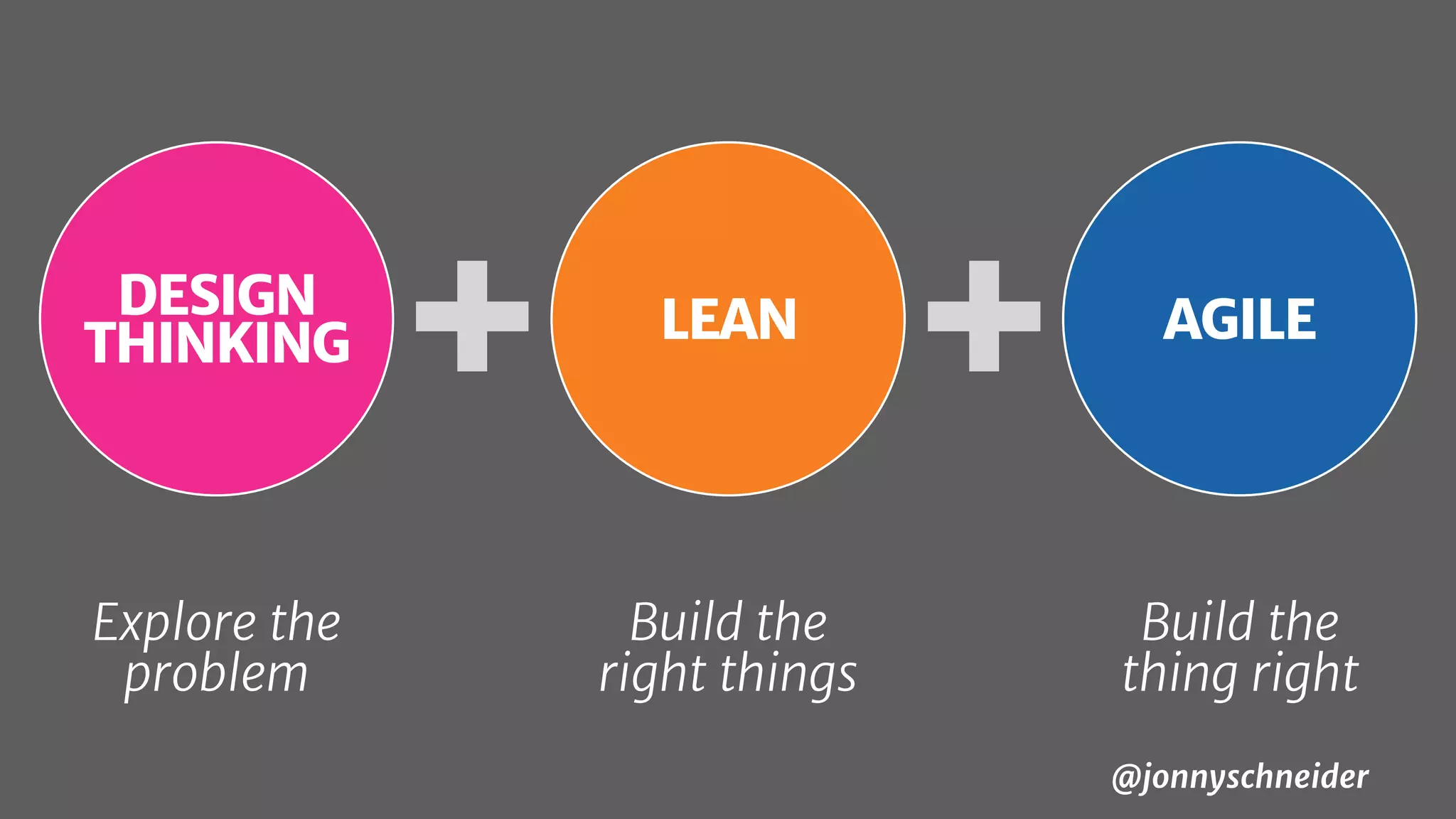
AGILE
Build the
thing right
+DESIGN
THINKING
Explore the
problem
LEAN
Build the
right things
+
@jonnyschneider
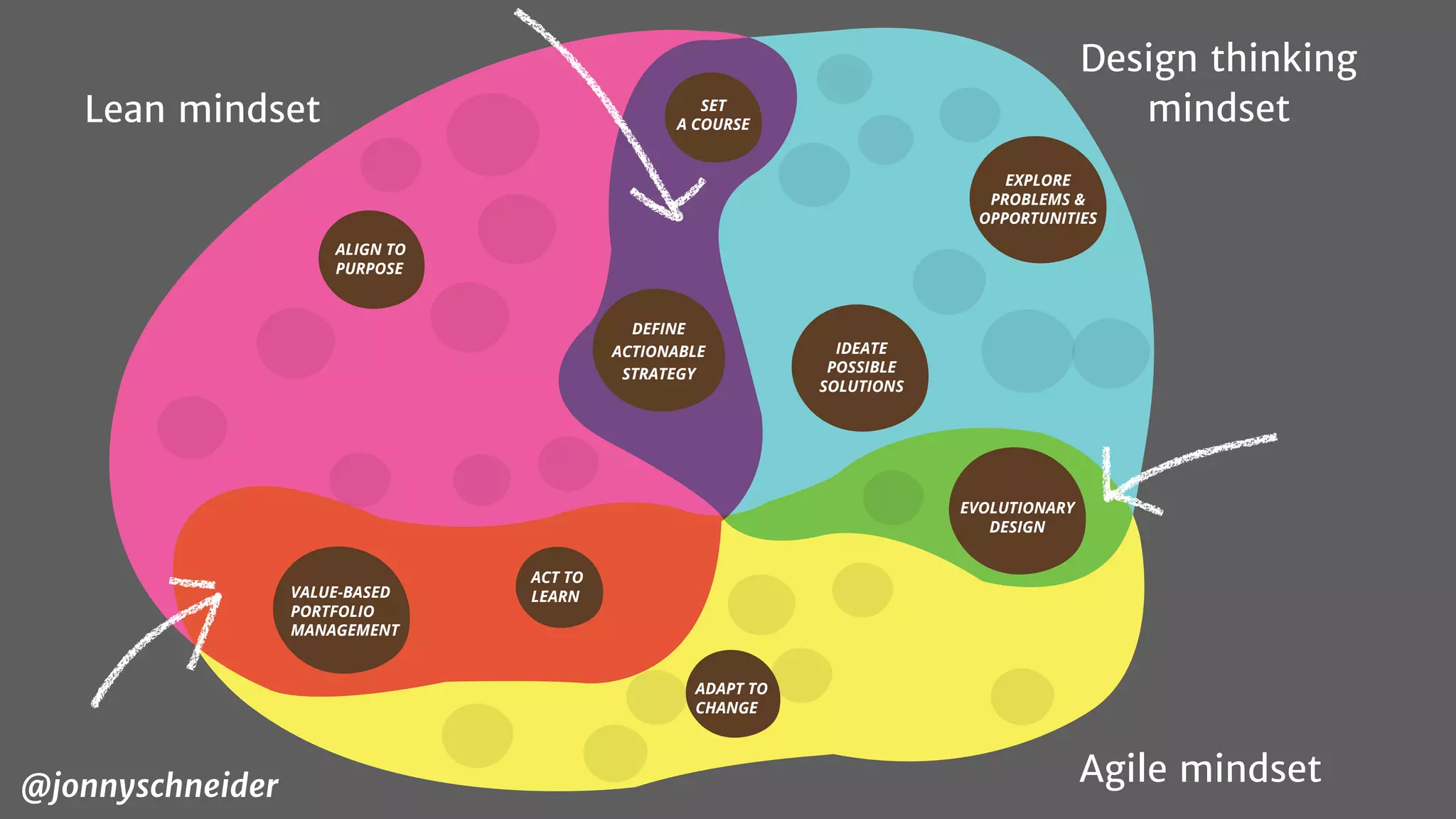
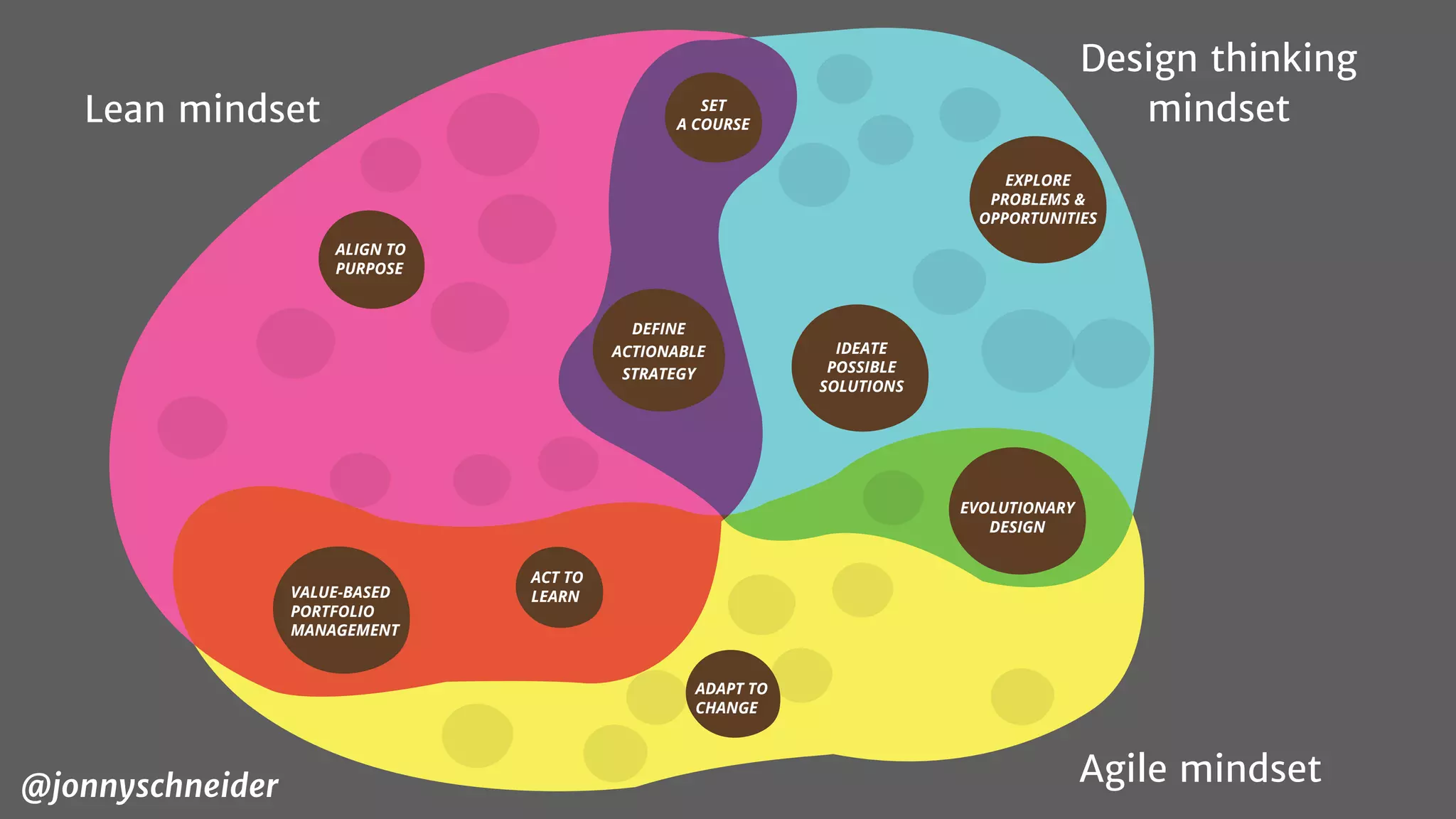
ADAPT TO
CHANGE
EVOLUTIONARY
DESIGN
ACT TO
LEARNVALUE-BASED
PORTFOLIO
MANAGEMENT
SET
A COURSE
DEFINE
ACTIONABLE
STRATEGY
ALIGN TO
PURPOSE
IDEATE
POSSIBLE
SOLUTIONS
EXPLORE
PROBLEMS &
OPPORTUNITIES
Lean mindset
Design thinking
mindset
Agile mindset@jonnyschneider
1
Continuous learning
is the new competitive advantage.
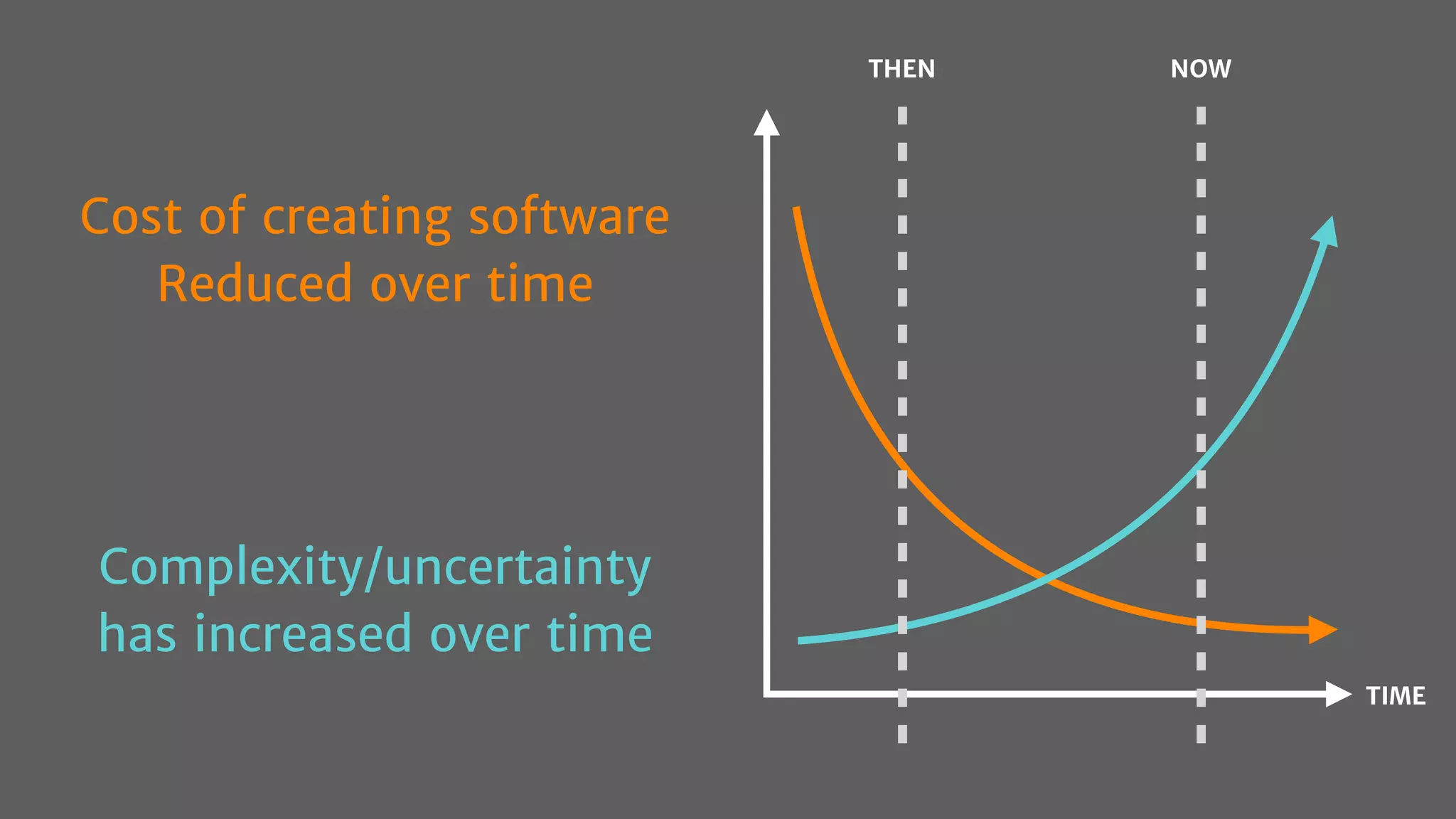
Cost of creating software
Reduced over time
Complexity/uncertainty
has increased over time
THEN NOW
TIME
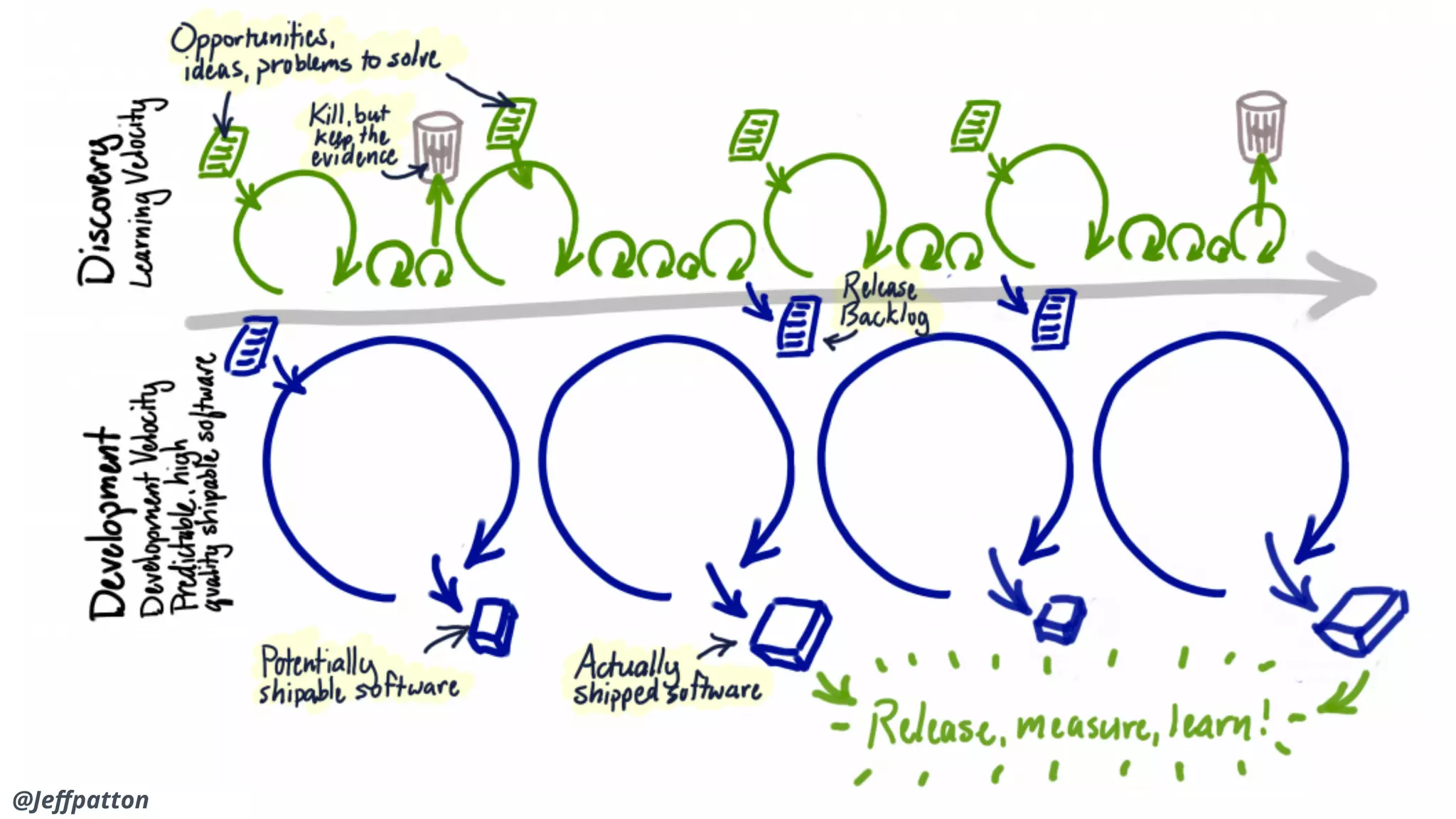
@Jeffpatton
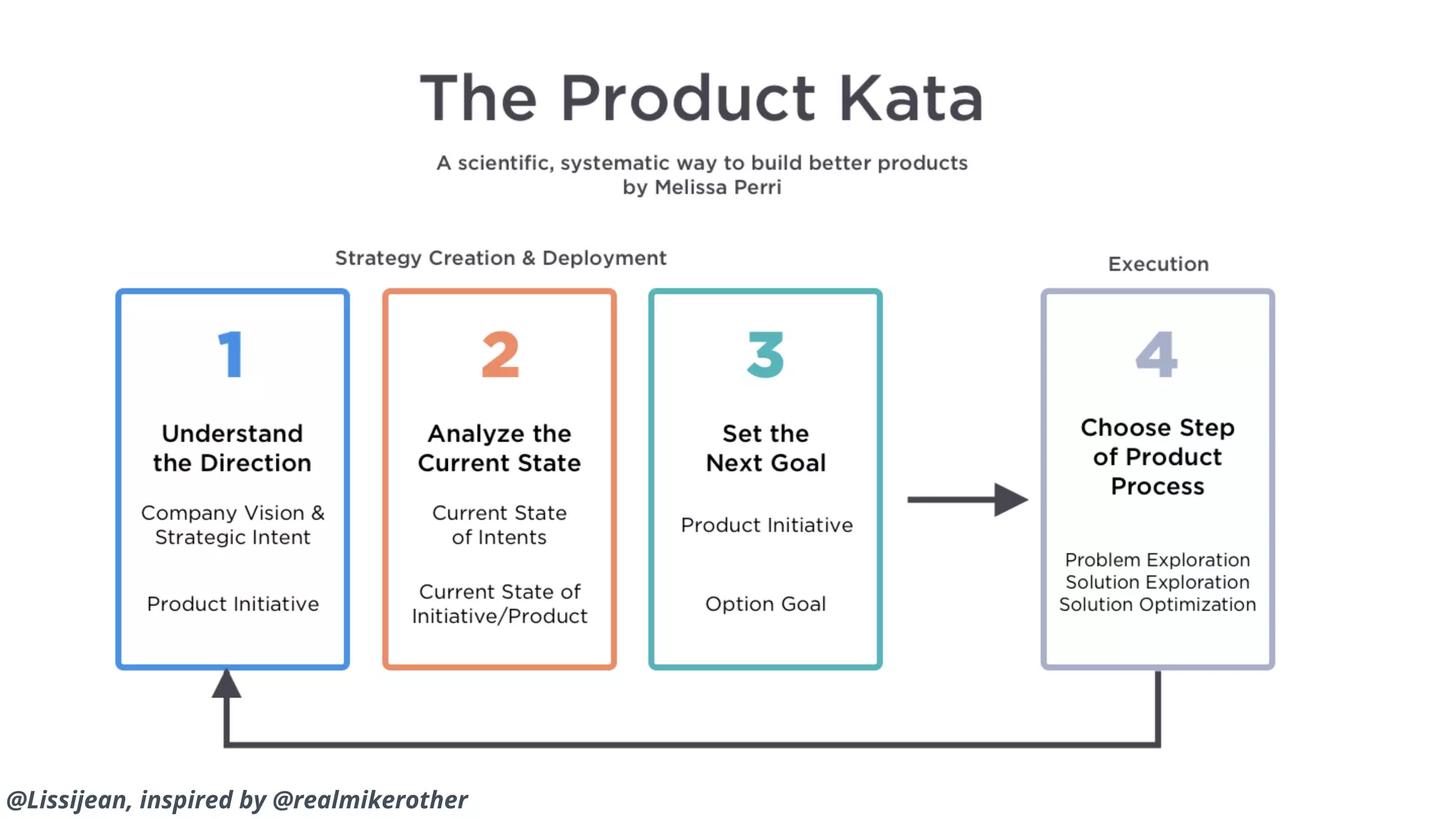
@Lissijean, inspired by @realmikerother
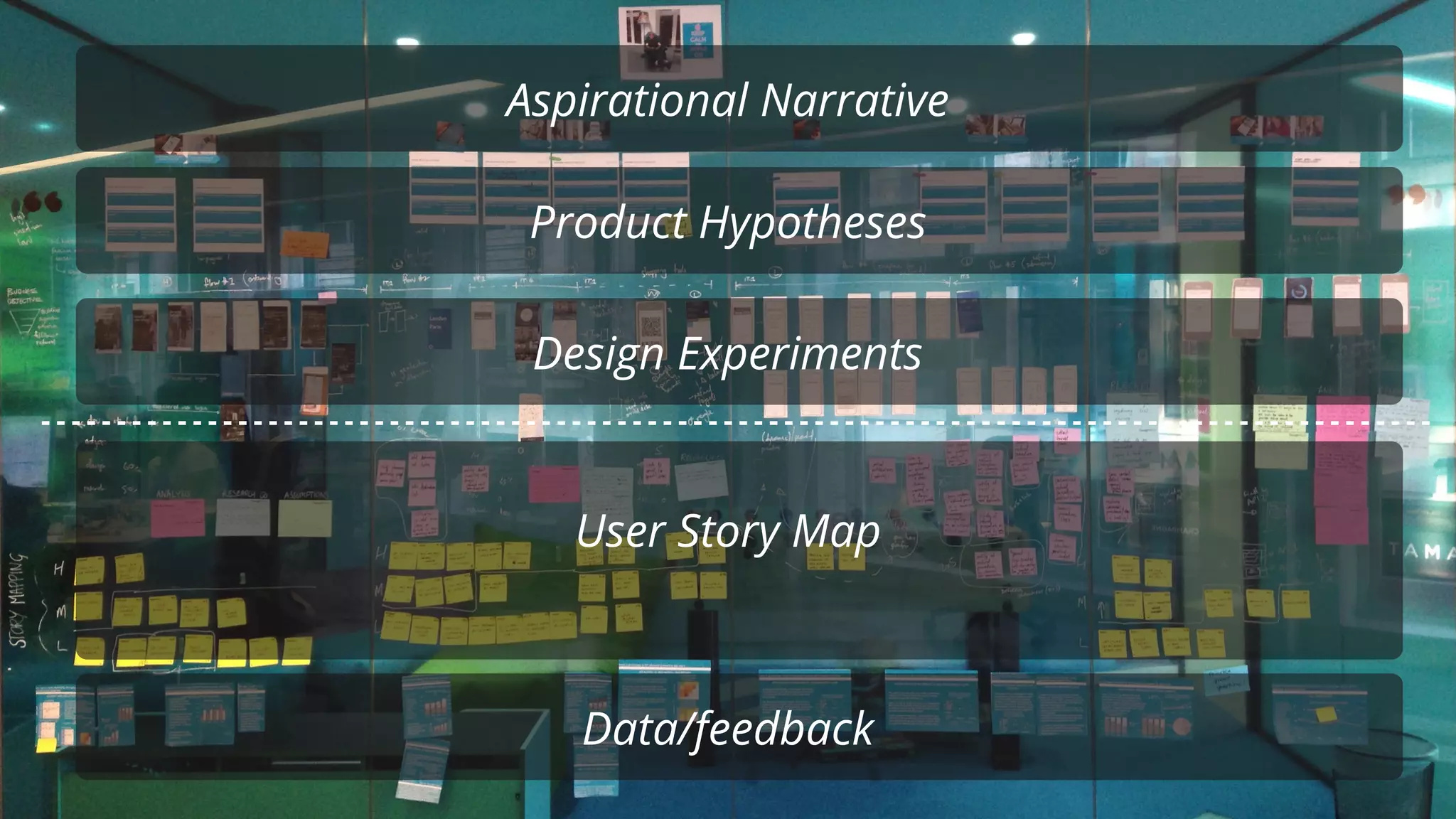
Aspirational Narrative
Product Hypotheses
Design Experiments
User Story Map
Data/feedback
2
Design the right experiments,
to learn the right things.
evolved version of hypothesis template
30
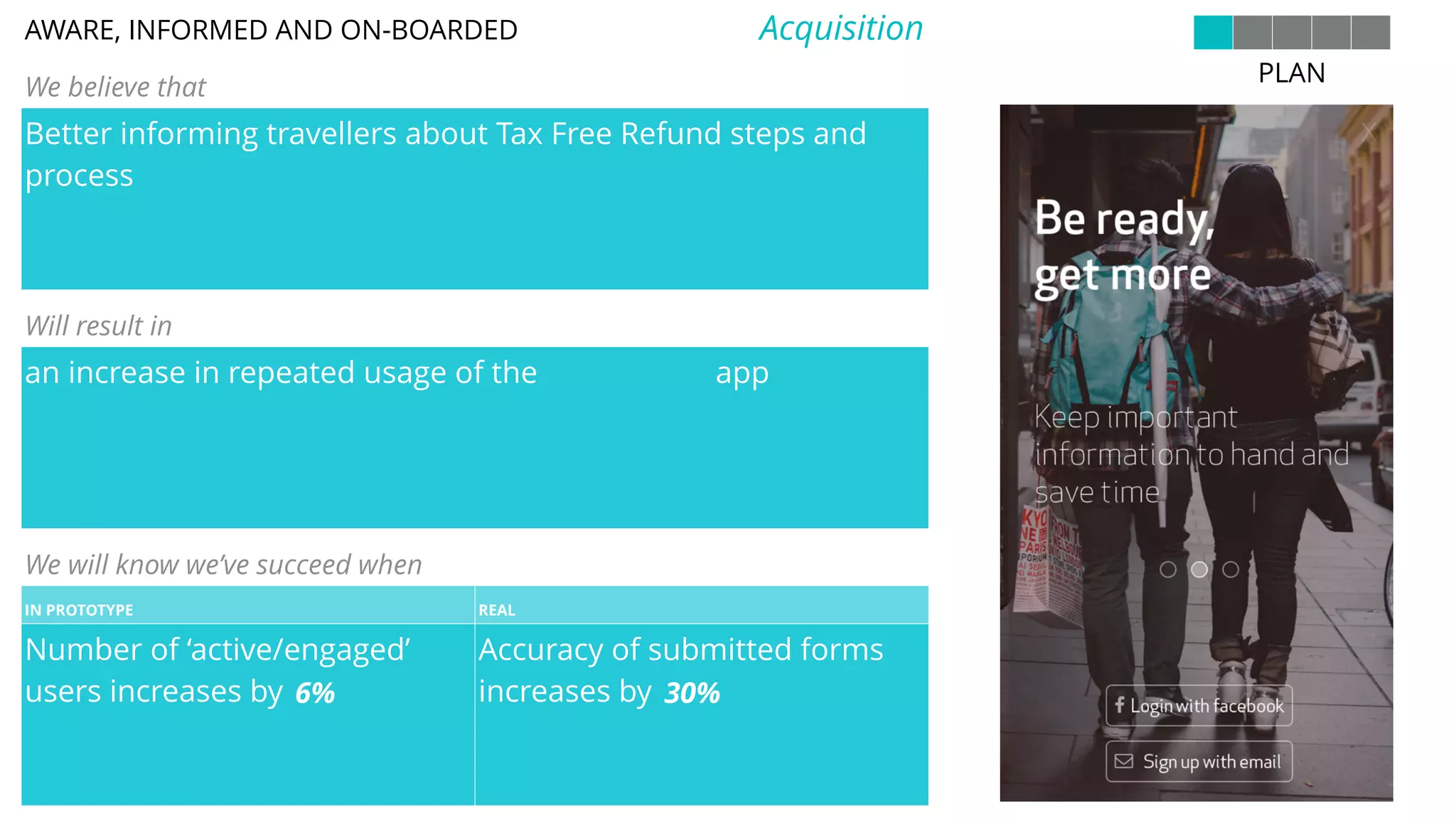
AWARE, INFORMED AND ON-BOARDED
We believe that
Better informing travellers about Tax Free Refund steps and
process
!
Will result in
an increase in repeated usage of the Global Blue app
We will know we’ve succeed when
IN PROTOTYPE REAL
Number of ‘active/engaged’
users increases by
Accuracy of submitted forms
increases by
PLAN
Acquisition
6% 30%
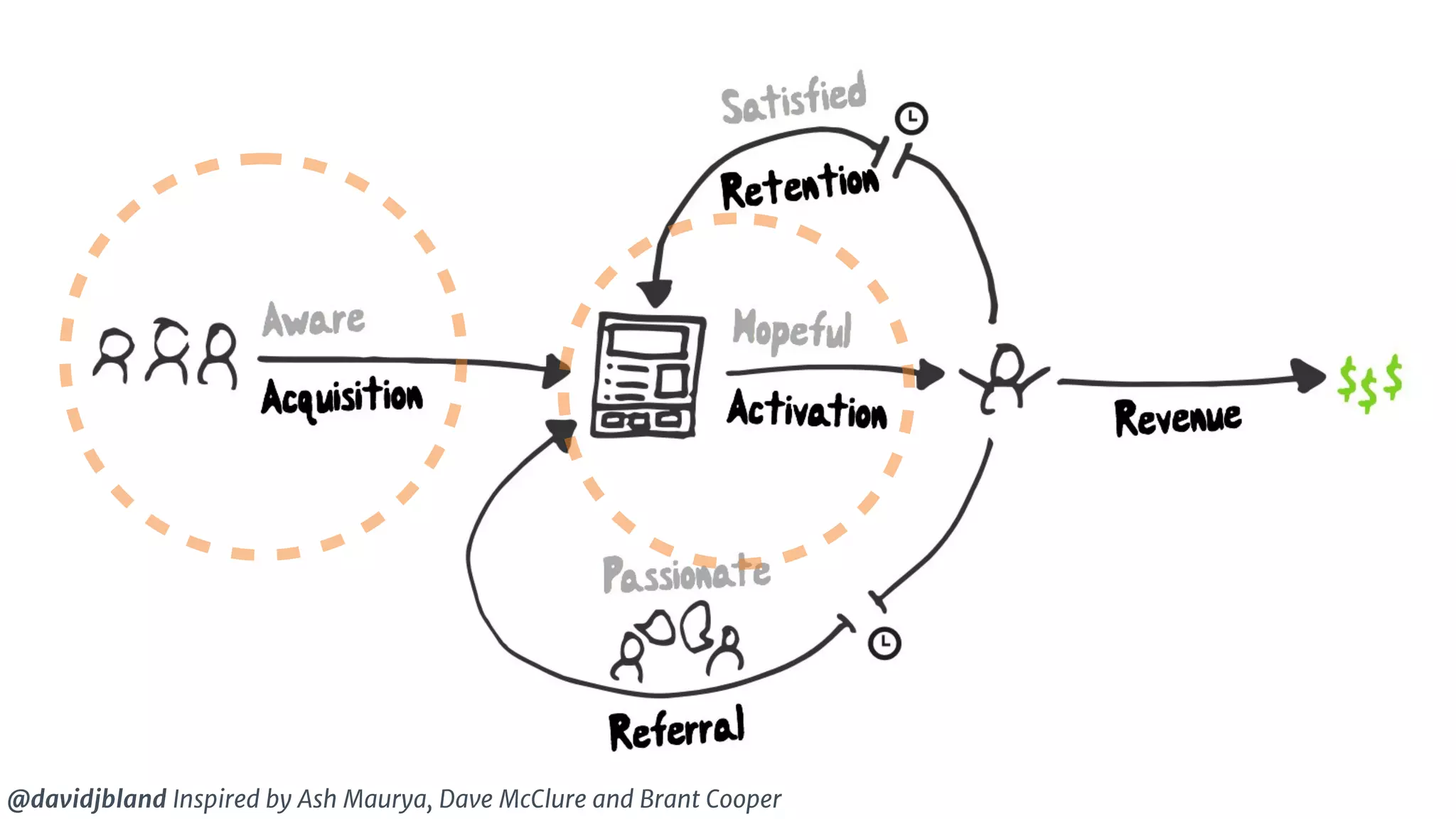
@davidjbland Inspired by Ash Maurya, Dave McClure and Brant Cooper
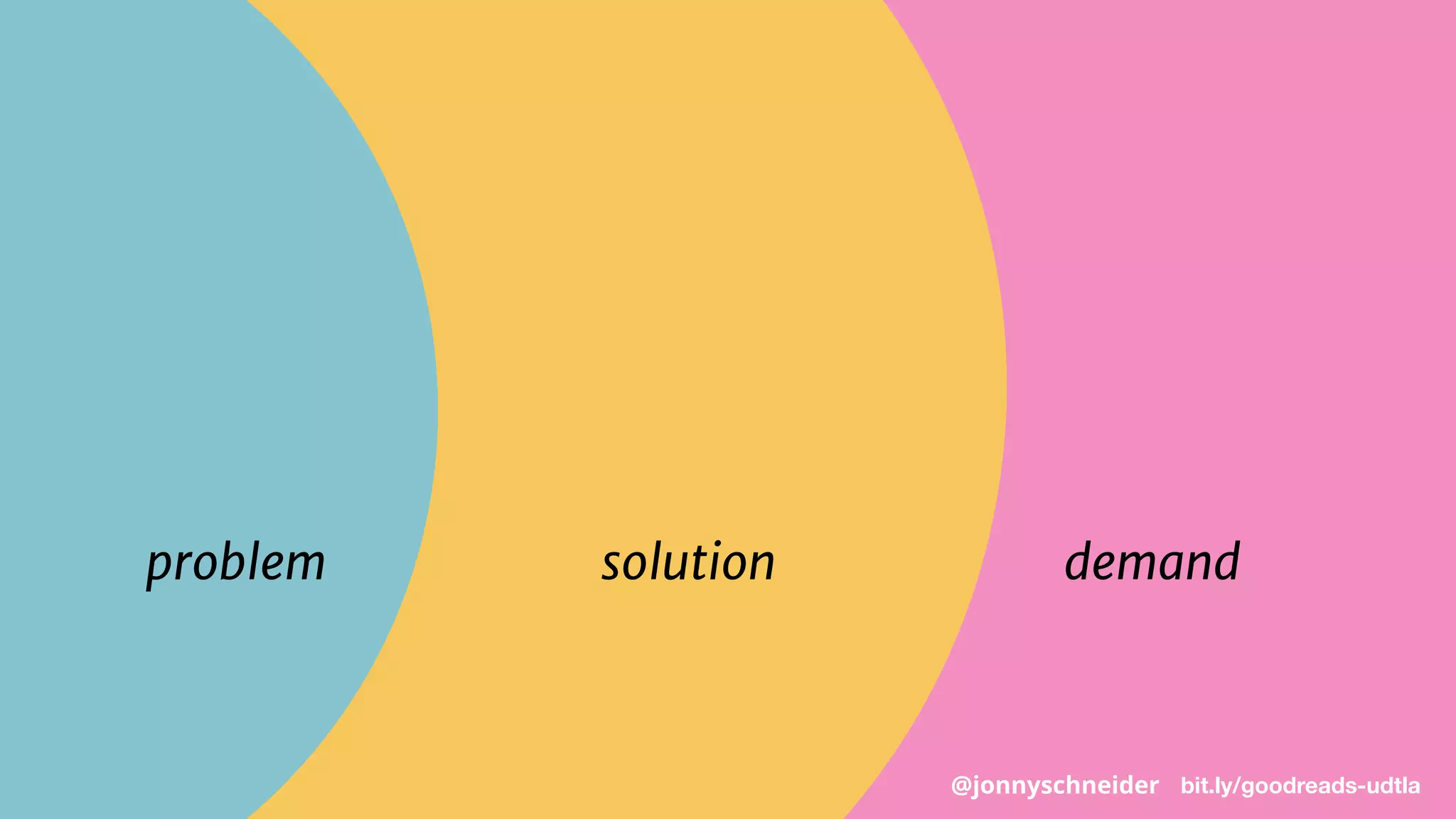
demandsolutionproblem
bit.ly/goodreads-udtla@jonnyschneider
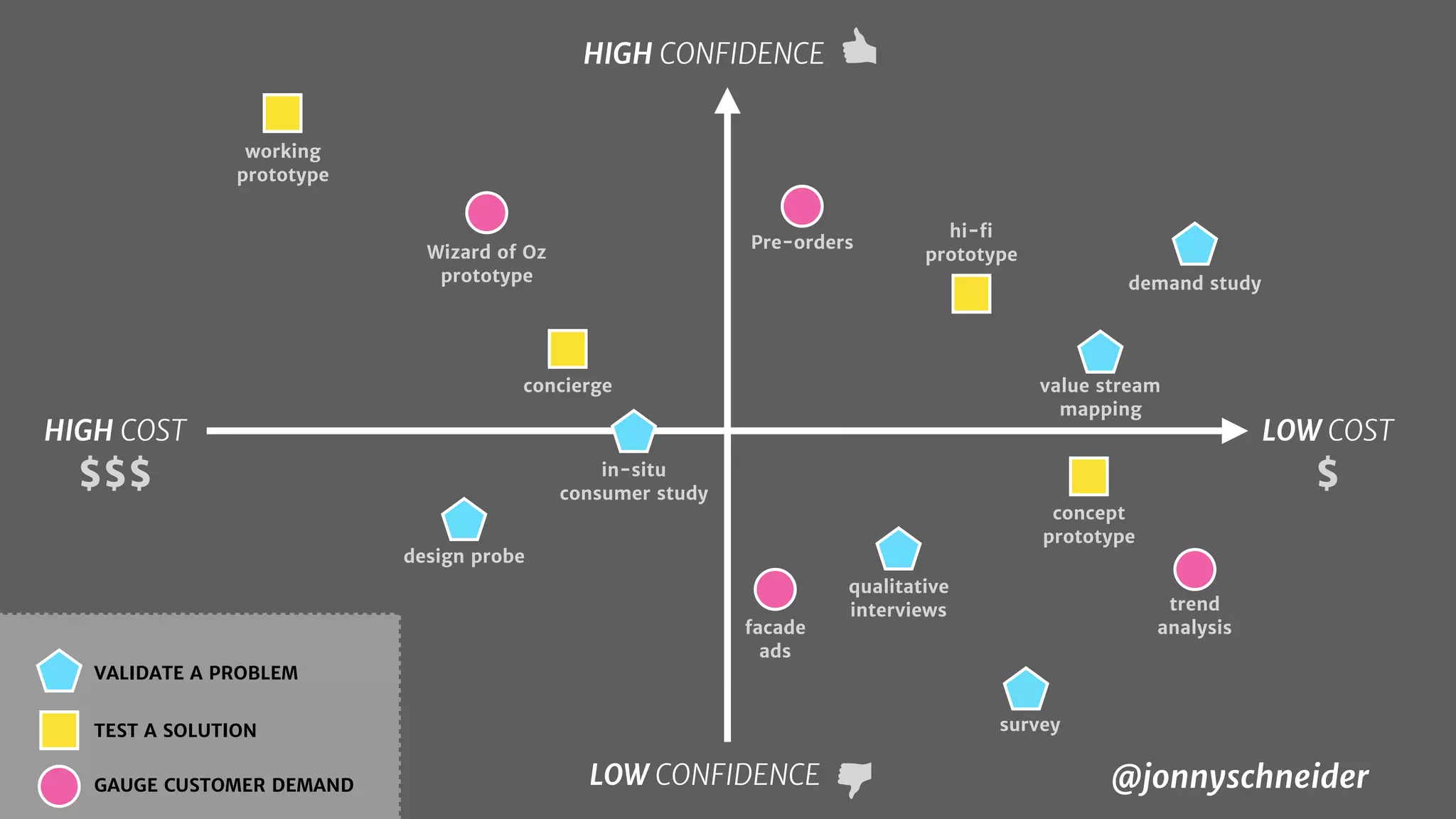
working
prototype
concierge
concept
prototype
hi-fi
prototypeWizard of Oz
prototype
Pre-orders
facade
ads
trend
analysis
demand study
value stream
mapping
in-situ
consumer study
design probe
qualitative
interviews
survey
HIGH COST LOW COST
HIGH CONFIDENCE
$$$
LOW CONFIDENCE
$
TEST A SOLUTION
VALIDATE A PROBLEM
GAUGE CUSTOMER DEMAND @jonnyschneider
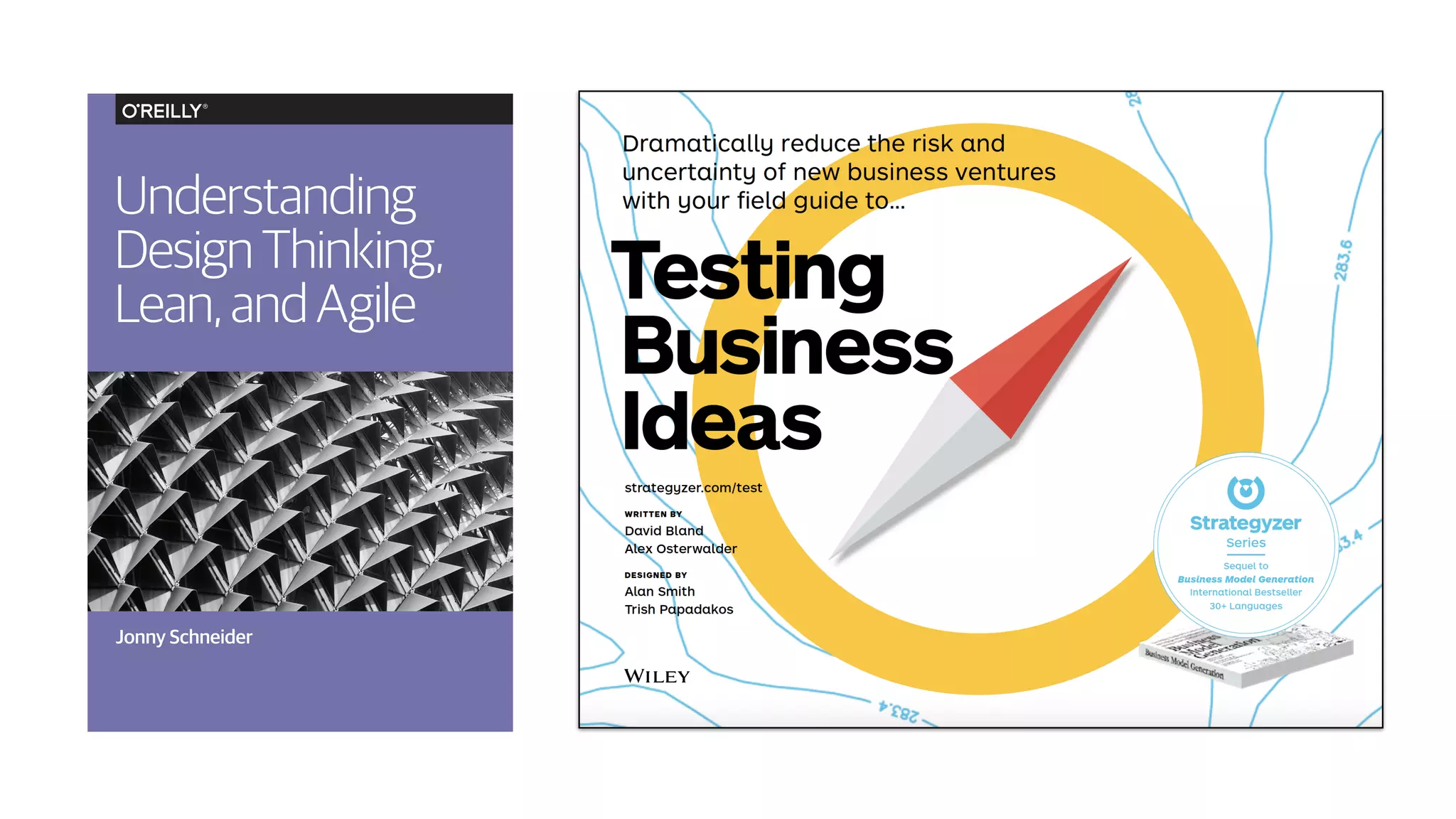
Jonny Schneider
Understanding
DesignThinking,
Lean,andAgile
3
Measure only things that contribute to decisions.
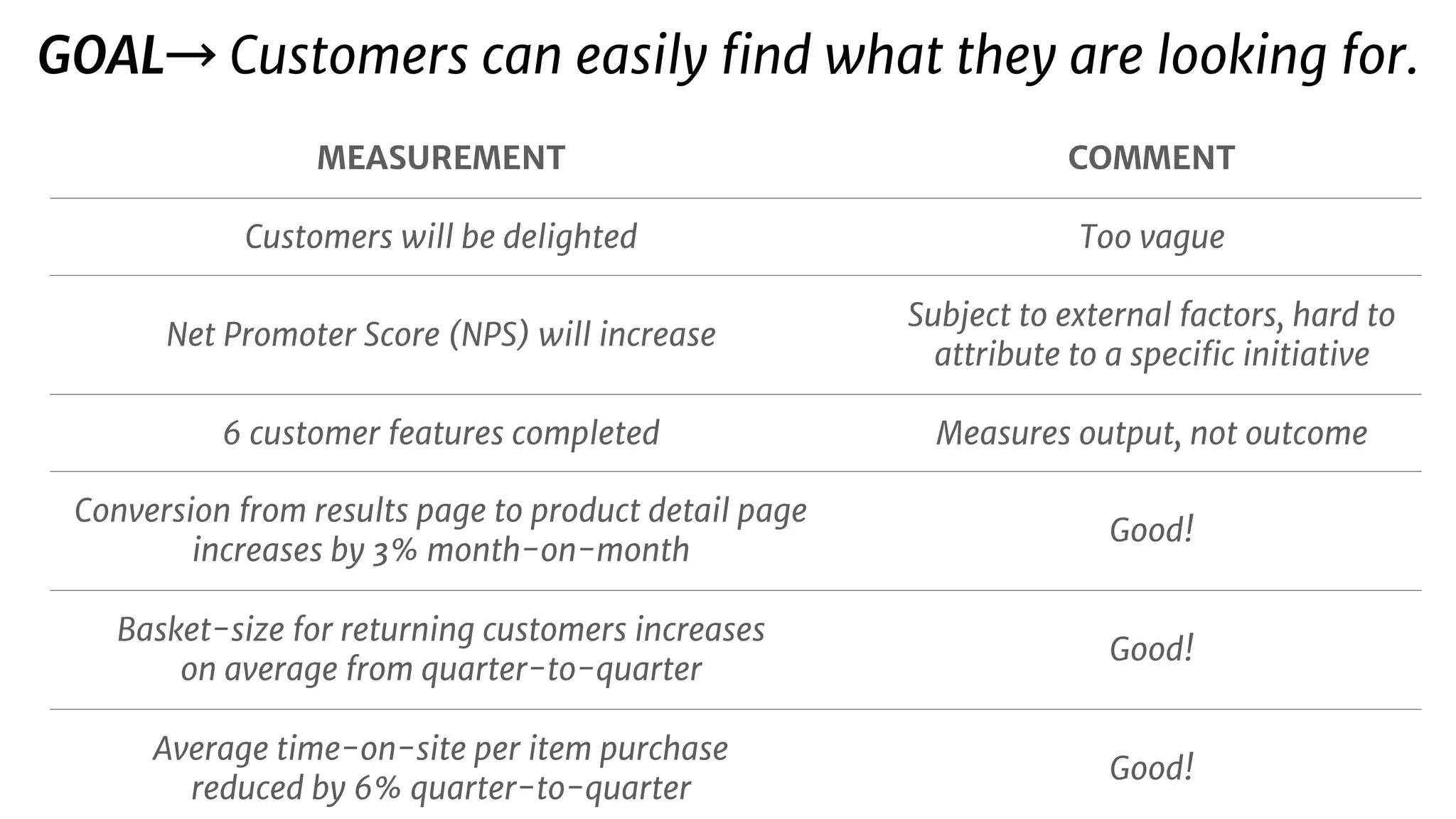
MEASUREMENT COMMENT
Customers will be delighted Too vague
Net Promoter Score (NPS) will increase
Subject to external factors, hard to
attribute to a specific initiative
6 customer features completed Measures output, not outcome
Conversion from results page to product detail page
increases by 3% month-on-month
Good!
Basket-size for returning customers increases
on average from quarter-to-quarter
Good!
Average time-on-site per item purchase
reduced by 6% quarter-to-quarter
Good!
GOAL→ Customers can easily find what they are looking for.
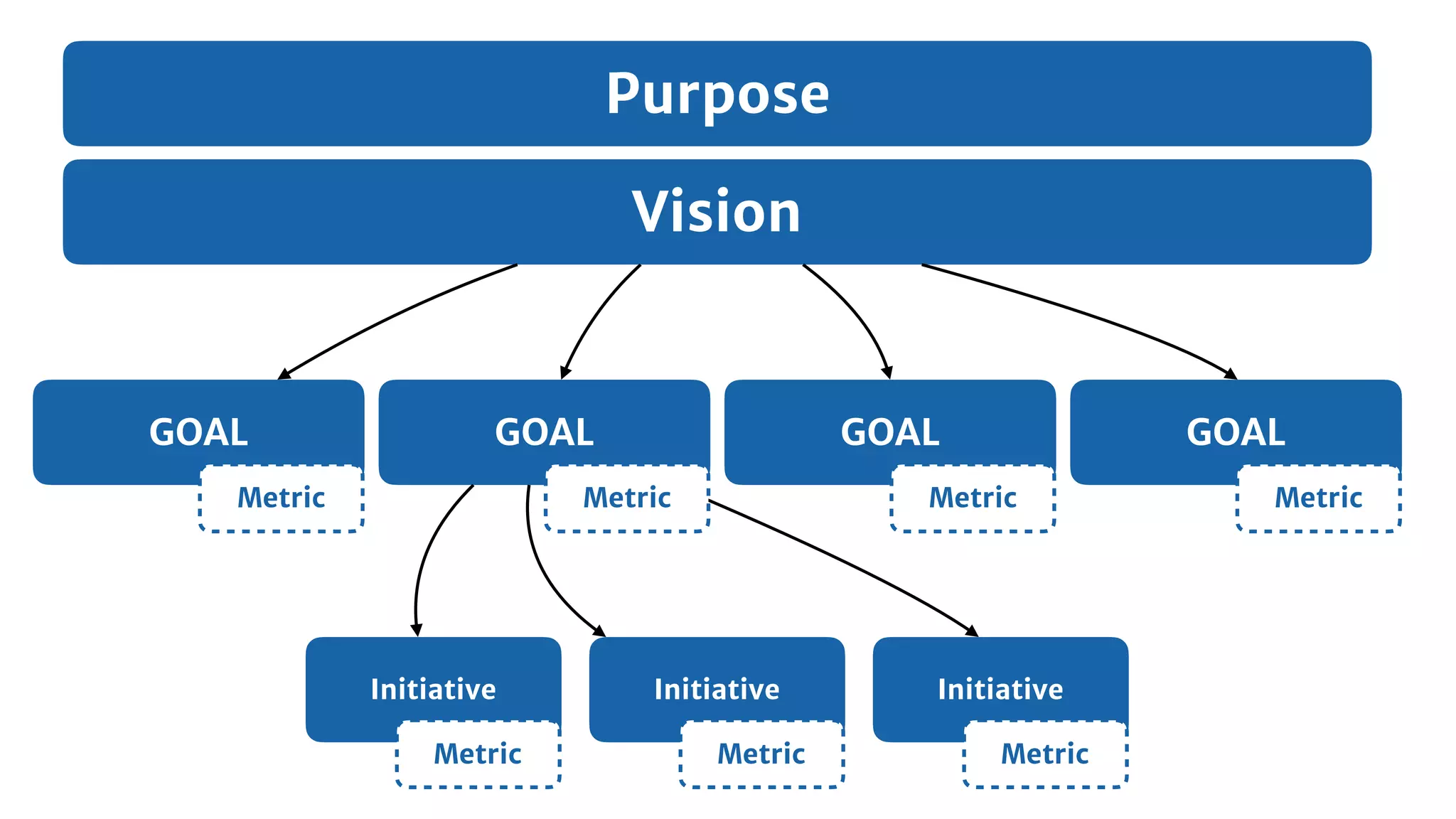
Vision
GOAL
Initiative Initiative Initiative
GOAL GOAL GOAL
Metric Metric Metric Metric
Metric Metric Metric
Purpose
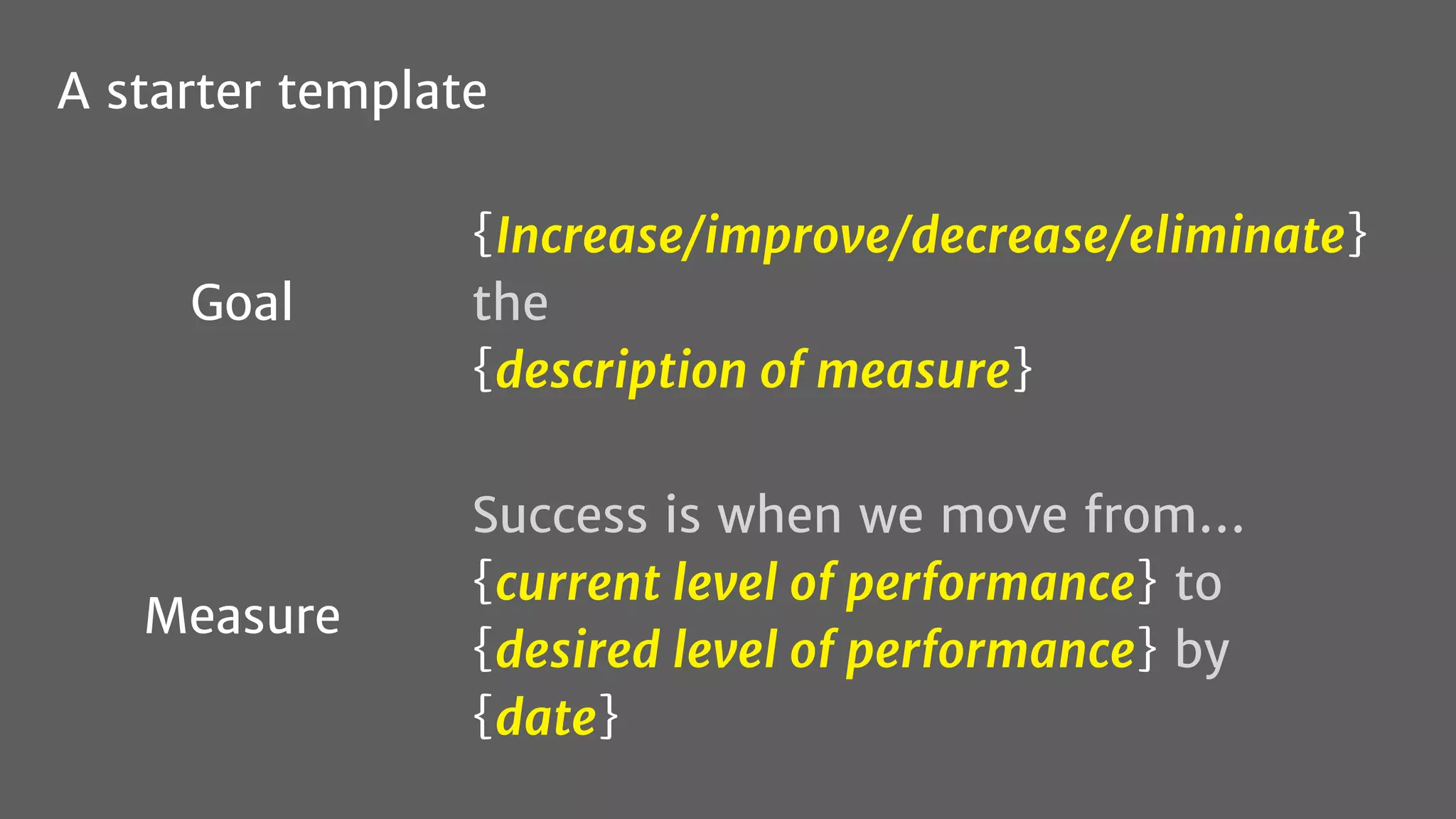
{Increase/improve/decrease/eliminate}
the
{description of measure}
Success is when we move from…
{current level of performance} to
{desired level of performance} by
{date}
Goal
Measure
A starter template
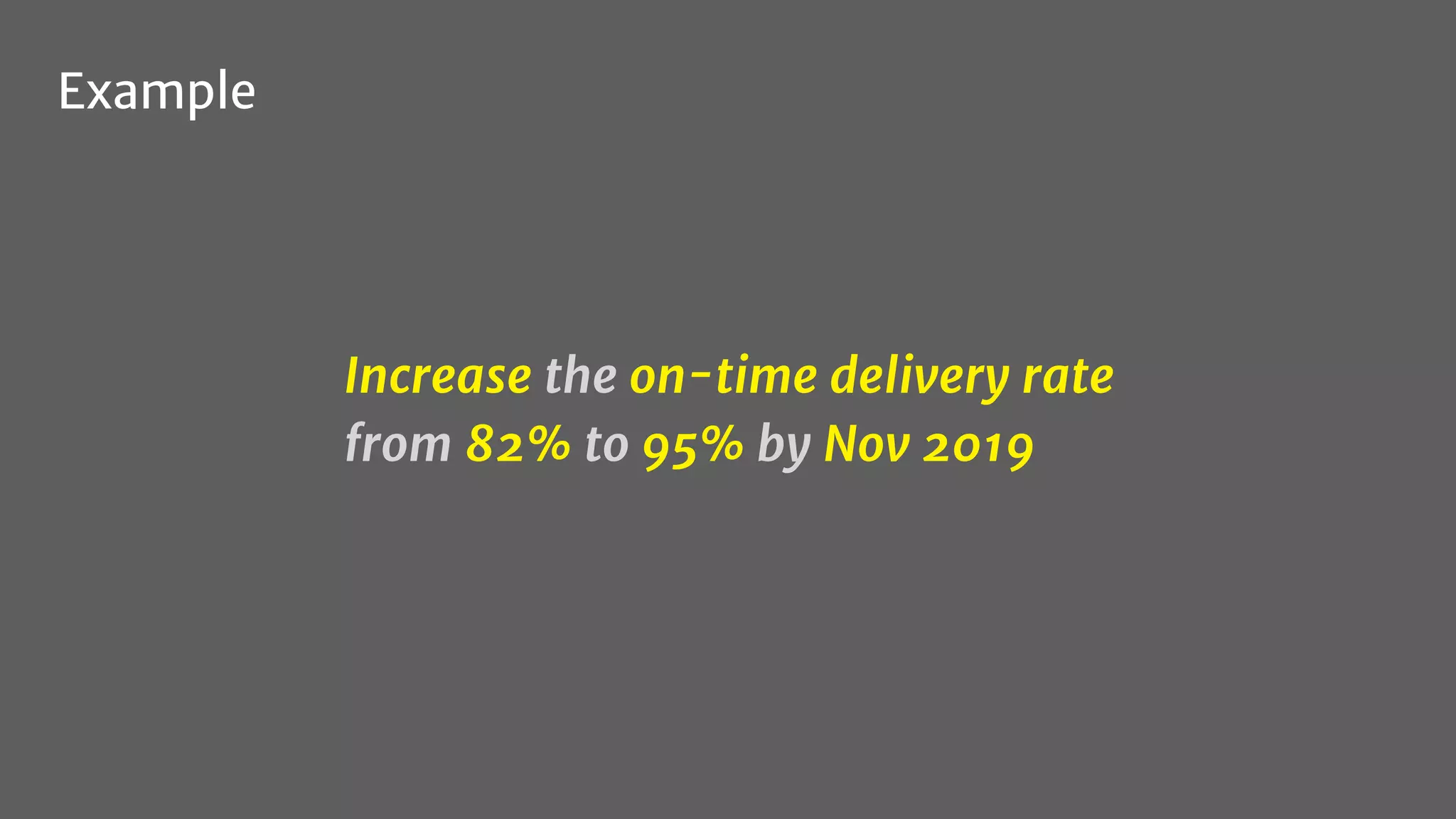
Example
Increase the on-time delivery rate
from 82% to 95% by Nov 2019
4
Solve for next order problems
© 2001 Thomas Höpker
ADAPT TO
CHANGE
EVOLUTIONARY
DESIGN
ACT TO
LEARNVALUE-BASED
PORTFOLIO
MANAGEMENT
SET
A COURSE
DEFINE
ACTIONABLE
STRATEGY
ALIGN TO
PURPOSE
IDEATE
POSSIBLE
SOLUTIONS
EXPLORE
PROBLEMS &
OPPORTUNITIES
Lean mindset
Design thinking
mindset
Agile mindset@jonnyschneider
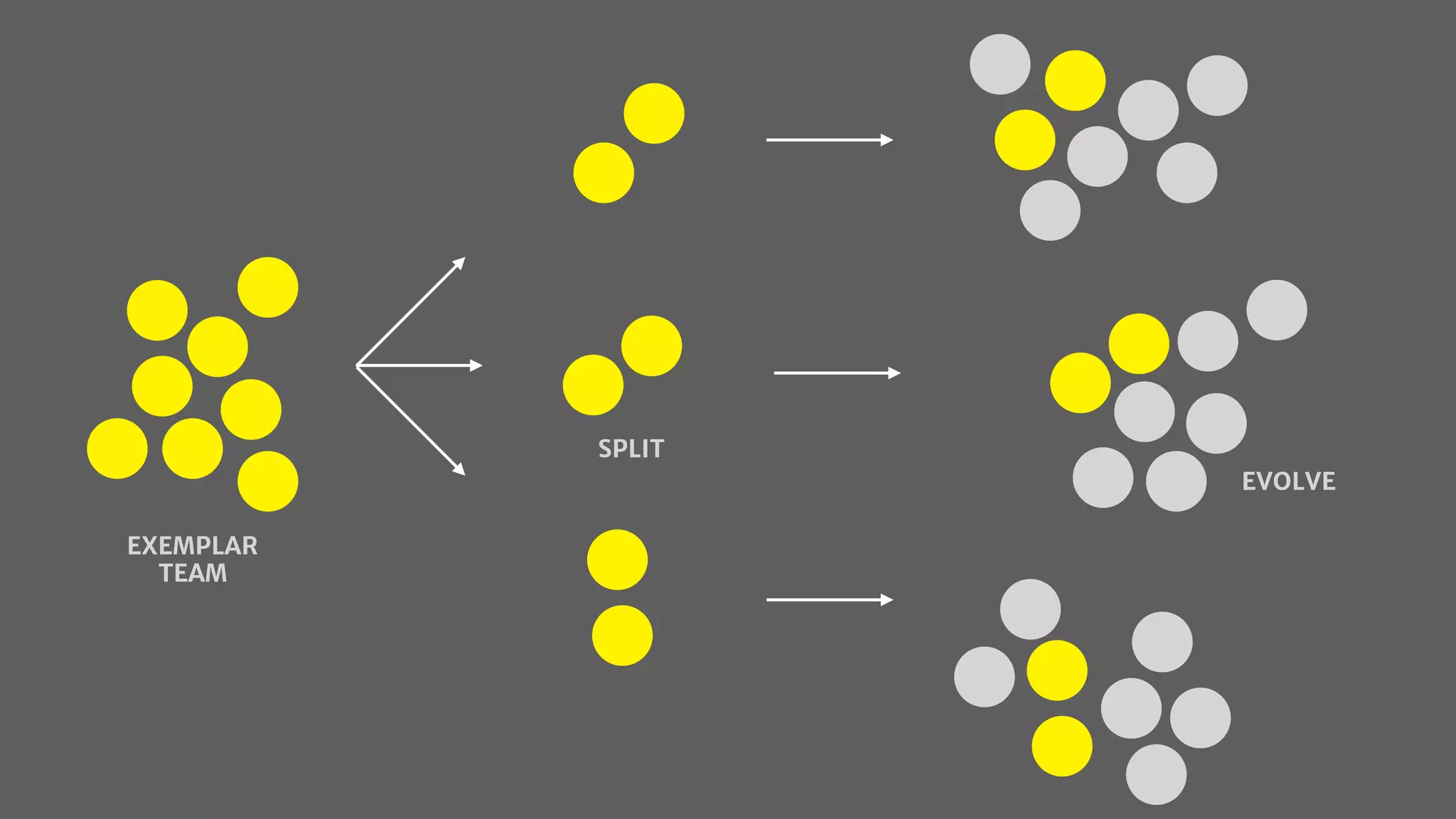
EXEMPLAR
TEAM
SPLIT
EVOLVE
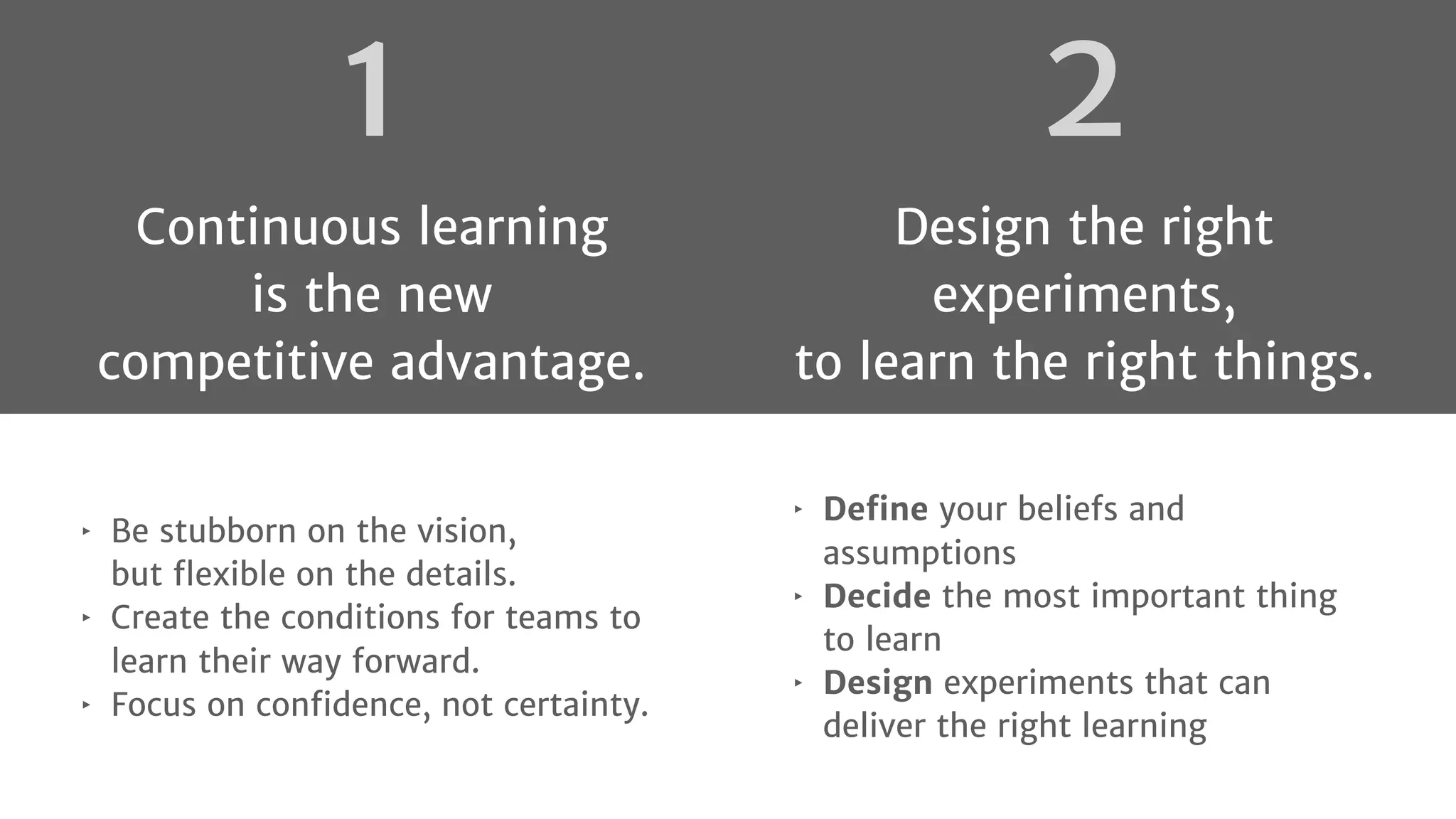
2
Design the right
experiments,
to learn the right things.
‣ Define your beliefs and
assumptions
‣ Decide the most important thing
to learn
‣ Design experiments that can
deliver the right learning
‣ Be stubborn on the vision,
but flexible on the details.
‣ Create the conditions for teams to
learn their way forward.
‣ Focus on confidence, not certainty.
1
Continuous learning
is the new
competitive advantage.
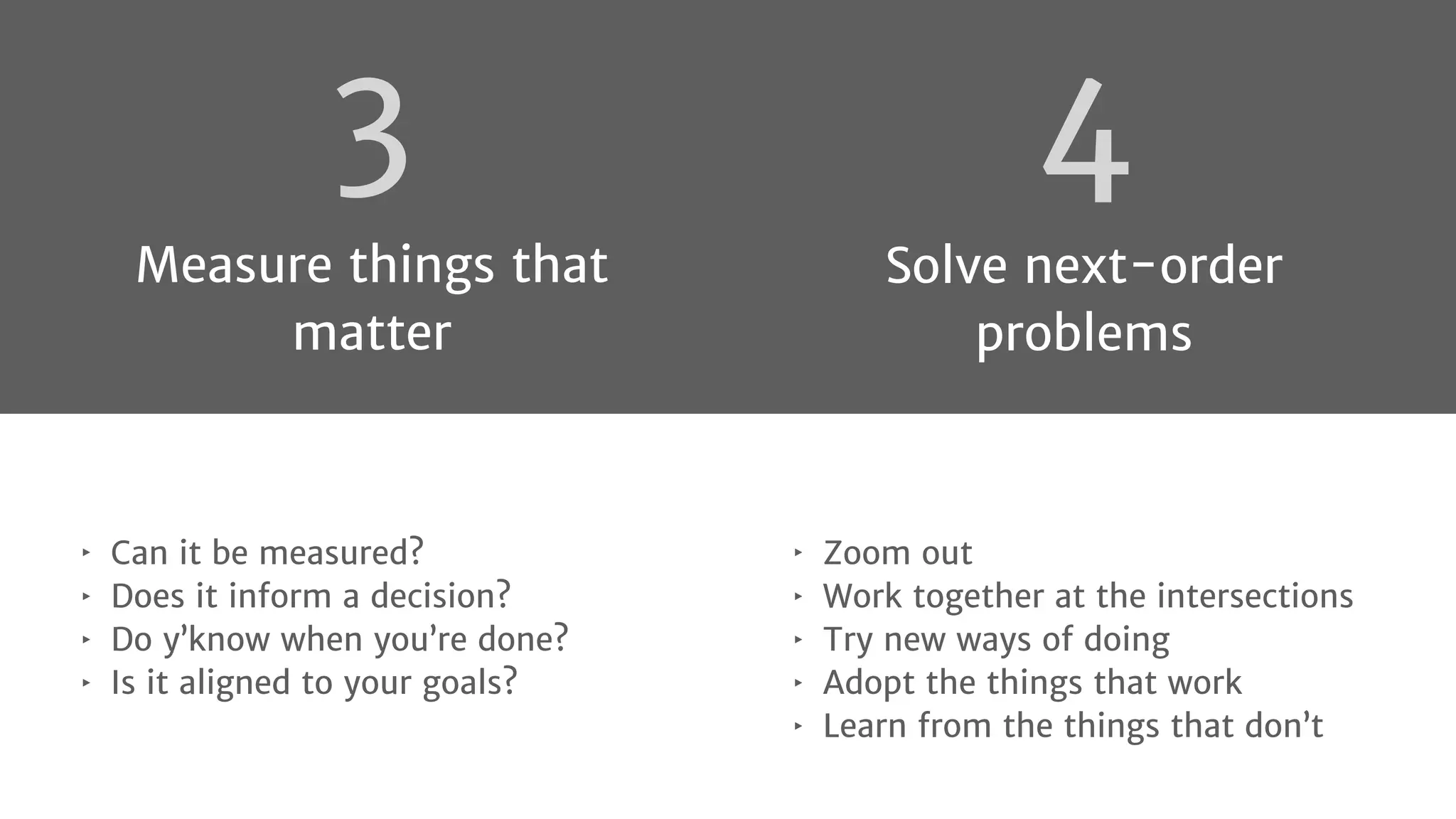
4
Solve next-order
problems
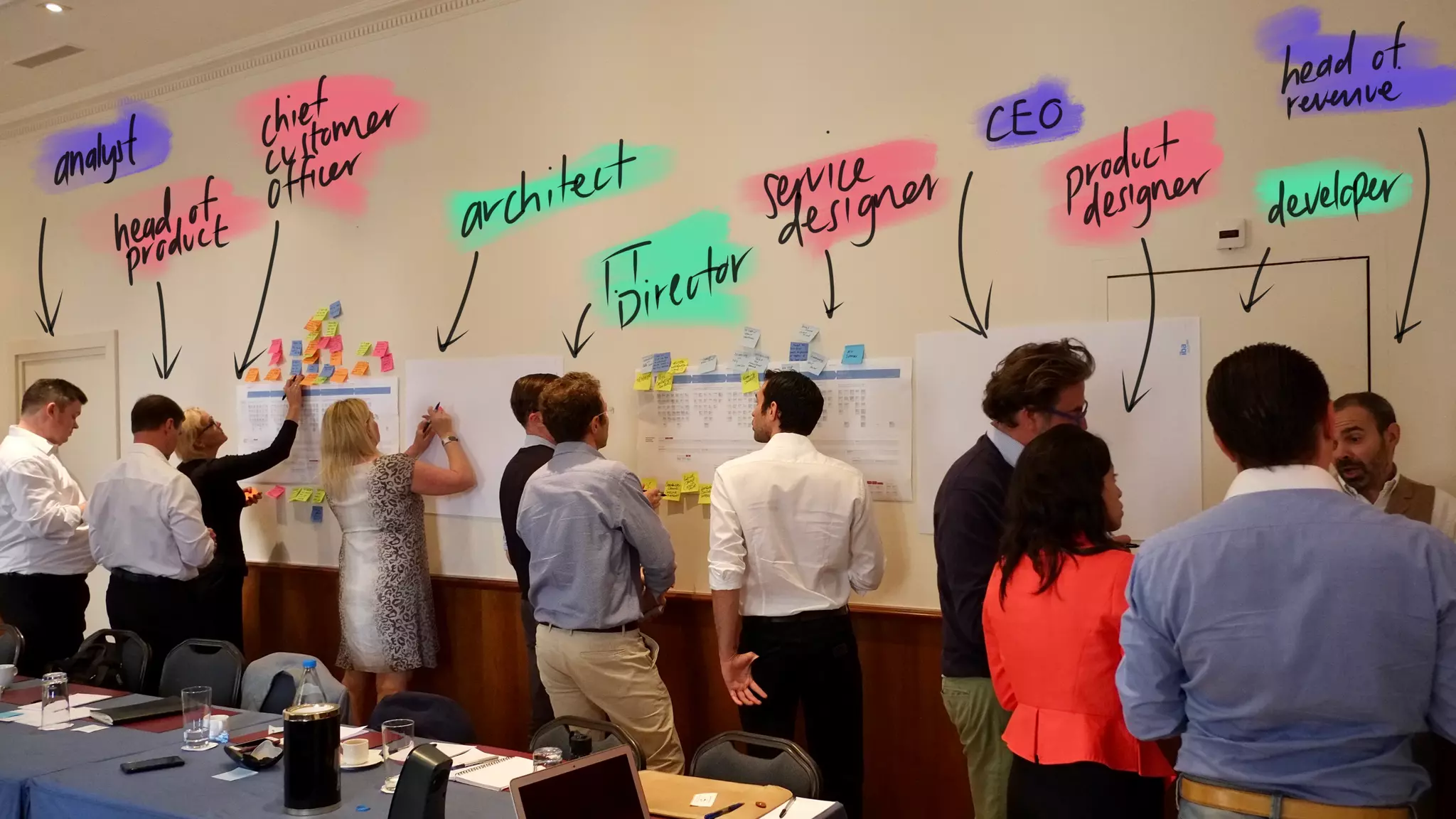
‣ Zoom out
‣ Work together at the intersections
‣ Try new ways of doing
‣ Adopt the things that work
‣ Learn from the things that don’t
‣ Can it be measured?
‣ Does it inform a decision?
‣ Do y’know when you’re done?
‣ Is it aligned to your goals?
3
Measure things that
matter
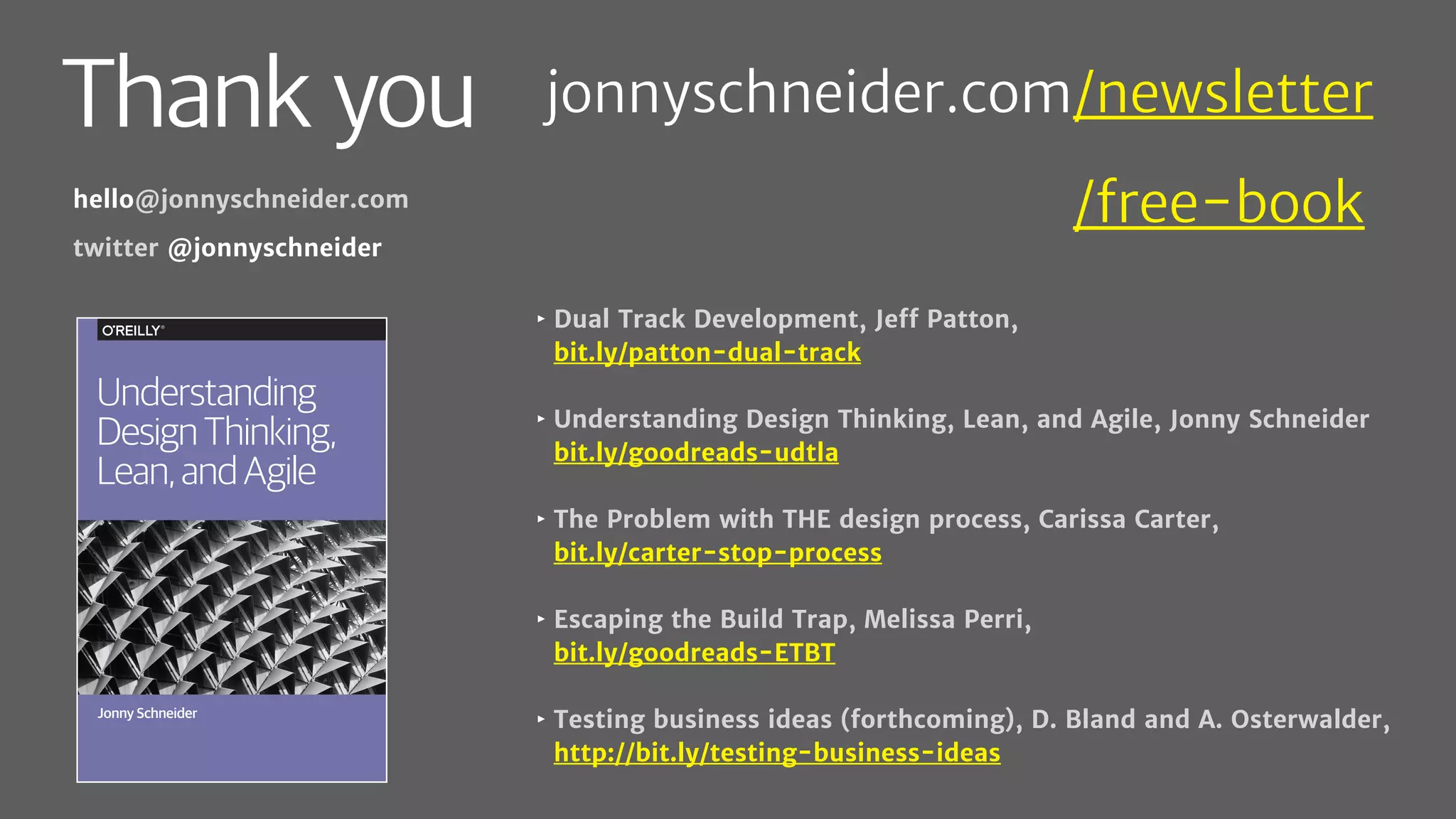
Thank you
‣ Dual Track Development, Jeff Patton,
bit.ly/patton-dual-track
‣ Understanding Design Thinking, Lean, and Agile, Jonny Schneider
bit.ly/goodreads-udtla
‣ The Problem with THE design process, Carissa Carter,
bit.ly/carter-stop-process
‣ Escaping the Build Trap, Melissa Perri,
bit.ly/goodreads-ETBT
‣ Testing business ideas (forthcoming), D. Bland and A. Osterwalder,
http://bit.ly/testing-business-ideas
hello@jonnyschneider.com
twitter @jonnyschneider
Jonny Schneider
Understanding
DesignThinking,
Lean,andAgile
jonnyschneider.com/newsletter
jonnyschneider.com/free-book

How design thinking, lean, and agile work together