DESIGN – LEAN – AGILE THINKING
Chaitanya Muppala05-Sep-2018
Happy Teachers Day !!!!!
Disclaimer
Any examples/stories relating to anyone is pure coincidental not intentional
Design – Lean – Agile Thinking
Let’s take a step back
Why do we need Thinking?
Problem Solving & Decision Making
Design Thinking
It is not just process or procedure.
Design Thinking
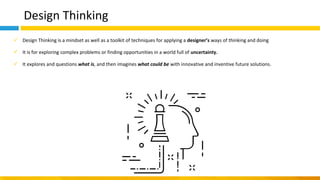
✓ Design Thinking is a mindset as well as a toolkit of techniques for applying a designer’s ways of thinking and doing
✓ It is for exploring complex problems or finding opportunities in a world full of uncertainty.
✓ It explores and questions what is, and then imagines what could be with innovative and inventive future solutions.
Designer Abilities
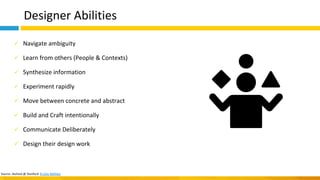
✓ Navigate ambiguity
✓ Learn from others (People & Contexts)
✓ Synthesize information
✓ Experiment rapidly
✓ Move between concrete and abstract
✓ Build and Craft intentionally
✓ Communicate Deliberately
✓ Design their design work
Source: dschool @ Stanford: 8 Core Abilities
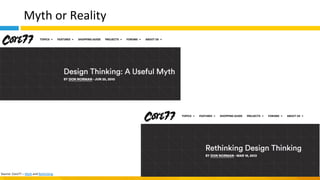
Myth or Reality
Source: Core77 – Myth and Rethinking
Components of Design Thinking
“Designers don’t search for a solution until they have determined the real problem, and even then,
instead of solving that problem, they stop to consider a wide range of potential solutions.
Only then will they converge upon their proposal”
- Donald Norman
Components of Design Thinking
✓ Determining the real problem
✓ Searching for solutions
✓ Considering many options
✓ Converging on a proposal
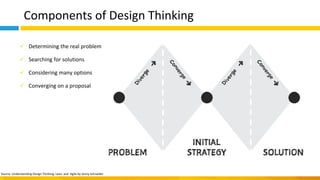
Components of Design Thinking
✓ Determining the real problem
✓ Searching for solutions
✓ Considering many options
✓ Converging on a proposal
Source: Understanding Design Thinking, Lean, and Agile by Jonny Schneider
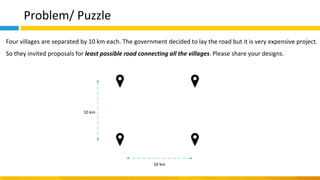
Problem/ Puzzle
10 km
10 km
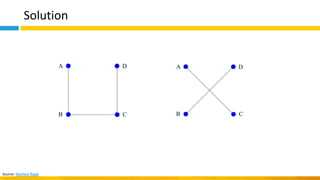
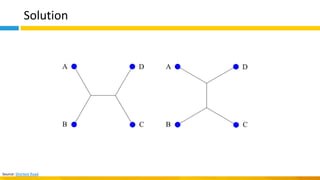
Four villages are separated by 10 km each. The government decided to lay the road but it is very expensive project.
So they invited proposals for least possible road connecting all the villages. Please share your designs.
Solution
Source: Shortest Road
Solution
Source: Shortest Road
Lean
✓ Lean is a management philosophy for improving any system that produces value—that is, any organization.
✓ Some of the characteristics are
Continuous improvement High Quality Reduction in WasteRespect People
History of Lean
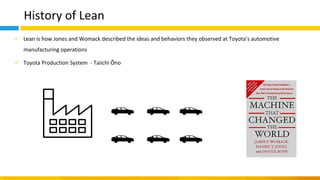
✓ Lean is how Jones and Womack described the ideas and behaviors they observed at Toyota’s automotive
manufacturing operations
✓ Toyota Production System - Taiichi Ōno
Let’s go to past for a while
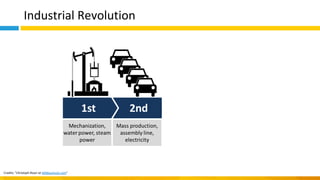
Industrial Revolution
Credits: "Christoph Roser at AllAboutLean.com"
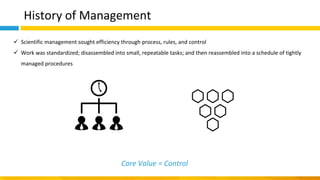
History of Management
✓ Scientific management sought efficiency through process, rules, and control
✓ Work was standardized; disassembled into small, repeatable tasks; and then reassembled into a schedule of tightly
managed procedures
Core Value = Control
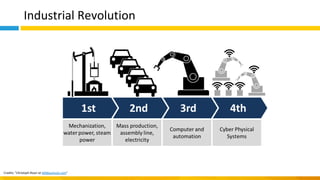
Industrial Revolution
Credits: "Christoph Roser at AllAboutLean.com"
Modern Software Business
Too Complex, Too Unpredictable, Too Dynamic
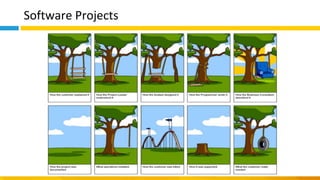
Software Projects
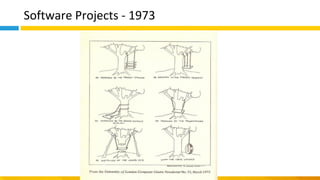
Software Projects - 1973
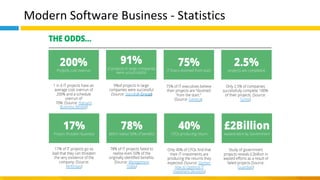
Modern Software Business - Statistics
Chaos Report
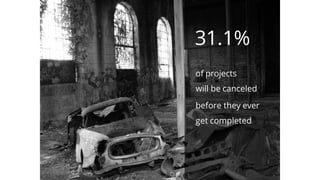
31.1%
of projects
will be canceled
before they ever
get completed
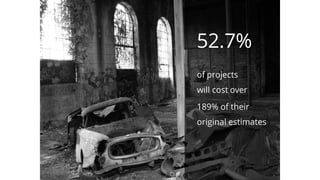
52.7%
of projects
will cost over
189% of their
original estimates
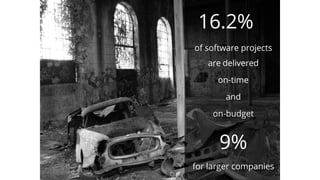
16.2%
of software projects
are delivered
on-time
and
on-budget
9%
for larger companies
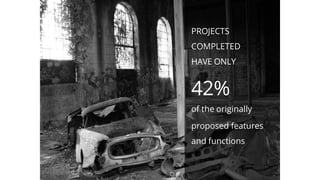
PROJECTS
COMPLETED
HAVE ONLY
42%
of the originally
proposed features
and functions
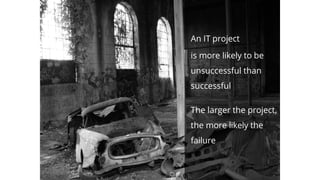
An IT project
is more likely to be
unsuccessful than
successful
The larger the project,
the more likely the
failure
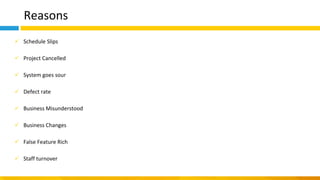
Reasons
✓ Schedule Slips
✓ Project Cancelled
✓ System goes sour
✓ Defect rate
✓ Business Misunderstood
✓ Business Changes
✓ False Feature Rich
✓ Staff turnover
So….
We need something that is
“adaptive rather than predictive”
“people-oriented rather than process-oriented”
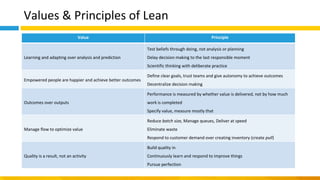
Values & Principles of Lean
Value Principle
Learning and adapting over analysis and prediction
Test beliefs through doing, not analysis or planning
Delay decision making to the last responsible moment
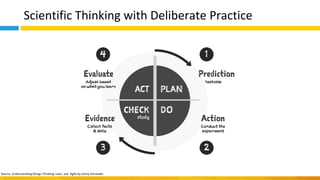
Scientific thinking with deliberate practice
Empowered people are happier and achieve better outcomes
Define clear goals, trust teams and give autonomy to achieve outcomes
Decentralize decision making
Outcomes over outputs
Performance is measured by whether value is delivered, not by how much
work is completed
Specify value, measure mostly that
Manage flow to optimize value
Reduce batch size, Manage queues, Deliver at speed
Eliminate waste
Respond to customer demand over creating inventory (create pull)
Quality is a result, not an activity
Build quality in
Continuously learn and respond to improve things
Pursue perfection
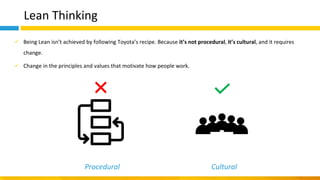
Lean Thinking
✓ Being Lean isn’t achieved by following Toyota’s recipe. Because it’s not procedural, it’s cultural, and it requires
change.
✓ Change in the principles and values that motivate how people work.
Procedural Cultural
Paradox
✓ All hands meetings – Board Meetings – “Must Change”
✓ It doesn’t work because it asks people to change, without changing the system and culture that exists around
them
Paradox - Video
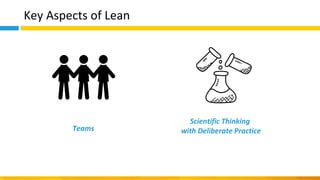
Key Aspects of Lean
Teams
Scientific Thinking
with Deliberate Practice
Scientific Thinking with Deliberate Practice
Source: Understanding Design Thinking, Lean, and Agile by Jonny Schneider
Teams
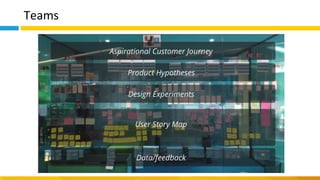
✓ People want to be self-directed, trusted, and empowered to do the right thing.
✓ Autonomy, Mastery & Purpose are key to motivation and engagement.
✓ Communicating vision, purpose and progress
✓ Mission Command
✓ It’s how army maintains centralized intent and dispersed execution through disciplined initiative.
www.productcamphyd.com
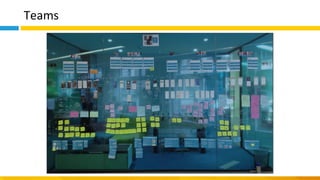
Teams
www.productcamphyd.com
Teams
Saying
Rome is not built in a day
Then
Rome is not built in a day
Even Teams are not built in a day
Simulation
Power of Teams
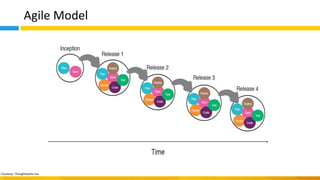
Agile Thinking
A way of building software that is all about
planning for, and assuming
“change”
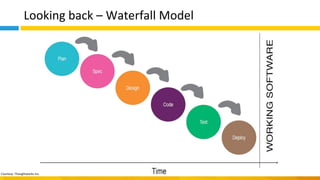
Looking back – Waterfall Model
Courtesy: Thoughtworks Inc.
Assumptions – Waterfall
✓ It’s possible to identify a complete set of requirements up front
✓ The requirements once identified will not change
✓ It’s possible to produce estimates with a high degree of accuracy
✓ Detailed schedule will prevent a project to delay its delivery
✓ Complete documentation will guarantee high quality software
Agile Model
Courtesy: Thoughtworks Inc.
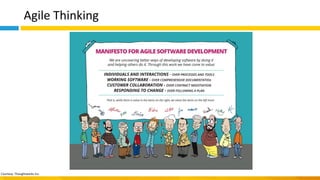
Agile Thinking
Courtesy: Thoughtworks Inc.
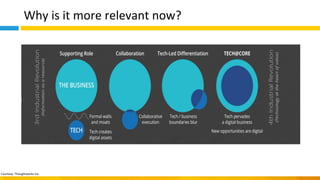
Why is it more relevant now?
Courtesy: Thoughtworks Inc.
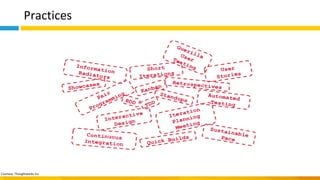
Practices
Courtesy: Thoughtworks Inc.
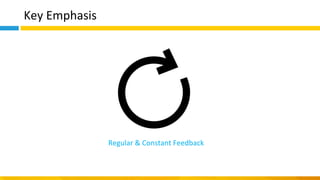
Key Emphasis
Regular & Constant Feedback
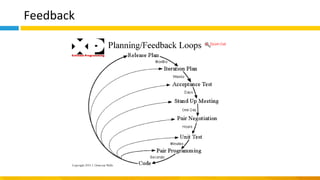
Feedback
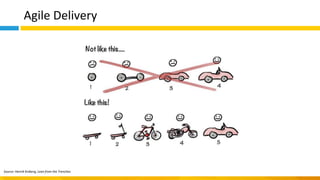
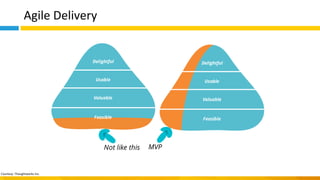
Agile Delivery
Source: Henrik Kniberg, Lean from the Trenches
Agile Delivery
Courtesy: Thoughtworks Inc.
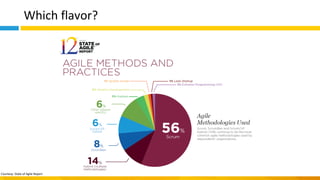
Which flavor?
Courtesy: State of Agile Report
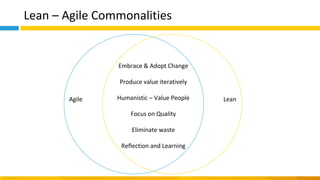
Lean – Agile Commonalities
Embrace & Adopt Change
Produce value iteratively
Humanistic – Value People
Focus on Quality
Eliminate waste
Reflection and Learning
Agile Lean
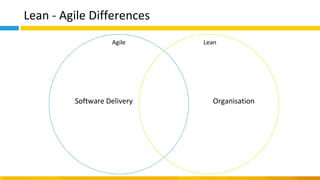
Lean - Agile Differences
Software Delivery Organisation
Agile Lean
Case Study – Event Participation
www.productcamphyd.com
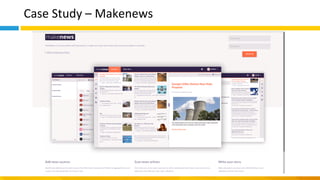
Case Study – Makenews
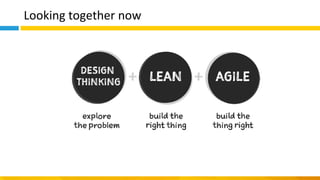
Looking together now
What should we adopt?
Too often, people ask/think, Lean or Agile or Design Thinking?
What should we adopt?
Too often, people ask/think, Lean or Agile or Design Thinking?
Answer is
“and”
not
“or”
Thank you
Chaitanya Muppala
Credits
Slide: Design - Lean - Agile
--------
Design Thinking - Pablo A
Agile, Lean - Rflor
Agile 2 - Nimal Raj
Slide: Let's take step back
--------
Step: Eugen Belyakoff
Back: Fatahillah
Slide: What is Thinking?
-------
Marek Polakovic
Slide: Why do we need to Thinking?
-------
Margaret Hagan
Slide: Problem Solving
-------
The Noun Project
Slide: Power of Teams, Paradox
Video by Guilherme Furtado from the
Noun Project
Slide: Design Thinking
-------
Mindset - Creative Stall
Slide: Components of Design Thinking
-------
Thoughtworks
Slide: Lean Thinking
-------
Vectors Market
Gregor Cresnar
iconsmind.com
Danil Polshin
Henry
Arthur Shlain
Abdo
Slide: Paradox
-------
Dan Hetteix
Slide: Let's go to past for a while
-------
Joe Mortell
Slide: Lean
people by Wilson Joseph from the Noun Project
Slide: History of Management
-------
Fiona OM
Ali Wijaya
Slide: Modern Software Business
-------
Simon Martin
Slide: Key Aspects of Lean
-------
TukTuk Design
Creative Stall
Slide: Why is it more relavant now?
-------
H Alberto Gongora
Slide: Case Study - Event Participation
-------
Oksana Latysheva
Slide: Barrier - traffic barrier by Lluisa Iborra from
the Noun Project
Slide: Key Emphasis
feedback by dilakuscan from the Noun Project
All the creative people from “The Noun Project”

Design lean agile_thinking presentation

  • 1.
    DESIGN – LEAN– AGILE THINKING Chaitanya Muppala05-Sep-2018
  • 2.
  • 3.
    Disclaimer Any examples/stories relatingto anyone is pure coincidental not intentional
  • 4.
    Design – Lean– Agile Thinking
  • 5.
    Let’s take astep back
  • 6.
    Why do weneed Thinking?
  • 7.
    Problem Solving &Decision Making
  • 9.
    Design Thinking It isnot just process or procedure.
  • 10.
    Design Thinking ✓ DesignThinking is a mindset as well as a toolkit of techniques for applying a designer’s ways of thinking and doing ✓ It is for exploring complex problems or finding opportunities in a world full of uncertainty. ✓ It explores and questions what is, and then imagines what could be with innovative and inventive future solutions.
  • 11.
    Designer Abilities ✓ Navigateambiguity ✓ Learn from others (People & Contexts) ✓ Synthesize information ✓ Experiment rapidly ✓ Move between concrete and abstract ✓ Build and Craft intentionally ✓ Communicate Deliberately ✓ Design their design work Source: dschool @ Stanford: 8 Core Abilities
  • 12.
    Myth or Reality Source:Core77 – Myth and Rethinking
  • 13.
    Components of DesignThinking “Designers don’t search for a solution until they have determined the real problem, and even then, instead of solving that problem, they stop to consider a wide range of potential solutions. Only then will they converge upon their proposal” - Donald Norman
  • 14.
    Components of DesignThinking ✓ Determining the real problem ✓ Searching for solutions ✓ Considering many options ✓ Converging on a proposal
  • 15.
    Components of DesignThinking ✓ Determining the real problem ✓ Searching for solutions ✓ Considering many options ✓ Converging on a proposal Source: Understanding Design Thinking, Lean, and Agile by Jonny Schneider
  • 16.
    Problem/ Puzzle 10 km 10km Four villages are separated by 10 km each. The government decided to lay the road but it is very expensive project. So they invited proposals for least possible road connecting all the villages. Please share your designs.
  • 17.
  • 18.
  • 21.
    Lean ✓ Lean isa management philosophy for improving any system that produces value—that is, any organization. ✓ Some of the characteristics are Continuous improvement High Quality Reduction in WasteRespect People
  • 22.
    History of Lean ✓Lean is how Jones and Womack described the ideas and behaviors they observed at Toyota’s automotive manufacturing operations ✓ Toyota Production System - Taiichi Ōno
  • 23.
    Let’s go topast for a while
  • 24.
  • 25.
    History of Management ✓Scientific management sought efficiency through process, rules, and control ✓ Work was standardized; disassembled into small, repeatable tasks; and then reassembled into a schedule of tightly managed procedures Core Value = Control
  • 26.
  • 27.
    Modern Software Business TooComplex, Too Unpredictable, Too Dynamic
  • 28.
  • 29.
  • 30.
  • 31.
  • 32.
    31.1% of projects will becanceled before they ever get completed
  • 33.
    52.7% of projects will costover 189% of their original estimates
  • 34.
    16.2% of software projects aredelivered on-time and on-budget 9% for larger companies
  • 35.
    PROJECTS COMPLETED HAVE ONLY 42% of theoriginally proposed features and functions
  • 36.
    An IT project ismore likely to be unsuccessful than successful The larger the project, the more likely the failure
  • 37.
    Reasons ✓ Schedule Slips ✓Project Cancelled ✓ System goes sour ✓ Defect rate ✓ Business Misunderstood ✓ Business Changes ✓ False Feature Rich ✓ Staff turnover
  • 38.
    So…. We need somethingthat is “adaptive rather than predictive” “people-oriented rather than process-oriented”
  • 39.
    Values & Principlesof Lean Value Principle Learning and adapting over analysis and prediction Test beliefs through doing, not analysis or planning Delay decision making to the last responsible moment Scientific thinking with deliberate practice Empowered people are happier and achieve better outcomes Define clear goals, trust teams and give autonomy to achieve outcomes Decentralize decision making Outcomes over outputs Performance is measured by whether value is delivered, not by how much work is completed Specify value, measure mostly that Manage flow to optimize value Reduce batch size, Manage queues, Deliver at speed Eliminate waste Respond to customer demand over creating inventory (create pull) Quality is a result, not an activity Build quality in Continuously learn and respond to improve things Pursue perfection
  • 40.
    Lean Thinking ✓ BeingLean isn’t achieved by following Toyota’s recipe. Because it’s not procedural, it’s cultural, and it requires change. ✓ Change in the principles and values that motivate how people work. Procedural Cultural
  • 41.
    Paradox ✓ All handsmeetings – Board Meetings – “Must Change” ✓ It doesn’t work because it asks people to change, without changing the system and culture that exists around them
  • 42.
  • 43.
    Key Aspects ofLean Teams Scientific Thinking with Deliberate Practice
  • 44.
    Scientific Thinking withDeliberate Practice Source: Understanding Design Thinking, Lean, and Agile by Jonny Schneider
  • 45.
    Teams ✓ People wantto be self-directed, trusted, and empowered to do the right thing. ✓ Autonomy, Mastery & Purpose are key to motivation and engagement. ✓ Communicating vision, purpose and progress ✓ Mission Command ✓ It’s how army maintains centralized intent and dispersed execution through disciplined initiative.
  • 46.
  • 47.
  • 48.
    Saying Rome is notbuilt in a day
  • 49.
    Then Rome is notbuilt in a day Even Teams are not built in a day
  • 50.
  • 51.
  • 53.
    Agile Thinking A wayof building software that is all about planning for, and assuming “change”
  • 54.
    Looking back –Waterfall Model Courtesy: Thoughtworks Inc.
  • 55.
    Assumptions – Waterfall ✓It’s possible to identify a complete set of requirements up front ✓ The requirements once identified will not change ✓ It’s possible to produce estimates with a high degree of accuracy ✓ Detailed schedule will prevent a project to delay its delivery ✓ Complete documentation will guarantee high quality software
  • 56.
  • 57.
  • 58.
    Why is itmore relevant now? Courtesy: Thoughtworks Inc.
  • 59.
  • 60.
    Key Emphasis Regular &Constant Feedback
  • 61.
  • 62.
    Agile Delivery Source: HenrikKniberg, Lean from the Trenches
  • 63.
  • 64.
  • 65.
    Lean – AgileCommonalities Embrace & Adopt Change Produce value iteratively Humanistic – Value People Focus on Quality Eliminate waste Reflection and Learning Agile Lean
  • 66.
    Lean - AgileDifferences Software Delivery Organisation Agile Lean
  • 67.
    Case Study –Event Participation
  • 68.
  • 69.
  • 70.
    What should weadopt? Too often, people ask/think, Lean or Agile or Design Thinking?
  • 71.
    What should weadopt? Too often, people ask/think, Lean or Agile or Design Thinking? Answer is “and” not “or”
  • 72.
  • 73.
    Credits Slide: Design -Lean - Agile -------- Design Thinking - Pablo A Agile, Lean - Rflor Agile 2 - Nimal Raj Slide: Let's take step back -------- Step: Eugen Belyakoff Back: Fatahillah Slide: What is Thinking? ------- Marek Polakovic Slide: Why do we need to Thinking? ------- Margaret Hagan Slide: Problem Solving ------- The Noun Project Slide: Power of Teams, Paradox Video by Guilherme Furtado from the Noun Project Slide: Design Thinking ------- Mindset - Creative Stall Slide: Components of Design Thinking ------- Thoughtworks Slide: Lean Thinking ------- Vectors Market Gregor Cresnar iconsmind.com Danil Polshin Henry Arthur Shlain Abdo Slide: Paradox ------- Dan Hetteix Slide: Let's go to past for a while ------- Joe Mortell Slide: Lean people by Wilson Joseph from the Noun Project Slide: History of Management ------- Fiona OM Ali Wijaya Slide: Modern Software Business ------- Simon Martin Slide: Key Aspects of Lean ------- TukTuk Design Creative Stall Slide: Why is it more relavant now? ------- H Alberto Gongora Slide: Case Study - Event Participation ------- Oksana Latysheva Slide: Barrier - traffic barrier by Lluisa Iborra from the Noun Project Slide: Key Emphasis feedback by dilakuscan from the Noun Project All the creative people from “The Noun Project”