HOST SEEKING BEHAVIOUR OF
PREDATORY AND PARASITOID GROUP
          OF INSECTS


          PramodKumar Kulkarni
           2010-11-150
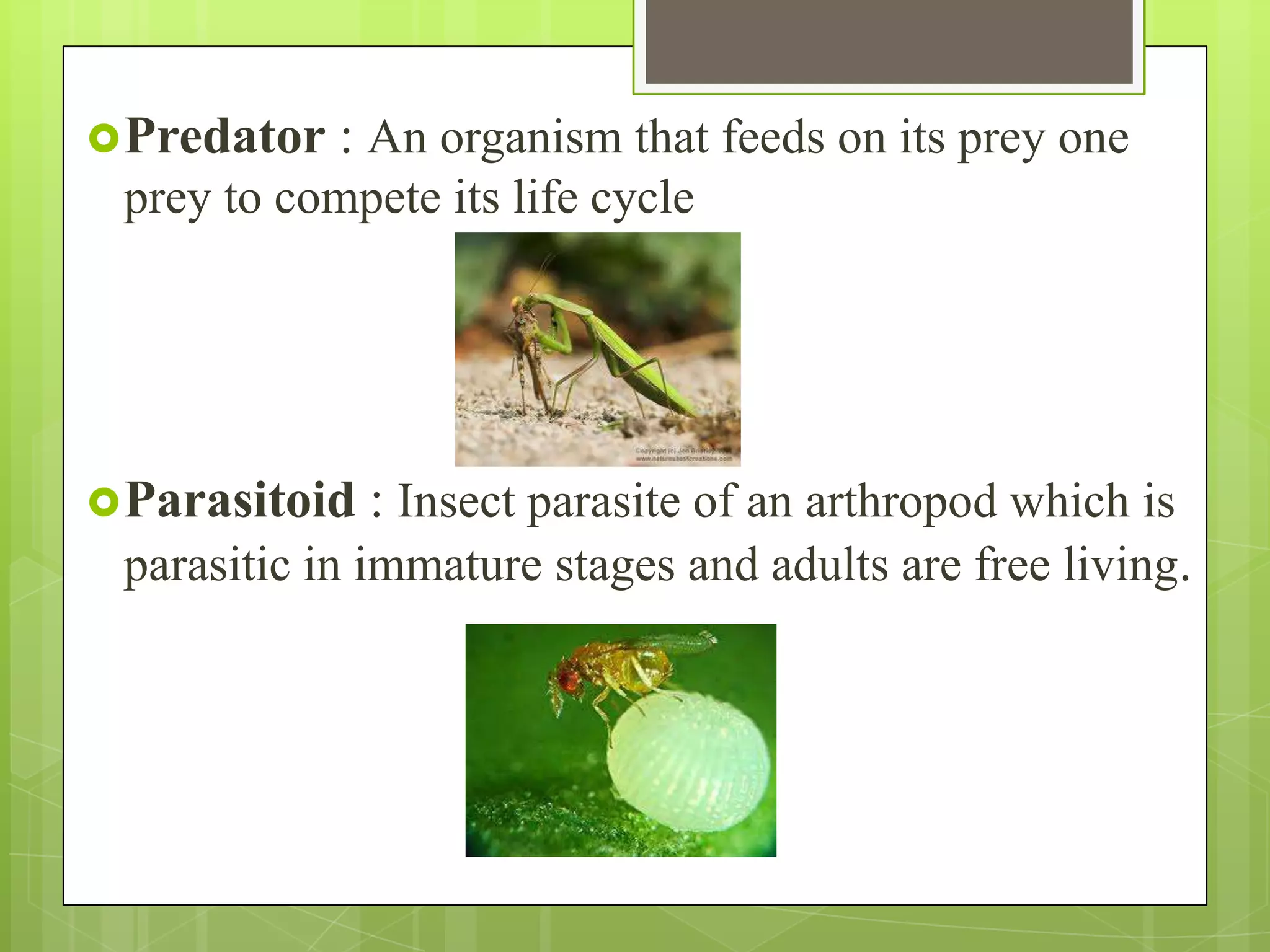
 Predator   : An organism that feeds on its prey one
 prey to compete its life cycle


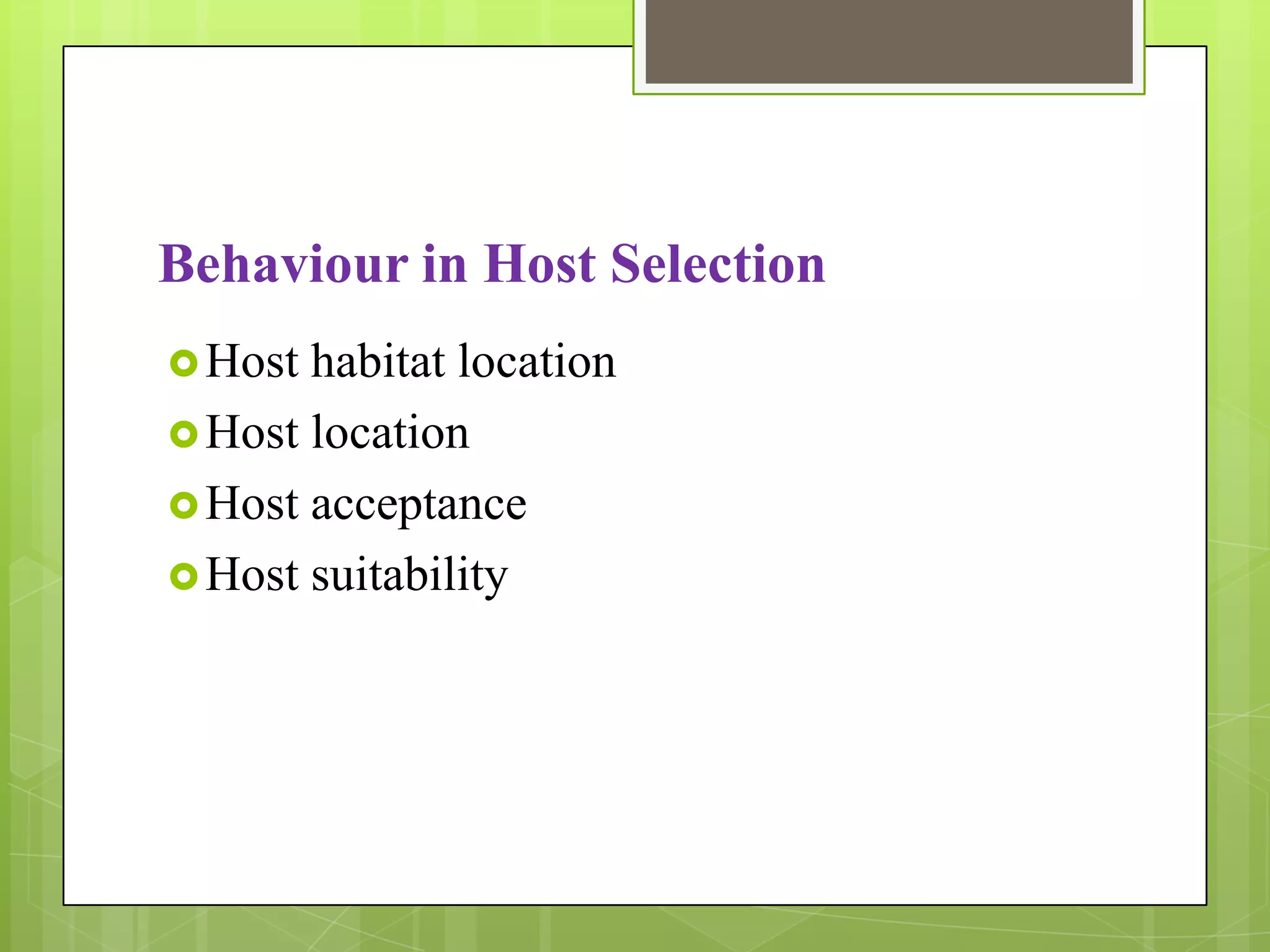
 Parasitoid   : Insect parasite of an arthropod which is
 parasitic in immature stages and adults are free living.
Behaviour in Host Selection
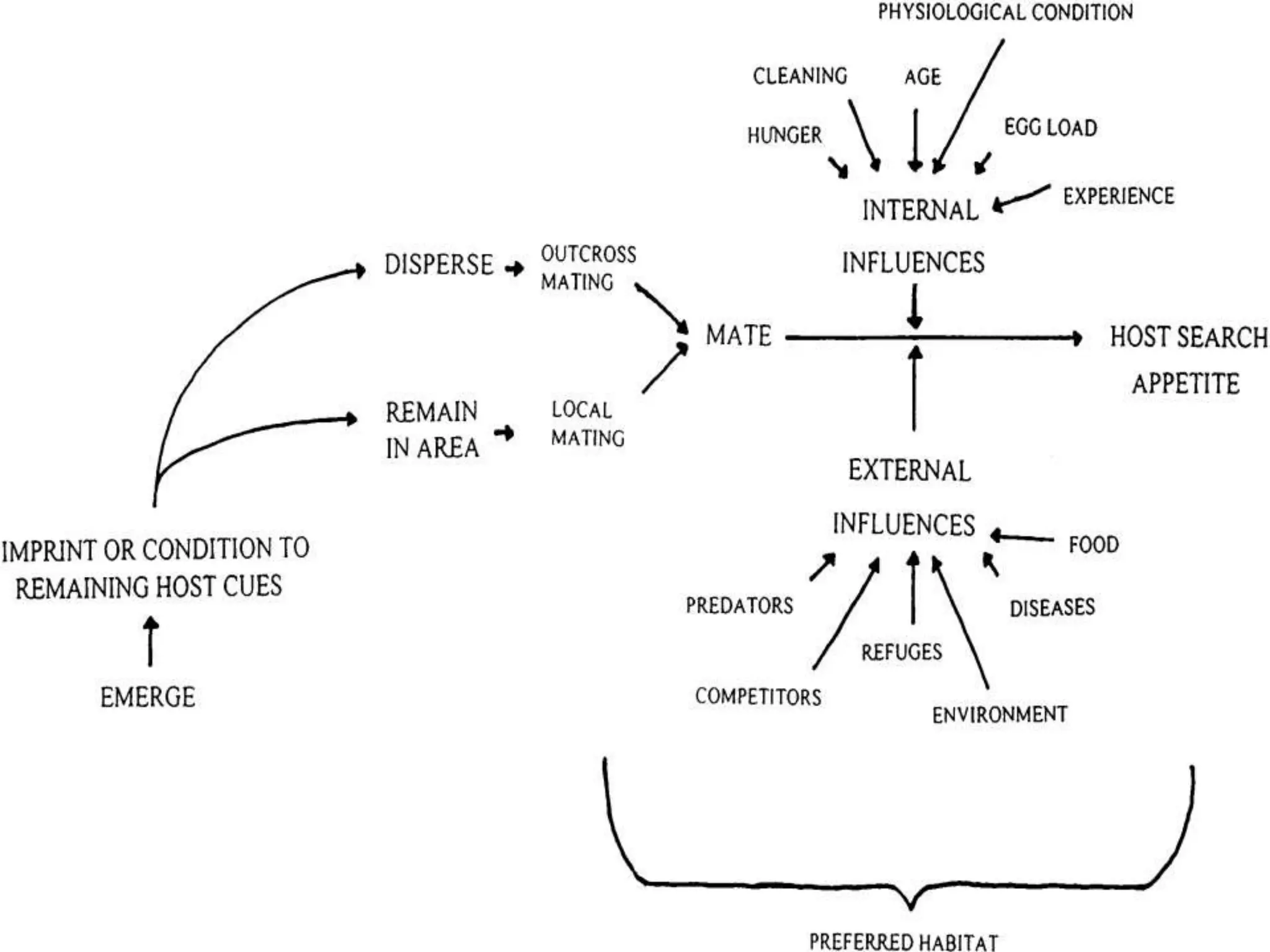
 Host habitat location
 Host location
 Host acceptance
 Host suitability
Host habitat location
 Process of finding a likely habitat that will include
  appropriate prey
 Parasites and predators initially and fundamentally
  seek a certain environment, and they do this
  irrespective of the presence of hosts
 Two important types of cues
   Attractant stimuli
   Arrestant stimuli
 Attractant   stimuli
  Induce  a change in forager behaviour that results in
   orientation to areas that either contain host or are likely to
   contain host.

 Arrestant   stimuli
  Act  by eliciting a reduction in distance or area covered per
   unit time by forager within such areas
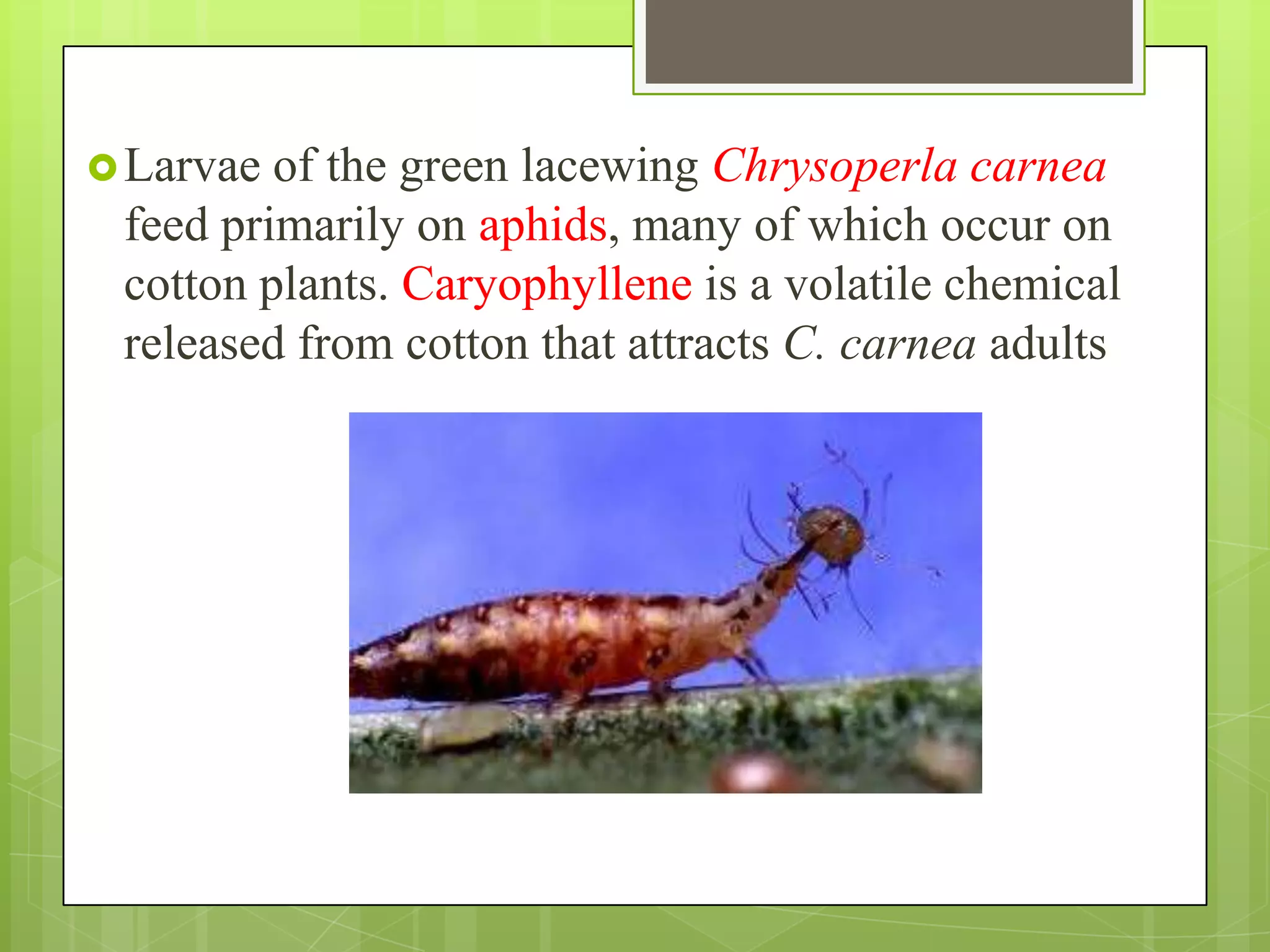
 Larvae of the green lacewing Chrysoperla carnea
 feed primarily on aphids, many of which occur on
 cotton plants. Caryophyllene is a volatile chemical
 released from cotton that attracts C. carnea adults
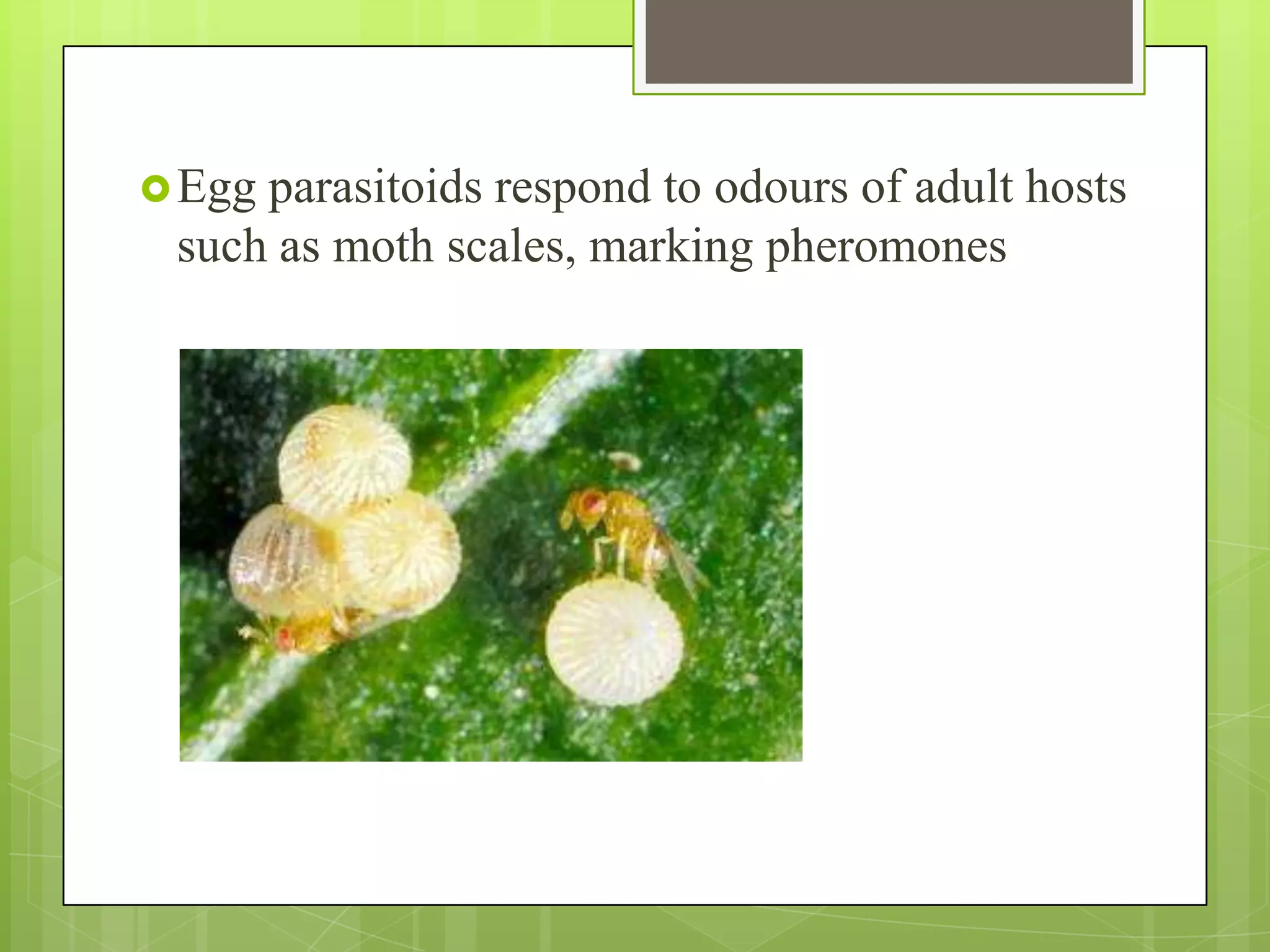
 Eggparasitoids respond to odours of adult hosts
 such as moth scales, marking pheromones
Host location
 The  process of actually finding suitable prey within
  the appropriate habitat
 The most commonly reported senses used in
  detecting the host are tactile and olfactory (for
  parasitoids)

   Inferring
            behaviour from morphology
   Kairomones
 Ex. Adultlacewings orient to the honeydew
 excretion of aphids because such sites
 likely have suitable prey for their offspring
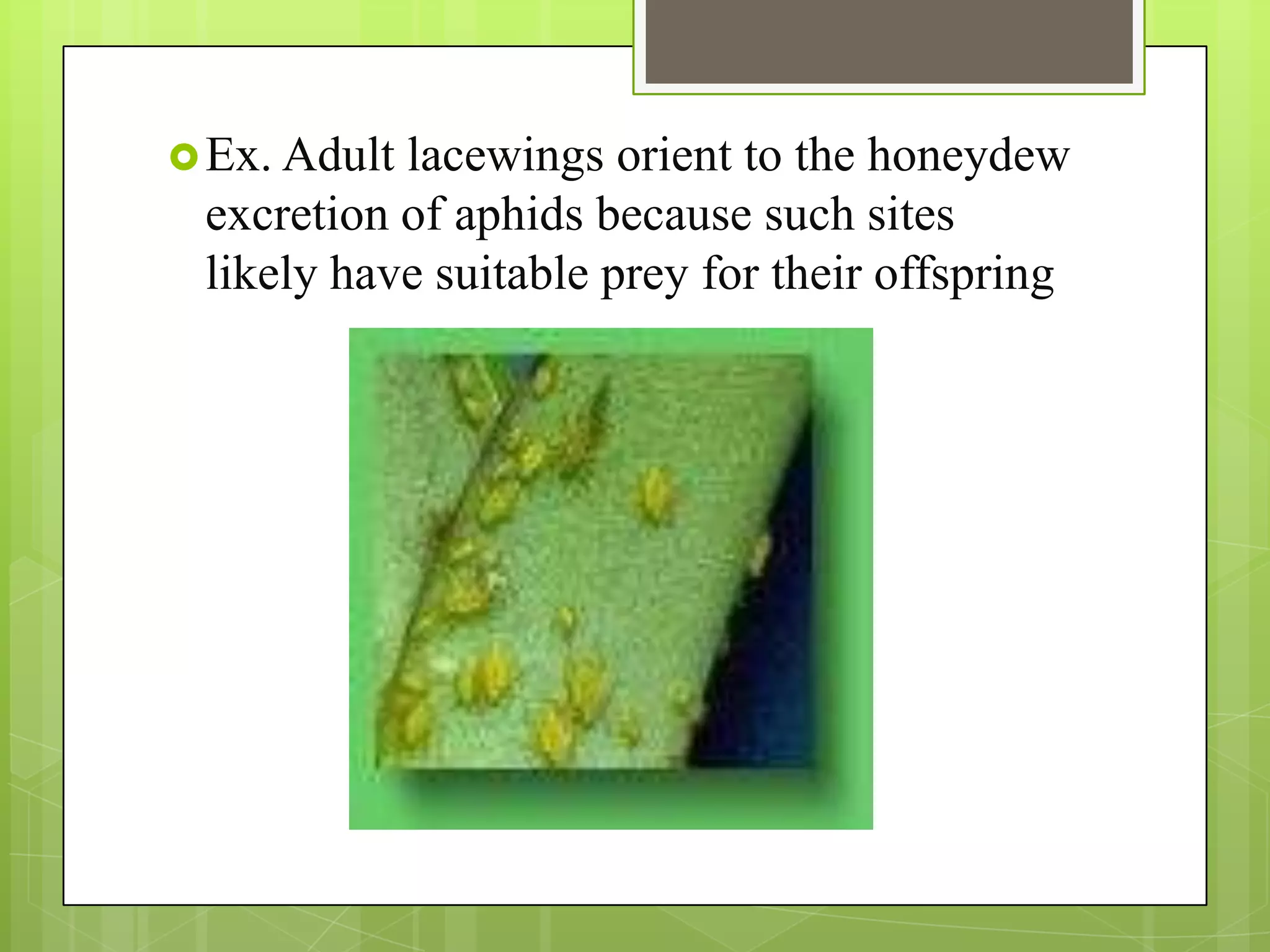
Inferring behaviour from morphology
 A predator  or parasitoid may locate its prey is to pay
  close attention to insect morphology
 Ex. Pipunculid flies
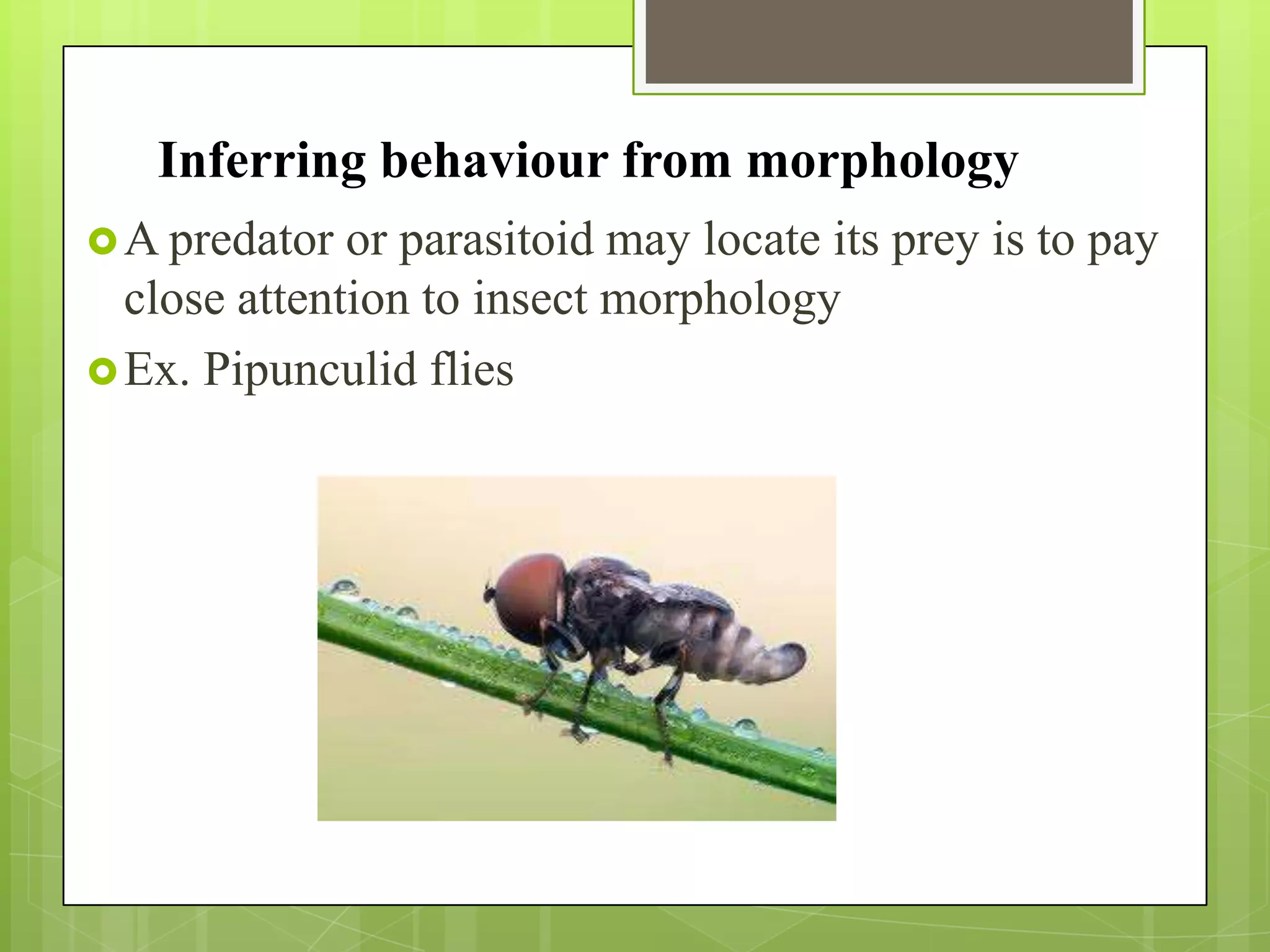
Kairomones
 Contact chemicals
 Chemicals released by one insect that induces a
  response in another insect which is advantageous to
  recipient
 Ex. Potato tuber moth
Host acceptance
 Parasite/ predator actually finds or contacts a suitable
 host/ prey, it still may not attack if the proper stimuli are
 lacking

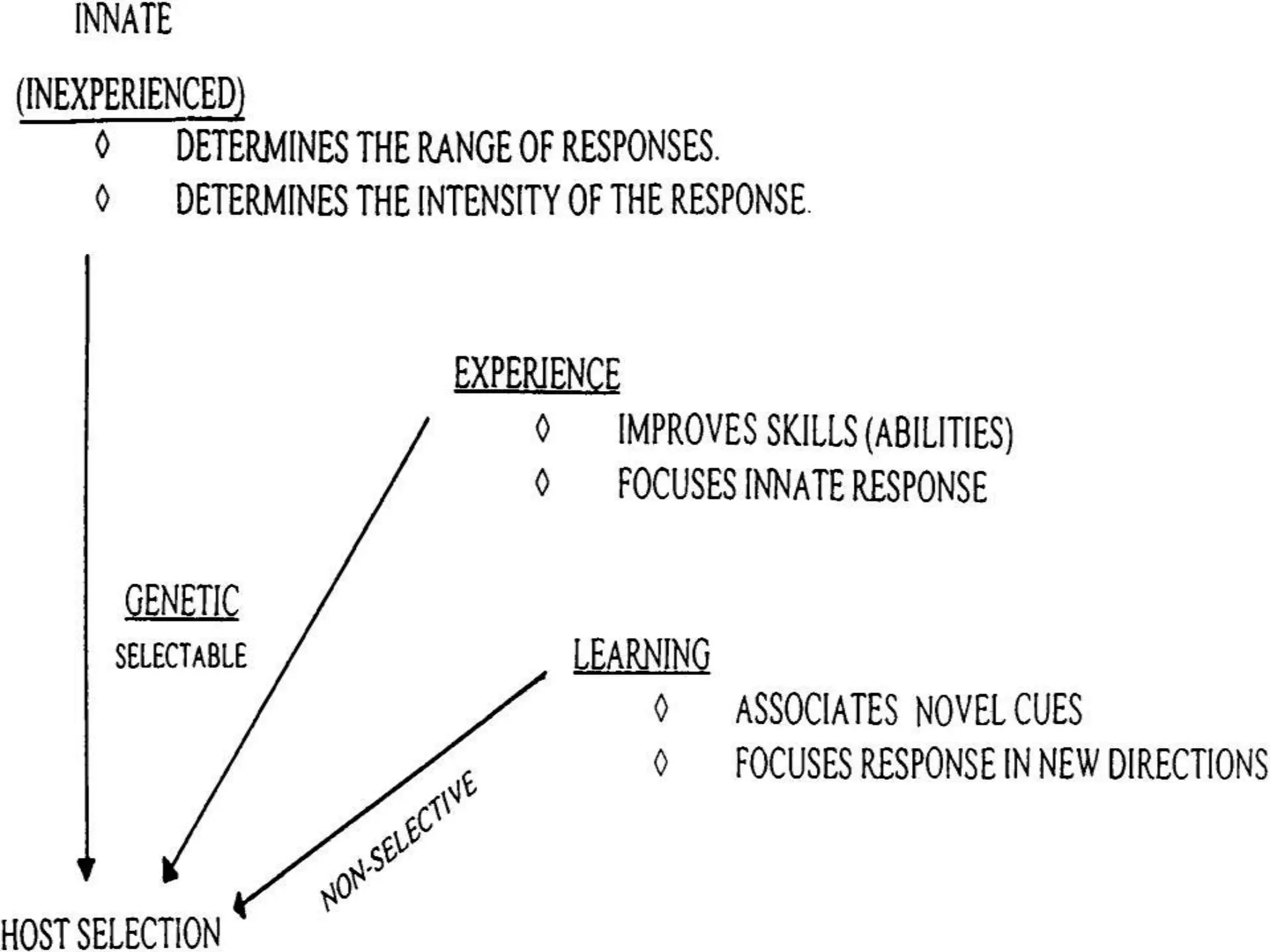
 Thisstep is truly host selection and is clearly a matter
 of innate behaviour of a parasitic / predacious species
Hosts may be rejected because they are:

  Too young or old
  Wrong size
  Diseased or Unhealthy
  Already parasitized (by the same or another
   species)
  Have been used for host feeding
  Do not exhibit the correct reactions when
   investigated by the parasitoid
Host suitability
 Even   though a parasite / predator has found the
  potential host / prey in its habitat and selected it for
  attack, the host/parasite or prey/predator relationship
  may still not succeed if the potential host individual is
  immune or otherwise unsuitable
 Nutritional and physical characteristics of the prey are
  involved

 Ex.Diseased prey may be acceptable to a generalist
 predator but be rejected by a specialist
Host seeking behaviour of insects

Host seeking behaviour of insects

  • 1.
    HOST SEEKING BEHAVIOUROF PREDATORY AND PARASITOID GROUP OF INSECTS  PramodKumar Kulkarni 2010-11-150
  • 2.
     Predator : An organism that feeds on its prey one prey to compete its life cycle  Parasitoid : Insect parasite of an arthropod which is parasitic in immature stages and adults are free living.
  • 3.
    Behaviour in HostSelection  Host habitat location  Host location  Host acceptance  Host suitability
  • 4.
    Host habitat location Process of finding a likely habitat that will include appropriate prey  Parasites and predators initially and fundamentally seek a certain environment, and they do this irrespective of the presence of hosts  Two important types of cues  Attractant stimuli  Arrestant stimuli
  • 5.
     Attractant stimuli  Induce a change in forager behaviour that results in orientation to areas that either contain host or are likely to contain host.  Arrestant stimuli  Act by eliciting a reduction in distance or area covered per unit time by forager within such areas
  • 7.
     Larvae ofthe green lacewing Chrysoperla carnea feed primarily on aphids, many of which occur on cotton plants. Caryophyllene is a volatile chemical released from cotton that attracts C. carnea adults
  • 8.
     Eggparasitoids respondto odours of adult hosts such as moth scales, marking pheromones
  • 9.
    Host location  The process of actually finding suitable prey within the appropriate habitat  The most commonly reported senses used in detecting the host are tactile and olfactory (for parasitoids)  Inferring behaviour from morphology  Kairomones
  • 10.
     Ex. Adultlacewingsorient to the honeydew excretion of aphids because such sites likely have suitable prey for their offspring
  • 11.
    Inferring behaviour frommorphology  A predator or parasitoid may locate its prey is to pay close attention to insect morphology  Ex. Pipunculid flies
  • 12.
    Kairomones  Contact chemicals Chemicals released by one insect that induces a response in another insect which is advantageous to recipient  Ex. Potato tuber moth
  • 13.
    Host acceptance  Parasite/predator actually finds or contacts a suitable host/ prey, it still may not attack if the proper stimuli are lacking  Thisstep is truly host selection and is clearly a matter of innate behaviour of a parasitic / predacious species
  • 15.
    Hosts may berejected because they are:  Too young or old  Wrong size  Diseased or Unhealthy  Already parasitized (by the same or another species)  Have been used for host feeding  Do not exhibit the correct reactions when investigated by the parasitoid
  • 16.
    Host suitability  Even though a parasite / predator has found the potential host / prey in its habitat and selected it for attack, the host/parasite or prey/predator relationship may still not succeed if the potential host individual is immune or otherwise unsuitable  Nutritional and physical characteristics of the prey are involved  Ex.Diseased prey may be acceptable to a generalist predator but be rejected by a specialist