• FARHAN
• USAMA
• MUSA
• ADEEL
• RUKHSAR
• BEHZAD
• ASIF
• RAFIQUE
• MUHAMMAD
CONTENTS OF TOPIC
 Introduction
 Classification of Hormones
 Chemistry of Hormones
 Pharmaceutical Applications
INTRODUCTIION
 Definition:
 A hormone can be defined as a
substance produced by an endocrine gland,
secreted into the blood and delivered to a
target organ on which it will act and elicit an
appropriate physiological response.
 The meaning of hormone in “GREEK” is to
excite.
 Hormones are used to communicate
between organs and tissues for physiological
regulations and behavioral activities.
 Entire field of endocrinology is derived to the
study of hormone.
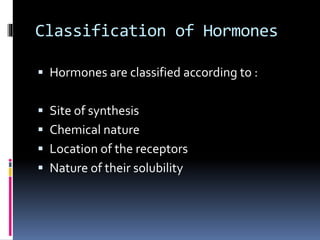
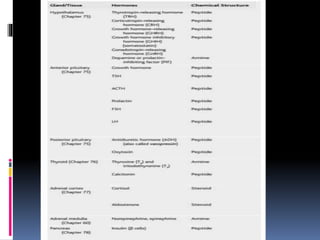
Classification of Hormones
 Hormones are classified according to :
 Site of synthesis
 Chemical nature
 Location of the receptors
 Nature of their solubility
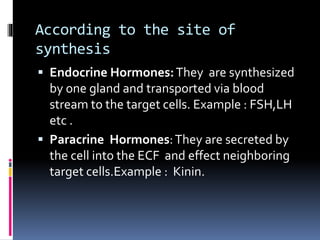
According to the site of
synthesis
 Endocrine Hormones:They are synthesized
by one gland and transported via blood
stream to the target cells. Example : FSH,LH
etc .
 Paracrine Hormones:They are secreted by
the cell into the ECF and effect neighboring
target cells.Example : Kinin.
 Autocrine Hormones :These hormone effect
the cell where synthesize from.Example
:Histamine.
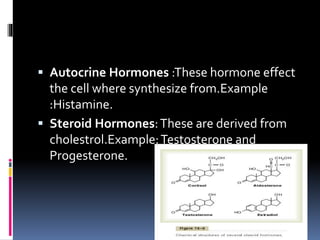
 Steroid Hormones:These are derived from
cholestrol.Example:Testosterone and
Progesterone.
According to their chemical
nature:
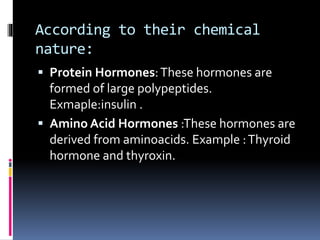
 Protein Hormones:These hormones are
formed of large polypeptides.
Exmaple:insulin .
 Amino Acid Hormones :These hormones are
derived from aminoacids. Example :Thyroid
hormone and thyroxin.
According to location of
Receptors:
 Group 1 Hormones: Binds to intracellular
receptors, to form receptor complex and
perform their function.
 Mostly lipophilic in nature.
 For example steroid and thyroid hormone.
 Group 2 Hormones :They bind to cell surface
receptors and stimulate the release of certain
molecules called second messenger, which in
turn perform bio chemical functions.
 For example :ACTH and FSH.
According to their water
solubility:
 The water soluble hormone :The water
soluble hormones are the catecholamines
(epinephrine and nor epinephrine) and
peptide or protein hormones.
 The lipid soluble hormone :The lipid soluble
hormones incude thyroid and steroid
hormone.
Mechanism of Hormone Action
 The glands of the endocrine system secrete
hormone directly into the extracellular fluid
.The hormones then diffuse to blood stream
via cappilaries and are transported to the
target cells.The mechanism by which
hormones act on their target cell depends on
the chemical nature of the hormone.
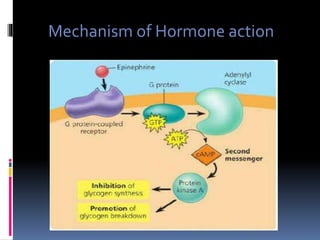
Mechanism of Hormone action
 Polar Hormones:Do not enter into the target
cells, instead bind to receptors on the plasma
membrane .These hormones exert their
effect through second messenger.
 Some of the hormones may enter into the
cell by pinocytosis but most of their effect
results from their binding to receptor protein
on the surface of the membrane.
 Non polar hormones:These hormones can
easily pass through plasma membrane and
bind to the specific protein in their target
cells.
 As they are lipophillic so they can easily pass
the cell membrane.
Mechanism of action of steroid
and thyroid hormone:
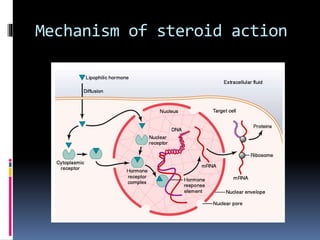
 The steroid hormones diffuse through the
membrane of all the cells.
 Inside the cell they interact with the
intracellular receptors.
 Structural changes occur in the receptor and
this complex now enter into the nucleus.
 This attach to the hormone responsive
element on DNA.
Mechanism of steroid action
Pharmaceutical Application of
Hormones
 There are many application of Hormones :
 Steroid:oral steroid preparations (prednisone)
may be used to treat poison , hay fever and
insect bite as well as inflammatory disease.
e.g. arthritis ,allergies and asthama.
 Growth Hormone: Is commonly used to treat
:
 Children with growth retardation
“Enhancement therapy” is done to promote
the growth in such pateint.
 Recently growth hormone is approved and
marketed for enhancing milk production in
daily cattle.
 Thyroid drugs: synthetic form e.g
Levothyroxin is prescribed for the pateints
who are unable to produce sufficient amount
of thyroid hormone.
 Insulin: It is used in the treatment of diabetes
mellitus (inability of the body to produce or
utilize insulin).
 Insulin or Oral-diabetic drugs are
administrated in such cases.
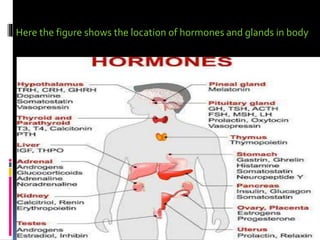
Here the figure shows the location of hormones and glands in body
GOOD BYE

Hormones

  • 2.
    • FARHAN • USAMA •MUSA • ADEEL • RUKHSAR • BEHZAD • ASIF • RAFIQUE • MUHAMMAD
  • 3.
    CONTENTS OF TOPIC Introduction  Classification of Hormones  Chemistry of Hormones  Pharmaceutical Applications
  • 4.
    INTRODUCTIION  Definition:  Ahormone can be defined as a substance produced by an endocrine gland, secreted into the blood and delivered to a target organ on which it will act and elicit an appropriate physiological response.
  • 5.
     The meaningof hormone in “GREEK” is to excite.  Hormones are used to communicate between organs and tissues for physiological regulations and behavioral activities.  Entire field of endocrinology is derived to the study of hormone.
  • 6.
    Classification of Hormones Hormones are classified according to :  Site of synthesis  Chemical nature  Location of the receptors  Nature of their solubility
  • 7.
    According to thesite of synthesis  Endocrine Hormones:They are synthesized by one gland and transported via blood stream to the target cells. Example : FSH,LH etc .  Paracrine Hormones:They are secreted by the cell into the ECF and effect neighboring target cells.Example : Kinin.
  • 8.
     Autocrine Hormones:These hormone effect the cell where synthesize from.Example :Histamine.  Steroid Hormones:These are derived from cholestrol.Example:Testosterone and Progesterone.
  • 9.
    According to theirchemical nature:  Protein Hormones:These hormones are formed of large polypeptides. Exmaple:insulin .  Amino Acid Hormones :These hormones are derived from aminoacids. Example :Thyroid hormone and thyroxin.
  • 11.
    According to locationof Receptors:  Group 1 Hormones: Binds to intracellular receptors, to form receptor complex and perform their function.  Mostly lipophilic in nature.  For example steroid and thyroid hormone.
  • 12.
     Group 2Hormones :They bind to cell surface receptors and stimulate the release of certain molecules called second messenger, which in turn perform bio chemical functions.  For example :ACTH and FSH.
  • 13.
    According to theirwater solubility:  The water soluble hormone :The water soluble hormones are the catecholamines (epinephrine and nor epinephrine) and peptide or protein hormones.  The lipid soluble hormone :The lipid soluble hormones incude thyroid and steroid hormone.
  • 14.
    Mechanism of HormoneAction  The glands of the endocrine system secrete hormone directly into the extracellular fluid .The hormones then diffuse to blood stream via cappilaries and are transported to the target cells.The mechanism by which hormones act on their target cell depends on the chemical nature of the hormone.
  • 15.
  • 16.
     Polar Hormones:Donot enter into the target cells, instead bind to receptors on the plasma membrane .These hormones exert their effect through second messenger.  Some of the hormones may enter into the cell by pinocytosis but most of their effect results from their binding to receptor protein on the surface of the membrane.
  • 17.
     Non polarhormones:These hormones can easily pass through plasma membrane and bind to the specific protein in their target cells.  As they are lipophillic so they can easily pass the cell membrane.
  • 18.
    Mechanism of actionof steroid and thyroid hormone:  The steroid hormones diffuse through the membrane of all the cells.  Inside the cell they interact with the intracellular receptors.  Structural changes occur in the receptor and this complex now enter into the nucleus.  This attach to the hormone responsive element on DNA.
  • 19.
  • 20.
    Pharmaceutical Application of Hormones There are many application of Hormones :  Steroid:oral steroid preparations (prednisone) may be used to treat poison , hay fever and insect bite as well as inflammatory disease. e.g. arthritis ,allergies and asthama.
  • 21.
     Growth Hormone:Is commonly used to treat :  Children with growth retardation “Enhancement therapy” is done to promote the growth in such pateint.  Recently growth hormone is approved and marketed for enhancing milk production in daily cattle.
  • 22.
     Thyroid drugs:synthetic form e.g Levothyroxin is prescribed for the pateints who are unable to produce sufficient amount of thyroid hormone.  Insulin: It is used in the treatment of diabetes mellitus (inability of the body to produce or utilize insulin).  Insulin or Oral-diabetic drugs are administrated in such cases.
  • 23.
    Here the figureshows the location of hormones and glands in body
  • 24.