TYPE OF DOCUMENTARY
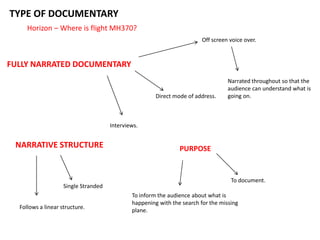
Horizon – Where is flight MH370?
FULLY NARRATED DOCUMENTARY
Off screen voice over.
Direct mode of address.
NARRATIVE STRUCTURE
Interviews.
Single Stranded
PURPOSE
To document.
To inform the audience about what is
happening with the search for the missing
plane.
Follows a linear structure.
Narrated throughout so that the
audience can understand what is
going on.
Camerawork
INTERVIEWS
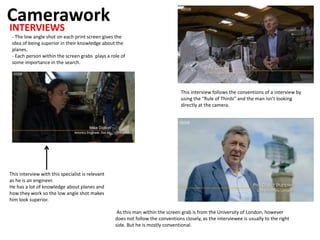
This interview with this specialist is relevant
as he is an engineer.
He has a lot of knowledge about planes and
how they work so the low angle shot makes
him look superior.
- The low angle shot on each print screen gives the
idea of being superior in their knowledge about the
planes.
- Each person within the screen grabs plays a role of
some importance in the search.
This interview follows the conventions of a interview by
using the “Rule of Thirds” and the man isn’t looking
directly at the camera.
As this man within the screen grab is from the University of London, however
does not follow the conventions closely, as the interviewee is usually to the right
side. But he is mostly conventional.
SHOT TYPES
HIGH ANGLE SHOT
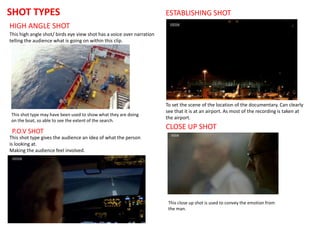
This high angle shot/ birds eye view shot has a voice over narration
telling the audience what is going on within this clip.
This shot type may have been used to show what they are doing
on the boat, so able to see the extent of the search.
This close up shot is used to convey the emotion from
the man.
CLOSE UP SHOT
ESTABLISHING SHOT
To set the scene of the location of the documentary. Can clearly
see that it is at an airport. As most of the recording is taken at
the airport.
P.O.V SHOT
This shot type gives the audience an idea of what the person
is looking at.
Making the audience feel involved.
Mise-en-scene
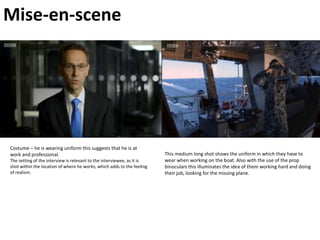
Costume – he is wearing uniform this suggests that he is at
work and professional.
The setting of the interview is relevant to the interviewee, as it is
shot within the location of where he works, which adds to the feeling
of realism.
This medium long shot shows the uniform in which they have to
wear when working on the boat. Also with the use of the prop
binoculars this illuminates the idea of them working hard and doing
their job, looking for the missing plane.
Sound
There is a voice over narrator throughout the documentary. Unless
it is interviews.
The narrator “Voice of God” is a female, with no particular accent.
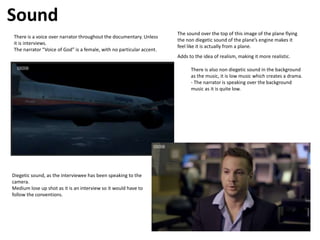
The sound over the top of this image of the plane flying
the non diegetic sound of the plane’s engine makes it
feel like it is actually from a plane.
Adds to the idea of realism, making it more realistic.
There is also non diegetic sound in the background
as the music, it is low music which creates a drama.
- The narrator is speaking over the background
music as it is quite low.
Diegetic sound, as the interviewee has been speaking to the
camera.
Medium lose up shot as it is an interview so it would have to
follow the conventions.
Editing
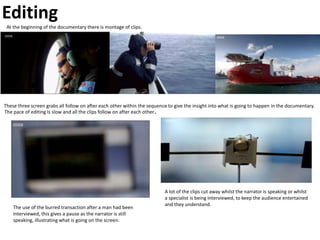
These three screen grabs all follow on after each other within the sequence to give the insight into what is going to happen in the documentary.
The pace of editing Is slow and all the clips follow on after each other.
At the beginning of the documentary there is montage of clips.
A lot of the clips cut away whilst the narrator is speaking or whilst
a specialist is being interviewed, to keep the audience entertained
and they understand.
The use of the burred transaction after a man had been
interviewed, this gives a pause as the narrator is still
speaking, illustrating what is going on the screen.
Graphics
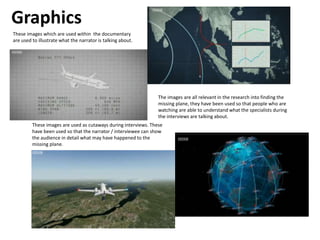
These images which are used within the documentary
are used to illustrate what the narrator is talking about.
The images are all relevant in the research into finding the
missing plane, they have been used so that people who are
watching are able to understand what the specialists during
the interviews are talking about.
These images are used as cutaways during interviews. These
have been used so that the narrator / interviewee can show
the audience in detail what may have happened to the
missing plane.
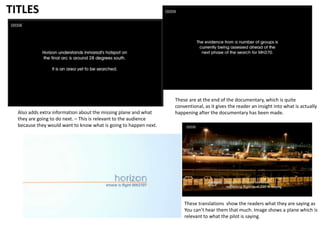
TITLES
These are at the end of the documentary, which is quite
conventional, as it gives the reader an insight into what is actually
happening after the documentary has been made.Also adds extra information about the missing plane and what
they are going to do next. – This is relevant to the audience
because they would want to know what is going to happen next.
These translations show the readers what they are saying as
You can’t hear them that much. Image shows a plane which is
relevant to what the pilot is saying.

Horizon where is flight mh370

  • 2.
    TYPE OF DOCUMENTARY Horizon– Where is flight MH370? FULLY NARRATED DOCUMENTARY Off screen voice over. Direct mode of address. NARRATIVE STRUCTURE Interviews. Single Stranded PURPOSE To document. To inform the audience about what is happening with the search for the missing plane. Follows a linear structure. Narrated throughout so that the audience can understand what is going on.
  • 3.
    Camerawork INTERVIEWS This interview withthis specialist is relevant as he is an engineer. He has a lot of knowledge about planes and how they work so the low angle shot makes him look superior. - The low angle shot on each print screen gives the idea of being superior in their knowledge about the planes. - Each person within the screen grabs plays a role of some importance in the search. This interview follows the conventions of a interview by using the “Rule of Thirds” and the man isn’t looking directly at the camera. As this man within the screen grab is from the University of London, however does not follow the conventions closely, as the interviewee is usually to the right side. But he is mostly conventional.
  • 4.
    SHOT TYPES HIGH ANGLESHOT This high angle shot/ birds eye view shot has a voice over narration telling the audience what is going on within this clip. This shot type may have been used to show what they are doing on the boat, so able to see the extent of the search. This close up shot is used to convey the emotion from the man. CLOSE UP SHOT ESTABLISHING SHOT To set the scene of the location of the documentary. Can clearly see that it is at an airport. As most of the recording is taken at the airport. P.O.V SHOT This shot type gives the audience an idea of what the person is looking at. Making the audience feel involved.
  • 5.
    Mise-en-scene Costume – heis wearing uniform this suggests that he is at work and professional. The setting of the interview is relevant to the interviewee, as it is shot within the location of where he works, which adds to the feeling of realism. This medium long shot shows the uniform in which they have to wear when working on the boat. Also with the use of the prop binoculars this illuminates the idea of them working hard and doing their job, looking for the missing plane.
  • 6.
    Sound There is avoice over narrator throughout the documentary. Unless it is interviews. The narrator “Voice of God” is a female, with no particular accent. The sound over the top of this image of the plane flying the non diegetic sound of the plane’s engine makes it feel like it is actually from a plane. Adds to the idea of realism, making it more realistic. There is also non diegetic sound in the background as the music, it is low music which creates a drama. - The narrator is speaking over the background music as it is quite low. Diegetic sound, as the interviewee has been speaking to the camera. Medium lose up shot as it is an interview so it would have to follow the conventions.
  • 7.
    Editing These three screengrabs all follow on after each other within the sequence to give the insight into what is going to happen in the documentary. The pace of editing Is slow and all the clips follow on after each other. At the beginning of the documentary there is montage of clips. A lot of the clips cut away whilst the narrator is speaking or whilst a specialist is being interviewed, to keep the audience entertained and they understand. The use of the burred transaction after a man had been interviewed, this gives a pause as the narrator is still speaking, illustrating what is going on the screen.
  • 8.
    Graphics These images whichare used within the documentary are used to illustrate what the narrator is talking about. The images are all relevant in the research into finding the missing plane, they have been used so that people who are watching are able to understand what the specialists during the interviews are talking about. These images are used as cutaways during interviews. These have been used so that the narrator / interviewee can show the audience in detail what may have happened to the missing plane.
  • 9.
    TITLES These are atthe end of the documentary, which is quite conventional, as it gives the reader an insight into what is actually happening after the documentary has been made.Also adds extra information about the missing plane and what they are going to do next. – This is relevant to the audience because they would want to know what is going to happen next. These translations show the readers what they are saying as You can’t hear them that much. Image shows a plane which is relevant to what the pilot is saying.