Basic Conventions Of
   Documentary
     By Jack gleave
A-Roll Footage
A-Roll footage, normally used in major documentaries that wish to get a point across to the audience and wish
    to give them a message about the documentary.
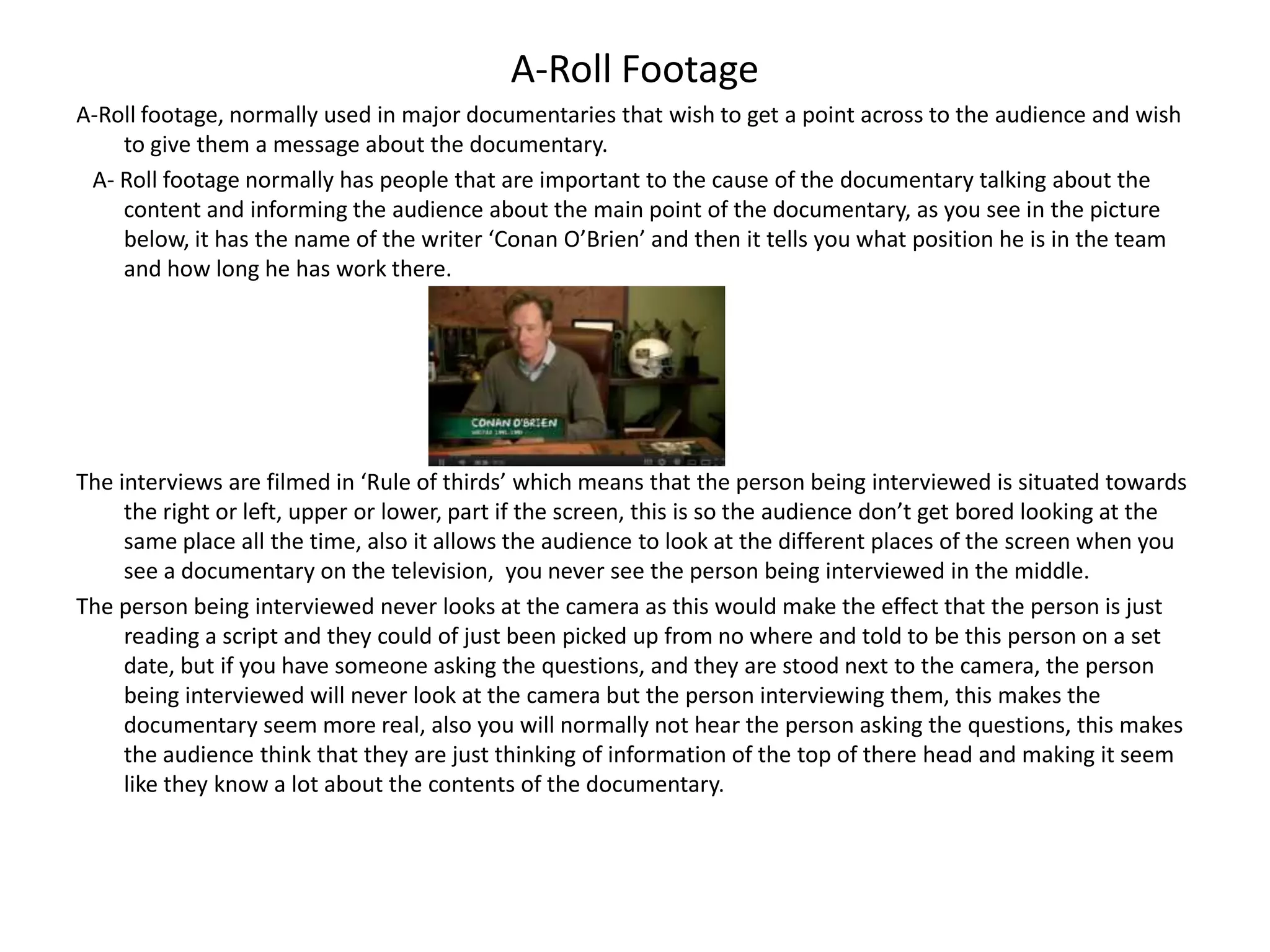
 A- Roll footage normally has people that are important to the cause of the documentary talking about the
    content and informing the audience about the main point of the documentary, as you see in the picture
    below, it has the name of the writer ‘Conan O’Brien’ and then it tells you what position he is in the team
    and how long he has work there.


The interviews are filmed in ‘Rule of thirds’ which means that the person being interviewed is situated towards
     the right or left, upper or lower, part if the screen, this is so the audience don’t get bored looking at the
     same place all the time, also it allows the audience to look at the different places of the screen when you
     see a documentary on the television, you never see the person being interviewed in the middle.
The person being interviewed never looks at the camera as this would make the effect that the person is just
     reading a script and they could of just been picked up from no where and told to be this person on a set
     date, but if you have someone asking the questions, and they are stood next to the camera, the person
     being interviewed will never look at the camera but the person interviewing them, this makes the
     documentary seem more real, also you will normally not hear the person asking the questions, this makes
     the audience think that they are just thinking of information of the top of there head and making it seem
     like they know a lot about the contents of the documentary.
Background mise en scene is normally used to give the effect that the people being interviewed keep all the
    objects from the contents on their wall, such as the woman who plays ‘Bart’s’ voice, keeping big pictures
    behind her so she knows what she is working towards making better.


Blue screens are normally used in a lot of documentaries as it shows a place that they aren't really at behind
     them, such as the Bart Simpson picture behind the woman may not really be there as the editors may just
     stick it behind her as it is what they are talking about, it makes it more effective and it makes it seem more
     important.

Graphics that show their names at the bottom are put in after the person has finished the interview as it is tells
    the audience who they are in relevance to the show, such as Hank Azaria plays Moe, Apu and Chief
    Wiggum, it allows the audience to see the characters they love and have become avid fans about and it
    lets them see who they are in real life.
B- Roll Footage
B- Roll Footage supplements the main interviews by getting visual images to represent what the interviews are
     talking about, it is almost like breathing space.
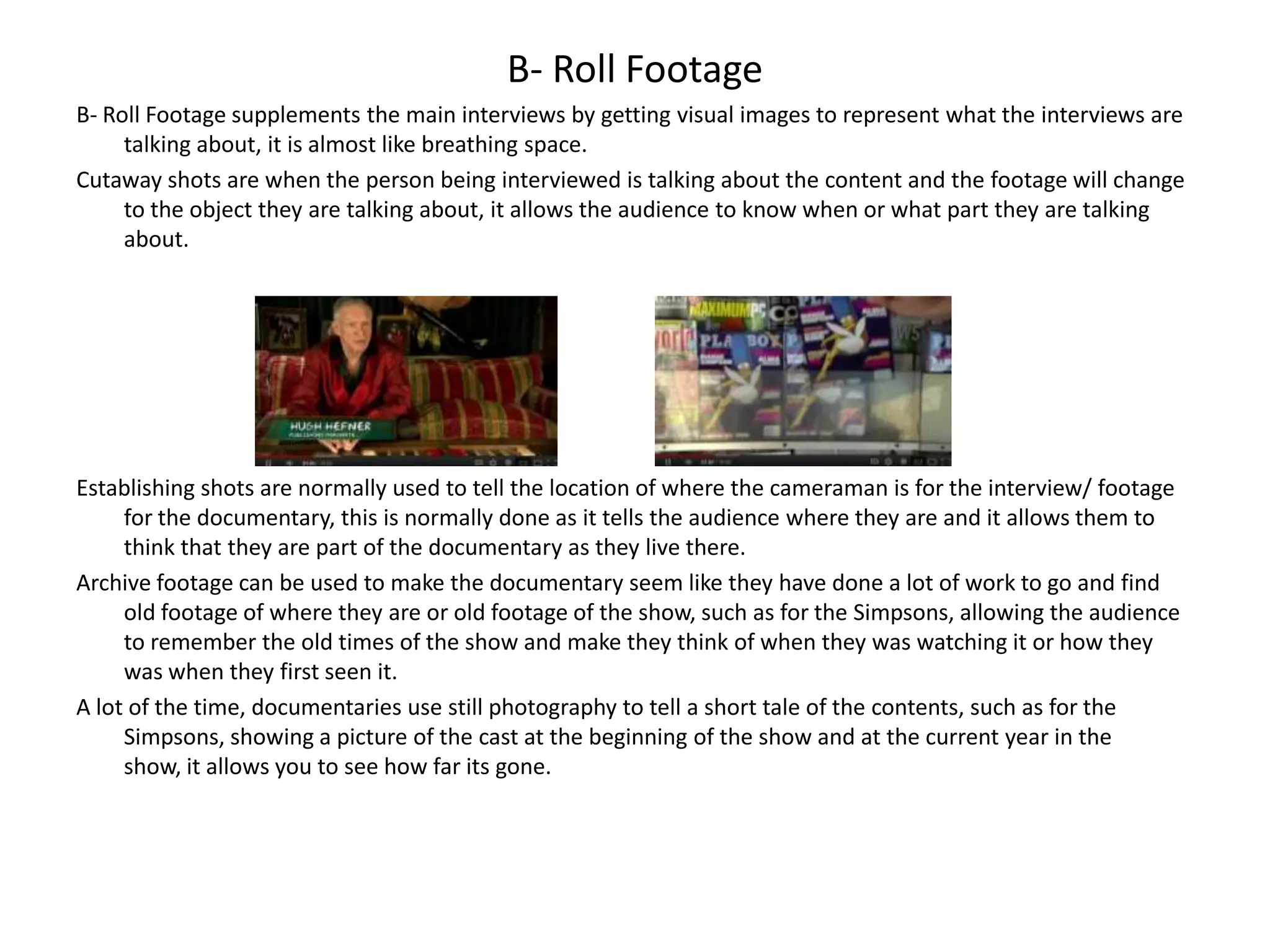
Cutaway shots are when the person being interviewed is talking about the content and the footage will change
     to the object they are talking about, it allows the audience to know when or what part they are talking
     about.


Establishing shots are normally used to tell the location of where the cameraman is for the interview/ footage
     for the documentary, this is normally done as it tells the audience where they are and it allows them to
     think that they are part of the documentary as they live there.
Archive footage can be used to make the documentary seem like they have done a lot of work to go and find
     old footage of where they are or old footage of the show, such as for the Simpsons, allowing the audience
     to remember the old times of the show and make they think of when they was watching it or how they
     was when they first seen it.
A lot of the time, documentaries use still photography to tell a short tale of the contents, such as for the
     Simpsons, showing a picture of the cast at the beginning of the show and at the current year in the
     show, it allows you to see how far its gone.
Vox pops, this is uncommon in documentaries as it uses sound bites of interviews with ordinary people,
    normally done with a hand-held camera, this gets the audience involved in the documentary and allows
    them to get their point across


Documentaries normally have a presenter that is passionate about the main contents of the documentary, the
    presenter normally makes the show more interesting as they give their point across to the audience and
    they make it believable as they like the show. They never seen with a script but they may remember parts
    for guidelines.


Non- diegetic musical soundtrack may be used when they are showing a montage of images, or when they are
    playing music from the show over and over with different instruments, it allows the audience to hear
    there favourite shows song in a lot of different ways.

Basic conventions of documentary

  • 1.
    Basic Conventions Of Documentary By Jack gleave
  • 2.
    A-Roll Footage A-Roll footage,normally used in major documentaries that wish to get a point across to the audience and wish to give them a message about the documentary. A- Roll footage normally has people that are important to the cause of the documentary talking about the content and informing the audience about the main point of the documentary, as you see in the picture below, it has the name of the writer ‘Conan O’Brien’ and then it tells you what position he is in the team and how long he has work there. The interviews are filmed in ‘Rule of thirds’ which means that the person being interviewed is situated towards the right or left, upper or lower, part if the screen, this is so the audience don’t get bored looking at the same place all the time, also it allows the audience to look at the different places of the screen when you see a documentary on the television, you never see the person being interviewed in the middle. The person being interviewed never looks at the camera as this would make the effect that the person is just reading a script and they could of just been picked up from no where and told to be this person on a set date, but if you have someone asking the questions, and they are stood next to the camera, the person being interviewed will never look at the camera but the person interviewing them, this makes the documentary seem more real, also you will normally not hear the person asking the questions, this makes the audience think that they are just thinking of information of the top of there head and making it seem like they know a lot about the contents of the documentary.
  • 3.
    Background mise enscene is normally used to give the effect that the people being interviewed keep all the objects from the contents on their wall, such as the woman who plays ‘Bart’s’ voice, keeping big pictures behind her so she knows what she is working towards making better. Blue screens are normally used in a lot of documentaries as it shows a place that they aren't really at behind them, such as the Bart Simpson picture behind the woman may not really be there as the editors may just stick it behind her as it is what they are talking about, it makes it more effective and it makes it seem more important. Graphics that show their names at the bottom are put in after the person has finished the interview as it is tells the audience who they are in relevance to the show, such as Hank Azaria plays Moe, Apu and Chief Wiggum, it allows the audience to see the characters they love and have become avid fans about and it lets them see who they are in real life.
  • 4.
    B- Roll Footage B-Roll Footage supplements the main interviews by getting visual images to represent what the interviews are talking about, it is almost like breathing space. Cutaway shots are when the person being interviewed is talking about the content and the footage will change to the object they are talking about, it allows the audience to know when or what part they are talking about. Establishing shots are normally used to tell the location of where the cameraman is for the interview/ footage for the documentary, this is normally done as it tells the audience where they are and it allows them to think that they are part of the documentary as they live there. Archive footage can be used to make the documentary seem like they have done a lot of work to go and find old footage of where they are or old footage of the show, such as for the Simpsons, allowing the audience to remember the old times of the show and make they think of when they was watching it or how they was when they first seen it. A lot of the time, documentaries use still photography to tell a short tale of the contents, such as for the Simpsons, showing a picture of the cast at the beginning of the show and at the current year in the show, it allows you to see how far its gone.
  • 5.
    Vox pops, thisis uncommon in documentaries as it uses sound bites of interviews with ordinary people, normally done with a hand-held camera, this gets the audience involved in the documentary and allows them to get their point across Documentaries normally have a presenter that is passionate about the main contents of the documentary, the presenter normally makes the show more interesting as they give their point across to the audience and they make it believable as they like the show. They never seen with a script but they may remember parts for guidelines. Non- diegetic musical soundtrack may be used when they are showing a montage of images, or when they are playing music from the show over and over with different instruments, it allows the audience to hear there favourite shows song in a lot of different ways.