Codes and
Conventions of a
Documentary
…What makes a documentary a documentary?
Voiceover
A voiceover is typically used to engage an audience into finding out key facts about the
certain documentary. In some ways, the documentary encourages the audience to think that
they have some kind of specialist knowledge into that documentary, as voiceovers are
another form of direct address. A voiceover is also usually used mostly throughout the whole
of the documentary, typically in wildlife documentary's such as ‘Planet Earth’ narrated by Sir
DavidAttenborough. However realityTv programmes such as ‘Keeping up with the
Kardashians’ do not use voiceovers as much in their documentary's as real life footage is
shown of the non-fictional protagonists throughout.
Real footage of events
Documentary's are usually seen as non-fictional although there are debates around
this. However one of the main conventions of a documentary is that all events
presented to the audience are all seen to be real. Documentarians often go to great
lengths to convince us that everything we see in a documentary is real and unaltered
in anyway, although editing and voiceovers can affect the ‘reality’ we as the viewers
see.
Technicality of Realism
Technicality of realism is an important convention within a documentary as it includes things
such as natural lighting and sound which creates a better effect for a documentary and
interviews as it presents a sense of realism to the intended audience.
Interviews
Interviews are used to add additional information about the documentary, for example,
crime documentaries usually use interviewees to gain further information about the
certain non-fictional storyline they are creating a documentary about. Interviews are also
used to authenticate the views expressed within the documentary. Sometimes, they will
disagree with the message of the documentary.
Use of text/titles
Majority of documentaries use words on screen to anchor images in time and space.
Labels, dates, etc tend to be believed unquestioningly and are also a quick and cheap
way of conveying information into a documentary.
Set-ups This is the set up of a typical scene.The way in which the scene has been
made to look naturalistic might have actually been set-up by a camera crew.
It’s a cheap way to gain footage quicker rather than waiting around for
something to happen ‘naturally’.
Sound
Sound within a documentary can include diegetic and non- diegetic sounds
to create a particular theme within the documentary, non-diegetic sounds
can add effect to a documentary such as music. Sound can also be used as a
bridge between scenes or even at the beginning or the end of the
documentary where the credits appear.
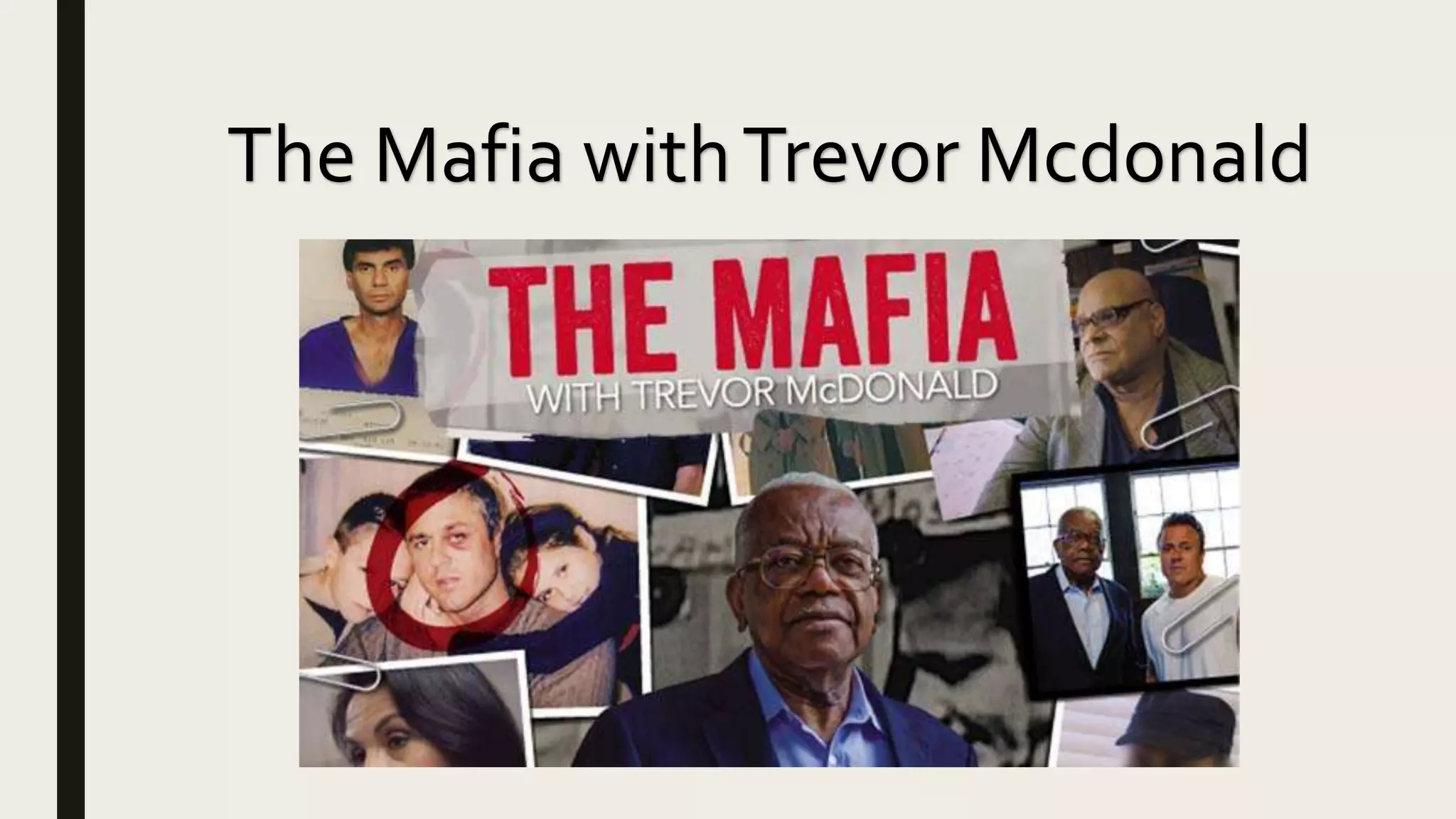
The Mafia withTrevor Mcdonald
Camerawork- Within this crime documentary the most important camerawork shots
used are flashbacks, mid-shots/close-ups. The episode I watched focuses upon a group
living in America, therefore by using mid-shots/close-ups, the audience watching would be
aware of the spoken and visual content. As this documentary is based on interviewing
from mafia’s, using a close-up shot can reveal a persons emotions which highlights the
realism of a documentary. The use of flashbacks provides factual information to the
as they would be unaware of what had happened in these people’s lives prior to them
interviewed by Trevor McDonald.
There is constant cross-cutting between Trevor and the other person he is interviewing
Sound- Music at the very start of the documentary to set the tone, this further highlights
the type of genre this documentary is. Voiceovers are a very important aspect to this
documentary, they are used to commentate over the image that is being shown at the
they are majorly used for flashbacks. ‘The Mafia’ uses a lot of flashbacks so the audience
gain added information to the story, the use of a voiceover adds extra information to the
clips/pictures being shown.
Mise en scene- As Trevor McDonald is the presenter and the face of this
documentary, he is dressed in formal clothing, such as smart shirts or suits. This
the people he interviews as they are dressed in their normal and casual clothing. An
important aspect of a documentary is realism, therefore the people being filmed are
told what to wear/look like. This makes a documentary different from things such a
Drama programmes as they are set up to entertain. The people who are being
interviewed are dressed in their every day clothing, this highlights their cultural or
background.
Editing- Long takes are used to show the establishing shots from scene to scene.
Short takes in the documentary are used for when Trevor is interviewing the other
people, the short takes usually include close-ups which reveal someone's emotional
state. Mid-shots are used to focus upon the status between Trevor and the people he
interviewing. For example in one episode I watched Trevor interviews a man who is
dressed like a stereotypical ‘gangster’, this not only highlights his status/personality
fits in with the whole genre of the documentary (crime).
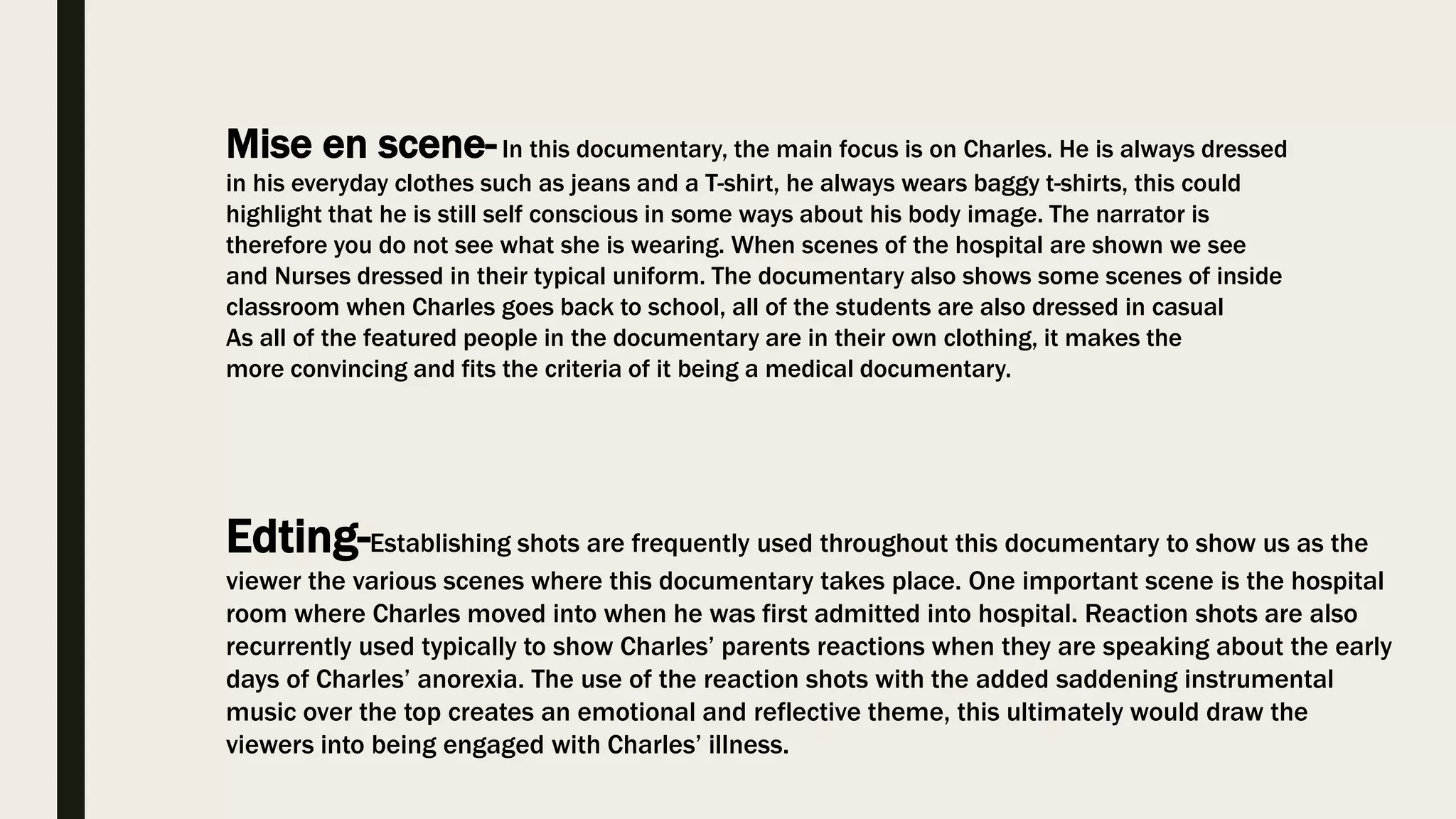
Anorexia: A Boy in a Girl’sWorld
Camerawork- This medical documentary focuses on one boy who suffers with Anorexia, as
this documentary is just based around his life, some camera shots used further highlight this
documentary, for example a hand-held camera shot is shown within Charles’ ward so as the
we can see what life was like for him in a children's ward from his perspective. Close up’s are
when Charles’ parents are being interviewed, by using a close-up shot it reveals their emotions
the situation and makes the documentary more realistic and sympathetic. Establishing shots
also used throughout this documentary to show the setting (The Hospital), by using an
shot it gives the viewer information about where the place is set.
Sound- Non-diegetic sound is played throughout this documentary. A well known sad
instrumental piece was played during an interview with Charles’ parents, this would allow for the
audience to feel more engaged within the documentary. Sound within this documentary reflects
mood and emotion the clip is showing, for example, the interview with Charles’ parents was
sad music over it to highlight the upsetting topic they were talking about.
Mise en scene-In this documentary, the main focus is on Charles. He is always dressed
in his everyday clothes such as jeans and a T-shirt, he always wears baggy t-shirts, this could
highlight that he is still self conscious in some ways about his body image. The narrator is
therefore you do not see what she is wearing. When scenes of the hospital are shown we see
and Nurses dressed in their typical uniform. The documentary also shows some scenes of inside
classroom when Charles goes back to school, all of the students are also dressed in casual
As all of the featured people in the documentary are in their own clothing, it makes the
more convincing and fits the criteria of it being a medical documentary.
Edting-Establishing shots are frequently used throughout this documentary to show us as the
viewer the various scenes where this documentary takes place. One important scene is the hospital
room where Charles moved into when he was first admitted into hospital. Reaction shots are also
recurrently used typically to show Charles’ parents reactions when they are speaking about the early
days of Charles’ anorexia. The use of the reaction shots with the added saddening instrumental
music over the top creates an emotional and reflective theme, this ultimately would draw the
viewers into being engaged with Charles’ illness.
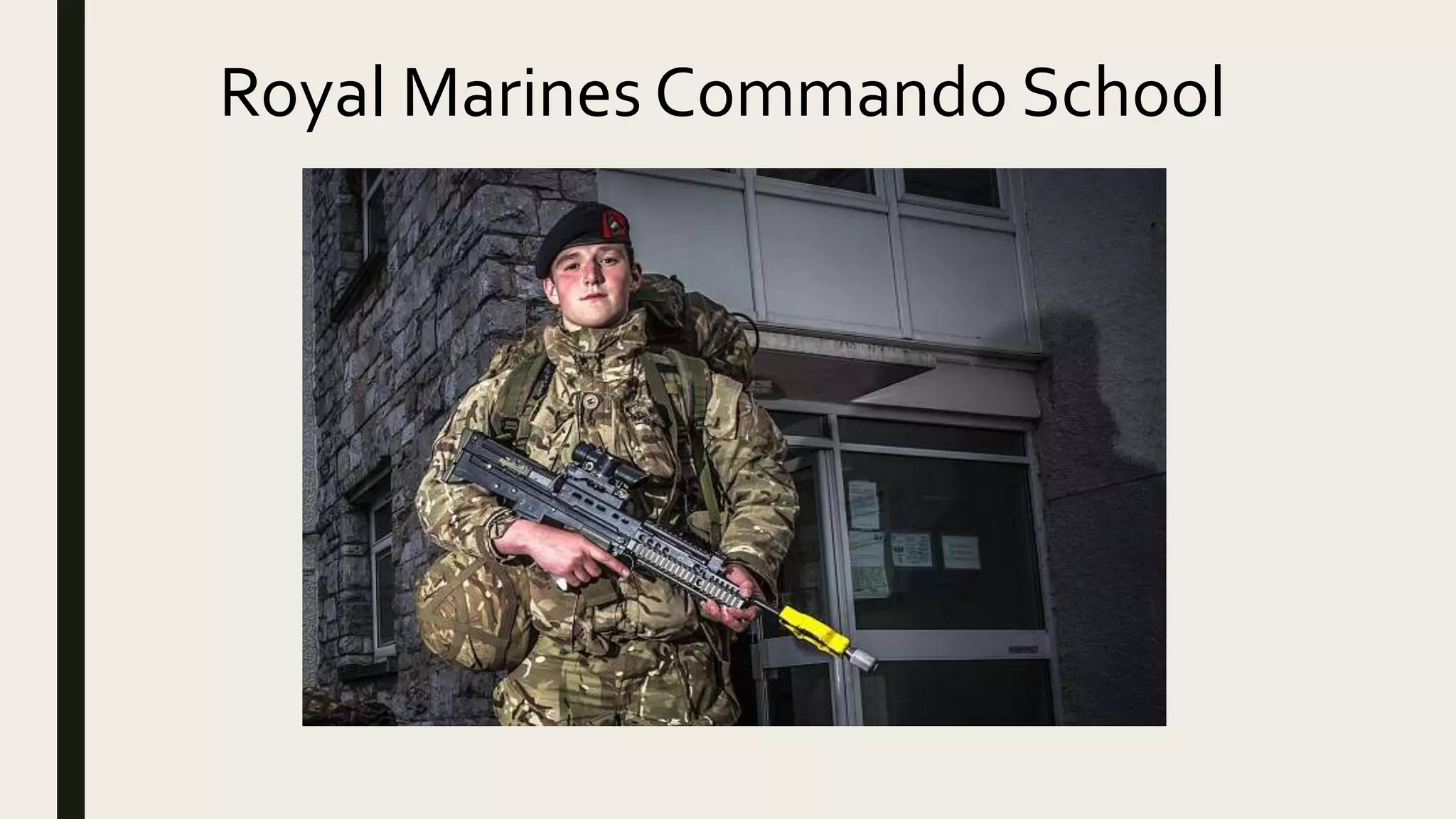
Royal Marines Commando School
Camerawork- This Documentary follows a journey across a 10 month period of trainee Royal
Marine soldiers. At the very beginning of the first series an aerial shot is shown showing Afghanistan,
narrative explains this is where the trainee’s will be heading if they pass the Royal marines school.
shots are also shown throughout the documentary mostly between a Corporal officer and a trainee,
the viewer you get a clear outlook at the difference between the two. This documentary is not staged,
close-up shots are shown to show the trainee’s emotions throughout their time at training school, this
documentary focuses upon certain trainee’s so that we can follow their story and are able to
with them. Track and Hand-held shots are used to show trainee’s perspective of their journey through
training
Sound- At the start of each episode, non-diegetic music is played, the music has been
chosen specifically to fit in with this war related documentary, the music sets the scene, there is
additional cartoon-effect pictures playing in mini clips in time with the music. The
documentary's sound contains speech from the trainee marine soldiers and also the Corporals.
Speech is presented mostly by using direct address , this shows that the people featuring in the
documentary take into account for the audience as they are talking to the camera (like a
personal diary on their journey). A narrator is used to tell the audience what is happening which
keeps them aware of what the audience are watching because if no narrator was used, this
would cause confusion about what the audience are watching, by using a narrator, it keeps the
audience watching the documentary as the narrator is typically the ‘storyteller’ of a
documentary.
Mise en scene- This non-staged documentary focuses upon a group of trainee marines that
want to pursue a career in the Royal Marines. In the first episode of this documentary, interviews take
place interviewing some of the trainee soldier's families, we see some of the soldiers in their home-
clothing, as the audience this allows us to make a judgement on the type of character the solider is.
in the documentary, it focuses on several soldiers so that we can get to know their characteristics
individually. The costumes are strictly the typical camouflage jackets, trousers etc, the Corporals are
always wearing their blue hats to show that they are of a higher status than the trainees, this is
to show as the audience can distinguish between each person.
Editing- To show a conversation between two people the documentary uses a two shot instead
of a shot reverse shot. This may be done so that the audience can see the facial expression on
both members at the same time instead of the camera switching from one person to another.
However a two shot could be used if the camera crew have limited access to equipment.
Throughout the documentary when the footage/scene has changed, a text box appears at the
bottom corner of the screen to inform the audience either who is speaking or where the scene is
set, the text box then fades out after a reasonable amount of time for the audience to read it.

Codes and Conventions of a Documentary

  • 1.
  • 2.
    …What makes adocumentary a documentary? Voiceover A voiceover is typically used to engage an audience into finding out key facts about the certain documentary. In some ways, the documentary encourages the audience to think that they have some kind of specialist knowledge into that documentary, as voiceovers are another form of direct address. A voiceover is also usually used mostly throughout the whole of the documentary, typically in wildlife documentary's such as ‘Planet Earth’ narrated by Sir DavidAttenborough. However realityTv programmes such as ‘Keeping up with the Kardashians’ do not use voiceovers as much in their documentary's as real life footage is shown of the non-fictional protagonists throughout.
  • 3.
    Real footage ofevents Documentary's are usually seen as non-fictional although there are debates around this. However one of the main conventions of a documentary is that all events presented to the audience are all seen to be real. Documentarians often go to great lengths to convince us that everything we see in a documentary is real and unaltered in anyway, although editing and voiceovers can affect the ‘reality’ we as the viewers see.
  • 4.
    Technicality of Realism Technicalityof realism is an important convention within a documentary as it includes things such as natural lighting and sound which creates a better effect for a documentary and interviews as it presents a sense of realism to the intended audience. Interviews Interviews are used to add additional information about the documentary, for example, crime documentaries usually use interviewees to gain further information about the certain non-fictional storyline they are creating a documentary about. Interviews are also used to authenticate the views expressed within the documentary. Sometimes, they will disagree with the message of the documentary.
  • 5.
    Use of text/titles Majorityof documentaries use words on screen to anchor images in time and space. Labels, dates, etc tend to be believed unquestioningly and are also a quick and cheap way of conveying information into a documentary. Set-ups This is the set up of a typical scene.The way in which the scene has been made to look naturalistic might have actually been set-up by a camera crew. It’s a cheap way to gain footage quicker rather than waiting around for something to happen ‘naturally’.
  • 6.
    Sound Sound within adocumentary can include diegetic and non- diegetic sounds to create a particular theme within the documentary, non-diegetic sounds can add effect to a documentary such as music. Sound can also be used as a bridge between scenes or even at the beginning or the end of the documentary where the credits appear.
  • 7.
  • 8.
    Camerawork- Within thiscrime documentary the most important camerawork shots used are flashbacks, mid-shots/close-ups. The episode I watched focuses upon a group living in America, therefore by using mid-shots/close-ups, the audience watching would be aware of the spoken and visual content. As this documentary is based on interviewing from mafia’s, using a close-up shot can reveal a persons emotions which highlights the realism of a documentary. The use of flashbacks provides factual information to the as they would be unaware of what had happened in these people’s lives prior to them interviewed by Trevor McDonald. There is constant cross-cutting between Trevor and the other person he is interviewing Sound- Music at the very start of the documentary to set the tone, this further highlights the type of genre this documentary is. Voiceovers are a very important aspect to this documentary, they are used to commentate over the image that is being shown at the they are majorly used for flashbacks. ‘The Mafia’ uses a lot of flashbacks so the audience gain added information to the story, the use of a voiceover adds extra information to the clips/pictures being shown.
  • 9.
    Mise en scene-As Trevor McDonald is the presenter and the face of this documentary, he is dressed in formal clothing, such as smart shirts or suits. This the people he interviews as they are dressed in their normal and casual clothing. An important aspect of a documentary is realism, therefore the people being filmed are told what to wear/look like. This makes a documentary different from things such a Drama programmes as they are set up to entertain. The people who are being interviewed are dressed in their every day clothing, this highlights their cultural or background. Editing- Long takes are used to show the establishing shots from scene to scene. Short takes in the documentary are used for when Trevor is interviewing the other people, the short takes usually include close-ups which reveal someone's emotional state. Mid-shots are used to focus upon the status between Trevor and the people he interviewing. For example in one episode I watched Trevor interviews a man who is dressed like a stereotypical ‘gangster’, this not only highlights his status/personality fits in with the whole genre of the documentary (crime).
  • 10.
    Anorexia: A Boyin a Girl’sWorld
  • 11.
    Camerawork- This medicaldocumentary focuses on one boy who suffers with Anorexia, as this documentary is just based around his life, some camera shots used further highlight this documentary, for example a hand-held camera shot is shown within Charles’ ward so as the we can see what life was like for him in a children's ward from his perspective. Close up’s are when Charles’ parents are being interviewed, by using a close-up shot it reveals their emotions the situation and makes the documentary more realistic and sympathetic. Establishing shots also used throughout this documentary to show the setting (The Hospital), by using an shot it gives the viewer information about where the place is set. Sound- Non-diegetic sound is played throughout this documentary. A well known sad instrumental piece was played during an interview with Charles’ parents, this would allow for the audience to feel more engaged within the documentary. Sound within this documentary reflects mood and emotion the clip is showing, for example, the interview with Charles’ parents was sad music over it to highlight the upsetting topic they were talking about.
  • 12.
    Mise en scene-Inthis documentary, the main focus is on Charles. He is always dressed in his everyday clothes such as jeans and a T-shirt, he always wears baggy t-shirts, this could highlight that he is still self conscious in some ways about his body image. The narrator is therefore you do not see what she is wearing. When scenes of the hospital are shown we see and Nurses dressed in their typical uniform. The documentary also shows some scenes of inside classroom when Charles goes back to school, all of the students are also dressed in casual As all of the featured people in the documentary are in their own clothing, it makes the more convincing and fits the criteria of it being a medical documentary. Edting-Establishing shots are frequently used throughout this documentary to show us as the viewer the various scenes where this documentary takes place. One important scene is the hospital room where Charles moved into when he was first admitted into hospital. Reaction shots are also recurrently used typically to show Charles’ parents reactions when they are speaking about the early days of Charles’ anorexia. The use of the reaction shots with the added saddening instrumental music over the top creates an emotional and reflective theme, this ultimately would draw the viewers into being engaged with Charles’ illness.
  • 13.
  • 14.
    Camerawork- This Documentaryfollows a journey across a 10 month period of trainee Royal Marine soldiers. At the very beginning of the first series an aerial shot is shown showing Afghanistan, narrative explains this is where the trainee’s will be heading if they pass the Royal marines school. shots are also shown throughout the documentary mostly between a Corporal officer and a trainee, the viewer you get a clear outlook at the difference between the two. This documentary is not staged, close-up shots are shown to show the trainee’s emotions throughout their time at training school, this documentary focuses upon certain trainee’s so that we can follow their story and are able to with them. Track and Hand-held shots are used to show trainee’s perspective of their journey through training Sound- At the start of each episode, non-diegetic music is played, the music has been chosen specifically to fit in with this war related documentary, the music sets the scene, there is additional cartoon-effect pictures playing in mini clips in time with the music. The documentary's sound contains speech from the trainee marine soldiers and also the Corporals. Speech is presented mostly by using direct address , this shows that the people featuring in the documentary take into account for the audience as they are talking to the camera (like a personal diary on their journey). A narrator is used to tell the audience what is happening which keeps them aware of what the audience are watching because if no narrator was used, this would cause confusion about what the audience are watching, by using a narrator, it keeps the audience watching the documentary as the narrator is typically the ‘storyteller’ of a documentary.
  • 15.
    Mise en scene-This non-staged documentary focuses upon a group of trainee marines that want to pursue a career in the Royal Marines. In the first episode of this documentary, interviews take place interviewing some of the trainee soldier's families, we see some of the soldiers in their home- clothing, as the audience this allows us to make a judgement on the type of character the solider is. in the documentary, it focuses on several soldiers so that we can get to know their characteristics individually. The costumes are strictly the typical camouflage jackets, trousers etc, the Corporals are always wearing their blue hats to show that they are of a higher status than the trainees, this is to show as the audience can distinguish between each person. Editing- To show a conversation between two people the documentary uses a two shot instead of a shot reverse shot. This may be done so that the audience can see the facial expression on both members at the same time instead of the camera switching from one person to another. However a two shot could be used if the camera crew have limited access to equipment. Throughout the documentary when the footage/scene has changed, a text box appears at the bottom corner of the screen to inform the audience either who is speaking or where the scene is set, the text box then fades out after a reasonable amount of time for the audience to read it.