Jill	
  Hopke	
  
@jillhopke	


January	
  26,	
  2015	


Sourcing	
  and	
  Verifying	
  Social	
  
Content	
  
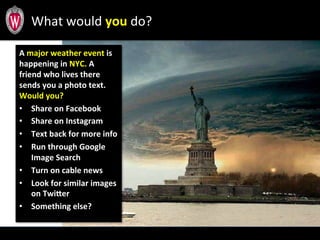
A	
  major	
  weather	
  event	
  is	
  
happening	
  in	
  NYC.	
  A	
  
friend	
  who	
  lives	
  there	
  
sends	
  you	
  a	
  photo	
  text.	
  	
  
Would	
  you?	
  
•  Share	
  on	
  Facebook	
  
•  Share	
  on	
  Instagram	
  
•  Text	
  back	
  for	
  more	
  info	
  
•  Run	
  through	
  Google	
  
Image	
  Search	
  
•  Turn	
  on	
  cable	
  news	
  
•  Look	
  for	
  similar	
  images	
  
on	
  TwiIer	
  
•  Something	
  else?	
  
What	
  would	
  you	
  do?	


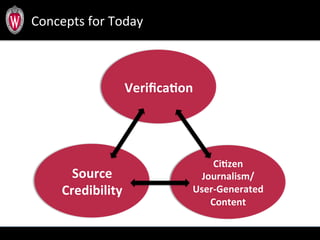
Source	
  
Credibility	
  
CiJzen	
  
Journalism/
User-­‐Generated	
  
Content	
  
Concepts	
  for	
  Today	
  
VerificaJon	
  
 
Social	
  Media	
  are	
  Changing	
  News	
  	
  
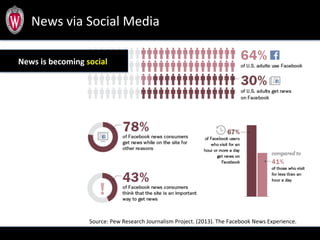
News	
  via	
  Social	
  Media	
  
News	
  is	
  becoming	
  social	
  
Source:	
  Pew	
  Research	
  Journalism	
  Project.	
  (2013).	
  The	
  Facebook	
  News	
  Experience.	


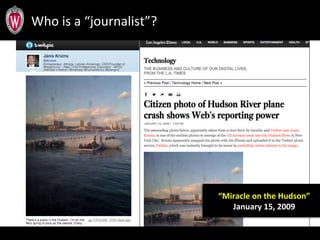
Who	
  is	
  a	
  “journalist”?	


“Miracle	
  on	
  the	
  Hudson”	
  
January	
  15,	
  2009	
  
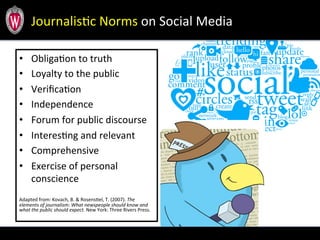
JournalisTc	
  Norms	
  on	
  Social	
  Media	
  
•  ObligaTon	
  to	
  truth	
  
•  Loyalty	
  to	
  the	
  public	
  
•  VerificaTon	
  
•  Independence	
  	
  
•  Forum	
  for	
  public	
  discourse	
  
•  InteresTng	
  and	
  relevant	
  
•  Comprehensive	
  
•  Exercise	
  of	
  personal	
  
conscience	


Adapted	
  from:	
  Kovach,	
  B.	
  &	
  RosensTel,	
  T.	
  (2007).	
  The	
  
elements	
  of	
  journalism:	
  What	
  newspeople	
  should	
  know	
  and	
  
what	
  the	
  public	
  should	
  expect.	
  New	
  York:	
  Three	
  Rivers	
  Press.	


Researching	
  on	
  TwiIer	
  
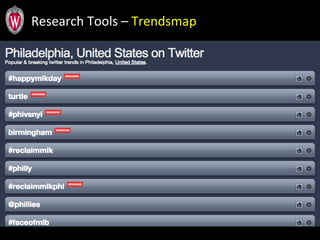
Research	
  Tools	
  –	
  Trendsmap	
  
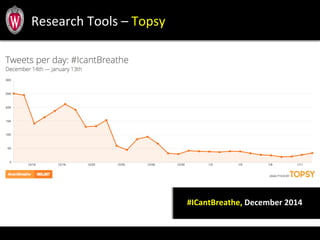
Research	
  Tools	
  –	
  Topsy	
  
Treat	
  social	
  media	
  content	
  as	
  Jps;	
  
place	
  to	
  start	
  researching	
  a	
  story	
  	
  	
  #ICantBreathe,	
  December	
  2014	
  	
  
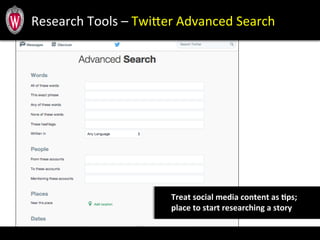
Research	
  Tools	
  –	
  Twiber	
  Advanced	
  Search	


Treat	
  social	
  media	
  content	
  as	
  Jps;	
  
place	
  to	
  start	
  researching	
  a	
  story	


Some	
  Challenges	
  to	
  Social	
  	
  
Media	
  Sourcing	
  
Assessing	
  Source	
  Credibility	
  	
  
ü Does	
  user	
  have	
  a	
  clear	
  bio,	
  
photo,	
  followers?	
  
ü Assess	
  content	
  of	
  past	
  posts	
  
ü Are	
  they	
  on-­‐the-­‐scene?	
  Will	
  
they	
  speak	
  with	
  you	
  by	
  phone,	
  
Skype?	
  	
  
ü Never	
  run	
  a	
  story	
  based	
  on	
  one	
  
source;	
  consult	
  different	
  types	
  
of	
  sources	
  (official,	
  etc.)	
  
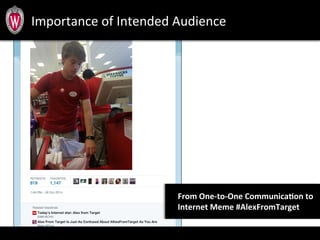
Importance	
  of	
  Intended	
  Audience	


From	
  One-­‐to-­‐One	
  CommunicaJon	
  to	
  	
  
Internet	
  Meme	
  #AlexFromTarget	
  
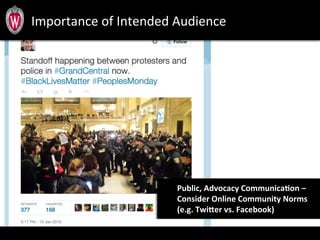
Importance	
  of	
  Intended	
  Audience	


Public,	
  Advocacy	
  CommunicaJon	
  –	
  	
  
Consider	
  Online	
  Community	
  Norms	
  	
  
(e.g.	
  TwiIer	
  vs.	
  Facebook)	
  	
  
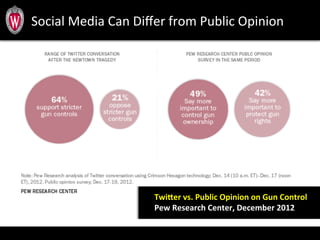
Social	
  Media	
  Can	
  Differ	
  from	
  Public	
  Opinion	


TwiIer	
  vs.	
  Public	
  Opinion	
  on	
  Gun	
  Control	
  
Pew	
  Research	
  Center,	
  December	
  2012	
  
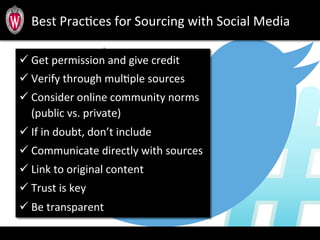
Best	
  PracTces	
  for	
  Sourcing	
  with	
  Social	
  Media	
  
ü Get	
  permission	
  and	
  give	
  credit	
  	
  
ü Verify	
  through	
  mulTple	
  sources	
  
ü Consider	
  online	
  community	
  norms	
  
(public	
  vs.	
  private)	
  
ü If	
  in	
  doubt,	
  don’t	
  include	
  
ü Communicate	
  directly	
  with	
  sources	
  
ü Link	
  to	
  original	
  content	
  
ü Trust	
  is	
  key	
  
ü Be	
  transparent	
  
More	
  on	
  CommunicaTng	
  with	
  Sources	
  
ü Have	
  a	
  professional	
  account	
  (e.g.	
  Twiber,	
  website)	
  
ü Give	
  your	
  affiliaTon	
  and	
  a	
  clear	
  request	
  (e.g.	
  
interview,	
  repost);	
  say	
  how	
  their	
  info	
  will	
  be	
  used	
  
ü Share	
  contact	
  info	
  privately	
  (i.e.	
  direct	
  message)	
  
ü State	
  your	
  Tmeframe/deadline	
  
ü Report	
  back/share	
  finished	
  product	
  
ü Follow-­‐up;	
  if	
  a	
  sources	
  says	
  no,	
  OK	
  to	
  check	
  back	
  as	
  
circumstances	
  change	
  but	
  respect	
  privacy	


Verifying	
  InformaJon	
  
	
  in	
  a	
  (Social)	
  Digital	
  Age	
  
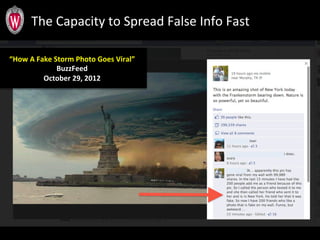
The	
  Capacity	
  to	
  Spread	
  False	
  Info	
  Fast	
  
“How	
  A	
  Fake	
  Storm	
  Photo	
  Goes	
  Viral”	
  
BuzzFeed	
  
October	
  29,	
  2012	
  	
  
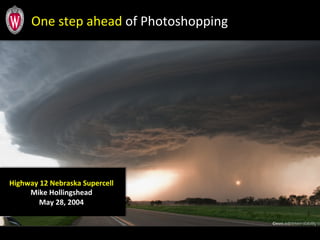
One	
  step	
  ahead	
  of	
  Photoshopping	
  
Highway	
  12	
  Nebraska	
  Supercell	
  	
  
Mike	
  Hollingshead	
  
May	
  28,	
  2004	
  
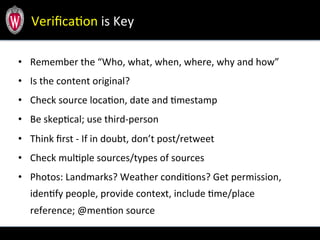
•  Remember	
  the	
  “Who,	
  what,	
  when,	
  where,	
  why	
  and	
  how”	


•  Is	
  the	
  content	
  original?	
  
•  Check	
  source	
  locaTon,	
  date	
  and	
  Tmestamp	
  
•  Be	
  skepTcal;	
  use	
  third-­‐person	
  
•  Think	
  first	
  -­‐	
  If	
  in	
  doubt,	
  don’t	
  post/retweet	
  
•  Check	
  mulTple	
  sources/types	
  of	
  sources	
  
•  Photos:	
  Landmarks?	
  Weather	
  condiTons?	
  Get	
  permission,	
  
idenTfy	
  people,	
  provide	
  context,	
  include	
  Tme/place	
  
reference;	
  @menTon	
  source	
  	
  
VerificaTon	
  is	
  Key	


Applying	
  What	
  We’ve	
  Learned	
  
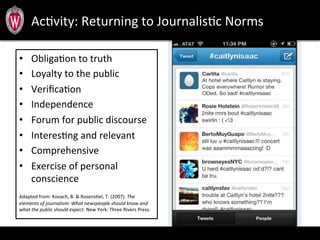
•  ObligaTon	
  to	
  truth	
  
•  Loyalty	
  to	
  the	
  public	
  
•  VerificaTon	
  
•  Independence	
  	
  
•  Forum	
  for	
  public	
  discourse	
  
•  InteresTng	
  and	
  relevant	
  
•  Comprehensive	
  
•  Exercise	
  of	
  personal	
  
conscience	


Adapted	
  from:	
  Kovach,	
  B.	
  &	
  RosensTel,	
  T.	
  (2007).	
  The	
  
elements	
  of	
  journalism:	
  What	
  newspeople	
  should	
  know	
  and	
  
what	
  the	
  public	
  should	
  expect.	
  New	
  York:	
  Three	
  Rivers	
  Press.	
  
AcTvity:	
  Returning	
  to	
  JournalisTc	
  Norms	
  
QuesTons?	
  	
  
Thank	
  you!	
  
Jill	
  Hopke	
  
jillhopke@gmail.com	
  
@jillhopke	
  
Jillhopke.com	


Sourcing and Verifying Social Content

  • 1.
    Jill  Hopke   @jillhopke     January  26,  2015       Sourcing  and  Verifying  Social   Content  
  • 2.
    A  major  weather  event  is   happening  in  NYC.  A   friend  who  lives  there   sends  you  a  photo  text.     Would  you?   •  Share  on  Facebook   •  Share  on  Instagram   •  Text  back  for  more  info   •  Run  through  Google   Image  Search   •  Turn  on  cable  news   •  Look  for  similar  images   on  TwiIer   •  Something  else?   What  would  you  do?  
  • 3.
        Source   Credibility   CiJzen   Journalism/ User-­‐Generated   Content   Concepts  for  Today   VerificaJon  
  • 4.
      Social  Media  are  Changing  News    
  • 5.
    News  via  Social  Media   News  is  becoming  social   Source:  Pew  Research  Journalism  Project.  (2013).  The  Facebook  News  Experience.      
  • 6.
    Who  is  a  “journalist”?     “Miracle  on  the  Hudson”   January  15,  2009  
  • 7.
    JournalisTc  Norms  on  Social  Media   •  ObligaTon  to  truth   •  Loyalty  to  the  public   •  VerificaTon   •  Independence     •  Forum  for  public  discourse   •  InteresTng  and  relevant   •  Comprehensive   •  Exercise  of  personal   conscience       Adapted  from:  Kovach,  B.  &  RosensTel,  T.  (2007).  The   elements  of  journalism:  What  newspeople  should  know  and   what  the  public  should  expect.  New  York:  Three  Rivers  Press.  
  • 8.
  • 9.
  • 10.
    Research  Tools  –  Topsy   Treat  social  media  content  as  Jps;   place  to  start  researching  a  story      #ICantBreathe,  December  2014    
  • 11.
    Research  Tools  –  Twiber  Advanced  Search       Treat  social  media  content  as  Jps;   place  to  start  researching  a  story  
  • 12.
        Some  Challenges  to  Social     Media  Sourcing  
  • 13.
    Assessing  Source  Credibility     ü Does  user  have  a  clear  bio,   photo,  followers?   ü Assess  content  of  past  posts   ü Are  they  on-­‐the-­‐scene?  Will   they  speak  with  you  by  phone,   Skype?     ü Never  run  a  story  based  on  one   source;  consult  different  types   of  sources  (official,  etc.)  
  • 14.
    Importance  of  Intended  Audience       From  One-­‐to-­‐One  CommunicaJon  to     Internet  Meme  #AlexFromTarget  
  • 15.
    Importance  of  Intended  Audience       Public,  Advocacy  CommunicaJon  –     Consider  Online  Community  Norms     (e.g.  TwiIer  vs.  Facebook)    
  • 16.
    Social  Media  Can  Differ  from  Public  Opinion       TwiIer  vs.  Public  Opinion  on  Gun  Control   Pew  Research  Center,  December  2012  
  • 17.
    Best  PracTces  for  Sourcing  with  Social  Media   ü Get  permission  and  give  credit     ü Verify  through  mulTple  sources   ü Consider  online  community  norms   (public  vs.  private)   ü If  in  doubt,  don’t  include   ü Communicate  directly  with  sources   ü Link  to  original  content   ü Trust  is  key   ü Be  transparent  
  • 18.
    More  on  CommunicaTng  with  Sources   ü Have  a  professional  account  (e.g.  Twiber,  website)   ü Give  your  affiliaTon  and  a  clear  request  (e.g.   interview,  repost);  say  how  their  info  will  be  used   ü Share  contact  info  privately  (i.e.  direct  message)   ü State  your  Tmeframe/deadline   ü Report  back/share  finished  product   ü Follow-­‐up;  if  a  sources  says  no,  OK  to  check  back  as   circumstances  change  but  respect  privacy  
  • 19.
        Verifying  InformaJon    in  a  (Social)  Digital  Age  
  • 20.
    The  Capacity  to  Spread  False  Info  Fast   “How  A  Fake  Storm  Photo  Goes  Viral”   BuzzFeed   October  29,  2012    
  • 21.
    One  step  ahead  of  Photoshopping   Highway  12  Nebraska  Supercell     Mike  Hollingshead   May  28,  2004  
  • 22.
    •  Remember  the  “Who,  what,  when,  where,  why  and  how”       •  Is  the  content  original?   •  Check  source  locaTon,  date  and  Tmestamp   •  Be  skepTcal;  use  third-­‐person   •  Think  first  -­‐  If  in  doubt,  don’t  post/retweet   •  Check  mulTple  sources/types  of  sources   •  Photos:  Landmarks?  Weather  condiTons?  Get  permission,   idenTfy  people,  provide  context,  include  Tme/place   reference;  @menTon  source     VerificaTon  is  Key  
  • 23.
        Applying  What  We’ve  Learned  
  • 24.
    •  ObligaTon  to  truth   •  Loyalty  to  the  public   •  VerificaTon   •  Independence     •  Forum  for  public  discourse   •  InteresTng  and  relevant   •  Comprehensive   •  Exercise  of  personal   conscience     Adapted  from:  Kovach,  B.  &  RosensTel,  T.  (2007).  The   elements  of  journalism:  What  newspeople  should  know  and   what  the  public  should  expect.  New  York:  Three  Rivers  Press.   AcTvity:  Returning  to  JournalisTc  Norms  
  • 25.
    QuesTons?     Thank  you!   Jill  Hopke   jillhopke@gmail.com   @jillhopke   Jillhopke.com