HUMAN GEOGRAPHY & the NATURAL
                      ENVIRONMENT
                   THE HUMAN IMPACT
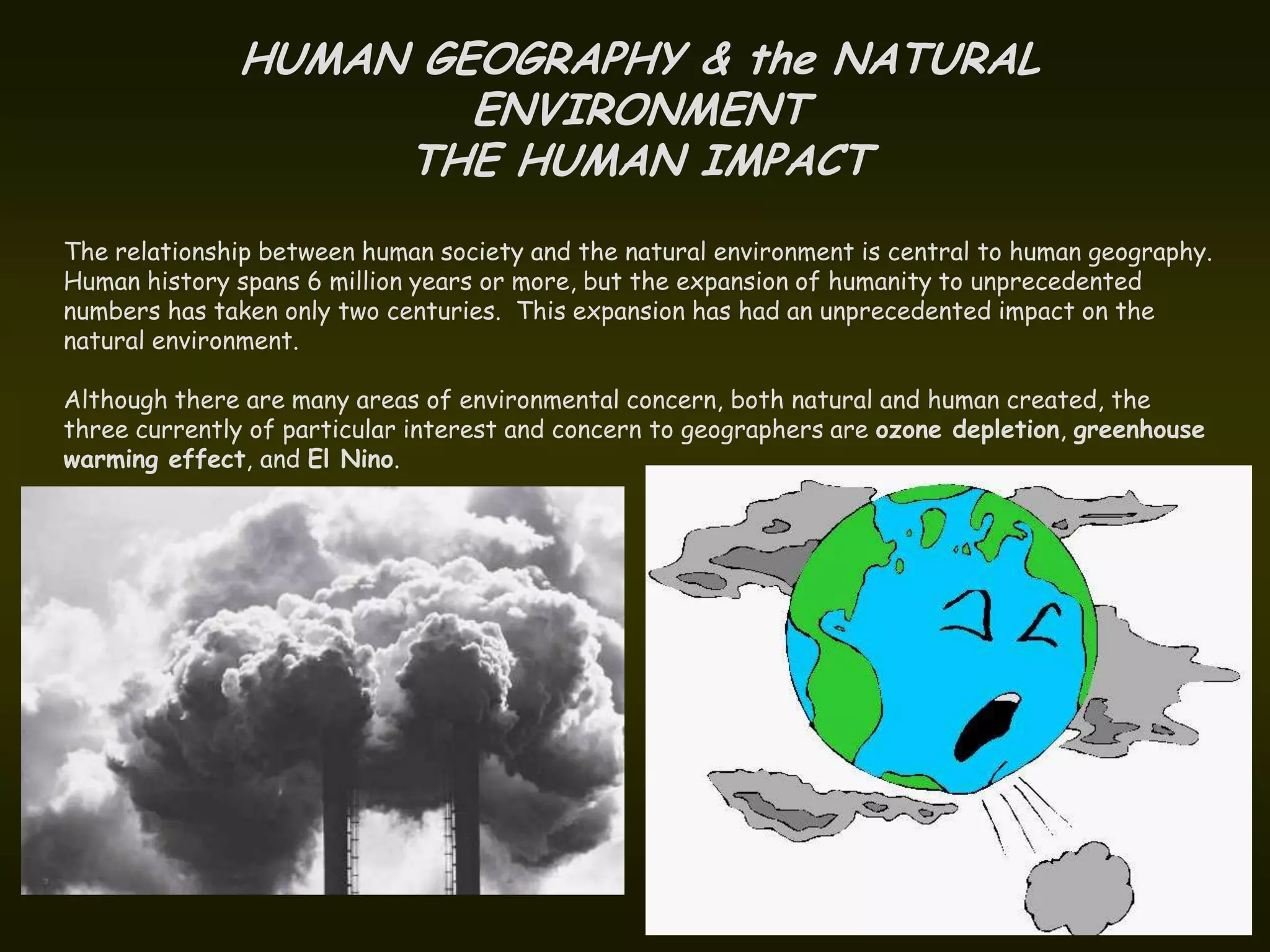
The relationship between human society and the natural environment is central to human geography.
Human history spans 6 million years or more, but the expansion of humanity to unprecedented
numbers has taken only two centuries. This expansion has had an unprecedented impact on the
natural environment.

Although there are many areas of environmental concern, both natural and human created, the
three currently of particular interest and concern to geographers are ozone depletion, greenhouse
warming effect, and El Nino.
OZONE DEPLETION
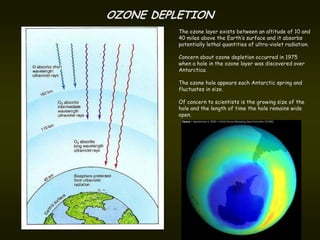
          The ozone layer exists between an altitude of 10 and
          40 miles above the Earth’s surface and it absorbs
          potentially lethal quantities of ultra-violet radiation.

          Concern about ozone depletion occurred in 1975
          when a hole in the ozone layer was discovered over
          Antarctica.

          The ozone hole appears each Antarctic spring and
          fluctuates in size.

          Of concern to scientists is the growing size of the
          hole and the length of time the hole remains wide
          open.
CAUSES OF OZONE DEPLETION:

          A. JET AIRCRAFT                        C. CFC’S
          B. NUCLEAR EXPLOSIONS                  D. AIR POLLUTION

DETRIMENTAL EFFECTS OF OZONE DEPLETION:

          A. SKIN CANCER                         C. CATARACTS
          B. BIRTH DEFECTS                       D. DAMAGE TO FARM CROPS

CURRENTLY:
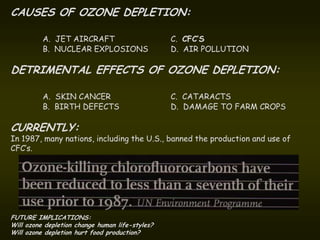
In 1987, many nations, including the U.S., banned the production and use of
CFC’s.


FUTURE IMPLICATIONS:
Will ozone depletion change human life-styles?
Will ozone depletion hurt food production?
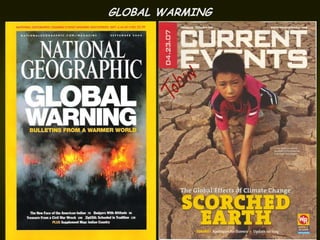
GLOBAL WARMING
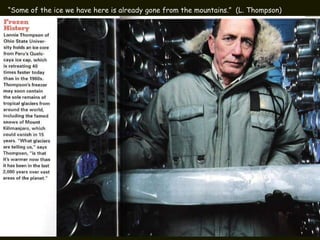
“Some of the ice we have here is already gone from the mountains.” (L. Thompson)
Increased worldwide urbanization is exasperating the global warming phenomenon – why?
Have you noticed that the average temp. in urban areas is higher than that in rural
areas?
The concern is over the rate of
warming over a limited period of
time.

Scientists have been closely
studying the correlation between
CO2 production and the steady
rise in global temperature.
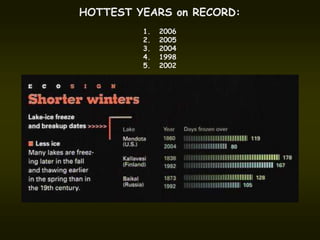
HOTTEST YEARS on RECORD:
         1.   2006
         2.   2005
         3.   2004
         4.   1998
         5.   2002
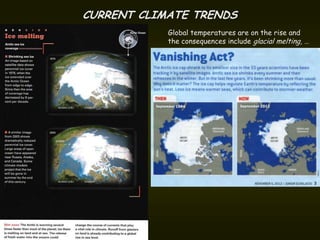
CURRENT CLIMATE TRENDS
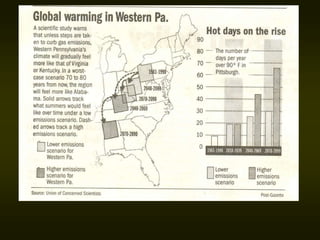
            Global temperatures are on the rise and
            the consequences include glacial melting, …
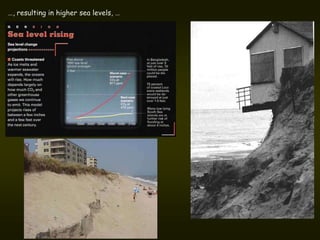
…, resulting in higher sea levels, …
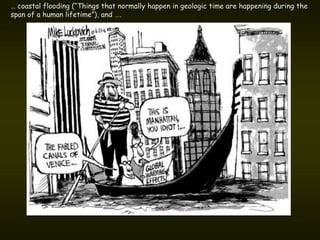
… coastal flooding (“Things that normally happen in geologic time are happening during the
span of a human lifetime”), and ….
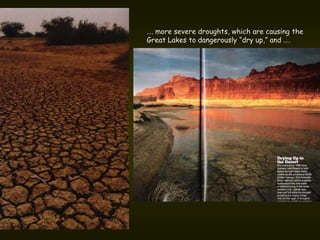
…. more severe droughts, which are causing the
Great Lakes to dangerously “dry up,” and ….
…. accelerating desertification
throughout the world.
Honors geo. ch3 (pt. 3a) p.p

Honors geo. ch3 (pt. 3a) p.p

  • 1.
    HUMAN GEOGRAPHY &the NATURAL ENVIRONMENT THE HUMAN IMPACT The relationship between human society and the natural environment is central to human geography. Human history spans 6 million years or more, but the expansion of humanity to unprecedented numbers has taken only two centuries. This expansion has had an unprecedented impact on the natural environment. Although there are many areas of environmental concern, both natural and human created, the three currently of particular interest and concern to geographers are ozone depletion, greenhouse warming effect, and El Nino.
  • 2.
    OZONE DEPLETION The ozone layer exists between an altitude of 10 and 40 miles above the Earth’s surface and it absorbs potentially lethal quantities of ultra-violet radiation. Concern about ozone depletion occurred in 1975 when a hole in the ozone layer was discovered over Antarctica. The ozone hole appears each Antarctic spring and fluctuates in size. Of concern to scientists is the growing size of the hole and the length of time the hole remains wide open.
  • 4.
    CAUSES OF OZONEDEPLETION: A. JET AIRCRAFT C. CFC’S B. NUCLEAR EXPLOSIONS D. AIR POLLUTION DETRIMENTAL EFFECTS OF OZONE DEPLETION: A. SKIN CANCER C. CATARACTS B. BIRTH DEFECTS D. DAMAGE TO FARM CROPS CURRENTLY: In 1987, many nations, including the U.S., banned the production and use of CFC’s. FUTURE IMPLICATIONS: Will ozone depletion change human life-styles? Will ozone depletion hurt food production?
  • 7.
  • 9.
    “Some of theice we have here is already gone from the mountains.” (L. Thompson)
  • 12.
    Increased worldwide urbanizationis exasperating the global warming phenomenon – why? Have you noticed that the average temp. in urban areas is higher than that in rural areas?
  • 13.
    The concern isover the rate of warming over a limited period of time. Scientists have been closely studying the correlation between CO2 production and the steady rise in global temperature.
  • 14.
    HOTTEST YEARS onRECORD: 1. 2006 2. 2005 3. 2004 4. 1998 5. 2002
  • 15.
    CURRENT CLIMATE TRENDS Global temperatures are on the rise and the consequences include glacial melting, …
  • 17.
    …, resulting inhigher sea levels, …
  • 18.
    … coastal flooding(“Things that normally happen in geologic time are happening during the span of a human lifetime”), and ….
  • 20.
    …. more severedroughts, which are causing the Great Lakes to dangerously “dry up,” and ….
  • 21.