CHAPTER TWO
            CULTURE, ENVIRONMENTS, & REGIONS
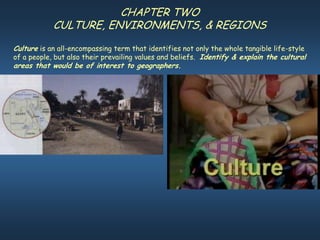
Culture is an all-encompassing term that identifies not only the whole tangible life-style
of a people, but also their prevailing values and beliefs. Identify & explain the cultural
areas that would be of interest to geographers.
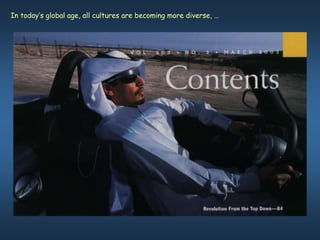
In today’s global age, all cultures are becoming more diverse, …
… although some remain less diverse than others.
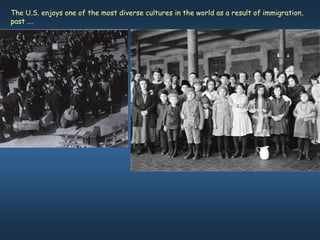
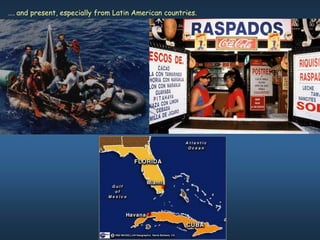
The U.S. enjoys one of the most diverse cultures in the world as a result of immigration,
past ….
…. and present, especially from Latin American countries.
COMPONENTS of CULTURE
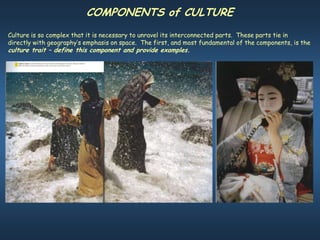
Culture is so complex that it is necessary to unravel its interconnected parts. These parts tie in
directly with geography’s emphasis on space. The first, and most fundamental of the components, is the
culture trait – define this component and provide examples.
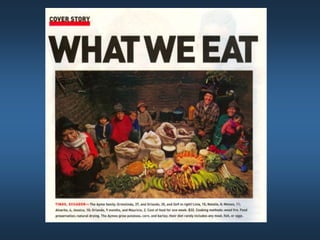
Every culture has tangible culture traits, including diet, fashion, language, laws, religion,
and sports, among others.
The physical environment in which one lives is a major determinant of many economic and
recreational culture traits, from fishing and ice skating commonly found in certain parts
of the U.S., ….
…. to the very distinctive
camel beauty contests
occurring as standard fare
in Saudi Arabia.

Why do you think the
Saudis incorporate camels
into their animal pageants,
rather than using what
Americans would
incorporate, such as dogs
and cats?
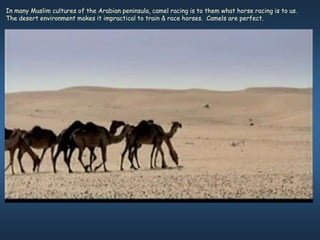
In many Muslim cultures of the Arabian peninsula, camel racing is to them what horse racing is to us.
The desert environment makes it impractical to train & race horses. Camels are perfect.
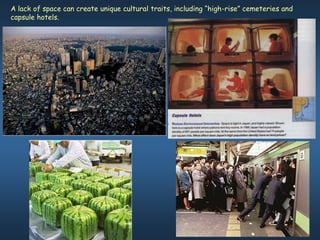
A lack of space can create unique cultural traits, including “high-rise” cemeteries and
capsule hotels.
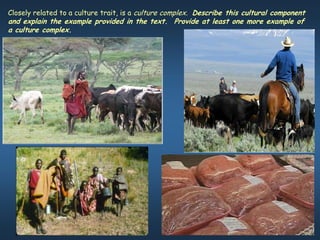
Closely related to a culture trait, is a culture complex. Describe this cultural component
and explain the example provided in the text. Provide at least one more example of
a culture complex.
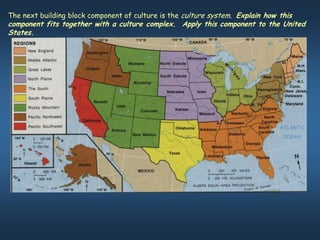
The next building block component of culture is the culture system. Explain how this
component fits together with a culture complex. Apply this component to the United
States.
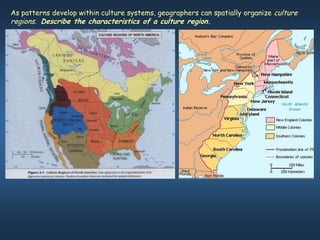
As patterns develop within culture systems, geographers can spatially organize culture
regions. Describe the characteristics of a culture region.
Cultural geographers have even demarcated culture regions within the U.S. based on
primary snack foods dominating certain regions.
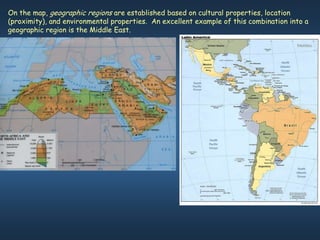
On the map, geographic regions are established based on cultural properties, location
(proximity), and environmental properties. An excellent example of this combination into a
geographic region is the Middle East.

Honors geo. ch 2 p.p (pt 1)

  • 1.
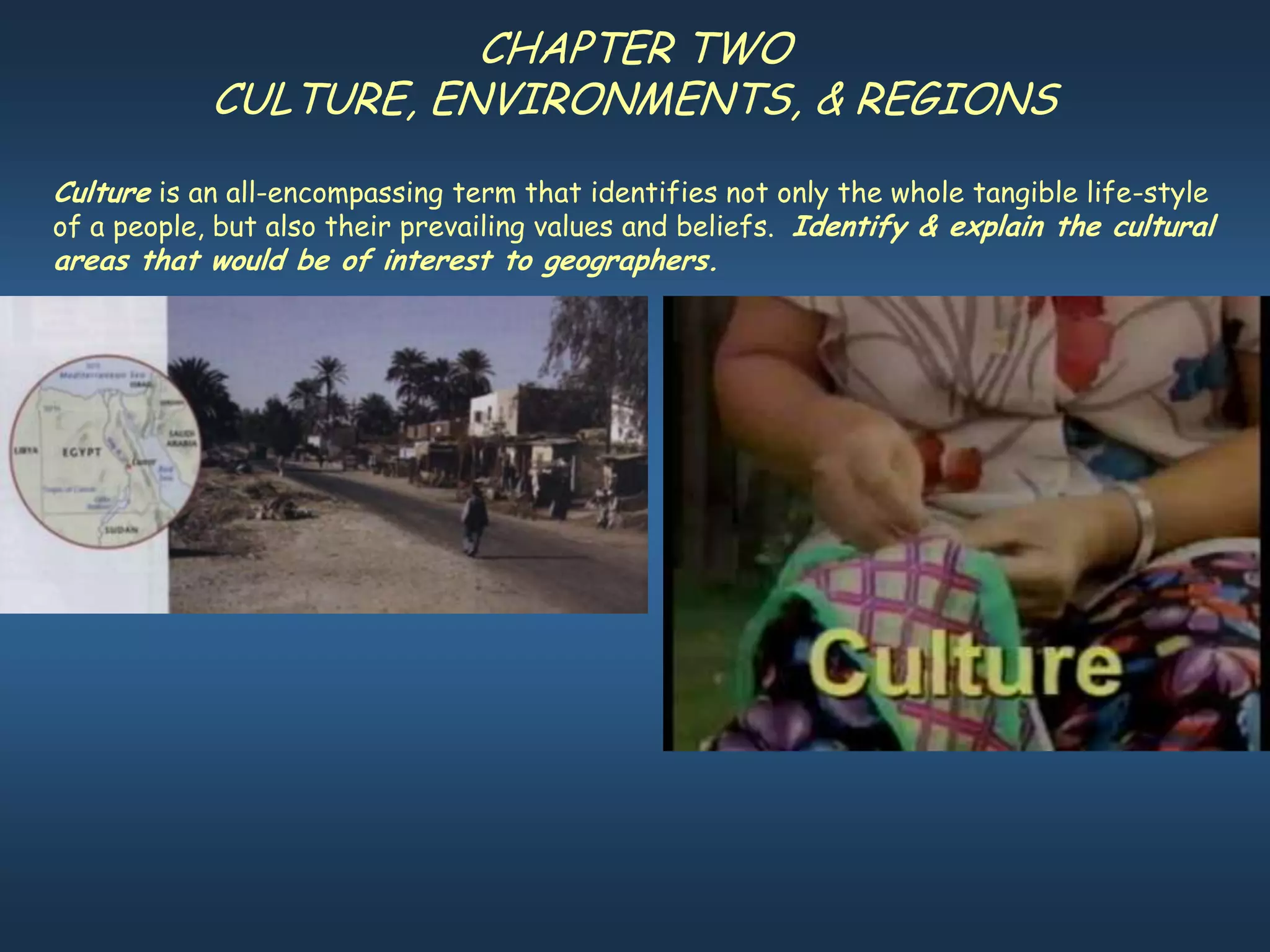
    CHAPTER TWO CULTURE, ENVIRONMENTS, & REGIONS Culture is an all-encompassing term that identifies not only the whole tangible life-style of a people, but also their prevailing values and beliefs. Identify & explain the cultural areas that would be of interest to geographers.
  • 2.
    In today’s globalage, all cultures are becoming more diverse, …
  • 3.
    … although someremain less diverse than others.
  • 4.
    The U.S. enjoysone of the most diverse cultures in the world as a result of immigration, past ….
  • 5.
    …. and present,especially from Latin American countries.
  • 6.
    COMPONENTS of CULTURE Cultureis so complex that it is necessary to unravel its interconnected parts. These parts tie in directly with geography’s emphasis on space. The first, and most fundamental of the components, is the culture trait – define this component and provide examples.
  • 7.
    Every culture hastangible culture traits, including diet, fashion, language, laws, religion, and sports, among others.
  • 9.
    The physical environmentin which one lives is a major determinant of many economic and recreational culture traits, from fishing and ice skating commonly found in certain parts of the U.S., ….
  • 10.
    …. to thevery distinctive camel beauty contests occurring as standard fare in Saudi Arabia. Why do you think the Saudis incorporate camels into their animal pageants, rather than using what Americans would incorporate, such as dogs and cats?
  • 11.
    In many Muslimcultures of the Arabian peninsula, camel racing is to them what horse racing is to us. The desert environment makes it impractical to train & race horses. Camels are perfect.
  • 12.
    A lack ofspace can create unique cultural traits, including “high-rise” cemeteries and capsule hotels.
  • 13.
    Closely related toa culture trait, is a culture complex. Describe this cultural component and explain the example provided in the text. Provide at least one more example of a culture complex.
  • 14.
    The next buildingblock component of culture is the culture system. Explain how this component fits together with a culture complex. Apply this component to the United States.
  • 15.
    As patterns developwithin culture systems, geographers can spatially organize culture regions. Describe the characteristics of a culture region.
  • 16.
    Cultural geographers haveeven demarcated culture regions within the U.S. based on primary snack foods dominating certain regions.
  • 22.
    On the map,geographic regions are established based on cultural properties, location (proximity), and environmental properties. An excellent example of this combination into a geographic region is the Middle East.