Download to read offline
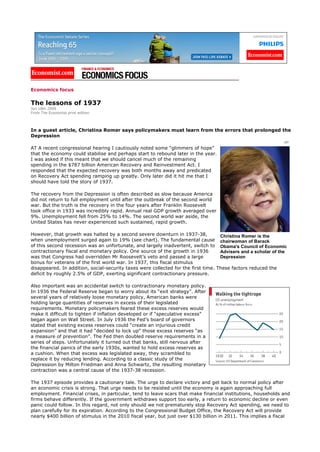

1) The US recovery in the 1930s was rapid until 1937, when unemployment surged again due to a switch to contractionary fiscal and monetary policy that prolonged the Depression. 2) In 1937, fiscal stimulus from veterans bonuses and Social Security taxes disappeared, reducing the deficit by 2.5% of GDP. Additionally, the Federal Reserve doubled bank reserve requirements, unintentionally causing banks to reduce lending and precipitating recession. 3) The author argues that policymakers today must learn from 1937 and resist prematurely withdrawing stimulus until the economy reaches full employment to avoid derailing the recovery.


