HEINNOVATE 
REVIEW BULGARIA 
Andrea-Rosalinde Hofer |Sofia, 26 September 2014
The Entrepreneurial & Innovative HEI 
The HEInnovate working definition 
The entrepreneurial & innovative HEI is … 
• designed to empower students and staff to 
demonstrate innovation, creativity and enterprise in 
teaching, research and third mission 
• its activities are directed to enhance learning, 
knowledge production & exchange in a highly complex 
and changing societal environment 
• as an organisation, it is dedicated to create public 
value via processes of open engagement
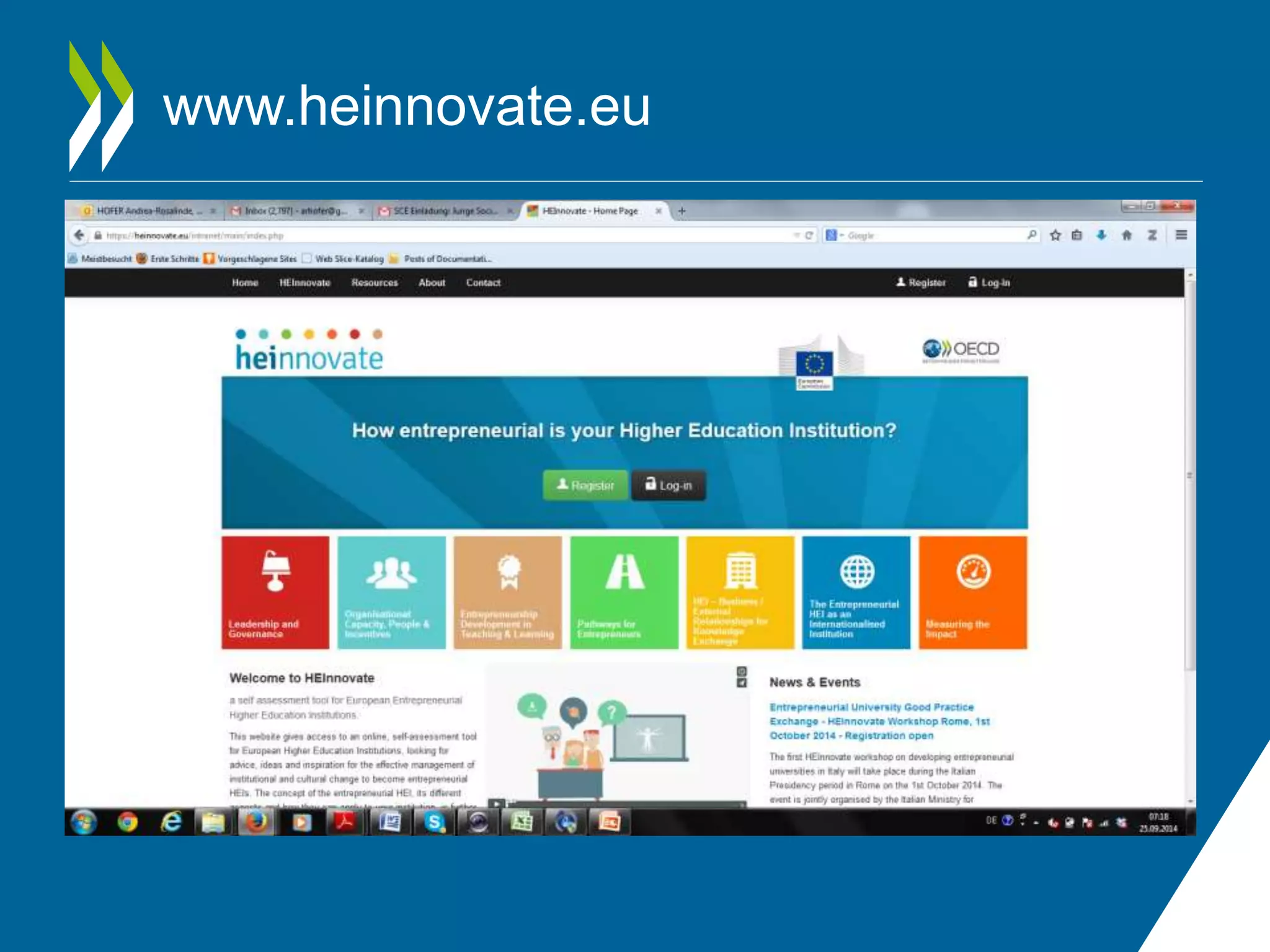
www.heinnovate.eu
HEInnovate Review Objectives 
Provide an external expert/peer perspective 
in order to: 
1. Identify key barriers & opportunities at 
HE system and HEI levels 
2. Develop recommendations and 
introduce „learning models“ to remove 
barriers & to make use of opportunities
Review process - six phases 
1. Preparation (January-March 2014) 
2. Study visit (19-23 May) to five case study universities 
3. Online surveys of HEI-Leader and students (June - 
October) 
4. Intermediate report on case study universities 
(July ) 
5. HEInnovate workshop (September) 
6. Final report (October 2014)
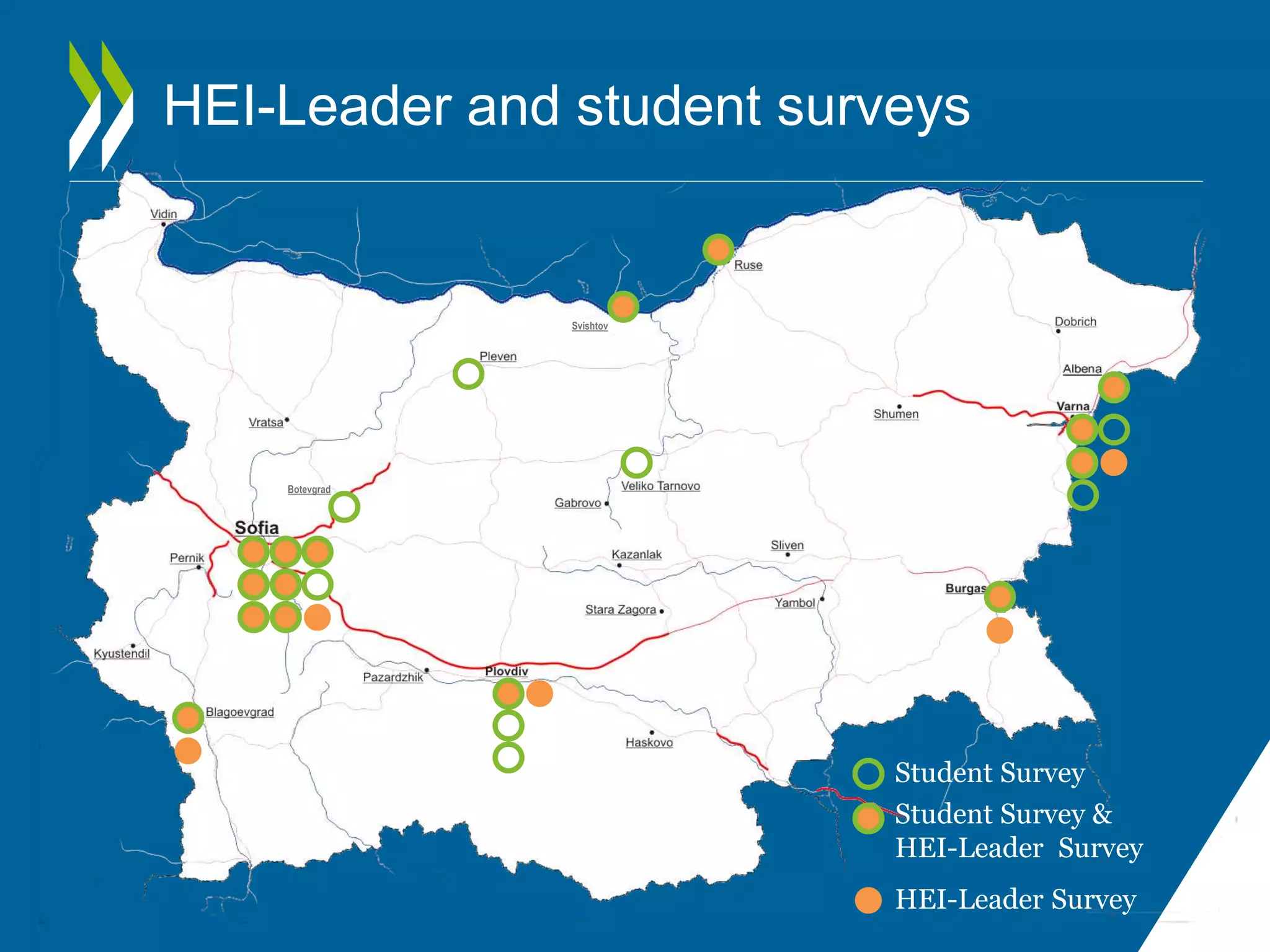
HEI-Leader and student surveys 
Botevgrad 
Svishtov 
Student Survey 
Student Survey & 
HEI-Leader Survey 
HEI-Leader Survey
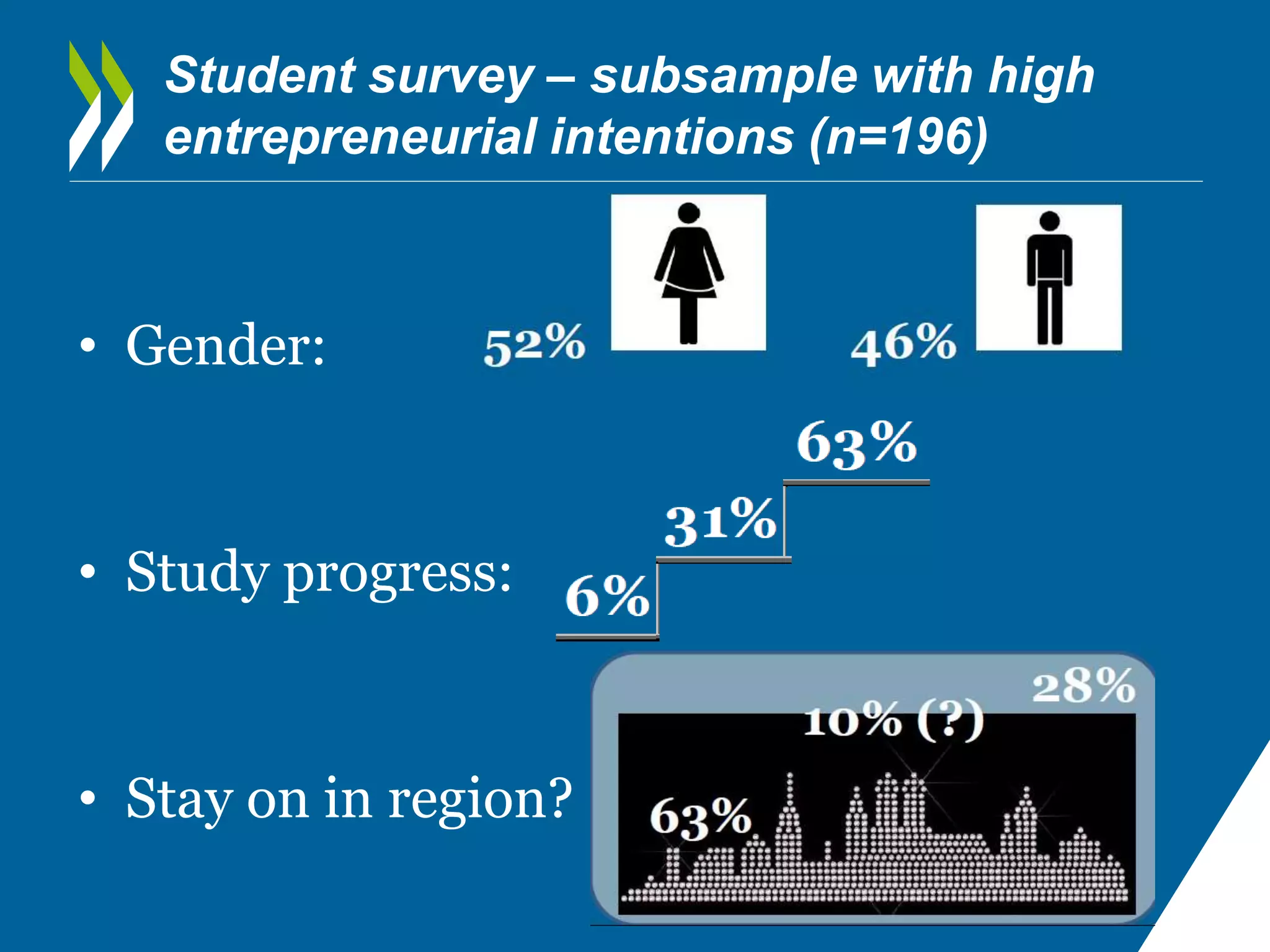
Student survey – subsample with high 
entrepreneurial intentions (n=196) 
• Gender: 
• Study progress: 
• Stay on in region?
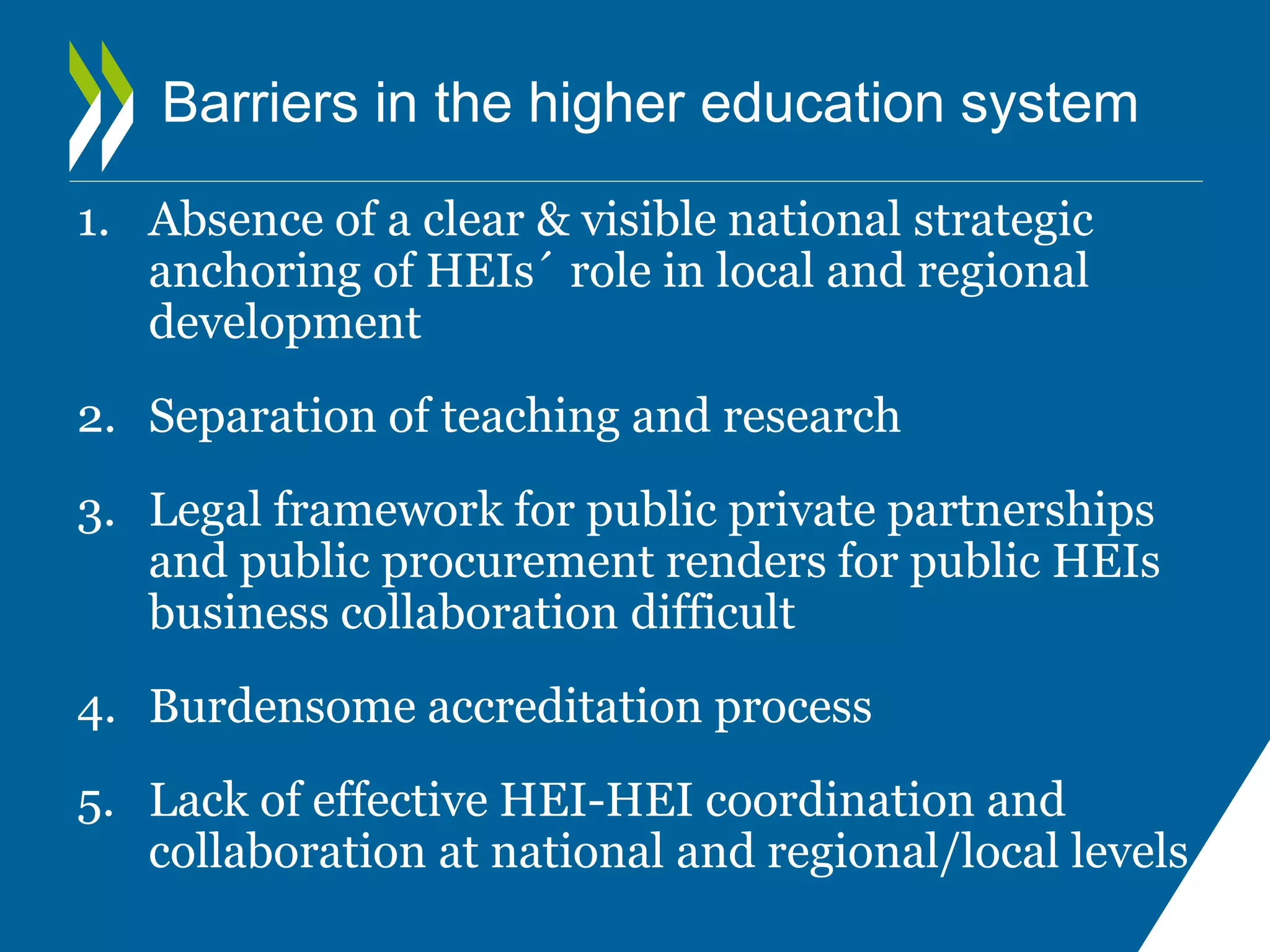
Barriers in the higher education system 
1. Absence of a clear & visible national strategic 
anchoring of HEIs´ role in local and regional 
development 
2. Separation of teaching and research 
3. Legal framework for public private partnerships 
and public procurement renders for public HEIs 
business collaboration difficult 
4. Burdensome accreditation process 
5. Lack of effective HEI-HEI coordination and 
collaboration at national and regional/local levels
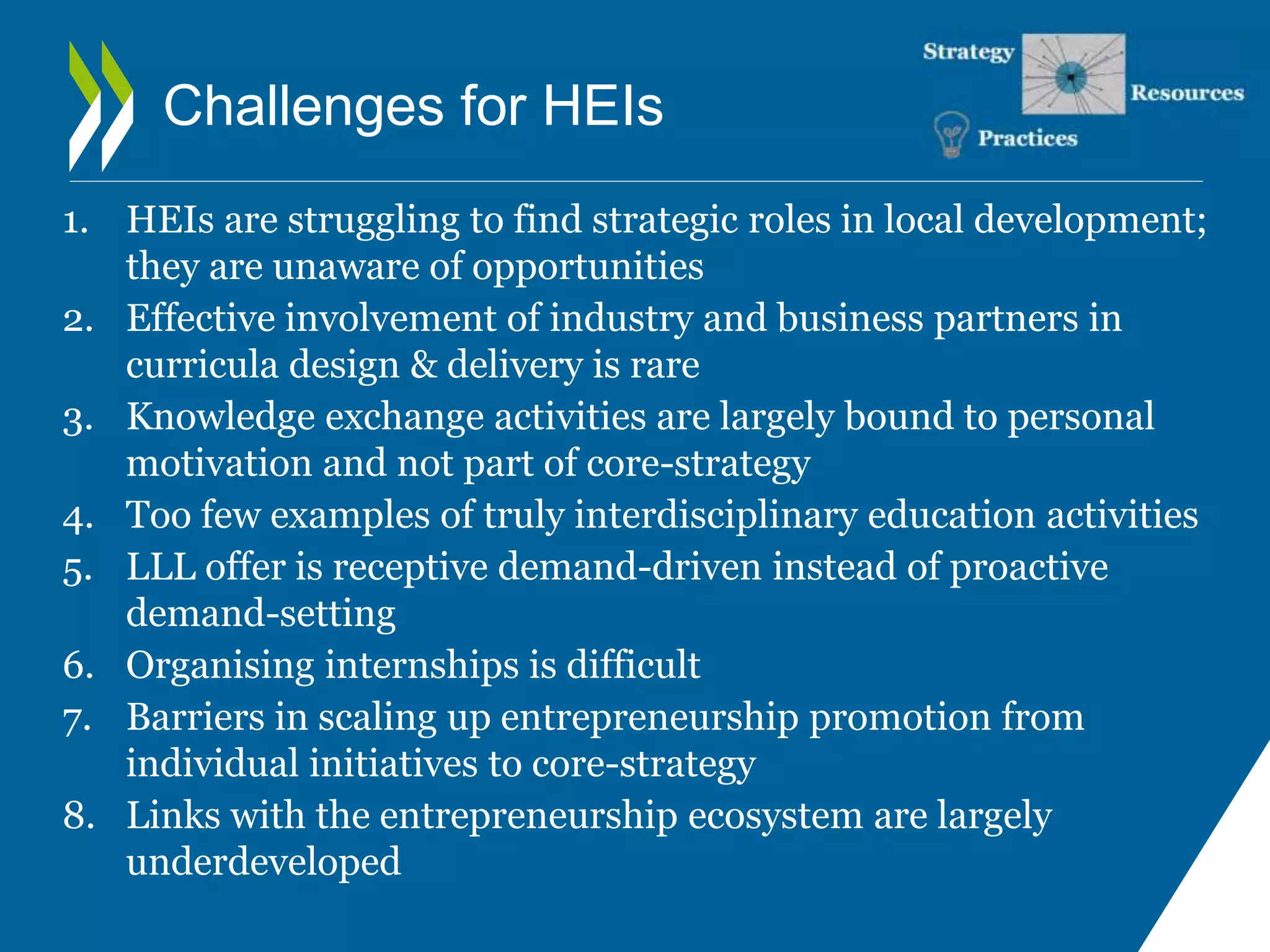
Challenges for HEIs 
1. HEIs are struggling to find strategic roles in local development; 
they are unaware of opportunities 
2. Effective involvement of industry and business partners in 
curricula design & delivery is rare 
3. Knowledge exchange activities are largely bound to personal 
motivation and not part of core-strategy 
4. Too few examples of truly interdisciplinary education activities 
5. LLL offer is receptive demand-driven instead of proactive 
demand-setting 
6. Organising internships is difficult 
7. Barriers in scaling up entrepreneurship promotion from 
individual initiatives to core-strategy 
8. Links with the entrepreneurship ecosystem are largely 
underdeveloped
Session 2 
Comment: 
Current HEI practices in 
entrepreneurship support and 
students` demand
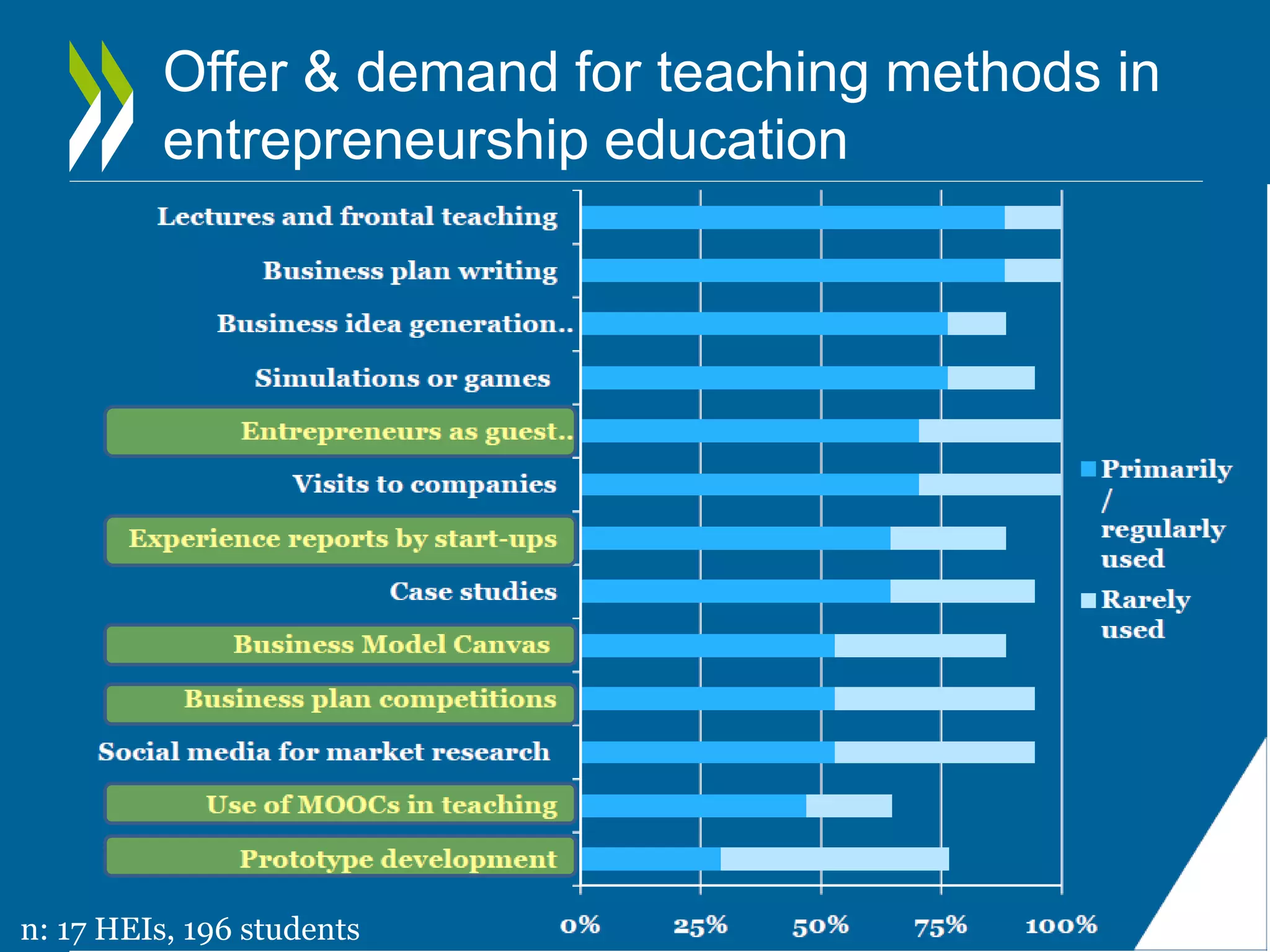
Offer & demand for teaching methods in 
entrepreneurship education 
n: 17 HEIs, 196 students
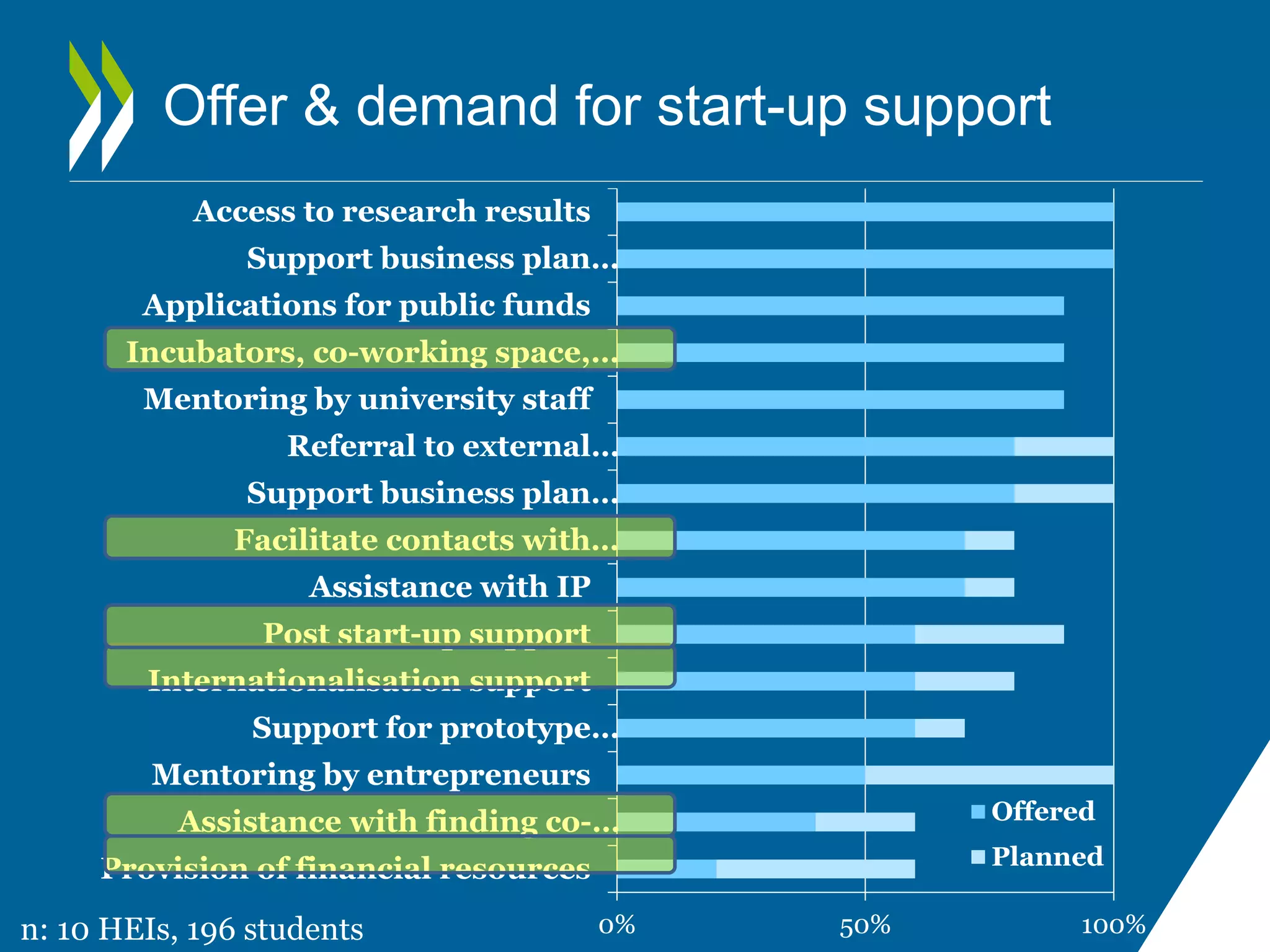
Offer & demand for start-up support 
Access to research results 
Support business plan… 
Applications for public funds 
Incubators, co-working space,… 
Mentoring by university staff 
Referral to external… 
Support business plan… 
Facilitate contacts with… 
Assistance with IP 
Post start-up support 
Internationalisation support 
Support for prototype… 
Mentoring by entrepreneurs 
Assistance with finding co-… 
0% 50% 100% 
Provision of financial resources 
Offered 
Planned 
n: 10 HEIs, 196 students
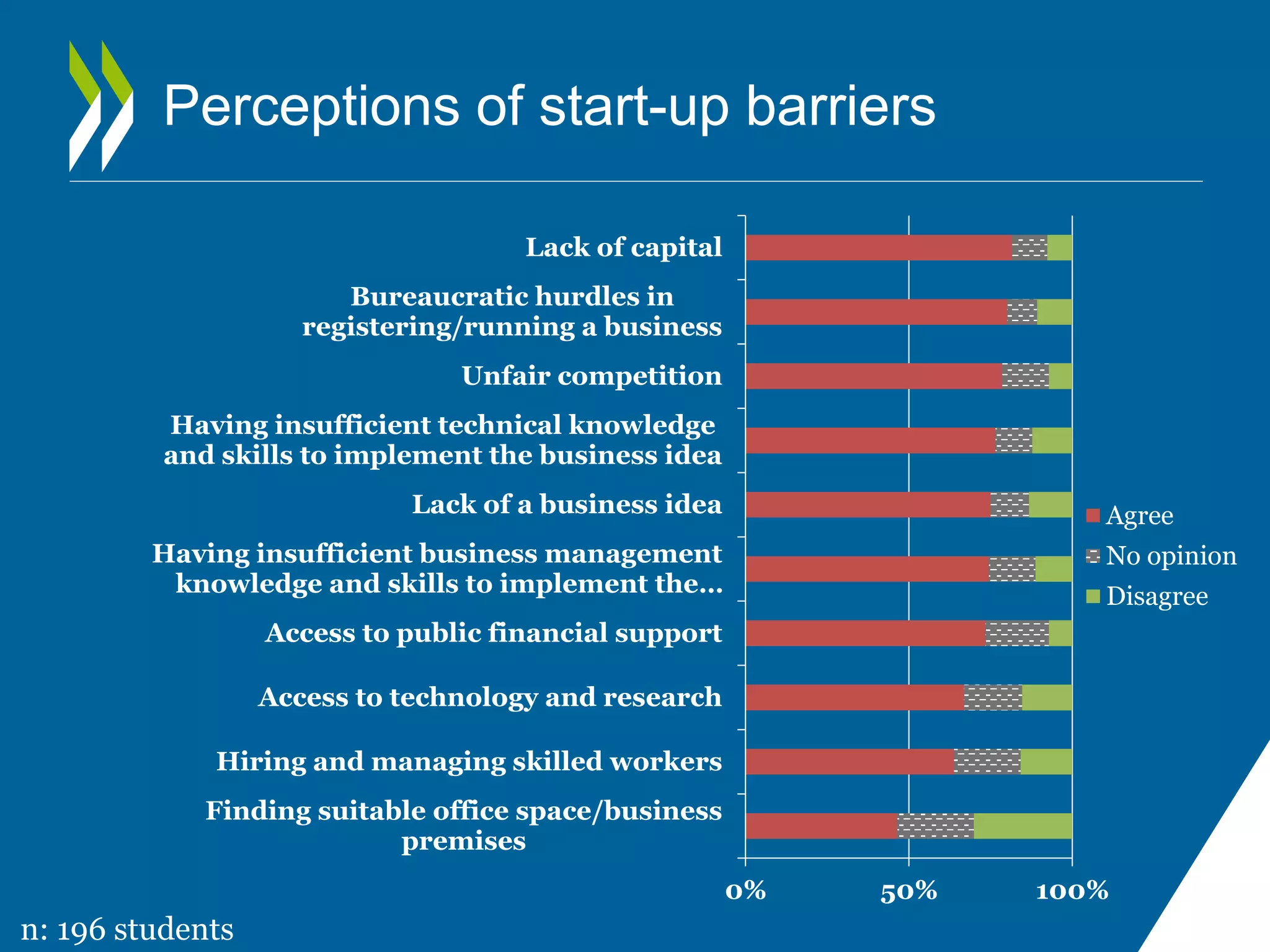
Perceptions of start-up barriers 
0% 50% 100% 
Lack of capital 
Bureaucratic hurdles in 
registering/running a business 
Unfair competition 
Having insufficient technical knowledge 
and skills to implement the business idea 
Lack of a business idea 
Having insufficient business management 
knowledge and skills to implement the… 
Access to public financial support 
Access to technology and research 
Hiring and managing skilled workers 
Finding suitable office space/business 
premises 
Agree 
No opinion 
Disagree 
n: 196 students

HEInnovate review in Bulgaria - Andrea Hofer (OECD LEED)

  • 1.
    HEINNOVATE REVIEW BULGARIA Andrea-Rosalinde Hofer |Sofia, 26 September 2014
  • 2.
    The Entrepreneurial &Innovative HEI The HEInnovate working definition The entrepreneurial & innovative HEI is … • designed to empower students and staff to demonstrate innovation, creativity and enterprise in teaching, research and third mission • its activities are directed to enhance learning, knowledge production & exchange in a highly complex and changing societal environment • as an organisation, it is dedicated to create public value via processes of open engagement
  • 3.
  • 4.
    HEInnovate Review Objectives Provide an external expert/peer perspective in order to: 1. Identify key barriers & opportunities at HE system and HEI levels 2. Develop recommendations and introduce „learning models“ to remove barriers & to make use of opportunities
  • 5.
    Review process -six phases 1. Preparation (January-March 2014) 2. Study visit (19-23 May) to five case study universities 3. Online surveys of HEI-Leader and students (June - October) 4. Intermediate report on case study universities (July ) 5. HEInnovate workshop (September) 6. Final report (October 2014)
  • 6.
    HEI-Leader and studentsurveys Botevgrad Svishtov Student Survey Student Survey & HEI-Leader Survey HEI-Leader Survey
  • 7.
    Student survey –subsample with high entrepreneurial intentions (n=196) • Gender: • Study progress: • Stay on in region?
  • 8.
    Barriers in thehigher education system 1. Absence of a clear & visible national strategic anchoring of HEIs´ role in local and regional development 2. Separation of teaching and research 3. Legal framework for public private partnerships and public procurement renders for public HEIs business collaboration difficult 4. Burdensome accreditation process 5. Lack of effective HEI-HEI coordination and collaboration at national and regional/local levels
  • 9.
    Challenges for HEIs 1. HEIs are struggling to find strategic roles in local development; they are unaware of opportunities 2. Effective involvement of industry and business partners in curricula design & delivery is rare 3. Knowledge exchange activities are largely bound to personal motivation and not part of core-strategy 4. Too few examples of truly interdisciplinary education activities 5. LLL offer is receptive demand-driven instead of proactive demand-setting 6. Organising internships is difficult 7. Barriers in scaling up entrepreneurship promotion from individual initiatives to core-strategy 8. Links with the entrepreneurship ecosystem are largely underdeveloped
  • 10.
    Session 2 Comment: Current HEI practices in entrepreneurship support and students` demand
  • 11.
    Offer & demandfor teaching methods in entrepreneurship education n: 17 HEIs, 196 students
  • 12.
    Offer & demandfor start-up support Access to research results Support business plan… Applications for public funds Incubators, co-working space,… Mentoring by university staff Referral to external… Support business plan… Facilitate contacts with… Assistance with IP Post start-up support Internationalisation support Support for prototype… Mentoring by entrepreneurs Assistance with finding co-… 0% 50% 100% Provision of financial resources Offered Planned n: 10 HEIs, 196 students
  • 13.
    Perceptions of start-upbarriers 0% 50% 100% Lack of capital Bureaucratic hurdles in registering/running a business Unfair competition Having insufficient technical knowledge and skills to implement the business idea Lack of a business idea Having insufficient business management knowledge and skills to implement the… Access to public financial support Access to technology and research Hiring and managing skilled workers Finding suitable office space/business premises Agree No opinion Disagree n: 196 students

Editor's Notes

  • #3 Link to the Framework and the event. This leads into Gibb presentation on the entrepreneurial university.
  • #8 N= 367; 219 completed (59.7%), 148 exits (40.3%) Of the completed questionnaires 196 have high entrepreneurial intentions - «Have you ever thought of starting up a business» (89.5%
  • #9 1: Dispersed responsibilities impact upon resource allocation and policy evaluation 2: HEIs face difficulties in establishing reputation as research partners of industry & business 3: Legal framework for PPP and public procurement not finalised. 4. 1 Dovetailing of study programmes to needs & opportunities in the local economy is burdensome and costly. Adjustments due to technology/other changes are difficult. 4.2 Accreditation teams not always neutral peers. Training of evaluators? 4.3 Is the agency enhancing, improving study programme offers. Stick & carrot approach. 5. Overlap and duplication in the HE system – examples of spurious competition in establishing faculties, departments and study programmes. Lack of critical mass and decreasing numbers of students is an issue for several HEIs. Very high number of PhDs – source of income as students pay fees.
  • #10 HEIs are not aware of the opportunities. Can involve the process of funding allocation. They can play an important role (RR) Governance structure does not allow. Three documents need to be submitted 1) Partnership agreement, 2) OPs planning of spending – EC is commenting, 3) Ris3 strategy. In BGL these were written by three different people, with no connections.