1
Silja Suntola
Project Director
Aalto University,
School of Business, SBC
Finland
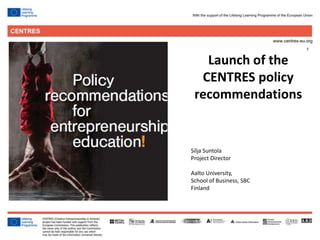
Launch of the
CENTRES policy
recommendations
2
Horizontal and integrated approaches to creative
entrepreneurship in schools
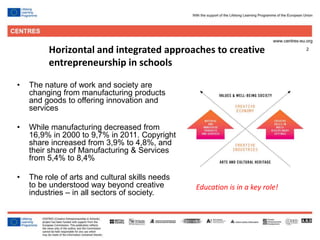
• The nature of work and society are
changing from manufacturing products
and goods to offering innovation and
services
• While manufacturing decreased from
16,9% in 2000 to 9,7% in 2011. Copyright
share increased from 3,9% to 4,8%, and
their share of Manufacturing & Services
from 5,4% to 8,4%
• The role of arts and cultural skills needs
to be understood way beyond creative
industries – in all sectors of society.
Education is in a key role!
3
Art subjects and art-based skills need
to be increased and incorporated into
the curricula horizontally
• We also need to build the confidence
and competency of teachers for
incorporating art-based methods
horizontally
• We need to improve the offer
provided by the arts and cultural
sector to improve the offer provided
by the arts & cultural sector
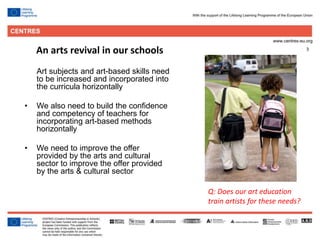
An arts revival in our schools
Q: Does our art education
train artists for these needs?
4
• Acknowledging the lack of multi-
disciplinary approaches / a strong
emphasis on specific disciplines
• Creative competencies and art-based
skills need to be incorporated into
education horizontally
• Skills pertinent to multi-disciplinary
working (such as interpersonal skills)
need to be identified as well as
discussing values, ethics and exploring
other cultures
Toward a creative entrepreneurship curriculum
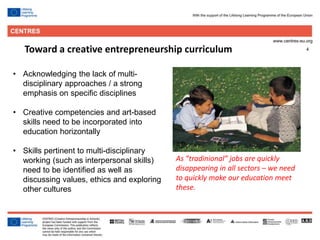
As ”tradinional” jobs are quickly
disappearing in all sectors – we need
to quickly make our education meet
these.
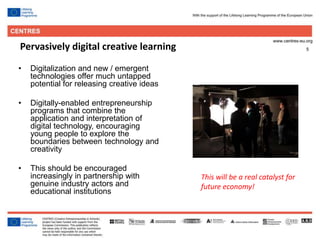
5Pervasively digital creative learning
• Digitalization and new / emergent
technologies offer much untapped
potential for releasing creative ideas
• Digitally-enabled entrepreneurship
programs that combine the
application and interpretation of
digital technology, encouraging
young people to explore the
boundaries between technology and
creativity
• This should be encouraged
increasingly in partnership with
genuine industry actors and
educational institutions
This will be a real catalyst for
future economy!
6
Dedicated creative entrepreneurship programmes
• Formal and informal education should
become a compulsory part of the
educational system
• Every secondary school student should
participate in at least one informal
entrepreneurship educational
programme
• A variety of measures such as
incubators, talent development projects
etc. should be supported in co-
operation with educational institutions
• Accreditation systems need to be
developed
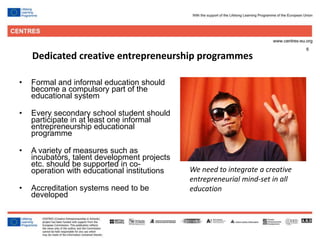
We need to integrate a creative
entrepreneurial mind-set in all
education
7Enabling programmes for creative entrepreneurship
teaching
• Entrepreneurial education and
creative methods should be
mandatory for teachers
• Programmes that enable links
between schools and businesses
should be supported
• Continuing education for teachers
should be provided – also as a
means to secure industry needs
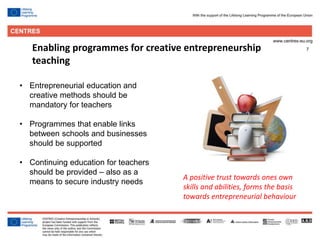
A positive trust towards ones own
skills and abilities, forms the basis
towards entrepreneurial behaviour
8
Coordinated programmes to link education and business
• Bridging the gap between
educational institutions and different
business support systems
• Creative hubs, mentoring networks
etc. to support and deliver in-and-
out of school activities (mini-
company programmes, start-up
programmes, work-related learning
and more)
• Brokered creative investment, fiscal
incentives for firms as part of talent
recruitment strategy
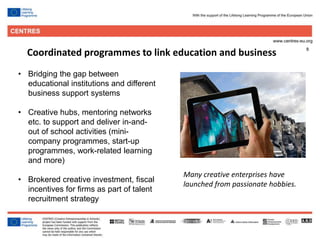
Many creative enterprises have
launched from passionate hobbies.
9
THANK YOU!

Policy recommendations by silja

  • 1.
    1 Silja Suntola Project Director AaltoUniversity, School of Business, SBC Finland Launch of the CENTRES policy recommendations
  • 2.
    2 Horizontal and integratedapproaches to creative entrepreneurship in schools • The nature of work and society are changing from manufacturing products and goods to offering innovation and services • While manufacturing decreased from 16,9% in 2000 to 9,7% in 2011. Copyright share increased from 3,9% to 4,8%, and their share of Manufacturing & Services from 5,4% to 8,4% • The role of arts and cultural skills needs to be understood way beyond creative industries – in all sectors of society. Education is in a key role!
  • 3.
    3 Art subjects andart-based skills need to be increased and incorporated into the curricula horizontally • We also need to build the confidence and competency of teachers for incorporating art-based methods horizontally • We need to improve the offer provided by the arts and cultural sector to improve the offer provided by the arts & cultural sector An arts revival in our schools Q: Does our art education train artists for these needs?
  • 4.
    4 • Acknowledging thelack of multi- disciplinary approaches / a strong emphasis on specific disciplines • Creative competencies and art-based skills need to be incorporated into education horizontally • Skills pertinent to multi-disciplinary working (such as interpersonal skills) need to be identified as well as discussing values, ethics and exploring other cultures Toward a creative entrepreneurship curriculum As ”tradinional” jobs are quickly disappearing in all sectors – we need to quickly make our education meet these.
  • 5.
    5Pervasively digital creativelearning • Digitalization and new / emergent technologies offer much untapped potential for releasing creative ideas • Digitally-enabled entrepreneurship programs that combine the application and interpretation of digital technology, encouraging young people to explore the boundaries between technology and creativity • This should be encouraged increasingly in partnership with genuine industry actors and educational institutions This will be a real catalyst for future economy!
  • 6.
    6 Dedicated creative entrepreneurshipprogrammes • Formal and informal education should become a compulsory part of the educational system • Every secondary school student should participate in at least one informal entrepreneurship educational programme • A variety of measures such as incubators, talent development projects etc. should be supported in co- operation with educational institutions • Accreditation systems need to be developed We need to integrate a creative entrepreneurial mind-set in all education
  • 7.
    7Enabling programmes forcreative entrepreneurship teaching • Entrepreneurial education and creative methods should be mandatory for teachers • Programmes that enable links between schools and businesses should be supported • Continuing education for teachers should be provided – also as a means to secure industry needs A positive trust towards ones own skills and abilities, forms the basis towards entrepreneurial behaviour
  • 8.
    8 Coordinated programmes tolink education and business • Bridging the gap between educational institutions and different business support systems • Creative hubs, mentoring networks etc. to support and deliver in-and- out of school activities (mini- company programmes, start-up programmes, work-related learning and more) • Brokered creative investment, fiscal incentives for firms as part of talent recruitment strategy Many creative enterprises have launched from passionate hobbies.
  • 9.