ENTREPRENEURSHIP EDUCATION –
 NEEDS AND PERSPECTIVES FOR
  THE EDUCATIONAL SCIENCES
     DOMAIN IN ROMANIA


CĂ TĂ LIN   Junior Researcher, Romanian Institute for Adult Education
 MARTIN                         PhD Student, University of Bucharest
Content

   Entrepreneurship – strategy and discipline
   Research
         Methodology
         Entrepreneurial intentions
         Interest to study entrepreneurship
         Usefulness of entrepreneurship education course
   Conclusions
Entrepreneurship – strategy and
discipline

   Europe 2020 - A European Strategy for smart,
    sustainable and inclusive growth
   Education and Training 2020 Strategy - De ve lo p ing
    c re a tivity a nd c a p a c ity fo r inno va tio n, inc lud ing
    e ntre p re ne uria l s p irit, a t a ll le ve ls o f e d uc a tio n a nd
    tra ining , strategic objective 4
   Annual Growth Survey 2012
   Analysis of the higher education system in Romania-
    systemic, institutional and quality assurance perspective
   Entrepreneurship in Higher Education, Especially Within
    Non-Business Studies. Final Report of the Expert Group
    report
Research
   questionnaire-based survey
   168 students from the Faculties of Educational
    Sciences specialization "Pedagogy", BA level, from 3
    major Romanian universities: West University of
    Timisoara, University of Craiova and the University of
    Bucharest.
   purpose - to identify entrepreneurial education needs
    of students at The Faculty of Educational Sciences,
    namely:

   O.1. Analysis of risk and success factors in the
    adoption of a module of entrepreneurship education.
   O.2. Identifying the variables that contribute to
    changing the attitudes and behavior towards starting a
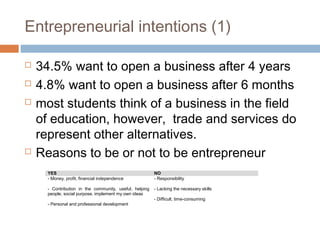
Entrepreneurial intentions (1)

   34.5% want to open a business after 4 years
   4.8% want to open a business after 6 months
   most students think of a business in the field
    of education, however, trade and services do
    represent other alternatives.
   Reasons to be or not to be entrepreneur
      YES                                                NO
      - Money, profit, financial independence            - Responsibility

      - Contribution in the community, useful, helping   - Lacking the necessary skills
      people, social purpose, implement my own ideas
                                                         - Difficult, time-consuming
      - Personal and professional development
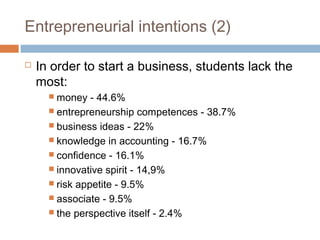
Entrepreneurial intentions (2)

   In order to start a business, students lack the
    most:
       money   - 44.6%
       entrepreneurship competences - 38.7%
       business ideas - 22%
       knowledge in accounting - 16.7%
       confidence - 16.1%
       innovative spirit - 14,9%
       risk appetite - 9.5%
       associate - 9.5%
       the perspective itself - 2.4%
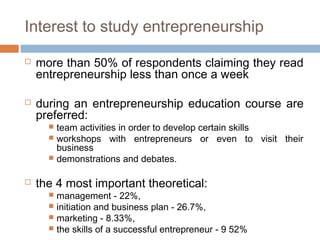
Interest to study entrepreneurship

   more than 50% of respondents claiming they read
    entrepreneurship less than once a week

   during an entrepreneurship education course are
    preferred:
       team activities in order to develop certain skills
       workshops with entrepreneurs or even to visit their
        business
       demonstrations and debates.


   the 4 most important theoretical:
       management - 22%,
       initiation and business plan - 26.7%,
       marketing - 8.33%,
       the skills of a successful entrepreneur - 9 52%
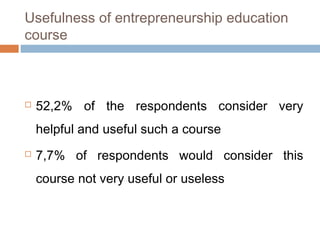
Usefulness of entrepreneurship education
course


   52,2% of the respondents consider very
    helpful and useful such a course
   7,7% of respondents would consider this
    course not very useful or useless
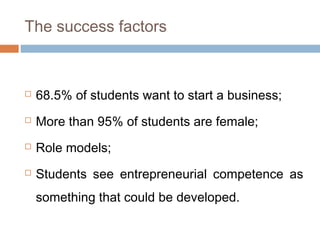
The success factors


   68.5% of students want to start a business;
   More than 95% of students are female;
   Role models;
   Students see entrepreneurial competence as
    something that could be developed.
The risk factors


   Approximately 50% of students intend to open
    a business after 2- 4 years -> hard to monitor
       Professors’     lack     of    training    in
    entrepreneurship    or     even   the   lack   of
    professors able to teach this discipline
Conclusions

   developing   transversal            competences          is
    necessary because:
       graduates  are working other areas which are not related
        to this specialization
       the graduates in educational sciences has a position of
        “doing” in the organization, not having subordinates
        (89.87%)
       students don’t know sure what they want

   teaching a module of entrepreneurship
    education with a sample of students in
    educational sciences could be a good solution
    for defining and adapting a curricula in
THANK YOU FOR YOUR
     ATTENTION!


                CATALIN MARTIN
        catalin.martin@irea.uvt.ro
 www.facebook.com/catalin.martin

Presentation martin

  • 1.
    ENTREPRENEURSHIP EDUCATION – NEEDS AND PERSPECTIVES FOR THE EDUCATIONAL SCIENCES DOMAIN IN ROMANIA CĂ TĂ LIN Junior Researcher, Romanian Institute for Adult Education MARTIN PhD Student, University of Bucharest
  • 2.
    Content  Entrepreneurship – strategy and discipline  Research  Methodology  Entrepreneurial intentions  Interest to study entrepreneurship  Usefulness of entrepreneurship education course  Conclusions
  • 3.
    Entrepreneurship – strategyand discipline  Europe 2020 - A European Strategy for smart, sustainable and inclusive growth  Education and Training 2020 Strategy - De ve lo p ing c re a tivity a nd c a p a c ity fo r inno va tio n, inc lud ing e ntre p re ne uria l s p irit, a t a ll le ve ls o f e d uc a tio n a nd tra ining , strategic objective 4  Annual Growth Survey 2012  Analysis of the higher education system in Romania- systemic, institutional and quality assurance perspective  Entrepreneurship in Higher Education, Especially Within Non-Business Studies. Final Report of the Expert Group report
  • 4.
    Research  questionnaire-based survey  168 students from the Faculties of Educational Sciences specialization "Pedagogy", BA level, from 3 major Romanian universities: West University of Timisoara, University of Craiova and the University of Bucharest.  purpose - to identify entrepreneurial education needs of students at The Faculty of Educational Sciences, namely:  O.1. Analysis of risk and success factors in the adoption of a module of entrepreneurship education.  O.2. Identifying the variables that contribute to changing the attitudes and behavior towards starting a
  • 5.
    Entrepreneurial intentions (1)  34.5% want to open a business after 4 years  4.8% want to open a business after 6 months  most students think of a business in the field of education, however, trade and services do represent other alternatives.  Reasons to be or not to be entrepreneur YES NO - Money, profit, financial independence - Responsibility - Contribution in the community, useful, helping - Lacking the necessary skills people, social purpose, implement my own ideas - Difficult, time-consuming - Personal and professional development
  • 6.
    Entrepreneurial intentions (2)  In order to start a business, students lack the most:  money - 44.6%  entrepreneurship competences - 38.7%  business ideas - 22%  knowledge in accounting - 16.7%  confidence - 16.1%  innovative spirit - 14,9%  risk appetite - 9.5%  associate - 9.5%  the perspective itself - 2.4%
  • 7.
    Interest to studyentrepreneurship  more than 50% of respondents claiming they read entrepreneurship less than once a week  during an entrepreneurship education course are preferred:  team activities in order to develop certain skills  workshops with entrepreneurs or even to visit their business  demonstrations and debates.  the 4 most important theoretical:  management - 22%,  initiation and business plan - 26.7%,  marketing - 8.33%,  the skills of a successful entrepreneur - 9 52%
  • 8.
    Usefulness of entrepreneurshipeducation course  52,2% of the respondents consider very helpful and useful such a course  7,7% of respondents would consider this course not very useful or useless
  • 9.
    The success factors  68.5% of students want to start a business;  More than 95% of students are female;  Role models;  Students see entrepreneurial competence as something that could be developed.
  • 10.
    The risk factors  Approximately 50% of students intend to open a business after 2- 4 years -> hard to monitor  Professors’ lack of training in entrepreneurship or even the lack of professors able to teach this discipline
  • 11.
    Conclusions  developing transversal competences is necessary because:  graduates are working other areas which are not related to this specialization  the graduates in educational sciences has a position of “doing” in the organization, not having subordinates (89.87%)  students don’t know sure what they want  teaching a module of entrepreneurship education with a sample of students in educational sciences could be a good solution for defining and adapting a curricula in
  • 12.
    THANK YOU FORYOUR ATTENTION! CATALIN MARTIN catalin.martin@irea.uvt.ro www.facebook.com/catalin.martin