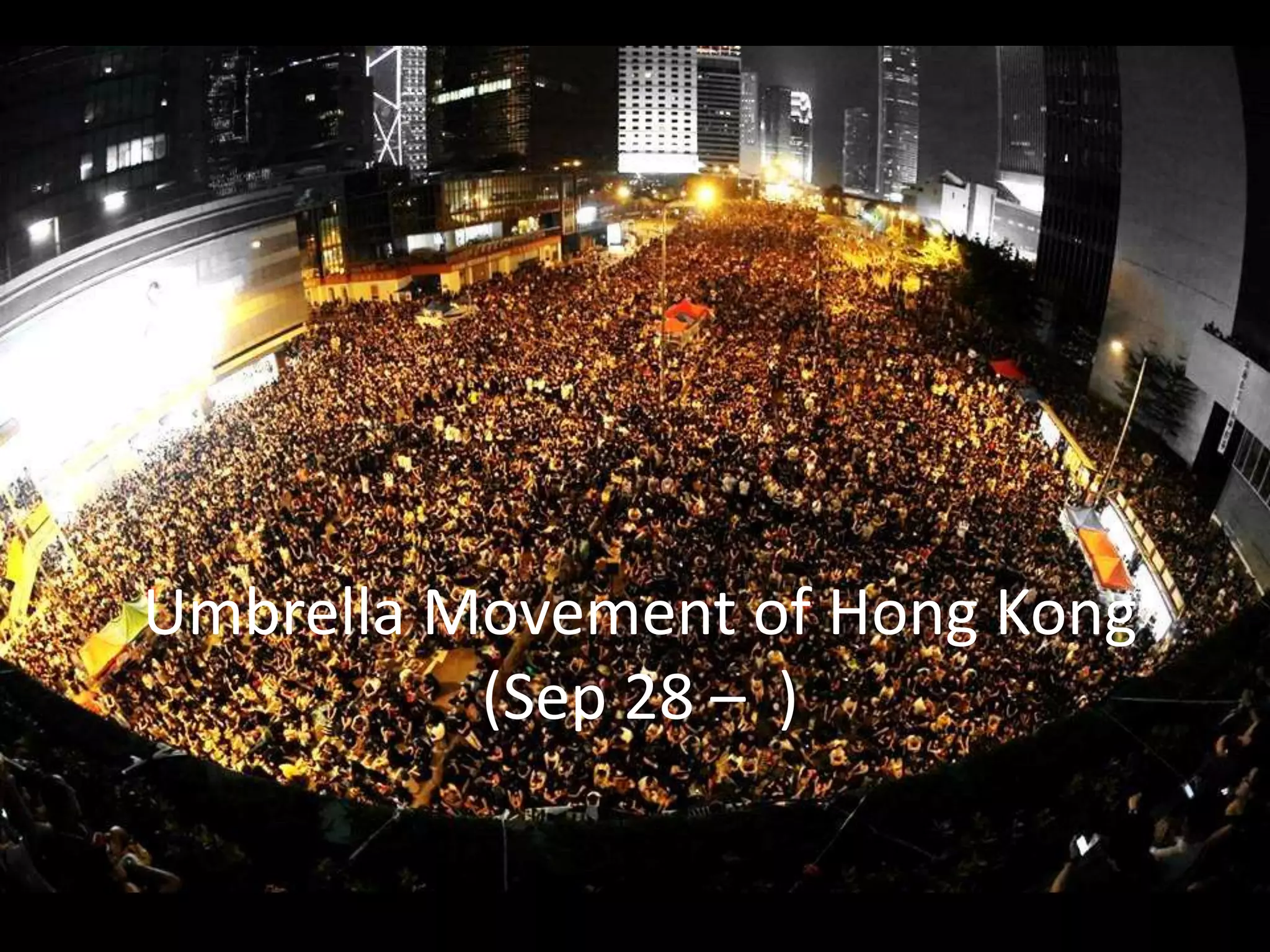
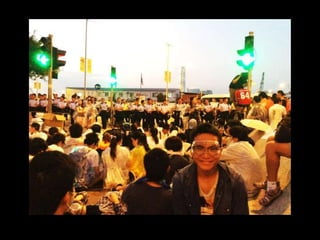
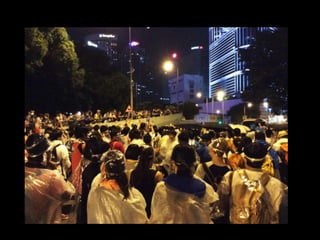
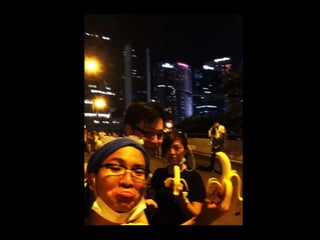
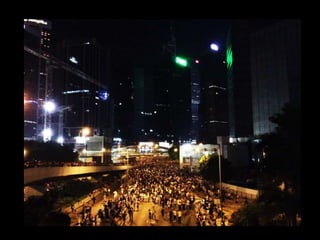
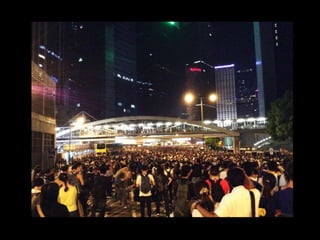
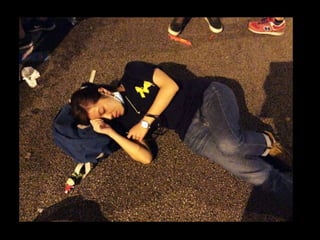
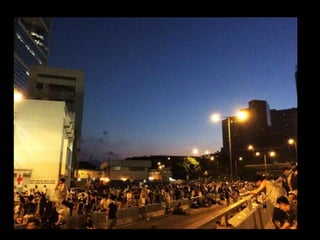
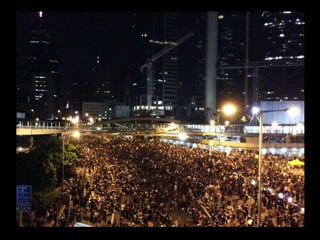
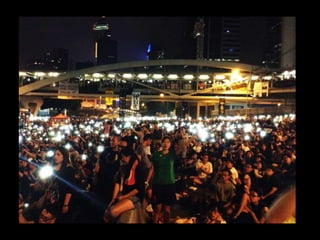
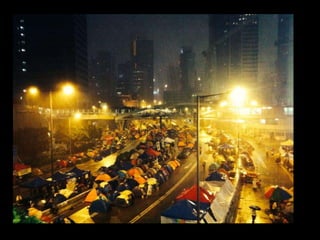
Umbrella Movement of Hong Kong
(Sep 28 – )
Background: Political
31st August 2014, Standing Committee of the
National People's Congress (NPCSC) announced
its decision on proposed electoral reform
• 1200 Pro-Beijing election Committee
nominate  then voted by Hong Kong people
• RICH BUSINESSMEN and EXISTING
POLITICIANS
• NO pro-democracy candidate can be
nominated
lBackground: Political.
- So-called universal suffrage
-  YES right to vote
-  NO right to be voted
-  NO right to be nominated
-  AGAINST our CONSTITUTION (Basic Law)
lBackground: Political.
- Legislative Council (Legco):
- 50% nominated and elected by a small group
of pro-Beijing election committee
-  Pro-democracy group has no say
Background: Economy
• Politics dominated by beneficiaries of the
system: Largest income gap in the world
• Some of the highest Real Estate Price in the
World
• Economic development dominated by Real
Estate Monopolies
• Very Low Wages
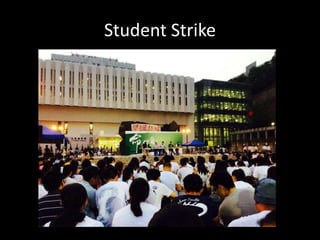
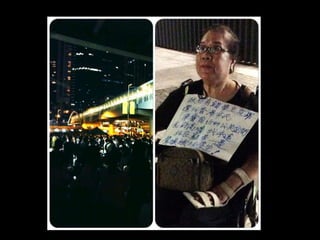
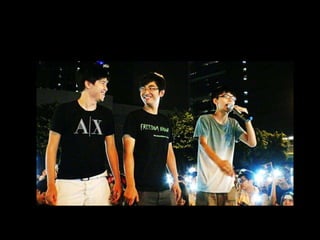
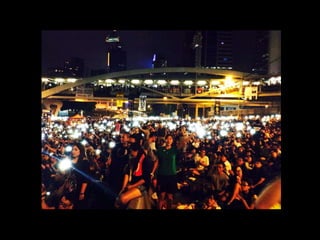
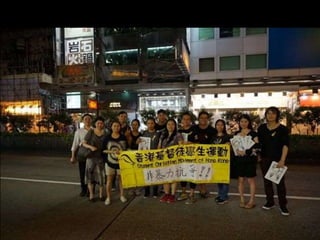
Student Strike
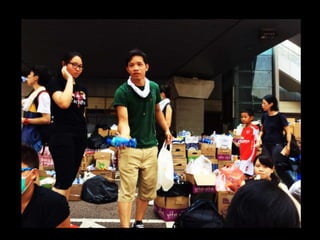
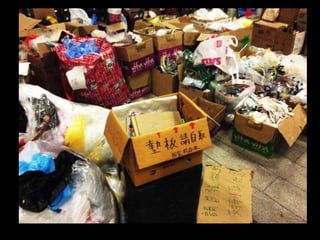
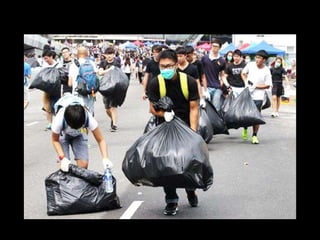
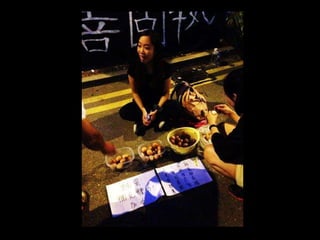
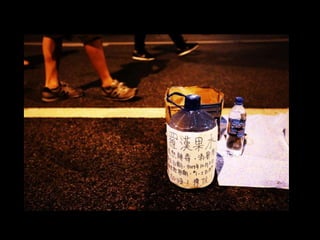
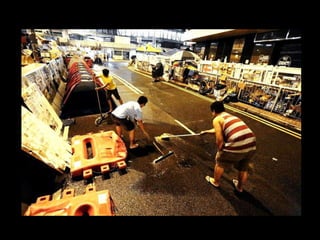
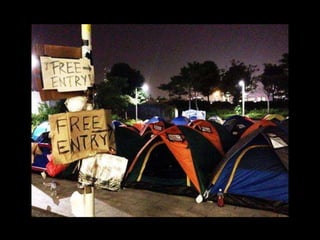
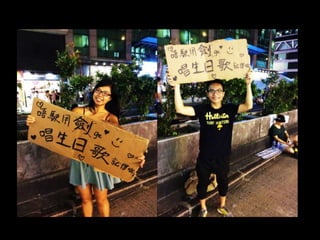
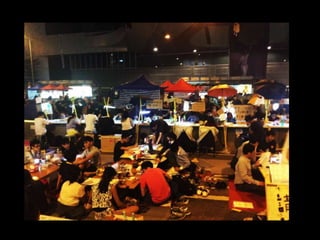
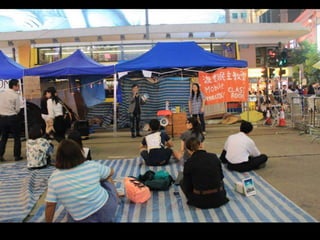
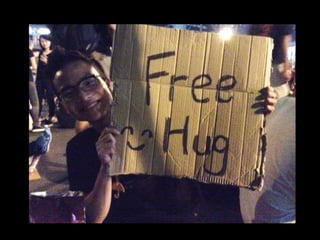
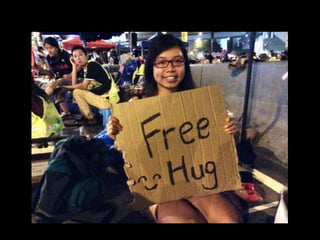
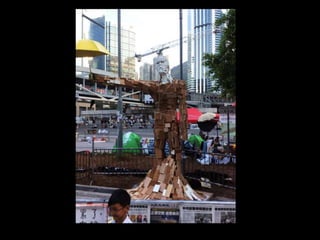
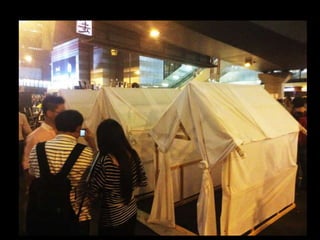
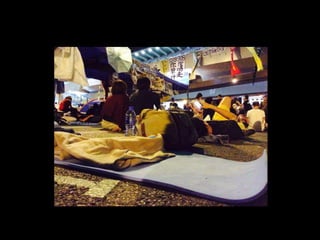
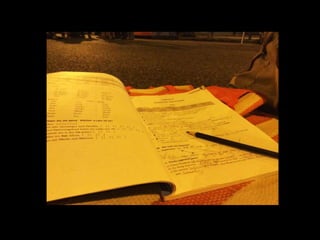
A World of Sharing and Love
Creating an Utopia of our Own
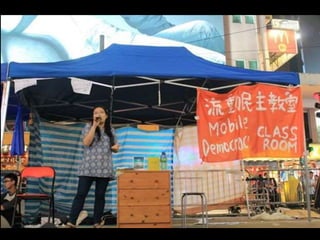
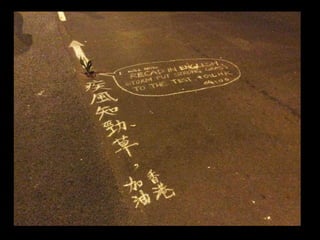
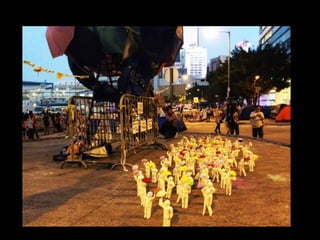
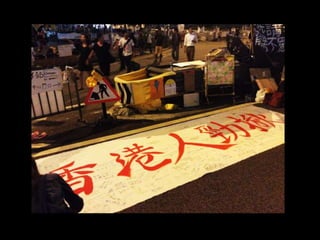
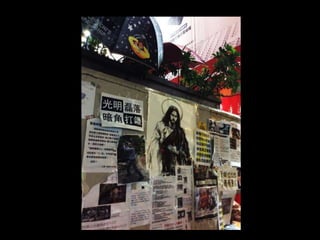
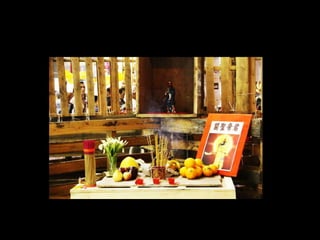
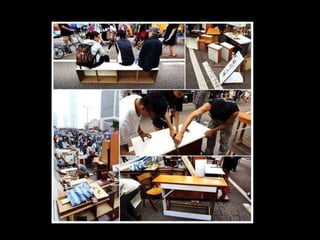
Where Art Meets Social
Movement
Creating an Utopia on Our Own
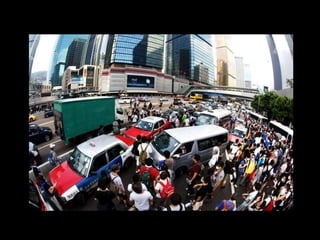
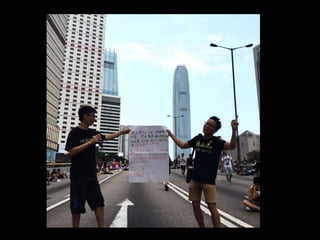
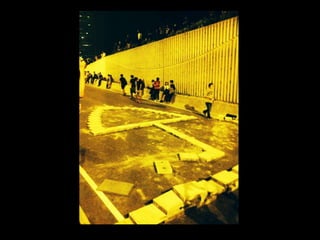
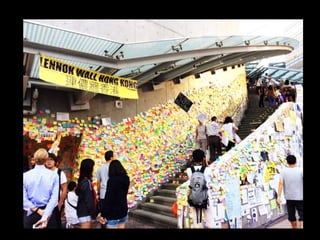
Our Works in the External World
Difficulties
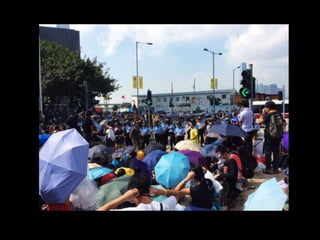
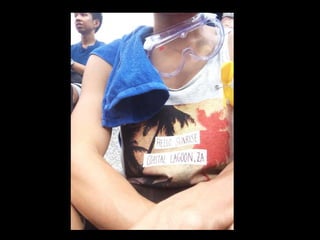
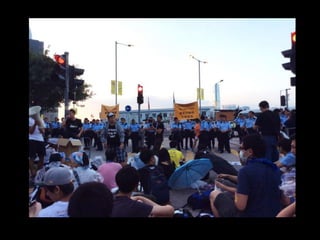
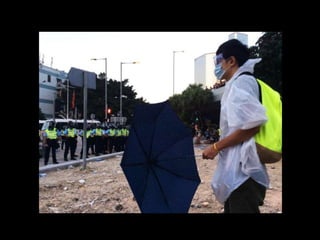
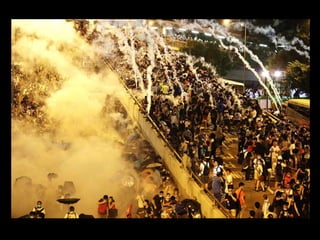
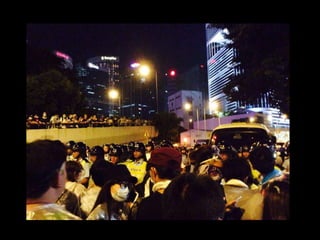
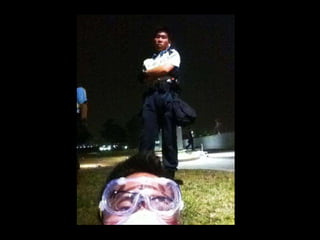
Police’s Brutality
Government’s Tough Stance
• One Negotiation with Students
• Emphasized that they could not change the
bills passed by China
• The use of Mass Media to portray students as
brutal demonstrators
• Hiring of gangsters to attack protestors and to
destroy the order of the peaceful protests
Government’s Tough Stance
• Weakening the movement by dramatizing the
conflicts between the police and the
protestors
• Refusing to negotiate/delaying negotiation so
as to accumulate tension between Occupy-
central and ANTI-occupy central protestors
• Dramatizing social division between different
social classes (the majority VS middle class)
Double-standards of Law Enforcement
• 1. Dropped the case against the police VS
arresting peaceful protestors
• 2. Violent Umbrella VS “necessary tear gas”
Significance of the Movement
• 1. Awakening of Political Consciousness
• 2. New Age of Civil Disobedience
• 3. Leadership of Students in Movements
• 4. Church Participation
• 5. An Experiment of Socialist Life
• 6. A New Age of Solidarity
• 7. Creation of Social Networks of Future
Movements
Hk Umbrella Movement (Part 1)

Hk Umbrella Movement (Part 1)

  • 1.
    Umbrella Movement ofHong Kong (Sep 28 – )
  • 2.
    Background: Political 31st August2014, Standing Committee of the National People's Congress (NPCSC) announced its decision on proposed electoral reform • 1200 Pro-Beijing election Committee nominate  then voted by Hong Kong people • RICH BUSINESSMEN and EXISTING POLITICIANS • NO pro-democracy candidate can be nominated
  • 3.
    lBackground: Political. - So-calleduniversal suffrage -  YES right to vote -  NO right to be voted -  NO right to be nominated -  AGAINST our CONSTITUTION (Basic Law)
  • 4.
    lBackground: Political. - LegislativeCouncil (Legco): - 50% nominated and elected by a small group of pro-Beijing election committee -  Pro-democracy group has no say
  • 5.
    Background: Economy • Politicsdominated by beneficiaries of the system: Largest income gap in the world • Some of the highest Real Estate Price in the World • Economic development dominated by Real Estate Monopolies • Very Low Wages
  • 6.
  • 24.
    A World ofSharing and Love Creating an Utopia of our Own
  • 45.
    Where Art MeetsSocial Movement Creating an Utopia on Our Own
  • 56.
    Our Works inthe External World
  • 65.
  • 68.
  • 70.
    Government’s Tough Stance •One Negotiation with Students • Emphasized that they could not change the bills passed by China • The use of Mass Media to portray students as brutal demonstrators • Hiring of gangsters to attack protestors and to destroy the order of the peaceful protests
  • 71.
    Government’s Tough Stance •Weakening the movement by dramatizing the conflicts between the police and the protestors • Refusing to negotiate/delaying negotiation so as to accumulate tension between Occupy- central and ANTI-occupy central protestors • Dramatizing social division between different social classes (the majority VS middle class)
  • 72.
    Double-standards of LawEnforcement • 1. Dropped the case against the police VS arresting peaceful protestors • 2. Violent Umbrella VS “necessary tear gas”
  • 73.
    Significance of theMovement • 1. Awakening of Political Consciousness • 2. New Age of Civil Disobedience • 3. Leadership of Students in Movements • 4. Church Participation • 5. An Experiment of Socialist Life • 6. A New Age of Solidarity • 7. Creation of Social Networks of Future Movements