THE SLAVE TRADE
PLANTATION SYSTEM
PRESENTER: ARDITH CONWAY
THE SLAVE TRADE
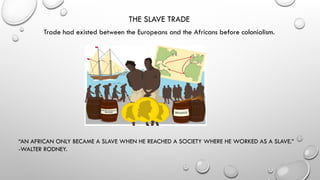
Trade had existed between the Europeans and the Africans before colonialism.
“AN AFRICAN ONLY BECAME A SLAVE WHEN HE REACHED A SOCIETY WHERE HE WORKED AS A SLAVE.”
-WALTER RODNEY.
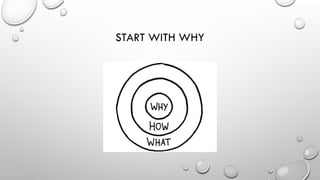
START WITH WHY
WHY?
• Europeans recognized the potential of the Americas in tropical
produce.
• Plantations systems needed a vast amount of labor.
• The indigenous Indian population died and Europe did not
possess the required labor force.
• Africans were accustomed to settled agriculture and disciplined
labor.
WHY?
• Europeans recognized the potential of the Americas in tropical
produce.
• Plantations systems needed a vast amount of labor.
• The indigenous Indian population died and Europe did not
possess the required labor force.
• Africans were accustomed to settled agriculture and disciplined
labor.
HOW?
• In some cases, the Europeans raided African villages in Western Africa.
• Mostly, Europeans exchanged manufactured goods for slaves from the
Africans themselves.
• African rulers found European goods desirable enough to hand over
captives from war as well as their own subjects.
• Obtaining slaves in order to trade to Europeans became an economic
activity.
WHAT?
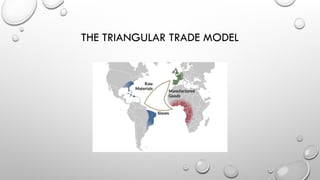
• Triangular trade usually evolves when a region has export
commodities that are not required in the region.
• The Triangular trade is a trade model, not an exact description of
the ship's route.
• It consisted of three parts.
TRIANGULAR TRADE: PART 1
• The first part of the triangle was from a European port to Africa, in
which ships carried manufactured goods.
• Typical cargo included copper, cloth, guns and ammunition.
• When the ship arrived, its cargo would be sold or traded for slaves.
TRIANGULAR TRADE: PART 2
• In the second part, ships made the journey of the Middle Passage from Africa to
the New World.
• Many slaves died due to the harsh conditions on board.
• Once the ship reached the New World, enslaved survivors were sold in the
Caribbean or the American colonies.
TRIANGULAR TRADE: PART 3
• In the third part, ships were then loaded with export goods for a
return voyage to their home port.
• Goods were mostly agricultural products produced by slaves.
• Export cargoes included sugar, rum, molasses, tobacco and hemp.
• The ship’s arrival in Europe, where the demand originated,
marked the completion of the triangle.
THE TRIANGULAR TRADE MODEL
CONSEQUENCES: ON EUROPEANS
• Walter Rodney asserted that the industrial revolution was at least
in part funded by agricultural profits from the Americas.
• Eric Williams suggested that the increase of consumption goods
called forth by that trade inevitably drew in its train the
development of the productive power of the country.
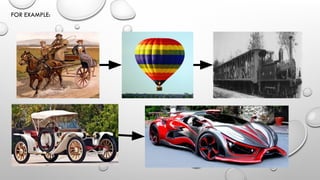
• By exploiting Africa there were able to make developments in
commercial banks, shipping, the steam engine and even simple
things such as piano keys.
FOR EXAMPLE:
CONSEQUENCES: ON AFRICANS
• Africa helped to develop Western Europe in the same proportion
as Western Europe helped to under develop Africa.
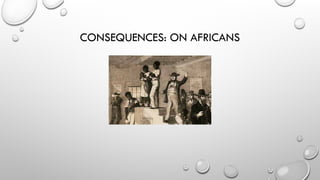
• Slaving prevented the remaining population from effectively
engaging in agriculture and industry, and it employed
professional slave hunters and warriors to destroy rather than
build.
• African economic activity was affected both directly and
indirectly by population loss.
CONSEQUENCES: ON AFRICANS
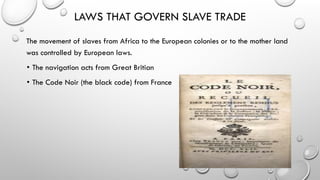
LAWS THAT GOVERN SLAVE TRADE
The movement of slaves from Africa to the European colonies or to the mother land
was controlled by European laws.
• The navigation acts from Great Britian
• The Code Noir (the black code) from France
REFERENCES
• METHODS OF TRANSPORTATION THROUGH THE CENTURIES. (2017). PREZI.COM. RETRIEVED 11
OCTOBER 2017, FROM
HTTPS://PREZI.COM/PSLTNQMJDJAF/METHODS-OF-TRANSPORTATION-THROUGH-THE-CENTU
RIES/
• NAVIGATION ACTS ***. (2017). LANDOFTHEBRAVE.INFO. RETRIEVED 11 OCTOBER 2017, FROM
HTTPS://WWW.LANDOFTHEBRAVE.INFO/NAVIGATION-ACTS.HTM
• RODNEY, W. (1973). HOW EUROPE UNDERDEVELOPED AFRICA. LONDON, U.K.: BOGLE-L’
OUVERTURE PUBLICATIONS.
• CLARKE, J. H. (1992). CHRISTOPHER COLUMBUS AND THE AFRIKAN HOLOCAUST: SLAVERY AND
RISE OF THE EUROPEAN CAPITALISM. NEW YORK, U.S.A: A &B BOOKS.
THE END
QUESTIONS PLEASE

The Atlantic Slave Trade

  • 1.
    THE SLAVE TRADE PLANTATIONSYSTEM PRESENTER: ARDITH CONWAY
  • 2.
    THE SLAVE TRADE Tradehad existed between the Europeans and the Africans before colonialism. “AN AFRICAN ONLY BECAME A SLAVE WHEN HE REACHED A SOCIETY WHERE HE WORKED AS A SLAVE.” -WALTER RODNEY.
  • 3.
  • 4.
    WHY? • Europeans recognizedthe potential of the Americas in tropical produce. • Plantations systems needed a vast amount of labor. • The indigenous Indian population died and Europe did not possess the required labor force. • Africans were accustomed to settled agriculture and disciplined labor.
  • 5.
    WHY? • Europeans recognizedthe potential of the Americas in tropical produce. • Plantations systems needed a vast amount of labor. • The indigenous Indian population died and Europe did not possess the required labor force. • Africans were accustomed to settled agriculture and disciplined labor.
  • 6.
    HOW? • In somecases, the Europeans raided African villages in Western Africa. • Mostly, Europeans exchanged manufactured goods for slaves from the Africans themselves. • African rulers found European goods desirable enough to hand over captives from war as well as their own subjects. • Obtaining slaves in order to trade to Europeans became an economic activity.
  • 7.
    WHAT? • Triangular tradeusually evolves when a region has export commodities that are not required in the region. • The Triangular trade is a trade model, not an exact description of the ship's route. • It consisted of three parts.
  • 8.
    TRIANGULAR TRADE: PART1 • The first part of the triangle was from a European port to Africa, in which ships carried manufactured goods. • Typical cargo included copper, cloth, guns and ammunition. • When the ship arrived, its cargo would be sold or traded for slaves.
  • 9.
    TRIANGULAR TRADE: PART2 • In the second part, ships made the journey of the Middle Passage from Africa to the New World. • Many slaves died due to the harsh conditions on board. • Once the ship reached the New World, enslaved survivors were sold in the Caribbean or the American colonies.
  • 10.
    TRIANGULAR TRADE: PART3 • In the third part, ships were then loaded with export goods for a return voyage to their home port. • Goods were mostly agricultural products produced by slaves. • Export cargoes included sugar, rum, molasses, tobacco and hemp. • The ship’s arrival in Europe, where the demand originated, marked the completion of the triangle.
  • 11.
  • 12.
    CONSEQUENCES: ON EUROPEANS •Walter Rodney asserted that the industrial revolution was at least in part funded by agricultural profits from the Americas. • Eric Williams suggested that the increase of consumption goods called forth by that trade inevitably drew in its train the development of the productive power of the country. • By exploiting Africa there were able to make developments in commercial banks, shipping, the steam engine and even simple things such as piano keys.
  • 13.
  • 14.
    CONSEQUENCES: ON AFRICANS •Africa helped to develop Western Europe in the same proportion as Western Europe helped to under develop Africa. • Slaving prevented the remaining population from effectively engaging in agriculture and industry, and it employed professional slave hunters and warriors to destroy rather than build. • African economic activity was affected both directly and indirectly by population loss.
  • 15.
  • 16.
    LAWS THAT GOVERNSLAVE TRADE The movement of slaves from Africa to the European colonies or to the mother land was controlled by European laws. • The navigation acts from Great Britian • The Code Noir (the black code) from France
  • 17.
    REFERENCES • METHODS OFTRANSPORTATION THROUGH THE CENTURIES. (2017). PREZI.COM. RETRIEVED 11 OCTOBER 2017, FROM HTTPS://PREZI.COM/PSLTNQMJDJAF/METHODS-OF-TRANSPORTATION-THROUGH-THE-CENTU RIES/ • NAVIGATION ACTS ***. (2017). LANDOFTHEBRAVE.INFO. RETRIEVED 11 OCTOBER 2017, FROM HTTPS://WWW.LANDOFTHEBRAVE.INFO/NAVIGATION-ACTS.HTM • RODNEY, W. (1973). HOW EUROPE UNDERDEVELOPED AFRICA. LONDON, U.K.: BOGLE-L’ OUVERTURE PUBLICATIONS. • CLARKE, J. H. (1992). CHRISTOPHER COLUMBUS AND THE AFRIKAN HOLOCAUST: SLAVERY AND RISE OF THE EUROPEAN CAPITALISM. NEW YORK, U.S.A: A &B BOOKS.
  • 18.