HIRE
PURCHASE
SYSTEM
1. MEANING
2. DEFINITION
3. FEATURES
4. IMPORTANCE
5. DIFFERENCE B/W HIRE PURCHASE AND
INSTALLMENT
MEANING
• A Hire Purchase (HP) system is a method of purchasing goods
through a combination of an initial down payment and
subsequent installment payments over a period of time. In this
system, the buyer takes possession of the goods immediately but
does not become the full owner until all the installment payments
have been made.
FEATURES
1.Down Payment: The buyer usually makes an initial deposit or down payment at the time
of the agreement.
2.Installment Payments: The remaining amount is paid in installments over a
predetermined period, typically ranging from months to years.
3.Ownership Transfer: While the buyer can use the goods during the installment period,
the legal ownership remains with the seller or finance company until the last
installment is paid.
4.Interest Charges: The buyer generally pays interest on the total price of the goods,
meaning the total amount paid will be higher than the original purchase price.
5.Option to Return: If the buyer defaults on the payments, the seller can reclaim the
goods, though this depends on the terms of the hire purchase agreement.
KEY BENEFITS
• Affordability: The buyer can spread the cost of an expensive item
over time.
• Immediate Use: The buyer can use the goods immediately while
paying for them, unlike in savings-based models where one must
wait until enough money has been saved.
• Fixed Payments: Payments are often fixed, making budgeting
easier for the buyer.
KEY DRAWBACKS
• Higher Total Cost: Due to interest charges, the buyer often ends
up paying more than the actual price of the item.
• No Ownership Until Paid Off: The buyer doesn’t own the item until
the final payment, even though they may be using it.
• Risk of Repossession: Failure to keep up with payments can lead
to the repossession of the goods.
IMPORTANCE
1.Facilitates Access to Expensive Goods
• Affordability: It enables individuals and businesses to acquire expensive items like vehicles,
machinery, electronics, or furniture without needing to pay the full price upfront.
• Immediate Use: The buyer can start using the goods right away, even though they have not yet
paid for them in full, which is especially valuable for items that are essential for daily operations
or personal use.
2. Budget-Friendly Payments
• Installment Payments: Instead of a lump sum, buyers can pay in smaller, more manageable
installments. This makes high-cost items affordable for those who may not have the necessary
upfront capital.
• Flexibility: Payment terms can often be tailored to suit the buyer’s financial situation, making it
easier to budget for payments over time.
IMPORTANCE
3. No Need for Collateral
• Unlike traditional loans, the hire purchase system usually doesn’t
require the buyer to provide additional collateral other than the
purchased item itself. The item purchased serves as security for the
financing, which is beneficial for both parties.
4. Improves Cash Flow
• Businesses: For businesses, hire purchase helps improve cash flow
because they can acquire essential assets like vehicles, equipment,
or machinery without tying up large amounts of working capital.
IMPORTANCE
• Individuals: For consumers, the system allows for the enjoyment of goods
immediately while spreading the cost over time, which helps maintain a stable
personal budget.
5. Builds Credit History
• By making regular payments on a hire purchase agreement, the buyer can build
or improve their credit history. This can be helpful for securing future loans or
financial products at better terms.
• Creditworthiness: The system can be an alternative for individuals or
businesses that do not have access to traditional credit sources, such as bank
loans.
IMPORTANCE
6.Ownership of Goods at the End
• In most hire purchase agreements, ownership of the asset is
transferred to the buyer once all the payments are completed.
This gives the buyer the long-term benefit of owning the item
they have been using.
• No Risk of Losing the Goods: As long as payments are made on
time, the buyer does not risk losing the goods or assets, unlike
rental or leasing agreements where ownership never transfers.
IMPORTANCE
7. Provides a Legal Framework for Both Parties
• The hire purchase system is typically governed by clear contractual terms, providing protection to
both the buyer and the seller. These terms outline the payment schedule, interest rates, and any
penalties for late payments.
• Consumer Protection: In many jurisdictions, hire purchase agreements are regulated by consumer
protection laws, ensuring that the terms are fair and transparent.
8. Encourages Consumer Spending and Economic Growth
• By enabling consumers to purchase goods they otherwise may not afford, the hire purchase system
stimulates consumer demand. This, in turn, drives economic growth by encouraging spending and
increasing sales for businesses.
• Business Growth: Companies offering hire purchase options can expand their customer base, which
can lead to increased sales and market share.
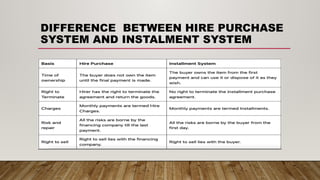
DIFFERENCE BETWEEN HIRE PURCHASE
SYSTEM AND INSTALMENT SYSTEM

HIRE PURCHASE SYSTEM -MEANING,IMPORTANCE,FEATURES

  • 1.
    HIRE PURCHASE SYSTEM 1. MEANING 2. DEFINITION 3.FEATURES 4. IMPORTANCE 5. DIFFERENCE B/W HIRE PURCHASE AND INSTALLMENT
  • 2.
    MEANING • A HirePurchase (HP) system is a method of purchasing goods through a combination of an initial down payment and subsequent installment payments over a period of time. In this system, the buyer takes possession of the goods immediately but does not become the full owner until all the installment payments have been made.
  • 3.
    FEATURES 1.Down Payment: Thebuyer usually makes an initial deposit or down payment at the time of the agreement. 2.Installment Payments: The remaining amount is paid in installments over a predetermined period, typically ranging from months to years. 3.Ownership Transfer: While the buyer can use the goods during the installment period, the legal ownership remains with the seller or finance company until the last installment is paid. 4.Interest Charges: The buyer generally pays interest on the total price of the goods, meaning the total amount paid will be higher than the original purchase price. 5.Option to Return: If the buyer defaults on the payments, the seller can reclaim the goods, though this depends on the terms of the hire purchase agreement.
  • 4.
    KEY BENEFITS • Affordability:The buyer can spread the cost of an expensive item over time. • Immediate Use: The buyer can use the goods immediately while paying for them, unlike in savings-based models where one must wait until enough money has been saved. • Fixed Payments: Payments are often fixed, making budgeting easier for the buyer.
  • 5.
    KEY DRAWBACKS • HigherTotal Cost: Due to interest charges, the buyer often ends up paying more than the actual price of the item. • No Ownership Until Paid Off: The buyer doesn’t own the item until the final payment, even though they may be using it. • Risk of Repossession: Failure to keep up with payments can lead to the repossession of the goods.
  • 6.
    IMPORTANCE 1.Facilitates Access toExpensive Goods • Affordability: It enables individuals and businesses to acquire expensive items like vehicles, machinery, electronics, or furniture without needing to pay the full price upfront. • Immediate Use: The buyer can start using the goods right away, even though they have not yet paid for them in full, which is especially valuable for items that are essential for daily operations or personal use. 2. Budget-Friendly Payments • Installment Payments: Instead of a lump sum, buyers can pay in smaller, more manageable installments. This makes high-cost items affordable for those who may not have the necessary upfront capital. • Flexibility: Payment terms can often be tailored to suit the buyer’s financial situation, making it easier to budget for payments over time.
  • 7.
    IMPORTANCE 3. No Needfor Collateral • Unlike traditional loans, the hire purchase system usually doesn’t require the buyer to provide additional collateral other than the purchased item itself. The item purchased serves as security for the financing, which is beneficial for both parties. 4. Improves Cash Flow • Businesses: For businesses, hire purchase helps improve cash flow because they can acquire essential assets like vehicles, equipment, or machinery without tying up large amounts of working capital.
  • 8.
    IMPORTANCE • Individuals: Forconsumers, the system allows for the enjoyment of goods immediately while spreading the cost over time, which helps maintain a stable personal budget. 5. Builds Credit History • By making regular payments on a hire purchase agreement, the buyer can build or improve their credit history. This can be helpful for securing future loans or financial products at better terms. • Creditworthiness: The system can be an alternative for individuals or businesses that do not have access to traditional credit sources, such as bank loans.
  • 9.
    IMPORTANCE 6.Ownership of Goodsat the End • In most hire purchase agreements, ownership of the asset is transferred to the buyer once all the payments are completed. This gives the buyer the long-term benefit of owning the item they have been using. • No Risk of Losing the Goods: As long as payments are made on time, the buyer does not risk losing the goods or assets, unlike rental or leasing agreements where ownership never transfers.
  • 10.
    IMPORTANCE 7. Provides aLegal Framework for Both Parties • The hire purchase system is typically governed by clear contractual terms, providing protection to both the buyer and the seller. These terms outline the payment schedule, interest rates, and any penalties for late payments. • Consumer Protection: In many jurisdictions, hire purchase agreements are regulated by consumer protection laws, ensuring that the terms are fair and transparent. 8. Encourages Consumer Spending and Economic Growth • By enabling consumers to purchase goods they otherwise may not afford, the hire purchase system stimulates consumer demand. This, in turn, drives economic growth by encouraging spending and increasing sales for businesses. • Business Growth: Companies offering hire purchase options can expand their customer base, which can lead to increased sales and market share.
  • 11.
    DIFFERENCE BETWEEN HIREPURCHASE SYSTEM AND INSTALMENT SYSTEM