Hire Purchase and
Lease
Contents
• Hire Purchase System
• Process of Hire Purchase
• Features of Hire Purchase
• Advantages and Disadvantages of Hire Purchase
• Contents of Hire Purchase agreement
• Installment Purchase
• Important Definitions
• Difference between Hire Purchase and Installment Purchase
• Difference between Sales and Hire Purchase
• Lease
• Features of Lease
• Merits and Demerits of Lease
• Difference between Hire Purchase and Lease
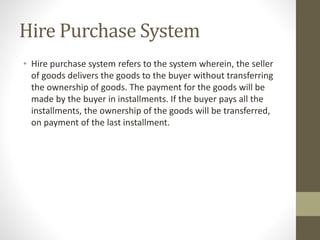
Hire Purchase System
• Hire purchase system refers to the system wherein, the seller
of goods delivers the goods to the buyer without transferring
the ownership of goods. The payment for the goods will be
made by the buyer in installments. If the buyer pays all the
installments, the ownership of the goods will be transferred,
on payment of the last installment.
Process of Hire Purchase
• The Dealer, contracts with finance co. for financing his hire
purchase deals.
• The customer selects the goods for HP, and dealer arranges for
the complete set of documents.
• Down payment by customer on completion of proposal form.
• Dealer sends documents to finance co. with request to
purchase the goods, and accept the HP transaction.
• The finance co. signs the agreement and sends copy along
with EMI details to dealer.
• Dealer delivers the goods to the customer, property passes on
to the finance co..
• Hirer pays EMIs, and on last payment , the ownership passes
on to him, with loan completion certificate by the finance co.
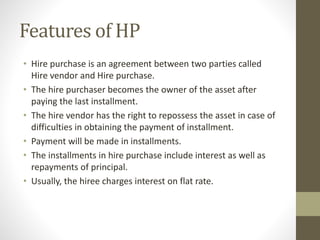
Features of HP
• Hire purchase is an agreement between two parties called
Hire vendor and Hire purchase.
• The hire purchaser becomes the owner of the asset after
paying the last installment.
• The hire vendor has the right to repossess the asset in case of
difficulties in obtaining the payment of installment.
• Payment will be made in installments.
• The installments in hire purchase include interest as well as
repayments of principal.
• Usually, the hiree charges interest on flat rate.
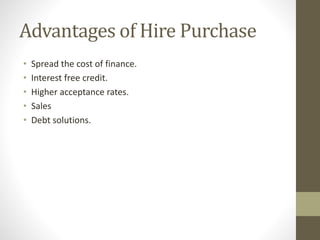
Advantages of Hire Purchase
• Spread the cost of finance.
• Interest free credit.
• Higher acceptance rates.
• Sales
• Debt solutions.
Disadvantages of HP
• Personal debt
• Final payment
• Bad credit
• Creditor enhancement.
• Repossession rights.
Contents of HP Agreement
• The date of commencement of the agreement
• The hire purchase price of the goods
• The cash price of the goods.
• Number of installments by which hire purchase price is to be
paid.
Installment Purchase Method
• Installment payment system (also called the deferred
installments) is a system where the buyer is given the
ownership as well as the possession of the goods at the time
of signing the contract. The buyer has the facility to pay the
price in installments.
Important Definitions
• Hire vendor is a person who delivers the goods to the hire
purchaser with intention to sell the goods under hire purchase
agreement.
• Cash price refers to the price at which goods are sold under
the contract of sale.
• Deposit means any sum payable by the hire purchaser under
the hire purchase agreement by way of deposit or other initial
payment or credited under the agreement
• Repossession refers to taking back of assets by the hire
vendor from the hire purchaser on the event of default in
payment of instalments by the hire purchaser.
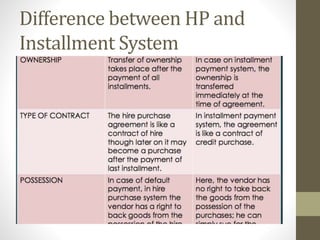
Difference between HP and
Installment System
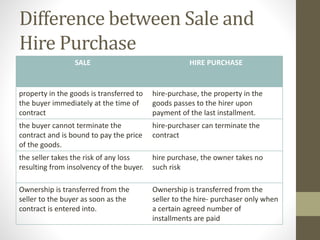
Difference between Sale and
Hire Purchase
SALE HIRE PURCHASE
property in the goods is transferred to
the buyer immediately at the time of
contract
hire-purchase, the property in the
goods passes to the hirer upon
payment of the last installment.
the buyer cannot terminate the
contract and is bound to pay the price
of the goods.
hire-purchaser can terminate the
contract
the seller takes the risk of any loss
resulting from insolvency of the buyer.
hire purchase, the owner takes no
such risk
Ownership is transferred from the
seller to the buyer as soon as the
contract is entered into.
Ownership is transferred from the
seller to the hire- purchaser only when
a certain agreed number of
installments are paid
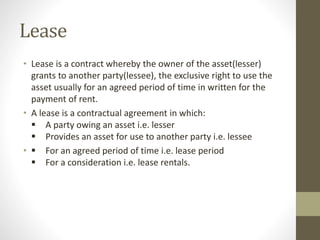
Lease
• Lease is a contract whereby the owner of the asset(lesser)
grants to another party(lessee), the exclusive right to use the
asset usually for an agreed period of time in written for the
payment of rent.
• A lease is a contractual agreement in which:
 A party owing an asset i.e. lesser
 Provides an asset for use to another party i.e. lessee
•  For an agreed period of time i.e. lease period
 For a consideration i.e. lease rentals.
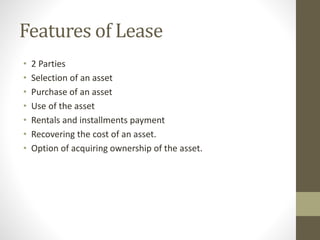
Features of Lease
• 2 Parties
• Selection of an asset
• Purchase of an asset
• Use of the asset
• Rentals and installments payment
• Recovering the cost of an asset.
• Option of acquiring ownership of the asset.
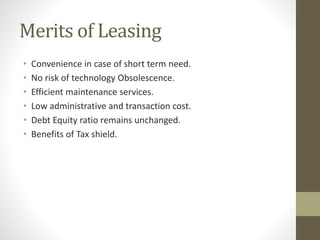
Merits of Leasing
• Convenience in case of short term need.
• No risk of technology Obsolescence.
• Efficient maintenance services.
• Low administrative and transaction cost.
• Debt Equity ratio remains unchanged.
• Benefits of Tax shield.
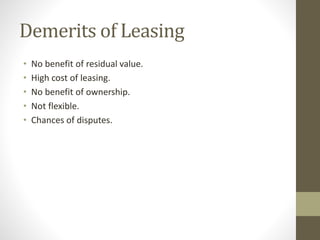
Demerits of Leasing
• No benefit of residual value.
• High cost of leasing.
• No benefit of ownership.
• Not flexible.
• Chances of disputes.
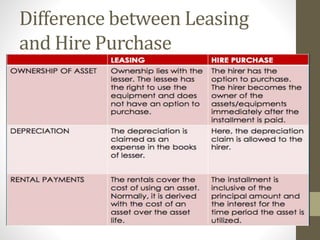
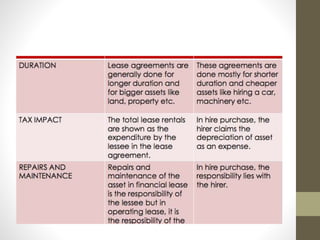
Difference between Leasing
and Hire Purchase
Hire purchase and lease

Hire purchase and lease

  • 1.
  • 2.
    Contents • Hire PurchaseSystem • Process of Hire Purchase • Features of Hire Purchase • Advantages and Disadvantages of Hire Purchase • Contents of Hire Purchase agreement • Installment Purchase • Important Definitions • Difference between Hire Purchase and Installment Purchase • Difference between Sales and Hire Purchase • Lease • Features of Lease • Merits and Demerits of Lease • Difference between Hire Purchase and Lease
  • 3.
    Hire Purchase System •Hire purchase system refers to the system wherein, the seller of goods delivers the goods to the buyer without transferring the ownership of goods. The payment for the goods will be made by the buyer in installments. If the buyer pays all the installments, the ownership of the goods will be transferred, on payment of the last installment.
  • 4.
    Process of HirePurchase • The Dealer, contracts with finance co. for financing his hire purchase deals. • The customer selects the goods for HP, and dealer arranges for the complete set of documents. • Down payment by customer on completion of proposal form. • Dealer sends documents to finance co. with request to purchase the goods, and accept the HP transaction. • The finance co. signs the agreement and sends copy along with EMI details to dealer. • Dealer delivers the goods to the customer, property passes on to the finance co.. • Hirer pays EMIs, and on last payment , the ownership passes on to him, with loan completion certificate by the finance co.
  • 5.
    Features of HP •Hire purchase is an agreement between two parties called Hire vendor and Hire purchase. • The hire purchaser becomes the owner of the asset after paying the last installment. • The hire vendor has the right to repossess the asset in case of difficulties in obtaining the payment of installment. • Payment will be made in installments. • The installments in hire purchase include interest as well as repayments of principal. • Usually, the hiree charges interest on flat rate.
  • 6.
    Advantages of HirePurchase • Spread the cost of finance. • Interest free credit. • Higher acceptance rates. • Sales • Debt solutions.
  • 7.
    Disadvantages of HP •Personal debt • Final payment • Bad credit • Creditor enhancement. • Repossession rights.
  • 8.
    Contents of HPAgreement • The date of commencement of the agreement • The hire purchase price of the goods • The cash price of the goods. • Number of installments by which hire purchase price is to be paid.
  • 9.
    Installment Purchase Method •Installment payment system (also called the deferred installments) is a system where the buyer is given the ownership as well as the possession of the goods at the time of signing the contract. The buyer has the facility to pay the price in installments.
  • 10.
    Important Definitions • Hirevendor is a person who delivers the goods to the hire purchaser with intention to sell the goods under hire purchase agreement. • Cash price refers to the price at which goods are sold under the contract of sale. • Deposit means any sum payable by the hire purchaser under the hire purchase agreement by way of deposit or other initial payment or credited under the agreement • Repossession refers to taking back of assets by the hire vendor from the hire purchaser on the event of default in payment of instalments by the hire purchaser.
  • 11.
    Difference between HPand Installment System
  • 12.
    Difference between Saleand Hire Purchase SALE HIRE PURCHASE property in the goods is transferred to the buyer immediately at the time of contract hire-purchase, the property in the goods passes to the hirer upon payment of the last installment. the buyer cannot terminate the contract and is bound to pay the price of the goods. hire-purchaser can terminate the contract the seller takes the risk of any loss resulting from insolvency of the buyer. hire purchase, the owner takes no such risk Ownership is transferred from the seller to the buyer as soon as the contract is entered into. Ownership is transferred from the seller to the hire- purchaser only when a certain agreed number of installments are paid
  • 13.
    Lease • Lease isa contract whereby the owner of the asset(lesser) grants to another party(lessee), the exclusive right to use the asset usually for an agreed period of time in written for the payment of rent. • A lease is a contractual agreement in which:  A party owing an asset i.e. lesser  Provides an asset for use to another party i.e. lessee •  For an agreed period of time i.e. lease period  For a consideration i.e. lease rentals.
  • 14.
    Features of Lease •2 Parties • Selection of an asset • Purchase of an asset • Use of the asset • Rentals and installments payment • Recovering the cost of an asset. • Option of acquiring ownership of the asset.
  • 15.
    Merits of Leasing •Convenience in case of short term need. • No risk of technology Obsolescence. • Efficient maintenance services. • Low administrative and transaction cost. • Debt Equity ratio remains unchanged. • Benefits of Tax shield.
  • 16.
    Demerits of Leasing •No benefit of residual value. • High cost of leasing. • No benefit of ownership. • Not flexible. • Chances of disputes.
  • 17.