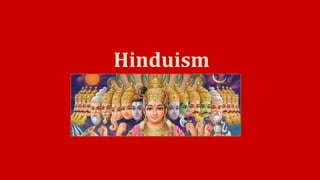
Hinduism
Introduction to Hinduism 
● Hinduism is the world’s oldest religion with its roots stretching back 4,500 years to the time of the Indus 
Valley Civilisation in North West India 
● Hinduism is the religion of the majority of people in India and Nepal. It also exists amoung significant 
populations outside of the sub continent and has over 900 million adherents worldwide. 
● Today there are more than 800 million Hindu’s 
● Hindus describe their religion as sanatana dharma, which means ‘eternal law’ or ‘eternal teaching’. For 
Hindus this is a code of duty and behaviour which affects every aspect of their daily lives 
● Most Hindus share the same basic belief. They believe in a great soul or spirit, called Brahman, which some 
Hindus call God. Braham has no visible shape or form but is present everywhere and in everything 
● There are thousands of Hindu Gods and godesses, each of which presents a different aspect of Braham’s 
power 
● Hindus believe every individual has a soul, called atman. When you die, your soul lives on or is reincarnated, 
or reborrn, in another body 
● Many Hindus visit a Mandir to worship 
● The Hindu act of worship is called puja. 
● Worshippers take offereing’s of sweets, fruit, flowers and money, which they give to the preist.
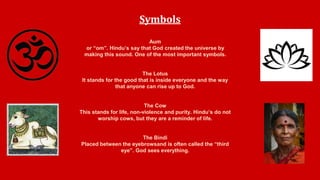
Symbols 
Aum 
or “om”. Hindu’s say that God created the universe by 
making this sound. One of the most important symbols. 
The Lotus 
It stands for the good that is inside everyone and the way 
that anyone can rise up to God. 
The Cow 
This stands for life, non-violence and purity. Hindu’s do not 
worship cows, but they are a reminder of life. 
The Bindi 
Placed between the eyebrowsand is often called the “third 
eye”. God sees everything.
God’s and Godesses 
Shiva: 
God of Mercy and compassion. He protects worshippers from evil forces such as ignorance, 
greed and anger. He is kind and brings good luck. 
Brahma: 
God of creation. Brahma’s job was creation of the world and all it’s creatures. Brahma is the 
least worshipped God in Hinduism today. 
Vishnu: 
God of preservation and protection. His job is to restore the balance of good and evil in 
troubled times. 
Vishnu’s incarnations: 
● Matsya (fish) 
● Kurma (turtle) 
● Varana (boar) 
● Narasimha (half lion half half man) 
● Vamana (dwarf sage) 
● Parasurama (hunter) 
● Rama (greatest warrior) 
● Krishna (mentally advanced) 
● Buddha (all knowing one)
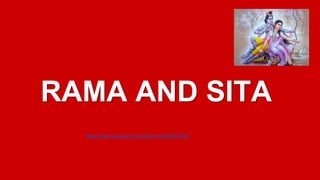
RAMA AND SITA 
https://www.youtube.com/watch?v=pp59n0So-XE
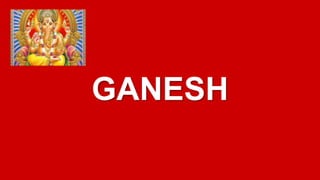
GANESH
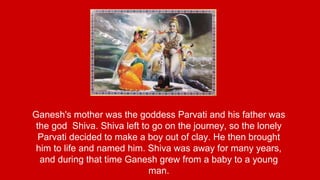
Ganesh's mother was the goddess Parvati and his father was 
the god Shiva. Shiva left to go on the journey, so the lonely 
Parvati decided to make a boy out of clay. He then brought 
him to life and named him. Shiva was away for many years, 
and during that time Ganesh grew from a baby to a young 
man.
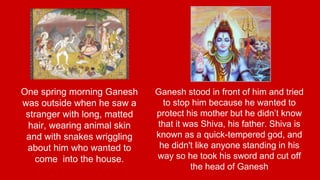
One spring morning Ganesh 
was outside when he saw a 
stranger with long, matted 
hair, wearing animal skin 
and with snakes wriggling 
about him who wanted to 
come into the house. 
Ganesh stood in front of him and tried 
to stop him because he wanted to 
protect his mother but he didn’t know 
that it was Shiva, his father. Shiva is 
known as a quick-tempered god, and 
he didn't like anyone standing in his 
way so he took his sword and cut off 
the head of Ganesh
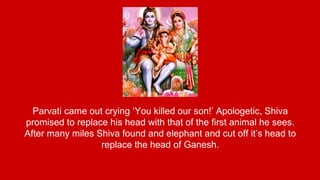
Parvati came out crying ‘You killed our son!’ Apologetic, Shiva 
promised to replace his head with that of the first animal he sees. 
After many miles Shiva found and elephant and cut off it’s head to 
replace the head of Ganesh.
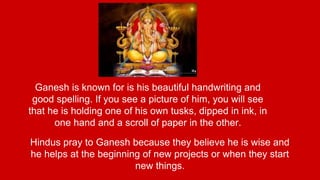
Ganesh is known for is his beautiful handwriting and 
good spelling. If you see a picture of him, you will see 
that he is holding one of his own tusks, dipped in ink, in 
one hand and a scroll of paper in the other. 
Hindus pray to Ganesh because they believe he is wise and 
he helps at the beginning of new projects or when they start 
new things.
Festivals 
Diwali 
● There are many reasons why Diwali is celebrated. Many Hindus remember the ancient story of Rama 
and Sita, told in the Ramayana, one of the most sacred Hindu texts. 
● Diwali is also a time when Hindus, especially those from business communities, worship Lakshmi, the 
goddess of wealth and fortune 
● Diwali is at the start of the new year 
● In India, Diwali is traditional celebrated over five days in October or November, each sih its own 
customs and ceremonies 
● In other countries, such as Britain, celebrations usually take place over the nearest weekend 
● Joyful, popular festival. People exchange cards and gifts of sweets, jewellery and new clothes 
● Visit the Mandie for Diwali puja or perform puja at home 
● Diwali is the festival of lights 
● People decorate their homes and mandirs with divas, small clay lamps filled with oil. The divas are 
intended to guide Rama and Sita safely home, and to welcome Lakshmi.
Holi 
● Holi celebrates the coming of spring, usually in February or March and begins with the siting 
of the full moon. 
● Traditionally the full moon signifies when the farmers in northern India brought in the first 
wheat harvest of the year. 
● The festival has connections with the god, Krishna. 
● The festival usually lasts 2-3 days in India and for one day only in Britain (usually at the 
weekend.) 
● On the first night of Holi - Bonfires are lit as a reminder of the story of Holika and to signify 
how good triumps over evil. 
● They gather round the fire and throw coconuts and rice into the flames as offerings to the 
gods. 
● Another ritual they may do is spray each other with coloured paints and powder. This is to 
remind people of the story of how mischief-loving Krishna once drenched his friends. 
Diwalli ⇨ ⇦ Holi

Hinduism presentation

  • 1.
  • 2.
    Introduction to Hinduism ● Hinduism is the world’s oldest religion with its roots stretching back 4,500 years to the time of the Indus Valley Civilisation in North West India ● Hinduism is the religion of the majority of people in India and Nepal. It also exists amoung significant populations outside of the sub continent and has over 900 million adherents worldwide. ● Today there are more than 800 million Hindu’s ● Hindus describe their religion as sanatana dharma, which means ‘eternal law’ or ‘eternal teaching’. For Hindus this is a code of duty and behaviour which affects every aspect of their daily lives ● Most Hindus share the same basic belief. They believe in a great soul or spirit, called Brahman, which some Hindus call God. Braham has no visible shape or form but is present everywhere and in everything ● There are thousands of Hindu Gods and godesses, each of which presents a different aspect of Braham’s power ● Hindus believe every individual has a soul, called atman. When you die, your soul lives on or is reincarnated, or reborrn, in another body ● Many Hindus visit a Mandir to worship ● The Hindu act of worship is called puja. ● Worshippers take offereing’s of sweets, fruit, flowers and money, which they give to the preist.
  • 3.
    Symbols Aum or“om”. Hindu’s say that God created the universe by making this sound. One of the most important symbols. The Lotus It stands for the good that is inside everyone and the way that anyone can rise up to God. The Cow This stands for life, non-violence and purity. Hindu’s do not worship cows, but they are a reminder of life. The Bindi Placed between the eyebrowsand is often called the “third eye”. God sees everything.
  • 4.
    God’s and Godesses Shiva: God of Mercy and compassion. He protects worshippers from evil forces such as ignorance, greed and anger. He is kind and brings good luck. Brahma: God of creation. Brahma’s job was creation of the world and all it’s creatures. Brahma is the least worshipped God in Hinduism today. Vishnu: God of preservation and protection. His job is to restore the balance of good and evil in troubled times. Vishnu’s incarnations: ● Matsya (fish) ● Kurma (turtle) ● Varana (boar) ● Narasimha (half lion half half man) ● Vamana (dwarf sage) ● Parasurama (hunter) ● Rama (greatest warrior) ● Krishna (mentally advanced) ● Buddha (all knowing one)
  • 5.
    RAMA AND SITA https://www.youtube.com/watch?v=pp59n0So-XE
  • 6.
  • 7.
    Ganesh's mother wasthe goddess Parvati and his father was the god Shiva. Shiva left to go on the journey, so the lonely Parvati decided to make a boy out of clay. He then brought him to life and named him. Shiva was away for many years, and during that time Ganesh grew from a baby to a young man.
  • 8.
    One spring morningGanesh was outside when he saw a stranger with long, matted hair, wearing animal skin and with snakes wriggling about him who wanted to come into the house. Ganesh stood in front of him and tried to stop him because he wanted to protect his mother but he didn’t know that it was Shiva, his father. Shiva is known as a quick-tempered god, and he didn't like anyone standing in his way so he took his sword and cut off the head of Ganesh
  • 9.
    Parvati came outcrying ‘You killed our son!’ Apologetic, Shiva promised to replace his head with that of the first animal he sees. After many miles Shiva found and elephant and cut off it’s head to replace the head of Ganesh.
  • 10.
    Ganesh is knownfor is his beautiful handwriting and good spelling. If you see a picture of him, you will see that he is holding one of his own tusks, dipped in ink, in one hand and a scroll of paper in the other. Hindus pray to Ganesh because they believe he is wise and he helps at the beginning of new projects or when they start new things.
  • 11.
    Festivals Diwali ●There are many reasons why Diwali is celebrated. Many Hindus remember the ancient story of Rama and Sita, told in the Ramayana, one of the most sacred Hindu texts. ● Diwali is also a time when Hindus, especially those from business communities, worship Lakshmi, the goddess of wealth and fortune ● Diwali is at the start of the new year ● In India, Diwali is traditional celebrated over five days in October or November, each sih its own customs and ceremonies ● In other countries, such as Britain, celebrations usually take place over the nearest weekend ● Joyful, popular festival. People exchange cards and gifts of sweets, jewellery and new clothes ● Visit the Mandie for Diwali puja or perform puja at home ● Diwali is the festival of lights ● People decorate their homes and mandirs with divas, small clay lamps filled with oil. The divas are intended to guide Rama and Sita safely home, and to welcome Lakshmi.
  • 12.
    Holi ● Holicelebrates the coming of spring, usually in February or March and begins with the siting of the full moon. ● Traditionally the full moon signifies when the farmers in northern India brought in the first wheat harvest of the year. ● The festival has connections with the god, Krishna. ● The festival usually lasts 2-3 days in India and for one day only in Britain (usually at the weekend.) ● On the first night of Holi - Bonfires are lit as a reminder of the story of Holika and to signify how good triumps over evil. ● They gather round the fire and throw coconuts and rice into the flames as offerings to the gods. ● Another ritual they may do is spray each other with coloured paints and powder. This is to remind people of the story of how mischief-loving Krishna once drenched his friends. Diwalli ⇨ ⇦ Holi