High Risk Neonate
Respiratory Distress Syndrome Most frequently affects premature births Deficiency of surfactant which leads to atelectasis Leads to collapsed alveoli Goal is to prevent preterm birth
Silverman Anderson Index
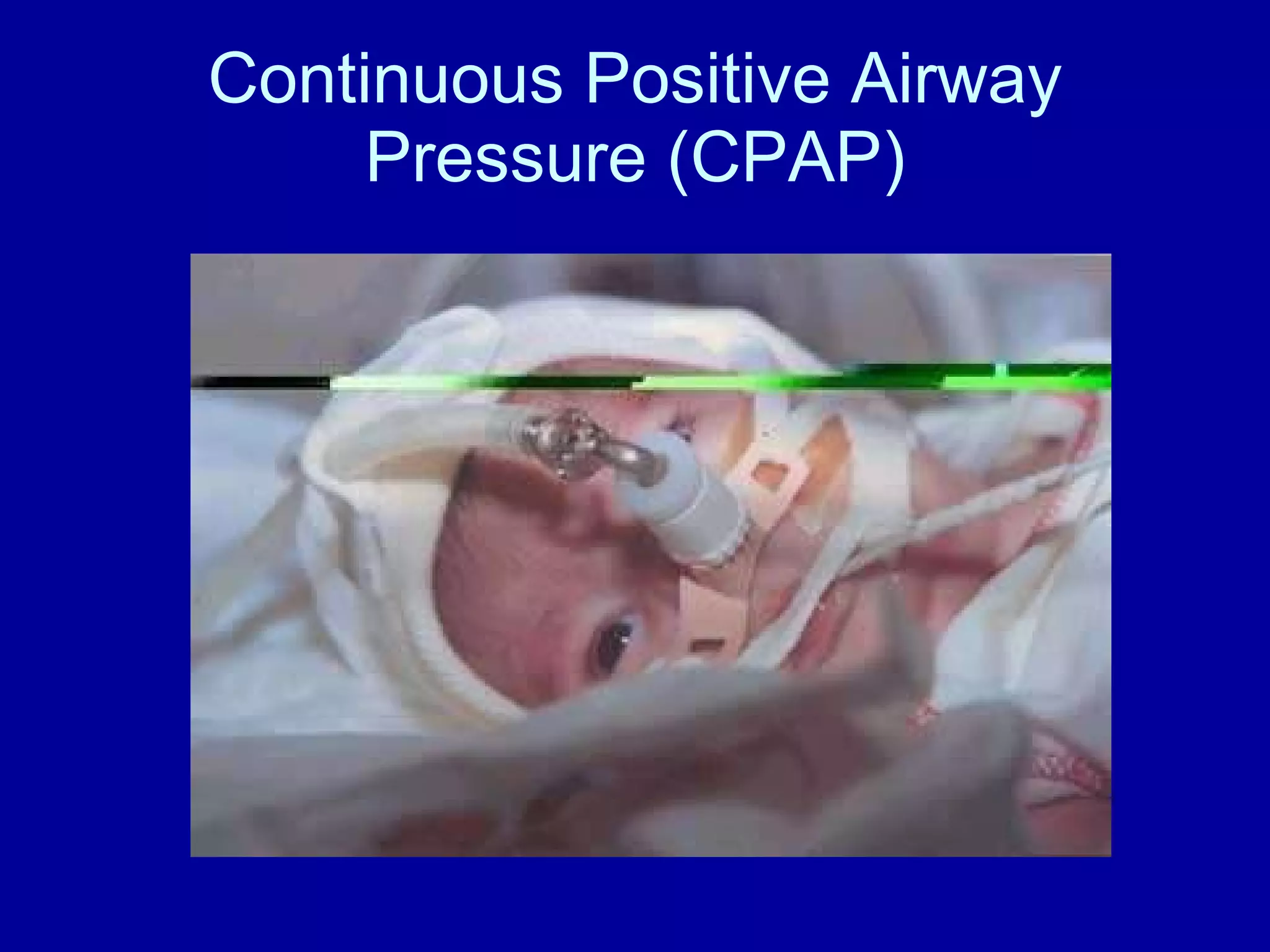
Continuous Positive Airway Pressure (CPAP)
Broncopulmonary Dysplasia Compilcation of RDS Long term lung disease Damage to alveolar secondary to ventilation
Meconium Aspiration Syndrome Meconium enters the lungs Airway obstruction Air gets in but cannot get out Overdistended alveoli leads to rupture
Cold Stress Excessive heat loss resulting in use of compensatory mechanisms S&S: tachypnea decreased temperature tremors irritable
Birth trauma Injury sustained during labor and delivery Assess neonate: symmetry mobility bulging fontanells
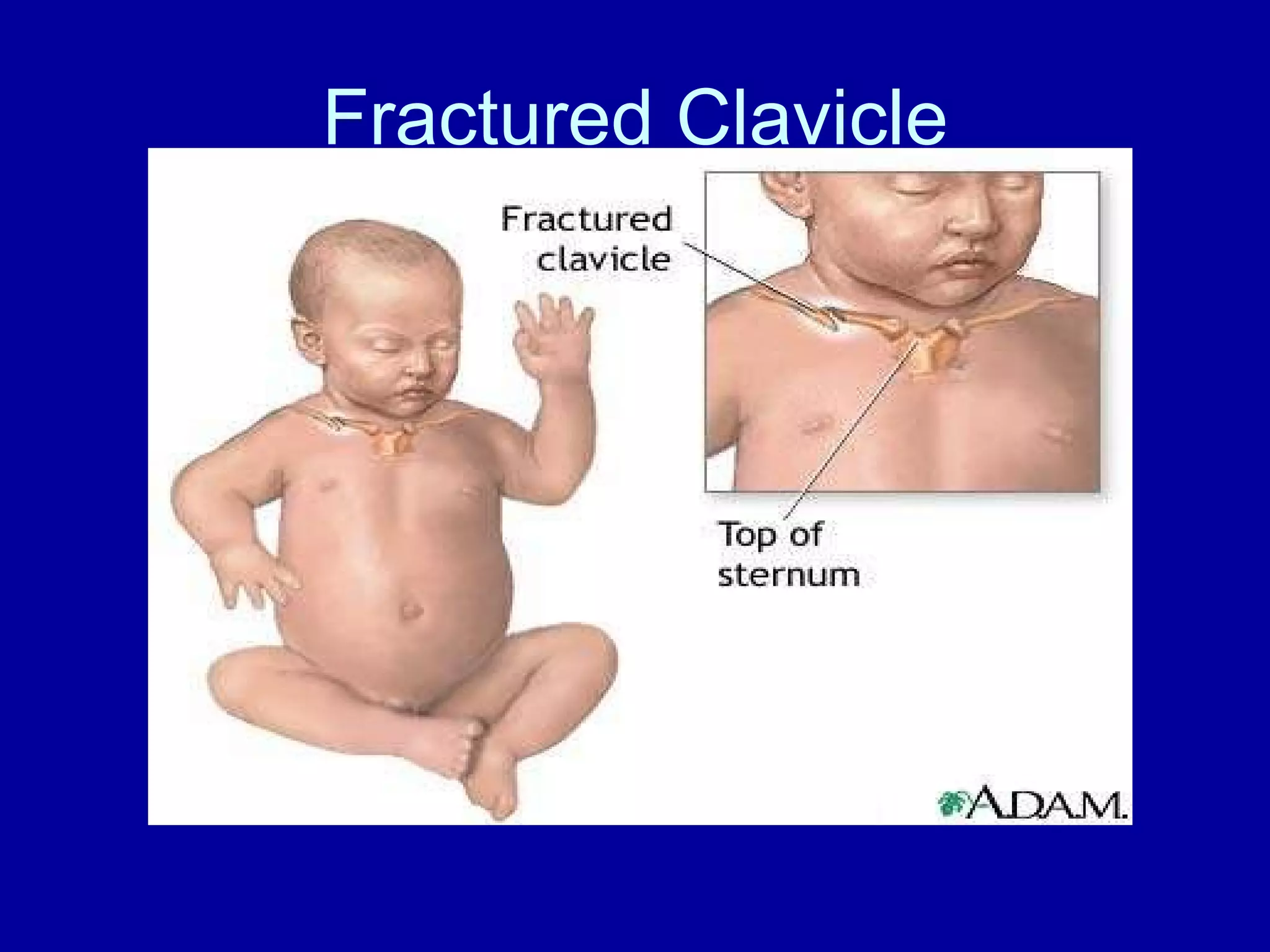
Fractured Clavicle
Erb Duchane Paralysis
Cephalhematoma
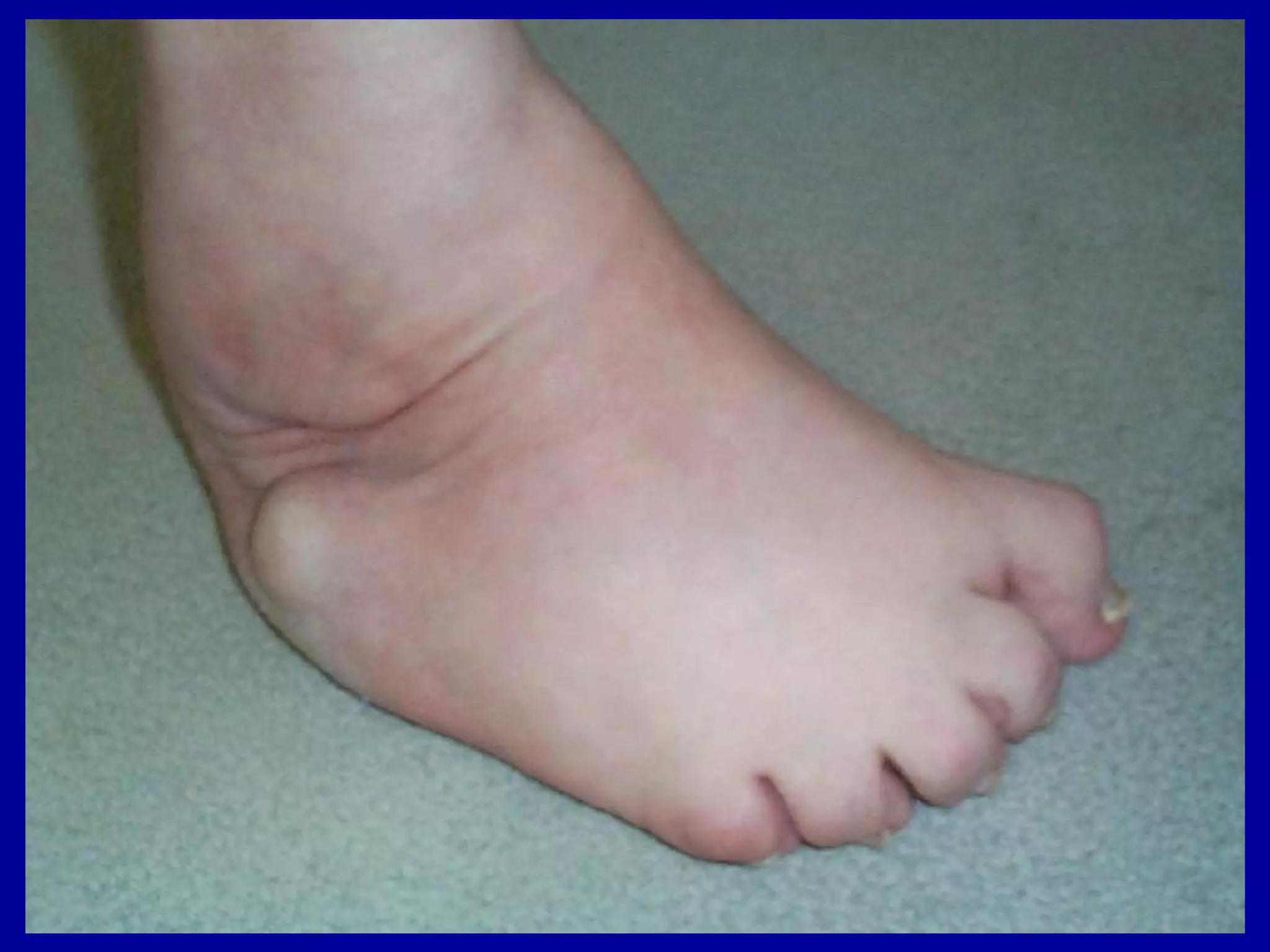
Talipes Equinovarus Heel turned inward Sole is flexed Achilles tendon shortened Unilateral or bilateral
 
Congenital Hip Dysplasia Imperfect development of the hip Can affect the femoral head, the acetabulum or both Preluxation, subluxation, dislocation Allis sign Ortalani manuever
Impeforated Anus Congenital defect Absence of meconium Requires surgical intervention
Retinopathy of Prematurity Due to immaturity of developing blood vessels Associated with excessive oxygen treatment Weekly optho exams Laser abnormal vessels
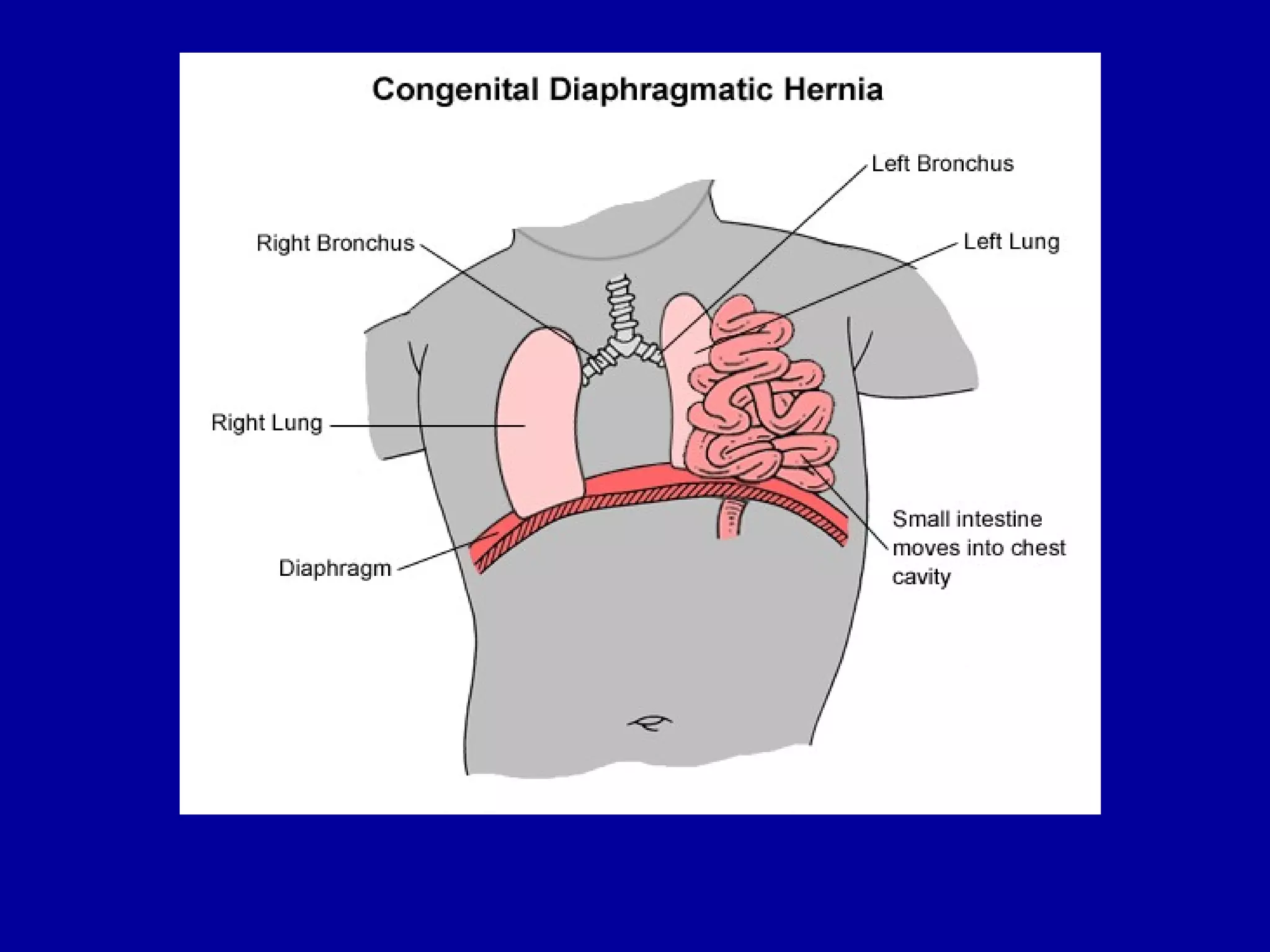
Diaphragmatic Hernia Failure of the pleuroperitoneal folds to fuse Lungs cannot expand Stomach contents in chest cavity Diagnosed by x-ray
 
Sepsis Neonatorum Systemic infection of the bloodstream Immature immune system Fewer antibodies Blood brain-barrier less effective in keeping organisms out thus CNS infections may result Causes: GBS, E-Coli are the most common
Necrotizing Enterocolitis Acute inflammatory bowel disorder Ischemia and necrosis LBW S&S: abd distention, vomiting, decreased bowel sounds, stool occult blood, gastric residule, poor color
Small for Gestational Age Below the 10 th  percentile on growth chart May be preterm, full term, or postterm SGA and IUGR Symmetrical – caused by long term maternal problem or fetal genetic anomaly Asymmetrical – problem after 28 weeks gestation
Preterm Neonate Appearance frail, limp, extended position, lack subcutaneous fat, translucent skin, nipples barely visible, plantar creases absent, abundant vernix and lanugo, flat pinna Associated problems: ROP,RDS,BPD,NEC,cold stress, hyperbilirubemia, apnea,
Nursing Interventions Respiratory status – CPAP, oxygen , suction, position changes to drain secretions Maintain hydration, fluid electrolyte balance Maintain thermoregulation Skin integrity Pain assessment Promote rest, motor development Readiness for feeding Facilitate interactions
Large for Gestational Age Above 90 th  percentile on growth chart General appearance – fat, puffy, cherub like Associated problems – birth trauma, hypoglycemia, polycythemia
Postterm  Beyond 42 weeks about 7% of all pregnancies Characteristics: dry skin, no vernix or lanugo, long nails, increased sole creases Weights vary
Postmature Beyond 42 weeks and placental insuffiency Not all postterm are postmature Associated problems: MAS, polycthemia, hypoglycemia
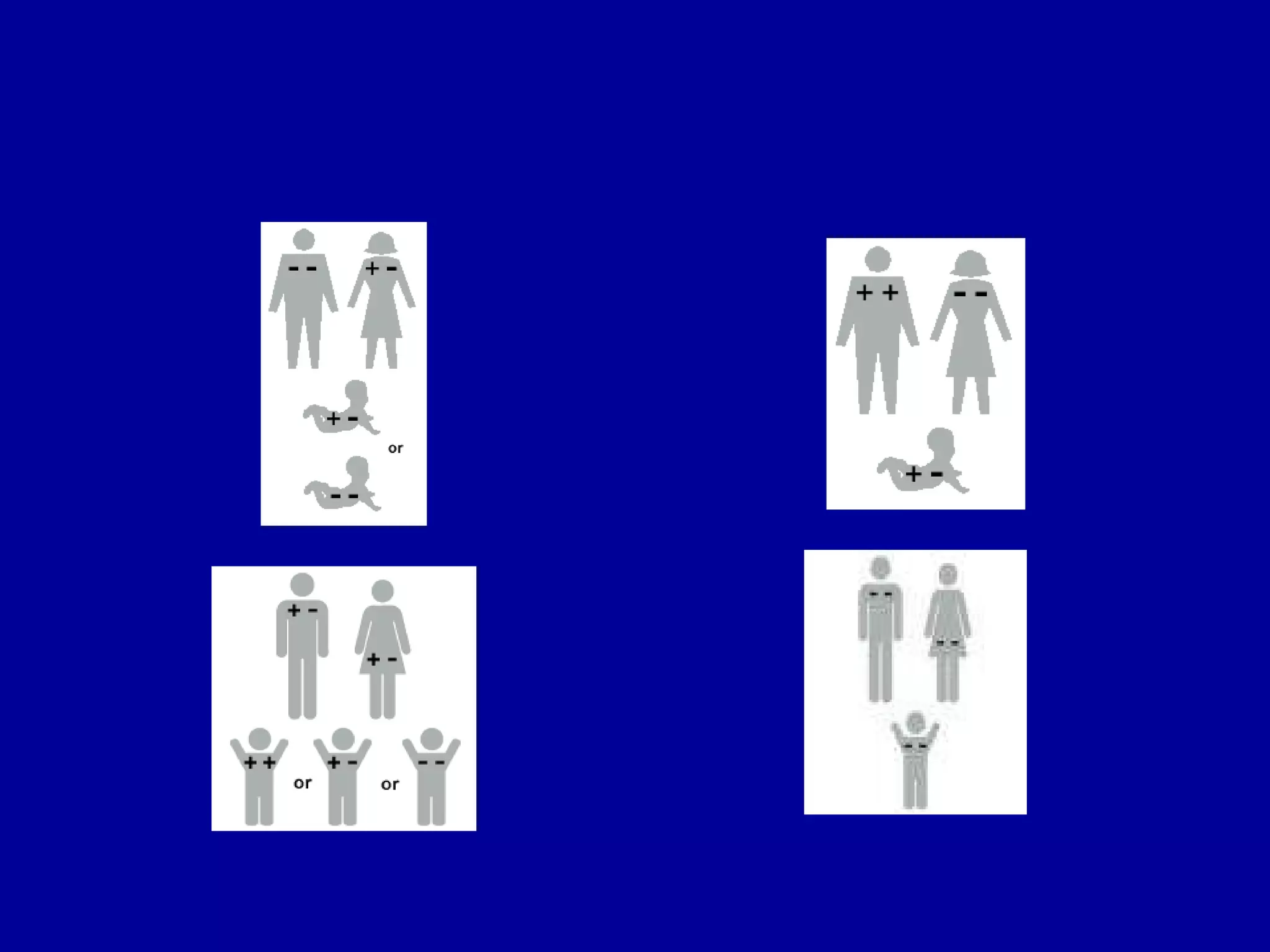
Rh Isoimmunization RH – woman carries an Rh + fetus Mother can produce antibodies (become sensitized) to Rh+ blood These antibodies would cross the placenta and destroy the fetus’ RBC
 
 
Fetal Amenia Erythroblastosis fetalis Hydrops fetalis
Prevention Screen all women at first PNV Indirect coombs – determines if the RH- woman has been sensitized to the Rh antigen If sensitized then titers every 2 weeks will be done
If not sensitized the we want to keep it that way RhoGam at 28 weeks Postpartum again if needed
RhoGam IM deltoid Pain at site Kleihauer- Bletke test if needed to determine amt of RhoGam to be given
ABO Incomatibility Common Rarely causes problems Mostly type O mom with an A or B fetus No relationship between # of pregnancies and degree of the disease No antepartum treatment Neonate may require bili lights and rarely exchange transfusion
Domestic Violence 1:4 women have been raped or abused by a partner Control and Power Cycle of Violence
Effects of abuse on pregnancy Start PNC late or no PNC STD’s Missed appointments Low weight gain
Nursing Responsibilities Empower women!!! Make it clear she owns her own body!!! She decides how she wants to be treated!! Ask the question of all your patients?????
 

High Risk Neonate

  • 1.
  • 2.
    Respiratory Distress SyndromeMost frequently affects premature births Deficiency of surfactant which leads to atelectasis Leads to collapsed alveoli Goal is to prevent preterm birth
  • 3.
  • 4.
  • 5.
    Broncopulmonary Dysplasia Compilcationof RDS Long term lung disease Damage to alveolar secondary to ventilation
  • 6.
    Meconium Aspiration SyndromeMeconium enters the lungs Airway obstruction Air gets in but cannot get out Overdistended alveoli leads to rupture
  • 7.
    Cold Stress Excessiveheat loss resulting in use of compensatory mechanisms S&S: tachypnea decreased temperature tremors irritable
  • 8.
    Birth trauma Injurysustained during labor and delivery Assess neonate: symmetry mobility bulging fontanells
  • 9.
  • 10.
  • 11.
  • 12.
    Talipes Equinovarus Heelturned inward Sole is flexed Achilles tendon shortened Unilateral or bilateral
  • 13.
  • 14.
    Congenital Hip DysplasiaImperfect development of the hip Can affect the femoral head, the acetabulum or both Preluxation, subluxation, dislocation Allis sign Ortalani manuever
  • 15.
    Impeforated Anus Congenitaldefect Absence of meconium Requires surgical intervention
  • 16.
    Retinopathy of PrematurityDue to immaturity of developing blood vessels Associated with excessive oxygen treatment Weekly optho exams Laser abnormal vessels
  • 17.
    Diaphragmatic Hernia Failureof the pleuroperitoneal folds to fuse Lungs cannot expand Stomach contents in chest cavity Diagnosed by x-ray
  • 18.
  • 19.
    Sepsis Neonatorum Systemicinfection of the bloodstream Immature immune system Fewer antibodies Blood brain-barrier less effective in keeping organisms out thus CNS infections may result Causes: GBS, E-Coli are the most common
  • 20.
    Necrotizing Enterocolitis Acuteinflammatory bowel disorder Ischemia and necrosis LBW S&S: abd distention, vomiting, decreased bowel sounds, stool occult blood, gastric residule, poor color
  • 21.
    Small for GestationalAge Below the 10 th percentile on growth chart May be preterm, full term, or postterm SGA and IUGR Symmetrical – caused by long term maternal problem or fetal genetic anomaly Asymmetrical – problem after 28 weeks gestation
  • 22.
    Preterm Neonate Appearancefrail, limp, extended position, lack subcutaneous fat, translucent skin, nipples barely visible, plantar creases absent, abundant vernix and lanugo, flat pinna Associated problems: ROP,RDS,BPD,NEC,cold stress, hyperbilirubemia, apnea,
  • 23.
    Nursing Interventions Respiratorystatus – CPAP, oxygen , suction, position changes to drain secretions Maintain hydration, fluid electrolyte balance Maintain thermoregulation Skin integrity Pain assessment Promote rest, motor development Readiness for feeding Facilitate interactions
  • 24.
    Large for GestationalAge Above 90 th percentile on growth chart General appearance – fat, puffy, cherub like Associated problems – birth trauma, hypoglycemia, polycythemia
  • 25.
    Postterm Beyond42 weeks about 7% of all pregnancies Characteristics: dry skin, no vernix or lanugo, long nails, increased sole creases Weights vary
  • 26.
    Postmature Beyond 42weeks and placental insuffiency Not all postterm are postmature Associated problems: MAS, polycthemia, hypoglycemia
  • 27.
    Rh Isoimmunization RH– woman carries an Rh + fetus Mother can produce antibodies (become sensitized) to Rh+ blood These antibodies would cross the placenta and destroy the fetus’ RBC
  • 28.
  • 29.
  • 30.
    Fetal Amenia Erythroblastosisfetalis Hydrops fetalis
  • 31.
    Prevention Screen allwomen at first PNV Indirect coombs – determines if the RH- woman has been sensitized to the Rh antigen If sensitized then titers every 2 weeks will be done
  • 32.
    If not sensitizedthe we want to keep it that way RhoGam at 28 weeks Postpartum again if needed
  • 33.
    RhoGam IM deltoidPain at site Kleihauer- Bletke test if needed to determine amt of RhoGam to be given
  • 34.
    ABO Incomatibility CommonRarely causes problems Mostly type O mom with an A or B fetus No relationship between # of pregnancies and degree of the disease No antepartum treatment Neonate may require bili lights and rarely exchange transfusion
  • 35.
    Domestic Violence 1:4women have been raped or abused by a partner Control and Power Cycle of Violence
  • 36.
    Effects of abuseon pregnancy Start PNC late or no PNC STD’s Missed appointments Low weight gain
  • 37.
    Nursing Responsibilities Empowerwomen!!! Make it clear she owns her own body!!! She decides how she wants to be treated!! Ask the question of all your patients?????
  • 38.