HERNIA
Definition of Hernia
A hernia occurs when an internal part of the body pushes through a weakness in
the muscle or surrounding tissue wall. This condition can lead to discomfort and
serious health risks if not addressed promptly. Hernias are often categorized
based on their location and cause.
Types of Hernias
Hernias can be classified into several types based on their anatomical location
and underlying causes:
1. Inguinal Hernia
Description: Occurs in the groin area when tissue, such as part of the intestine,
protrudes through a weak spot in the abdominal muscles.
Prevalence: The most common type, particularly among men.
2. Femoral Hernia
Description: Occurs just below the groin, where fatty tissue or a part of the
intestine protrudes through a weak spot in the femoral canal.
Risk Factors: More common in women, especially those who are pregnant or
obese.
3. Umbilical Hernia
Description: Occurs when tissue bulges through the abdominal wall near the
belly button.
Commonality: Frequently seen in infants but can also occur in adults.
4. Incisional Hernia
Description: Develops through a scar or incision from previous surgery.
Risk Factors: Increased risk with obesity, smoking, and poor wound healing.
5. Hiatal Hernia
Description: Occurs when part of the stomach pushes up through the diaphragm
into the chest cavity.
Symptoms: Often associated with gastroesophageal reflux disease (GERD).
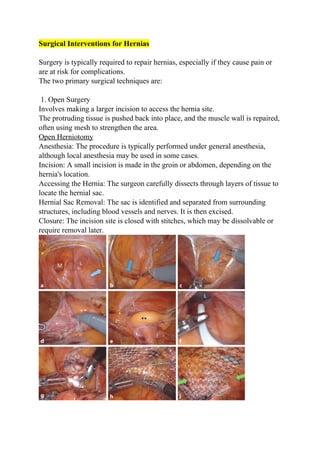
Surgical Interventions for Hernias
Surgery is typically required to repair hernias, especially if they cause pain or
are at risk for complications.
The two primary surgical techniques are:
1. Open Surgery
Involves making a larger incision to access the hernia site.
The protruding tissue is pushed back into place, and the muscle wall is repaired,
often using mesh to strengthen the area.
Open Herniotomy
Anesthesia: The procedure is typically performed under general anesthesia,
although local anesthesia may be used in some cases.
Incision: A small incision is made in the groin or abdomen, depending on the
hernia's location.
Accessing the Hernia: The surgeon carefully dissects through layers of tissue to
locate the hernial sac.
Hernial Sac Removal: The sac is identified and separated from surrounding
structures, including blood vessels and nerves. It is then excised.
Closure: The incision site is closed with stitches, which may be dissolvable or
require removal later.
2. Laparoscopic Surgery
A minimally invasive technique that uses small incisions and specialized
instruments.
Surgeons use a camera to guide them and typically employ mesh for
reinforcement.
Patients often experience less postoperative pain and quicker recovery times
compared to open surgery.
Precautions Before Surgery
Before undergoing hernia surgery, several precautions should be taken:
Preoperative Assessment
A thorough physical examination and medical history review are essential to
assess overall health and suitability for surgery.
Specific tests may be required to evaluate heart and lung function, especially in
older patients or those with pre-existing conditions.
Patient Selection
Ideal candidates for laparoscopic surgery include patients with small,
uncomplicated hernias.
High-risk patients, such as those with large hernias or significant comorbidities
(e.g., obesity, diabetes), may require careful evaluation before surgery.
Lifestyle Modifications
Patients are often advised to stop smoking at least four to six weeks before
surgery to improve healing outcomes.
Weight management may also be recommended to reduce surgical risks.
Postoperative Care and Precautions
After hernia surgery, careful postoperative care is crucial for recovery:
Pain Management
Patients may experience discomfort post-surgery; effective pain management
strategies include:
Prescription medications as needed.
Over-the-counter pain relievers like acetaminophen or ibuprofen.
Ice packs applied to the surgical site to reduce swelling.
Activity Restrictions
Patients should avoid heavy lifting, strenuous activities, or any actions that
strain the abdominal area for several weeks post-surgery.
Gradual reintroduction of physical activity is encouraged, starting with light
walking.
Monitoring for Complications
Patients should be vigilant for signs of complications such as:
Increased pain or swelling at the incision site.
Fever or chills indicating potential infection.
Changes in bowel habits or urinary difficulties.
Complications Associated with Hernias :
While many hernia surgeries are successful, complications can arise:
1. Recurrence
The hernia may return if not adequately repaired or due to strain on the surgical
site.
2. Infection
Surgical site infections can occur, leading to redness, swelling, and discharge
from the incision.
3. Chronic Pain
Some patients may experience long-term pain at the surgical site known as post-
herniorrhaphy pain syndrome (PHPS).
4. Seroma Formation
Fluid accumulation at the surgical site can occur postoperatively; while usually
benign, it may require drainage.
5. Strangulation
A severe complication where blood supply to the herniated tissue is
compromised; this requires immediate surgical intervention to prevent necrosis
(tissue death).
6. Obstruction
Hernias can obstruct normal intestinal flow leading to nausea, vomiting, and
severe abdominal pain; this is also a medical emergency requiring prompt
treatment.

Hernia - Defination, Types, complications , precautions, surgery, procedure

  • 1.
    HERNIA Definition of Hernia Ahernia occurs when an internal part of the body pushes through a weakness in the muscle or surrounding tissue wall. This condition can lead to discomfort and serious health risks if not addressed promptly. Hernias are often categorized based on their location and cause.
  • 2.
    Types of Hernias Herniascan be classified into several types based on their anatomical location and underlying causes: 1. Inguinal Hernia Description: Occurs in the groin area when tissue, such as part of the intestine, protrudes through a weak spot in the abdominal muscles. Prevalence: The most common type, particularly among men. 2. Femoral Hernia Description: Occurs just below the groin, where fatty tissue or a part of the intestine protrudes through a weak spot in the femoral canal. Risk Factors: More common in women, especially those who are pregnant or obese.
  • 3.
    3. Umbilical Hernia Description:Occurs when tissue bulges through the abdominal wall near the belly button. Commonality: Frequently seen in infants but can also occur in adults. 4. Incisional Hernia Description: Develops through a scar or incision from previous surgery. Risk Factors: Increased risk with obesity, smoking, and poor wound healing.
  • 4.
    5. Hiatal Hernia Description:Occurs when part of the stomach pushes up through the diaphragm into the chest cavity. Symptoms: Often associated with gastroesophageal reflux disease (GERD).
  • 5.
    Surgical Interventions forHernias Surgery is typically required to repair hernias, especially if they cause pain or are at risk for complications. The two primary surgical techniques are: 1. Open Surgery Involves making a larger incision to access the hernia site. The protruding tissue is pushed back into place, and the muscle wall is repaired, often using mesh to strengthen the area. Open Herniotomy Anesthesia: The procedure is typically performed under general anesthesia, although local anesthesia may be used in some cases. Incision: A small incision is made in the groin or abdomen, depending on the hernia's location. Accessing the Hernia: The surgeon carefully dissects through layers of tissue to locate the hernial sac. Hernial Sac Removal: The sac is identified and separated from surrounding structures, including blood vessels and nerves. It is then excised. Closure: The incision site is closed with stitches, which may be dissolvable or require removal later.
  • 6.
    2. Laparoscopic Surgery Aminimally invasive technique that uses small incisions and specialized instruments. Surgeons use a camera to guide them and typically employ mesh for reinforcement. Patients often experience less postoperative pain and quicker recovery times compared to open surgery. Precautions Before Surgery Before undergoing hernia surgery, several precautions should be taken: Preoperative Assessment A thorough physical examination and medical history review are essential to assess overall health and suitability for surgery. Specific tests may be required to evaluate heart and lung function, especially in older patients or those with pre-existing conditions. Patient Selection Ideal candidates for laparoscopic surgery include patients with small, uncomplicated hernias. High-risk patients, such as those with large hernias or significant comorbidities (e.g., obesity, diabetes), may require careful evaluation before surgery.
  • 7.
    Lifestyle Modifications Patients areoften advised to stop smoking at least four to six weeks before surgery to improve healing outcomes. Weight management may also be recommended to reduce surgical risks. Postoperative Care and Precautions After hernia surgery, careful postoperative care is crucial for recovery: Pain Management Patients may experience discomfort post-surgery; effective pain management strategies include: Prescription medications as needed. Over-the-counter pain relievers like acetaminophen or ibuprofen. Ice packs applied to the surgical site to reduce swelling. Activity Restrictions Patients should avoid heavy lifting, strenuous activities, or any actions that strain the abdominal area for several weeks post-surgery. Gradual reintroduction of physical activity is encouraged, starting with light walking. Monitoring for Complications Patients should be vigilant for signs of complications such as: Increased pain or swelling at the incision site. Fever or chills indicating potential infection. Changes in bowel habits or urinary difficulties. Complications Associated with Hernias : While many hernia surgeries are successful, complications can arise: 1. Recurrence The hernia may return if not adequately repaired or due to strain on the surgical site. 2. Infection
  • 8.
    Surgical site infectionscan occur, leading to redness, swelling, and discharge from the incision. 3. Chronic Pain Some patients may experience long-term pain at the surgical site known as post- herniorrhaphy pain syndrome (PHPS). 4. Seroma Formation Fluid accumulation at the surgical site can occur postoperatively; while usually benign, it may require drainage. 5. Strangulation A severe complication where blood supply to the herniated tissue is compromised; this requires immediate surgical intervention to prevent necrosis (tissue death). 6. Obstruction Hernias can obstruct normal intestinal flow leading to nausea, vomiting, and severe abdominal pain; this is also a medical emergency requiring prompt treatment.