Communicable disease in
toddler
Communicable disease result from infection or
infestation capable of being transmitted directly or
indirectly from man or from animal to man or from
environment to man or animal.
With better knowledge and advancement in their
epidemological studies these disease are now
being efficiently controlled in developed countries
but in developing countries quite a number of
these disease are still a problem .The major pre-
requirment for the spread of this disease are:
Cont….
• Presence of infectious agent .
• Presence of susceptable person.
• Favourable environmental factor.
Some communicable disease which are more
common in toddler are
Common viral infection
1.Viral hepatitis A
2.Poliomyelitis
3.Measels
Common bacterial infection
1.Whopping cough
2.Enteric fever
3.Tetanus
VIRAL HEPATITIS A
• It is an acute communicable disease caused
by an RNA virus of the enterovirus family .Age
group under 15 yre are at most risk.
RISK FACTOR
• Commonly in early winter
• Infected water,food(waterborn and
foodborne)
• Man,s faeces(mainly)serum,blood or other
fluid.
MOOD OF TRANSMISSION
• Fecal-oral route
• Parenteral route
• Sexual transmission
Incubation period
15 to 45 day(usually25 to 30 day)
Clinical feature
• Fever ,anorexia ,followded by progressive
jundice.
• Leathergy ,irritability ,nausea vomiting
abdominal pain
• Pruritis
Cont…
• Anemia ,tender hepatomegaly ,spleenomegally.
• Palmar erythemia and gynacomastia
MANAGEMENT
• Prvide adequate rest.
• Encourage to take proper diet.
• Provide psychological support.
• Provide symptomatically treatment.
• Relief of pruritis.
• Antiemetic decrease nausea and vomiting.
• A diet high in carbohydrate and calories with moderat
amount of fat and protein is recommended.
PREVENTION
• Control of reservoir .
• Control of transmission by maintain personal
hygiene, prevent contamination of water
,food ,milk.
• Control susceptabl population.
Defination
• Typhoid fever is an acute infectious disease caused
by salmonella typhi.
• The term “enteric fever” includes both typhoid and
paratyphoid fevers.
• The disease may occur sporadically , epidemically , or
endemically.
• It is characterized by constitutional symptoms like
prolonged pyrexia ,prostration and involvement of
spleen and lymph nodes.
Etiology
• It is caused by Salmonella typhi , Salmonella
paratyphi A, B and C lead to a typhoid like
illlness ,so called paratyphoid fever.
Mode of transmission
• Oral ingestion of contaminated food or beverage.
• Unboiled milk and vegetable or water.
• Hand to mouth transmission after using a
contaminated toilet and neglecting hand
hygiene.
• Oral transmission via sewage contaminated water
or shellfish.
• House flies play a significant role by carrying
bacilli from urine or stool of an infected person or
active sufferer or carrier to food and products
Incidence
• Common in infant and young children.
• Highest in 5-19 years age group.
• Peak incidence occurs in summer and rainy
season.
Incubation period
• 10-14 days with a range of 3days to 3 weeks .
Clinical features
• Rapid raise of temperature
• Extreme malaise
• Anoroxia
• Severe headache and coated tongue
• Vomiting and abdominal pain and distension
• Cloudiness of consciousness
• Diarrhea
• A rash (maculared rose spot)is said to be
appear about 5th day on the front &back of
• Bacillary dysentry ,respiratory infection or
meningitis.
• Convulsion ,anemia, blood loss or hemolysis
from auto antibodies.
• Seizures ,jaundice,hepatomegaly,anoroxia &
weight loss.
Diagnosis
• History collection
• Physical examination
• Blood and bonemarrow culture.
• Routine blood examination
• Widal test is positive.
• Stool& urine culture is positive after 2nd week.
Management
1. Specific management of enteric fever is
antibiotic.
• Antibiotics are used for about 10-14 days.
Drugs used are;
• 3rd generation cephalosporins such as
ceftrixone , cefotaxim,cefexime.
• Fluoroquinolone such as ciprofloxacin,
ofloxacin
• chloramphenicol
3. Other supportive management includes;
• Management of fever: antipyretics, rest ,
fluids
• Maintenance of fluid & electrolyte balance.
• General care like oral &general hygiene ,
bowel & bladder care(careful disposal).
• Nutritious diet should be provided.
• Blood transfusion may be needed in intestinal
perforation or hemorrhage.
POLIOMYELITIS
INTRODUCTION
Acute viral infection
Caused by RNA enterovirus, called polio
virus.
CAUSES
RNA virus
Infectious materials
Droplet infections
Transmitted through faeco-oral route.
CLINICAL TYPES
Asymptomatic poliomyelitis
Abortive poliomyelitis
Non-paralytic poliomyeliti
Paralytic poliomyelits
CLINICAL MANIFESTATION
Asymptomatic:
Sub clinical infections
silent or in apparent
Abortive:
Fever, sore throat
Headache
Nausea and vomiting
Anorexia
Abdominal pain
Non-paralytic:
Meningeal irritation as:
neck rigidity, headache, backache, pain in legs,
neck pain, nausea and vomiting, back stiffness.
Paralytic:
- spinal form: fever, muscle pain, hyperasthesiatremors, deep
tendon reflexes, flaccid paralysis, urinary retention and
constipation.
-Bulbar form: dysphagia, nasal speech, dyspnea, facial
and vagus nerve paralysis.
-Bulbospinal: features of both spinal n bulbar.
-Encephalitic form: irritability, tremors, drowsiness,
convulsion, unconsciousness and may be paralysis.
MANAGEMENT
No specific treatment.
Supportive treatment:
 Hospitalization
 Strict bed rest
 Positioning and suctioning
 Maintain neutral position of limbs
 Avoid over stretching of paralytic limb
 Analgesic and hot formentation
 Anti-hypertensive drugs and tranquilizer
 Maintainence of fluid and electrolye balance
 Nutritious diet and personal hygiene
 Physiotherapy
 Emotional support and rehabilitation
 Surgical management
PREVENTION
Active immunization with OPV.
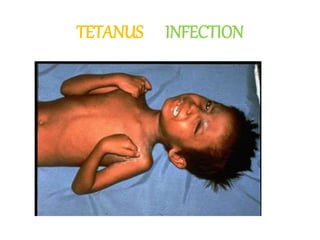
TETANUS INFECTION
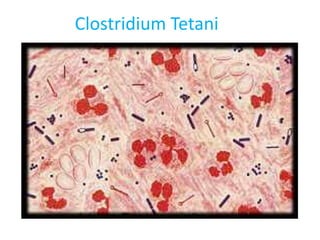
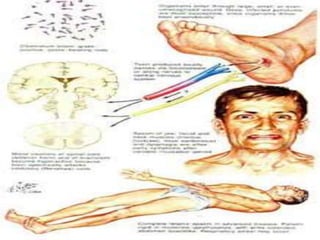
Clostridium Tetani
Clostridium tetani is a gram
positive, anaerobic, spore
bearing organism.
The spores are highly
resistant to injurious agent,
boiling, phenol, cresol etc.
etiology
Lack of handwashing or lack of good hygiene.
Contaminated cut or deep puncture injury eg- stepping on a nail.
Injuries that involve dead skin such burn, frost bite,gangrene etc.
Wound contaminated with soil,saliva or feces.
Skin puncture with unsterile needle.
In neonate
Unhygenic delivery practices- delivery by untrainedperson, traditional
birth customs.
Lack of intrest in immunization among antenatal mothers or lack of
education.
Lack of handwashing or hygiene.
Lack of health care centers in remote areas.
Unbilical cord stump contaminated.
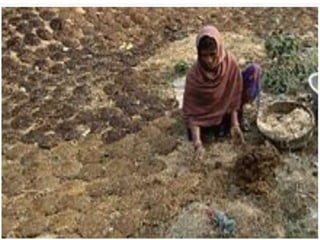
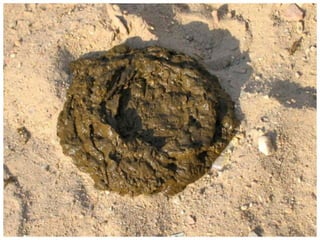
Use of cow dunk or soil in the wound or in umbilical cord to prevent
bleeding.
Clinical manifestation
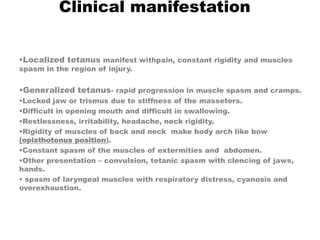
Localized tetanus manifest withpain, constant rigidity and muscles
spasm in the region of injury.
Generalized tetanus- rapid progression in muscle spasm and cramps.
Locked jaw or trismus due to stiffness of the masseters.
Difficult in opening mouth and difficult in swallowing.
Restlessness, irritability, headache, neck rigidity.
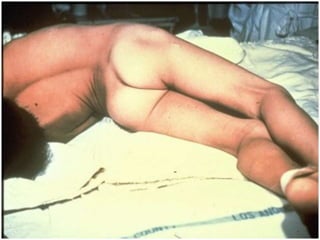
Rigidity of muscles of back and neck make body arch like bow
(opisthotonus position).
Constant spasm of the muscles of extermities and abdomen.
Other presentation – convulsion, tetanic spasm with clencing of jaws,
hands.
 spasm of laryngeal muscles with respiratory distress, cyanosis and
overexhaustion.
management
Specific management should aims
at neutralizing of the toxin and
removal of the clostridium tetani.
Human tetanus immunoglobulin 500-
3000 IU should be given IM immediate
on admission.
Antitetani serum can be
administered after skin test with
30,ooo-1,000,000 IU IM or IV.
Antibiotics administration penicillin
or cephalosporine.
IV therapy and oxygen therapy are
essential.
Mechanical ventilationmay be
needed in respiratory paralysis.
Tracheostomy may required in
persistent laryngeal spasm.
Isolate the patient with complete
rest and close observation.
Suctioning oforopharyngeal
secretion, comfortable
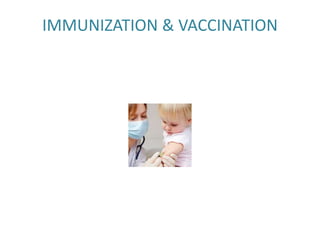
IMMUNIZATION & VACCINATION
THANK YOU

hepatitis.pptx

  • 1.
    Communicable disease in toddler Communicabledisease result from infection or infestation capable of being transmitted directly or indirectly from man or from animal to man or from environment to man or animal. With better knowledge and advancement in their epidemological studies these disease are now being efficiently controlled in developed countries but in developing countries quite a number of these disease are still a problem .The major pre- requirment for the spread of this disease are:
  • 2.
    Cont…. • Presence ofinfectious agent . • Presence of susceptable person. • Favourable environmental factor. Some communicable disease which are more common in toddler are Common viral infection 1.Viral hepatitis A 2.Poliomyelitis 3.Measels Common bacterial infection 1.Whopping cough 2.Enteric fever 3.Tetanus
  • 3.
    VIRAL HEPATITIS A •It is an acute communicable disease caused by an RNA virus of the enterovirus family .Age group under 15 yre are at most risk. RISK FACTOR • Commonly in early winter • Infected water,food(waterborn and foodborne) • Man,s faeces(mainly)serum,blood or other fluid.
  • 4.
    MOOD OF TRANSMISSION •Fecal-oral route • Parenteral route • Sexual transmission Incubation period 15 to 45 day(usually25 to 30 day) Clinical feature • Fever ,anorexia ,followded by progressive jundice. • Leathergy ,irritability ,nausea vomiting abdominal pain • Pruritis
  • 5.
    Cont… • Anemia ,tenderhepatomegaly ,spleenomegally. • Palmar erythemia and gynacomastia MANAGEMENT • Prvide adequate rest. • Encourage to take proper diet. • Provide psychological support. • Provide symptomatically treatment. • Relief of pruritis. • Antiemetic decrease nausea and vomiting. • A diet high in carbohydrate and calories with moderat amount of fat and protein is recommended.

  • 6.
    PREVENTION • Control ofreservoir . • Control of transmission by maintain personal hygiene, prevent contamination of water ,food ,milk. • Control susceptabl population.
  • 7.
    Defination • Typhoid feveris an acute infectious disease caused by salmonella typhi. • The term “enteric fever” includes both typhoid and paratyphoid fevers. • The disease may occur sporadically , epidemically , or endemically. • It is characterized by constitutional symptoms like prolonged pyrexia ,prostration and involvement of spleen and lymph nodes.
  • 8.
    Etiology • It iscaused by Salmonella typhi , Salmonella paratyphi A, B and C lead to a typhoid like illlness ,so called paratyphoid fever.
  • 9.
    Mode of transmission •Oral ingestion of contaminated food or beverage. • Unboiled milk and vegetable or water. • Hand to mouth transmission after using a contaminated toilet and neglecting hand hygiene. • Oral transmission via sewage contaminated water or shellfish. • House flies play a significant role by carrying bacilli from urine or stool of an infected person or active sufferer or carrier to food and products
  • 10.
    Incidence • Common ininfant and young children. • Highest in 5-19 years age group. • Peak incidence occurs in summer and rainy season.
  • 11.
    Incubation period • 10-14days with a range of 3days to 3 weeks .
  • 12.
    Clinical features • Rapidraise of temperature • Extreme malaise • Anoroxia • Severe headache and coated tongue • Vomiting and abdominal pain and distension • Cloudiness of consciousness • Diarrhea • A rash (maculared rose spot)is said to be appear about 5th day on the front &back of
  • 13.
    • Bacillary dysentry,respiratory infection or meningitis. • Convulsion ,anemia, blood loss or hemolysis from auto antibodies. • Seizures ,jaundice,hepatomegaly,anoroxia & weight loss.
  • 14.
    Diagnosis • History collection •Physical examination • Blood and bonemarrow culture. • Routine blood examination • Widal test is positive. • Stool& urine culture is positive after 2nd week.
  • 15.
    Management 1. Specific managementof enteric fever is antibiotic. • Antibiotics are used for about 10-14 days. Drugs used are; • 3rd generation cephalosporins such as ceftrixone , cefotaxim,cefexime. • Fluoroquinolone such as ciprofloxacin, ofloxacin • chloramphenicol
  • 16.
    3. Other supportivemanagement includes; • Management of fever: antipyretics, rest , fluids • Maintenance of fluid & electrolyte balance. • General care like oral &general hygiene , bowel & bladder care(careful disposal). • Nutritious diet should be provided. • Blood transfusion may be needed in intestinal perforation or hemorrhage.
  • 17.
  • 18.
    CAUSES RNA virus Infectious materials Dropletinfections Transmitted through faeco-oral route.
  • 19.
    CLINICAL TYPES Asymptomatic poliomyelitis Abortivepoliomyelitis Non-paralytic poliomyeliti Paralytic poliomyelits
  • 20.
    CLINICAL MANIFESTATION Asymptomatic: Sub clinicalinfections silent or in apparent Abortive: Fever, sore throat Headache Nausea and vomiting Anorexia Abdominal pain
  • 21.
    Non-paralytic: Meningeal irritation as: neckrigidity, headache, backache, pain in legs, neck pain, nausea and vomiting, back stiffness. Paralytic: - spinal form: fever, muscle pain, hyperasthesiatremors, deep tendon reflexes, flaccid paralysis, urinary retention and constipation.
  • 22.
    -Bulbar form: dysphagia,nasal speech, dyspnea, facial and vagus nerve paralysis. -Bulbospinal: features of both spinal n bulbar. -Encephalitic form: irritability, tremors, drowsiness, convulsion, unconsciousness and may be paralysis.
  • 23.
    MANAGEMENT No specific treatment. Supportivetreatment:  Hospitalization  Strict bed rest  Positioning and suctioning  Maintain neutral position of limbs  Avoid over stretching of paralytic limb  Analgesic and hot formentation  Anti-hypertensive drugs and tranquilizer  Maintainence of fluid and electrolye balance  Nutritious diet and personal hygiene  Physiotherapy  Emotional support and rehabilitation  Surgical management

  • 24.
  • 25.
  • 26.
  • 27.
    Clostridium tetani isa gram positive, anaerobic, spore bearing organism. The spores are highly resistant to injurious agent, boiling, phenol, cresol etc.
  • 28.
    etiology Lack of handwashingor lack of good hygiene. Contaminated cut or deep puncture injury eg- stepping on a nail. Injuries that involve dead skin such burn, frost bite,gangrene etc. Wound contaminated with soil,saliva or feces. Skin puncture with unsterile needle. In neonate Unhygenic delivery practices- delivery by untrainedperson, traditional birth customs. Lack of intrest in immunization among antenatal mothers or lack of education. Lack of handwashing or hygiene. Lack of health care centers in remote areas. Unbilical cord stump contaminated. Use of cow dunk or soil in the wound or in umbilical cord to prevent bleeding.
  • 33.
    Clinical manifestation Localized tetanusmanifest withpain, constant rigidity and muscles spasm in the region of injury. Generalized tetanus- rapid progression in muscle spasm and cramps. Locked jaw or trismus due to stiffness of the masseters. Difficult in opening mouth and difficult in swallowing. Restlessness, irritability, headache, neck rigidity. Rigidity of muscles of back and neck make body arch like bow (opisthotonus position). Constant spasm of the muscles of extermities and abdomen. Other presentation – convulsion, tetanic spasm with clencing of jaws, hands.  spasm of laryngeal muscles with respiratory distress, cyanosis and overexhaustion.
  • 37.
    management Specific management shouldaims at neutralizing of the toxin and removal of the clostridium tetani. Human tetanus immunoglobulin 500- 3000 IU should be given IM immediate on admission. Antitetani serum can be administered after skin test with 30,ooo-1,000,000 IU IM or IV. Antibiotics administration penicillin or cephalosporine.
  • 38.
    IV therapy andoxygen therapy are essential. Mechanical ventilationmay be needed in respiratory paralysis. Tracheostomy may required in persistent laryngeal spasm. Isolate the patient with complete rest and close observation. Suctioning oforopharyngeal secretion, comfortable
  • 39.
  • 40.