INBORN
METABOLIC
ERROR
Prepared by : Laxmi Dahal
M. Sc. Nursing
B-19
12/9/2022 1
INTRODUCTION
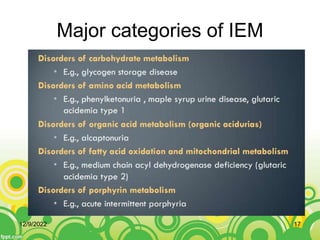
• Also known as congenital metabolic diseases or inherited
metabolic diseases.
• Inborn error : an inherited (i.e. genetic) disorder
Metabolism : chemical or physical changes undergone by
substances in a biological system
• IEM is a conditions caused by the genetic errors related to
synthesis, metabolism, transport or storage of biochemical
compounds.
• It results in the accumulation or deficiency of a specific
metabolite.
12/9/2022 2
Introduction
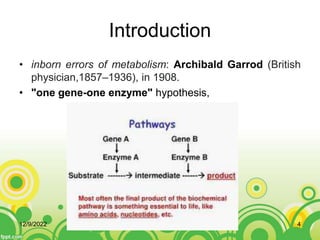
• The majority are due to defects of single genes that code
for enzymes that facilitate conversion of various substances
(substrates) into others (products).
• These disorders are individually rare, but collectively
common, and manifest at any time from the fetal life to old
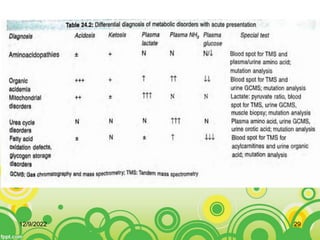
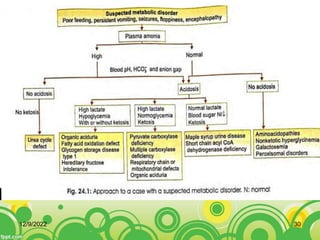
age.
• Early recognition of signs and symptoms, prompt evaluation
and management results in optimal outcome.
12/9/2022 3
Introduction
• inborn errors of metabolism: Archibald Garrod (British
physician,1857–1936), in 1908.
• "one gene-one enzyme" hypothesis,
12/9/2022 4
12/9/2022 5
Epidemiology
• The prevalence of IEM in various countries shows a
prevalence varying between 1 in 800 to 1 in 5000
• British Columbia: estimated 1 in 2,500 births,
• Mexican study: incidence of 3.4: 1000 live newborns
and a carrier detection of 6.8:1000 NBS.
12/9/2022 6
Research Article
Research topic: Case reports of metabolic disorders from Nepal
Conducted by: Arti Sharma Pandey
• The prevalence of metabolic disease in Nepal is largely
unknown. Some consideration has been given by the nepalese
government for high prevalence of congenital disorders in
some populations.
• enzymatic deficiencies disorders have not been considered as
a class of diseases where timely diagnosis and intervention
might be possible.
12/9/2022 7
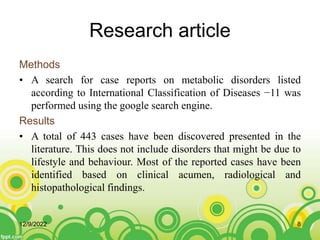
Research article
Methods
• A search for case reports on metabolic disorders listed
according to International Classification of Diseases −11 was
performed using the google search engine.
Results
• A total of 443 cases have been discovered presented in the
literature. This does not include disorders that might be due to
lifestyle and behaviour. Most of the reported cases have been
identified based on clinical acumen, radiological and
histopathological findings.
12/9/2022 8
Research article
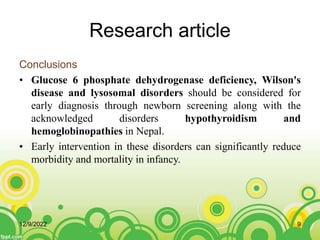
Conclusions
• Glucose 6 phosphate dehydrogenase deficiency, Wilson's
disease and lysosomal disorders should be considered for
early diagnosis through newborn screening along with the
acknowledged disorders hypothyroidism and
hemoglobinopathies in Nepal.
• Early intervention in these disorders can significantly reduce
morbidity and mortality in infancy.
12/9/2022 9
CLASSIFICATION
Intoxication group
Defects of energy
metabolism
Disorders of complex
molecules
12/9/2022 10
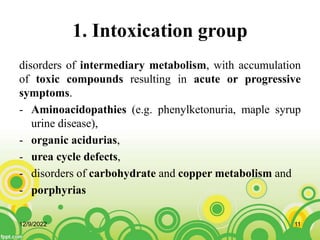
1. Intoxication group
disorders of intermediary metabolism, with accumulation
of toxic compounds resulting in acute or progressive
symptoms.
- Aminoacidopathies (e.g. phenylketonuria, maple syrup
urine disease),
- organic acidurias,
- urea cycle defects,
- disorders of carbohydrate and copper metabolism and
- porphyrias
12/9/2022 11
Intoxication group
- Symptoms are precipitated by catabolic state (fever,
infections, immunization, dehydration or fasting),
- sudden onset and non-specific physical findings.
12/9/2022 12
2. Defects of energy metabolism
deficient energy production or utilization within liver, muscle,
heart and brain. E. g:
- mitochondrial disorders,
- disorders of glycolysis, glycogen metabolism and
gluconeogenesis, and
- hyperinsulinism.
Failure to thrive, hypoglycemia with high lactate, hepatomegaly,
hypotonia, cardiomyopathy, myopathy, neurological symptoms
and circulatory collapse may occur.
Sudden onset and non-specific physical findings.
12/9/2022 13
3. Disorders of complex molecules
Molecules involving organelles. E.g:
- lysosomal storage diseases,
- peroxisomal disorders,
- antitrypsin deficiency and
- congenital disorders of glycosylation.
Symptoms are progressive and permanent and do not have
precipitating factors. Most disorders have multisystem
involvement.
12/9/2022 14
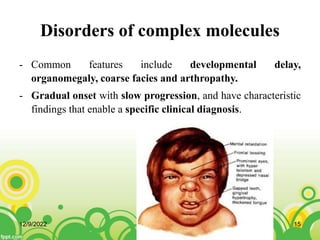
Disorders of complex molecules
- Common features include developmental delay,
organomegaly, coarse facies and arthropathy.
- Gradual onset with slow progression, and have characteristic
findings that enable a specific clinical diagnosis.
12/9/2022 15
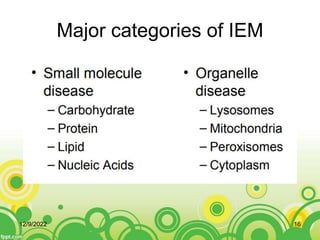
Major categories of IEM
12/9/2022 16
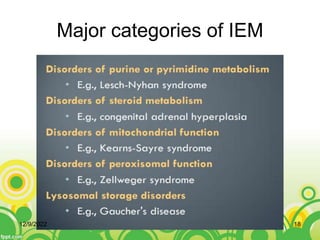
Major categories of IEM
12/9/2022 17
Major categories of IEM
12/9/2022 18
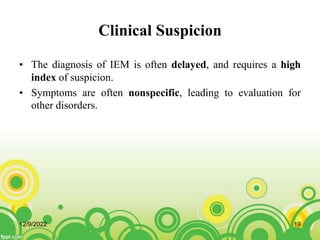
Clinical Suspicion
• The diagnosis of IEM is often delayed, and requires a high
index of suspicion.
• Symptoms are often nonspecific, leading to evaluation for
other disorders.
12/9/2022 19
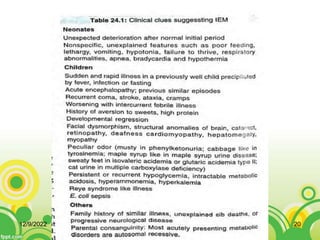
12/9/2022 20
Acute presentation
• Neonates are normal at birth since the small intermediary
metabolites are eliminated by the placenta during fetal life.
• Disorders of glucose, protein and fat breakdown usually
present early; premature neonates with transient
hyperammonemia of newborn (THAN) and term babies
with glutaric acidemia type II may present on the first day
of life.
• Early onset of symptoms is associated with severe disease.
12/9/2022 21
Acute presentation
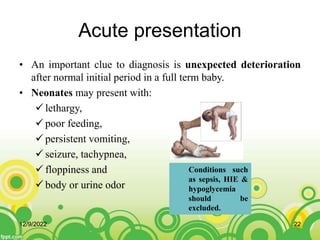
• An important clue to diagnosis is unexpected deterioration
after normal initial period in a full term baby.
• Neonates may present with:
 lethargy,
 poor feeding,
 persistent vomiting,
 seizure, tachypnea,
 floppiness and
 body or urine odor
Conditions such
as sepsis, HIE &
hypoglycemia
should be
excluded.
12/9/2022 22
Acute presentation
Older children show acute unexplained, recurrent episodes of:
- altered sensorium,
- vomiting,
- lethargy progressing to coma,
- stroke or stroke-like episodes,
- ataxia,
- psychiatric features,
- exercise intolerance,
- abdominal pain,
- quadriparesis or arrhythmias
12/9/2022 23
Acute presentation
• Asymptomatic more than 1 year and patients are normal in
between the episodes.
• Intercurrent illness, high protein intake, exercise, fasting and
drug intake may precipitate symptoms.
• Encephalopathy occurs with little warning in previously
healthy individuals, progresses rapidly, may be recurrent and is
not associated with neurological deficits.
• Physical examination shows altered sensorium, apnea or
hyperpnea and hypotonia.
12/9/2022 24
Laboratory investigation
Metabolic screening:
- Blood glucose,
- Electrolytes,
- Lactate,
- pH,
- Bicarbonate and
- Ammonia
 Done in: urea cycle disorders, organic acidurias, energy
deficit disorders
12/9/2022 25
Laboratory investigation
Urine metabolic screen
- pH,
- ketones and reducing substances
 Done in : PKU, organic aciduria/maple syrup urine disease
and homocystinuria.
 Biochemical screening may be normal in asymptomatic
patients.
12/9/2022 26
Specialized tests
• Quantitative Plasma Amino acids analysis by High
Performance (HPLC),
• Acylcarnitine profile on plasma or dried blood spot by
Tandem Mass Spectrometry (TMS) and
• Urinary organic acids by Gas Chromatography
Spectrometry (GCMS)
12/9/2022 27
Other tests
• Examinations of cerebrospinal fluid,
• Chest X-ray,
• Echocardiography,
• Ultrasound abdomen,
• Computed tomography and magnetic resonance
imaging of the head and
• Electroencephalogram (EEG) are required in
specific cases.
12/9/2022 28
12/9/2022 29
12/9/2022 30
Biochemical Autopsy
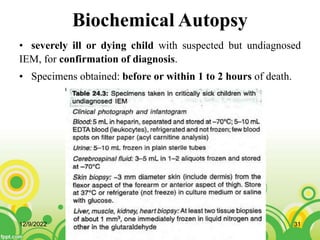
• severely ill or dying child with suspected but undiagnosed
IEM, for confirmation of diagnosis.
• Specimens obtained: before or within 1 to 2 hours of death.
12/9/2022 31
12/9/2022 32
Principles of Management
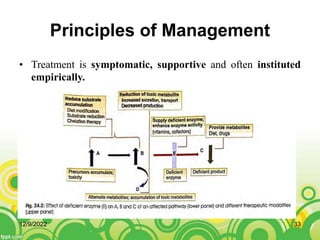
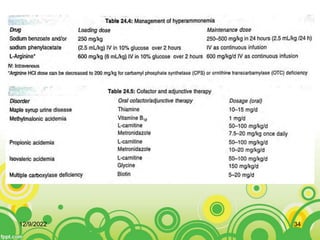
• Treatment is symptomatic, supportive and often instituted
empirically.
12/9/2022 33
12/9/2022 34
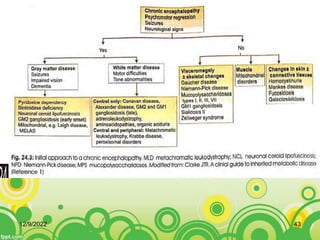
CHRONIC AND PROGRESSIVE
PRESENTATION
• variable but insidious onset from birth to adulthood. Some
useful clues are:
 Unexplained developmental delay with or without seizures,
 organomegaly, - coarse facies,
 cataract, - dislocated lens,
 chronic skin lesions,
 abnormal hair or urine color, and
 failure to thrive .
12/9/2022 35
Neurologic findings
- developmental delay
- progressive psychomotor retardation,
- seizures,
- ataxia,
- spasticity,
- variable hearing and visual impairment, and
- extra pyramidal symptoms
12/9/2022 36
Neurologic findings
• Severe irritability, impulsivity, aggressiveness,
hyperactivity and abnormal behavior are common.
• Complex partial or myoclonic seizures which is often resistant
to therapy.
• involvement of grey and white matter (narrowing the
diagnosis)
 Movement disorders: intermittent or progressive (ataxia,
dystonia, choreoathetosis and Parkinsonism).
 Muscular disorders: myopathy (progressive) are usually due
to defects in energy metabolism.
12/9/2022 37
Hepatic presentations
• un-conjugated or conjugated jaundice,
• hypoglycemia and course of the disease and are often
resistant to therapy.
• hepatomegaly with or without hepatocellular dysfunction.
GSD types I and III, lysosomal storage disorders, galactosemia,
GSD IV and III, Niemann-Pick type B and alpha -antitrypsin
deficiency, tyrosinemia, galactosemia, hereditary fructose
intolerance and Wilson disease.
12/9/2022 38
Cardiac manifestations
occur in
- fatty acid oxidation defects,
- mitochondrial disorders,
– GSD type: II,
– methylmalonic acidemia,
– Fabry disease,
– Kearns-Sayre syndrome,
– familial hypercholesterolemia,
– mucopolysaccharidoses and
– GM1 gangliosidosis.
12/9/2022 39
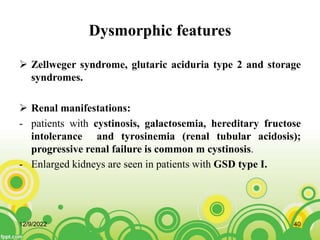
Dysmorphic features
 Zellweger syndrome, glutaric aciduria type 2 and storage
syndromes.
 Renal manifestations:
- patients with cystinosis, galactosemia, hereditary fructose
intolerance and tyrosinemia (renal tubular acidosis);
progressive renal failure is common m cystinosis.
- Enlarged kidneys are seen in patients with GSD type I.
12/9/2022 40
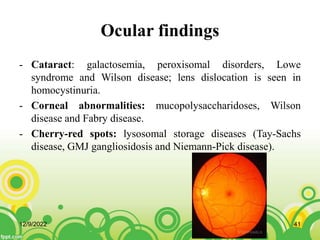
Ocular findings
- Cataract: galactosemia, peroxisomal disorders, Lowe
syndrome and Wilson disease; lens dislocation is seen in
homocystinuria.
- Corneal abnormalities: mucopolysaccharidoses, Wilson
disease and Fabry disease.
- Cherry-red spots: lysosomal storage diseases (Tay-Sachs
disease, GMJ gangliosidosis and Niemann-Pick disease).
12/9/2022 41
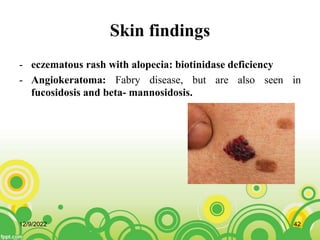
Skin findings
- eczematous rash with alopecia: biotinidase deficiency
- Angiokeratoma: Fabry disease, but are also seen in
fucosidosis and beta- mannosidosis.
12/9/2022 42
12/9/2022 43
Laboratory Investigations
- Peripheral smear : vacuolated lymphocytes in neuronal
ceroid lipofuscinosis, fucosidosis and sialidosis;
acanthocytosis in abetalipoproteinemia and Hallervorden Spatz
disease.
• Adrenal insufficiency
• Neuroimaging, electrophysiological studies and skeletal
survey are useful for various neurodegenerative and storage
disorders.
12/9/2022 44
Laboratory Investigations
• Bone marrow aspirate
• Enzyme assays
• DNA molecular testing is the most specific form of diagnostic
testing and is useful for prenatal diagnosis.
12/9/2022 45
Management
• A multidisciplinary team of metabolic specialists, pediatric,
neurologists, clinical geneticist, cardiologist, orthopedic surgeon
and physiotherapist is required to minimize the supportive care in
these patients.
• enzyme replacement
• enzyme enhancement/ organ transplant
• substrate reduction
12/9/2022 46
Management
• Since most IEMs are inherited in an autosomal recessive
manner, the risk of recurrence in subsequent pregnancies in
25%.
• Few disorders show X- linked, autosomal dominant and
mitochondrial inheritance.
• Prenatal diagnosis is possible by enzyme assays or mutation
testing on fetal DNA, obtained through amniotic fluid or
chorionic villus biopsy.
12/9/2022 47
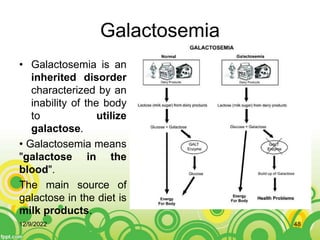
Galactosemia
• Galactosemia is an
inherited disorder
characterized by an
inability of the body
to utilize
galactose.
• Galactosemia means
"galactose in the
blood".
The main source of
galactose in the diet is
milk products.
12/9/2022 48
Features
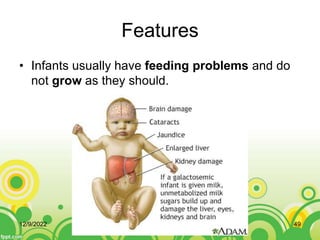
• Infants usually have feeding problems and do
not grow as they should.
12/9/2022 49
Management
• Galactosemia is treated by removing
foods that contain galactose from the
diet.
• Untreated galactosemia will result in a
harmful build-up of galactose and
galactose-1- phosphate in the
bloodstream and body tissues.
12/9/2022 50
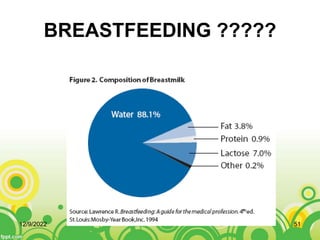
BREASTFEEDING ?????
12/9/2022 51
Research article
Topic: To Breastfeed or Not: PKU, Galactosemia, Other
Rare Disorders and Possible Misdiagnosis
- Galactosemic baby, soon after birth have profuse
vomiting, poor weight gain, wasting and lethargy.
- This usually prompts them to seek medical attention and
testing.
- There is no intermediate or partial breastfeeding
option for these infants.
- They must be totally weaned promptly and fed a
galactose-free formula such as Nutramigen. With cup /
spoon.
12/9/2022 52
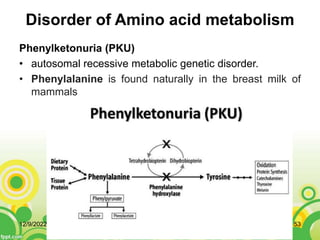
Disorder of Amino acid metabolism
Phenylketonuria (PKU)
• autosomal recessive metabolic genetic disorder.
• Phenylalanine is found naturally in the breast milk of
mammals
12/9/2022 53
12/9/2022 54
12/9/2022 55
BREASTFEEDING????
12/9/2022 56
To Breastfeed or Not: PKU, Galactosemia,
Other Rare Disorders and Possible
Misdiagnosis
• According to Riordan and Auerbach, "Breastfeeding an
infant with PKU is not contraindicated as was
previously believed.
• Human milk has relatively low levels of phenylalanine"
when compared with cow's milk formulas.
• Miller and Chopra and others recommend that total or
partial breastfeeding should be encouraged in the PKU
infant.
• In addition, these infants should have their phenylalanine
blood levels monitored regularly.
12/9/2022 57
Research article
Topic: The management of breast feeding among infants with
phenylketonuria
Conducted by: L. McCabe, A. E. Ernest, M. R. Neifert, S.
Yannicelli, A. M. Nord, P. J. Garry & E. R. B. McCabe
Journal of Inherited Metabolic Disease
Summary :Treatment for phenylketonuria (PKU) involves using
low phenylalanine or phenylalanine-free formulas and
supplementation with sufficient phenylalanine for normal growth
and development. Eighteen infants with phenylketonuria who
received breast milk as their primary phenylalanine source were
compared with ten other infants with PKU who received their
phenylalanine primarily from infant formulas.
12/9/2022 58
Research article
• There were no significant differences between breast-fed
and formula-fed infants for serum phenylalanine, serum
tyrosine, length, weight, head circumference,
haematocrit, haemoglobin, serum iron, total iron binding
capacity, percentage iron saturation, ferritin, plasma zinc
and total calorie intake.
• Breast-fed infants did show lower mean corpuscular
volume at 3 months and 6 months of age. Breast-fed
infants had lower phenylalanine intake at 2, 4, 5 and 6
months of age. Breast-fed infants at 1, 2, 3, 4, 5 and 6
months of age had lower protein intake. Breast feeding
may be continued in the newly diagnosed
phenylketonuric infant without any apparent
adverse nutritional consequences.
12/9/2022 59
REFERENCES
• Inborn errors of metabolism [Internet]. En.wikipedia.org. 2020 [cited 8 September
2020]. Available from: https://en.wikipedia.org/wiki/Inborn_errors_of_metabolism
• disease M. Maple syrup urine disease: MedlinePlus Medical Encyclopedia
[Internet]. Medlineplus.gov. 2020 [cited 8 September 2020]. Available from:
https://medlineplus.gov/ency/article/000373.htm#:~:text=Maple%20syrup%20urine
%20disease%20(MSUD)%20is%20inherited%2C%20which%20means,these%20c
hemicals%20in%20the%20blood.
• Wu F, Wang J, Pu C, Qiao L, Jiang C. Wilson’s Disease: A Comprehensive Review
of the Molecular Mechanisms. International Journal of Molecular Sciences.
2015;16(12):6419-6431.
• Wilson's disease - Diagnosis and treatment - Mayo Clinic [Internet].
Mayoclinic.org. 2020 [cited 8 September 2020]. Available from:
https://www.mayoclinic.org/diseases-conditions/wilsons-disease/diagnosis-
treatment/drc-20353256
12/9/2022 60
REFERENCES
• 5. [Internet]. 2020 [cited 8 September 2020]. Available from:
https://www.researchgate.net/publication/273144908_To_Breastfeed_or_N
ot_PKU_Galactosemia_Other_Rare_Disorders_and_Possible_Misdiagnosi
s [accessed Sep 06 2020]. Available from:
https://www.researchgate.net/publication/273144908_To_Breastfeed_or_N
ot_PKU_Galactosemia_Other_Rare_Disorders_and_Possible_Misdiagnosi
s [accessed Sep 07 2020].
• https://www.researchgate.net/publication/273144908_To_Breastfeed_or_N
ot_PKU_Galactosemia_Other_Rare_Disorders_and_Possible_Misdiagnosi
s [accessed Sep 06 2020].
• Available from:
https://www.researchgate.net/publication/273144908_To_Breastfeed_or_N
ot_PKU_Galactosemia_Other_Rare_Disorders_and_Possible_Misdiagnosi
s [accessed Sep 07 2020].
12/9/2022 61
12/9/2022 62
12/9/2022 63

Genetics, IEM.ppt

  • 1.
    INBORN METABOLIC ERROR Prepared by :Laxmi Dahal M. Sc. Nursing B-19 12/9/2022 1
  • 2.
    INTRODUCTION • Also knownas congenital metabolic diseases or inherited metabolic diseases. • Inborn error : an inherited (i.e. genetic) disorder Metabolism : chemical or physical changes undergone by substances in a biological system • IEM is a conditions caused by the genetic errors related to synthesis, metabolism, transport or storage of biochemical compounds. • It results in the accumulation or deficiency of a specific metabolite. 12/9/2022 2
  • 3.
    Introduction • The majorityare due to defects of single genes that code for enzymes that facilitate conversion of various substances (substrates) into others (products). • These disorders are individually rare, but collectively common, and manifest at any time from the fetal life to old age. • Early recognition of signs and symptoms, prompt evaluation and management results in optimal outcome. 12/9/2022 3
  • 4.
    Introduction • inborn errorsof metabolism: Archibald Garrod (British physician,1857–1936), in 1908. • "one gene-one enzyme" hypothesis, 12/9/2022 4
  • 5.
  • 6.
    Epidemiology • The prevalenceof IEM in various countries shows a prevalence varying between 1 in 800 to 1 in 5000 • British Columbia: estimated 1 in 2,500 births, • Mexican study: incidence of 3.4: 1000 live newborns and a carrier detection of 6.8:1000 NBS. 12/9/2022 6
  • 7.
    Research Article Research topic:Case reports of metabolic disorders from Nepal Conducted by: Arti Sharma Pandey • The prevalence of metabolic disease in Nepal is largely unknown. Some consideration has been given by the nepalese government for high prevalence of congenital disorders in some populations. • enzymatic deficiencies disorders have not been considered as a class of diseases where timely diagnosis and intervention might be possible. 12/9/2022 7
  • 8.
    Research article Methods • Asearch for case reports on metabolic disorders listed according to International Classification of Diseases −11 was performed using the google search engine. Results • A total of 443 cases have been discovered presented in the literature. This does not include disorders that might be due to lifestyle and behaviour. Most of the reported cases have been identified based on clinical acumen, radiological and histopathological findings. 12/9/2022 8
  • 9.
    Research article Conclusions • Glucose6 phosphate dehydrogenase deficiency, Wilson's disease and lysosomal disorders should be considered for early diagnosis through newborn screening along with the acknowledged disorders hypothyroidism and hemoglobinopathies in Nepal. • Early intervention in these disorders can significantly reduce morbidity and mortality in infancy. 12/9/2022 9
  • 10.
    CLASSIFICATION Intoxication group Defects ofenergy metabolism Disorders of complex molecules 12/9/2022 10
  • 11.
    1. Intoxication group disordersof intermediary metabolism, with accumulation of toxic compounds resulting in acute or progressive symptoms. - Aminoacidopathies (e.g. phenylketonuria, maple syrup urine disease), - organic acidurias, - urea cycle defects, - disorders of carbohydrate and copper metabolism and - porphyrias 12/9/2022 11
  • 12.
    Intoxication group - Symptomsare precipitated by catabolic state (fever, infections, immunization, dehydration or fasting), - sudden onset and non-specific physical findings. 12/9/2022 12
  • 13.
    2. Defects ofenergy metabolism deficient energy production or utilization within liver, muscle, heart and brain. E. g: - mitochondrial disorders, - disorders of glycolysis, glycogen metabolism and gluconeogenesis, and - hyperinsulinism. Failure to thrive, hypoglycemia with high lactate, hepatomegaly, hypotonia, cardiomyopathy, myopathy, neurological symptoms and circulatory collapse may occur. Sudden onset and non-specific physical findings. 12/9/2022 13
  • 14.
    3. Disorders ofcomplex molecules Molecules involving organelles. E.g: - lysosomal storage diseases, - peroxisomal disorders, - antitrypsin deficiency and - congenital disorders of glycosylation. Symptoms are progressive and permanent and do not have precipitating factors. Most disorders have multisystem involvement. 12/9/2022 14
  • 15.
    Disorders of complexmolecules - Common features include developmental delay, organomegaly, coarse facies and arthropathy. - Gradual onset with slow progression, and have characteristic findings that enable a specific clinical diagnosis. 12/9/2022 15
  • 16.
    Major categories ofIEM 12/9/2022 16
  • 17.
    Major categories ofIEM 12/9/2022 17
  • 18.
    Major categories ofIEM 12/9/2022 18
  • 19.
    Clinical Suspicion • Thediagnosis of IEM is often delayed, and requires a high index of suspicion. • Symptoms are often nonspecific, leading to evaluation for other disorders. 12/9/2022 19
  • 20.
  • 21.
    Acute presentation • Neonatesare normal at birth since the small intermediary metabolites are eliminated by the placenta during fetal life. • Disorders of glucose, protein and fat breakdown usually present early; premature neonates with transient hyperammonemia of newborn (THAN) and term babies with glutaric acidemia type II may present on the first day of life. • Early onset of symptoms is associated with severe disease. 12/9/2022 21
  • 22.
    Acute presentation • Animportant clue to diagnosis is unexpected deterioration after normal initial period in a full term baby. • Neonates may present with:  lethargy,  poor feeding,  persistent vomiting,  seizure, tachypnea,  floppiness and  body or urine odor Conditions such as sepsis, HIE & hypoglycemia should be excluded. 12/9/2022 22
  • 23.
    Acute presentation Older childrenshow acute unexplained, recurrent episodes of: - altered sensorium, - vomiting, - lethargy progressing to coma, - stroke or stroke-like episodes, - ataxia, - psychiatric features, - exercise intolerance, - abdominal pain, - quadriparesis or arrhythmias 12/9/2022 23
  • 24.
    Acute presentation • Asymptomaticmore than 1 year and patients are normal in between the episodes. • Intercurrent illness, high protein intake, exercise, fasting and drug intake may precipitate symptoms. • Encephalopathy occurs with little warning in previously healthy individuals, progresses rapidly, may be recurrent and is not associated with neurological deficits. • Physical examination shows altered sensorium, apnea or hyperpnea and hypotonia. 12/9/2022 24
  • 25.
    Laboratory investigation Metabolic screening: -Blood glucose, - Electrolytes, - Lactate, - pH, - Bicarbonate and - Ammonia  Done in: urea cycle disorders, organic acidurias, energy deficit disorders 12/9/2022 25
  • 26.
    Laboratory investigation Urine metabolicscreen - pH, - ketones and reducing substances  Done in : PKU, organic aciduria/maple syrup urine disease and homocystinuria.  Biochemical screening may be normal in asymptomatic patients. 12/9/2022 26
  • 27.
    Specialized tests • QuantitativePlasma Amino acids analysis by High Performance (HPLC), • Acylcarnitine profile on plasma or dried blood spot by Tandem Mass Spectrometry (TMS) and • Urinary organic acids by Gas Chromatography Spectrometry (GCMS) 12/9/2022 27
  • 28.
    Other tests • Examinationsof cerebrospinal fluid, • Chest X-ray, • Echocardiography, • Ultrasound abdomen, • Computed tomography and magnetic resonance imaging of the head and • Electroencephalogram (EEG) are required in specific cases. 12/9/2022 28
  • 29.
  • 30.
  • 31.
    Biochemical Autopsy • severelyill or dying child with suspected but undiagnosed IEM, for confirmation of diagnosis. • Specimens obtained: before or within 1 to 2 hours of death. 12/9/2022 31
  • 32.
  • 33.
    Principles of Management •Treatment is symptomatic, supportive and often instituted empirically. 12/9/2022 33
  • 34.
  • 35.
    CHRONIC AND PROGRESSIVE PRESENTATION •variable but insidious onset from birth to adulthood. Some useful clues are:  Unexplained developmental delay with or without seizures,  organomegaly, - coarse facies,  cataract, - dislocated lens,  chronic skin lesions,  abnormal hair or urine color, and  failure to thrive . 12/9/2022 35
  • 36.
    Neurologic findings - developmentaldelay - progressive psychomotor retardation, - seizures, - ataxia, - spasticity, - variable hearing and visual impairment, and - extra pyramidal symptoms 12/9/2022 36
  • 37.
    Neurologic findings • Severeirritability, impulsivity, aggressiveness, hyperactivity and abnormal behavior are common. • Complex partial or myoclonic seizures which is often resistant to therapy. • involvement of grey and white matter (narrowing the diagnosis)  Movement disorders: intermittent or progressive (ataxia, dystonia, choreoathetosis and Parkinsonism).  Muscular disorders: myopathy (progressive) are usually due to defects in energy metabolism. 12/9/2022 37
  • 38.
    Hepatic presentations • un-conjugatedor conjugated jaundice, • hypoglycemia and course of the disease and are often resistant to therapy. • hepatomegaly with or without hepatocellular dysfunction. GSD types I and III, lysosomal storage disorders, galactosemia, GSD IV and III, Niemann-Pick type B and alpha -antitrypsin deficiency, tyrosinemia, galactosemia, hereditary fructose intolerance and Wilson disease. 12/9/2022 38
  • 39.
    Cardiac manifestations occur in -fatty acid oxidation defects, - mitochondrial disorders, – GSD type: II, – methylmalonic acidemia, – Fabry disease, – Kearns-Sayre syndrome, – familial hypercholesterolemia, – mucopolysaccharidoses and – GM1 gangliosidosis. 12/9/2022 39
  • 40.
    Dysmorphic features  Zellwegersyndrome, glutaric aciduria type 2 and storage syndromes.  Renal manifestations: - patients with cystinosis, galactosemia, hereditary fructose intolerance and tyrosinemia (renal tubular acidosis); progressive renal failure is common m cystinosis. - Enlarged kidneys are seen in patients with GSD type I. 12/9/2022 40
  • 41.
    Ocular findings - Cataract:galactosemia, peroxisomal disorders, Lowe syndrome and Wilson disease; lens dislocation is seen in homocystinuria. - Corneal abnormalities: mucopolysaccharidoses, Wilson disease and Fabry disease. - Cherry-red spots: lysosomal storage diseases (Tay-Sachs disease, GMJ gangliosidosis and Niemann-Pick disease). 12/9/2022 41
  • 42.
    Skin findings - eczematousrash with alopecia: biotinidase deficiency - Angiokeratoma: Fabry disease, but are also seen in fucosidosis and beta- mannosidosis. 12/9/2022 42
  • 43.
  • 44.
    Laboratory Investigations - Peripheralsmear : vacuolated lymphocytes in neuronal ceroid lipofuscinosis, fucosidosis and sialidosis; acanthocytosis in abetalipoproteinemia and Hallervorden Spatz disease. • Adrenal insufficiency • Neuroimaging, electrophysiological studies and skeletal survey are useful for various neurodegenerative and storage disorders. 12/9/2022 44
  • 45.
    Laboratory Investigations • Bonemarrow aspirate • Enzyme assays • DNA molecular testing is the most specific form of diagnostic testing and is useful for prenatal diagnosis. 12/9/2022 45
  • 46.
    Management • A multidisciplinaryteam of metabolic specialists, pediatric, neurologists, clinical geneticist, cardiologist, orthopedic surgeon and physiotherapist is required to minimize the supportive care in these patients. • enzyme replacement • enzyme enhancement/ organ transplant • substrate reduction 12/9/2022 46
  • 47.
    Management • Since mostIEMs are inherited in an autosomal recessive manner, the risk of recurrence in subsequent pregnancies in 25%. • Few disorders show X- linked, autosomal dominant and mitochondrial inheritance. • Prenatal diagnosis is possible by enzyme assays or mutation testing on fetal DNA, obtained through amniotic fluid or chorionic villus biopsy. 12/9/2022 47
  • 48.
    Galactosemia • Galactosemia isan inherited disorder characterized by an inability of the body to utilize galactose. • Galactosemia means "galactose in the blood". The main source of galactose in the diet is milk products. 12/9/2022 48
  • 49.
    Features • Infants usuallyhave feeding problems and do not grow as they should. 12/9/2022 49
  • 50.
    Management • Galactosemia istreated by removing foods that contain galactose from the diet. • Untreated galactosemia will result in a harmful build-up of galactose and galactose-1- phosphate in the bloodstream and body tissues. 12/9/2022 50
  • 51.
  • 52.
    Research article Topic: ToBreastfeed or Not: PKU, Galactosemia, Other Rare Disorders and Possible Misdiagnosis - Galactosemic baby, soon after birth have profuse vomiting, poor weight gain, wasting and lethargy. - This usually prompts them to seek medical attention and testing. - There is no intermediate or partial breastfeeding option for these infants. - They must be totally weaned promptly and fed a galactose-free formula such as Nutramigen. With cup / spoon. 12/9/2022 52
  • 53.
    Disorder of Aminoacid metabolism Phenylketonuria (PKU) • autosomal recessive metabolic genetic disorder. • Phenylalanine is found naturally in the breast milk of mammals 12/9/2022 53
  • 54.
  • 55.
  • 56.
  • 57.
    To Breastfeed orNot: PKU, Galactosemia, Other Rare Disorders and Possible Misdiagnosis • According to Riordan and Auerbach, "Breastfeeding an infant with PKU is not contraindicated as was previously believed. • Human milk has relatively low levels of phenylalanine" when compared with cow's milk formulas. • Miller and Chopra and others recommend that total or partial breastfeeding should be encouraged in the PKU infant. • In addition, these infants should have their phenylalanine blood levels monitored regularly. 12/9/2022 57
  • 58.
    Research article Topic: Themanagement of breast feeding among infants with phenylketonuria Conducted by: L. McCabe, A. E. Ernest, M. R. Neifert, S. Yannicelli, A. M. Nord, P. J. Garry & E. R. B. McCabe Journal of Inherited Metabolic Disease Summary :Treatment for phenylketonuria (PKU) involves using low phenylalanine or phenylalanine-free formulas and supplementation with sufficient phenylalanine for normal growth and development. Eighteen infants with phenylketonuria who received breast milk as their primary phenylalanine source were compared with ten other infants with PKU who received their phenylalanine primarily from infant formulas. 12/9/2022 58
  • 59.
    Research article • Therewere no significant differences between breast-fed and formula-fed infants for serum phenylalanine, serum tyrosine, length, weight, head circumference, haematocrit, haemoglobin, serum iron, total iron binding capacity, percentage iron saturation, ferritin, plasma zinc and total calorie intake. • Breast-fed infants did show lower mean corpuscular volume at 3 months and 6 months of age. Breast-fed infants had lower phenylalanine intake at 2, 4, 5 and 6 months of age. Breast-fed infants at 1, 2, 3, 4, 5 and 6 months of age had lower protein intake. Breast feeding may be continued in the newly diagnosed phenylketonuric infant without any apparent adverse nutritional consequences. 12/9/2022 59
  • 60.
    REFERENCES • Inborn errorsof metabolism [Internet]. En.wikipedia.org. 2020 [cited 8 September 2020]. Available from: https://en.wikipedia.org/wiki/Inborn_errors_of_metabolism • disease M. Maple syrup urine disease: MedlinePlus Medical Encyclopedia [Internet]. Medlineplus.gov. 2020 [cited 8 September 2020]. Available from: https://medlineplus.gov/ency/article/000373.htm#:~:text=Maple%20syrup%20urine %20disease%20(MSUD)%20is%20inherited%2C%20which%20means,these%20c hemicals%20in%20the%20blood. • Wu F, Wang J, Pu C, Qiao L, Jiang C. Wilson’s Disease: A Comprehensive Review of the Molecular Mechanisms. International Journal of Molecular Sciences. 2015;16(12):6419-6431. • Wilson's disease - Diagnosis and treatment - Mayo Clinic [Internet]. Mayoclinic.org. 2020 [cited 8 September 2020]. Available from: https://www.mayoclinic.org/diseases-conditions/wilsons-disease/diagnosis- treatment/drc-20353256 12/9/2022 60
  • 61.
    REFERENCES • 5. [Internet].2020 [cited 8 September 2020]. Available from: https://www.researchgate.net/publication/273144908_To_Breastfeed_or_N ot_PKU_Galactosemia_Other_Rare_Disorders_and_Possible_Misdiagnosi s [accessed Sep 06 2020]. Available from: https://www.researchgate.net/publication/273144908_To_Breastfeed_or_N ot_PKU_Galactosemia_Other_Rare_Disorders_and_Possible_Misdiagnosi s [accessed Sep 07 2020]. • https://www.researchgate.net/publication/273144908_To_Breastfeed_or_N ot_PKU_Galactosemia_Other_Rare_Disorders_and_Possible_Misdiagnosi s [accessed Sep 06 2020]. • Available from: https://www.researchgate.net/publication/273144908_To_Breastfeed_or_N ot_PKU_Galactosemia_Other_Rare_Disorders_and_Possible_Misdiagnosi s [accessed Sep 07 2020]. 12/9/2022 61
  • 62.
  • 63.

Editor's Notes

  • #5 His seminal text, Inborn Errors of Metabolism was published in 1923. The one gene–one enzyme hypothesis is the idea that genes act through the production of enzymes, with each gene responsible for producing a single enzyme that in turn affects a single step in a metabolic pathway based on his studies on the nature and inheritance of alkaptonuria. Alkaptonuria is a rare inherited genetic disorder which is caused by a mutation in the HGD gene for the enzyme homogentisate 1,2-dioxygenase (EC 1.13.11.5);
  • #7 overall representing more than approximately 15% of single gene disorders in the population. NBS: newborn screening 50% of all inborn errors present outside of the neonatal period, and some are not diagnosed until adulthood. Mitochondrial disorders are inherited from mother to 100% of her offspring, while other disorders may have variable penetrance or be sex-linked.
  • #12 Porphyrias are a group of rare inherited blood disorders. People with these disorders have problems making a substance called heme in their bodies.
  • #13 intoxication due to defects in the intermediary metabolic pathway resulting in the accumulation of toxic compounds proximal to the metabolic block [example: urea cycle defect (UCD), amino acid disorders]; (II) deficiency in energy production or utilization [example: mitochondrial disorders, glycogen metabolism disorders, fatty acid oxidation disorders (FAO)]; and (III) complex molecules involving organelles (example: lysosomes, peroxisomes, Golgi and endoplasmic reticulum) and cofactors catabolic state, you're breaking down or losing overall mass, both fat and muscle. 
  • #16 Coarse facies: Absence of fine and sharp appearance of brows, nose, lips, mouth, and chin, usually because of rounded and heavy features or thickened skin with or without thickening of subcutaneous and bony tissues.
  • #21 Aversion: a strong dislike or disinclination Musty: having a stale, mouldy, or damp smell Intractable: hard to control or deal with Reye's (Reye) syndrome is a rare but serious condition that causes swelling in the liver and brain. Reye's syndrome most often affects children and teenagers recovering from a viral infection, most commonly the flu or chickenpox.
  • #24 Ataxia is a degenerative disease of the nervous system. Many symptoms of Ataxia mimic those of being drunk, such as slurred speech, stumbling, falling, and incoordination. Quadriparesis is a condition characterized by weakness in all four limbs (both arms and both legs)
  • #25 Hyperpnea is increased volume of air during breathing. It can occur with or without an increase in respiration rate. It is characterized by deep breathing.
  • #26 During neonatal period, ammonia levels are <200ug/dL; subsequently levels <80 ug/dL are considered normal. urea cycle disorders, ammonia levels usually exceed 1000 µg/ dL and cause respiratory alkalosis with compensatory metabolic acidosis. In organic acidurias, ammonia levels are <500ug/dL and in fatty acid oxidation defects <250 ug/dL.
  • #28 Points to be noted: Urine samples should be obtained during the acute phase of illness. Details about drugs, diet and fluids should be provided to patient while ordering these tests. A pretransfusion sample is preferred, if blood transfusion is planned. All samples should be promptly transported to the lab.
  • #34 observation or experience rather than theory or pure logic. Specific treatment is directed towards reversing the basic pathophysiological process causing the disease. It includes reduction of substrate accumulation for a deficient enzyme, reduce accumulated toxic metabolites, supplement metabolites, replace deficient enzyme or enhance residual enzyme activity . Eliminate dietary or parenteral intake of potentially toxic agents (e.g. protein, fat, galactose, fructose). Provide adequate calories (0.2% saline in 10% dextrose IV); intralipids (2- 3 g/kg/ day) may be infused if fatty acid oxidation defect is not suspected. Correct metabolic acidosis, dehydration and electrolyte imbalance. Treat intercurrent illness, if any.
  • #36 These forms are divided into subgroups depending upon the involvement of specific system. proceeding in a gradual, subtle way, but with very harmful effects.
  • #37 Psychomotor or developmental delay is the chief manifestation and tends to be global and progressive; regression of milestones may be present.
  • #38 (automatism, stereotypes, compulsive chewing of thumbs and fingers, self-mutilation, nocturnal restlessness) Automatism refers to a set of brief unconscious behaviors. These typically last for several seconds to minutes or sometimes longer, a time during which the subject is unaware of his/her actions.
  • #39 Deranged lipid profile: GSD types I and III, Hepatosplenomegaly: lysosomal storage disorders. Hepatocellular dysfunction: galactosemia, GSD IV and III, Niemann-Pick type B and alpha -antitrypsin deficiency. Cirrhosis: tyrosinemia, galactosemia, hereditary fructose intolerance and Wilson disease.
  • #41 A dysmorphic feature is an abnormal difference in body structure. 
  • #43 Angiokeratoma is a condition in which small, dark spots appear on the skin. They can appear anywhere on your body. These lesions happen when tiny blood vessels called capillaries dilate, or widen, near the surface of your skin
  • #44 Visceromegaly is enlargement of the organs inside the abdomen, such as the liver, spleen, stomach, kidneys, or pancreas
  • #45 Anemia and thrombocytopenia are important features of Gaucher disease; pancytopenia may be seen in propionic and methylmalonic acidemia.
  • #46 is frequent in patients with adrenoleukodystrophy. Metabolic acidosis with proximal tubular dysfunction is present in patients with Lowe syndrome, cystinosis, Wilson disease and galactosemia. Enzyme assays for various storage disorders are now available and provide definitive diagnosis. Enzyme assays are laboratory methods for measuring enzymatic activity.
  • #47 Supply of deficient enzyme (enzyme replacement), enhancing residual enzyme activity through cofactor and megavitamin therapy (enzyme enhancement/ organ transplant), or reduction of substrate accumulation (substrate reduction) are available for these disorders.
  • #49 The deficient enzyme that is responsible of galactosemia is called galactose-1-phosphate uridyl transferase (GALT). The GALT enzyme enables the body to break down galactose into glucose for energy.
  • #53 Failing to identify galactosemia may have dire results while false-positive test results can lead to unnecessary weaning. Err: mistake Such testing may be difficult in areas where there is no reliable way of protecting the sample from heat.
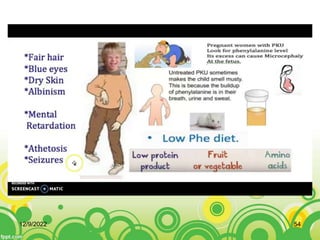
  • #54 deficiency in the hepatic enzyme phenylalanine hydroxylase (PAH), necessary to metabolize the phenylalanine (Phe) to the tyrosine. When PAH is deficient, phenylalanine accumulates and is converted into phenylpyruvate, which is detected in the urine. Phenylalanine is a precursor for tyrosine, the monoamine neurotransmitters dopamine, norepinephrine (noradrenaline), and epinephrine (adrenaline), and the skin pigment melanin. It is encoded by the codons UUU and UUC. Phenylalanine is found naturally in the breast milk of mammals
  • #55 Albinism is a genetic condition where people are born without the usual pigment (color) in their bodies. (unable to make melanin )