Beka Aberra [R2]
SPHMMC Gastroenterology Attachment
Moderator: Yemiserach Chane, MD, Internist/Gastroenterologist
December, 2018
 Objectives
 Audit
 Discussion
 Hemorrhoids in Brief
 Challenges of the Unit
 Recommendations
 Appendix
 To Identify common Clinical indications for Colonoscopy
 To Identify common Colonoscopy findings, and Diagnostic yield
 To Discuss on the Audit & Commonest finding
 To Figure out some Challenges
 To Make recommendations to Improve Current Practice
Data resources
 Colonoscopy Report Papers from November 1- 30 or
 From [Tikemt 22 -Hidar 21]
 In the Month of November 57Colonoscopies were done.
 Colonoscopy Audit.xlsx
NUMBER PERCENTAGE
GENDER MALE 31 56.3%
FEMALE 24 43.6%
AGE GROUPS
* < 40 yrs were[18]
* >= 40 yrs were [37]
0-9 0 0%
10-19 1 1.8%
20-29 12 21.8%
30-39 5 9%
40-49 10 18.3%
50-59 15 27.3%
60-69 5 9%
70-79 6 11%
80-89 1 1.8%
 Patients were Aged between [18-85 years] with Mean Age 46.42 Years;
56.3% Males and 43.6% Females
0%
5%
10%
15%
20%
25%
30%
0
2
4
6
8
10
12
14
16
0-9 [10-19] [20-29] [30-39] [40-49] [50-59] [60-69] [70-79] [80-89]
AGE GROUPS
Chart Title
NUMBER PERCENTAGE
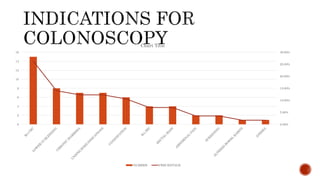
INDICATIONS NUMBER PERCENTAGE
R/o CRC 15 26.30%
LOWER GI BLEEDING 8 14%
CHRONIC DIARRHEA 7 12.30%
UNSPECIFIED INDICATIONS 7 12.30%
CONSTIPATION 6 10.60%
R/o IBD 4 7%
RECTAL MASS 4 7%
ABDOMINAL PAIN 2 3.50%
SCREENING 2 3.50%
ALTERED BOWEL HABITS 1 1.75%
ANEMIA 1 1.75%
The Commonest Indications
being Rule Out CRC [26.3%]
followed by LGIB [14%].
0.00%
5.00%
10.00%
15.00%
20.00%
25.00%
30.00%
0
2
4
6
8
10
12
14
16
Chart Title
NUMBER PERCENTAGE
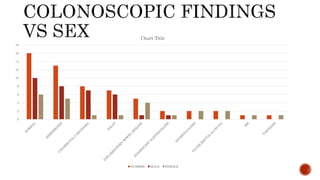
DIAGNOSIS NUMBER PERCENTAGE MALE FEMALE
NORMAL 16 28% 10 6
HEMORROIDS 13 22.80% 8 5
COLORECTAL CARCINOMA 8 14% 7 1
POLYP 7 12.20% 6 1
INFLAMMATORY BOWEL DISEASE 5 9% 1 4
NONSPECIFIC ILEITIS/COLITIS 2 3.50% 1 1
DIVERTICULOSIS 2 3.50% 0 2
ULCER [RECTAL & CECAL] 2 3.50% 0 2
IBS 1 1.75% 0 1
TAENIASIS 1 1.75% 0 1
0%
5%
10%
15%
20%
25%
30%
0
2
4
6
8
10
12
14
16
18
Normal Hemorroids Colorectal Cancer Polyps IBD Nonspecific
Ileitis/Colitis
Ulcer
[Rectal/Cecal]
Diverticulosis IBS Taeniasis
Chart Title
Frequency Percent
Diagnostic yield is about 72% for colonoscopy of the
Total Indications [57]; Normal Findings were [16].
 53 % for CRC [15 R/o CRC Indications; 8 Findings]
 62.5% for Hemorrhoids [8 LGIB Indication; 5H/3P]
0
2
4
6
8
10
12
14
16
18
Chart Title
NUMBER MALE FEMALE
FINDINGS NORMAL HEMORRHOIDS CRC POLYPS IBD NONSPECIFIC
ILEITIS/
COLITIS
DIVERTICUL
OSIS
ULCER
[RECTAL/
CECAL]
IBS TAENIASI
S
AGE
GROUPS
0-9 0
0 0 0 0 0 0 0 0 0
10-19 0
0 0 0 0 0 0 0 0 1
20-29 3 2 2 1 3 0 0 0 1 0
30-39 0
2 0 0 0 0 1 2 0 0
40-49 3
2 2 1 1 0 1 0 0 0
50-59 7 1 3 2 0 2 0 0 0 0
60-69 0
3 0 2 0 0 0 0 0 0
70-79 3
2 1 0 0 0 0 0 0 0
80-89 0
0 0 1 0 0 0 0 0 0
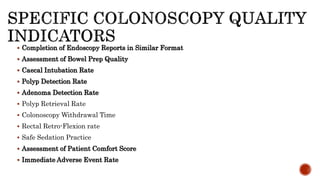
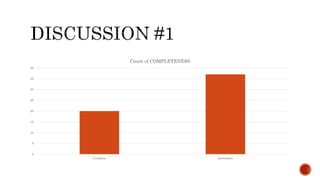
 Completion of Endoscopy Reports in Similar Format
 Assessment of Bowel Prep Quality
 Caecal Intubation Rate
 Polyp Detection Rate
 Adenoma Detection Rate
 Polyp Retrieval Rate
 Colonoscopy Withdrawal Time
 Rectal Retro-Flexion rate
 Safe Sedation Practice
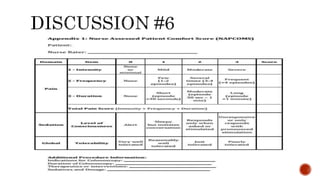
 Assessment of Patient Comfort Score
 Immediate Adverse Event Rate
0
5
10
15
20
25
30
35
40
Complete Incomplete
Count of COMPLETENESS
0
5
10
15
20
25
30
35
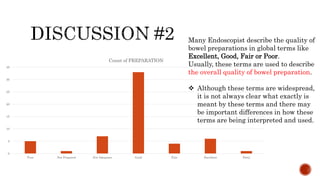
Poor Not Prepared Not Adequate Good Fair Excellent Dirty
Count of PREPARATION
Many Endoscopist describe the quality of
bowel preparations in global terms like
Excellent, Good, Fair or Poor.
Usually, these terms are used to describe
the overall quality of bowel preparation.
 Although these terms are widespread,
it is not always clear what exactly is
meant by these terms and there may
be important differences in how these
terms are being interpreted and used.
 Insufficient mucosal visualization during colonoscopy can result in relevant lesions
being missed. This has been shown in studies on colorectal cancer screening programs,
where the adenoma detection rate is directly related to the quality of bowel
preparation.
 It has been suggested that the fact that Colonoscopic surveillance does not prevent
right-sided cancers is caused by the often worse quality of cleansing of the right side of
the colon.
 Poor bowel preparation can also result in difficult progression, an increased risk of
complications, prolonged procedure duration and an increase in the amount of
sedatives and analgesics required.
 The Aronchick scale. This scale grades the adequacy of cleansing of colonic segments
or the entire colon, using semi-quantitative descriptors:
Excellent/Good/Fair/Poor/Inadequate
 The Ottowa bowel preparation scale is another tool to assess adequacy of colonic
cleansing; Dividing in 3 Segments; Excellent/Good/Fair/Poor/Inadequate
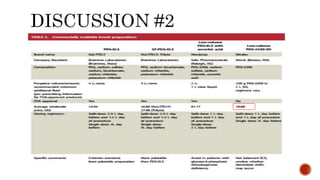
 The Boston Bowel Preparation Scale, is a scoring system, that has an excellent
intra- and interobserver reliability, and is proven to be related to endoscopy
outcome. The colon is divided in three segments: The right side (including cecum
and ascending colon), the transverse colon (including the flexures) and the left
sided colon, which includes the descending colon, sigmoid and rectum.
 For all three sections cleansing is assessed as follows:
0: Unprepared colon segment with mucosa not seen because of solid stool that
cannot be cleared.
1: Portion of mucosa of the colon segment seen, but other areas of the colon not well
seen because of staining, residual stool, and/or opaque liquid.
2: Minor amount of residual staining, small fragments of stool and/or opaque liquid,
but mucosa of colon segment seen well.
3: Entire mucosa of colon segment seen well with no residual staining, small
fragments of stool or opaque liquid.
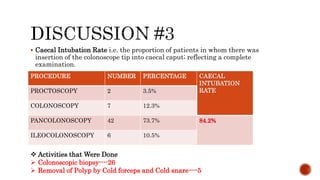
 Caecal Intubation Rate i.e. the proportion of patients in whom there was
insertion of the colonoscope tip into caecal caput; reflecting a complete
examination.
PROCEDURE NUMBER PERCENTAGE CAECAL
INTUBATION
RATEPROCTOSCOPY 2 3.5%
COLONOSCOPY 7 12.3%
PANCOLONOSCOPY 42 73.7% 84.2%
ILEOCOLONOSCOPY 6 10.5%
 Activities that Were Done
 Colonoscopic biopsy----26
 Removal of Polyp by Cold forceps and Cold snare----5
 Polyp Detection Rate Calculation Method: # of colonoscopy cases with at least one
polyp was biopsied or removed/Total # of screening colonoscopies.
 Polyps 7/57 [12.3%] vs CRC 8/57 [14%]
FINDINGS NORMAL CRC POLYPS
AGE GROUPS
* < 40 yrs were[2/1]
* >= 40 yrs were [6/6]
***Above Age of 40 yrs Fecal
Occult Blood testing +
DRE/Endoscopic Exams may
be necessary
0-9 0
0 0
10-19 0
0 0
20-29 3 2 1
30-39 0
0 0
40-49 3
2 1
50-59 7 3 2
60-69 0
0 2
70-79 3
1 0
80-89 0
0 1
 A retrospective analysis of 640 patients who underwent 681 Colonoscopic
examinations between March 1984 and April 1996 was undertaken. The major
indications were rectal bleeding (32.8%), change in bowel habit (24.7%),
abdominal pain (20.1%), abnormal barium enema (9.8%) and iron deficiency
anemia (4.8%).
 Total colonoscopy was performed in 79.3% of cases. The Colonoscopic finding was
normal in 49.8% of patients. Most of the lesions were benign.
 Polyps and carcinoma were found in 9.2% and 7% of patients respectively. 91.3%
of the lesions were located distal to the splenic flexure and of the remaining
proximal lesions, polyps and carcinoma accounted for only 2.2%. Rectal bleeding
produced the highest diagnostic yield (70%) followed by iron deficiency anemia
(61.3%), change in bowel habit (48.1%) and abnormal barium enema (47.6%).
Lower yields were found in patients with abdominal mass (33.3%), follow up
colonoscopy (28.6%) and abdominal pain (26.9%).
 Colonoscopy in the investigation of colonic diseases by Endale Kassa; EAMJ 1996
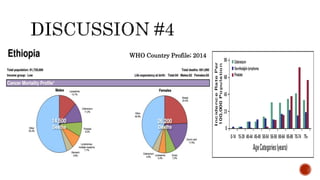
WHO Country Profile; 2014
 Conclusion: Hyoscine is used in clinical practice to decrease spasms in the colon during
colonoscopy in an effort to improve polyp or adenoma detection. However, this study
shows that hyoscine given before the procedure or at time of caecal intubation does not
improve polyp or adenoma detection.
 Adverse Events Rate Calculation method:
Each regional program will be responsible for determining the tracking measure
that is feasible given ITs infrastructure and clerical support.
Hospital separations data and transfusion records can be utilized to develop an
adverse event monitoring system.
The most common determined colonoscopy clinical
indication was to rule out CRC and diagnostic yield was
for Hemorrhoids followed by Colorectal Ca and Polyps.
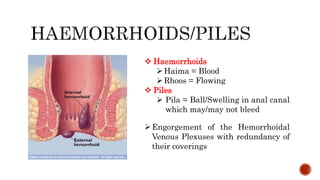
Engorgement of the Hemorrhoidal
Venous Plexuses with redundancy of
their coverings
 Haemorrhoids
Haima = Blood
Rhoos = Flowing
 Piles
 Pila = Ball/Swelling in anal canal
which may/may not bleed
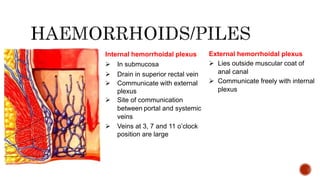
Internal hemorrhoidal plexus
 In submucosa
 Drain in superior rectal vein
 Communicate with external
plexus
 Site of communication
between portal and systemic
veins
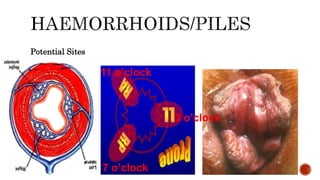
 Veins at 3, 7 and 11 o’clock
position are large
External hemorrhoidal plexus
 Lies outside muscular coat of
anal canal
 Communicate freely with internal
plexus
Potential Sites
3 o’clock
7 o’clock
11 o’clock
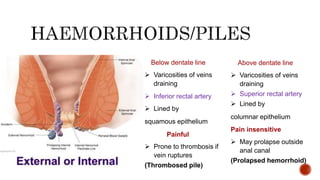
Below dentate line
 Varicosities of veins
draining
 Inferior rectal artery
 Lined by
squamous epithelium
Painful
 Prone to thrombosis if
vein ruptures
(Thrombosed pile)
Above dentate line
 Varicosities of veins
draining
 Superior rectal artery
 Lined by
columnar epithelium
Pain insensitive
 May prolapse outside
anal canal
(Prolapsed hemorrhoid)
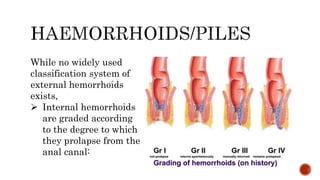
While no widely used
classification system of
external hemorrhoids
exists,
 Internal hemorrhoids
are graded according
to the degree to which
they prolapse from the
anal canal:
 The development of symptomatic hemorrhoids has been associated
with
 Advancing age,
 Diarrhea,
 Prolonged sitting,
 Straining,
 Chronic constipation,
 Trauma
 Lack of Fiber rich diet
 Secondary Causes
 Local: Anorectal deformity. Hypotonic Sphincter
 Abdominal: Ascites
 Pelvic: Gravid Uterus/ Ovarian-Uterine Neoplasms
 Portal Hypertension
 Neurological: Paraplegia/Multiple Sclerosis
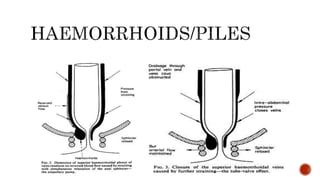
 Pathogenesis Various Theories
1. Portal Hypertension and varicose veins
2. Upright posture of human beings
3. Erosion and weakening of wall of veins due to infections 2o to trauma
4. Hard fecal matter obstructing venous return
5. Raised anal canal resting pressure
6. Hyperplasia of Corpus Cavernosum Recti
 Current View of Pathogenesis
1. Shearing forces acting on anus
2. Caudal displacement of anal cushions and mucosal trauma
3. Fragmentation of supporting structures
4. Loss of elasticity of anal cushions
5. Loss of retraction of anal cushions
 Anal Cushions are hemorrhoidal venous plexuses together with some
arteriovenous anastomoses surrounded by smooth muscle, elastic and fibrous
tissue in the sub epithelial space both above and below dentate line.
 Shield anal canal/ sphincter during evacuation
 Complete the closure of the anal canal
 Contribute 15% of anal canal’s pressure
 Congest during Valsalva maneuver/ Increased intra abdominal pressure
 Their increase in size is the starting point of hemorrhoids
 EPIDEMIOLOGY — The true prevalence of hemorrhoids is uncertain as anorectal
discomfort is often attributed to symptomatic hemorrhoids.
 In a large, cross-sectional survey conducted in the United States, the self-reported
prevalence of symptomatic hemorrhoids was 4.4 percent.
 The prevalence was equal in both sexes, peaked between the ages of 45 and 65,
and declined thereafter.
 Development of symptoms prior to 20 years was unusual.
 ? Caucasians > Afro-Caribbeans
 Local Data??
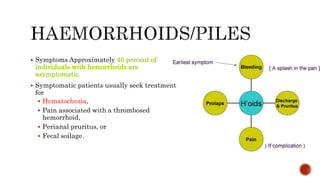
 Symptoms Approximately 40 percent of
individuals with hemorrhoids are
asymptomatic.
 Symptomatic patients usually seek treatment
for
 Hematochezia,
 Pain associated with a thrombosed
hemorrhoid,
 Perianal pruritus, or
 Fecal soilage.
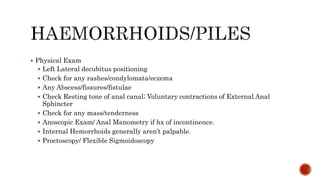
 Physical Exam
 Left Lateral decubitus positioning
 Check for any rashes/condylomata/eczema
 Any Abscess/fissures/fistulae
 Check Resting tone of anal canal; Voluntary contractions of External Anal
Sphincter
 Check for any mass/tenderness
 Anoscopic Exam/ Anal Manometry if hx of incontinence.
 Internal Hemorrhoids generally aren’t palpable.
 Proctoscopy/ Flexible Sigmoidoscopy
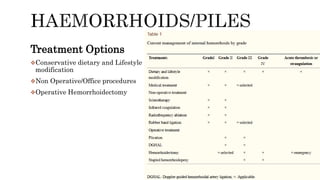
Treatment Options
Conservative dietary and Lifestyle
modification
Non Operative/Office procedures
Operative Hemorrhoidectomy
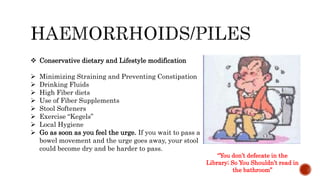
 Conservative dietary and Lifestyle modification
 Minimizing Straining and Preventing Constipation
 Drinking Fluids
 High Fiber diets
 Use of Fiber Supplements
 Stool Softeners
 Exercise “Kegels”
 Local Hygiene
 Go as soon as you feel the urge. If you wait to pass a
bowel movement and the urge goes away, your stool
could become dry and be harder to pass.
“You don’t defecate in the
Library; So You Shouldn’t read in
the bathroom”
Conservative dietary and Lifestyle modification
If Prolapses, Gently push back into anal canal
Use Moist or Wet toilet paper instead of dry toilet paper
Topical Treatments including
Pads, Ointments, Creams, Gels, Lotions, Suppositories
Calcium dobesilate 0.25% ; Anhydrous Lignocaine 3%;
Hydrocortisone acetate 0.25%, Zn 5%.
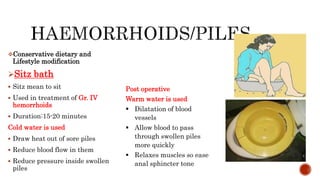
Conservative dietary and
Lifestyle modification
Sitz bath
 Sitz mean to sit
 Used in treatment of Gr. IV
hemorrhoids
 Duration:15-20 minutes
Cold water is used
 Draw heat out of sore piles
 Reduce blood flow in them
 Reduce pressure inside swollen
piles
Post operative
Warm water is used
 Dilatation of blood
vessels
 Allow blood to pass
through swollen piles
more quickly
 Relaxes muscles so ease
anal sphincter tone
Non Operative/Office procedures
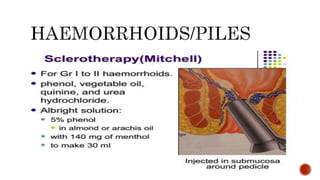
Sclerotherapy
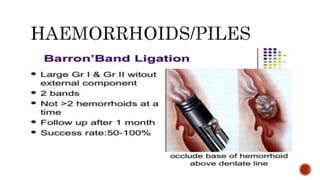
Band Ligation
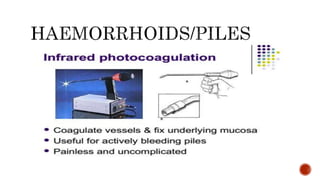
Infra-red coagulation
Cryosurgery
Manual dilatation of anus
Sphicterotomy [Lateral]
Bicap Electrocoagulation
Haemorrhoidolysis
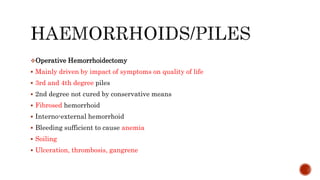
Operative Hemorrhoidectomy
 Mainly driven by impact of symptoms on quality of life
 3rd and 4th degree piles
 2nd degree not cured by conservative means
 Fibrosed hemorrhoid
 Interno-external hemorrhoid
 Bleeding sufficient to cause anemia
 Soiling
 Ulceration, thrombosis, gangrene
Operative Hemorrhoidectomy
 Milligan-Morgan Hemorrhoidectomy [OPEN]
 Ferguson’s Hemorrhoidectomy [CLOSED]
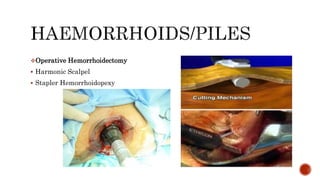
Operative Hemorrhoidectomy
 Harmonic Scalpel
 Stapler Hemorrhoidopexy
Complications of Surgery
 Early Complications
 Post Operative Pain/2-3 Wks.
 Wound Infection
 Post Op Bleeding
 Swelling of Skin Bridges
 Short term incontinence
 Difficult Urination
 Late Complications
 Anal Stenosis
 Anal Fissure
 Fecal Impaction
 Mild Incontinence
 Sub mucous abscess
 Delayed Bleeding
 Skin tags
 Recurrence
 Scope Problems
 Screening the patients Diagnostic yield was only 72 %.
 Different Colonoscopic reporting formats used
 Many Incomplete data fillings; Mostly Duration of procedure.
 Lack of Standard Grading of Bowel Preparation [BBPS].
 Lack of Imaging of Findings.
 Less therapeutic activities done; Mostly Diagnostic.
 No strict follow-up of patients post colonoscopy for complication detection.
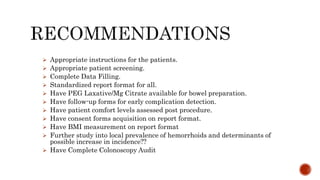
 Appropriate instructions for the patients.
 Appropriate patient screening.
 Complete Data Filling.
 Standardized report format for all.
 Have PEG Laxative/Mg Citrate available for bowel preparation.
 Have follow-up forms for early complication detection.
 Have patient comfort levels assessed post procedure.
 Have consent forms acquisition on report format.
 Have BMI measurement on report format
 Further study into local prevalence of hemorrhoids and determinants of
possible increase in incidence??
 Have Complete Colonoscopy Audit
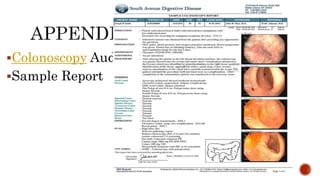
Colonoscopy Audit.xlsx
Sample Report
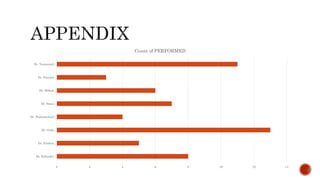
0 2 4 6 8 10 12 14
Dr. Eskinder
Dr. Fisshea
Dr. Geda
Dr. Hailemicheal
Dr. Hana
Dr. Miftah
Dr. Paoulos
Dr. Yemisrach
Count of PERFORMED

Hemorrhoids/ Colonoscopy Audit

  • 1.
    Beka Aberra [R2] SPHMMCGastroenterology Attachment Moderator: Yemiserach Chane, MD, Internist/Gastroenterologist December, 2018
  • 2.
     Objectives  Audit Discussion  Hemorrhoids in Brief  Challenges of the Unit  Recommendations  Appendix
  • 3.
     To Identifycommon Clinical indications for Colonoscopy  To Identify common Colonoscopy findings, and Diagnostic yield  To Discuss on the Audit & Commonest finding  To Figure out some Challenges  To Make recommendations to Improve Current Practice
  • 4.
    Data resources  ColonoscopyReport Papers from November 1- 30 or  From [Tikemt 22 -Hidar 21]  In the Month of November 57Colonoscopies were done.  Colonoscopy Audit.xlsx
  • 5.
    NUMBER PERCENTAGE GENDER MALE31 56.3% FEMALE 24 43.6% AGE GROUPS * < 40 yrs were[18] * >= 40 yrs were [37] 0-9 0 0% 10-19 1 1.8% 20-29 12 21.8% 30-39 5 9% 40-49 10 18.3% 50-59 15 27.3% 60-69 5 9% 70-79 6 11% 80-89 1 1.8%  Patients were Aged between [18-85 years] with Mean Age 46.42 Years; 56.3% Males and 43.6% Females
  • 6.
    0% 5% 10% 15% 20% 25% 30% 0 2 4 6 8 10 12 14 16 0-9 [10-19] [20-29][30-39] [40-49] [50-59] [60-69] [70-79] [80-89] AGE GROUPS Chart Title NUMBER PERCENTAGE
  • 7.
    INDICATIONS NUMBER PERCENTAGE R/oCRC 15 26.30% LOWER GI BLEEDING 8 14% CHRONIC DIARRHEA 7 12.30% UNSPECIFIED INDICATIONS 7 12.30% CONSTIPATION 6 10.60% R/o IBD 4 7% RECTAL MASS 4 7% ABDOMINAL PAIN 2 3.50% SCREENING 2 3.50% ALTERED BOWEL HABITS 1 1.75% ANEMIA 1 1.75% The Commonest Indications being Rule Out CRC [26.3%] followed by LGIB [14%].
  • 8.
  • 9.
    DIAGNOSIS NUMBER PERCENTAGEMALE FEMALE NORMAL 16 28% 10 6 HEMORROIDS 13 22.80% 8 5 COLORECTAL CARCINOMA 8 14% 7 1 POLYP 7 12.20% 6 1 INFLAMMATORY BOWEL DISEASE 5 9% 1 4 NONSPECIFIC ILEITIS/COLITIS 2 3.50% 1 1 DIVERTICULOSIS 2 3.50% 0 2 ULCER [RECTAL & CECAL] 2 3.50% 0 2 IBS 1 1.75% 0 1 TAENIASIS 1 1.75% 0 1
  • 10.
    0% 5% 10% 15% 20% 25% 30% 0 2 4 6 8 10 12 14 16 18 Normal Hemorroids ColorectalCancer Polyps IBD Nonspecific Ileitis/Colitis Ulcer [Rectal/Cecal] Diverticulosis IBS Taeniasis Chart Title Frequency Percent Diagnostic yield is about 72% for colonoscopy of the Total Indications [57]; Normal Findings were [16].  53 % for CRC [15 R/o CRC Indications; 8 Findings]  62.5% for Hemorrhoids [8 LGIB Indication; 5H/3P]
  • 11.
  • 12.
    FINDINGS NORMAL HEMORRHOIDSCRC POLYPS IBD NONSPECIFIC ILEITIS/ COLITIS DIVERTICUL OSIS ULCER [RECTAL/ CECAL] IBS TAENIASI S AGE GROUPS 0-9 0 0 0 0 0 0 0 0 0 0 10-19 0 0 0 0 0 0 0 0 0 1 20-29 3 2 2 1 3 0 0 0 1 0 30-39 0 2 0 0 0 0 1 2 0 0 40-49 3 2 2 1 1 0 1 0 0 0 50-59 7 1 3 2 0 2 0 0 0 0 60-69 0 3 0 2 0 0 0 0 0 0 70-79 3 2 1 0 0 0 0 0 0 0 80-89 0 0 0 1 0 0 0 0 0 0
  • 13.
     Completion ofEndoscopy Reports in Similar Format  Assessment of Bowel Prep Quality  Caecal Intubation Rate  Polyp Detection Rate  Adenoma Detection Rate  Polyp Retrieval Rate  Colonoscopy Withdrawal Time  Rectal Retro-Flexion rate  Safe Sedation Practice  Assessment of Patient Comfort Score  Immediate Adverse Event Rate
  • 14.
  • 15.
    0 5 10 15 20 25 30 35 Poor Not PreparedNot Adequate Good Fair Excellent Dirty Count of PREPARATION Many Endoscopist describe the quality of bowel preparations in global terms like Excellent, Good, Fair or Poor. Usually, these terms are used to describe the overall quality of bowel preparation.  Although these terms are widespread, it is not always clear what exactly is meant by these terms and there may be important differences in how these terms are being interpreted and used.
  • 16.
     Insufficient mucosalvisualization during colonoscopy can result in relevant lesions being missed. This has been shown in studies on colorectal cancer screening programs, where the adenoma detection rate is directly related to the quality of bowel preparation.  It has been suggested that the fact that Colonoscopic surveillance does not prevent right-sided cancers is caused by the often worse quality of cleansing of the right side of the colon.  Poor bowel preparation can also result in difficult progression, an increased risk of complications, prolonged procedure duration and an increase in the amount of sedatives and analgesics required.  The Aronchick scale. This scale grades the adequacy of cleansing of colonic segments or the entire colon, using semi-quantitative descriptors: Excellent/Good/Fair/Poor/Inadequate  The Ottowa bowel preparation scale is another tool to assess adequacy of colonic cleansing; Dividing in 3 Segments; Excellent/Good/Fair/Poor/Inadequate
  • 17.
     The BostonBowel Preparation Scale, is a scoring system, that has an excellent intra- and interobserver reliability, and is proven to be related to endoscopy outcome. The colon is divided in three segments: The right side (including cecum and ascending colon), the transverse colon (including the flexures) and the left sided colon, which includes the descending colon, sigmoid and rectum.  For all three sections cleansing is assessed as follows: 0: Unprepared colon segment with mucosa not seen because of solid stool that cannot be cleared. 1: Portion of mucosa of the colon segment seen, but other areas of the colon not well seen because of staining, residual stool, and/or opaque liquid. 2: Minor amount of residual staining, small fragments of stool and/or opaque liquid, but mucosa of colon segment seen well. 3: Entire mucosa of colon segment seen well with no residual staining, small fragments of stool or opaque liquid.
  • 20.
     Caecal IntubationRate i.e. the proportion of patients in whom there was insertion of the colonoscope tip into caecal caput; reflecting a complete examination. PROCEDURE NUMBER PERCENTAGE CAECAL INTUBATION RATEPROCTOSCOPY 2 3.5% COLONOSCOPY 7 12.3% PANCOLONOSCOPY 42 73.7% 84.2% ILEOCOLONOSCOPY 6 10.5%  Activities that Were Done  Colonoscopic biopsy----26  Removal of Polyp by Cold forceps and Cold snare----5
  • 21.
     Polyp DetectionRate Calculation Method: # of colonoscopy cases with at least one polyp was biopsied or removed/Total # of screening colonoscopies.  Polyps 7/57 [12.3%] vs CRC 8/57 [14%] FINDINGS NORMAL CRC POLYPS AGE GROUPS * < 40 yrs were[2/1] * >= 40 yrs were [6/6] ***Above Age of 40 yrs Fecal Occult Blood testing + DRE/Endoscopic Exams may be necessary 0-9 0 0 0 10-19 0 0 0 20-29 3 2 1 30-39 0 0 0 40-49 3 2 1 50-59 7 3 2 60-69 0 0 2 70-79 3 1 0 80-89 0 0 1
  • 22.
     A retrospectiveanalysis of 640 patients who underwent 681 Colonoscopic examinations between March 1984 and April 1996 was undertaken. The major indications were rectal bleeding (32.8%), change in bowel habit (24.7%), abdominal pain (20.1%), abnormal barium enema (9.8%) and iron deficiency anemia (4.8%).  Total colonoscopy was performed in 79.3% of cases. The Colonoscopic finding was normal in 49.8% of patients. Most of the lesions were benign.  Polyps and carcinoma were found in 9.2% and 7% of patients respectively. 91.3% of the lesions were located distal to the splenic flexure and of the remaining proximal lesions, polyps and carcinoma accounted for only 2.2%. Rectal bleeding produced the highest diagnostic yield (70%) followed by iron deficiency anemia (61.3%), change in bowel habit (48.1%) and abnormal barium enema (47.6%). Lower yields were found in patients with abdominal mass (33.3%), follow up colonoscopy (28.6%) and abdominal pain (26.9%).  Colonoscopy in the investigation of colonic diseases by Endale Kassa; EAMJ 1996
  • 23.
  • 24.
     Conclusion: Hyoscineis used in clinical practice to decrease spasms in the colon during colonoscopy in an effort to improve polyp or adenoma detection. However, this study shows that hyoscine given before the procedure or at time of caecal intubation does not improve polyp or adenoma detection.
  • 26.
     Adverse EventsRate Calculation method: Each regional program will be responsible for determining the tracking measure that is feasible given ITs infrastructure and clerical support. Hospital separations data and transfusion records can be utilized to develop an adverse event monitoring system.
  • 27.
    The most commondetermined colonoscopy clinical indication was to rule out CRC and diagnostic yield was for Hemorrhoids followed by Colorectal Ca and Polyps.
  • 28.
    Engorgement of theHemorrhoidal Venous Plexuses with redundancy of their coverings  Haemorrhoids Haima = Blood Rhoos = Flowing  Piles  Pila = Ball/Swelling in anal canal which may/may not bleed
  • 29.
    Internal hemorrhoidal plexus In submucosa  Drain in superior rectal vein  Communicate with external plexus  Site of communication between portal and systemic veins  Veins at 3, 7 and 11 o’clock position are large External hemorrhoidal plexus  Lies outside muscular coat of anal canal  Communicate freely with internal plexus
  • 30.
    Potential Sites 3 o’clock 7o’clock 11 o’clock
  • 31.
    Below dentate line Varicosities of veins draining  Inferior rectal artery  Lined by squamous epithelium Painful  Prone to thrombosis if vein ruptures (Thrombosed pile) Above dentate line  Varicosities of veins draining  Superior rectal artery  Lined by columnar epithelium Pain insensitive  May prolapse outside anal canal (Prolapsed hemorrhoid)
  • 32.
    While no widelyused classification system of external hemorrhoids exists,  Internal hemorrhoids are graded according to the degree to which they prolapse from the anal canal:
  • 33.
     The developmentof symptomatic hemorrhoids has been associated with  Advancing age,  Diarrhea,  Prolonged sitting,  Straining,  Chronic constipation,  Trauma  Lack of Fiber rich diet
  • 34.
     Secondary Causes Local: Anorectal deformity. Hypotonic Sphincter  Abdominal: Ascites  Pelvic: Gravid Uterus/ Ovarian-Uterine Neoplasms  Portal Hypertension  Neurological: Paraplegia/Multiple Sclerosis
  • 35.
     Pathogenesis VariousTheories 1. Portal Hypertension and varicose veins 2. Upright posture of human beings 3. Erosion and weakening of wall of veins due to infections 2o to trauma 4. Hard fecal matter obstructing venous return 5. Raised anal canal resting pressure 6. Hyperplasia of Corpus Cavernosum Recti
  • 37.
     Current Viewof Pathogenesis 1. Shearing forces acting on anus 2. Caudal displacement of anal cushions and mucosal trauma 3. Fragmentation of supporting structures 4. Loss of elasticity of anal cushions 5. Loss of retraction of anal cushions
  • 38.
     Anal Cushionsare hemorrhoidal venous plexuses together with some arteriovenous anastomoses surrounded by smooth muscle, elastic and fibrous tissue in the sub epithelial space both above and below dentate line.  Shield anal canal/ sphincter during evacuation  Complete the closure of the anal canal  Contribute 15% of anal canal’s pressure  Congest during Valsalva maneuver/ Increased intra abdominal pressure  Their increase in size is the starting point of hemorrhoids
  • 39.
     EPIDEMIOLOGY —The true prevalence of hemorrhoids is uncertain as anorectal discomfort is often attributed to symptomatic hemorrhoids.  In a large, cross-sectional survey conducted in the United States, the self-reported prevalence of symptomatic hemorrhoids was 4.4 percent.  The prevalence was equal in both sexes, peaked between the ages of 45 and 65, and declined thereafter.  Development of symptoms prior to 20 years was unusual.  ? Caucasians > Afro-Caribbeans  Local Data??
  • 42.
     Symptoms Approximately40 percent of individuals with hemorrhoids are asymptomatic.  Symptomatic patients usually seek treatment for  Hematochezia,  Pain associated with a thrombosed hemorrhoid,  Perianal pruritus, or  Fecal soilage.
  • 43.
     Physical Exam Left Lateral decubitus positioning  Check for any rashes/condylomata/eczema  Any Abscess/fissures/fistulae  Check Resting tone of anal canal; Voluntary contractions of External Anal Sphincter  Check for any mass/tenderness  Anoscopic Exam/ Anal Manometry if hx of incontinence.  Internal Hemorrhoids generally aren’t palpable.  Proctoscopy/ Flexible Sigmoidoscopy
  • 45.
    Treatment Options Conservative dietaryand Lifestyle modification Non Operative/Office procedures Operative Hemorrhoidectomy
  • 46.
     Conservative dietaryand Lifestyle modification  Minimizing Straining and Preventing Constipation  Drinking Fluids  High Fiber diets  Use of Fiber Supplements  Stool Softeners  Exercise “Kegels”  Local Hygiene  Go as soon as you feel the urge. If you wait to pass a bowel movement and the urge goes away, your stool could become dry and be harder to pass. “You don’t defecate in the Library; So You Shouldn’t read in the bathroom”
  • 47.
    Conservative dietary andLifestyle modification If Prolapses, Gently push back into anal canal Use Moist or Wet toilet paper instead of dry toilet paper Topical Treatments including Pads, Ointments, Creams, Gels, Lotions, Suppositories Calcium dobesilate 0.25% ; Anhydrous Lignocaine 3%; Hydrocortisone acetate 0.25%, Zn 5%.
  • 48.
    Conservative dietary and Lifestylemodification Sitz bath  Sitz mean to sit  Used in treatment of Gr. IV hemorrhoids  Duration:15-20 minutes Cold water is used  Draw heat out of sore piles  Reduce blood flow in them  Reduce pressure inside swollen piles Post operative Warm water is used  Dilatation of blood vessels  Allow blood to pass through swollen piles more quickly  Relaxes muscles so ease anal sphincter tone
  • 49.
    Non Operative/Office procedures Sclerotherapy BandLigation Infra-red coagulation Cryosurgery Manual dilatation of anus Sphicterotomy [Lateral] Bicap Electrocoagulation Haemorrhoidolysis
  • 53.
    Operative Hemorrhoidectomy  Mainlydriven by impact of symptoms on quality of life  3rd and 4th degree piles  2nd degree not cured by conservative means  Fibrosed hemorrhoid  Interno-external hemorrhoid  Bleeding sufficient to cause anemia  Soiling  Ulceration, thrombosis, gangrene
  • 54.
    Operative Hemorrhoidectomy  Milligan-MorganHemorrhoidectomy [OPEN]  Ferguson’s Hemorrhoidectomy [CLOSED]
  • 55.
    Operative Hemorrhoidectomy  HarmonicScalpel  Stapler Hemorrhoidopexy
  • 56.
    Complications of Surgery Early Complications  Post Operative Pain/2-3 Wks.  Wound Infection  Post Op Bleeding  Swelling of Skin Bridges  Short term incontinence  Difficult Urination  Late Complications  Anal Stenosis  Anal Fissure  Fecal Impaction  Mild Incontinence  Sub mucous abscess  Delayed Bleeding  Skin tags  Recurrence
  • 57.
     Scope Problems Screening the patients Diagnostic yield was only 72 %.  Different Colonoscopic reporting formats used  Many Incomplete data fillings; Mostly Duration of procedure.  Lack of Standard Grading of Bowel Preparation [BBPS].  Lack of Imaging of Findings.  Less therapeutic activities done; Mostly Diagnostic.  No strict follow-up of patients post colonoscopy for complication detection.
  • 58.
     Appropriate instructionsfor the patients.  Appropriate patient screening.  Complete Data Filling.  Standardized report format for all.  Have PEG Laxative/Mg Citrate available for bowel preparation.  Have follow-up forms for early complication detection.  Have patient comfort levels assessed post procedure.  Have consent forms acquisition on report format.  Have BMI measurement on report format  Further study into local prevalence of hemorrhoids and determinants of possible increase in incidence??  Have Complete Colonoscopy Audit
  • 59.
  • 60.
    0 2 46 8 10 12 14 Dr. Eskinder Dr. Fisshea Dr. Geda Dr. Hailemicheal Dr. Hana Dr. Miftah Dr. Paoulos Dr. Yemisrach Count of PERFORMED

Editor's Notes

  • #6 A Single Centre Colonoscopy Audit and Its Importance in Colorectal Carcinoma Detection Rate in the Society J.J.M. Medical College
  • #13 CRC occur at a much younger age in Ethiopia than in the developed world. More than half of the cases were in the rectum. Therefore, the shift of CRC to the right colon reported of elsewhere was not observed. The clinician should expect CRC also in young patients, and most of these carcinomas are still detectable by proctosigmoidoscopy. The frequency of large bowel cancer as seen in Addis Ababa University, Pathology Department. 2000 1 CASE OF HEMORRHOID AGE UNSPECIFIED 1 CASE OF IBD AGE UNSPECIFIED
  • #14 CER Calculation method: For each individual endoscopist = #of procedures reported in synoptic format/Total # of procedures performed per reporting period. BPQ Assessment of Bowel Prep Quality = # of colonoscopies where the bowel quality is recorded / Total Number of Colonoscopies per reporting period. CIR Calculation method = # of caecal intubation events/ # Total number of colonoscopies attempted per reporting period PDR Calculation method: # of colonoscopy cases with at least one polyp was biopsied or removed/Total # of screening colonoscopies ADR Calculation method: # of colonoscopy cases in which an adenoma was removed/ Total # of colonoscopy cases (done for a positive FIT or family history of CRC) PRR Calculation method: # of polyps submitted for pathological review /# of polyps detected with polypectomy attempt. CWT Calculation method: For all colonoscopies in which no lesions are detected, the CWT = Time at which the anus is reached (hh:mm) – time at which withdrawal from cecum commenced (hh:mm) RRF Calculation method: # of retroflexion events/# total number of colonoscopies Safe sedation practice Calculation method: # of cases in which reversal agents (flumazenil/naloxone) or respiratory support were required/ total number of cases PCS Calculation method: # cases with a NAPCOMS score of 6 or higher/Total Number of Cases per reporting period. AER Calculation method: Each regional program will be responsible for determining the tracking measure that is feasible given IT infrastructure and clerical support. Hospital separations data and transfusion records can be utilized to develop an adverse event monitoring system.
  • #15 This is the first colonoscopy audit in this part of Karnataka where data was compiled for 6 years and results were recorded and analysed. The most important difference between our audit and other audits performed is that in our audit all cases were assessed and colonoscopy was performed by the same surgical gastroenterologist so there is hardly any discrepancy in the results, assessment and evaluation. This is as compared to other studies that were conducted on a nationwide basis where multiple centres were included and more than one colonoscopist was involved, the results compiled were from data over 1 month and patients over 16years of age [7] . The advantage of our audit as compared to other studies is that we have a caecal intubation rate of 98% and no discrepancy in results whereas the audit in Lagos, Nigeria claims a caecal intubation rate of 56-76% [8] . We claim the maximum caecal intubation rate compared with other audits. Scope withdrawal time (fastest colonoscopy done) was 9.2 minutes. Terminal ileal intubation was achieved in 98% of the cases. Better patient tolerance of colonoscopy has been achieved over the audit period consistent with improvement in other areas of technical performance. The patient discomfort score was significantly associated with time to caecum. This may be partly because longer procedures are by definition more difficult, but time to caecum is also likely to be a marker of technical expertise. This is suggested by the significant correlation of patient discomfort with mean time to caecum for individual colonoscopist and the inverse relationship with mean annual colonoscopy volume for each colonoscopist. This analysis eliminates the potential bias that longer procedures will be more uncomfortable assuming that the case mix of difficulty is similar for all colonoscopists. Our audit also includes therapeutic indications, for i.e. 8% patients were detected with polyp for which polypectomy was done. Other therapeutic intervention done was colonoscopic balloon dilatation for terminal ileal stricture due to tuberculosis, Crohn’s disease or malignant strictures. Serial multiple biopsies were done for indeterminate colitis in order to achieve a clear diagnosis of inflammatory bowel disease
  • #16 Many endoscopists describe the quality of bowel preparations in global terms like excellent, good, fair or poor. Usually, these terms are used to describe the overall quality of bowel preparation. Although these terms are widespread, it is not always clear what exactly is meant by these terms and there may be important differences in how these terms are being interpreted and used. Dichotomic descriptions like ‘adequate–inadequate’ or ‘satisfactory–unsatisfactory’, are usually used to describe the overall quality of cleansing of the bowel. A potential pitfall with such terms is that they are not solely the result of the mucosal visibility: they also take into account the indication for the investigation. For instance, a poor quality of bowel preparation might be adequate in a colonoscopy performed to investigate bloody diarrhea, but would be inadequate for dysplasia surveillance in a patient with longstanding ulcerative colitis. So, although terms like ‘adequate’ or ‘inadequate’ do not describe the cleansing quality in segmental detail or nuances, these terms do answer the fundamental question: has this been a reliable investigation or not? They are therefore complementary to the formal description of mucosal visibility. One of the scales used to evaluate the quality of bowel preparation is The Aronchick scale [9]. This scale grades the adequacy of cleansing of colonic segments or the entire colon, using semi-quantitative descriptors: Excellent: Small volume of clear liquid, or greater than 95% of surface seen. Good: Large volume of clear liquid covering 5–25% of the surface but greater than 90% of surface seen. Fair: Presence of some semi-solid stool that could be suctioned or washed away but greater than 90% of surface seen. Poor: Semi-solid stool that could not be suctioned or washed away and less than 90% of surface seen. Inadequate: Repreparation needed. The Ottowa bowel preparation scale is another tool to assess adequacy of colonic cleansing [10]. For calculation of the score, the colon is divided in three segments: the right side (cecum and ascending colon), the mid-section (transverse and descending colon) and the rectosigmoid. For these three segments the following score is applied: 0 – Excellent cleanliness: Mucosal detail clearly visible. If fluid is present it is clear. Almost no stool residue. 1 – Good: Some turbid fluid or stool residue but mucosal detail is still visible. Washing and suctioning not necessary. 2 – Fair: Turbid fluid or stool residue obscuring mucosal detail. However, mucosal detail becomes visible with suctioning. Washing not necessary. 3 – Poor: Presence of stool obscuring mucosal detail and contour. However, with suctioning and washing, a reasonable view is obtained. 4 – Inadequate: Solid stool obscuring mucosal detail and contour, despite aggressive washing and suctioning.
  • #17 Additionally, it is a frequent cause for incomplete procedures or interventions not being performed, resulting in the need for a repeat colonoscopy. Moreover, in screening or surveillance endoscopies, suboptimal bowel cleansing often results in shorter surveillance intervals. These important consequences of inadequate preparation, need to be justified by proper documentation of the preparation quality in the endoscopy report.
  • #18 This score is applied during the withdrawal phase, after cleaning maneuvers have been performed as much as possible. The scores of the individual segments are summed, resulting in an overall score ranging from 0 to 9, where 9 represents the best possible score. Due to the straightforward terminology, the Boston bowel preparation score is easy to use in daily practice. There is the excellent training program that can be followed online at 〈www.cori.org/bbps〉 [11]. In a recent study, segment scores of 2 or 3 had an odds ratio of 1.60 and 2.58, respectively, for polyp detection compared with segment scores of 0 or 1 [6]. A recent study from China showed that in screening colonoscopies BBPS scores Z 5 were associated with a higher polyp-detection rate (35%) than scores o 5 (18%) [12]. Most likely, the impact of excellent bowel preparation will be even bigger in flat lesions or serrated lesions.
  • #19 Castor Oil/Bisacodyl vs PEG FDA Approved Purgatives
  • #21 Proctoscopy Circumferential, Obstructing, Fungating mass 3 cm from Anal Verge Proctoscopy Circumferential, Obstructing, mass on Distal Rectum Colonoscopy done upto level of hepatic flexture; Abandoned due to poor preparation; Multiple pedunculated polyps on Sigmoid/Transverse Colon; Multiple Diverticula; Biopsied Colonoscopy tried upto 2cm from anal verge, ulcerated mass obstructing lumen, Biopsy taken. Colonoscopy upto hepatic flexture; Mucosal changes with loss of vascular markings @ transverse colon, multiple biopsies taken. Colonoscopy upto level of hepatic flexture; Obstructing mass with contact bleeding, surrounding mucosal changes; Small Multiple polyps < 0.5 cm; Biopsied Colonoscopy upto Splenic flexture but couldn’t pass on due to Mass; Biopsied. Colonoscopy upto splenic flexture; There was diffuse ulceration of the colon and rectum which bleed easily upon contact; procedure terminated b/c of bleeding. Multiple Biopsy taken. Colonoscopy upto transverse colon; Poor Preparation, Single Flat Polyp biopsied
  • #22 Polyps and carcinoma were found in 9.2% and 7% of patients respectively by ENDALE KASSA
  • #23 However, the diagnostic yield of clinically significant pathology varied widely among the different indications. Therefore, selection of patients for colonoscopy based on the diagnostic yield of each indication may not be practical. Sigmoidoscopy is suggested as the first line of investigation for patients suspected to have colonic diseases, particularly where there is limited trained manpower and facility. Total colonoscopy should be reserved for sigmoidoscopy negative patients with persistent symptoms and high risk cases for malignancy.
  • #28 This figure is closely similar to the 79.0% diagnostic yield found by Ismaila and Misauno in Jos, Nigeria.7 Studies in the West African sub‑region carried out by Mbengue etal.,8 and Dakubo etal.,9 in Senegal and Ghana, respectively, revealed a similarly high diagnostic yield. However, the high diagnostic yield in our study contrasts with the 48.0% obtained by Sahu et al.,3 amongst their Indian patients and the 27.2% found by Siddique etal.,10 Furthermore, it is higher than the 21.0% diagnostic yield obtained by Al‑shamali etal.,11 amongst the Saudis. The differences in the diagnostic yield may be due to varying sample sizes in the studies, the differences in the spectrum of colonic diseases seen in the different regions of the world, and the different selection criteria and indications for colonoscopy. Studies have shown that the highest diagnostic yield is found in patients having lower GI bleeding, mass lesions and polyps as demonstrated by Morini et al.,12 Kassa,13 Lee et al.,14 and Rex15 in their work. Rex, in his study amongst Americans, demonstrated that colonoscopy for bleeding indications such as positive faecal occult blood test, emergent or non‑emergent rectal bleeding, melaena with a negative upper GI endoscopy and iron deficiency anaemia has a substantial yield for cancers. The exact incidence of haemorrhoids is diffiult to ascertain, as many patients with minor lesions do not seek medical advice. In this audit, haemorrhoids were the most common diagnosis with a prevalence of 26% similar to Nigeria where they reported a proportion of 21%11. Interestingly, another study from Nigeria reported the prevalence as high as 43%12. The same pattern of disease diagnosis is seen in the developed world. Riss et al from Austria noted that 39% of their study participants suffered from haemorrhoids30.Rectal bleeding is a common presentation in patients with haemorrhoids. Nigeria reports an older population of patients acquiring haemorrhoids, the highest frequency being in the 61-70 age group; which correlates with Austria’s mean age of haemorrhoid diagnosis of 61.68 years11,30. Korea reports a slightly lower age group, 40-59 years31. In this study, the mean age was 43 years. High body mass index (BMI) has been linked to the development of haemorrhoids30,32, but we did not have data on BMI in this audit. This was the fist colonoscopy audit done in a Zambian population but had the limitation of incomplete entries. This reduced the number of reports included in the fial analysis. The lack of histological confimation of the tumours seen during endoscopy is another limitation of this retrospective audit. In conclusion, the profie of disease detected during colonoscopy in Zambia is similar to other centers in Africa, with a much younger population of individuals with colorectal tumours.
  • #29 ●Hemorrhoids are normal vascular structures in the anal canal, arising from a channel of arteriovenous connective tissues that drains into the superior and inferior hemorrhoidal veins ●External hemorrhoids are located distal to the dentate line ●Internal hemorrhoids are located proximal to the dentate line ●Mixed hemorrhoids are located both proximal and distal to the dentate line
  • #31 The exact pathophysiology of hemorrhoidal development is poorly understood. For years the theory of varicose veins, which postulated that hemorrhoids were caused by varicose veins in the anal canal, had been popular but now it is obsolete because hemorrhoids and anorectal varices are proven to be distinct entities. In fact, patients with portal hypertension and varices do not have an increased incidence of hemorrhoids[5]. Today, the theory of sliding anal canal lining is widely accepted[6]. This proposes that hemorrhoids develop when the supporting tissues of the anal cushions disintegrate or deteriorate. Hemorrhoids are therefore the pathological term to describe the abnormal downward displacement of the anal cushions causing venous dilatation. There are typically three major anal cushions, located in the right anterior, right posterior and left lateral aspect of the anal canal, and various numbers of minor cushions lying between them[7] (Figure ​(Figure1).1). The anal cushions of patients with hemorrhoids show significant pathological changes. These changes include abnormal venous dilatation, vascular thrombosis, degenerative process in the collagen fibers and fibroelastic tissues, distortion and rupture of the anal subepithelial muscle (Figure ​(Figure2).2). In addition to the above findings, a severe inflammatory reaction involving the vascular wall and surrounding connective tissue has been demonstrated in hemorrhoidal specimens, with associated mucosal ulceration, ischemia and thrombosis[2].
  • #34 Patients on anticoagulation and antiplatelet therapy, although it is unclear if the association is causal.
  • #37 Mucosal piles develop when the strength of the anal sphincter is impaired. Normally, sudden or transient increases in intra-abdominal pressure are countered by simultaneous strong contraction of the anal sphincter (Fig. 4). But in pregnant women and the aged the sphincter is unable to contract sufficiently to counteract these rises in pressure
  • #38 The pathogenesis of symptomatic internal hemorrhoids is not well understood, but may be due to the following factors: ●Deterioration of the connective tissue that anchors hemorrhoids [3]. It is hypothesized that with advancing age or aggravating conditions the weakly anchored hemorrhoids then gradually begin to bulge, and "slide" into the anal canal leading to progressive symptoms. ●Hypertrophy or increased tone of the internal anal sphincter [4,5]. During defecation, the fecal bolus forces the hemorrhoidal plexus against the internal sphincter, which causes them to enlarge and become symptomatic. ●Abnormal distension of the arteriovenous anastomoses within the hemorrhoidal cushions [6]. In support of this hypothesis is the observation that hemorrhoids regress following ligation of the hemorrhoidal arteries [7]. ●Abnormal dilatation of the veins of the internal hemorrhoidal venous plexus.
  • #39 Several enzymes or mediators involving the degradation of supporting tissues in the anal cushions have been studied. Among these, matrix metalloproteinase (MMP), a zinc-dependent proteinase, is one of the most potent enzymes, being capable of degrading extracellular proteins such as elastin, fibronectin, and collagen. MMP-9 was found to be over-expressed in hemorrhoids, in association with the breakdown of elastic fibers[8]. Activation of MMP-2 and MMP-9 by thrombin, plasmin or other proteinases resulted in the disruption of the capillary bed and promotion of angioproliferative activity of transforming growth factor β (TGF-β)[9]. Recently, increased microvascular density was found in hemorrhoidal tissue, suggesting that neovascularization might be another important phenomenon of hemorrhoidal disease. In 2004, Chung et al[4] reported that endoglin (CD105), which is one of the binding sites of TGF-β and is a proliferative marker for neovascularization, was expressed in more than half of hemorrhoidal tissue specimens compared to none taken from the normal anorectal mucosa. This marker was prominently found in venules larger than 100 μm. Moreover, these workers found that microvascular density increased in hemorrhoidal tissue especially when thrombosis and stromal vascular endothelial growth factors (VEGF) were present. Han et al[8] also demonstrated that there was a higher expression of angiogenesis-related protein such as VEGF in hemorrhoids. Regarding the study of morphology and hemodynamics of the anal cushions and hemorrhoids, Aigner et al[3,10] found that the terminal branches of the superior rectal artery supplying the anal cushion in patients with hemorrhoids had a significantly larger diameter, greater blood flow, higher peak velocity and acceleration velocity, compared to those of healthy volunteers. Moreover, an increase in arterial caliber and flow was well correlated with the grades of hemorrhoids. These abnormal findings still remained after surgical removal of the hemorrhoids, confirming the association between hypervascularization and the development of hemorrhoids. Using an immunohistochemical approach, Aigner et al[3] also identified a sphincter-like structure, formed by a thickened tunica media containing 5-15 layers of smooth muscle cells, between the vascular plexus within the subepithelial space of the anal transitional zone in normal anorectal specimens. Unlike the normal specimens, hemorrhoids contained remarkably dilated, thin-walled vessels within the submucosal arteriovenous plexus, with absent or nearly-flat sphincter-like constriction on the vessels. These investigators concluded that a smooth muscle sphincter in the arteriovenous plexus helps in reducing the arterial inflow, thus facilitating an effective venous drainage. Aigner et al[3] then proposed that, if this mechanism is impaired, hyperperfusion of the arteriovenous plexus will lead to the formation of hemorrhoids. Based on the histological findings of abnormal venous dilatation and distortion in hemorrhoids, dysregulation of the vascular tone might play a role in hemorrhoidal development. Basically, vascular smooth muscle is regulated by the autonomic nervous system, hormones, cytokines and overlying endothelium. Imbalance between endothelium-derived relaxing factors (such as nitric oxide, prostacyclin, and endothelium-derived hyperpolarizing factor) and endothelium-derived vasoconstricting factors (such as reactive oxygen radicals and endothelin) causes several vascular disorders[11]. In hemorrhoids, nitric oxide synthase, an enzyme which synthesizes nitric oxide from L-arginine, was reported to increase significantly[8]. Several physiological changes in the anal canal of patients with hemorrhoids have been observed. Sun et al[12] revealed that resting anal pressure in patients with non-prolapsing or prolapsing hemorrhoids was much higher than in normal subjects, whereas there was no significant change in the internal sphincter thickness. Ho et al[13] performed anorectal physiological studies in 24 patients with prolapsed hemorrhoids and compared with results in 13 sex- and age-matched normal subjects. Before operation, those with hemorrhoids had significantly higher resting anal pressures, lower rectal compliance, and more perineal descent. The abnormalities found reverted to the normal range within 3 mo after hemorrhoidectomy, suggesting that these physiological changes are more likely to be an effect, rather than the cause, of hemorrhoidal disease.
  • #43 Hemorrhoidal bleeding is almost always painless and is usually associated with a bowel movement, although can be spontaneous. The blood is typically bright red and coats the stool at the end of defecation or may drip into the toilet. Occasionally, bleeding can be copious and can be exacerbated by straining. In rare cases, chronic blood loss can cause iron deficiency anemia with associated symptoms of weakness, headache, irritability, and varying degrees of fatigue and exercise intolerance. Irritation or itching of perianal skin is a common symptom of hemorrhoidal disease. These symptoms result from a combination of factors: •Internal hemorrhoids are covered with columnar epithelium leading to mucous deposition on the perianal skin that can cause pruritus. •Prolapse of internal hemorrhoids may permit leakage of rectal contents. •Skin tags associated with external hemorrhoids may be difficult to clean, resulting in prolonged contact of fecal material with the perianal skin and local irritation. •Patients with leakage may clean aggressively, irritating the perineum and also allowing contact of fecal material with denuded skin. Patients may present with acute onset of perianal pain and a palpable perianal "lump" from thrombosis. Thrombosis is more common with external hemorrhoids as compared with internal hemorrhoids. Thromboses of external hemorrhoids may be associated with excruciating pain as the overlying perianal skin is highly innervated and becomes distended and inflamed. Thrombosed internal hemorrhoids can also cause pain, but to a lesser degree than external hemorrhoids. An exception is when internal hemorrhoids become prolapsed, strangulated, and develop gangrenous changes due to the associated lack of blood supply.
  • #46 Minimal Invasive procedures
  • #47 A recent study out of Japan took a closer look at different defecation positions in order to test the theory. Six healthy volunteers participated in the study which analyzed anorectal angles, intra-abdominal pressure and anal pressure, in the standard sitting position, flexed hip position and full squat position.  What they found was that in the squatting position the abdominal pressure was lower. Although the sample size was small, these finding draw attention to the potential significance of the squatting posture.
  • #48 For the second year in a row the charity Water Aid has highlighted Ethiopia's poor record when it comes to access to toilets at home. On World Toilet Day, it has reported that 93%of Ethiopians lack basic sanitation where they live, making it the lowest ranked nation on the continent. For Chad, Madagascar and South Sudan the figure is 90%. In sub-Saharan Africa overall more than 340 million children do not have access to a decent toilet, thereby increasing the risk of death from diseases like diarrhoea, Water Aid says. The report also highlighted the lack of toilets in schools for children, with 60% of schools in the region without toilets.
  • #50 • Freezing of hemorrhoidal tissue • liquid Nitrogen probe at -160oC for 3 minutes • Applied for 10-15 minutes • Over upper part of hemorrhoidal area • Profuse watery discharge is most common complication (in first 3 hrs)
  • #51 Quick, Painless, Follow-up/ 6wks, 2-3 Further injections required. C/I Prolapsed Piles; Infections Complications Retroperitoneal sepsis; Portal Pyemia; Necrotizing Fascitis; Prostatitis; Impotence; Rectovaginal Fistula
  • #52 Fix Connective tissue to rectal wall; Necrosis in 24-48 hrs.; Slough off in 7 days. Complications Anal Stenosis; Pain from dentate line inclusion; Vasovagal shock; sepsis.