Heterocyclic Compounds
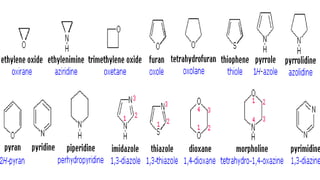
 Other elements such as nitrogen and oxygen can be included in the
rings. When they are, the compounds are called heterocyclic
compounds. The hetero- part of the name means that more than one
kind of element is included within the ring and -cyclic, of course,
indicates that there is at least one ring present in the compound.
 Compounds classified as heterocyclic probably constitute the largest
and most varied family of organic compounds. After all, every
carbocyclic compound, regardless of structure and functionality, may in
principle be converted into a collection of heterocyclic analogs by
replacing one or more of the ring carbon atoms with a different
element. Even if we restrict our consideration to oxygen, nitrogen and
sulfur (the most common heterocyclic elements), the permutations and
combinations of such a replacement are numerous.
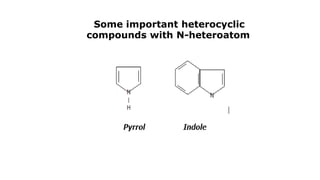
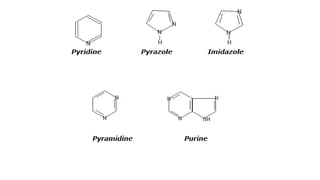
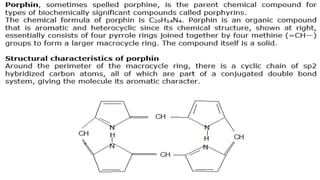
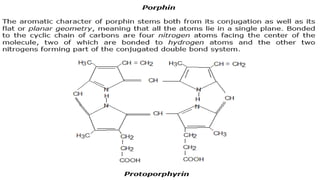
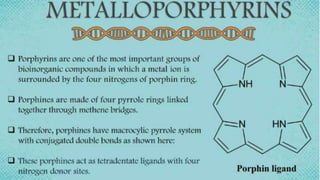
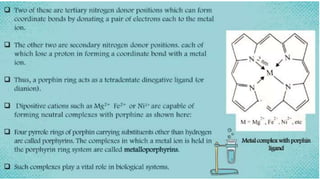
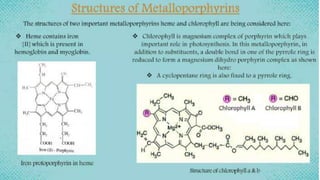
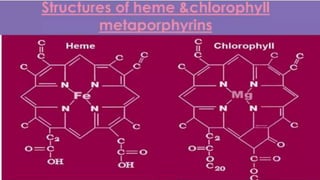
Some important heterocyclic
compounds with N-heteroatom
heme and chlorophyll.pptx

heme and chlorophyll.pptx

  • 1.
  • 2.
     Other elementssuch as nitrogen and oxygen can be included in the rings. When they are, the compounds are called heterocyclic compounds. The hetero- part of the name means that more than one kind of element is included within the ring and -cyclic, of course, indicates that there is at least one ring present in the compound.  Compounds classified as heterocyclic probably constitute the largest and most varied family of organic compounds. After all, every carbocyclic compound, regardless of structure and functionality, may in principle be converted into a collection of heterocyclic analogs by replacing one or more of the ring carbon atoms with a different element. Even if we restrict our consideration to oxygen, nitrogen and sulfur (the most common heterocyclic elements), the permutations and combinations of such a replacement are numerous.
  • 4.