"HEDONISM"
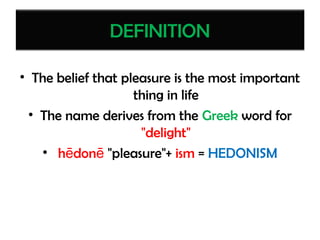
DEFINITION
• The belief that pleasure is the most important
thing in life
• The name derives from the Greek word for
"delight"
• h donē ē "pleasure"+ ism = HEDONISM
TYPES OF HEDONISM
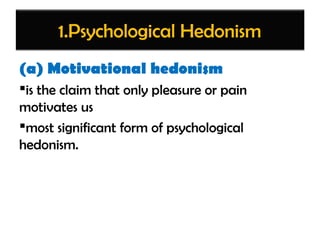
1.Psychological Hedonism
(a) Motivational hedonism
is the claim that only pleasure or pain
motivates us
most significant form of psychological
hedonism.
(b) Normative Hedonism
• is the claim that all and only pleasure has worth or
value, and all and only pain has disvalue.
• Jeremy Bentham endorsed both sorts of hedonism in
his An Introduction to the Principles of Morals and Legislation:
“Nature has placed mankind under the governance of two
sovereign masters, pain, and pleasure. It is for them
alone to point out what we ought to do, as well as to
determine what we shall do” (Bentham 1789)
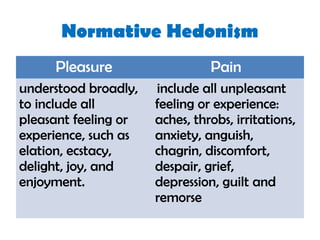
Normative Hedonism
Pleasure Pain
understood broadly,
to include all
pleasant feeling or
experience, such as
elation, ecstacy,
delight, joy, and
enjoyment.
include all unpleasant
feeling or experience:
aches, throbs, irritations,
anxiety, anguish,
chagrin, discomfort,
despair, grief,
depression, guilt and
remorse
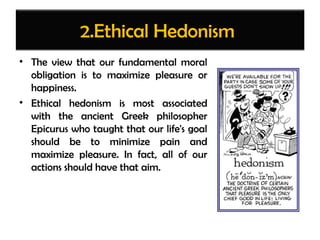
2.Ethical Hedonism
• The view that our fundamental moral
obligation is to maximize pleasure or
happiness.
• Ethical hedonism is most associated
with the ancient Greek philosopher
Epicurus who taught that our life's goal
should be to minimize pain and
maximize pleasure. In fact, all of our
actions should have that aim.
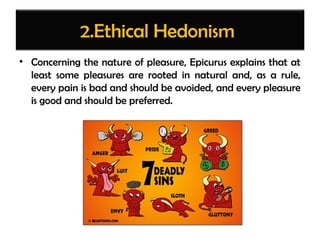
2.Ethical Hedonism
• Concerning the nature of pleasure, Epicurus explains that at
least some pleasures are rooted in natural and, as a rule,
every pain is bad and should be avoided, and every pleasure
is good and should be preferred.

Hedonism

  • 1.
  • 2.
    DEFINITION • The beliefthat pleasure is the most important thing in life • The name derives from the Greek word for "delight" • h donē ē "pleasure"+ ism = HEDONISM
  • 3.
  • 4.
    1.Psychological Hedonism (a) Motivationalhedonism is the claim that only pleasure or pain motivates us most significant form of psychological hedonism.
  • 5.
    (b) Normative Hedonism •is the claim that all and only pleasure has worth or value, and all and only pain has disvalue. • Jeremy Bentham endorsed both sorts of hedonism in his An Introduction to the Principles of Morals and Legislation: “Nature has placed mankind under the governance of two sovereign masters, pain, and pleasure. It is for them alone to point out what we ought to do, as well as to determine what we shall do” (Bentham 1789)
  • 6.
    Normative Hedonism Pleasure Pain understoodbroadly, to include all pleasant feeling or experience, such as elation, ecstacy, delight, joy, and enjoyment. include all unpleasant feeling or experience: aches, throbs, irritations, anxiety, anguish, chagrin, discomfort, despair, grief, depression, guilt and remorse
  • 7.
    2.Ethical Hedonism • Theview that our fundamental moral obligation is to maximize pleasure or happiness. • Ethical hedonism is most associated with the ancient Greek philosopher Epicurus who taught that our life's goal should be to minimize pain and maximize pleasure. In fact, all of our actions should have that aim.
  • 8.
    2.Ethical Hedonism • Concerningthe nature of pleasure, Epicurus explains that at least some pleasures are rooted in natural and, as a rule, every pain is bad and should be avoided, and every pleasure is good and should be preferred.