NAME : SUMIT KUMAR
CLASS : 10 ‘E’
ROLL NO. : 28
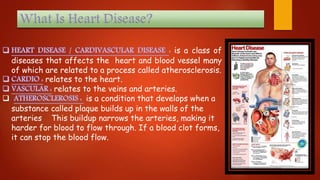
is a class of
diseases that affects the heart and blood vessel many
of which are related to a process called atherosclerosis.
relates to the heart.
relates to the veins and arteries.
 is a condition that develops when a
substance called plaque builds up in the walls of the
arteries This buildup narrows the arteries, making it
harder for blood to flow through. If a blood clot forms,
it can stop the blood flow.
TYPES OF HEART DISEASE :
 Coronary artery disease
 Heart attack
 Arrhythmias
 Hole in heart
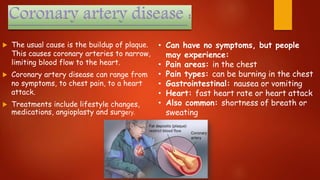
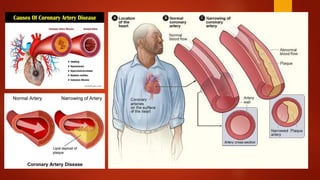
 The usual cause is the buildup of plaque.
This causes coronary arteries to narrow,
limiting blood flow to the heart.
 Coronary artery disease can range from
no symptoms, to chest pain, to a heart
attack.
 Treatments include lifestyle changes,
medications, angioplasty and surgery.
• Can have no symptoms, but people
may experience:
• Pain areas: in the chest
• Pain types: can be burning in the chest
• Gastrointestinal: nausea or vomiting
• Heart: fast heart rate or heart attack
• Also common: shortness of breath or
sweating
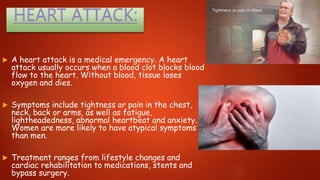
 A heart attack is a medical emergency. A heart
attack usually occurs when a blood clot blocks blood
flow to the heart. Without blood, tissue loses
oxygen and dies.
 Symptoms include tightness or pain in the chest,
neck, back or arms, as well as fatigue,
lightheadedness, abnormal heartbeat and anxiety.
Women are more likely to have atypical symptoms
than men.
 Treatment ranges from lifestyle changes and
cardiac rehabilitation to medications, stents and
bypass surgery.
 Symptoms include tightness or pain in the chest, neck, back or arms, as well as
fatigue, lightheadedness, abnormal heartbeat and anxiety. Women are more
likely to have atypical symptoms than men.
 Pain types: can be burning in the chest, crushing, like a clenched fist in the
chest, radiating from the chest, sudden in the chest, or mild
 Pain circumstances: can occur during rest
 Whole body: dizziness, fatigue, light-headedness, clammy skin, cold sweat, or
sweating
 Gastrointestinal: indigestion, nausea, or vomiting
 Chest: discomfort, fullness, or tightness
 Neck: discomfort or tightness
 Arm: discomfort or tightness
 Also common: anxiety, feeling of impending doom, sensation of an abnormal
heartbeat, shortness of breath, or shoulder discomfort
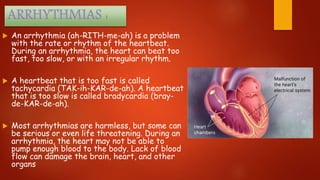
 An arrhythmia (ah-RITH-me-ah) is a problem
with the rate or rhythm of the heartbeat.
During an arrhythmia, the heart can beat too
fast, too slow, or with an irregular rhythm.
 A heartbeat that is too fast is called
tachycardia (TAK-ih-KAR-de-ah). A heartbeat
that is too slow is called bradycardia (bray-
de-KAR-de-ah).
 Most arrhythmias are harmless, but some can
be serious or even life threatening. During an
arrhythmia, the heart may not be able to
pump enough blood to the body. Lack of blood
flow can damage the brain, heart, and other
organs
Some Tips to Prevent Heart Disease
And Stroke
1. Take responsibility for your health.
2. Know your risks.
3. Don’t smoke or expose yourself to second-hand smoke.
4. Maintain a healthy blood pressure.
5. Monitor your cholesterol (blood lipids).
6. Limit your calories.
7. Make exercise a daily habit.
8. Pick your pills wisely.
9. Reduce stress.
10. Stay informed: Science changes constantly.
HEART PROBLEMS  AND ITS TYPES BY SUMIT KUMAR

HEART PROBLEMS AND ITS TYPES BY SUMIT KUMAR

  • 1.
    NAME : SUMITKUMAR CLASS : 10 ‘E’ ROLL NO. : 28
  • 3.
    is a classof diseases that affects the heart and blood vessel many of which are related to a process called atherosclerosis. relates to the heart. relates to the veins and arteries.  is a condition that develops when a substance called plaque builds up in the walls of the arteries This buildup narrows the arteries, making it harder for blood to flow through. If a blood clot forms, it can stop the blood flow.
  • 4.
    TYPES OF HEARTDISEASE :  Coronary artery disease  Heart attack  Arrhythmias  Hole in heart
  • 5.
     The usualcause is the buildup of plaque. This causes coronary arteries to narrow, limiting blood flow to the heart.  Coronary artery disease can range from no symptoms, to chest pain, to a heart attack.  Treatments include lifestyle changes, medications, angioplasty and surgery. • Can have no symptoms, but people may experience: • Pain areas: in the chest • Pain types: can be burning in the chest • Gastrointestinal: nausea or vomiting • Heart: fast heart rate or heart attack • Also common: shortness of breath or sweating
  • 7.
     A heartattack is a medical emergency. A heart attack usually occurs when a blood clot blocks blood flow to the heart. Without blood, tissue loses oxygen and dies.  Symptoms include tightness or pain in the chest, neck, back or arms, as well as fatigue, lightheadedness, abnormal heartbeat and anxiety. Women are more likely to have atypical symptoms than men.  Treatment ranges from lifestyle changes and cardiac rehabilitation to medications, stents and bypass surgery.
  • 8.
     Symptoms includetightness or pain in the chest, neck, back or arms, as well as fatigue, lightheadedness, abnormal heartbeat and anxiety. Women are more likely to have atypical symptoms than men.  Pain types: can be burning in the chest, crushing, like a clenched fist in the chest, radiating from the chest, sudden in the chest, or mild  Pain circumstances: can occur during rest  Whole body: dizziness, fatigue, light-headedness, clammy skin, cold sweat, or sweating  Gastrointestinal: indigestion, nausea, or vomiting  Chest: discomfort, fullness, or tightness  Neck: discomfort or tightness  Arm: discomfort or tightness  Also common: anxiety, feeling of impending doom, sensation of an abnormal heartbeat, shortness of breath, or shoulder discomfort
  • 9.
     An arrhythmia(ah-RITH-me-ah) is a problem with the rate or rhythm of the heartbeat. During an arrhythmia, the heart can beat too fast, too slow, or with an irregular rhythm.  A heartbeat that is too fast is called tachycardia (TAK-ih-KAR-de-ah). A heartbeat that is too slow is called bradycardia (bray- de-KAR-de-ah).  Most arrhythmias are harmless, but some can be serious or even life threatening. During an arrhythmia, the heart may not be able to pump enough blood to the body. Lack of blood flow can damage the brain, heart, and other organs
  • 10.
    Some Tips toPrevent Heart Disease And Stroke 1. Take responsibility for your health. 2. Know your risks. 3. Don’t smoke or expose yourself to second-hand smoke. 4. Maintain a healthy blood pressure. 5. Monitor your cholesterol (blood lipids). 6. Limit your calories. 7. Make exercise a daily habit. 8. Pick your pills wisely. 9. Reduce stress. 10. Stay informed: Science changes constantly.