Entresto: The true breakthrough in
shifting the treatment paradigm of HF
DR. Hasan Mahmud Iqbal.
MBBS, BCS, MACC, MD.
Consultant Cardiology.
Code: COM/ENT/23/11
Valid: 31 Dec, 2023
Universal Definition1
of Heart Failure by HFSA, HFA-ESC & JHFS
Current or prior symptoms
and/or signs caused by a
structural and/or functional
cardiac abnormality
(determined by any one of the
following:
• EF <50%
• Abnormal cardiac chamber
enlargement
• E/E′ >15
• Moderate/severe ventricular
hypertrophy
• Moderate/severe valvular
obstructive/regurgitant lesion)
Evidence of cardiogenic
pulmonary or systemic
congestion at rest or with
provocation
NPs
(pg/mL)
Ambulatory
patients
Hospitalized/
decompensated
patients
BNP ≥35 ≥100
NT-proBNP ≥125 ≥300
Elevated natriuretic
peptides
Or
Determined by
• Diagnostic modalities such as imaging
(e.g. by chest X-ray or elevated filling pressures by
echocardiography), or
• Hemodynamic measurement (e.g. right heart
catheterization, pulmonary artery catheter) at rest or
provocation (e.g. exercise)
AND
corroborated
by
HF is a clinical syndrome with: Either
EF, ejection fraction; E/E’, the ratio of the early transmitral flow velocity and the early mitral annular velocity; BNP, brain natriuretic peptide; NPs, natriuretic peptides;
NT-proBNP, N-terminal pro−B-type natriuretic peptide; HF, heart failure
The proposed universal definition helps to improve patient care by simplifying diagnosis of HF1
1. Bozkurt B, et al. Universal definition and classification of heart failure. J Card Fail. 2021;27(4):387-413
Heart Failure Classification
The guidelines differ with respect to the LVEF cut-off limits for classification of HF as HFrEF,
HFmrEF, and HFpEF
Types3
HFSA 20105 ACCF-AHA
20134 2016 ESC3
Universal Definition 20212
2021 ESC HF1
HFrEF <50% ≤40% <40% ≤40% ≤40%
HFmrEF – – 40–49% 41–49% 41–49%
HFpEF ≥50% ≥50% ≥50% ≥50% ≥50%
HFimpEF
– – –
≤40% at BL
≥10 point increase from BL
>40% on 2nd
measurement
≥50%,
with previous
LVEF ≤40%*
* The 2021 ESC HF Guidelines do not mention HFimpEF as a separate type of HF
1. McDonagh T, et al. 2021 ESC Guidelines for the diagnosis and treatment of acute and chronic heart failure. Eur Heart J. 2021; 00:1–28;
2. Bozkurt B, et al. Universal definition and classification of heart failure. J Card Fail. 2021;27(4):387-413;
3. Ponikowski P, et al. 2016 ESC Guidelines for the diagnosis and treatment of acute and chronic heart failure. Eur Heart J. 2016; 37:2129–2200:
4. Yancy CW, et al. 2013 ACC/AHA Guideline for the management of heart failure. Circulation. 2013;128:e240–e327.
5. Lidenfeld J, et al. HFSA 2010 Comprehensive heart failure practice guideline. J Card Fail. 2010;16:e1–194.
Heart failure is a progressive disease leading to:3–11
HF is associated with a devastating burden on patients1–10
HF, heart failure; HFpEF, heart failure with preserved ejection fraction.
1. Savarese G & Lund LH. Cardiac Failure Review 2017;3:7–11; 2. Dunlay SM, Roger VL, Redfield MM. Nature Reviews Cardiology 2017;14:591–602; 3. Ponikowski P, et
al. Eur Heart J 2016; 37:2129–2000; 4. Maggioni AP, et al. Eur J Heart Fail 2010;12:1076–84; 5. Ahmed A, et al. Am Heart J 2006;151:444–450; 6. Gheorghiade M, et al.
Am J Cardiol 2005;96:11G–17G; 7. Gheorghiade M & Pang PS. J Am Coll Cardiol 2009;53:557–573; 8. Holland R, et al. J Card Fail 2010;16:150–156; 9. Muntwyler J, et
al. Eur Heart J 2002;23:1861–1866; 10. McCullough PA, et al. J Am Coll Cardiol 2002;39:60–69; 11. McMurray JJ, et al. Eur Heart J. 2012;33:1787–1847.
Increased
hospitalization
Increased
mortality
Reduced
quality of life
26million people
have HF
GLOBALLY
50%
are classed
as HFpEF1,2
Heart Failure is deadlier than many cancers
1. National Cancer Institute. Cancer stat fact sheets. Available at: http://seer.cancer.gov/statfacts. Accessed 31 May 2016;
2. Roger et al. JAMA 2004;292:344–50
Physical & mental wellbeing are compromised in HF1
patients
HF, heart failure.
1. Hobbs FDR, et al. European Heart Journal 2002; 23: 1867–1876; 2. Calvert MJ, et al. Eur J Heart Fail 2005; 7:243–51.
Social2
50%
have anxiety
or depression
30% feel
a loss of
control in
their lives
66%
have mobility
problems
76%
have difficulty
performing daily
tasks
>60% feel tired,
fatigued or low on energy
60%
find recreational
pastimes difficult
40% struggle
to relate to or
do things with
friends or family
Physical2
Emotional2
HF is a progressive disease where cardiac structure
and function continue to deteriorate1–7
Diagram adapted from reference Gheroghiade M, et al. 2005.
HF, heart failure.
1. Ahmed A, et al. Am Heart J 2006;151:444–450; 2. Gheorghiade M, et al. Am J Cardiol 2005;96:11G–17G; 3. Gheorghiade M & Pang PS. J Am Coll
Cardiol 2009;53:557–573; 4. Holland R, et al. J Card Fail 2010;16:150–156; 5. Muntwyler J, et al. Eur Heart J 2002;23:1861–1866; 6. McCullough PA, et al.
J Am Coll Cardiol 2002;39:60–69; 7. McMurray JJ, et al. Eur Heart J. 2012;33:1787–1847
Acutely
decompensated
Compensated
Chronically
decompensated
Clinical
status
Death
Episode of acute
decompensation
Disease progression
Increasing frequency of
acute events and disease
progression leads to
increasingly symptomatic
patients with high rates
of hospitalization and
increased risk
of mortality1–7
Prevalence of HFpEF
Approximately half of patients presenting with symptoms of HF have HFpEF
In patients with clinical HF,
the prevalence of HFpEF is
estimated to be
approximately 50%1
Patients with HFpEF were
older and more likely to be
female than those with
HFrEF3
The proportion of incident
cases of HFpEF increased
from 47.8% in 2000–2003 to
52.3% in 2008–20102
By 2020, 65% of HF hospitalizations will be attributed to HFpEF4
HF, heart failure; HFrEF, heart failure with preserved ejection fraction; HFrEF, heart failure with reduced ejection fraction.
1. Yancy CW et al. Circulation. 2013;128:e240-e327; 2. Gerber Y et al. JAMA Intern Med. 2015;175(6):996-1004; 3. Shah KS et al. J Am Coll Cardiol.
2017;70(20):2476-2486; 4. Oktay AA et al. Curr Heart Fail Rep. 2013; 10(4): doi:10.1007/s11897-013-0155-7.
0 20 40 60 80 100
10 30 50 70 90
HFpEF is associated with poor outcomes and reduced
life expectancy
CV, cardiovascular; HF, heart failure; HFpEF, heart failure with preserved ejection fraction.
1. Gerber Y, et al. JAMA Intern Med 2015;175:996–1004; 2. Zarrinkoub R, et al. Eur J Heart Fail 2013; 15:995–1002. 3. Maggioni AP, et al. Eur J Heart Fail 2010;12:1076–
84; 4. Nieminen MS, et al. Eur Heart J 2006; 27:2725–2736; 5. Cleland JGF, et al. Eur Heart J 2003;24:442–63; 6. Saczynski JS, et al. J Am Geriatr Soc 2009;57:1587–94;
7. Nicol ED, et al. Heart 2008;94:172–7; 8. Maggioni AP, et al. Eur J Heart Fail 2013;15:808–17; 9. Curtis LH, et al. Arch Int Med 2008; 168:2481–8; 10. Goldberg RJ, et al.
Arch Int Med 2007;167:490–6; 11. Gerber Y, et al. JAMA Intern Med 2015;175:996–1004; 12. Cheng RK, et al. Am Heart J 2014;168:721–730; 13. Carson PE, et al. JACC
Hear Fail 2015;3:429–411.
Approximately 50% of patients die within 5 years following diagnosis of HF1,2
3–15% of hospitalized HF patients die in hospital3–7
Following hospitalization for HF, up to 37% of patients die within 1 year8–10
10–36% of patients with HFpEF die each year, with the majority of deaths being CV-related11–13
±50%
up to 37%
10-30%
3-15%
HFpEF Trials: Mortality & Hospitalization are higher
than other CVD trials
ACCORD [Action to Control Cardiovascular Risk in Diabetes], second Australian National Blood Pressure trial [ANBP-2], ACTION [A Coronary disease Trial Investigating Outcome with Nifedipine],
Losartan Intervention for Endpoint reduction in hypertension [LIFE], VALUE [Valsartan Antihypertensive Long-term Use Evaluation], Antihypertensive and Lipid-Lowering Treatment to Prevent Heart Attack
Trial [ALLHAT], and Hypertension in the Very Elderly Trial [HYVET]) and heart failure–preserved ejection fraction (HF-PEF) trials (DIG-PEF, CHARM-Preserved, and I-PRESERVE)
CV, cardiovascular; HFpEF, Heart failure with preserved ejection fraction
Campbell RT et al. J Am Coll Cardiol 2012;60:2349–56.
It is high time to address the clinical burden of HFpEF & to act
accordingly
HFpEF pathophysiology is multifactorial in nature
HFpEF, heart failure with preserved ejection fraction; LV, left ventricular.
Solomon SD, et al. JACC Heart Fail 2017;5(7):471–482
Several pathophysiological alterations can play a role in HFpEF
HFpEF
Cardiac remodeling
and progressive
aggravation
of LV function
Increased cardiomyocyte stiffness
and diastolic stiffening
LV hypertrophy and fibrosis
LV systolic and
diastolic dysfunction
Neurohormonal imbalance
Entresto (Sacubitril/valsartan) can help to restore the
neurohormonal balance1,2
VALSARTAN
angiotensin II receptor blocker
RAAS INHIBITION1,2
Sodium and water retention
Vasoconstriction
Hypertrophy
Fibrosis
SACUBITRIL
neprilysin inhibitor
NP ENHANCEMENT1,2
Natriuresis/diuresis
Vasodilation
Aldosterone suppression
Inhibition of fibrosis
+
Sacubitril/valsartan is a first-in-class ARNI
that inhibits both neprilysin and angiotensin II
=
Cardiac
relaxation
and improved
left ventricular
filling1,3
NP, Natriuretic peptide; RAAS, Renin-angiotensin-aldosterone system; ARNI, angiotensin receptor neprilysin inhibitor
1. ENTRESTO [prescribing information]. East Hanover, NJ: Novartis Pharmaceuticals Corp; February 2021; . 2. Kaplinsky. J Geriatr. Cardiol. 2016
13(11):914–923 3. Solomon et al. Lancet 2012; 380:1387–1395.
CHF patients with ejection fraction below normal1
Entresto is now indicated for
Entresto New Indication Approval
FDA2
approved new US indication on February 16, 2021:
- ENTRESTO is indicated to reduce the risk of cardiovascular death and hospitalization for heart failure
in adult patients with chronic heart failure. Benefits are most clearly evident in patients with left
ventricular ejection fraction (LVEF) below normal.1,2
- LVEF is a variable measure, so use clinical judgment in deciding whom to treat.
- The approval consisted with the totality of evidence of multiple registration studies across the CHF
continuum on the results of
- PARAGON-HF study in HFpEF population
- PARADIGM-HF study in HFrEF population
- PARAMOUNT with supportive mechanistic information
- DGDA Bangladesh has approved the expanded indication for Entresto for CHF patients with ejection
fraction below normal.3
1. ENTRESTO [prescribing information]. East Hanover, NJ: Novartis Pharmaceuticals Corp; February 2021; 2. U.S. Food and Drug Administration. Novartis
Cardiovascular and Renal Drugs Advisory Committee Briefing Document, December 15, 2020. ENTRESTO™ (sacubitril/valsartan) for chronic heart failure and
preserved ejection fraction. https://www.fda.gov/media/144379/download. Accessed February 18, 2021. 3. EntrestoTM
Local approved prescribing information
(CDS Ver 2.2 19 May 2021)
1. McMurray JJ, et al. N Engl J Med. 2014;371(11):993-1004.
PARADIGM HF Study
IN FIRST HF
HOSPITALISATION
VS ENALAPRIL1
21 %
RRR
IN CV DEATH
VS ENALAPRIL1
20 %
RRR
Sac/Val vs Enalapril―HF hospitalization and CV death
First study to explore if newer therapy (EntrestoTM
) is superior to reduce HF mortality rate, HF
hospitalization rate and the improvement of quality of life over conventional standard of care (Enalapril)
PARAMOUNT: Study Design
 A 12-week, randomized, double-blind, multicenter, parallel-group, active-controlled study to evaluate the efficacy and safety
profile of Entresto 200 mg BID compared with valsartan 160 mg BID in patients with chronic HF and preserved LVEF (≥45%),
followed by a 24-week extension period
 685 patients from 65 centers and 13 countries were screened for the PARAMOUNT study and 308 eligible patients randomized
to treatment
Solomon et al. Lancet 2012;380:1387–95
*100 mg TDD; ‡
200 mg TDD; §
400 mg TDD; ¶
80 mg TDD; #
160 mg TDD; **
320 mg TDD
ACEI=angiotensin-converting enzyme inhibitor; ARB=angiotensin receptor blocker; BID=twice daily; HF=heart failure; LVEF=left ventricular ejection fraction;
TDD= total daily dose
Prospective comparison of ARNI with ARB on Management Of heart failUre with preserved ejectioN fracTion
1–2 wks
2 weeks
12-week main study period
Entresto
100 mg
BID‡
Entresto
50 mg BID*
(n=149)
Valsartan
40 mg BID¶
(n=152)
8–10 weeks
Placebo run-in
Discontinue ACEI or ARB
therapy
24 hours prior to
randomization
Entresto 200 mg BID§
Valsartan
80 mg
BID#
Valsartan 160 mg BID**
1–2 wks 24-week extension period
Randomization
PARAMOUNT: Entresto (Sac/Val) is the only medication
with positive Phase II data in HFpEF
Improvement in NT-proBNP Improvement in left atrial size Improvement in NYHA class
LA, left atrial; HFpEF, heart failure with preserved ejection fraction; NT-proBNP, N-terminal pro-brain natriuretic peptide; NYHA, New York Heart Association.
Solomon SD, et al. Lancet 2012 380(9851):1387–1395.
 The findings of the PARAMOUNT study suggest that Entresto may have beneficial effects in patients with
HFpEF and that further testing of this agent in this patient population may be warranted1
 The potential benefits of Entresto on long-term morbidity and mortality will be evaluated in a Phase III trial
(PARAGON-HF: Prospective comparison of ARni with Arb Global Outcomes in heart failure with preserved
ejectioN fraction)2
1. Solomon et al. Lancet 2012;380:1387–95
2. Solomon et al. Poster presentation at ESC-HFCongress, 25 May 2013
PARAGON-HF: Study Design
Prospective comparison of ARNI with ARB Global Outcomes in heart failure with preserved ejectioN fraction
ACEI, angiotensin-converting enzyme inhibitor; ARB, angiotensin receptor blocker; BID, twice daily; CV, cardiovascular; HF, heart failure
Solomon SD et al. JACC Heart Fail. 2017;5:471-482
Up to 2 weeks Valsartan 160 mg BID
Entresto 200 mg BID
Entresto
100 mg BID
On top of optimal background medications for comorbidities (excluding
ACEIs and ARBs)
Valsartan
80 mg BID
Screening
Single-blind run-in period
Double-blind, long-term follow-up period
Randomization
N = 4822
1─4 weeks 2─4 weeks
Safety and tolerability
check
Safety and
tolerability check
A randomized, double-blind, parallel group, active-controlled, event driven trial
PRIMARY OUTCOME: CV death and total (first and recurrent) HF hospitalizations
SECONDARY OUTCOMES: KCCQ clinical summary score; NYHA class; Delay in time to first renal events; Delay in time to all-cause death
Primary Endpoint Results
Reduction HF hospitalizations and CV death1,2
*As the primary endpoint missed the predetermined level of statistical significance, subsequent analyses are considered exploratory and any inferences drawn may not be reproducible.
ARR, absolute rate reduction; CI, confidence interval; CV, cardiovascular; HF, heart failure; HFpEF, heart failure with preserved ejection fraction; RRR, relative rate reduction.
1. Solomon SD, et al. N Engl J Med. 2019 Sep 1. doi: 10.1056/NEJMoa1908655; 2. Solomon SD. Oral presentation 2101. ESC, Paris, 2019.
Mean
cumulative
events
per
100
patients
0 1 2 3 4
Valsartan (n = 2,389)
1009 events,
14.6 per 100 pt-years
Entresto (n = 2407)
894 events,
12.8 per 100 pt-years
Rate ratio 0.87 (95% CI 0.75, 1.01)
P = 0.059
0
5
10
15
20
25
30
35
40
45
50
55
13.0% RRR*
5.1% ARR*
Total HF hospitalizations and CV death
Secondary Endpoint Results1,2
HR: hazard ratio; LSM: least square mean; OR: odds ratio
*defined as renal death, reaching end stage renal disease (ESRD), or ≥50% decline in estimated glomerular filtration rate (eGFR) relative to baseline
1. Solomon SD, et al. N Engl J Med. 2019 Sep 1. doi: 10.1056/NEJMoa1908655; 2. Solomon SD. Oral presentation 2101. ESC, Paris, 2019.
KCCQ, NYHA and Renal Endpoints Consistently Favor Entresto (Sacubitril/Valsartan)
Entresto Valsartan
Effect Size
(95% CI)
KCCQ clinical summary score at 8 months – n
LSM of change from baseline (SE)
2250
-1.5 (0.4)
2226
-2.5 (0.4)
LSM of difference
1.03 (-0.00 – 2.06)
NYHA functional classification at 8 months – n
Change from baseline - %
Improved
Unchanged
Worsened
2316
15.0%
76.3%
8.7%
2302
12.6%
77.9%
9.6%
OR for improvement
1.45 (1.13 – 1.86)
Composite renal endpoint* - n/N
33/2407
1.4%
64/2389
2.7%
HR = 0.504
(0.331 – 0.767)
All-cause mortality – n/N
342/2407
14.2%
349/2389
14.6%
HR = 0.970
(0.835 – 1.126)
Multivariate analyses
heterogeneity in the treatment response to Entresto across EF and gender subgroups
*Multivariate interaction < 0.05
AF, atrial fibrillation; CI, confidence interval; EF, ejection fractions; eGFR, estimated glomerular filtration rate; LVEF, left ventricular ejection fraction; MRA, mineralocorticoid receptor
antagonist; NT-proBNP, N-terminal-pro hormone B-Type natriuretic peptide; NYHA, New York Heart Association; SBP, systolic blood pressure.
Solomon SD, et al. N Engl J Med. 2019 Sep 1. doi: 10.1056/NEJMoa1908655.
Diabetic
Yes 1041/2069 0.89 (0.74−1.09)
No 862/2727 0.84 (0.68−1.04)
LVEF*
above median (57%) 1048/2495 0.78 (0.64−0.95)
at or below median (57%) 855/2301 1.00 (0.81−1.23)
History of AF
Yes 1140/2521 0.83 (0.69−1.00)
No 763/2275 0.94 (0.75−1.18)
Screening NT−proBNP
at or below median (911pg/mL) 708/2379 0.85 (0.67−1.08)
above median (911pg/mL) 1183/2378 0.87 (0.73−1.05)
Screening SBP
at or below median (137mmHg) 984/2450 0.88 (0.72−1.07)
above median (137mmHg) 919/2344 0.86 (0.69−1.06)
MRA use
Yes 543/1238 0.73 (0.56−0.94)
No 1360/3558 0.94 (0.79−1.12)
Baseline eGFR
<60 mL/min/1.73m2 1115/2341 0.79 (0.66−0.95)
≥60 mL/min/1.73m2 787/2454 1.01 (0.80−1.27)
NYHA class
I/II 1402/3843 0.90 (0.76−1.06)
III/IV 499/951 0.79 (0.59−1.06)
Subgroup
No. of Events
/patients
Hazard ratio
(95% CI)
Overall 1903/4796 0.87 (0.75−1.01)
Age (years)
Less than 65 years 276/825 0.99 (0.64−1.53)
65 years or older 1627/3971 0.85 (0.73−0.99)
Age (years) 938/2597
Less than 75 years 965/2199 0.82 (0.66−1.02)
75 years or older 0.92 (0.76−1.11)
Gender*
Male 980/2317 1.03 (0.85−1.25)
Female 923/2479 0.73 (0.59−0.90)
Race
Caucasian 1542/3907 0.83 (0.71−0.97)
Black 89/102 0.69 (0.24−1.99)
Asian 237/607 1.25 (0.87−1.79)
Other 35/180 1.03 (0.47−2.28)
Region
North America 478/559 0.80 (0.57−1.14)
Latin America 83/370 1.33 (0.75−2.36)
Western Europe 544/1390 0.69 (0.53−0.89)
Central Europe 466/1715 0.97 (0.76−1.24)
Asia/Pacific 332/762 1.10 (0.79−1.52)
Subgroup analyses for the primary endpoint
Subgroup
No. of events
/patients
Hazard ratio
(95% CI)
Safety and tolerability: similar to that in PARADIGM-HF1,2
*After randomization, 610 (25.3%) patients in the sacubitril/valsartan group and 638 (26.7%) in the valsartan group discontinued study drug for reasons other than death and 370 participants
(15.4%) in the sacubitril/valsartan group and 387 (16.2%) in the valsartan arm because of an adverse event.
SBP, systolic blood pressure.
1. Solomon SD, et al. N Engl J Med. 2019 Sep 1. doi: 10.1056/NEJMoa1908655; 2. Solomon SD. Oral presentation 2101. ESC, Paris, 2019.
• Patients in the Entresto group were
more likely to experience hypotension
but were less likely to have increases
in creatinine and potassium
• Rates of discontinuation were similar
for both treatments*
EVENT
ENTRESTO
(N = 2407)
VALSARTAN
(N= 2389)
Hypotension with SBP < 100
mmHg
380 (15.8%) 257 (10.8%)
Elevated serum creatinine
>= 2.0 mg/dl 261 (10.8%) 328 (13.7%)
>= 2.5 mg/dl 97 (4.0%) 109 (4.6%)
>= 3.0 mg/dl 38 (1.6%) 40 (1.7%)
Elevated serum potassium
> 5.5 mmol/l 316 (13.2%) 361 (15.3%)
> 6.0 mmol/l 75 (3.1%) 101 (4.3%)
Angioedema 14 (0.6%) 4 (0.2%)
PARAGON-HF: Redefining treatment of HF
• Entresto reduced the primary endpoint, a
composite of total HF hospitalizations and CV death,
narrowly missing statistical significance (p=0.059)4
– Sensitivity analyses of the primary endpoint
further support the observed treatment effect with
Entresto 5
• Secondary endpoints investigating changes in NYHA
class, KCCQ and renal function support a clinical
benefit with Entresto4
CV, cardiovascular; HF, heart failure; HFpEF, heart failure with preserved ejection fracture; KCCQ, Kansas City Cardiomyopathy Questionnaire; NYHA, New York Heart Association.
1. Savarese G & Lund LH. Cardiac Failure Review 2017;3:7–11; 2. Campbell RT, et al. J Am Coll Cardiol 2012;60:2349–2356; 3. Harper AR et al, Clinical Medicine 2018;18:s24–s9; 4.
Solomon SD. Oral presentation 2101. ESC, Paris, 2019; 5. Solomon SD, et al. N Engl J Med. 2019 Sep 1. doi: 10.1056/NEJMoa1908655; 6. McMurray JM, et al. NEJM
2014;371(11):993–1004.
Safety and tolerability with Entresto were similar to that seen in PARADIGM-HF4,6
13 million people1
Increased risk of hospitalization
compared with patients without HF2
No evidence-based treatment3
The unmet need in HFpEF:
PARAGON-HF: Shifting the treatment paradigm of HF
Multivariate analyses of the PARAGON-HF data show heterogeneity in the treatment response with Entresto
in HFpEF1
HF; heart failure; HFH, heart failure hospitalizations; HFpEF, heart failure with preserved ejection fraction; LVEF, left ventricular ejection fraction.
1. Solomon SD. Oral presentation 2101. ESC, Paris, 2019; 2. Butler J, et al. JACC Heart Fail 2014;2:97–112; 3. Solomon S, et al, Eur Heart J. 2016;37:455–462;
4.McMurray JM, et al. NEJM 2014;371(11): 993–1004; 5. Solomon SD, et al. N Engl J Med. 2019 Sep 1. doi: 10.1056/NEJMoa1908655.
Greater efficacy was
seen in women, in
whom HFpEF is
more prevalent1,4
Greater clinical
benefit was seen at
the lower end of the
LVEF spectrum
(below median,
57%)1
The PARAGON-HF trial has significantly contributed to the scientific understanding
of HFpEF and the broader spectrum of HF
LVEF
22% RRR
95% CI = 0.64 – 1.25
8% RRR
95% CI = 0.68 – 1.25
<57%
57-62
27% RRR in women
95% CI = 0.59 – 0.90
Absolute risk reduction is comparable across PARADIGM-HF and the lower ejection fraction
with PARAGON-HF1,5
Trends in data consistent with
the results of TOPCAT and
CHARM-P2,3
Trends in data consistent with
the results of TOPCAT2
ACCF/AHA4
Focused update
on new pharmacological
therapy for HF
ESC2
ARNI to replace
ACEi in
symptomatic
patients on BB,
ACEi and MRA
NICE3
Technology appraisal
guidance
Complete guideline
Partial guideline
Technology appraisal guidance
ACC Expert Consensus
Report5
Focused update on in-
hospital initiation of
ARNI
French Expert
Opinion7
Preference for ARNI over
ACEi/ARB in
hospitalized patients
CaReMe
Algorithm8
Preference of ARNI over
ACEi/ARB in hospitalized
patients
Canadian
CCS/CHFS10
Recommends ARNI
ahead of ACEi/ARB
ACC ECDP11
Sacubitril/valsartan is the
preferred RAASi for
patients with HFrEF
2021 ESC HF Guidelines1
Guidelines on management of HF
recommends ARNI as first-line
treatment along with ACEi
ARNI is advancing in clinical practice guidelines for HF
1. McDonagh T, et al. Eur Heart J. 2021; 00:1–28; 2. Ponikowski P, et al. Eur Heart J. 2016; 37:2129–2200; 3. NICE. The technology appraisal guidance. nice.org.uk/guidance/ta388. Accessed
online:18 June 2021; 4. Yancy CW et al. Circulation. 2016;134:e282–e293; 5. Hollenberg SM, et al. J Am Coll Cardiol. 2019;74:1966–2011; 6. Seferovic PM, et al. Eur J Heart Fail. 2019;21:1169–
1186; 7. Girerd N. 2020. Heart failure policy and practice in Europe: France. https://www.hfpolicynetwork.org/wp-content/uploads/Heart-failure-policy-and-practice-in-Europe-France.pdf. Accessed
online: 18 June 2021; 8. CaReMe HF Algorithm. 2020. https://www.britishcardiovascularsociety.org/resources/bcs-videos-and-webcasts/careme. Accessed online: 18 June 2021; 9. Pinilla JMG, et al.
Rev Esp Cardiol (Engl Ed). 2020;73:69-77; 10. McDonald M, et al. Can J Cardiol. 2021;37:531–546; 11. Maddox TM, et al. J Am Coll Cardiol. 2021;77:772–810; 12. Ntalianis A, et al. Angiotensin
receptor neprilysin inhibition in patients with acute decompensated heart failure: an expert consensus position paper. Heart Fail Rev. 2021:1–13.
‑
AHF, acute heart failure; ACEi, angiotensin converting enzyme inhibitor; ARB, angiotensin receptor blocker; ARNI, angiotensin receptor blocker neprilysin inhibitor; BBs, beta blockers; CV,
cardiovascular; HF, heart failure; HFrEF, heart failure with reduced ejection fraction; MRA, mineralocorticoid receptor antagonist; RAASi, renin-angiotensin-aldosterone system inhibtor
2019
2016
ESC Expert Consensus
Report6
Focused update on
in-hospital initiation of
ARNI
Spanish Consensus
Report9
Recommends ARNI
ahead of ACEi/ARB
2020 2021
Greek Expert
Consensus Report12
Focused update on patients with
AHF with initiation of
sacubitril/valsartan
New
Recent guidelines and recommendations
Recognition of Entresto as an essential HF treatment across EF spectrum
First-line
recommendation
preferred over
ACEi/ARB
First-line
recommendation
along with
ACEi/ARB
2021 ACC Expert Consensus Decision
Pathway8
• Recommends sacubitril/valsartan as
the preferred RAASi for all appropriate
HFrEF patients
2021 Canadian CCS/CHFS HF
Guidelines Update7
• Elevated ARNI ahead of ACEi/ARB
2020 Spanish Consensus6
• Elevated ARNI ahead of ACEi/ARB
2019 ACC Expert Consensus Report2
• Recommends sacubitril/valsartan in
patients who are ACEi/ARB naïve
2019 ESC Expert Consensus Report3
• Recommends sacubitril/valsartan in
patients who are ACEi/ARB naïve
2021 Greek Expert Consensus9
• Recommends sacubitril/valsartan in
patients who are ACEi/ARB naïve
2020 CaReMe Algorithm5
• Elevated ARNI to same level as
ACEi/ARB, with preference in
hospitalized patients
2020 French Expert Opinion4
• Elevated ARNI to same level as
ACEi/ARB, with preference in
hospitalized patients
2021 ESC HF Guidelines1
• Recommends sacubitril/valsartan as a
cornerstone therapy for HFrEF, along
with ACEi, BB and MRA, and as a
replacement for ACEi in patients who
remain symptomatic
Hospitalized patients Ambulatory + hospitalized patients
1. McDonagh T, et al. Eur Heart J. 2021; 00:1–28; 2. Hollenberg SM, et al. J Am Coll Cardiol. 2019;74:1966–2011; 3. Seferovic PM, et al. Eur J Heart Fail. 2019;21:1169–1186; 4. Girerd N. 2020. Heart failure policy and
practice in Europe: France. https://www.hfpolicynetwork.org/wp-content/uploads/Heart-failure-policy-and-practice-in-Europe-France.pdf. Accessed online: 18 June 2021; 5. CaReMe HF Algorithm. 2020.
https://www.britishcardiovascularsociety.org/resources/bcs-videos-and-webcasts/careme. Accessed online: 18 June 2021; 6. Pinilla JMG, et al. Rev Esp Cardiol (Engl Ed). 2020;73:69-77; 7. McDonald M, et al. Can J
Cardiol. 2021;37:531–546; 8. Maddox TM, et al. J Am Coll Cardiol. 2021;77:772–810; 9. Ntalianis A, et al. Angiotensin receptor neprilysin inhibition in patients with acute decompensated heart failure: an expert
‑
consensus position paper. Heart Fail Rev. 2021:1–13.
ACEi, angiotensin converting enzyme inhibitor; ARB, angiotensin receptor blocker; ARNI, angiotensin receptor blocker neprilysin inhibitor; BB, beta blockers;
HF, heart failure; HFrEF, heart failure with reduced ejection fraction; RAASi, renin-angiotensin-aldosterone system inhibitor
2021 ESC HF Guidelines management of HFrEF
Phenotypic overview1
To reduce mortality - for all patients
To reduce HF hospitalization and improve QOL - for all patients
ACEi/ARNI BB MRA SGLT2i
Exercise rehabilitation
Multi-professional disease management
For selected advanced HF patients
Heart transplantation MCS as BTT/BTC Long-term MCS as DT
To reduce HF hospitalization/mortality - for selected patients
Diuretics
CRT-P/D CRT-P/D
SR with LBBB 130–149 ms or non LBBB ≥150 ms
SR with LBBB ≥150 ms
ICD ICD
Non-ischemic etiology
Ischemic etiology
Volume overload
Anticoagulation CABG Ferric carboxymaltose
Digoxin PVI
Atrial fibrillation Atrial fibrillation Coronary artery disease Iron deficiency
SAVR/TAVI TEE MV Repair Ivabradine Hydralazine/ISDN ARB
Aortic stenosis Mitral regurgitation Heart rate SR >70 bpm Black Race ACEi/ARNI intolerance
ACEi, angiotensin converting enzyme inhibitor; ARB, angiotensin II receptor blocker; ARNI, angiotensin receptor neprilysin inhibitor; BBs, beta blockers; b.p.m., beats per minute; BTC, bridge to candidacy; BTT, bridge to
transplantation; CABG=coronary artery bypass graft; CRT-D, cardiac resynchronization therapy with defibrillator; CRT-P, CRT with pacemaker; DT, destination therapy; HF, heart failure; HFrEF, HF with reduced ejection
fraction; ICD, implantable cardioverter-defibrillator; ISDN, isosorbide dinitrate; LBBB, left bundle branch block; MCS, mechanical circulatory support; MRA, mineralocorticoid receptor antagonist; MV, mitral valve; PVI,
pulmonary vein isolation; QOL, quality of life; SAVR, surgical aortic valve replacement; SGLT2i, sodium-glucose co-transporter 2 inhibitor; SR, sinus rhythm; TAVI, transcatheter aortic valve replacement; TEE, transcatheter
edge to edge. Colour code for classes of recommendation: Green for Class of recommendation I; Grey for Class of recommendation IIa
1. McDonagh T, et al. 2021 ESC Guidelines for the diagnosis and treatment of acute and chronic heart failure. Developed by the Task Force for the diagnosis and treatment of
acute and chronic heart failure of the European Society of Cardiology (ESC). Eur Heart J. 2021; 00:1–28
2021 ESC HF Guidelines management of HFrEF
Treatment algorithm1
Management of patients with HFrEF
• ACEi/ARNI
• BB
• MRA
• Dapagliflozin/Empagliflozin
• Loop diuretic for fluid retention
(Class I)
If symptoms persist, consider therapies
with Class II recommendations
LVEF ≤35% and
QRS <130 ms and
where appropriate
LVEF >35% or device
therapy not indicated
or inappropriate
SR and
LVEF ≤35% and
QRS ≥130 ms
ICD CRT-Db
/-P
Non-ischemic
(Class IIa)
Ischemic
(Class I)
QRS 130-149 ms
(Class IIa)
QRS ≥150 ms
(Class I)
ACEi, angiotensin converting enzyme inhibitor; ARNI, angiotensin receptor blocker neprilysin inhibitor; BB, beta blocker; CRT-D, cardiac resynchronization therapy with defibrillator; CRT-P, CRT with pacemaker; ICD,
implantable cardioverter-defibrillator; HFrEF, heart failure with reduced ejection fraction; MRA, mineralocorticoid receptor antagonist; QRS, Q, R, and S waves (on a 12-lead electrocardiogram); SR, sinus rhythm. a
As a
replacement for ACEi. b
Where appropriate. Green for Class of recommendation I; Grey for Class of recommendation IIa
1. McDonagh T, et al. 2021 ESC Guidelines for the diagnosis and treatment of acute and chronic heart failure. Developed by the Task Force for the diagnosis and treatment of acute and chronic
heart failure of the European Society of Cardiology (ESC). Eur Heart J. 2021; 00:1–28
2021 ESC HF Guidelines recommendations
for the management of patients with HFmrEF (NYHAclass II–IV)
• Newly introduced recommendation to consider drugs to reduce the risk of HF hospitalization and death include (class IIb, level of
evidence C): ACEi, ARB, BB, MRA, sacubitril/valsartan (Entresto)
• Previous recommendation for diuretics in patients with congestion and HFmrEF in order to alleviate symptoms and signs is
repeated (class I, level of evidence C)
For the first time, the 2021 ESC HF Guidelines provide recommendations for the management of patients with
HFmrEF (LVEF 41–49%, NYHA class II–IV)1
• The recommendation is based on PARAGON-HF, especially the analyzed benefit for patients with LVEF below median (57%)
• Sacubitril/valsartan (Entresto) now may be considered for patients with HFmrEF to reduce the risk of HF hospitalization and death
• The guidelines mentioned that US FDA has endorsed the use of sacubitril/valsartan and spironolactone (an MRA) in those with
an LVEF ‘less than normal’
Sacubitril/valsartan is now recommended as a treatment option in patients with HFmrEF1
ACEi, angiotensin converting enzyme inhibitors; ARB, angiotensin II receptor blocker; BB, beta-blocker; FDA, Food and Drug Administration; HF, heart failure HFmrEF, heart failure with mildly
reduced ejection fraction; LVEF, left ventricular ejection fraction; MRA, mineralocorticoid receptor antagonist; NYHA, New York Heart Association
1. McDonagh T, et al. 2021 ESC Guidelines for the diagnosis and treatment of acute and chronic heart failure. Developed by the Task Force for the diagnosis and treatment of acute and chronic
heart failure of the European Society of Cardiology (ESC). Eur Heart J. 2021; 00:1–28
2021 Update of ACC Expert Consensus Decision Pathway
HF TreatmentAlgorithm for Guideline Directed Medical Therapy (GDMT)
1. Maddox et al. 2021 Up date to 2017 ECDP for Optimization of Heart Failure Treatment. J Am Coll Cardiol. Jan 11, 2021. Epublished DOI: 10.1016/j.jacc.2020.11.02
*ACEI/ARB should only be considered in patients with contraindications, intolerance or inaccessibility to ARNI. In those instances, please consult Figure 3 and text
for guidance on initiation
Conclusion
• Approximately half of patients presenting with symptoms of HF have HFpEF1
• There is a significant unmet medical need for therapies for the patients with HFpEF1
• Multivariate analyses of the PARAGON-HF data show heterogeneity in the treatment response with Entresto in
HFpEF3
• USFDA granted an expanded indication to Entresto to reduce the risk of cardiovascular death and hospitalization for
adult CHF patients with left ventricular ejection fraction (LVEF) below normal which is based on efficacy and safety
evidence observed in PARAGON-HF and additional evidence from PARAMOUNT as well as PARADIGM-HF2
• Sac/Val (Entresto) is recommended by ESC-HF Guideline 2021 as the first-line pharmacological treatment for all
patients with HFrEF to reduce mortality and the risk for HF hospitalization including patients previously not treated
with ACEi/ARB (i.e. de novo HF) and to replace ACEi in patients who remain symptomatic4
– Initiation of Sac/Val (Entresto) in recently hospitalized stable patients with HFrEF is safe and may be
considered4
• In addition, Sac/Val (Entresto) is recognized as a treatment option in HFmrEF patients (LVEF 41–49%) and
mentioned as a potential option for HFpEF patients, although without a formal recommendation4
1. CARDIOVASCULAR AND RENAL DRUGS ADVISORY COMMITTEE BRIEFING DOCUMENT December 15, 2021; https://www.fda.gov/media/144377/download; 2. U.S. Food and
Drug Administration. Novartis Cardiovascular and Renal Drugs Advisory Committee Briefing Document, December 15, 2020. ENTRESTO™ (sacubitril/valsartan) for chronic heart failure
and preserved ejection fraction. https://www.fda.gov/media/144379/download. Accessed February 18, 2021. ENTRESTO [ Local approved prescribing information]. (CDS Ver 2.2 19 May
2021); 3. Solomon SD. Oral presentation 2101. ESC, Paris, 2019; 4. McDonagh T, et al. 2021 ESC Guidelines for the diagnosis and treatment of acute and chronic heart failure.
Developed by the Task Force for the diagnosis and treatment of acute and chronic heart failure of the European Society of Cardiology (ESC). Eur Heart J. 2021; 00:1–28
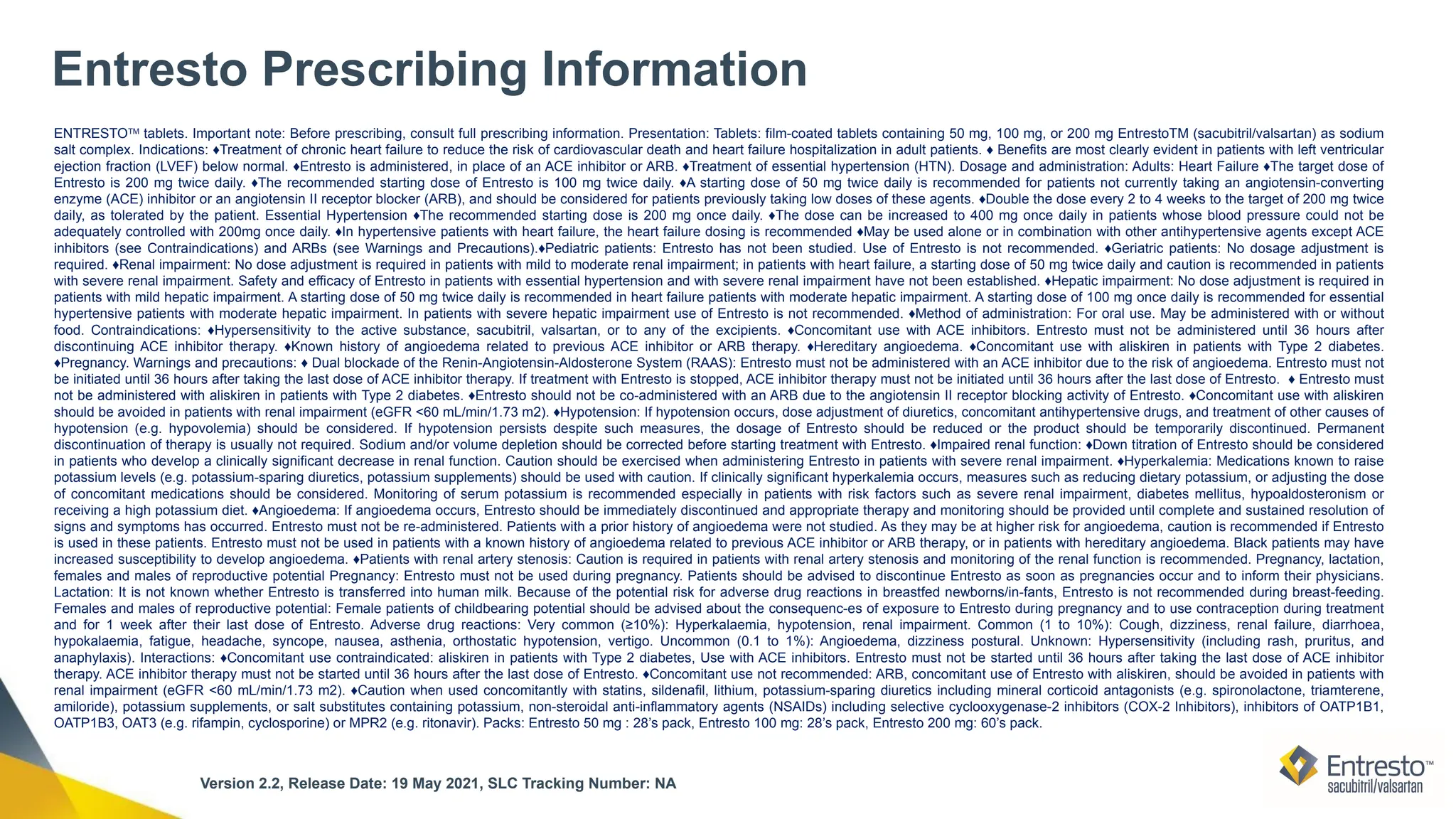
Entresto Prescribing Information
Version 2.2, Release Date: 19 May 2021, SLC Tracking Number: NA
ENTRESTOTM
tablets. Important note: Before prescribing, consult full prescribing information. Presentation: Tablets: film-coated tablets containing 50 mg, 100 mg, or 200 mg EntrestoTM (sacubitril/valsartan) as sodium
salt complex. Indications: ♦Treatment of chronic heart failure to reduce the risk of cardiovascular death and heart failure hospitalization in adult patients. ♦ Benefits are most clearly evident in patients with left ventricular
ejection fraction (LVEF) below normal. ♦Entresto is administered, in place of an ACE inhibitor or ARB. ♦Treatment of essential hypertension (HTN). Dosage and administration: Adults: Heart Failure ♦The target dose of
Entresto is 200 mg twice daily. ♦The recommended starting dose of Entresto is 100 mg twice daily. ♦A starting dose of 50 mg twice daily is recommended for patients not currently taking an angiotensin-converting
enzyme (ACE) inhibitor or an angiotensin II receptor blocker (ARB), and should be considered for patients previously taking low doses of these agents. ♦Double the dose every 2 to 4 weeks to the target of 200 mg twice
daily, as tolerated by the patient. Essential Hypertension ♦The recommended starting dose is 200 mg once daily. ♦The dose can be increased to 400 mg once daily in patients whose blood pressure could not be
adequately controlled with 200mg once daily. ♦In hypertensive patients with heart failure, the heart failure dosing is recommended ♦May be used alone or in combination with other antihypertensive agents except ACE
inhibitors (see Contraindications) and ARBs (see Warnings and Precautions).♦Pediatric patients: Entresto has not been studied. Use of Entresto is not recommended. ♦Geriatric patients: No dosage adjustment is
required. ♦Renal impairment: No dose adjustment is required in patients with mild to moderate renal impairment; in patients with heart failure, a starting dose of 50 mg twice daily and caution is recommended in patients
with severe renal impairment. Safety and efficacy of Entresto in patients with essential hypertension and with severe renal impairment have not been established. ♦Hepatic impairment: No dose adjustment is required in
patients with mild hepatic impairment. A starting dose of 50 mg twice daily is recommended in heart failure patients with moderate hepatic impairment. A starting dose of 100 mg once daily is recommended for essential
hypertensive patients with moderate hepatic impairment. In patients with severe hepatic impairment use of Entresto is not recommended. ♦Method of administration: For oral use. May be administered with or without
food. Contraindications: ♦Hypersensitivity to the active substance, sacubitril, valsartan, or to any of the excipients. ♦Concomitant use with ACE inhibitors. Entresto must not be administered until 36 hours after
discontinuing ACE inhibitor therapy. ♦Known history of angioedema related to previous ACE inhibitor or ARB therapy. ♦Hereditary angioedema. ♦Concomitant use with aliskiren in patients with Type 2 diabetes.
♦Pregnancy. Warnings and precautions: ♦ Dual blockade of the Renin-Angiotensin-Aldosterone System (RAAS): Entresto must not be administered with an ACE inhibitor due to the risk of angioedema. Entresto must not
be initiated until 36 hours after taking the last dose of ACE inhibitor therapy. If treatment with Entresto is stopped, ACE inhibitor therapy must not be initiated until 36 hours after the last dose of Entresto. ♦ Entresto must
not be administered with aliskiren in patients with Type 2 diabetes. ♦Entresto should not be co-administered with an ARB due to the angiotensin II receptor blocking activity of Entresto. ♦Concomitant use with aliskiren
should be avoided in patients with renal impairment (eGFR <60 mL/min/1.73 m2). ♦Hypotension: If hypotension occurs, dose adjustment of diuretics, concomitant antihypertensive drugs, and treatment of other causes of
hypotension (e.g. hypovolemia) should be considered. If hypotension persists despite such measures, the dosage of Entresto should be reduced or the product should be temporarily discontinued. Permanent
discontinuation of therapy is usually not required. Sodium and/or volume depletion should be corrected before starting treatment with Entresto. ♦Impaired renal function: ♦Down titration of Entresto should be considered
in patients who develop a clinically significant decrease in renal function. Caution should be exercised when administering Entresto in patients with severe renal impairment. ♦Hyperkalemia: Medications known to raise
potassium levels (e.g. potassium-sparing diuretics, potassium supplements) should be used with caution. If clinically significant hyperkalemia occurs, measures such as reducing dietary potassium, or adjusting the dose
of concomitant medications should be considered. Monitoring of serum potassium is recommended especially in patients with risk factors such as severe renal impairment, diabetes mellitus, hypoaldosteronism or
receiving a high potassium diet. ♦Angioedema: If angioedema occurs, Entresto should be immediately discontinued and appropriate therapy and monitoring should be provided until complete and sustained resolution of
signs and symptoms has occurred. Entresto must not be re-administered. Patients with a prior history of angioedema were not studied. As they may be at higher risk for angioedema, caution is recommended if Entresto
is used in these patients. Entresto must not be used in patients with a known history of angioedema related to previous ACE inhibitor or ARB therapy, or in patients with hereditary angioedema. Black patients may have
increased susceptibility to develop angioedema. ♦Patients with renal artery stenosis: Caution is required in patients with renal artery stenosis and monitoring of the renal function is recommended. Pregnancy, lactation,
females and males of reproductive potential Pregnancy: Entresto must not be used during pregnancy. Patients should be advised to discontinue Entresto as soon as pregnancies occur and to inform their physicians.
Lactation: It is not known whether Entresto is transferred into human milk. Because of the potential risk for adverse drug reactions in breastfed newborns/in-fants, Entresto is not recommended during breast-feeding.
Females and males of reproductive potential: Female patients of childbearing potential should be advised about the consequenc-es of exposure to Entresto during pregnancy and to use contraception during treatment
and for 1 week after their last dose of Entresto. Adverse drug reactions: Very common (≥10%): Hyperkalaemia, hypotension, renal impairment. Common (1 to 10%): Cough, dizziness, renal failure, diarrhoea,
hypokalaemia, fatigue, headache, syncope, nausea, asthenia, orthostatic hypotension, vertigo. Uncommon (0.1 to 1%): Angioedema, dizziness postural. Unknown: Hypersensitivity (including rash, pruritus, and
anaphylaxis). Interactions: ♦Concomitant use contraindicated: aliskiren in patients with Type 2 diabetes, Use with ACE inhibitors. Entresto must not be started until 36 hours after taking the last dose of ACE inhibitor
therapy. ACE inhibitor therapy must not be started until 36 hours after the last dose of Entresto. ♦Concomitant use not recommended: ARB, concomitant use of Entresto with aliskiren, should be avoided in patients with
renal impairment (eGFR <60 mL/min/1.73 m2). ♦Caution when used concomitantly with statins, sildenafil, lithium, potassium-sparing diuretics including mineral corticoid antagonists (e.g. spironolactone, triamterene,
amiloride), potassium supplements, or salt substitutes containing potassium, non-steroidal anti-inflammatory agents (NSAIDs) including selective cyclooxygenase-2 inhibitors (COX-2 Inhibitors), inhibitors of OATP1B1,
OATP1B3, OAT3 (e.g. rifampin, cyclosporine) or MPR2 (e.g. ritonavir). Packs: Entresto 50 mg : 28’s pack, Entresto 100 mg: 28’s pack, Entresto 200 mg: 60’s pack.
THANK YOU

ARNI, Angiotensin Neprilysin, New Indication.pptx,

  • 1.
    Entresto: The truebreakthrough in shifting the treatment paradigm of HF DR. Hasan Mahmud Iqbal. MBBS, BCS, MACC, MD. Consultant Cardiology. Code: COM/ENT/23/11 Valid: 31 Dec, 2023
  • 2.
    Universal Definition1 of HeartFailure by HFSA, HFA-ESC & JHFS Current or prior symptoms and/or signs caused by a structural and/or functional cardiac abnormality (determined by any one of the following: • EF <50% • Abnormal cardiac chamber enlargement • E/E′ >15 • Moderate/severe ventricular hypertrophy • Moderate/severe valvular obstructive/regurgitant lesion) Evidence of cardiogenic pulmonary or systemic congestion at rest or with provocation NPs (pg/mL) Ambulatory patients Hospitalized/ decompensated patients BNP ≥35 ≥100 NT-proBNP ≥125 ≥300 Elevated natriuretic peptides Or Determined by • Diagnostic modalities such as imaging (e.g. by chest X-ray or elevated filling pressures by echocardiography), or • Hemodynamic measurement (e.g. right heart catheterization, pulmonary artery catheter) at rest or provocation (e.g. exercise) AND corroborated by HF is a clinical syndrome with: Either EF, ejection fraction; E/E’, the ratio of the early transmitral flow velocity and the early mitral annular velocity; BNP, brain natriuretic peptide; NPs, natriuretic peptides; NT-proBNP, N-terminal pro−B-type natriuretic peptide; HF, heart failure The proposed universal definition helps to improve patient care by simplifying diagnosis of HF1 1. Bozkurt B, et al. Universal definition and classification of heart failure. J Card Fail. 2021;27(4):387-413
  • 3.
    Heart Failure Classification Theguidelines differ with respect to the LVEF cut-off limits for classification of HF as HFrEF, HFmrEF, and HFpEF Types3 HFSA 20105 ACCF-AHA 20134 2016 ESC3 Universal Definition 20212 2021 ESC HF1 HFrEF <50% ≤40% <40% ≤40% ≤40% HFmrEF – – 40–49% 41–49% 41–49% HFpEF ≥50% ≥50% ≥50% ≥50% ≥50% HFimpEF – – – ≤40% at BL ≥10 point increase from BL >40% on 2nd measurement ≥50%, with previous LVEF ≤40%* * The 2021 ESC HF Guidelines do not mention HFimpEF as a separate type of HF 1. McDonagh T, et al. 2021 ESC Guidelines for the diagnosis and treatment of acute and chronic heart failure. Eur Heart J. 2021; 00:1–28; 2. Bozkurt B, et al. Universal definition and classification of heart failure. J Card Fail. 2021;27(4):387-413; 3. Ponikowski P, et al. 2016 ESC Guidelines for the diagnosis and treatment of acute and chronic heart failure. Eur Heart J. 2016; 37:2129–2200: 4. Yancy CW, et al. 2013 ACC/AHA Guideline for the management of heart failure. Circulation. 2013;128:e240–e327. 5. Lidenfeld J, et al. HFSA 2010 Comprehensive heart failure practice guideline. J Card Fail. 2010;16:e1–194.
  • 4.
    Heart failure isa progressive disease leading to:3–11 HF is associated with a devastating burden on patients1–10 HF, heart failure; HFpEF, heart failure with preserved ejection fraction. 1. Savarese G & Lund LH. Cardiac Failure Review 2017;3:7–11; 2. Dunlay SM, Roger VL, Redfield MM. Nature Reviews Cardiology 2017;14:591–602; 3. Ponikowski P, et al. Eur Heart J 2016; 37:2129–2000; 4. Maggioni AP, et al. Eur J Heart Fail 2010;12:1076–84; 5. Ahmed A, et al. Am Heart J 2006;151:444–450; 6. Gheorghiade M, et al. Am J Cardiol 2005;96:11G–17G; 7. Gheorghiade M & Pang PS. J Am Coll Cardiol 2009;53:557–573; 8. Holland R, et al. J Card Fail 2010;16:150–156; 9. Muntwyler J, et al. Eur Heart J 2002;23:1861–1866; 10. McCullough PA, et al. J Am Coll Cardiol 2002;39:60–69; 11. McMurray JJ, et al. Eur Heart J. 2012;33:1787–1847. Increased hospitalization Increased mortality Reduced quality of life 26million people have HF GLOBALLY 50% are classed as HFpEF1,2
  • 5.
    Heart Failure isdeadlier than many cancers 1. National Cancer Institute. Cancer stat fact sheets. Available at: http://seer.cancer.gov/statfacts. Accessed 31 May 2016; 2. Roger et al. JAMA 2004;292:344–50
  • 6.
    Physical & mentalwellbeing are compromised in HF1 patients HF, heart failure. 1. Hobbs FDR, et al. European Heart Journal 2002; 23: 1867–1876; 2. Calvert MJ, et al. Eur J Heart Fail 2005; 7:243–51. Social2 50% have anxiety or depression 30% feel a loss of control in their lives 66% have mobility problems 76% have difficulty performing daily tasks >60% feel tired, fatigued or low on energy 60% find recreational pastimes difficult 40% struggle to relate to or do things with friends or family Physical2 Emotional2
  • 7.
    HF is aprogressive disease where cardiac structure and function continue to deteriorate1–7 Diagram adapted from reference Gheroghiade M, et al. 2005. HF, heart failure. 1. Ahmed A, et al. Am Heart J 2006;151:444–450; 2. Gheorghiade M, et al. Am J Cardiol 2005;96:11G–17G; 3. Gheorghiade M & Pang PS. J Am Coll Cardiol 2009;53:557–573; 4. Holland R, et al. J Card Fail 2010;16:150–156; 5. Muntwyler J, et al. Eur Heart J 2002;23:1861–1866; 6. McCullough PA, et al. J Am Coll Cardiol 2002;39:60–69; 7. McMurray JJ, et al. Eur Heart J. 2012;33:1787–1847 Acutely decompensated Compensated Chronically decompensated Clinical status Death Episode of acute decompensation Disease progression Increasing frequency of acute events and disease progression leads to increasingly symptomatic patients with high rates of hospitalization and increased risk of mortality1–7
  • 8.
    Prevalence of HFpEF Approximatelyhalf of patients presenting with symptoms of HF have HFpEF In patients with clinical HF, the prevalence of HFpEF is estimated to be approximately 50%1 Patients with HFpEF were older and more likely to be female than those with HFrEF3 The proportion of incident cases of HFpEF increased from 47.8% in 2000–2003 to 52.3% in 2008–20102 By 2020, 65% of HF hospitalizations will be attributed to HFpEF4 HF, heart failure; HFrEF, heart failure with preserved ejection fraction; HFrEF, heart failure with reduced ejection fraction. 1. Yancy CW et al. Circulation. 2013;128:e240-e327; 2. Gerber Y et al. JAMA Intern Med. 2015;175(6):996-1004; 3. Shah KS et al. J Am Coll Cardiol. 2017;70(20):2476-2486; 4. Oktay AA et al. Curr Heart Fail Rep. 2013; 10(4): doi:10.1007/s11897-013-0155-7.
  • 9.
    0 20 4060 80 100 10 30 50 70 90 HFpEF is associated with poor outcomes and reduced life expectancy CV, cardiovascular; HF, heart failure; HFpEF, heart failure with preserved ejection fraction. 1. Gerber Y, et al. JAMA Intern Med 2015;175:996–1004; 2. Zarrinkoub R, et al. Eur J Heart Fail 2013; 15:995–1002. 3. Maggioni AP, et al. Eur J Heart Fail 2010;12:1076– 84; 4. Nieminen MS, et al. Eur Heart J 2006; 27:2725–2736; 5. Cleland JGF, et al. Eur Heart J 2003;24:442–63; 6. Saczynski JS, et al. J Am Geriatr Soc 2009;57:1587–94; 7. Nicol ED, et al. Heart 2008;94:172–7; 8. Maggioni AP, et al. Eur J Heart Fail 2013;15:808–17; 9. Curtis LH, et al. Arch Int Med 2008; 168:2481–8; 10. Goldberg RJ, et al. Arch Int Med 2007;167:490–6; 11. Gerber Y, et al. JAMA Intern Med 2015;175:996–1004; 12. Cheng RK, et al. Am Heart J 2014;168:721–730; 13. Carson PE, et al. JACC Hear Fail 2015;3:429–411. Approximately 50% of patients die within 5 years following diagnosis of HF1,2 3–15% of hospitalized HF patients die in hospital3–7 Following hospitalization for HF, up to 37% of patients die within 1 year8–10 10–36% of patients with HFpEF die each year, with the majority of deaths being CV-related11–13 ±50% up to 37% 10-30% 3-15%
  • 10.
    HFpEF Trials: Mortality& Hospitalization are higher than other CVD trials ACCORD [Action to Control Cardiovascular Risk in Diabetes], second Australian National Blood Pressure trial [ANBP-2], ACTION [A Coronary disease Trial Investigating Outcome with Nifedipine], Losartan Intervention for Endpoint reduction in hypertension [LIFE], VALUE [Valsartan Antihypertensive Long-term Use Evaluation], Antihypertensive and Lipid-Lowering Treatment to Prevent Heart Attack Trial [ALLHAT], and Hypertension in the Very Elderly Trial [HYVET]) and heart failure–preserved ejection fraction (HF-PEF) trials (DIG-PEF, CHARM-Preserved, and I-PRESERVE) CV, cardiovascular; HFpEF, Heart failure with preserved ejection fraction Campbell RT et al. J Am Coll Cardiol 2012;60:2349–56. It is high time to address the clinical burden of HFpEF & to act accordingly
  • 11.
    HFpEF pathophysiology ismultifactorial in nature HFpEF, heart failure with preserved ejection fraction; LV, left ventricular. Solomon SD, et al. JACC Heart Fail 2017;5(7):471–482 Several pathophysiological alterations can play a role in HFpEF HFpEF Cardiac remodeling and progressive aggravation of LV function Increased cardiomyocyte stiffness and diastolic stiffening LV hypertrophy and fibrosis LV systolic and diastolic dysfunction Neurohormonal imbalance
  • 12.
    Entresto (Sacubitril/valsartan) canhelp to restore the neurohormonal balance1,2 VALSARTAN angiotensin II receptor blocker RAAS INHIBITION1,2 Sodium and water retention Vasoconstriction Hypertrophy Fibrosis SACUBITRIL neprilysin inhibitor NP ENHANCEMENT1,2 Natriuresis/diuresis Vasodilation Aldosterone suppression Inhibition of fibrosis + Sacubitril/valsartan is a first-in-class ARNI that inhibits both neprilysin and angiotensin II = Cardiac relaxation and improved left ventricular filling1,3 NP, Natriuretic peptide; RAAS, Renin-angiotensin-aldosterone system; ARNI, angiotensin receptor neprilysin inhibitor 1. ENTRESTO [prescribing information]. East Hanover, NJ: Novartis Pharmaceuticals Corp; February 2021; . 2. Kaplinsky. J Geriatr. Cardiol. 2016 13(11):914–923 3. Solomon et al. Lancet 2012; 380:1387–1395. CHF patients with ejection fraction below normal1 Entresto is now indicated for
  • 13.
    Entresto New IndicationApproval FDA2 approved new US indication on February 16, 2021: - ENTRESTO is indicated to reduce the risk of cardiovascular death and hospitalization for heart failure in adult patients with chronic heart failure. Benefits are most clearly evident in patients with left ventricular ejection fraction (LVEF) below normal.1,2 - LVEF is a variable measure, so use clinical judgment in deciding whom to treat. - The approval consisted with the totality of evidence of multiple registration studies across the CHF continuum on the results of - PARAGON-HF study in HFpEF population - PARADIGM-HF study in HFrEF population - PARAMOUNT with supportive mechanistic information - DGDA Bangladesh has approved the expanded indication for Entresto for CHF patients with ejection fraction below normal.3 1. ENTRESTO [prescribing information]. East Hanover, NJ: Novartis Pharmaceuticals Corp; February 2021; 2. U.S. Food and Drug Administration. Novartis Cardiovascular and Renal Drugs Advisory Committee Briefing Document, December 15, 2020. ENTRESTO™ (sacubitril/valsartan) for chronic heart failure and preserved ejection fraction. https://www.fda.gov/media/144379/download. Accessed February 18, 2021. 3. EntrestoTM Local approved prescribing information (CDS Ver 2.2 19 May 2021)
  • 14.
    1. McMurray JJ,et al. N Engl J Med. 2014;371(11):993-1004. PARADIGM HF Study IN FIRST HF HOSPITALISATION VS ENALAPRIL1 21 % RRR IN CV DEATH VS ENALAPRIL1 20 % RRR Sac/Val vs Enalapril―HF hospitalization and CV death First study to explore if newer therapy (EntrestoTM ) is superior to reduce HF mortality rate, HF hospitalization rate and the improvement of quality of life over conventional standard of care (Enalapril)
  • 15.
    PARAMOUNT: Study Design A 12-week, randomized, double-blind, multicenter, parallel-group, active-controlled study to evaluate the efficacy and safety profile of Entresto 200 mg BID compared with valsartan 160 mg BID in patients with chronic HF and preserved LVEF (≥45%), followed by a 24-week extension period  685 patients from 65 centers and 13 countries were screened for the PARAMOUNT study and 308 eligible patients randomized to treatment Solomon et al. Lancet 2012;380:1387–95 *100 mg TDD; ‡ 200 mg TDD; § 400 mg TDD; ¶ 80 mg TDD; # 160 mg TDD; ** 320 mg TDD ACEI=angiotensin-converting enzyme inhibitor; ARB=angiotensin receptor blocker; BID=twice daily; HF=heart failure; LVEF=left ventricular ejection fraction; TDD= total daily dose Prospective comparison of ARNI with ARB on Management Of heart failUre with preserved ejectioN fracTion 1–2 wks 2 weeks 12-week main study period Entresto 100 mg BID‡ Entresto 50 mg BID* (n=149) Valsartan 40 mg BID¶ (n=152) 8–10 weeks Placebo run-in Discontinue ACEI or ARB therapy 24 hours prior to randomization Entresto 200 mg BID§ Valsartan 80 mg BID# Valsartan 160 mg BID** 1–2 wks 24-week extension period Randomization
  • 16.
    PARAMOUNT: Entresto (Sac/Val)is the only medication with positive Phase II data in HFpEF Improvement in NT-proBNP Improvement in left atrial size Improvement in NYHA class LA, left atrial; HFpEF, heart failure with preserved ejection fraction; NT-proBNP, N-terminal pro-brain natriuretic peptide; NYHA, New York Heart Association. Solomon SD, et al. Lancet 2012 380(9851):1387–1395.  The findings of the PARAMOUNT study suggest that Entresto may have beneficial effects in patients with HFpEF and that further testing of this agent in this patient population may be warranted1  The potential benefits of Entresto on long-term morbidity and mortality will be evaluated in a Phase III trial (PARAGON-HF: Prospective comparison of ARni with Arb Global Outcomes in heart failure with preserved ejectioN fraction)2 1. Solomon et al. Lancet 2012;380:1387–95 2. Solomon et al. Poster presentation at ESC-HFCongress, 25 May 2013
  • 17.
    PARAGON-HF: Study Design Prospectivecomparison of ARNI with ARB Global Outcomes in heart failure with preserved ejectioN fraction ACEI, angiotensin-converting enzyme inhibitor; ARB, angiotensin receptor blocker; BID, twice daily; CV, cardiovascular; HF, heart failure Solomon SD et al. JACC Heart Fail. 2017;5:471-482 Up to 2 weeks Valsartan 160 mg BID Entresto 200 mg BID Entresto 100 mg BID On top of optimal background medications for comorbidities (excluding ACEIs and ARBs) Valsartan 80 mg BID Screening Single-blind run-in period Double-blind, long-term follow-up period Randomization N = 4822 1─4 weeks 2─4 weeks Safety and tolerability check Safety and tolerability check A randomized, double-blind, parallel group, active-controlled, event driven trial PRIMARY OUTCOME: CV death and total (first and recurrent) HF hospitalizations SECONDARY OUTCOMES: KCCQ clinical summary score; NYHA class; Delay in time to first renal events; Delay in time to all-cause death
  • 18.
    Primary Endpoint Results ReductionHF hospitalizations and CV death1,2 *As the primary endpoint missed the predetermined level of statistical significance, subsequent analyses are considered exploratory and any inferences drawn may not be reproducible. ARR, absolute rate reduction; CI, confidence interval; CV, cardiovascular; HF, heart failure; HFpEF, heart failure with preserved ejection fraction; RRR, relative rate reduction. 1. Solomon SD, et al. N Engl J Med. 2019 Sep 1. doi: 10.1056/NEJMoa1908655; 2. Solomon SD. Oral presentation 2101. ESC, Paris, 2019. Mean cumulative events per 100 patients 0 1 2 3 4 Valsartan (n = 2,389) 1009 events, 14.6 per 100 pt-years Entresto (n = 2407) 894 events, 12.8 per 100 pt-years Rate ratio 0.87 (95% CI 0.75, 1.01) P = 0.059 0 5 10 15 20 25 30 35 40 45 50 55 13.0% RRR* 5.1% ARR* Total HF hospitalizations and CV death
  • 19.
    Secondary Endpoint Results1,2 HR:hazard ratio; LSM: least square mean; OR: odds ratio *defined as renal death, reaching end stage renal disease (ESRD), or ≥50% decline in estimated glomerular filtration rate (eGFR) relative to baseline 1. Solomon SD, et al. N Engl J Med. 2019 Sep 1. doi: 10.1056/NEJMoa1908655; 2. Solomon SD. Oral presentation 2101. ESC, Paris, 2019. KCCQ, NYHA and Renal Endpoints Consistently Favor Entresto (Sacubitril/Valsartan) Entresto Valsartan Effect Size (95% CI) KCCQ clinical summary score at 8 months – n LSM of change from baseline (SE) 2250 -1.5 (0.4) 2226 -2.5 (0.4) LSM of difference 1.03 (-0.00 – 2.06) NYHA functional classification at 8 months – n Change from baseline - % Improved Unchanged Worsened 2316 15.0% 76.3% 8.7% 2302 12.6% 77.9% 9.6% OR for improvement 1.45 (1.13 – 1.86) Composite renal endpoint* - n/N 33/2407 1.4% 64/2389 2.7% HR = 0.504 (0.331 – 0.767) All-cause mortality – n/N 342/2407 14.2% 349/2389 14.6% HR = 0.970 (0.835 – 1.126)
  • 20.
    Multivariate analyses heterogeneity inthe treatment response to Entresto across EF and gender subgroups *Multivariate interaction < 0.05 AF, atrial fibrillation; CI, confidence interval; EF, ejection fractions; eGFR, estimated glomerular filtration rate; LVEF, left ventricular ejection fraction; MRA, mineralocorticoid receptor antagonist; NT-proBNP, N-terminal-pro hormone B-Type natriuretic peptide; NYHA, New York Heart Association; SBP, systolic blood pressure. Solomon SD, et al. N Engl J Med. 2019 Sep 1. doi: 10.1056/NEJMoa1908655. Diabetic Yes 1041/2069 0.89 (0.74−1.09) No 862/2727 0.84 (0.68−1.04) LVEF* above median (57%) 1048/2495 0.78 (0.64−0.95) at or below median (57%) 855/2301 1.00 (0.81−1.23) History of AF Yes 1140/2521 0.83 (0.69−1.00) No 763/2275 0.94 (0.75−1.18) Screening NT−proBNP at or below median (911pg/mL) 708/2379 0.85 (0.67−1.08) above median (911pg/mL) 1183/2378 0.87 (0.73−1.05) Screening SBP at or below median (137mmHg) 984/2450 0.88 (0.72−1.07) above median (137mmHg) 919/2344 0.86 (0.69−1.06) MRA use Yes 543/1238 0.73 (0.56−0.94) No 1360/3558 0.94 (0.79−1.12) Baseline eGFR <60 mL/min/1.73m2 1115/2341 0.79 (0.66−0.95) ≥60 mL/min/1.73m2 787/2454 1.01 (0.80−1.27) NYHA class I/II 1402/3843 0.90 (0.76−1.06) III/IV 499/951 0.79 (0.59−1.06) Subgroup No. of Events /patients Hazard ratio (95% CI) Overall 1903/4796 0.87 (0.75−1.01) Age (years) Less than 65 years 276/825 0.99 (0.64−1.53) 65 years or older 1627/3971 0.85 (0.73−0.99) Age (years) 938/2597 Less than 75 years 965/2199 0.82 (0.66−1.02) 75 years or older 0.92 (0.76−1.11) Gender* Male 980/2317 1.03 (0.85−1.25) Female 923/2479 0.73 (0.59−0.90) Race Caucasian 1542/3907 0.83 (0.71−0.97) Black 89/102 0.69 (0.24−1.99) Asian 237/607 1.25 (0.87−1.79) Other 35/180 1.03 (0.47−2.28) Region North America 478/559 0.80 (0.57−1.14) Latin America 83/370 1.33 (0.75−2.36) Western Europe 544/1390 0.69 (0.53−0.89) Central Europe 466/1715 0.97 (0.76−1.24) Asia/Pacific 332/762 1.10 (0.79−1.52) Subgroup analyses for the primary endpoint Subgroup No. of events /patients Hazard ratio (95% CI)
  • 21.
    Safety and tolerability:similar to that in PARADIGM-HF1,2 *After randomization, 610 (25.3%) patients in the sacubitril/valsartan group and 638 (26.7%) in the valsartan group discontinued study drug for reasons other than death and 370 participants (15.4%) in the sacubitril/valsartan group and 387 (16.2%) in the valsartan arm because of an adverse event. SBP, systolic blood pressure. 1. Solomon SD, et al. N Engl J Med. 2019 Sep 1. doi: 10.1056/NEJMoa1908655; 2. Solomon SD. Oral presentation 2101. ESC, Paris, 2019. • Patients in the Entresto group were more likely to experience hypotension but were less likely to have increases in creatinine and potassium • Rates of discontinuation were similar for both treatments* EVENT ENTRESTO (N = 2407) VALSARTAN (N= 2389) Hypotension with SBP < 100 mmHg 380 (15.8%) 257 (10.8%) Elevated serum creatinine >= 2.0 mg/dl 261 (10.8%) 328 (13.7%) >= 2.5 mg/dl 97 (4.0%) 109 (4.6%) >= 3.0 mg/dl 38 (1.6%) 40 (1.7%) Elevated serum potassium > 5.5 mmol/l 316 (13.2%) 361 (15.3%) > 6.0 mmol/l 75 (3.1%) 101 (4.3%) Angioedema 14 (0.6%) 4 (0.2%)
  • 22.
    PARAGON-HF: Redefining treatmentof HF • Entresto reduced the primary endpoint, a composite of total HF hospitalizations and CV death, narrowly missing statistical significance (p=0.059)4 – Sensitivity analyses of the primary endpoint further support the observed treatment effect with Entresto 5 • Secondary endpoints investigating changes in NYHA class, KCCQ and renal function support a clinical benefit with Entresto4 CV, cardiovascular; HF, heart failure; HFpEF, heart failure with preserved ejection fracture; KCCQ, Kansas City Cardiomyopathy Questionnaire; NYHA, New York Heart Association. 1. Savarese G & Lund LH. Cardiac Failure Review 2017;3:7–11; 2. Campbell RT, et al. J Am Coll Cardiol 2012;60:2349–2356; 3. Harper AR et al, Clinical Medicine 2018;18:s24–s9; 4. Solomon SD. Oral presentation 2101. ESC, Paris, 2019; 5. Solomon SD, et al. N Engl J Med. 2019 Sep 1. doi: 10.1056/NEJMoa1908655; 6. McMurray JM, et al. NEJM 2014;371(11):993–1004. Safety and tolerability with Entresto were similar to that seen in PARADIGM-HF4,6 13 million people1 Increased risk of hospitalization compared with patients without HF2 No evidence-based treatment3 The unmet need in HFpEF:
  • 23.
    PARAGON-HF: Shifting thetreatment paradigm of HF Multivariate analyses of the PARAGON-HF data show heterogeneity in the treatment response with Entresto in HFpEF1 HF; heart failure; HFH, heart failure hospitalizations; HFpEF, heart failure with preserved ejection fraction; LVEF, left ventricular ejection fraction. 1. Solomon SD. Oral presentation 2101. ESC, Paris, 2019; 2. Butler J, et al. JACC Heart Fail 2014;2:97–112; 3. Solomon S, et al, Eur Heart J. 2016;37:455–462; 4.McMurray JM, et al. NEJM 2014;371(11): 993–1004; 5. Solomon SD, et al. N Engl J Med. 2019 Sep 1. doi: 10.1056/NEJMoa1908655. Greater efficacy was seen in women, in whom HFpEF is more prevalent1,4 Greater clinical benefit was seen at the lower end of the LVEF spectrum (below median, 57%)1 The PARAGON-HF trial has significantly contributed to the scientific understanding of HFpEF and the broader spectrum of HF LVEF 22% RRR 95% CI = 0.64 – 1.25 8% RRR 95% CI = 0.68 – 1.25 <57% 57-62 27% RRR in women 95% CI = 0.59 – 0.90 Absolute risk reduction is comparable across PARADIGM-HF and the lower ejection fraction with PARAGON-HF1,5 Trends in data consistent with the results of TOPCAT and CHARM-P2,3 Trends in data consistent with the results of TOPCAT2
  • 24.
    ACCF/AHA4 Focused update on newpharmacological therapy for HF ESC2 ARNI to replace ACEi in symptomatic patients on BB, ACEi and MRA NICE3 Technology appraisal guidance Complete guideline Partial guideline Technology appraisal guidance ACC Expert Consensus Report5 Focused update on in- hospital initiation of ARNI French Expert Opinion7 Preference for ARNI over ACEi/ARB in hospitalized patients CaReMe Algorithm8 Preference of ARNI over ACEi/ARB in hospitalized patients Canadian CCS/CHFS10 Recommends ARNI ahead of ACEi/ARB ACC ECDP11 Sacubitril/valsartan is the preferred RAASi for patients with HFrEF 2021 ESC HF Guidelines1 Guidelines on management of HF recommends ARNI as first-line treatment along with ACEi ARNI is advancing in clinical practice guidelines for HF 1. McDonagh T, et al. Eur Heart J. 2021; 00:1–28; 2. Ponikowski P, et al. Eur Heart J. 2016; 37:2129–2200; 3. NICE. The technology appraisal guidance. nice.org.uk/guidance/ta388. Accessed online:18 June 2021; 4. Yancy CW et al. Circulation. 2016;134:e282–e293; 5. Hollenberg SM, et al. J Am Coll Cardiol. 2019;74:1966–2011; 6. Seferovic PM, et al. Eur J Heart Fail. 2019;21:1169– 1186; 7. Girerd N. 2020. Heart failure policy and practice in Europe: France. https://www.hfpolicynetwork.org/wp-content/uploads/Heart-failure-policy-and-practice-in-Europe-France.pdf. Accessed online: 18 June 2021; 8. CaReMe HF Algorithm. 2020. https://www.britishcardiovascularsociety.org/resources/bcs-videos-and-webcasts/careme. Accessed online: 18 June 2021; 9. Pinilla JMG, et al. Rev Esp Cardiol (Engl Ed). 2020;73:69-77; 10. McDonald M, et al. Can J Cardiol. 2021;37:531–546; 11. Maddox TM, et al. J Am Coll Cardiol. 2021;77:772–810; 12. Ntalianis A, et al. Angiotensin receptor neprilysin inhibition in patients with acute decompensated heart failure: an expert consensus position paper. Heart Fail Rev. 2021:1–13. ‑ AHF, acute heart failure; ACEi, angiotensin converting enzyme inhibitor; ARB, angiotensin receptor blocker; ARNI, angiotensin receptor blocker neprilysin inhibitor; BBs, beta blockers; CV, cardiovascular; HF, heart failure; HFrEF, heart failure with reduced ejection fraction; MRA, mineralocorticoid receptor antagonist; RAASi, renin-angiotensin-aldosterone system inhibtor 2019 2016 ESC Expert Consensus Report6 Focused update on in-hospital initiation of ARNI Spanish Consensus Report9 Recommends ARNI ahead of ACEi/ARB 2020 2021 Greek Expert Consensus Report12 Focused update on patients with AHF with initiation of sacubitril/valsartan New
  • 25.
    Recent guidelines andrecommendations Recognition of Entresto as an essential HF treatment across EF spectrum First-line recommendation preferred over ACEi/ARB First-line recommendation along with ACEi/ARB 2021 ACC Expert Consensus Decision Pathway8 • Recommends sacubitril/valsartan as the preferred RAASi for all appropriate HFrEF patients 2021 Canadian CCS/CHFS HF Guidelines Update7 • Elevated ARNI ahead of ACEi/ARB 2020 Spanish Consensus6 • Elevated ARNI ahead of ACEi/ARB 2019 ACC Expert Consensus Report2 • Recommends sacubitril/valsartan in patients who are ACEi/ARB naïve 2019 ESC Expert Consensus Report3 • Recommends sacubitril/valsartan in patients who are ACEi/ARB naïve 2021 Greek Expert Consensus9 • Recommends sacubitril/valsartan in patients who are ACEi/ARB naïve 2020 CaReMe Algorithm5 • Elevated ARNI to same level as ACEi/ARB, with preference in hospitalized patients 2020 French Expert Opinion4 • Elevated ARNI to same level as ACEi/ARB, with preference in hospitalized patients 2021 ESC HF Guidelines1 • Recommends sacubitril/valsartan as a cornerstone therapy for HFrEF, along with ACEi, BB and MRA, and as a replacement for ACEi in patients who remain symptomatic Hospitalized patients Ambulatory + hospitalized patients 1. McDonagh T, et al. Eur Heart J. 2021; 00:1–28; 2. Hollenberg SM, et al. J Am Coll Cardiol. 2019;74:1966–2011; 3. Seferovic PM, et al. Eur J Heart Fail. 2019;21:1169–1186; 4. Girerd N. 2020. Heart failure policy and practice in Europe: France. https://www.hfpolicynetwork.org/wp-content/uploads/Heart-failure-policy-and-practice-in-Europe-France.pdf. Accessed online: 18 June 2021; 5. CaReMe HF Algorithm. 2020. https://www.britishcardiovascularsociety.org/resources/bcs-videos-and-webcasts/careme. Accessed online: 18 June 2021; 6. Pinilla JMG, et al. Rev Esp Cardiol (Engl Ed). 2020;73:69-77; 7. McDonald M, et al. Can J Cardiol. 2021;37:531–546; 8. Maddox TM, et al. J Am Coll Cardiol. 2021;77:772–810; 9. Ntalianis A, et al. Angiotensin receptor neprilysin inhibition in patients with acute decompensated heart failure: an expert ‑ consensus position paper. Heart Fail Rev. 2021:1–13. ACEi, angiotensin converting enzyme inhibitor; ARB, angiotensin receptor blocker; ARNI, angiotensin receptor blocker neprilysin inhibitor; BB, beta blockers; HF, heart failure; HFrEF, heart failure with reduced ejection fraction; RAASi, renin-angiotensin-aldosterone system inhibitor
  • 26.
    2021 ESC HFGuidelines management of HFrEF Phenotypic overview1 To reduce mortality - for all patients To reduce HF hospitalization and improve QOL - for all patients ACEi/ARNI BB MRA SGLT2i Exercise rehabilitation Multi-professional disease management For selected advanced HF patients Heart transplantation MCS as BTT/BTC Long-term MCS as DT To reduce HF hospitalization/mortality - for selected patients Diuretics CRT-P/D CRT-P/D SR with LBBB 130–149 ms or non LBBB ≥150 ms SR with LBBB ≥150 ms ICD ICD Non-ischemic etiology Ischemic etiology Volume overload Anticoagulation CABG Ferric carboxymaltose Digoxin PVI Atrial fibrillation Atrial fibrillation Coronary artery disease Iron deficiency SAVR/TAVI TEE MV Repair Ivabradine Hydralazine/ISDN ARB Aortic stenosis Mitral regurgitation Heart rate SR >70 bpm Black Race ACEi/ARNI intolerance ACEi, angiotensin converting enzyme inhibitor; ARB, angiotensin II receptor blocker; ARNI, angiotensin receptor neprilysin inhibitor; BBs, beta blockers; b.p.m., beats per minute; BTC, bridge to candidacy; BTT, bridge to transplantation; CABG=coronary artery bypass graft; CRT-D, cardiac resynchronization therapy with defibrillator; CRT-P, CRT with pacemaker; DT, destination therapy; HF, heart failure; HFrEF, HF with reduced ejection fraction; ICD, implantable cardioverter-defibrillator; ISDN, isosorbide dinitrate; LBBB, left bundle branch block; MCS, mechanical circulatory support; MRA, mineralocorticoid receptor antagonist; MV, mitral valve; PVI, pulmonary vein isolation; QOL, quality of life; SAVR, surgical aortic valve replacement; SGLT2i, sodium-glucose co-transporter 2 inhibitor; SR, sinus rhythm; TAVI, transcatheter aortic valve replacement; TEE, transcatheter edge to edge. Colour code for classes of recommendation: Green for Class of recommendation I; Grey for Class of recommendation IIa 1. McDonagh T, et al. 2021 ESC Guidelines for the diagnosis and treatment of acute and chronic heart failure. Developed by the Task Force for the diagnosis and treatment of acute and chronic heart failure of the European Society of Cardiology (ESC). Eur Heart J. 2021; 00:1–28
  • 27.
    2021 ESC HFGuidelines management of HFrEF Treatment algorithm1 Management of patients with HFrEF • ACEi/ARNI • BB • MRA • Dapagliflozin/Empagliflozin • Loop diuretic for fluid retention (Class I) If symptoms persist, consider therapies with Class II recommendations LVEF ≤35% and QRS <130 ms and where appropriate LVEF >35% or device therapy not indicated or inappropriate SR and LVEF ≤35% and QRS ≥130 ms ICD CRT-Db /-P Non-ischemic (Class IIa) Ischemic (Class I) QRS 130-149 ms (Class IIa) QRS ≥150 ms (Class I) ACEi, angiotensin converting enzyme inhibitor; ARNI, angiotensin receptor blocker neprilysin inhibitor; BB, beta blocker; CRT-D, cardiac resynchronization therapy with defibrillator; CRT-P, CRT with pacemaker; ICD, implantable cardioverter-defibrillator; HFrEF, heart failure with reduced ejection fraction; MRA, mineralocorticoid receptor antagonist; QRS, Q, R, and S waves (on a 12-lead electrocardiogram); SR, sinus rhythm. a As a replacement for ACEi. b Where appropriate. Green for Class of recommendation I; Grey for Class of recommendation IIa 1. McDonagh T, et al. 2021 ESC Guidelines for the diagnosis and treatment of acute and chronic heart failure. Developed by the Task Force for the diagnosis and treatment of acute and chronic heart failure of the European Society of Cardiology (ESC). Eur Heart J. 2021; 00:1–28
  • 28.
    2021 ESC HFGuidelines recommendations for the management of patients with HFmrEF (NYHAclass II–IV) • Newly introduced recommendation to consider drugs to reduce the risk of HF hospitalization and death include (class IIb, level of evidence C): ACEi, ARB, BB, MRA, sacubitril/valsartan (Entresto) • Previous recommendation for diuretics in patients with congestion and HFmrEF in order to alleviate symptoms and signs is repeated (class I, level of evidence C) For the first time, the 2021 ESC HF Guidelines provide recommendations for the management of patients with HFmrEF (LVEF 41–49%, NYHA class II–IV)1 • The recommendation is based on PARAGON-HF, especially the analyzed benefit for patients with LVEF below median (57%) • Sacubitril/valsartan (Entresto) now may be considered for patients with HFmrEF to reduce the risk of HF hospitalization and death • The guidelines mentioned that US FDA has endorsed the use of sacubitril/valsartan and spironolactone (an MRA) in those with an LVEF ‘less than normal’ Sacubitril/valsartan is now recommended as a treatment option in patients with HFmrEF1 ACEi, angiotensin converting enzyme inhibitors; ARB, angiotensin II receptor blocker; BB, beta-blocker; FDA, Food and Drug Administration; HF, heart failure HFmrEF, heart failure with mildly reduced ejection fraction; LVEF, left ventricular ejection fraction; MRA, mineralocorticoid receptor antagonist; NYHA, New York Heart Association 1. McDonagh T, et al. 2021 ESC Guidelines for the diagnosis and treatment of acute and chronic heart failure. Developed by the Task Force for the diagnosis and treatment of acute and chronic heart failure of the European Society of Cardiology (ESC). Eur Heart J. 2021; 00:1–28
  • 29.
    2021 Update ofACC Expert Consensus Decision Pathway HF TreatmentAlgorithm for Guideline Directed Medical Therapy (GDMT) 1. Maddox et al. 2021 Up date to 2017 ECDP for Optimization of Heart Failure Treatment. J Am Coll Cardiol. Jan 11, 2021. Epublished DOI: 10.1016/j.jacc.2020.11.02 *ACEI/ARB should only be considered in patients with contraindications, intolerance or inaccessibility to ARNI. In those instances, please consult Figure 3 and text for guidance on initiation
  • 30.
    Conclusion • Approximately halfof patients presenting with symptoms of HF have HFpEF1 • There is a significant unmet medical need for therapies for the patients with HFpEF1 • Multivariate analyses of the PARAGON-HF data show heterogeneity in the treatment response with Entresto in HFpEF3 • USFDA granted an expanded indication to Entresto to reduce the risk of cardiovascular death and hospitalization for adult CHF patients with left ventricular ejection fraction (LVEF) below normal which is based on efficacy and safety evidence observed in PARAGON-HF and additional evidence from PARAMOUNT as well as PARADIGM-HF2 • Sac/Val (Entresto) is recommended by ESC-HF Guideline 2021 as the first-line pharmacological treatment for all patients with HFrEF to reduce mortality and the risk for HF hospitalization including patients previously not treated with ACEi/ARB (i.e. de novo HF) and to replace ACEi in patients who remain symptomatic4 – Initiation of Sac/Val (Entresto) in recently hospitalized stable patients with HFrEF is safe and may be considered4 • In addition, Sac/Val (Entresto) is recognized as a treatment option in HFmrEF patients (LVEF 41–49%) and mentioned as a potential option for HFpEF patients, although without a formal recommendation4 1. CARDIOVASCULAR AND RENAL DRUGS ADVISORY COMMITTEE BRIEFING DOCUMENT December 15, 2021; https://www.fda.gov/media/144377/download; 2. U.S. Food and Drug Administration. Novartis Cardiovascular and Renal Drugs Advisory Committee Briefing Document, December 15, 2020. ENTRESTO™ (sacubitril/valsartan) for chronic heart failure and preserved ejection fraction. https://www.fda.gov/media/144379/download. Accessed February 18, 2021. ENTRESTO [ Local approved prescribing information]. (CDS Ver 2.2 19 May 2021); 3. Solomon SD. Oral presentation 2101. ESC, Paris, 2019; 4. McDonagh T, et al. 2021 ESC Guidelines for the diagnosis and treatment of acute and chronic heart failure. Developed by the Task Force for the diagnosis and treatment of acute and chronic heart failure of the European Society of Cardiology (ESC). Eur Heart J. 2021; 00:1–28
  • 31.
    Entresto Prescribing Information Version2.2, Release Date: 19 May 2021, SLC Tracking Number: NA ENTRESTOTM tablets. Important note: Before prescribing, consult full prescribing information. Presentation: Tablets: film-coated tablets containing 50 mg, 100 mg, or 200 mg EntrestoTM (sacubitril/valsartan) as sodium salt complex. Indications: ♦Treatment of chronic heart failure to reduce the risk of cardiovascular death and heart failure hospitalization in adult patients. ♦ Benefits are most clearly evident in patients with left ventricular ejection fraction (LVEF) below normal. ♦Entresto is administered, in place of an ACE inhibitor or ARB. ♦Treatment of essential hypertension (HTN). Dosage and administration: Adults: Heart Failure ♦The target dose of Entresto is 200 mg twice daily. ♦The recommended starting dose of Entresto is 100 mg twice daily. ♦A starting dose of 50 mg twice daily is recommended for patients not currently taking an angiotensin-converting enzyme (ACE) inhibitor or an angiotensin II receptor blocker (ARB), and should be considered for patients previously taking low doses of these agents. ♦Double the dose every 2 to 4 weeks to the target of 200 mg twice daily, as tolerated by the patient. Essential Hypertension ♦The recommended starting dose is 200 mg once daily. ♦The dose can be increased to 400 mg once daily in patients whose blood pressure could not be adequately controlled with 200mg once daily. ♦In hypertensive patients with heart failure, the heart failure dosing is recommended ♦May be used alone or in combination with other antihypertensive agents except ACE inhibitors (see Contraindications) and ARBs (see Warnings and Precautions).♦Pediatric patients: Entresto has not been studied. Use of Entresto is not recommended. ♦Geriatric patients: No dosage adjustment is required. ♦Renal impairment: No dose adjustment is required in patients with mild to moderate renal impairment; in patients with heart failure, a starting dose of 50 mg twice daily and caution is recommended in patients with severe renal impairment. Safety and efficacy of Entresto in patients with essential hypertension and with severe renal impairment have not been established. ♦Hepatic impairment: No dose adjustment is required in patients with mild hepatic impairment. A starting dose of 50 mg twice daily is recommended in heart failure patients with moderate hepatic impairment. A starting dose of 100 mg once daily is recommended for essential hypertensive patients with moderate hepatic impairment. In patients with severe hepatic impairment use of Entresto is not recommended. ♦Method of administration: For oral use. May be administered with or without food. Contraindications: ♦Hypersensitivity to the active substance, sacubitril, valsartan, or to any of the excipients. ♦Concomitant use with ACE inhibitors. Entresto must not be administered until 36 hours after discontinuing ACE inhibitor therapy. ♦Known history of angioedema related to previous ACE inhibitor or ARB therapy. ♦Hereditary angioedema. ♦Concomitant use with aliskiren in patients with Type 2 diabetes. ♦Pregnancy. Warnings and precautions: ♦ Dual blockade of the Renin-Angiotensin-Aldosterone System (RAAS): Entresto must not be administered with an ACE inhibitor due to the risk of angioedema. Entresto must not be initiated until 36 hours after taking the last dose of ACE inhibitor therapy. If treatment with Entresto is stopped, ACE inhibitor therapy must not be initiated until 36 hours after the last dose of Entresto. ♦ Entresto must not be administered with aliskiren in patients with Type 2 diabetes. ♦Entresto should not be co-administered with an ARB due to the angiotensin II receptor blocking activity of Entresto. ♦Concomitant use with aliskiren should be avoided in patients with renal impairment (eGFR <60 mL/min/1.73 m2). ♦Hypotension: If hypotension occurs, dose adjustment of diuretics, concomitant antihypertensive drugs, and treatment of other causes of hypotension (e.g. hypovolemia) should be considered. If hypotension persists despite such measures, the dosage of Entresto should be reduced or the product should be temporarily discontinued. Permanent discontinuation of therapy is usually not required. Sodium and/or volume depletion should be corrected before starting treatment with Entresto. ♦Impaired renal function: ♦Down titration of Entresto should be considered in patients who develop a clinically significant decrease in renal function. Caution should be exercised when administering Entresto in patients with severe renal impairment. ♦Hyperkalemia: Medications known to raise potassium levels (e.g. potassium-sparing diuretics, potassium supplements) should be used with caution. If clinically significant hyperkalemia occurs, measures such as reducing dietary potassium, or adjusting the dose of concomitant medications should be considered. Monitoring of serum potassium is recommended especially in patients with risk factors such as severe renal impairment, diabetes mellitus, hypoaldosteronism or receiving a high potassium diet. ♦Angioedema: If angioedema occurs, Entresto should be immediately discontinued and appropriate therapy and monitoring should be provided until complete and sustained resolution of signs and symptoms has occurred. Entresto must not be re-administered. Patients with a prior history of angioedema were not studied. As they may be at higher risk for angioedema, caution is recommended if Entresto is used in these patients. Entresto must not be used in patients with a known history of angioedema related to previous ACE inhibitor or ARB therapy, or in patients with hereditary angioedema. Black patients may have increased susceptibility to develop angioedema. ♦Patients with renal artery stenosis: Caution is required in patients with renal artery stenosis and monitoring of the renal function is recommended. Pregnancy, lactation, females and males of reproductive potential Pregnancy: Entresto must not be used during pregnancy. Patients should be advised to discontinue Entresto as soon as pregnancies occur and to inform their physicians. Lactation: It is not known whether Entresto is transferred into human milk. Because of the potential risk for adverse drug reactions in breastfed newborns/in-fants, Entresto is not recommended during breast-feeding. Females and males of reproductive potential: Female patients of childbearing potential should be advised about the consequenc-es of exposure to Entresto during pregnancy and to use contraception during treatment and for 1 week after their last dose of Entresto. Adverse drug reactions: Very common (≥10%): Hyperkalaemia, hypotension, renal impairment. Common (1 to 10%): Cough, dizziness, renal failure, diarrhoea, hypokalaemia, fatigue, headache, syncope, nausea, asthenia, orthostatic hypotension, vertigo. Uncommon (0.1 to 1%): Angioedema, dizziness postural. Unknown: Hypersensitivity (including rash, pruritus, and anaphylaxis). Interactions: ♦Concomitant use contraindicated: aliskiren in patients with Type 2 diabetes, Use with ACE inhibitors. Entresto must not be started until 36 hours after taking the last dose of ACE inhibitor therapy. ACE inhibitor therapy must not be started until 36 hours after the last dose of Entresto. ♦Concomitant use not recommended: ARB, concomitant use of Entresto with aliskiren, should be avoided in patients with renal impairment (eGFR <60 mL/min/1.73 m2). ♦Caution when used concomitantly with statins, sildenafil, lithium, potassium-sparing diuretics including mineral corticoid antagonists (e.g. spironolactone, triamterene, amiloride), potassium supplements, or salt substitutes containing potassium, non-steroidal anti-inflammatory agents (NSAIDs) including selective cyclooxygenase-2 inhibitors (COX-2 Inhibitors), inhibitors of OATP1B1, OATP1B3, OAT3 (e.g. rifampin, cyclosporine) or MPR2 (e.g. ritonavir). Packs: Entresto 50 mg : 28’s pack, Entresto 100 mg: 28’s pack, Entresto 200 mg: 60’s pack.
  • 32.

Editor's Notes

  • #14 Speaker Notes A look at the coprimary end points confirms Sac/Val superiority in reducing risk of heart failure hospitalisation and cardiovascular death.
  • #15 Prevalence of heart failure in population‐based studies around the world, in percentage, per region.17,25,29,39,64–71 IF THIS IMAGE HAS BEEN PROVIDED BY OR IS OWNED BY A THIRD PARTY, AS INDICATED IN THE CAPTION LINE, THEN FURTHER PERMISSION MAY BE NEEDED BEFORE ANY FURTHER USE. PLEASE CONTACT WILEY'S PERMISSIONS DEPARTMENT ON PERMISSIONS@WILEY.COM OR USE THE RIGHTSLINK SERVICE BY CLICKING ON THE 'REQUEST PERMISSIONS' LINK ACCOMPANYING THIS ARTICLE. WILEY OR AUTHOR OWNED IMAGES MAY BE USED FOR NON-COMMERCIAL PURPOSES, SUBJECT TO PROPER CITATION OF THE ARTICLE, AUTHOR, AND PUBLISHER.
  • #17 *Eligible patients were exposed to valsartan 80 mg BID for 1─2 weeks. Patients on low pre-study ACEI/ARB doses or those with tolerability concerns were first started on valsartan 40 mg BID 1─2 weeks and then up-titrated to valsartan 80 mg BID for 1─2 weeks ^Patients tolerating valsartan 80 mg BID for 1─2 weeks were switched to sacubitril/valsartan 100 mg BID for 2─4 weeks ¥Follow-up visits occurred at 4, 16, 32, and 48 weeks and every 12 weeks thereafter. All patients were followed until target number of primary composite (CV deaths and total HF hospitalizations) occur or 26 months after randomization of the last patient elapse, whichever occurs last
  • #24 ACCF/AHA, American College of cardiology foundation/American heart association; CaReMe, cardio-renal-metabolic  CCS, Canadian cardiovascular society; CHFS, Canadian heart failure society; ECDP,  expert consensus decision pathway; ESC, European society of cardiology; NICE, national institute for health and care excellence
  • #25 ACC, American college of cardiology; CaReMe, cardio-renal-metabolic  CCS, Canadian cardiovascular society; CHFS, Canadian heart failure society; ECDP,  expert consensus decision pathway; ESC, European society of cardiology; NICE, national institute for health & care excellence;