Congestive Heart Failure
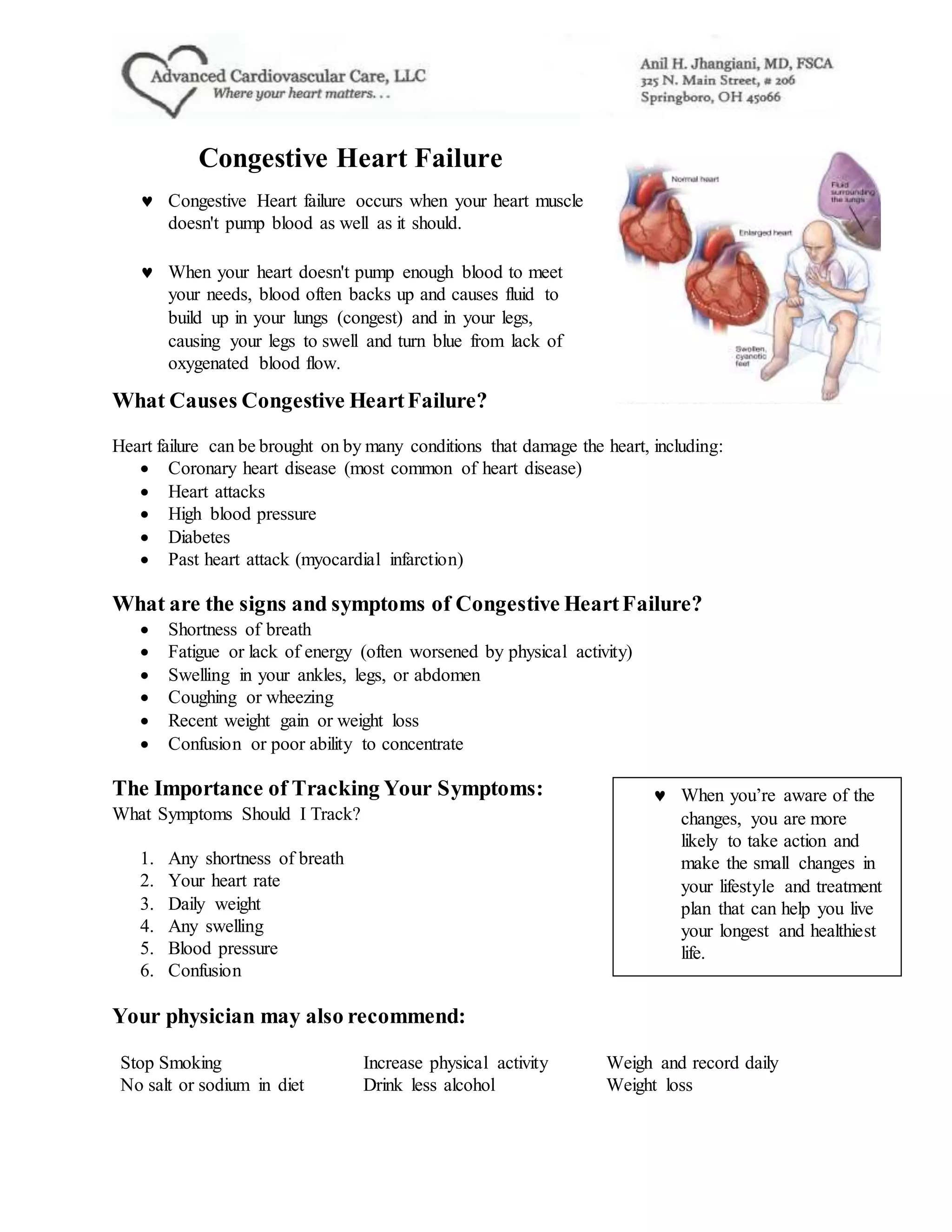
 Congestive Heart failure occurs when your heart muscle
doesn't pump blood as well as it should.
 When your heart doesn't pump enough blood to meet
your needs, blood often backs up and causes fluid to
build up in your lungs (congest) and in your legs,
causing your legs to swell and turn blue from lack of
oxygenated blood flow.
What Causes Congestive HeartFailure?
Heart failure can be brought on by many conditions that damage the heart, including:
 Coronary heart disease (most common of heart disease)
 Heart attacks
 High blood pressure
 Diabetes
 Past heart attack (myocardial infarction)
What are the signs and symptoms of Congestive HeartFailure?
 Shortness of breath
 Fatigue or lack of energy (often worsened by physical activity)
 Swelling in your ankles, legs, or abdomen
 Coughing or wheezing
 Recent weight gain or weight loss
 Confusion or poor ability to concentrate
The Importance of Tracking Your Symptoms:
What Symptoms Should I Track?
1. Any shortness of breath
2. Your heart rate
3. Daily weight
4. Any swelling
5. Blood pressure
6. Confusion
Your physician may also recommend:
Stop Smoking Increase physical activity Weigh and record daily
No salt or sodium in diet Drink less alcohol Weight loss
 When you’re aware of the
changes, you are more
likely to take action and
make the small changes in
your lifestyle and treatment
plan that can help you live
your longest and healthiest
life.
Congestive Heart Failure Patient Education

Congestive Heart Failure Patient Education

  • 1.
    Congestive Heart Failure Congestive Heart failure occurs when your heart muscle doesn't pump blood as well as it should.  When your heart doesn't pump enough blood to meet your needs, blood often backs up and causes fluid to build up in your lungs (congest) and in your legs, causing your legs to swell and turn blue from lack of oxygenated blood flow. What Causes Congestive HeartFailure? Heart failure can be brought on by many conditions that damage the heart, including:  Coronary heart disease (most common of heart disease)  Heart attacks  High blood pressure  Diabetes  Past heart attack (myocardial infarction) What are the signs and symptoms of Congestive HeartFailure?  Shortness of breath  Fatigue or lack of energy (often worsened by physical activity)  Swelling in your ankles, legs, or abdomen  Coughing or wheezing  Recent weight gain or weight loss  Confusion or poor ability to concentrate The Importance of Tracking Your Symptoms: What Symptoms Should I Track? 1. Any shortness of breath 2. Your heart rate 3. Daily weight 4. Any swelling 5. Blood pressure 6. Confusion Your physician may also recommend: Stop Smoking Increase physical activity Weigh and record daily No salt or sodium in diet Drink less alcohol Weight loss  When you’re aware of the changes, you are more likely to take action and make the small changes in your lifestyle and treatment plan that can help you live your longest and healthiest life.