Downloaded 33 times
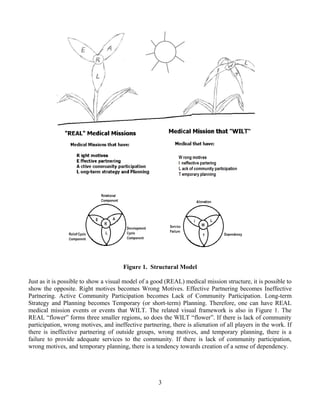
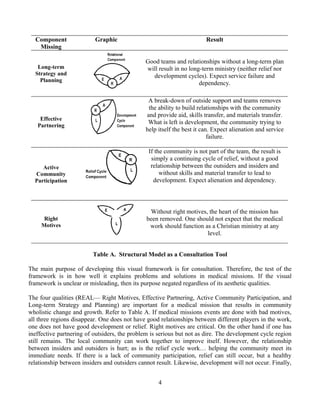
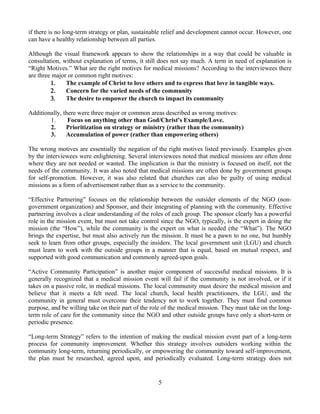
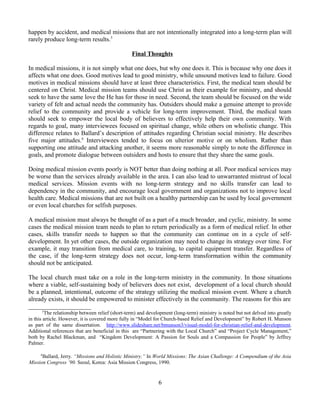
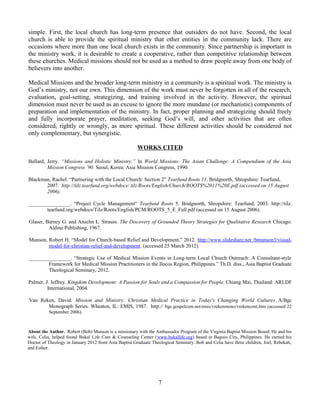

The article discusses effective principles for medical missions within the church in the Philippines, emphasizing the importance of right motives, effective partnering, active community participation, and long-term strategy for successful outcomes. It presents a visual model in the form of a flower to illustrate how these key components can either lead to thriving missions (referred to as 'real') or failing ones (referred to as 'wilt'). The findings are based on interviews with practitioners in the field and suggest that well-planned medical missions must be integrated into long-term community development initiatives to avoid dependency and ensure sustainability.


