Healthy Aging
Ajaz Ahmad Suhaff
Aging
• Aging or ageing is a process that accumulates
changes in organisms or objects over time.
• Human aging process involves
multidimensional changes on physical,
psychological, cultural and social levels.
Aging Brings Challenges
• Older adults face more challenges with everyday
living activities, 1 in 3 older adults has limitations
in activities such as preparing meals and
housekeeping
• Increase in the prevalence of chronic diseases, 80
percent of older adults have at least one chronic
health condition.
• Challenge for Caregiving and Caregivers
• Caregivers themselves are at risk for health
problems.
Myths about healthy aging
• Myth: Aging means declining health and/or
disability.
• Fact: There are some diseases that become
more common as we age.
• However, getting older does not automatically
mean poor health or that you will be confined
to a walker or wheelchair.
• Plenty of older adults enjoy vigorous health,
often better than many younger people.
• Myth: Memory loss is an inevitable part of
aging.
• Fact: As you age, you may eventually notice
you don’t remember things as easily as in the
past, or memories may start to take a little
longer to retrieve.
• However, significant memory loss is not an
inevitable result of aging.
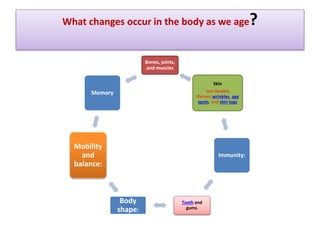
What changes occur in the body as we age?
Bones, joints,
and muscles
Skin
less flexible,
thinner,wrinkles, age
spots, and skin tags
Immunity:
Teeth and
gums:
Body
shape:
Mobility
and
balance:
Memory
contd
Hair and
nail:
Vision Sleep:
Hearing Bowel and
bladder:
Taste and
smell:
How can social issues affect the life and health of seniors?
• Loneliness from losing a spouse and friends
• Inability to independently manage regular activities of
living
• Difficulty coping and accepting physical changes of
aging
• Frustration with ongoing medical problems and
increasing number of medications
• Feeling inadequate from inability to continue to work
• Boredom from retirement and lack of routine activities
• Financial stresses from the loss of regular income
Healthy Aging
• The process of developing and maintaining
the functional ability that enables wellbeing in
older age.
• Staying healthy and feeling your best is
important at any age.
Functional abilities
• to meet their basic needs;
• To learn, grow and make decisions;
• be mobile;
• To build and maintain relationships; and
• To contribute to society.
Key features of Healthy Aging
Diversity:
• There is no typical older person. Some 80-year-olds
have levels of physical and mental capacity that
compare favourably with 30-year-olds. Others of the
same age may require extensive care and support for
basic activities like dressing and eating.
• Inequity:
A large proportion (approximately 75%) of the diversity in
capacity and circumstance observed in older age is the
result of the cumulative impact of advantage and
disadvantage across people’s lives.
What are lifestyle changes seniors can make to lead a healthy
life as they age?
• Include physical activity in your daily routine. Regular
moderate physical activity can help you maintain a
healthy weight and lower your heart disease risk.
• Eat a healthy diet. Choose vegetables, fruits, whole
grains, high-fiber foods and lean sources of protein,
such as fish.
• Don't smoke.
• Manage stress. Stress can take a toll on your heart.
Take steps to reduce stress, such as meditation,
exercise or talk therapy.
• Get enough sleep.
continued
• Get adequate amounts of calcium.
• Get adequate amounts of vitamin D.
• Include physical activity in your daily routine.
• Avoid substance abuse.
• Eat a healthy diet. .
• Include physical activity in your daily routine.
• Don't ignore the urge to have a bowel movement.
• Go to the toilet regularly.
• Maintain a healthy weight.
• Avoid bladder irritants. Caffeine, acidic foods, alcohol and
carbonated beverages can make incontinence worse.
• Avoid constipation. Eat more fiber and take other steps to avoid
constipation, which can worsen incontinence.
• Eat a healthy diet.
• Stay mentally active.
• Be social.
• Connect regularly with friends and family.
• Make an effort to make new friends.
• “Let's be positive and passionate about life.
As we age, let's look forward to better days
ahead.”

Healthy Aging.pptx

  • 1.
  • 2.
    Aging • Aging orageing is a process that accumulates changes in organisms or objects over time. • Human aging process involves multidimensional changes on physical, psychological, cultural and social levels.
  • 3.
    Aging Brings Challenges •Older adults face more challenges with everyday living activities, 1 in 3 older adults has limitations in activities such as preparing meals and housekeeping • Increase in the prevalence of chronic diseases, 80 percent of older adults have at least one chronic health condition. • Challenge for Caregiving and Caregivers • Caregivers themselves are at risk for health problems.
  • 4.
    Myths about healthyaging • Myth: Aging means declining health and/or disability. • Fact: There are some diseases that become more common as we age. • However, getting older does not automatically mean poor health or that you will be confined to a walker or wheelchair. • Plenty of older adults enjoy vigorous health, often better than many younger people.
  • 5.
    • Myth: Memoryloss is an inevitable part of aging. • Fact: As you age, you may eventually notice you don’t remember things as easily as in the past, or memories may start to take a little longer to retrieve. • However, significant memory loss is not an inevitable result of aging.
  • 6.
    What changes occurin the body as we age? Bones, joints, and muscles Skin less flexible, thinner,wrinkles, age spots, and skin tags Immunity: Teeth and gums: Body shape: Mobility and balance: Memory
  • 7.
    contd Hair and nail: Vision Sleep: HearingBowel and bladder: Taste and smell:
  • 8.
    How can socialissues affect the life and health of seniors? • Loneliness from losing a spouse and friends • Inability to independently manage regular activities of living • Difficulty coping and accepting physical changes of aging • Frustration with ongoing medical problems and increasing number of medications • Feeling inadequate from inability to continue to work • Boredom from retirement and lack of routine activities • Financial stresses from the loss of regular income
  • 9.
    Healthy Aging • Theprocess of developing and maintaining the functional ability that enables wellbeing in older age. • Staying healthy and feeling your best is important at any age.
  • 10.
    Functional abilities • tomeet their basic needs; • To learn, grow and make decisions; • be mobile; • To build and maintain relationships; and • To contribute to society.
  • 11.
    Key features ofHealthy Aging Diversity: • There is no typical older person. Some 80-year-olds have levels of physical and mental capacity that compare favourably with 30-year-olds. Others of the same age may require extensive care and support for basic activities like dressing and eating. • Inequity: A large proportion (approximately 75%) of the diversity in capacity and circumstance observed in older age is the result of the cumulative impact of advantage and disadvantage across people’s lives.
  • 12.
    What are lifestylechanges seniors can make to lead a healthy life as they age? • Include physical activity in your daily routine. Regular moderate physical activity can help you maintain a healthy weight and lower your heart disease risk. • Eat a healthy diet. Choose vegetables, fruits, whole grains, high-fiber foods and lean sources of protein, such as fish. • Don't smoke. • Manage stress. Stress can take a toll on your heart. Take steps to reduce stress, such as meditation, exercise or talk therapy. • Get enough sleep.
  • 13.
    continued • Get adequateamounts of calcium. • Get adequate amounts of vitamin D. • Include physical activity in your daily routine. • Avoid substance abuse. • Eat a healthy diet. . • Include physical activity in your daily routine. • Don't ignore the urge to have a bowel movement. • Go to the toilet regularly. • Maintain a healthy weight. • Avoid bladder irritants. Caffeine, acidic foods, alcohol and carbonated beverages can make incontinence worse. • Avoid constipation. Eat more fiber and take other steps to avoid constipation, which can worsen incontinence.
  • 14.
    • Eat ahealthy diet. • Stay mentally active. • Be social. • Connect regularly with friends and family. • Make an effort to make new friends.
  • 15.
    • “Let's bepositive and passionate about life. As we age, let's look forward to better days ahead.”