Hassan Fayyaz 105
Usama Fayyaz 107
Zeeshan Yousuf 113
INTRODUCTION
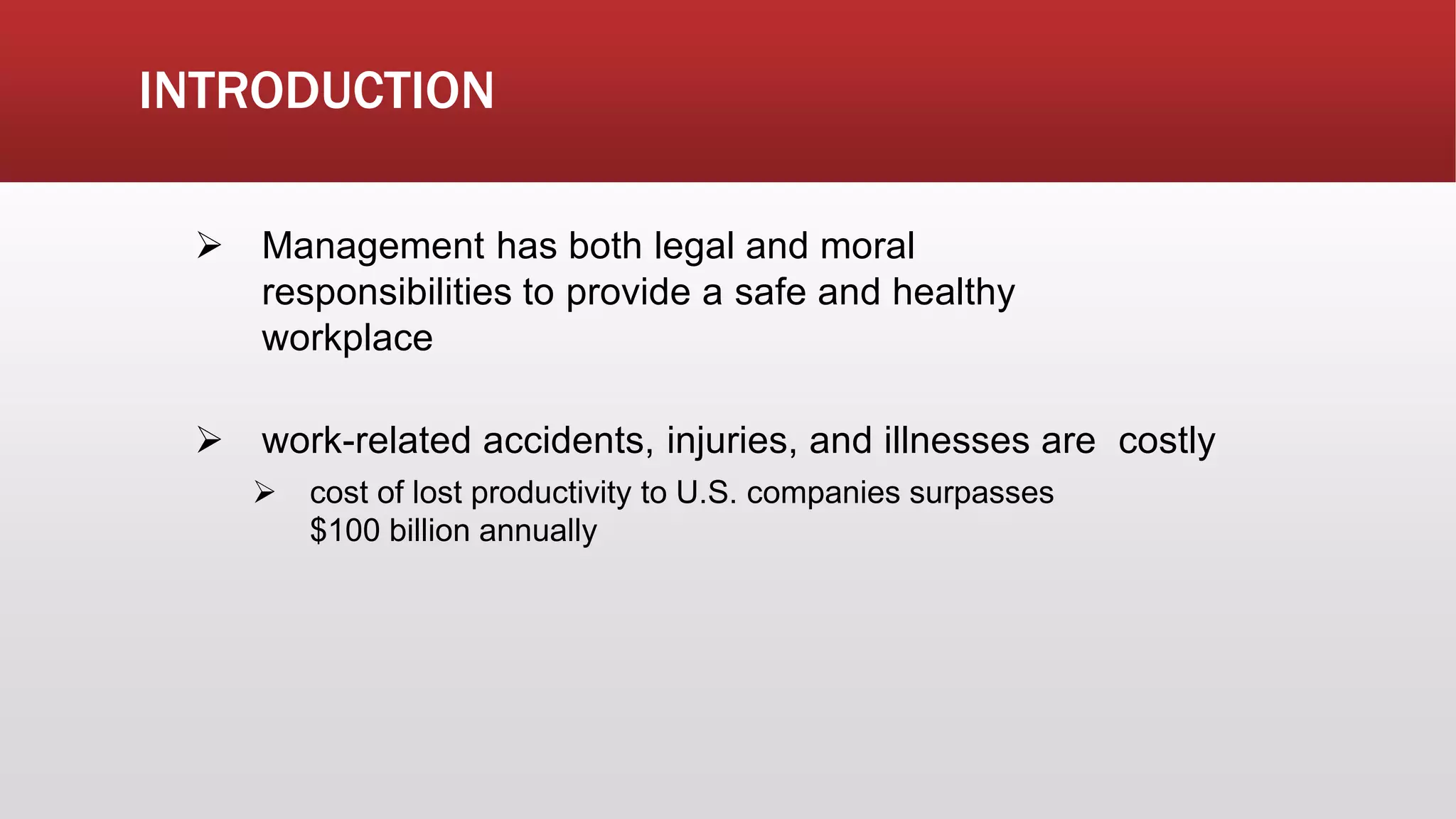
 Management has both legal and moral
responsibilities to provide a safe and healthy
workplace
 work-related accidents, injuries, and illnesses are costly
 cost of lost productivity to U.S. companies surpasses
$100 billion annually
According to ILO (International of Labor Organization)
Every 15 seconds, a worker dies from a work related accident
or disease.
Every 15 seconds, 160 workers have a work related accident.
Every year, 2.3 million people die as a result of occupational
accidents or work-related diseases
Health and Safety Issues
 Accidents
 Indoor Air Quality
 Smoke Free Environment
 Stress
ACCIENDENT
An unplanned, uncontrolled event that happens unexpectedly
and unintentionally, typically resulting in damage or injury or
loss of the property/assets.
Reasons for Accident
Unsafe Act
Unsafe Condition
Natural Reasons
Cause wise Analysis for Accident
88%
10% 2%
UnSafe Act
UnSafe Condition
Natural Reasons
Indoor Air Quality
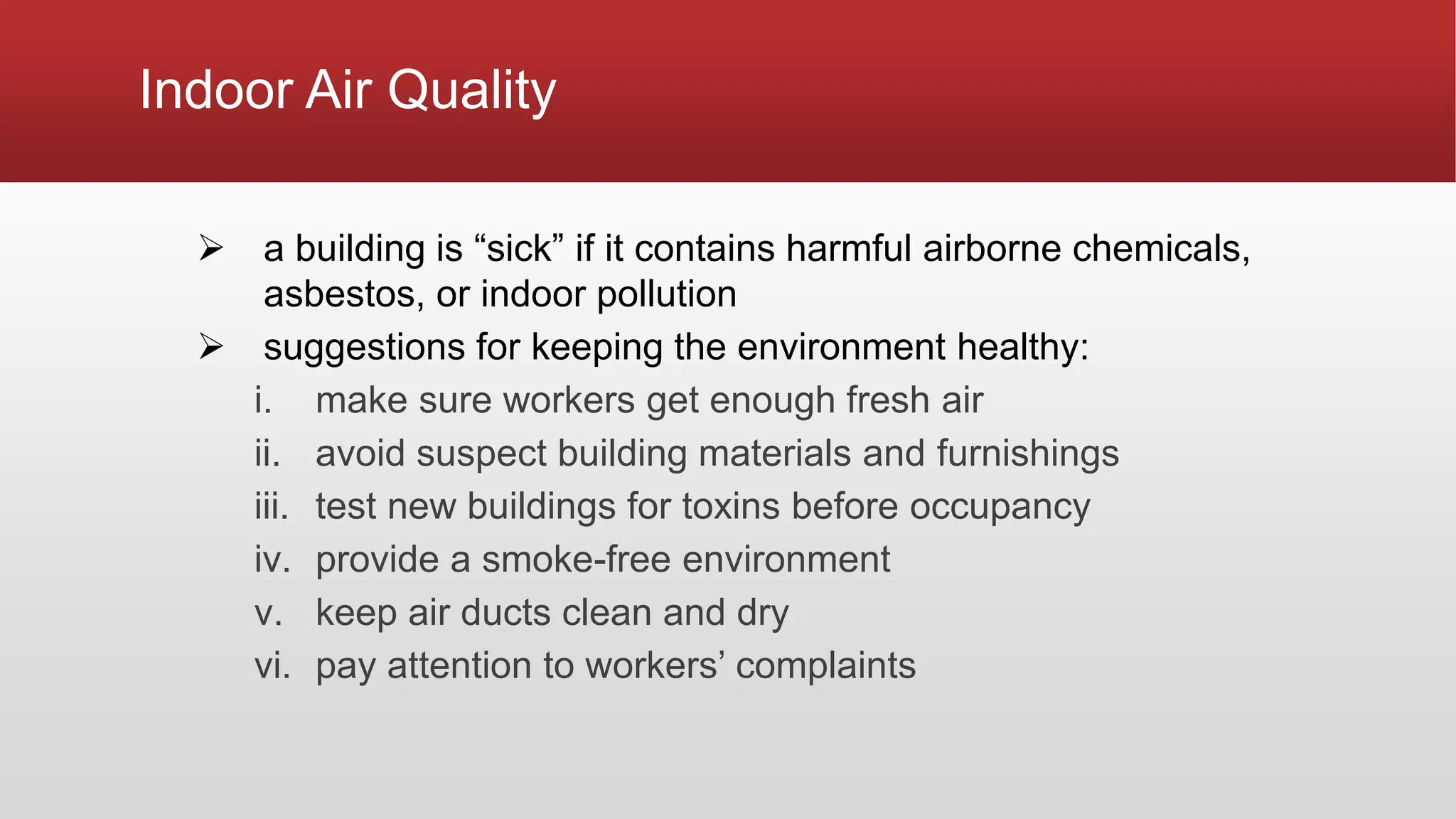
 a building is “sick” if it contains harmful airborne chemicals,
asbestos, or indoor pollution
 suggestions for keeping the environment healthy:
i. make sure workers get enough fresh air
ii. avoid suspect building materials and furnishings
iii. test new buildings for toxins before occupancy
iv. provide a smoke-free environment
v. keep air ducts clean and dry
vi. pay attention to workers’ complaints
Smoke Free Environment
Costs of smokers:
 increased health premiums
 absenteeism
 lost productivity due to smoke breaks
 maintenance costs
 harm to coworkers by second-hand smoke
Stress
 Employees feel negative stress in the face of constraints,
demands, and pressure
 stress costs U.S. corporations billions dollars annually
Why Health and Safety is Important??
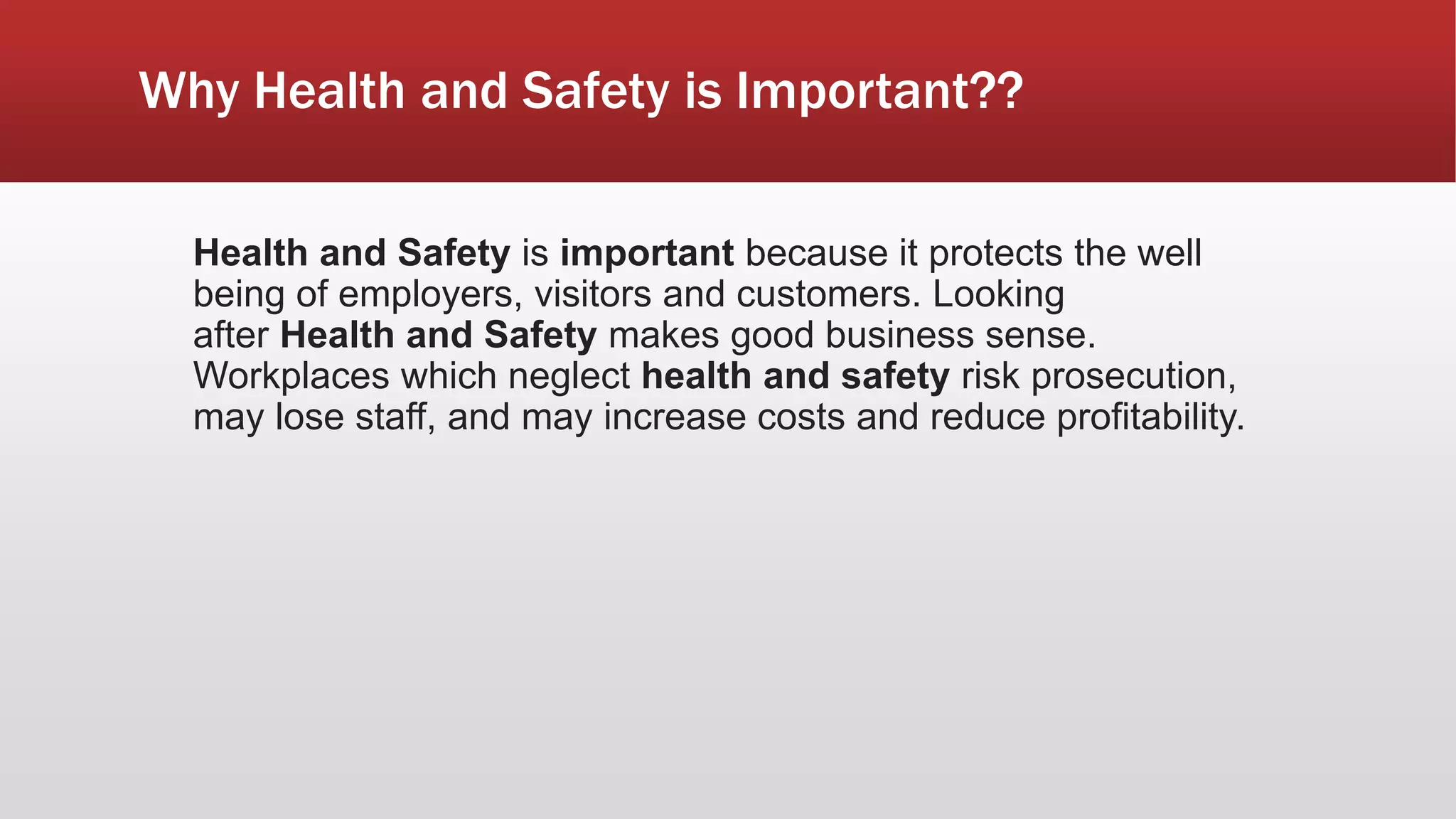
Health and Safety is important because it protects the well
being of employers, visitors and customers. Looking
after Health and Safety makes good business sense.
Workplaces which neglect health and safety risk prosecution,
may lose staff, and may increase costs and reduce profitability.
Health and Safety Act 1974
The 1974 Act was a major step forward because:
1) It protected everyone
2) It gave inspectors powers of investigation into accidents
3) It gave employers and workers duties at work
4) It included welfare at work e.g. toilets, Mess etc.
5) It included imprisonment and fines as penalties
Health and Safety Depends
Health and Safety Depends on:
1) Worker
2) Supervisor
3) Employers
Workers must do for Health and Safety:
▪ Follow the law and workplace health and safety policies and
procedures
▪ Wear and use the protective equipment required by their
employer
▪ Work and act in a way that won’t hurt themselves or anyone
else
▪ Report any hazards or injuries to their supervisor
Supervisor must do for Health and Safety:
▪ Tell workers about hazards and dangers, and respond to their
concerns
▪ Show workers how to work safely, and make sure they follow
the law and workplace health and safety policies and
procedures
▪ Make sure workers wear and use the right protective
equipment
▪ Do everything reasonable in the circumstances to protect
workers from being hurt or getting a work-related illness.
Employer must do for Health and Safety:
▪ Make sure workers know about hazards and dangers by
providing information, instruction and supervision on how to
work safely
▪ Make sure supervisors know what is required to protect
workers’ health and safety on the job
▪ Create workplace health and safety policies and procedures
Employer must do for Health and Safety:
▪ Make sure everyone follows the law and the workplace
health and safety policies and procedures
▪ Make sure workers wear and use the right protective
equipment
▪ Do everything reasonable in the circumstances to
protect workers from being hurt or getting a work-
related illness.
Thank You

Health and Safety at Work

  • 1.
    Hassan Fayyaz 105 UsamaFayyaz 107 Zeeshan Yousuf 113
  • 2.
    INTRODUCTION  Management hasboth legal and moral responsibilities to provide a safe and healthy workplace  work-related accidents, injuries, and illnesses are costly  cost of lost productivity to U.S. companies surpasses $100 billion annually
  • 3.
    According to ILO(International of Labor Organization) Every 15 seconds, a worker dies from a work related accident or disease. Every 15 seconds, 160 workers have a work related accident. Every year, 2.3 million people die as a result of occupational accidents or work-related diseases
  • 4.
    Health and SafetyIssues  Accidents  Indoor Air Quality  Smoke Free Environment  Stress
  • 5.
    ACCIENDENT An unplanned, uncontrolledevent that happens unexpectedly and unintentionally, typically resulting in damage or injury or loss of the property/assets.
  • 6.
    Reasons for Accident UnsafeAct Unsafe Condition Natural Reasons
  • 7.
    Cause wise Analysisfor Accident 88% 10% 2% UnSafe Act UnSafe Condition Natural Reasons
  • 8.
    Indoor Air Quality a building is “sick” if it contains harmful airborne chemicals, asbestos, or indoor pollution  suggestions for keeping the environment healthy: i. make sure workers get enough fresh air ii. avoid suspect building materials and furnishings iii. test new buildings for toxins before occupancy iv. provide a smoke-free environment v. keep air ducts clean and dry vi. pay attention to workers’ complaints
  • 9.
    Smoke Free Environment Costsof smokers:  increased health premiums  absenteeism  lost productivity due to smoke breaks  maintenance costs  harm to coworkers by second-hand smoke
  • 10.
    Stress  Employees feelnegative stress in the face of constraints, demands, and pressure  stress costs U.S. corporations billions dollars annually
  • 11.
    Why Health andSafety is Important?? Health and Safety is important because it protects the well being of employers, visitors and customers. Looking after Health and Safety makes good business sense. Workplaces which neglect health and safety risk prosecution, may lose staff, and may increase costs and reduce profitability.
  • 12.
    Health and SafetyAct 1974 The 1974 Act was a major step forward because: 1) It protected everyone 2) It gave inspectors powers of investigation into accidents 3) It gave employers and workers duties at work 4) It included welfare at work e.g. toilets, Mess etc. 5) It included imprisonment and fines as penalties
  • 13.
    Health and SafetyDepends Health and Safety Depends on: 1) Worker 2) Supervisor 3) Employers
  • 14.
    Workers must dofor Health and Safety: ▪ Follow the law and workplace health and safety policies and procedures ▪ Wear and use the protective equipment required by their employer ▪ Work and act in a way that won’t hurt themselves or anyone else ▪ Report any hazards or injuries to their supervisor
  • 15.
    Supervisor must dofor Health and Safety: ▪ Tell workers about hazards and dangers, and respond to their concerns ▪ Show workers how to work safely, and make sure they follow the law and workplace health and safety policies and procedures ▪ Make sure workers wear and use the right protective equipment ▪ Do everything reasonable in the circumstances to protect workers from being hurt or getting a work-related illness.
  • 16.
    Employer must dofor Health and Safety: ▪ Make sure workers know about hazards and dangers by providing information, instruction and supervision on how to work safely ▪ Make sure supervisors know what is required to protect workers’ health and safety on the job ▪ Create workplace health and safety policies and procedures
  • 17.
    Employer must dofor Health and Safety: ▪ Make sure everyone follows the law and the workplace health and safety policies and procedures ▪ Make sure workers wear and use the right protective equipment ▪ Do everything reasonable in the circumstances to protect workers from being hurt or getting a work- related illness.
  • 18.