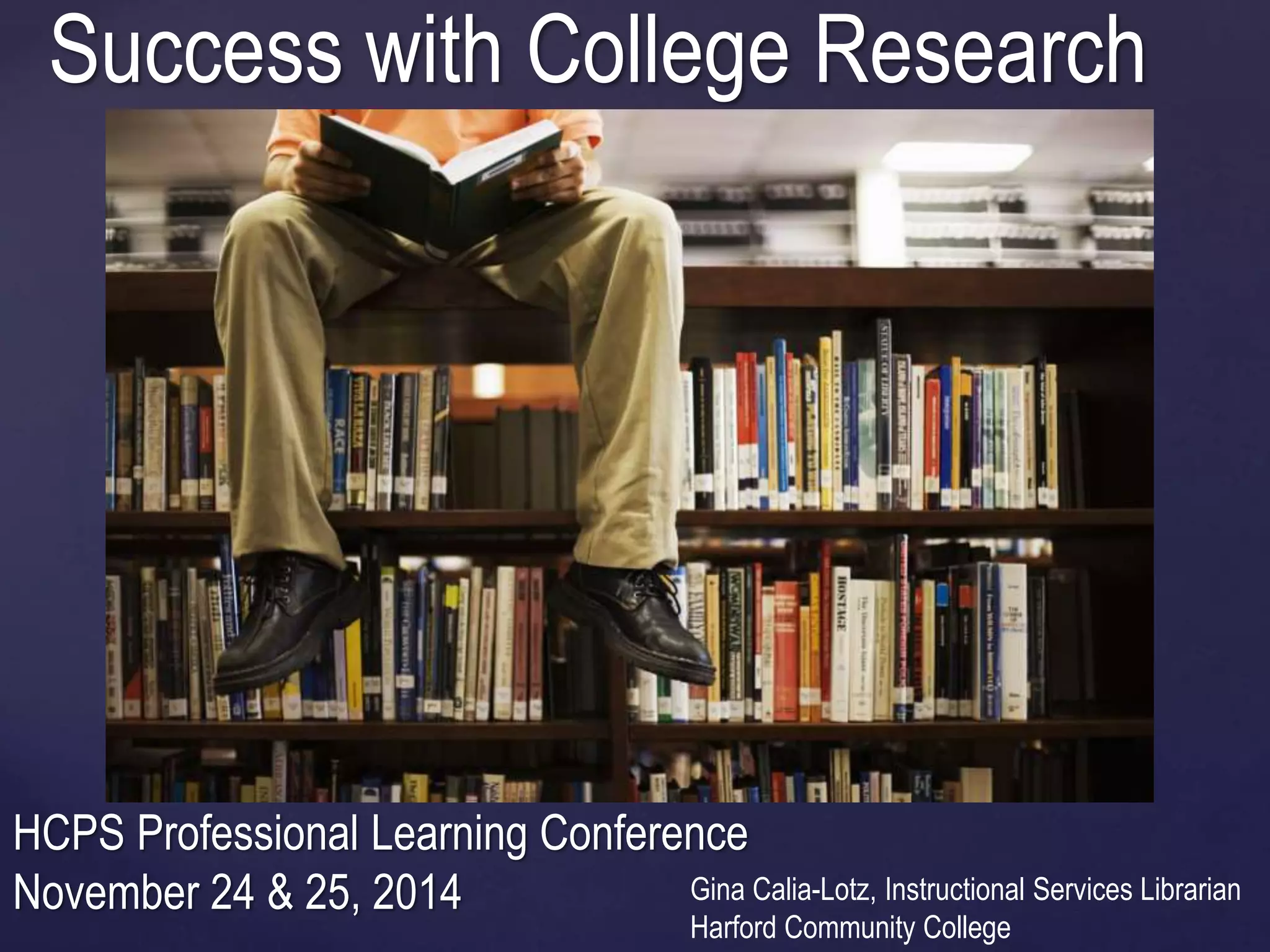
Success with College Research 
{ 
HCPS Professional Learning Conference 
November 24 & 25, 2014 Gina Calia-Lotz, Instructional Services Librarian 
Harford Community College
ASSOCATION OF COLLEGE & RESEARCH 
LIBRARIES (ACRL): 
“Framework for Information Literacy for Higher 
Education” 
{ 
(A work in progress…)
“Old” ACRL “Standards for 
Information Literacy” 
 Determine the extent of information needed 
 Access the needed information effectively and efficiently 
 Evaluate information and its sources critically 
 Incorporate selected information into one’s knowledge 
base 
 Use information effectively to accomplish a specific 
purpose 
 Understand the economic, legal, and social issues 
surrounding the use of information, and access and use 
information ethically and legally
ACRL’s expanded definition of 
information literacy 
“ Information literacy is a spectrum of abilities, practices, and 
habits of mind that extends and deepens learning through 
engagement with the information ecosystem. It includes: 
 understanding essential concepts about that ecosystem; 
 engaging in creative inquiry and critical reflection to develop 
questions and to find, evaluate and manage information 
through an iterative process; 
 creating new knowledge through ethical participation in 
communities of learning, scholarship, and civic purpose; 
and 
 adopting a strategic view of the interests, biases, and 
assumptions present in the information ecosystem.”
Snapshots of the 
ACRL Framework for 
Information Literacy 
{ 
“The Six Frames”
Authority is Constructed & Contextual 
various communities may 
recognize different types of 
authority 
Novice learners may need to rely 
on superficial indicators of 
authority, such as type of 
publication or author credentials, 
where experts recognize schools 
of thought or discipline-specific 
paradigms. 
Even authoritative should be 
regarded with “informed 
skepticism.”
Information Creation as a Process 
{ 
Unique capabilities and 
constraints of each information 
product determine how info can 
and should be used. 
information products are 
valued differently in different 
contexts, such as academia or 
the workplace. 
Researchers decide which 
format and mode of 
transmission to use when 
disseminating their own info 
creations.
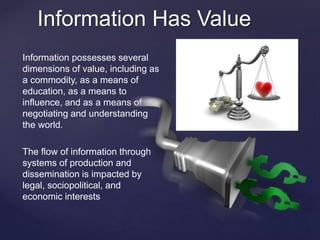
Information Has Value 
Information possesses several 
dimensions of value, including as 
a commodity, as a means of 
education, as a means to 
influence, and as a means of 
negotiating and understanding 
the world. 
The flow of information through 
systems of production and 
dissemination is impacted by 
legal, sociopolitical, and 
economic interests
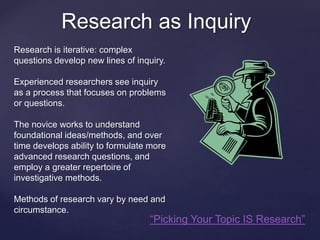
Research as Inquiry 
Research is iterative: complex 
questions develop new lines of inquiry. 
Experienced researchers see inquiry 
as a process that focuses on problems 
or questions. 
The novice works to understand 
foundational ideas/methods, and over 
time develops ability to formulate more 
advanced research questions, and 
employ a greater repertoire of 
investigative methods. 
Methods of research vary by need and 
circumstance. 
“Picking Your Topic IS Research”
Scholarship is a Conversation 
Sustained discourse within a 
community of scholars or thinkers. 
Scholarly research resists simple 
answers. 
Scholarship is a discursive practice, 
over extended periods of time. 
The experienced researcher seeks 
out many perspectives in a scholarly 
conversation, not merely the one 
with which the researcher already 
agrees.
Searching is Strategic 
{ 
Knowing the universe of possible 
tools, collections, and 
repositories. 
No single system works well for 
all research needs. 
Using appropriate search 
vocabularies and protocols. 
Refining and adjusting search 
strategies during the process.
“Credible websites”
“Only academic sources”
“Develop a thesis.”
“Incorporate your sources, 
don’t just quote.”
“Cite in MLA style” 
“Cite in APA style” 
“Cite using a standard format”
EVALUATION
Slideshare link: 
{

HCPS-PDConference-2014

  • 1.
    Success with CollegeResearch { HCPS Professional Learning Conference November 24 & 25, 2014 Gina Calia-Lotz, Instructional Services Librarian Harford Community College
  • 2.
    ASSOCATION OF COLLEGE& RESEARCH LIBRARIES (ACRL): “Framework for Information Literacy for Higher Education” { (A work in progress…)
  • 3.
    “Old” ACRL “Standardsfor Information Literacy”  Determine the extent of information needed  Access the needed information effectively and efficiently  Evaluate information and its sources critically  Incorporate selected information into one’s knowledge base  Use information effectively to accomplish a specific purpose  Understand the economic, legal, and social issues surrounding the use of information, and access and use information ethically and legally
  • 4.
    ACRL’s expanded definitionof information literacy “ Information literacy is a spectrum of abilities, practices, and habits of mind that extends and deepens learning through engagement with the information ecosystem. It includes:  understanding essential concepts about that ecosystem;  engaging in creative inquiry and critical reflection to develop questions and to find, evaluate and manage information through an iterative process;  creating new knowledge through ethical participation in communities of learning, scholarship, and civic purpose; and  adopting a strategic view of the interests, biases, and assumptions present in the information ecosystem.”
  • 5.
    Snapshots of the ACRL Framework for Information Literacy { “The Six Frames”
  • 6.
    Authority is Constructed& Contextual various communities may recognize different types of authority Novice learners may need to rely on superficial indicators of authority, such as type of publication or author credentials, where experts recognize schools of thought or discipline-specific paradigms. Even authoritative should be regarded with “informed skepticism.”
  • 7.
    Information Creation asa Process { Unique capabilities and constraints of each information product determine how info can and should be used. information products are valued differently in different contexts, such as academia or the workplace. Researchers decide which format and mode of transmission to use when disseminating their own info creations.
  • 8.
    Information Has Value Information possesses several dimensions of value, including as a commodity, as a means of education, as a means to influence, and as a means of negotiating and understanding the world. The flow of information through systems of production and dissemination is impacted by legal, sociopolitical, and economic interests
  • 9.
    Research as Inquiry Research is iterative: complex questions develop new lines of inquiry. Experienced researchers see inquiry as a process that focuses on problems or questions. The novice works to understand foundational ideas/methods, and over time develops ability to formulate more advanced research questions, and employ a greater repertoire of investigative methods. Methods of research vary by need and circumstance. “Picking Your Topic IS Research”
  • 10.
    Scholarship is aConversation Sustained discourse within a community of scholars or thinkers. Scholarly research resists simple answers. Scholarship is a discursive practice, over extended periods of time. The experienced researcher seeks out many perspectives in a scholarly conversation, not merely the one with which the researcher already agrees.
  • 11.
    Searching is Strategic { Knowing the universe of possible tools, collections, and repositories. No single system works well for all research needs. Using appropriate search vocabularies and protocols. Refining and adjusting search strategies during the process.
  • 12.
  • 13.
  • 14.
  • 15.
    “Incorporate your sources, don’t just quote.”
  • 16.
    “Cite in MLAstyle” “Cite in APA style” “Cite using a standard format”
  • 17.
  • 18.