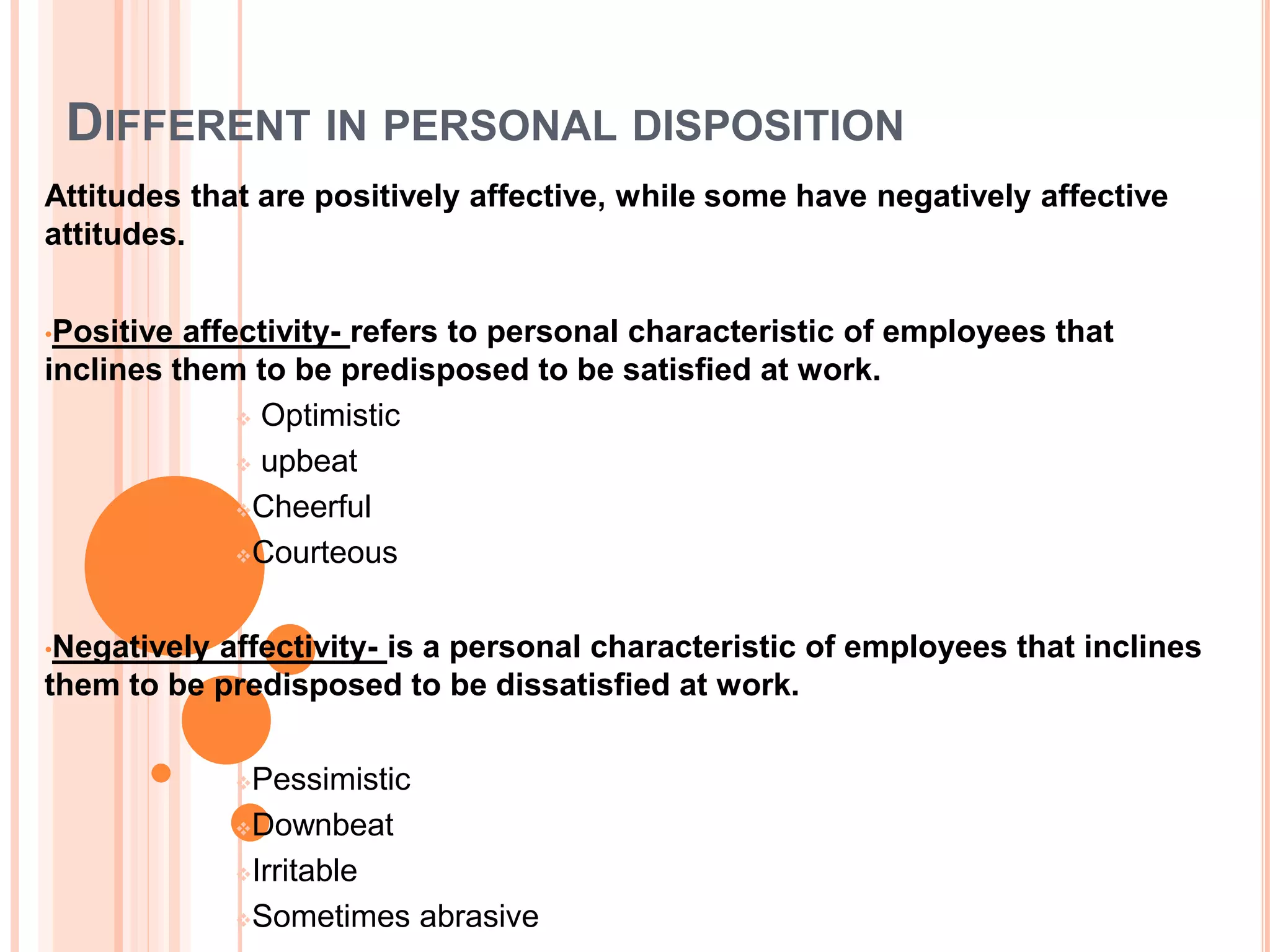
DIFFERENT IN PERSONAL DISPOSITION
Attitudes that are positively affective, while some have negatively affective
attitudes.
•Positive affectivity- refers to personal characteristic of employees that
inclines them to be predisposed to be satisfied at work.
 Optimistic
 upbeat
Cheerful
Courteous
•Negatively affectivity- is a personal characteristic of employees that inclines
them to be predisposed to be dissatisfied at work.
Pessimistic
Downbeat
Irritable
Sometimes abrasive
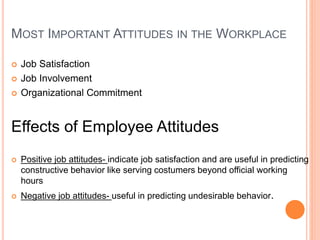
MOST IMPORTANT ATTITUDES IN THE WORKPLACE
 Job Satisfaction
 Job Involvement
 Organizational Commitment
Effects of Employee Attitudes
 Positive job attitudes- indicate job satisfaction and are useful in predicting
constructive behavior like serving costumers beyond official working
hours
 Negative job attitudes- useful in predicting undesirable behavior.
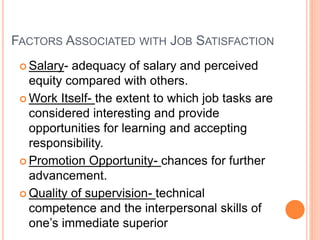
FACTORS ASSOCIATED WITH JOB SATISFACTION
 Salary- adequacy of salary and perceived
equity compared with others.
 Work Itself- the extent to which job tasks are
considered interesting and provide
opportunities for learning and accepting
responsibility.
 Promotion Opportunity- chances for further
advancement.
 Quality of supervision- technical
competence and the interpersonal skills of
one’s immediate superior
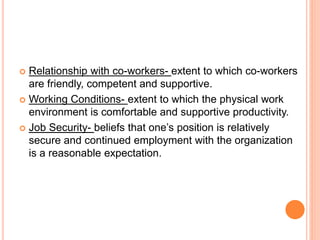
 Relationship with co-workers- extent to which co-workers
are friendly, competent and supportive.
 Working Conditions- extent to which the physical work
environment is comfortable and supportive productivity.
 Job Security- beliefs that one’s position is relatively
secure and continued employment with the organization
is a reasonable expectation.
WAYS OF MEASURING JOB SATISFACTION
 Single global rating method- refers to that
approach where individuals are asked to respond
to a single question.
 Summation score method- is an approach where
individuals indicate their feelings regarding each
key factors of their job.
THREE DIMENSION OF ORGANIZATIONAL
COMMITMENT
 Affective Commitment- refers to the
employee’s emotional attachment to the
organization and belief in its values.
 Continuance commitment- refers to the
employee’s tendency to remain in an
organization because he cannot afford to
leave.
 Normative Commitment- refers to an
obligation to remain with the company for
moral or ethical reason.

HBO-JAYMIE

  • 1.
    DIFFERENT IN PERSONALDISPOSITION Attitudes that are positively affective, while some have negatively affective attitudes. •Positive affectivity- refers to personal characteristic of employees that inclines them to be predisposed to be satisfied at work.  Optimistic  upbeat Cheerful Courteous •Negatively affectivity- is a personal characteristic of employees that inclines them to be predisposed to be dissatisfied at work. Pessimistic Downbeat Irritable Sometimes abrasive
  • 2.
    MOST IMPORTANT ATTITUDESIN THE WORKPLACE  Job Satisfaction  Job Involvement  Organizational Commitment Effects of Employee Attitudes  Positive job attitudes- indicate job satisfaction and are useful in predicting constructive behavior like serving costumers beyond official working hours  Negative job attitudes- useful in predicting undesirable behavior.
  • 3.
    FACTORS ASSOCIATED WITHJOB SATISFACTION  Salary- adequacy of salary and perceived equity compared with others.  Work Itself- the extent to which job tasks are considered interesting and provide opportunities for learning and accepting responsibility.  Promotion Opportunity- chances for further advancement.  Quality of supervision- technical competence and the interpersonal skills of one’s immediate superior
  • 4.
     Relationship withco-workers- extent to which co-workers are friendly, competent and supportive.  Working Conditions- extent to which the physical work environment is comfortable and supportive productivity.  Job Security- beliefs that one’s position is relatively secure and continued employment with the organization is a reasonable expectation.
  • 5.
    WAYS OF MEASURINGJOB SATISFACTION  Single global rating method- refers to that approach where individuals are asked to respond to a single question.  Summation score method- is an approach where individuals indicate their feelings regarding each key factors of their job.
  • 6.
    THREE DIMENSION OFORGANIZATIONAL COMMITMENT  Affective Commitment- refers to the employee’s emotional attachment to the organization and belief in its values.  Continuance commitment- refers to the employee’s tendency to remain in an organization because he cannot afford to leave.  Normative Commitment- refers to an obligation to remain with the company for moral or ethical reason.