Session 3 Attitudes
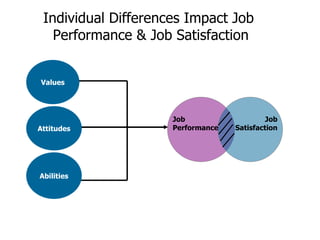
Individual Differences Impact Job  Performance & Job Satisfaction Values Attitudes Abilities Job Performance Job Satisfaction
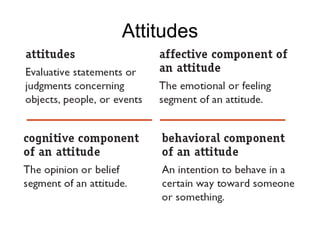
Attitudes
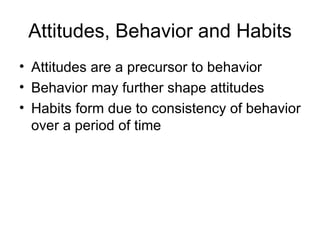
Attitudes, Behavior and Habits Attitudes are a precursor to behavior Behavior may further shape attitudes Habits form due to consistency of behavior over a period of time
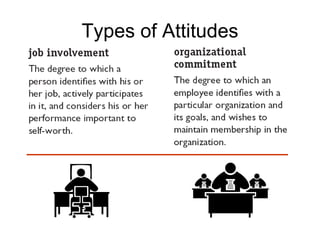
Types of Attitudes
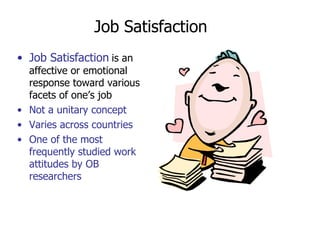
Job Satisfaction Job Satisfaction   is an affective or emotional response toward various facets of one’s job Not a unitary concept Varies across countries One of the most frequently studied work attitudes by OB researchers
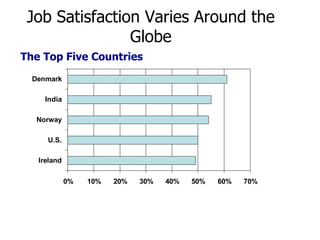
Job Satisfaction Varies Around the Globe The Top Five Countries
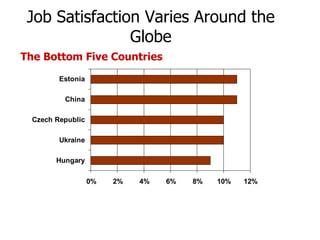
Job Satisfaction Varies Around the Globe The Bottom Five Countries
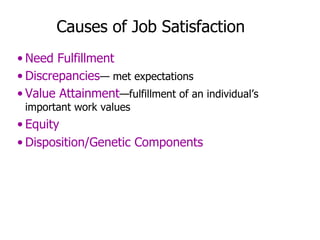
Causes of Job Satisfaction Need Fulfillment Discrepancies — met expectations Value Attainment —fulfillment of an individual’s important work values Equity Disposition/Genetic Components
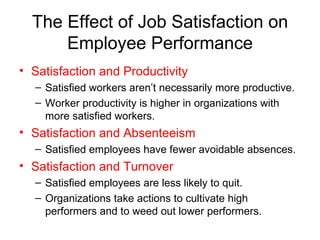
The Effect of Job Satisfaction on Employee Performance Satisfaction and Productivity Satisfied workers aren’t necessarily more productive. Worker productivity is higher in organizations with more satisfied workers. Satisfaction and Absenteeism Satisfied employees have fewer avoidable absences. Satisfaction and Turnover Satisfied employees are less likely to quit. Organizations take actions to cultivate high performers and to weed out lower performers.
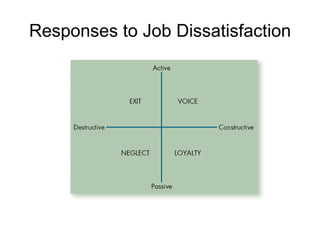
Responses to Job Dissatisfaction
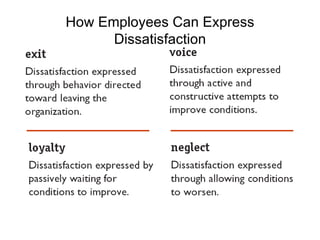
How Employees Can Express Dissatisfaction
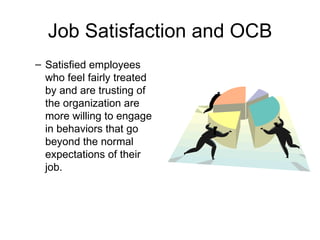
Job Satisfaction and OCB Satisfied employees who feel fairly treated by and are trusting of the organization are more willing to engage in behaviors that go beyond the normal expectations of their job.
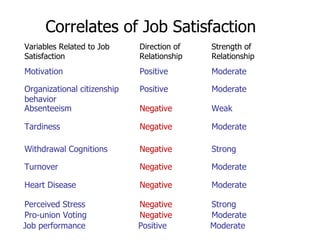
Correlates of Job Satisfaction Strength of Relationship Direction of Relationship Variables Related to Job Satisfaction Moderate Negative Tardiness Weak Negative Absenteeism Moderate Positive  Organizational citizenship behavior Moderate Positive Motivation Strong Negative Withdrawal Cognitions Moderate Negative Pro-union Voting Strong Negative Perceived Stress Moderate Negative Heart Disease Moderate Negative Turnover Moderate Positive  Job performance
Organizational Commitment Organizational Commitment   extent to which an individual identifies with an organization and its goals Strong relationship between organizational commitment and job satisfaction Highly correlated with job performance Lower intentions to quit
Job Involvement Job Involvement   extent to which an individual is immersed in his or her personal job Positively associated with job satisfaction, organizational commitment, and intrinsic motivation Negatively related to intentions to quit Positive relationship between job involvement and performance
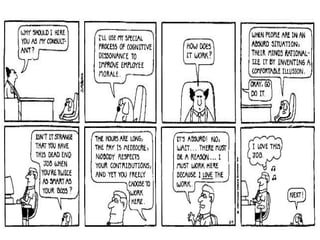
Cognitive Dissonance An incompatibility between values, attitudes and / or behavior.
                                                                                                   
Positive Attitude What do we mean…..

Session 4 attitudes

  • 1.
  • 2.
    Individual Differences ImpactJob Performance & Job Satisfaction Values Attitudes Abilities Job Performance Job Satisfaction
  • 3.
  • 4.
    Attitudes, Behavior andHabits Attitudes are a precursor to behavior Behavior may further shape attitudes Habits form due to consistency of behavior over a period of time
  • 5.
  • 6.
    Job Satisfaction JobSatisfaction is an affective or emotional response toward various facets of one’s job Not a unitary concept Varies across countries One of the most frequently studied work attitudes by OB researchers
  • 7.
    Job Satisfaction VariesAround the Globe The Top Five Countries
  • 8.
    Job Satisfaction VariesAround the Globe The Bottom Five Countries
  • 9.
    Causes of JobSatisfaction Need Fulfillment Discrepancies — met expectations Value Attainment —fulfillment of an individual’s important work values Equity Disposition/Genetic Components
  • 10.
    The Effect ofJob Satisfaction on Employee Performance Satisfaction and Productivity Satisfied workers aren’t necessarily more productive. Worker productivity is higher in organizations with more satisfied workers. Satisfaction and Absenteeism Satisfied employees have fewer avoidable absences. Satisfaction and Turnover Satisfied employees are less likely to quit. Organizations take actions to cultivate high performers and to weed out lower performers.
  • 11.
    Responses to JobDissatisfaction
  • 12.
    How Employees CanExpress Dissatisfaction
  • 13.
    Job Satisfaction andOCB Satisfied employees who feel fairly treated by and are trusting of the organization are more willing to engage in behaviors that go beyond the normal expectations of their job.
  • 14.
    Correlates of JobSatisfaction Strength of Relationship Direction of Relationship Variables Related to Job Satisfaction Moderate Negative Tardiness Weak Negative Absenteeism Moderate Positive Organizational citizenship behavior Moderate Positive Motivation Strong Negative Withdrawal Cognitions Moderate Negative Pro-union Voting Strong Negative Perceived Stress Moderate Negative Heart Disease Moderate Negative Turnover Moderate Positive Job performance
  • 15.
    Organizational Commitment OrganizationalCommitment extent to which an individual identifies with an organization and its goals Strong relationship between organizational commitment and job satisfaction Highly correlated with job performance Lower intentions to quit
  • 16.
    Job Involvement JobInvolvement extent to which an individual is immersed in his or her personal job Positively associated with job satisfaction, organizational commitment, and intrinsic motivation Negatively related to intentions to quit Positive relationship between job involvement and performance
  • 17.
    Cognitive Dissonance Anincompatibility between values, attitudes and / or behavior.
  • 18.
                                                                                                     
  • 19.
    Positive Attitude Whatdo we mean…..