Harassment, Intimidation, &
Bullying
NJ HIB Law
Mrs. Bordas
WHAT IS HIB?
Harrasment, Intimidation, or
Bullying (HIB)
 Is any gesture, written, verbal or physical act or
electronic communication, single incident or a
series of incidents, that is:
 Motivated either by any actual or perceived
characteristic, such:
◦ race, color, religion, ancestry, national origin, gender,
sexual orientation, gender identity and expression, or
a mental, physical or sensory disability, or any other
distinguishing characteristic
 Occurs on school property, school-sponsored
function, on a school bus, or off school grounds
that substantially disrupts or interferes with the
operation of the school or rights of other
students
HIB Conditions
 A reasonable person should know under the
circumstances will have the effect of physically or
emotionally harming a pupil or damaging the pupil’s
property, or placing a pupil in reasonable fear of
physical or emotional harm to his/her person or damage
to his/her property; or
 Has the effect of insulting or demeaning any pupil or
group of pupils; or
 Creates a hostile educational environment for the pupil
by interfering with a pupil’s education or by severely or
pervasively causing physical or emotional harm to the
pupil.
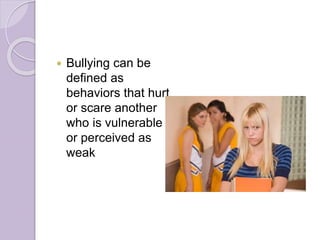
 Bullying can be
defined as
behaviors that hurt
or scare another
who is vulnerable
or perceived as
weak
TYPES OF BULLYING
Physical Bullying
What does it look like?
 Pushing
 Shoving
 Spitting
 Kicking
 Stealing
 Threatening
 Verbal Bullying
 Mocking
 Name-calling
 Taunting
 Teasing
 Verbally threatening
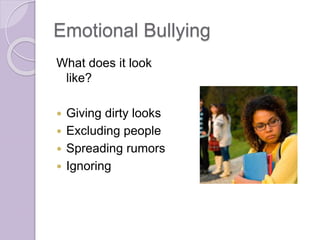
Emotional Bullying
What does it look
like?
 Giving dirty looks
 Excluding people
 Spreading rumors
 Ignoring
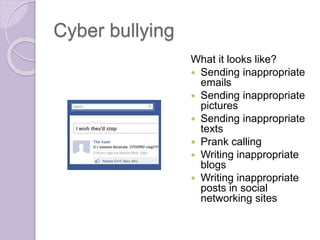
Cyber bullying
What it looks like?
 Sending inappropriate
emails
 Sending inappropriate
pictures
 Sending inappropriate
texts
 Prank calling
 Writing inappropriate
blogs
 Writing inappropriate
posts in social
networking sites
STATISTICS
 1 in 7 students is either a bully or victim
 160,000 students stay home a day because they're
afraid of being bullied
 60% of boys who were bullies in high school had at
least one criminal conviction by the age of 24
 42% of students have been bullied while online

 18-25% of high school students are bullied
frequently
 Victims of bullying are more likely to
suffer physical problems such as
common colds and coughs, sore throats,
poor appetite, and night waking. (Journal
of the American Medical Association,
2003).
 Teens that come from homes with little
support are at greater risk for engaging
in bullying behavior
 Physical bullying declines in high school.
Verbal abuse remains.
WHY DO PEOPLE
BULLY?
Possible Motives
 They are bullied themselves
 Others are doing it and getting away
with it
 They want to feel like they belong
 Makes some people feel stronger,
smarter, or better than the victim
 It keeps others from bullying them
WHAT DO YOU DO IF
YOU ARE BULLIED OR
HARASSED?
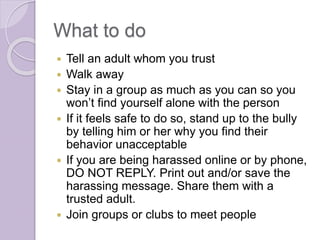
What to do
 Tell an adult whom you trust
 Walk away
 Stay in a group as much as you can so you
won’t find yourself alone with the person
 If it feels safe to do so, stand up to the bully
by telling him or her why you find their
behavior unacceptable
 If you are being harassed online or by phone,
DO NOT REPLY. Print out and/or save the
harassing message. Share them with a
trusted adult.
 Join groups or clubs to meet people
What NOT to do
 Don’t bully back or bully someone else
 Don’t keep it to yourself or hope the
problem will just disappear
 Don’t hurt yourself
 Don’t skip school or avoid groups-
Remember up to 160,000 stay home
because of this
What happens to the bullied?
 Self esteem drops
 Feelings of overwhelming sadness,
loneliness, or anxiety
 Depression that can carry over into
adulthood
 Dropping out of social situations
 Cutting school and falling behind in
class work
GROUP WORK

Harassment, Intimidation, & Bullying

  • 1.
  • 2.
  • 3.
    Harrasment, Intimidation, or Bullying(HIB)  Is any gesture, written, verbal or physical act or electronic communication, single incident or a series of incidents, that is:  Motivated either by any actual or perceived characteristic, such: ◦ race, color, religion, ancestry, national origin, gender, sexual orientation, gender identity and expression, or a mental, physical or sensory disability, or any other distinguishing characteristic  Occurs on school property, school-sponsored function, on a school bus, or off school grounds that substantially disrupts or interferes with the operation of the school or rights of other students
  • 4.
    HIB Conditions  Areasonable person should know under the circumstances will have the effect of physically or emotionally harming a pupil or damaging the pupil’s property, or placing a pupil in reasonable fear of physical or emotional harm to his/her person or damage to his/her property; or  Has the effect of insulting or demeaning any pupil or group of pupils; or  Creates a hostile educational environment for the pupil by interfering with a pupil’s education or by severely or pervasively causing physical or emotional harm to the pupil.
  • 5.
     Bullying canbe defined as behaviors that hurt or scare another who is vulnerable or perceived as weak
  • 6.
  • 7.
    Physical Bullying What doesit look like?  Pushing  Shoving  Spitting  Kicking  Stealing  Threatening  Verbal Bullying  Mocking  Name-calling  Taunting  Teasing  Verbally threatening
  • 8.
    Emotional Bullying What doesit look like?  Giving dirty looks  Excluding people  Spreading rumors  Ignoring
  • 9.
    Cyber bullying What itlooks like?  Sending inappropriate emails  Sending inappropriate pictures  Sending inappropriate texts  Prank calling  Writing inappropriate blogs  Writing inappropriate posts in social networking sites
  • 10.
  • 11.
     1 in7 students is either a bully or victim  160,000 students stay home a day because they're afraid of being bullied  60% of boys who were bullies in high school had at least one criminal conviction by the age of 24  42% of students have been bullied while online   18-25% of high school students are bullied frequently
  • 12.
     Victims ofbullying are more likely to suffer physical problems such as common colds and coughs, sore throats, poor appetite, and night waking. (Journal of the American Medical Association, 2003).  Teens that come from homes with little support are at greater risk for engaging in bullying behavior  Physical bullying declines in high school. Verbal abuse remains.
  • 13.
  • 14.
    Possible Motives  Theyare bullied themselves  Others are doing it and getting away with it  They want to feel like they belong  Makes some people feel stronger, smarter, or better than the victim  It keeps others from bullying them
  • 15.
    WHAT DO YOUDO IF YOU ARE BULLIED OR HARASSED?
  • 16.
    What to do Tell an adult whom you trust  Walk away  Stay in a group as much as you can so you won’t find yourself alone with the person  If it feels safe to do so, stand up to the bully by telling him or her why you find their behavior unacceptable  If you are being harassed online or by phone, DO NOT REPLY. Print out and/or save the harassing message. Share them with a trusted adult.  Join groups or clubs to meet people
  • 17.
    What NOT todo  Don’t bully back or bully someone else  Don’t keep it to yourself or hope the problem will just disappear  Don’t hurt yourself  Don’t skip school or avoid groups- Remember up to 160,000 stay home because of this
  • 18.
    What happens tothe bullied?  Self esteem drops  Feelings of overwhelming sadness, loneliness, or anxiety  Depression that can carry over into adulthood  Dropping out of social situations  Cutting school and falling behind in class work
  • 19.

Editor's Notes

  • #17 ...it always helps to let someone know what is happening. Don’t worry about being a “rat”!