Career Center 
Transferable Skills 
As you begin your job search or consider careers that would be right for you, it is important to know what 
you are good at and what you enjoy doing. Over the years you have developed many skills from 
coursework, extracurricular activities, internships, jobs and your total life experiences. If you’ve 
researched, written, edited and presented papers for classes, you’ve used skills that are not limited to any 
one academic discipline or knowledge area but are transferable to many occupations. 
What Skills and Qualities Are Important to Employers? 
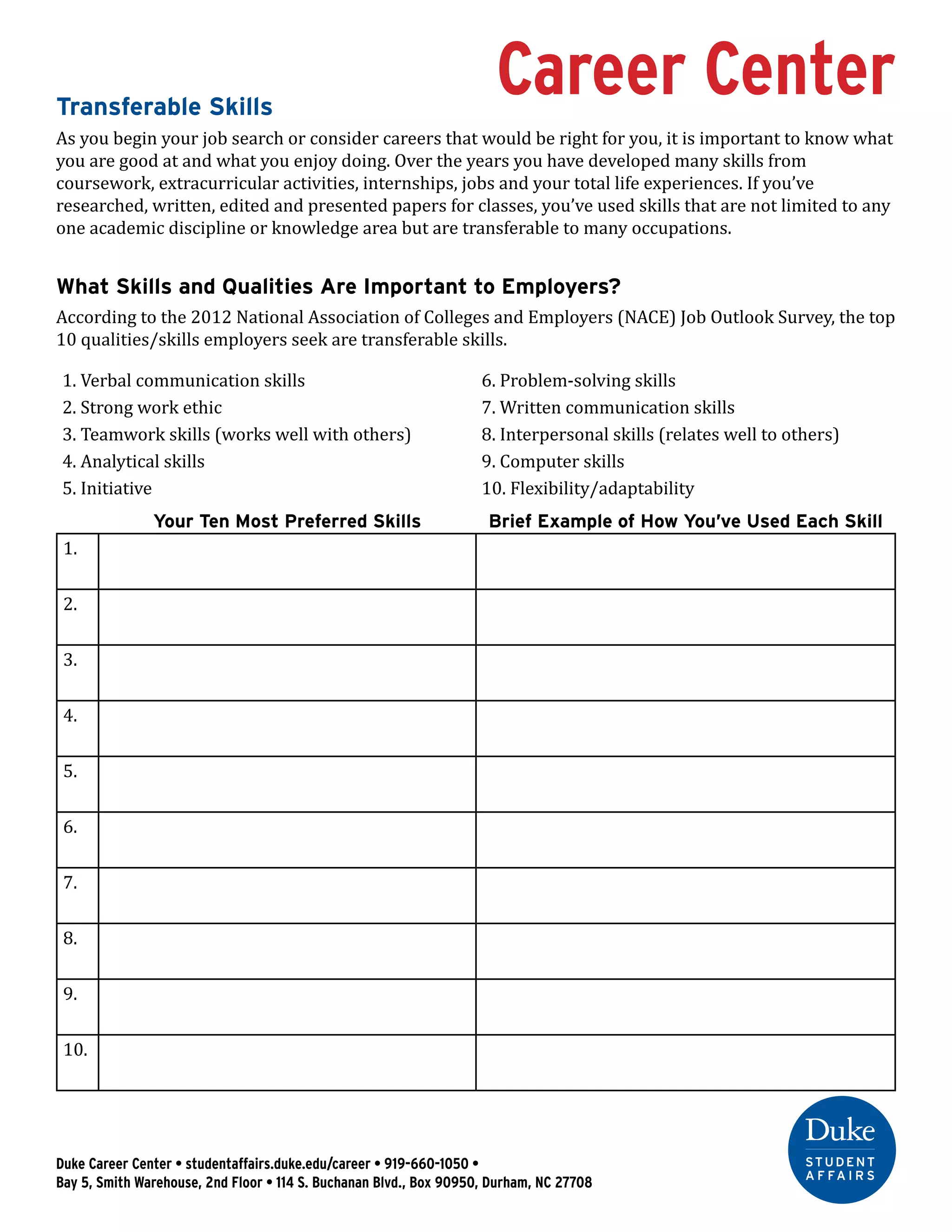
According to the 2012 National Association of Colleges and Employers (NACE) Job Outlook Survey, the top 
10 qualities/skills employers seek are transferable skills. 
1. Verbal communication skills 6. Problem-solving skills 
2. Strong work ethic 7. Written communication skills 
3. Teamwork skills (works well with others) 8. Interpersonal skills (relates well to others) 
4. Analytical skills 9. Computer skills 
5. Initiative 10. Flexibility/adaptability 
Your Ten Most Preferred Skills Brief Example of How You’ve Used Each Skill 
1. 
2. 
3. 
4. 
5. 
6. 
7. 
8. 
9. 
10. 
Duke Career Center • studentaffairs.duke.edu/career • 919-660-1050 • 
Bay 5, Smith Warehouse, 2nd Floor • 114 S. Buchanan Blvd., Box 90950, Durham, NC 27708
Take Stock of Your Transferable Skills 
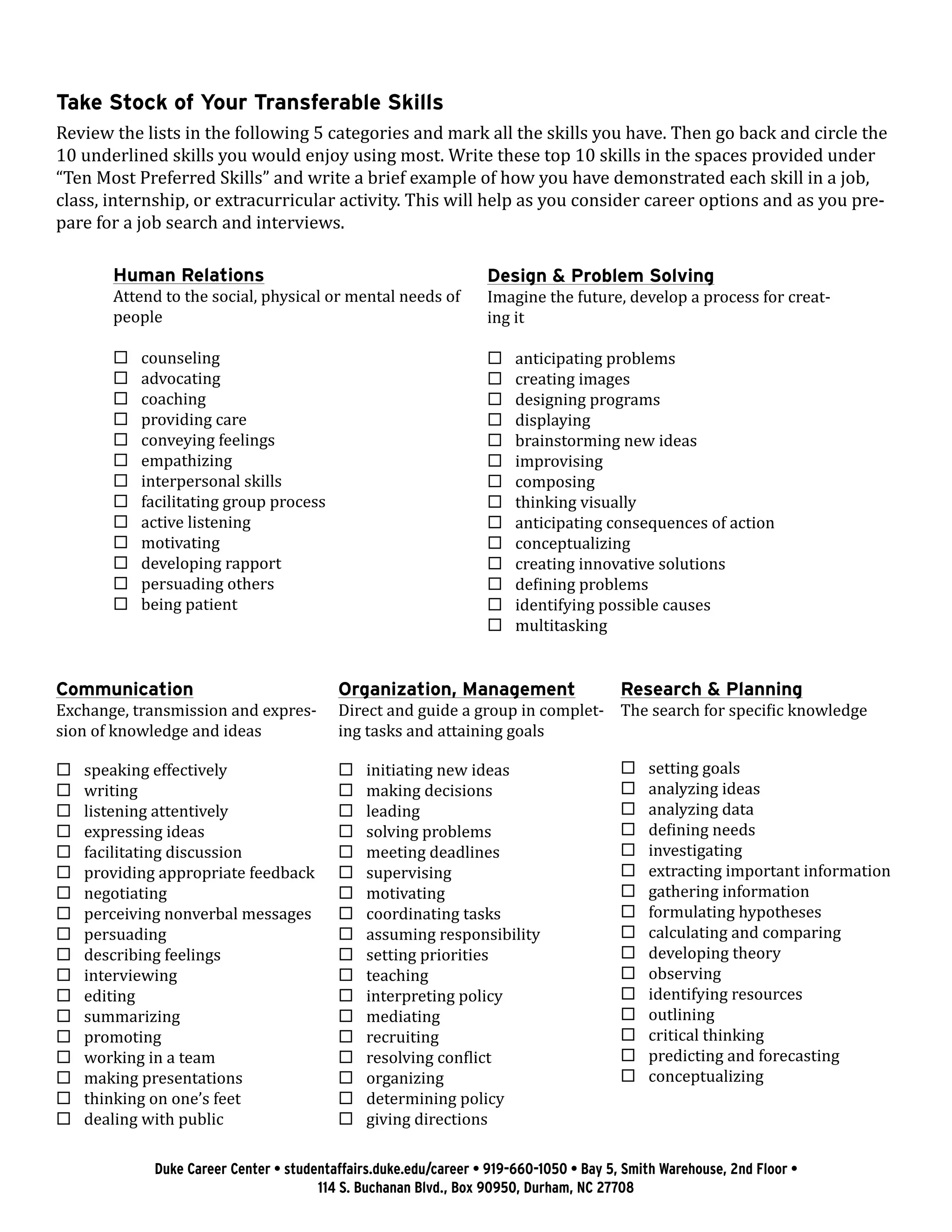
Review the lists in the following 5 categories and mark all the skills you have. Then go back and circle the 
10 underlined skills you would enjoy using most. Write these top 10 skills in the spaces provided under 
“Ten Most Preferred Skills” and write a brief example of how you have demonstrated each skill in a job, 
class, internship, or extracurricular activity. This will help as you consider career options and as you pre-pare 
Duke Career Center • studentaffairs.duke.edu/career • 919-660-1050 • Bay 5, Smith Warehouse, 2nd Floor • 
114 S. Buchanan Blvd., Box 90950, Durham, NC 27708 
Communication 
Exchange, transmission and expres-sion 
of knowledge and ideas 
¨¨ speaking effectively 
¨¨ writing 
¨¨ listening attentively 
¨¨ expressing ideas 
¨¨ facilitating discussion 
¨¨ providing appropriate feedback 
¨¨ negotiating 
¨¨ perceiving nonverbal messages 
¨¨ persuading 
¨¨ describing feelings 
¨¨ interviewing 
¨¨ editing 
¨¨ summarizing 
¨¨ promoting 
¨¨ working in a team 
¨¨ making presentations 
¨¨ thinking on one’s feet 
¨¨ dealing with public 
Organization, Management 
Direct and guide a group in complet-ing 
tasks and attaining goals 
¨¨ initiating new ideas 
¨¨ making decisions 
¨¨ leading 
¨¨ solving problems 
¨¨ meeting deadlines 
¨¨ supervising 
¨¨ motivating 
¨¨ coordinating tasks 
¨¨ assuming responsibility 
¨¨ setting priorities 
¨¨ teaching 
¨¨ interpreting policy 
¨¨ mediating 
¨¨ recruiting 
¨¨ resolving conflict 
¨¨ organizing 
¨¨ determining policy 
¨¨ giving directions 
Research & Planning 
The search for specific knowledge 
¨¨ setting goals 
¨¨ analyzing ideas 
¨¨ analyzing data 
¨¨ defining needs 
¨¨ investigating 
¨¨ extracting important information 
¨¨ gathering information 
¨¨ formulating hypotheses 
¨¨ calculating and comparing 
¨¨ developing theory 
¨¨ observing 
¨¨ identifying resources 
¨¨ outlining 
¨¨ critical thinking 
¨¨ predicting and forecasting 
¨¨ conceptualizing 
Human Relations 
Attend to the social, physical or mental needs of 
people 
¨¨ counseling 
¨¨ advocating 
¨¨ coaching 
¨¨ providing care 
¨¨ conveying feelings 
¨¨ empathizing 
¨¨ interpersonal skills 
¨¨ facilitating group process 
¨¨ active listening 
¨¨ motivating 
¨¨ developing rapport 
¨¨ persuading others 
¨¨ being patient 
Design & Problem Solving 
Imagine the future, develop a process for creat-ing 
it 
¨¨ anticipating problems 
¨¨ creating images 
¨¨ designing programs 
¨¨ displaying 
¨¨ brainstorming new ideas 
¨¨ improvising 
¨¨ composing 
¨¨ thinking visually 
¨¨ anticipating consequences of action 
¨¨ conceptualizing 
¨¨ creating innovative solutions 
¨¨ defining problems 
¨¨ identifying possible causes 
¨¨ multitasking 
for a job search and interviews.

Transferable Skills

  • 1.
    Career Center TransferableSkills As you begin your job search or consider careers that would be right for you, it is important to know what you are good at and what you enjoy doing. Over the years you have developed many skills from coursework, extracurricular activities, internships, jobs and your total life experiences. If you’ve researched, written, edited and presented papers for classes, you’ve used skills that are not limited to any one academic discipline or knowledge area but are transferable to many occupations. What Skills and Qualities Are Important to Employers? According to the 2012 National Association of Colleges and Employers (NACE) Job Outlook Survey, the top 10 qualities/skills employers seek are transferable skills. 1. Verbal communication skills 6. Problem-solving skills 2. Strong work ethic 7. Written communication skills 3. Teamwork skills (works well with others) 8. Interpersonal skills (relates well to others) 4. Analytical skills 9. Computer skills 5. Initiative 10. Flexibility/adaptability Your Ten Most Preferred Skills Brief Example of How You’ve Used Each Skill 1. 2. 3. 4. 5. 6. 7. 8. 9. 10. Duke Career Center • studentaffairs.duke.edu/career • 919-660-1050 • Bay 5, Smith Warehouse, 2nd Floor • 114 S. Buchanan Blvd., Box 90950, Durham, NC 27708
  • 2.
    Take Stock ofYour Transferable Skills Review the lists in the following 5 categories and mark all the skills you have. Then go back and circle the 10 underlined skills you would enjoy using most. Write these top 10 skills in the spaces provided under “Ten Most Preferred Skills” and write a brief example of how you have demonstrated each skill in a job, class, internship, or extracurricular activity. This will help as you consider career options and as you pre-pare Duke Career Center • studentaffairs.duke.edu/career • 919-660-1050 • Bay 5, Smith Warehouse, 2nd Floor • 114 S. Buchanan Blvd., Box 90950, Durham, NC 27708 Communication Exchange, transmission and expres-sion of knowledge and ideas ¨¨ speaking effectively ¨¨ writing ¨¨ listening attentively ¨¨ expressing ideas ¨¨ facilitating discussion ¨¨ providing appropriate feedback ¨¨ negotiating ¨¨ perceiving nonverbal messages ¨¨ persuading ¨¨ describing feelings ¨¨ interviewing ¨¨ editing ¨¨ summarizing ¨¨ promoting ¨¨ working in a team ¨¨ making presentations ¨¨ thinking on one’s feet ¨¨ dealing with public Organization, Management Direct and guide a group in complet-ing tasks and attaining goals ¨¨ initiating new ideas ¨¨ making decisions ¨¨ leading ¨¨ solving problems ¨¨ meeting deadlines ¨¨ supervising ¨¨ motivating ¨¨ coordinating tasks ¨¨ assuming responsibility ¨¨ setting priorities ¨¨ teaching ¨¨ interpreting policy ¨¨ mediating ¨¨ recruiting ¨¨ resolving conflict ¨¨ organizing ¨¨ determining policy ¨¨ giving directions Research & Planning The search for specific knowledge ¨¨ setting goals ¨¨ analyzing ideas ¨¨ analyzing data ¨¨ defining needs ¨¨ investigating ¨¨ extracting important information ¨¨ gathering information ¨¨ formulating hypotheses ¨¨ calculating and comparing ¨¨ developing theory ¨¨ observing ¨¨ identifying resources ¨¨ outlining ¨¨ critical thinking ¨¨ predicting and forecasting ¨¨ conceptualizing Human Relations Attend to the social, physical or mental needs of people ¨¨ counseling ¨¨ advocating ¨¨ coaching ¨¨ providing care ¨¨ conveying feelings ¨¨ empathizing ¨¨ interpersonal skills ¨¨ facilitating group process ¨¨ active listening ¨¨ motivating ¨¨ developing rapport ¨¨ persuading others ¨¨ being patient Design & Problem Solving Imagine the future, develop a process for creat-ing it ¨¨ anticipating problems ¨¨ creating images ¨¨ designing programs ¨¨ displaying ¨¨ brainstorming new ideas ¨¨ improvising ¨¨ composing ¨¨ thinking visually ¨¨ anticipating consequences of action ¨¨ conceptualizing ¨¨ creating innovative solutions ¨¨ defining problems ¨¨ identifying possible causes ¨¨ multitasking for a job search and interviews.