


What is hacking?
Who is a hacker?
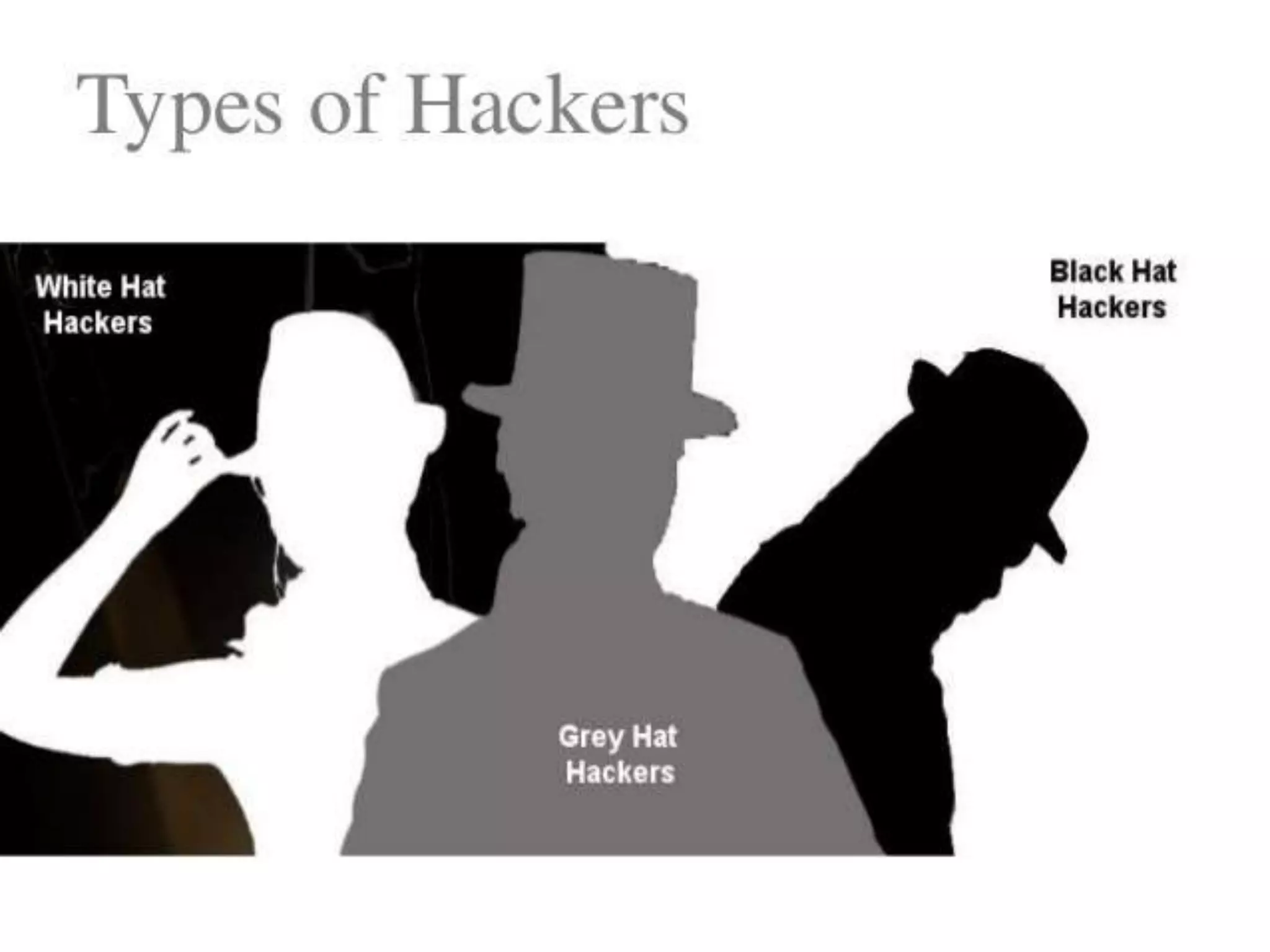
Types of hackers
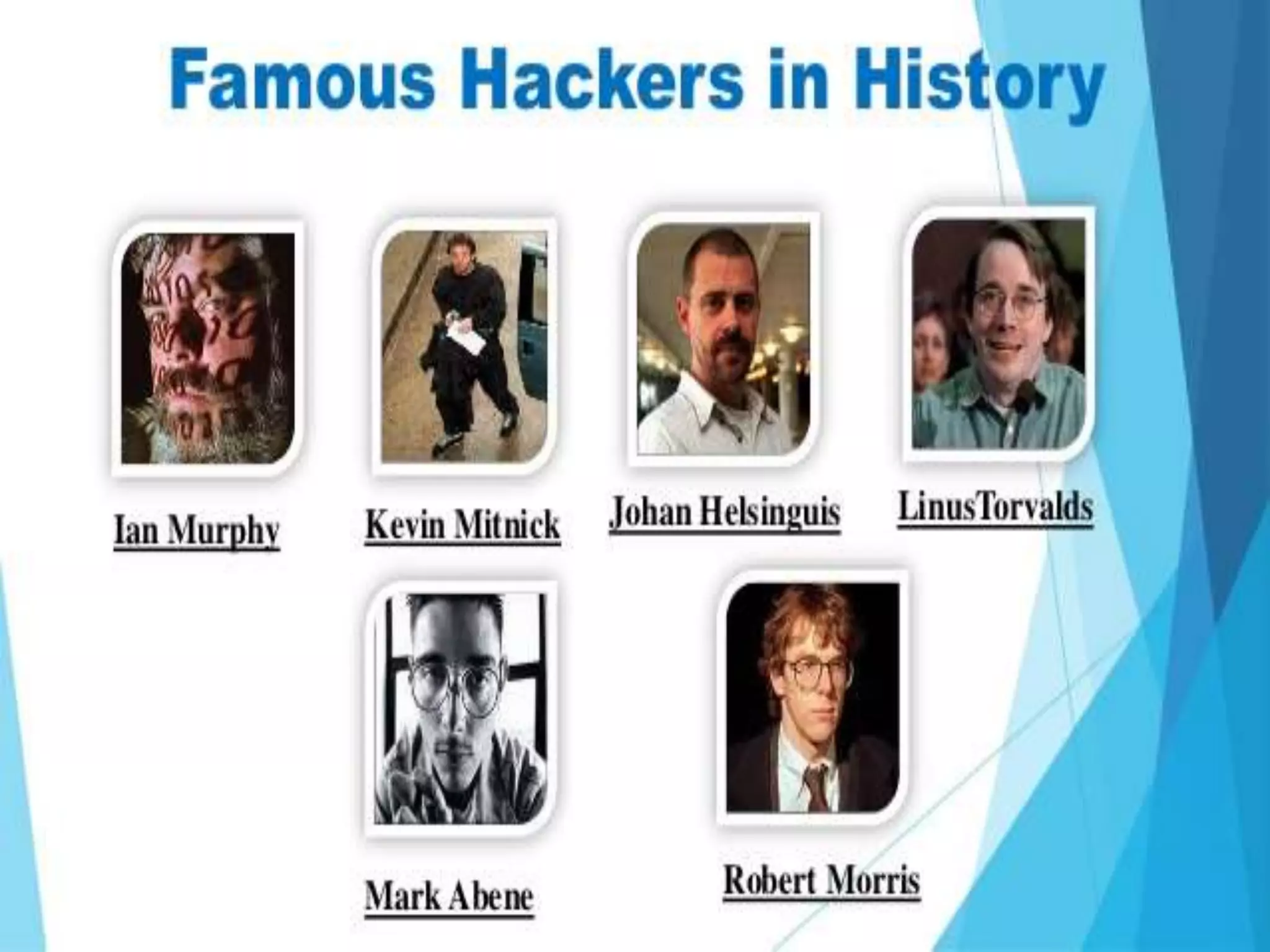
Famous hackers in history
Types of hacking
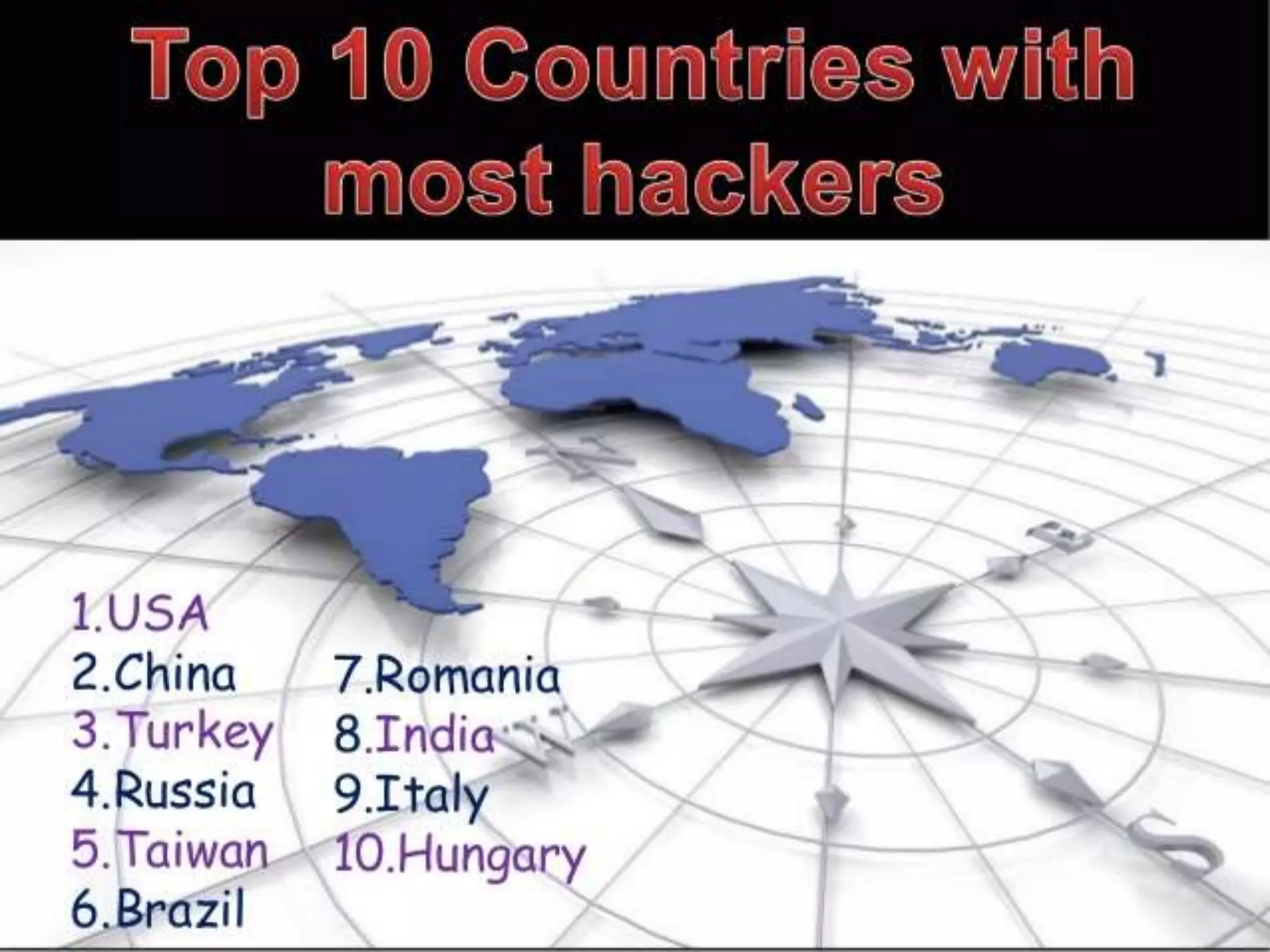
Top 10 countries with most hackers
Advantages of hacking
Disadvantages of hacking
Preventive measures
What you can do after you are hacked
How to give password to an account
Conclusion
The process of attempting to gain unauthorized access to
computer resources is called hacking.
 Hacker is someone who seeks or exploits weakness
in a computer system
 The term hacker is reclaimed by computer
programmers who argue that someone breaking into
computers is better called a cracker.
 Website Hacking
 Network Hacking
 Ethical Hacking
 Email Hacking
 Password Hacking
 Online Banking Hacking
 Computer Hacking
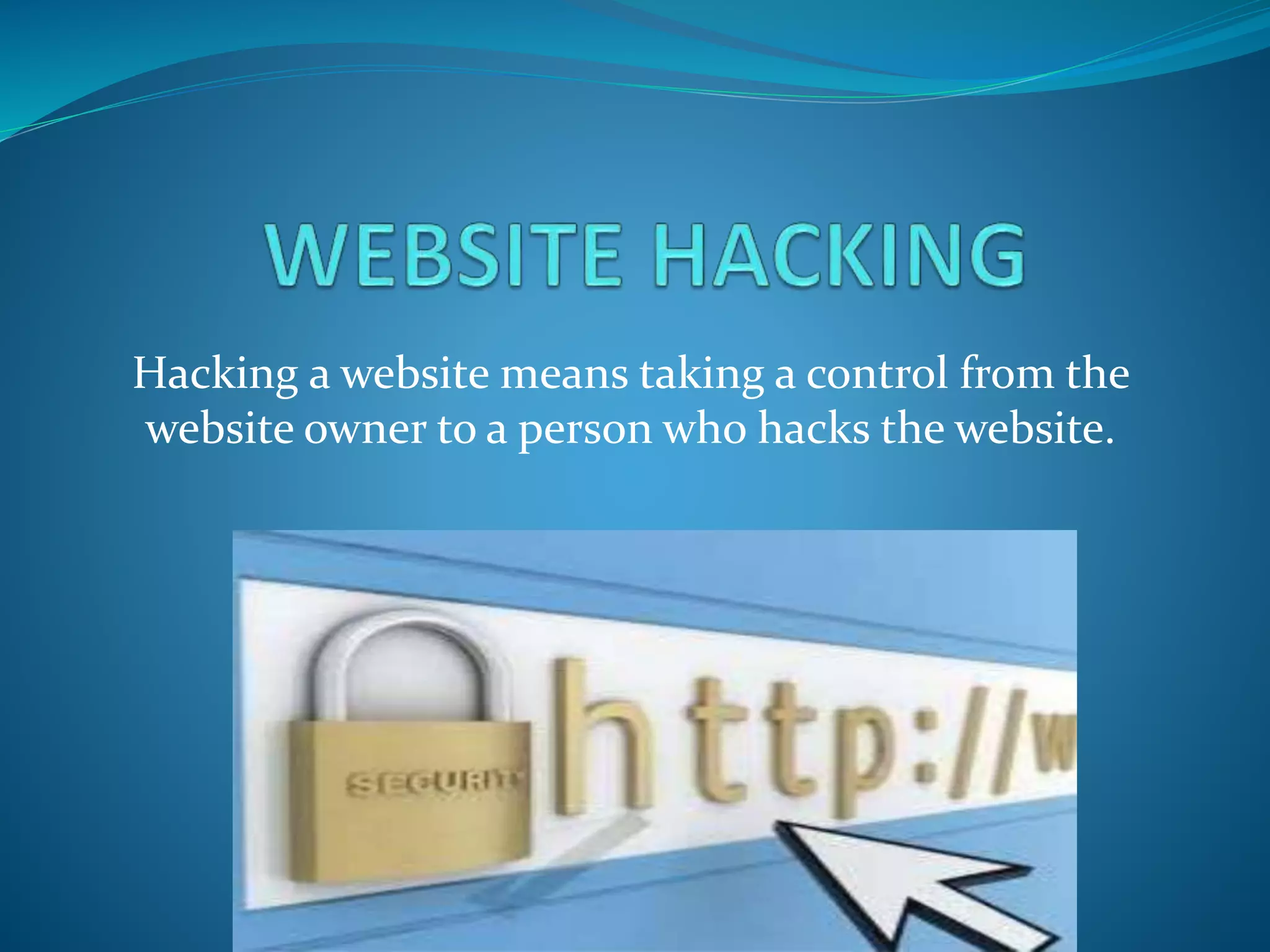
Hacking a website means taking a control from the
website owner to a person who hacks the website.
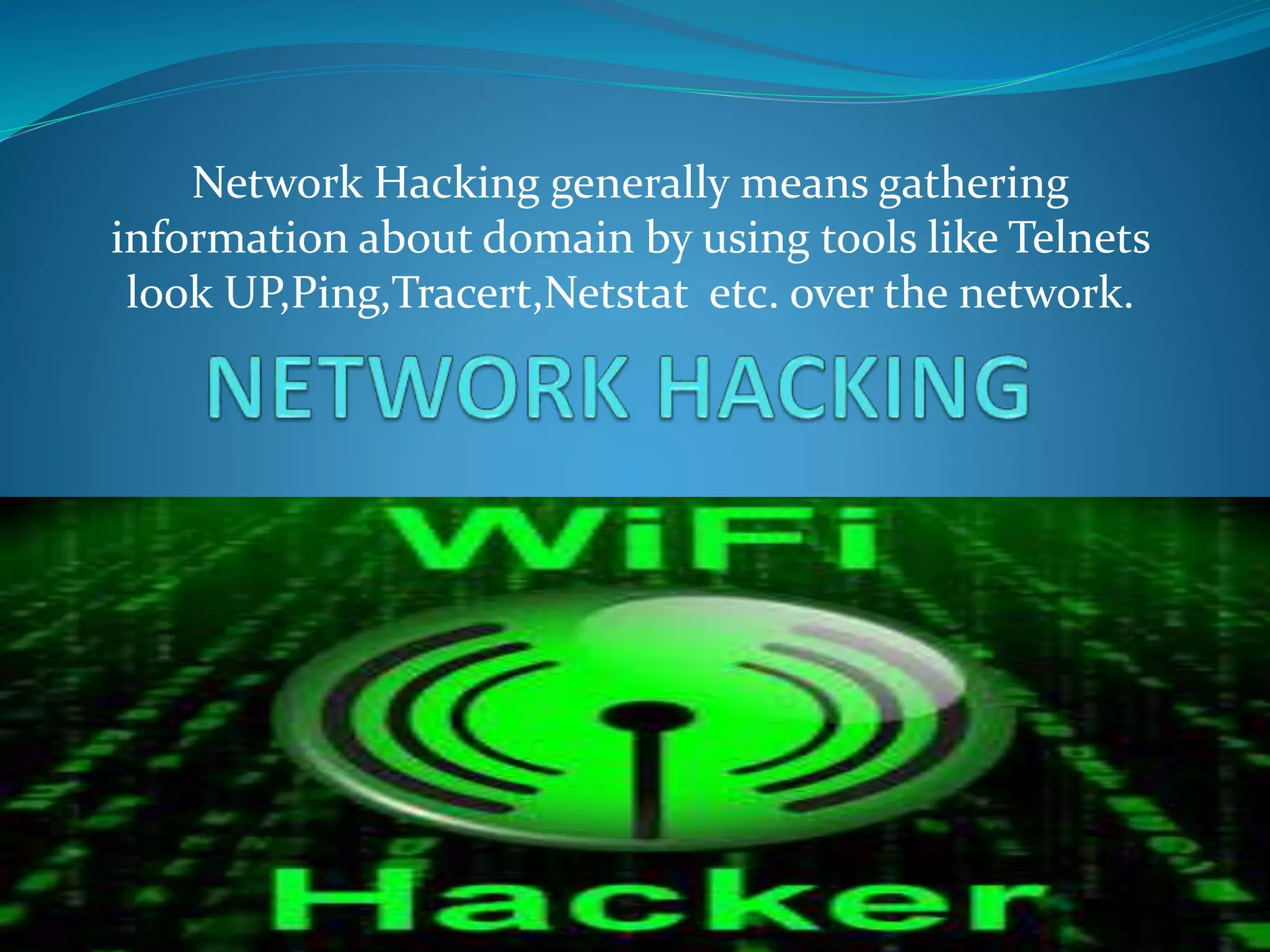
Network Hacking generally means gathering
information about domain by using tools like Telnets
look UP,Ping,Tracert,Netstat etc. over the network.
Ethical Hacking is where a person
Hacks to find weakness in a system and then usually
patches them.
Commercial and social websites rely on the security of
email accounts . Large amount of email exchanges are
occurring daily which contain personal information as
well as company secrets ,this makes email accounts
very valuable and becomes of the main causes for
email hacking.
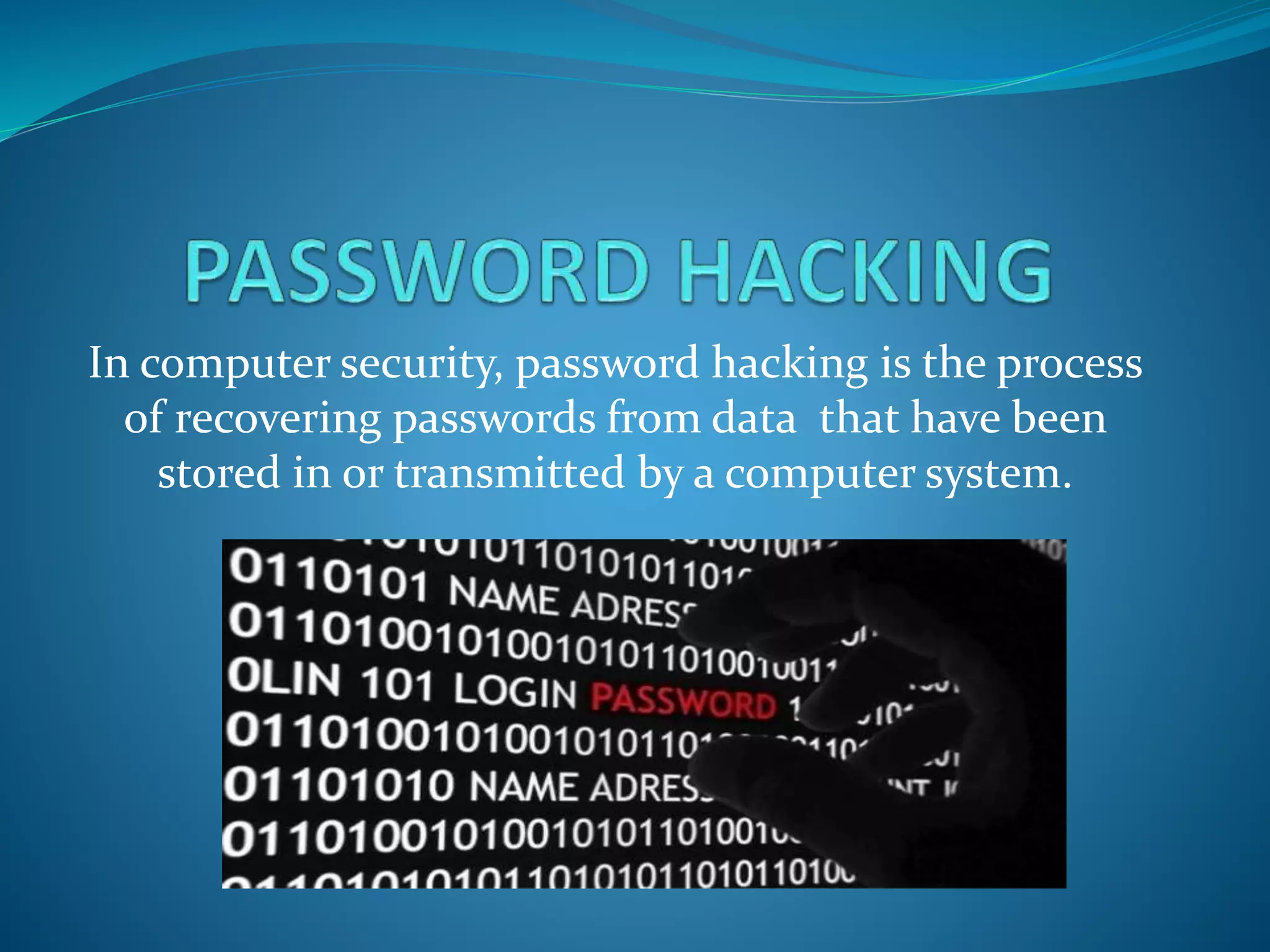
In computer security, password hacking is the process
of recovering passwords from data that have been
stored in or transmitted by a computer system.
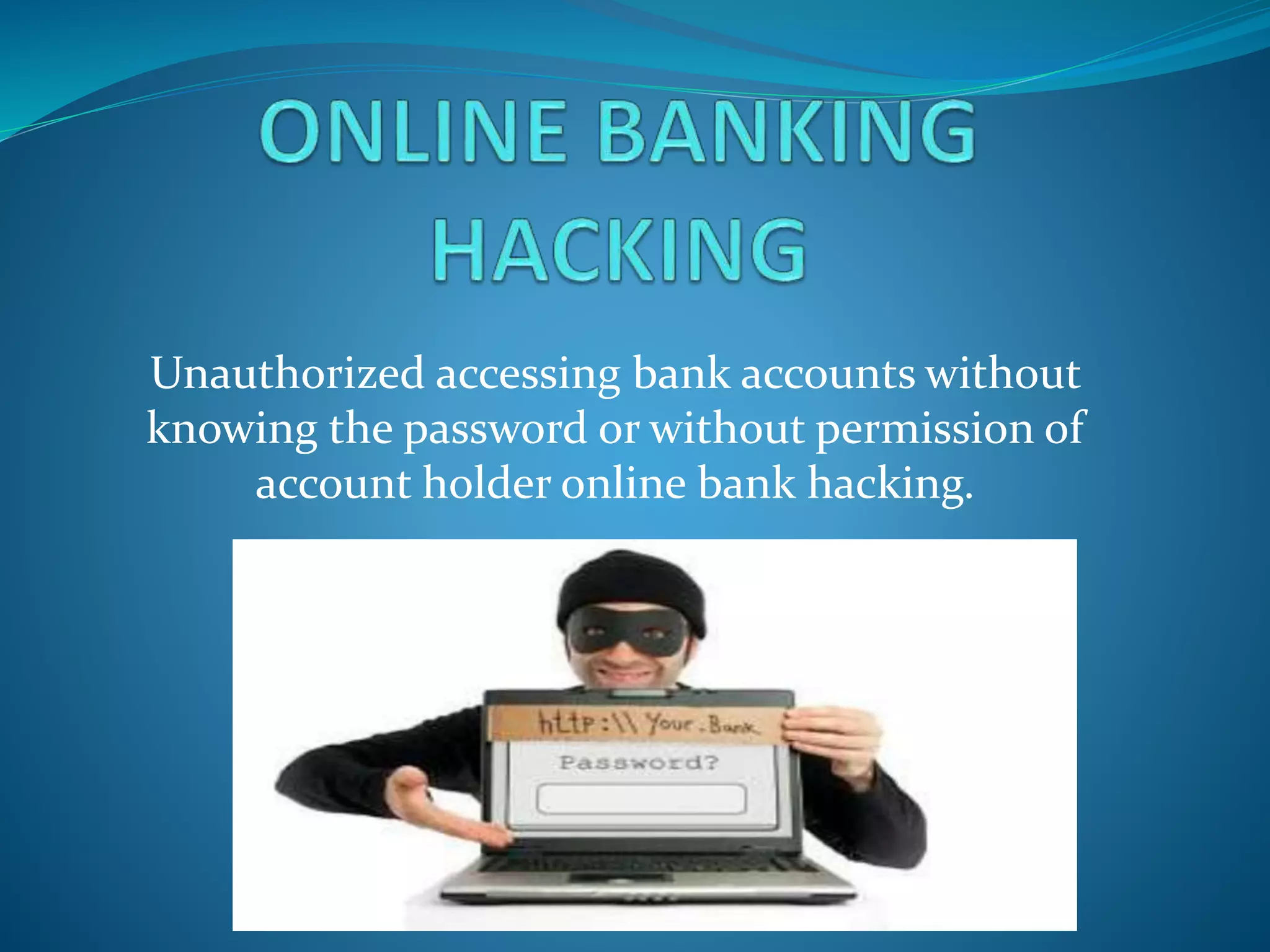
Unauthorized accessing bank accounts without
knowing the password or without permission of
account holder online bank hacking.
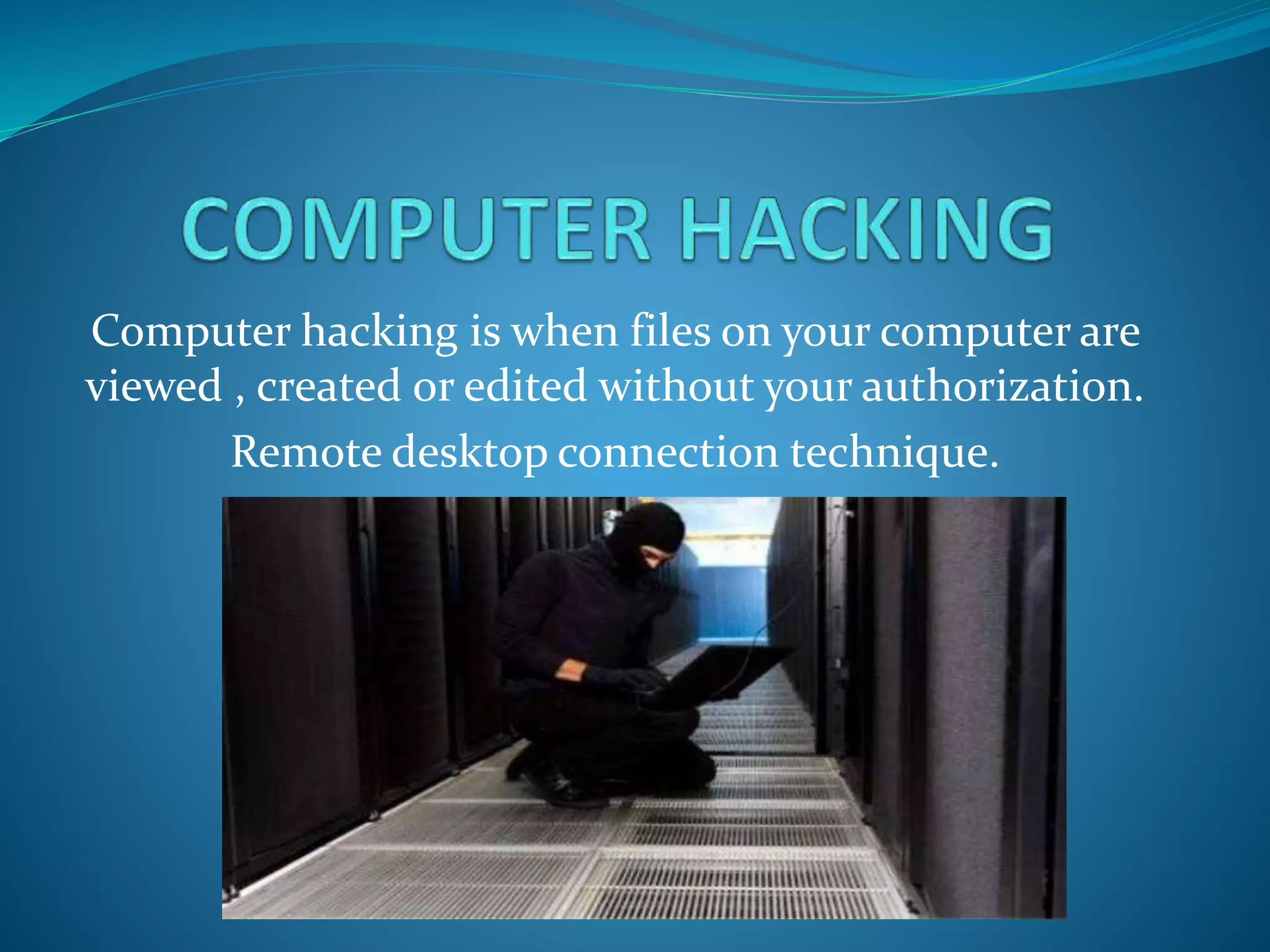
Computer hacking is when files on your computer are
viewed , created or edited without your authorization.
Remote desktop connection technique.
Can be used to recover lost information where the computer
password has been lost.
Teaches us that no technology is 100% secure.
It helps the organization better protects its systems and information.
Ethical hacking provides protection against theft.
DISADVANTAGES OF HACKING
Criminals can use it to their advantage.
It can harm someone’s privacy.
It is illegal.
Hacking leads to financial losses.
PREVENTIVE MEASURES
Install a strong anti-virus.
Always run a anti-virus check before you download a
program or a file from the internet.
Avoid disclosing personal details like phone number,
credit card details to strangers.
What you can do after you are
hacked
Shutdown the system or turn off the system.
Separate the system from network.
Restore the system with the backup or reinstall all the
programs.
Connect the system to the network.
It can be good to call the police or cyber crime
investigators.
HOW TO GIVE PASSWORD TO AN
ACCOUNT
Use unique password to your account.
Choose a combination of letters , numbers or symbols.
Always create a unique and long password for security
of your personal informations and details.
CONCLUSION
Hackers are just people with innovative spirits and an
in-dept knowledge of technology . Hackers are not
necessarily criminals , it totally depends on the way
how you use your innovative idea . There is nothing
wrong with hackers knowledge Therefore do whatever
you like as long as you didn't make other people
suffered and devastated by your own actions.
Hacking 1
Hacking 1

Hacking 1

  • 2.
    What is hacking? Whois a hacker? Types of hackers Famous hackers in history Types of hacking Top 10 countries with most hackers Advantages of hacking Disadvantages of hacking Preventive measures What you can do after you are hacked How to give password to an account Conclusion
  • 4.
    The process ofattempting to gain unauthorized access to computer resources is called hacking.
  • 6.
     Hacker issomeone who seeks or exploits weakness in a computer system  The term hacker is reclaimed by computer programmers who argue that someone breaking into computers is better called a cracker.
  • 10.
     Website Hacking Network Hacking  Ethical Hacking  Email Hacking  Password Hacking  Online Banking Hacking  Computer Hacking
  • 11.
    Hacking a websitemeans taking a control from the website owner to a person who hacks the website.
  • 12.
    Network Hacking generallymeans gathering information about domain by using tools like Telnets look UP,Ping,Tracert,Netstat etc. over the network.
  • 14.
    Ethical Hacking iswhere a person Hacks to find weakness in a system and then usually patches them.
  • 15.
    Commercial and socialwebsites rely on the security of email accounts . Large amount of email exchanges are occurring daily which contain personal information as well as company secrets ,this makes email accounts very valuable and becomes of the main causes for email hacking.
  • 16.
    In computer security,password hacking is the process of recovering passwords from data that have been stored in or transmitted by a computer system.
  • 17.
    Unauthorized accessing bankaccounts without knowing the password or without permission of account holder online bank hacking.
  • 18.
    Computer hacking iswhen files on your computer are viewed , created or edited without your authorization. Remote desktop connection technique.
  • 20.
    Can be usedto recover lost information where the computer password has been lost. Teaches us that no technology is 100% secure. It helps the organization better protects its systems and information. Ethical hacking provides protection against theft.
  • 21.
    DISADVANTAGES OF HACKING Criminalscan use it to their advantage. It can harm someone’s privacy. It is illegal. Hacking leads to financial losses.
  • 22.
    PREVENTIVE MEASURES Install astrong anti-virus. Always run a anti-virus check before you download a program or a file from the internet. Avoid disclosing personal details like phone number, credit card details to strangers.
  • 23.
    What you cando after you are hacked Shutdown the system or turn off the system. Separate the system from network. Restore the system with the backup or reinstall all the programs. Connect the system to the network. It can be good to call the police or cyber crime investigators.
  • 24.
    HOW TO GIVEPASSWORD TO AN ACCOUNT Use unique password to your account. Choose a combination of letters , numbers or symbols. Always create a unique and long password for security of your personal informations and details.
  • 25.
    CONCLUSION Hackers are justpeople with innovative spirits and an in-dept knowledge of technology . Hackers are not necessarily criminals , it totally depends on the way how you use your innovative idea . There is nothing wrong with hackers knowledge Therefore do whatever you like as long as you didn't make other people suffered and devastated by your own actions.